30 Front Yard Fence Ideas for a Modern Entrance
Choose a front yard fence by privacy, security, curb appeal, and upkeep. Get 30 modern ideas plus code, gate, material, and planting tips.
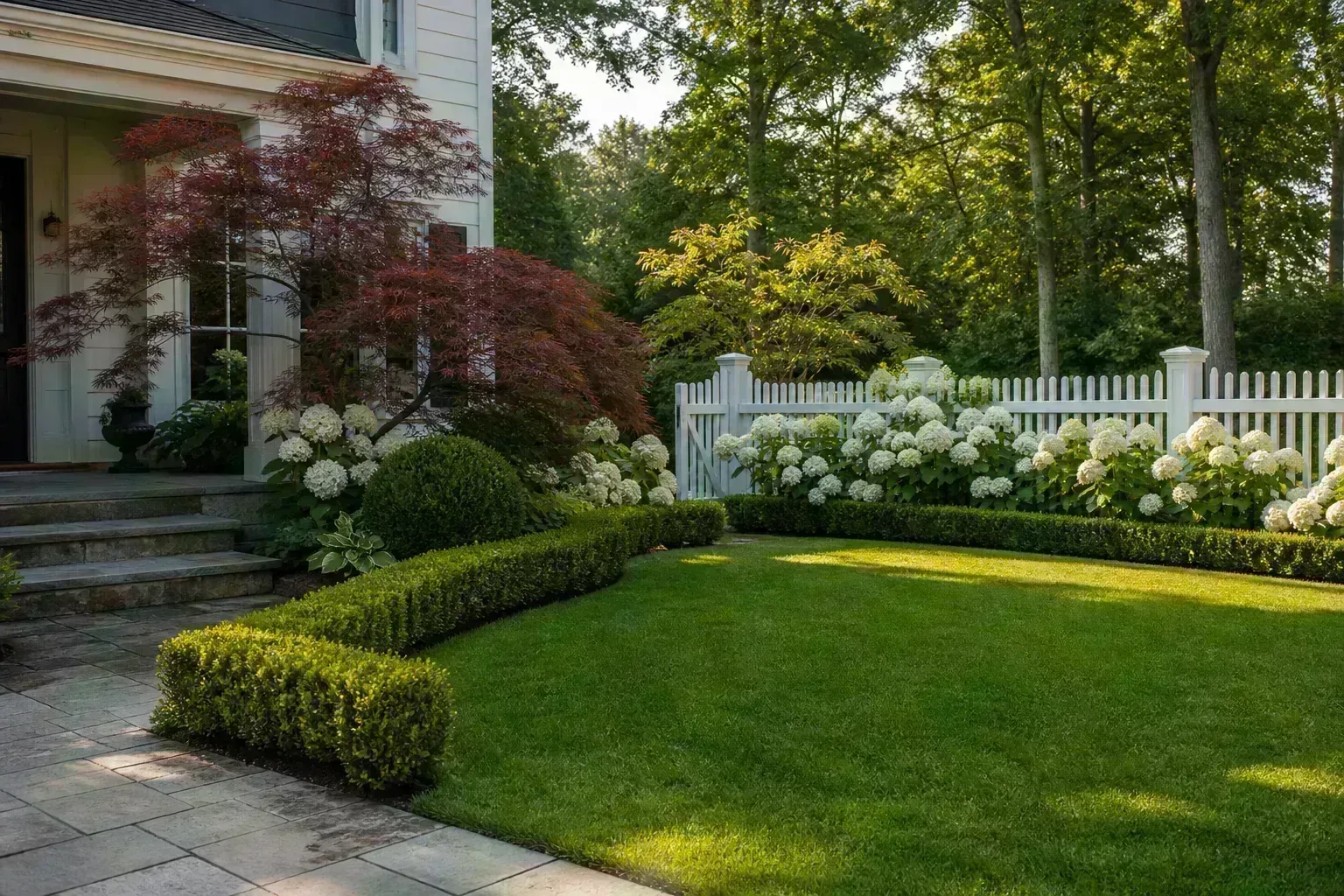
A front yard fence has to do more than look good in a photo. It may define the property line, keep a dog from bolting, slow down foot traffic, give a porch some privacy, or simply make the path to the front door feel intentional. The best design makes that job obvious without turning the entrance into a visual dead end.
Start by choosing a privacy level, a material, and a gate arrangement that fit your house and street. The 30 ideas below range from open metal and low pickets to planted screens and solid walls, with the trade-offs spelled out so you can turn inspiration into a buildable plan.
Start With the Job Your Fence Must Do
There is no single best front yard fence. A low transparent boundary can keep people and pets inside while preserving a view of the garden; a taller solid screen can make a busy street more comfortable but may also hide the front door and reduce the sense of welcome. Garden Design’s front-yard planning guide makes the same useful distinction between a waist-high barrier that preserves light and views and a high barrier that creates seclusion.
Five questions that prevent an expensive mismatch
Before comparing pickets and slats, decide what the fence must accomplish.
- Are you marking a boundary or creating a room? A 30- to 42-inch open fence usually reads as an edge. A taller opaque fence reads as architecture and needs a stronger relationship to the facade.
- Do you need privacy from the sidewalk, the road, or a neighboring house? Privacy is directional. You may need a solid panel beside a porch but only a low fence along the public sidewalk.
- What must remain visible? Keep house numbers, the front door, pedestrians, vehicles backing out, and the approach to a driveway or corner lot easy to see.
- Who uses the gate? A daily walk gate, a trash-bin route, and a vehicle gate have different widths, hardware, swing clearances, and maintenance needs.
- How much upkeep will you tolerate? Painted wood, clipped hedges, flowering vines, powder-coated metal, and masonry all age differently. Choose the finish you are willing to inspect and repair.
30 Front Yard Fence Ideas, Organized by the Look You Want
The ideas are grouped by design strategy rather than by material alone. That makes it easier to choose a concept that solves your particular front-yard problem.
Open and welcoming boundaries
1. Use a low modern picket fence. A squared-off picket with a simple top rail can look crisp rather than cottage-like when the posts, spacing, and paint color are restrained. Keep the height low enough to show the garden and front steps, then use a strong gate post or a short path of pavers to make the entry feel finished.
2. Frame only the driveway. Stop the fence at both sides of the driveway instead of running a continuous line across the entire frontage. The opening creates a visual arrow toward the house, and the two end posts give you a place for lights, address numbers, or a pair of matching planters.
3. Try a slim black metal fence. Narrow vertical bars make a useful boundary with little visual weight. It suits brick, stucco, painted siding, and contemporary facades, but the gaps will not provide privacy; use shrubs behind it if you need screening.
4. Repeat the porch railing pattern. Match the fence’s post spacing, rail direction, and finish to an existing porch or balcony railing. The repetition makes a small fence feel like part of the house’s architecture rather than a separate object added at the sidewalk.
5. Build a post-and-rail edge. Two or three rails between substantial posts work well on a rural, ranch, or wide suburban lot. This is a boundary marker, not a security barrier, so pair it with a planted bed or a separate pet-safe mesh if containment is the actual goal.
6. Choose a wire grid with a clean frame. Black or dark-green welded wire inside a wood or metal frame keeps the view open and can support a restrained planting scheme. Use a properly finished lower edge so the fence does not become a sharp obstacle for children, pets, or people working around the bed.
Modern materials and strong contrast
7. Install warm horizontal wood slats. Horizontal boards emphasize width and can make a narrow frontage feel broader. Leave a consistent gap between boards for filtered views, or tighten the spacing near the porch where you want more privacy; avoid using the same slat spacing everywhere if one area needs ventilation or visibility.
8. Pair cedar with a black frame. The contrast between warm wood and dark posts gives a contemporary fence more texture without adding a decorative pattern. Keep the number of finishes limited: the fence, gate, and exterior trim should share a clear color relationship instead of competing for attention.
9. Mix stone piers with a wood gate. Short masonry piers can make a walk gate feel anchored and substantial, while a wood door softens the arrival. Use this combination where the house already has stone, brick, or a heavy foundation; on a small facade, oversized piers can overwhelm the entrance.
10. Match a fence to the home’s siding or trim. A fence painted the same color as the house recedes and lets planting do the visual work. Matching trim can be especially effective when you need a fence but do not want it to become the first thing visitors notice.
11. Use a steel panel as an accent, not a full wall. A single perforated, laser-cut, or ribbed panel can mark the gate zone or screen a porch corner. Repeating a bold pattern across the entire property line may look busy, so treat the decorative panel as a focal point and keep the rest simple.
12. Try a charcoal gray or deep green finish. Black is high-contrast and architectural; charcoal and deep green are slightly quieter against plants and masonry. Sample the finish outdoors because a color that looks soft on a paint chip can read much darker beside a shaded foundation.
Privacy without a fortress effect
13. Use a privacy gradient. Make the fence most opaque where people sit or look toward the house, then open it up as it approaches the sidewalk or driveway. A solid porch screen with open side sections often feels more welcoming than a uniform six-foot wall.
14. Set a solid screen behind a planting bed. A narrow bed between the sidewalk and the fence breaks up the hard edge and gives you room to hide the base with shrubs or grasses. Leave enough access to clean the fence and trim the plants; a screen buried in foliage will age faster and be harder to repair.
15. Combine a low fence with a hedge. A short picket or metal fence supplies definition while the hedge provides a softer layer of privacy. This option takes longer to fill in and needs pruning, but it avoids the abrupt look of a tall opaque barrier and can be adapted as the plants mature.
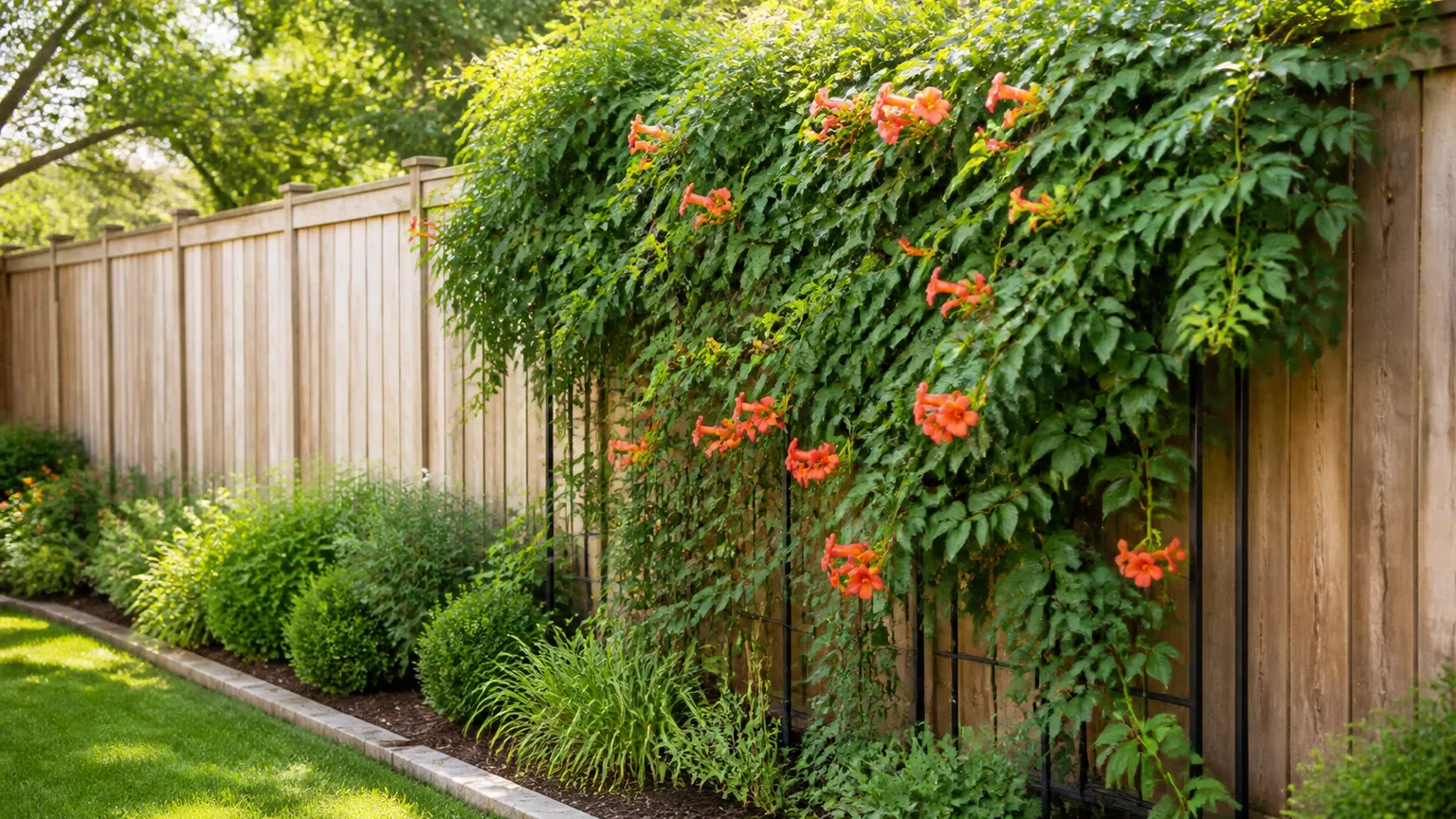
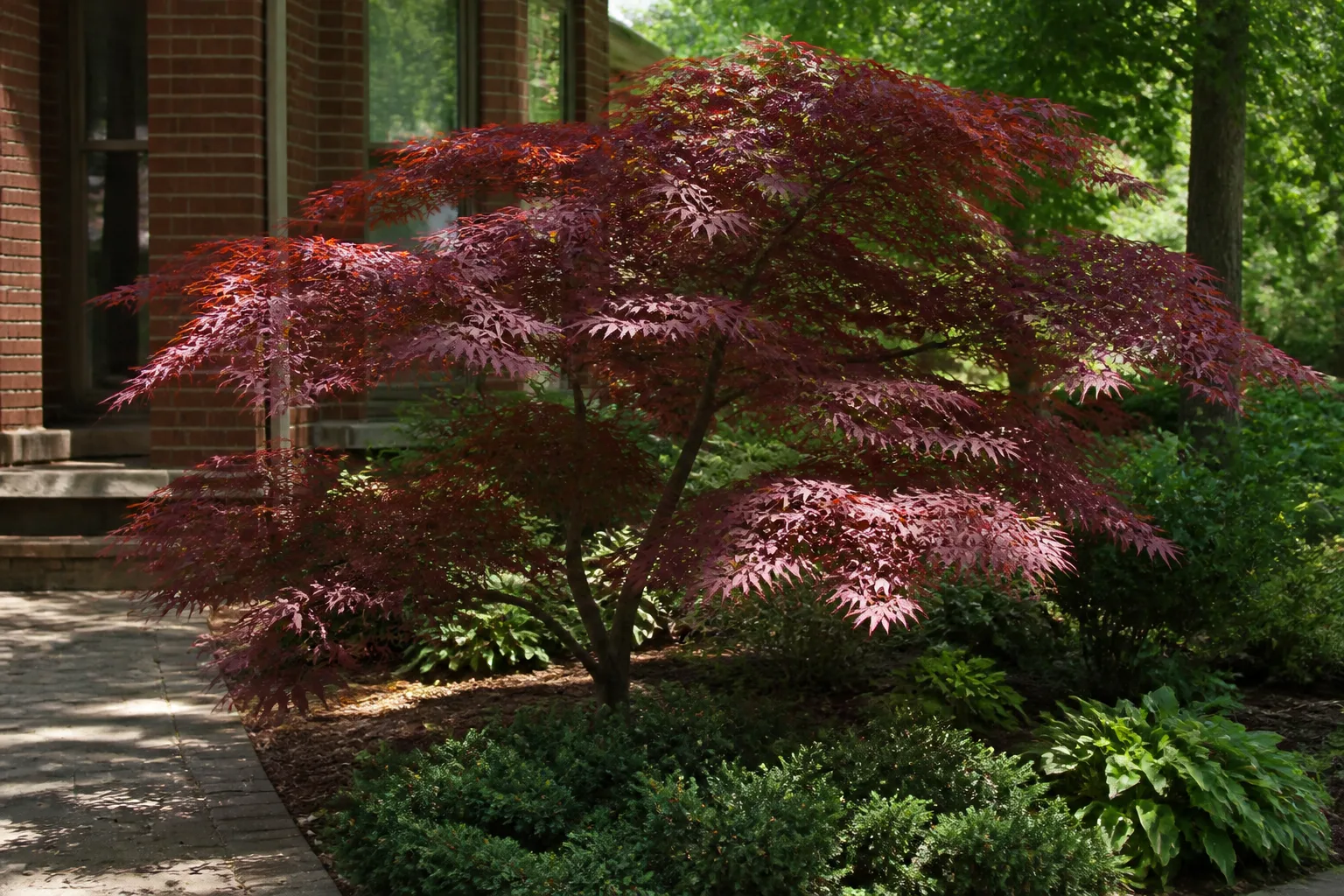
16. Use a fence as a backdrop for layered planting. A simple fence becomes a calm background for a small tree, medium shrubs, and lower perennials. Repeat one or two shapes or colors so the border feels designed rather than like a collection of plants pressed against the property line.
17. Create a slatted privacy screen. Closely spaced vertical or horizontal slats can block direct views while still letting air and some light move through. Angle or stagger the slats only when the privacy need justifies the added detailing; complicated joinery is harder to repaint and replace.
18. Make a courtyard wall with a visible doorway. A solid or masonry enclosure can work when the front yard is really an outdoor room. Keep the gate legible, light the approach, and use a contrasting door or handle so privacy does not turn into confusion about where visitors should enter.
Gates and arrival moments
19. Use a separate walk gate and driveway gate. A small pedestrian gate makes everyday arrivals feel human-scale, while a wider vehicle gate handles cars, bins, and deliveries. Separating them also lets you keep the walk gate visually open when the driveway must be closed.
20. Center the walk gate on the front door. When the sidewalk, gate, and front steps line up, the fence becomes a guide rather than an obstacle. If the driveway controls the approach, shift the gate to the natural walking route instead of forcing visitors to cross the lawn or squeeze beside a parked car.
21. Choose a sliding driveway gate for a tight frontage. A sliding gate avoids a large swing arc across the sidewalk or driveway. It needs a straight run of fence, reliable rollers, a safe stop, and access to the mechanism, so it is not automatically the simplest choice for a small property.
22. Add a gate canopy or narrow arbor. A simple overhead frame makes the entrance feel like a destination and gives a vine or light fixture a place to land. Keep the structure proportionate to the door and check mature vine weight before attaching it to a lightweight fence panel.
23. Make the gate the one decorative moment. Use a chevron, curved top, cutout, or contrasting material on the gate while keeping the fence field quiet. This approach works especially well on modern homes because it adds personality without covering every panel in a motif.
24. Light the posts, not the street. Low, shielded lights at the walk gate and driveway turn the entry into a readable sequence without creating glare. Aim light down toward steps, locks, and changes in grade; avoid fixtures that shine into a driver’s eyes or a neighbor’s windows.
Small-lot, porch, and partial-yard solutions
25. Fence only the porch. A low fence around a porch or stoop can create a defined outdoor room while leaving the rest of a narrow front yard open. It is useful when a full perimeter would make the house feel smaller or block the relationship between the sidewalk and the door.
26. Wrap the fence around a corner. On a corner lot, continue the same material around the side yard rather than ending with an exposed back face. Use the street-side run as the open, public edge and reserve taller screening for the portion that actually faces a living area.
27. Tuck a mini fence into a garden bed. A three-sided fence around a planting area can protect young plants, define a vegetable garden, or keep a path from cutting through a bed. Because it is not acting as a full boundary, you can use a lighter material and a more playful gate.
28. Leave a gap between house and fence. A short return that stops before the facade can preserve the entry view and make the yard feel wider. Use the gap to frame a path, add a house number, or create a clear service route; do not leave an awkward dead-end that visitors mistake for the entrance.
29. Use a house-matching screen for a narrow side approach. A few vertical boards or a short masonry screen can separate a front porch from a side walkway without fencing the whole lot. Repeat the house’s material on one plane and add a contrasting gate latch or light so the passage stays easy to read.
30. Combine a low fence with a raised planter edge. A planter, seat wall, or low retaining edge can supply separation when a conventional fence would be too much. This is a good solution for a front yard that needs a sense of enclosure but still benefits from broad views to the street.
Choose Materials by Maintenance, Not Just Mood
Wood and composite
Wood is warm, easy to customize, and relatively simple to repair one board at a time. It also moves, weathers, and eventually needs cleaning, staining, painting, or replacement; the lower edges and post bases usually show trouble first. Keep soil and mulch below the boards, provide drainage around posts, and leave a serviceable gap wherever a gate or panel needs to move.
Composite and cellular PVC can reduce painting, but they are not maintenance-free. Check how the product handles heat, fasteners, impact, and color change before committing to a long run, and do not mix a low-quality panel with heavy gate hardware that it was never designed to carry.
Metal and masonry
Aluminum and powder-coated steel give a clean profile and can make an open fence feel nearly weightless. Look closely at welds, fasteners, hinges, and the finish at cut ends; the most visible failure is often not the main panel but a sagging gate or rusting connection.
Brick, stone, and stucco walls provide the strongest architectural presence and the most privacy, but they need a sound base and careful water management. A masonry wall that holds water against a facade or traps soil at its base can create a repair problem more serious than a cosmetic fence issue.
Fine Gardening’s practical guide to garden structures is a useful reminder that simple materials can make effective outdoor structures when their proportions and bracing suit the load. Apply the same discipline to a front fence: a light decorative panel is not automatically strong enough to support a gate, a heavy vine, or a wind-exposed privacy screen.
Use Plants and Lighting to Finish the Entrance
Living screens, planters, and trellises
Planting is what keeps a fence from looking like a line dropped onto the lawn. Use a tree or large shrub to anchor one end, medium plants to soften the center, and lower plants to keep the path visible. Garden Design recommends choosing plants for mature scale and evaluating light before planting; that matters even more beside a fence, where reflected heat, shade, and restricted root space can change the growing conditions.
For a living fence, pick plants that suit your climate and the amount of pruning you will actually do. Evergreen hedges offer year-round screening but can become bulky; flowering shrubs offer seasonal interest but may be bare for part of the year; vines can soften a fence quickly but need a dedicated trellis, tie points, and regular direction-setting.
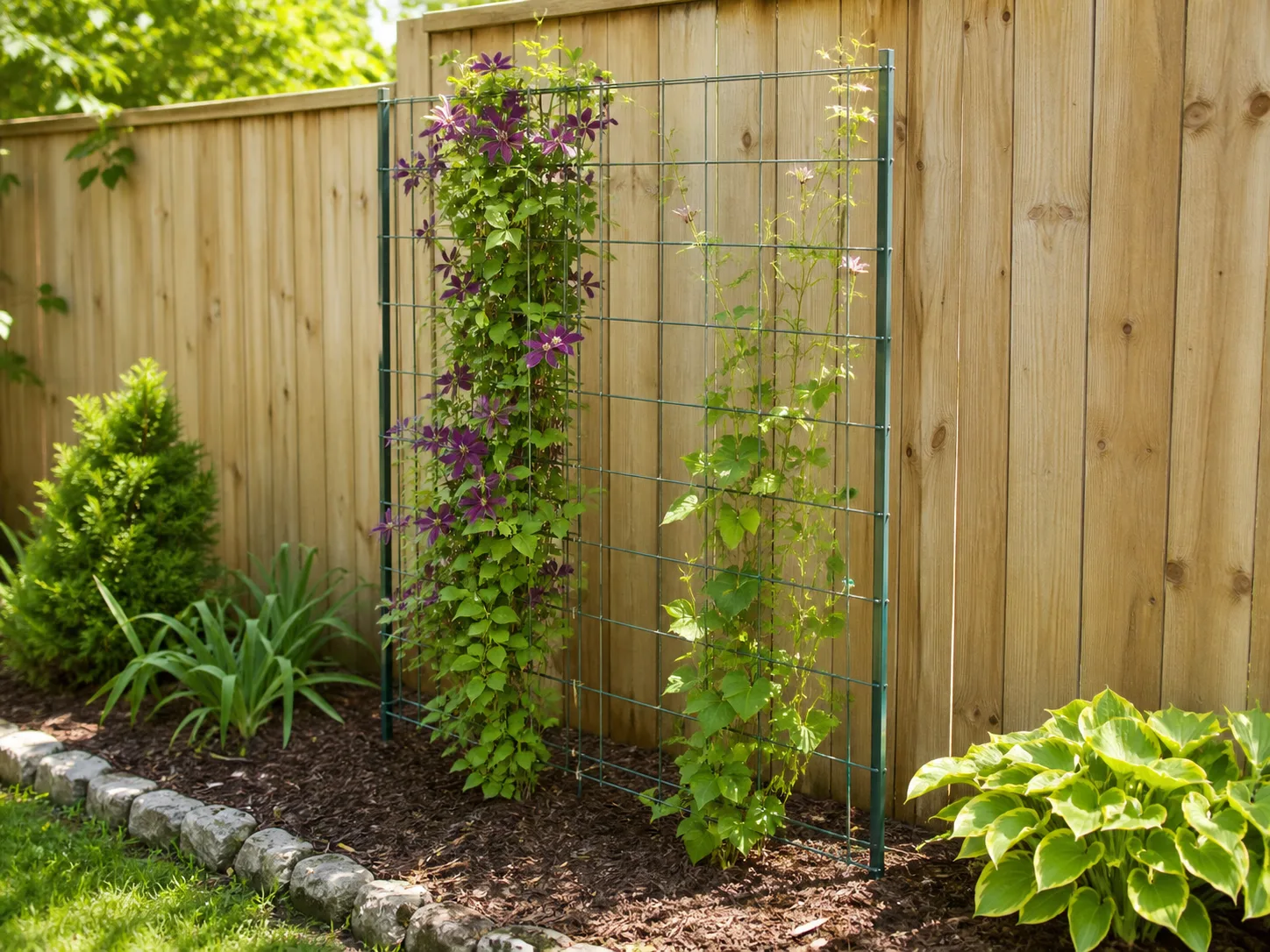
Do not let a vigorous vine use a flimsy gate as its trellis. Keep plant support separate from moving hardware, leave access for painting or washing the fence, and inspect stems that wrap around rails before they become woody. A planter built into the fence can be attractive, but it must drain away from the posts and should be sized for the mature roots of the plant rather than the size of the nursery pot.
Lighting should complete the route: one fixture at the gate, low markers along steps or a turn, and a gentle wash on the house or planting. Avoid a row of exposed bright dots across the fence. Modern entrances usually look better when the hardware is quiet during the day and the light reveals the path, lock, address, and change in grade after dark.
What to Check Before You Build
Rules, property lines, and sightlines
Do not assume a front-yard fence is governed by the same rule as a backyard privacy fence. Regulations may change with the front setback, corner-lot condition, height, transparency, zoning district, sidewalk, and whether the gate is in a public right-of-way. Oakland’s official fence, gate, and freestanding-wall permit guidance, for example, describes front-yard thresholds for zoning approval, transparency, sidewalk setback, and site-plan documentation. NYC311’s fence-permit guidance gives a different local example, including a four-foot maximum in lower-density front yards.
Those examples are not a national standard; they are proof that the answer depends on your jurisdiction. Before ordering materials, check your city or county zoning office, permit portal, recorded plat or survey, utility-marking requirements, and HOA or neighborhood design rules. Ask specifically about corner visibility, driveway sightlines, gate swing, sidewalk clearance, fence height, transparency, and whether a retaining wall changes the review.
Gate operation, drainage, and maintenance access
Mark the proposed fence with stakes and string before you buy panels. Walk the route from the sidewalk, test where a car turns, open an imaginary gate in both directions, and stand inside and outside the line to see what the fence will hide. This simple mock-up exposes awkward returns, blocked house numbers, and a gate that lands in a shrub bed.
Confirm that posts will not sit in a low, wet spot and that mulch or irrigation will not keep wood in contact with saturated soil. Leave a way to reach both sides of the fence, clean debris from the gate track, repaint exposed ends, prune plants, and replace a damaged board without dismantling the entire entrance.
If you want privacy, decide whether you need it at eye level, from a seated porch, or across the whole property. That answer may lead to a solid panel at the porch, a hedge along the sidewalk, or a staggered screen rather than one tall wall. The most successful modern front yard fences make the boundary clear, keep arrival simple, and use planting to create the softer layers a single material cannot provide.
Conclusion
The right front yard fence is a small piece of architecture: it sets the pace of arrival, frames the house, and decides how much of the garden remains part of the street view. Start with the job, choose a privacy gradient, coordinate the fence with the facade, and give the gate, path, lighting, and planting equal attention.
Then verify the rules and property line before you finalize the design. A quick full-size mock-up, a clear maintenance plan, and one deliberate focal point will take you further than adding more materials or more decoration.