How to Grow and Care for Satin Pothos
Grow satin pothos (Scindapsus pictus) with bright indirect light, well-draining soil, and a watering rhythm that protects silver variegation—plus propagation and pet safety.
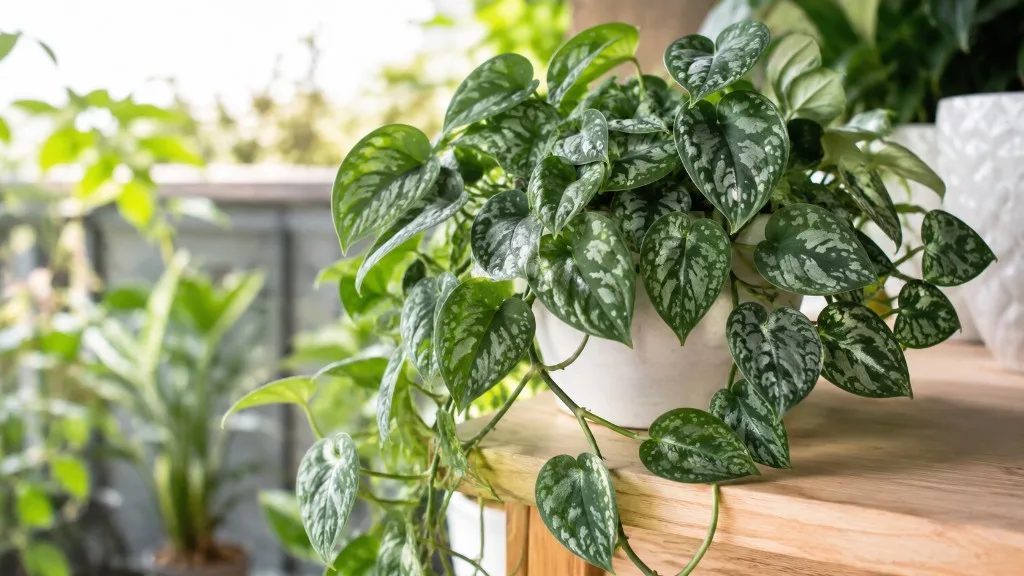
Satin pothos (Scindapsus pictus) looks like someone brushed its heart-shaped leaves with liquid silver. That shimmer is the whole reason people buy it—and the first thing that disappears when light, water, or humidity drift out of range. The good news: this tropical vine is forgiving compared with many variegated houseplants. The catch: it is not a true pothos, and copying golden pothos care by reflex is how silver pattern fades and vines go bare.
This guide covers the full indoor loop for Scindapsus pictus: correct identity and cultivar labels, light that keeps variegation sharp, soil and watering rhythm, humidity without the misting trap, fertilizer timing, climbing vs trailing growth, propagation, repotting, pests, leaf troubleshooting, and pet safety. For factor-by-factor schedules, the Scindapsus pictus hub splits light, watering, soil, fertilizer, repotting, propagation, and problem pages when one variable—not the whole plant—needs attention.
Satin Pothos Quick Reference
Use this table before you change anything. Match symptoms to the troubleshooting section instead of adding water by reflex.
| Factor | Indoor target | First warning sign |
|---|---|---|
| Light | Bright indirect; shield from direct sun | Faded silver pattern or scorched patches |
| Water | When top 2 inches of mix are dry | Yellow lower leaves = too wet; tight curl = too dry |
| Soil | Well-draining peat-based potting mix | Sour smell, fungus gnats = staying too wet |
| Humidity | 40–60%; pebble tray or humidifier | Crispy brown leaf tips in heated winter air |
| Temperature | 65–85°F (18–29°C) | Cold drafts and AC blasts cause sudden wilt |
| Fertilizer | Monthly half-strength spring through fall | Salt crust; pale new growth in bright light |
| Support | Moss pole for larger leaves; basket to trail | Long bare vines with tiny new leaves |
| Pets | Toxic to cats and dogs | ASPCA lists insoluble calcium oxalates |
| Size | 1.5–3 ft upright trained; trails longer | NC State Extension typical indoor height |
| Outdoors | USDA 10–12 in partial shade | Houseplant everywhere else |
What Satin Pothos Actually Is
Satin pothos is a tropical evergreen climbing vine in Araceae, the arum family. Its accepted botanical name is Scindapsus pictus. Native to Bangladesh and Malesia, it climbs tree trunks in humid forest understory using clinging rootlets—behavior that matters indoors because the plant wants something to grip, not just a shelf to sit on.
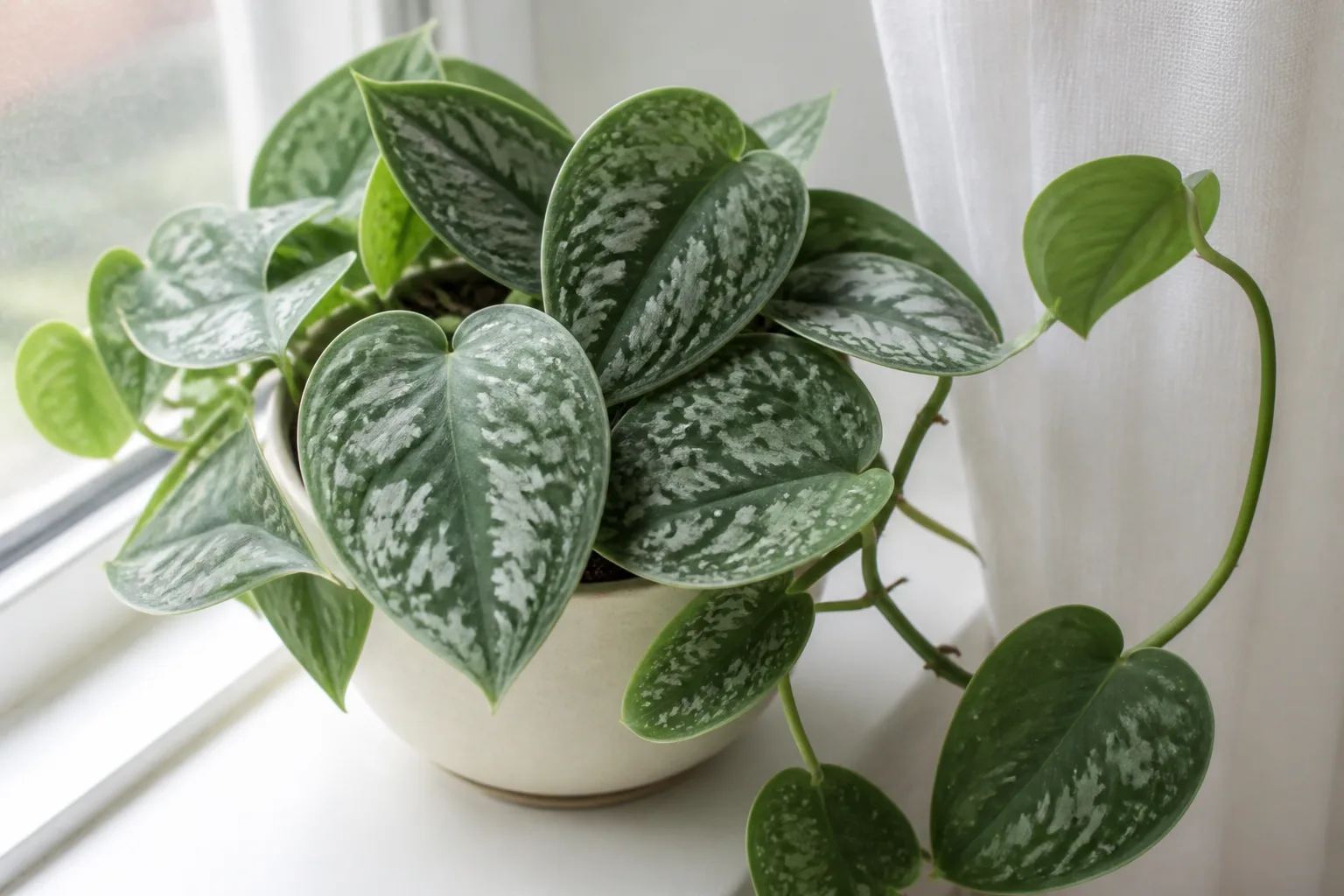
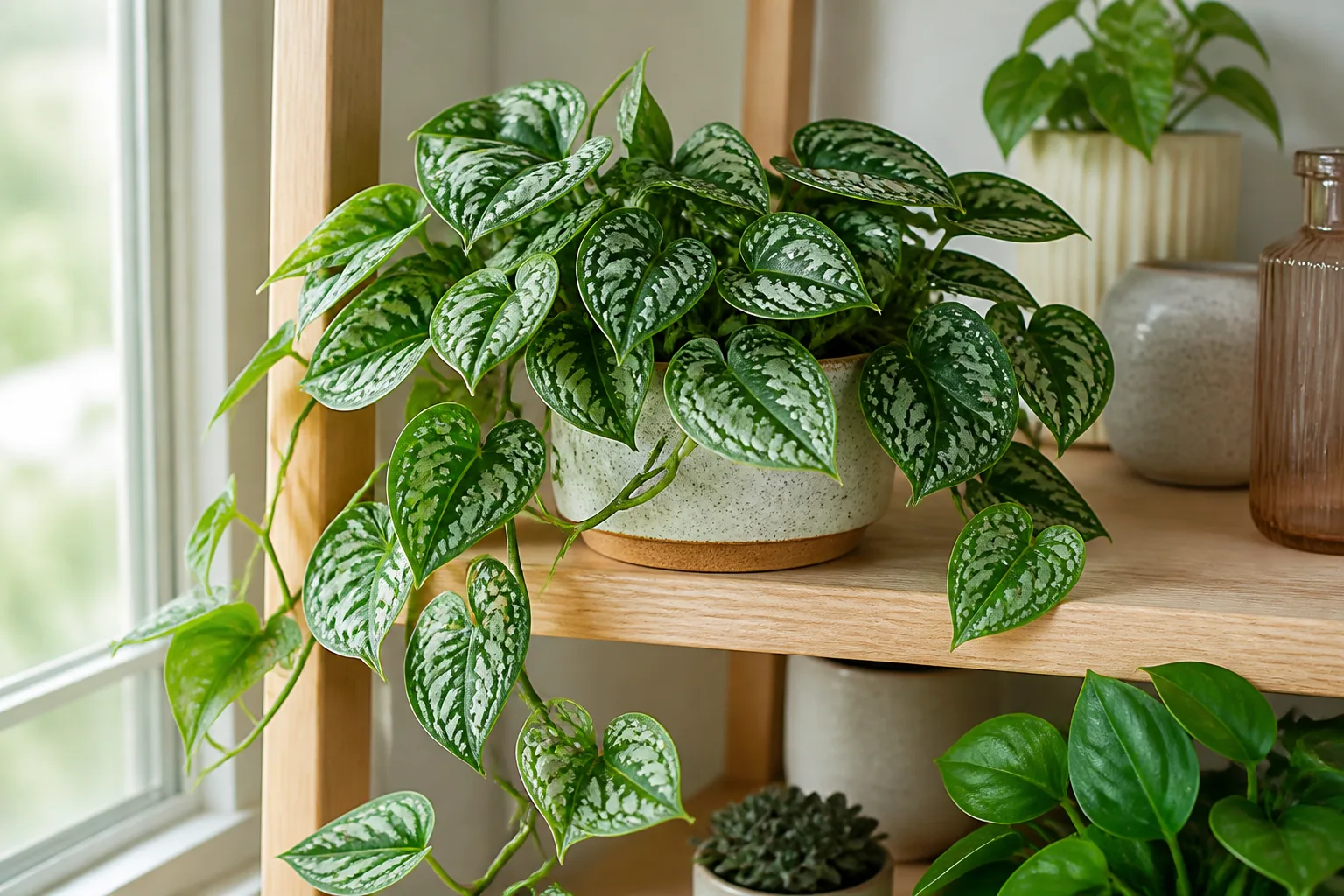
Juvenile leaves are ovate with heart-shaped bases and entire margins, green to dark green above with silver-gray blotches on the upper surface and paler undersides without blotches, per NC State Extension. Mature outdoor leaves may develop lobes; indoor plants usually stay in the juvenile form that growers prize. Tiny spathe flowers and berries appear on outdoor specimens in summer, but indoor satin pothos rarely blooms—and that is normal. You are growing it for foliage, not flowers.
Indoors, NC State describes typical trained height of 1.5 to 3 feet, with vines that can trail considerably longer from a hanging basket. Growth is moderate when light, moisture, and warmth align, and slows sharply when any pillar drifts out of range.
Botanical Names and Nursery Tag Confusion
Despite the common name, satin pothos is not a pothos. True pothos is Epipremnum aureum, a different genus in the same family. Both are easy trailing houseplants with similar care tolerances, which is why tags say “pothos” and “philodendron” interchangeably—but the plants are not interchangeable at the species level.
Scindapsus pictus has also been sold as Pothos argyraeus, Scindapsus argyraeus, and Scindapsus pictus var. argyraeus. If your label prints any of those older names, care requirements are the same. For a side-by-side identity guide, see pothos vs philodendron and the pothos care guide—then adjust watering slightly drier than you would for a thirsty golden pothos in the same room.
Light Requirements for Silvery Variegation
Satin pothos needs bright, indirect light—enough intensity to keep the silver pattern vivid, never so much that leaves bleach or scorch. NC State classifies outdoor tolerance as partial shade; indoors that translates to an east-facing window, a bright spot back from a south- or west-facing window behind a sheer curtain, or a well-lit room several feet from the glass.
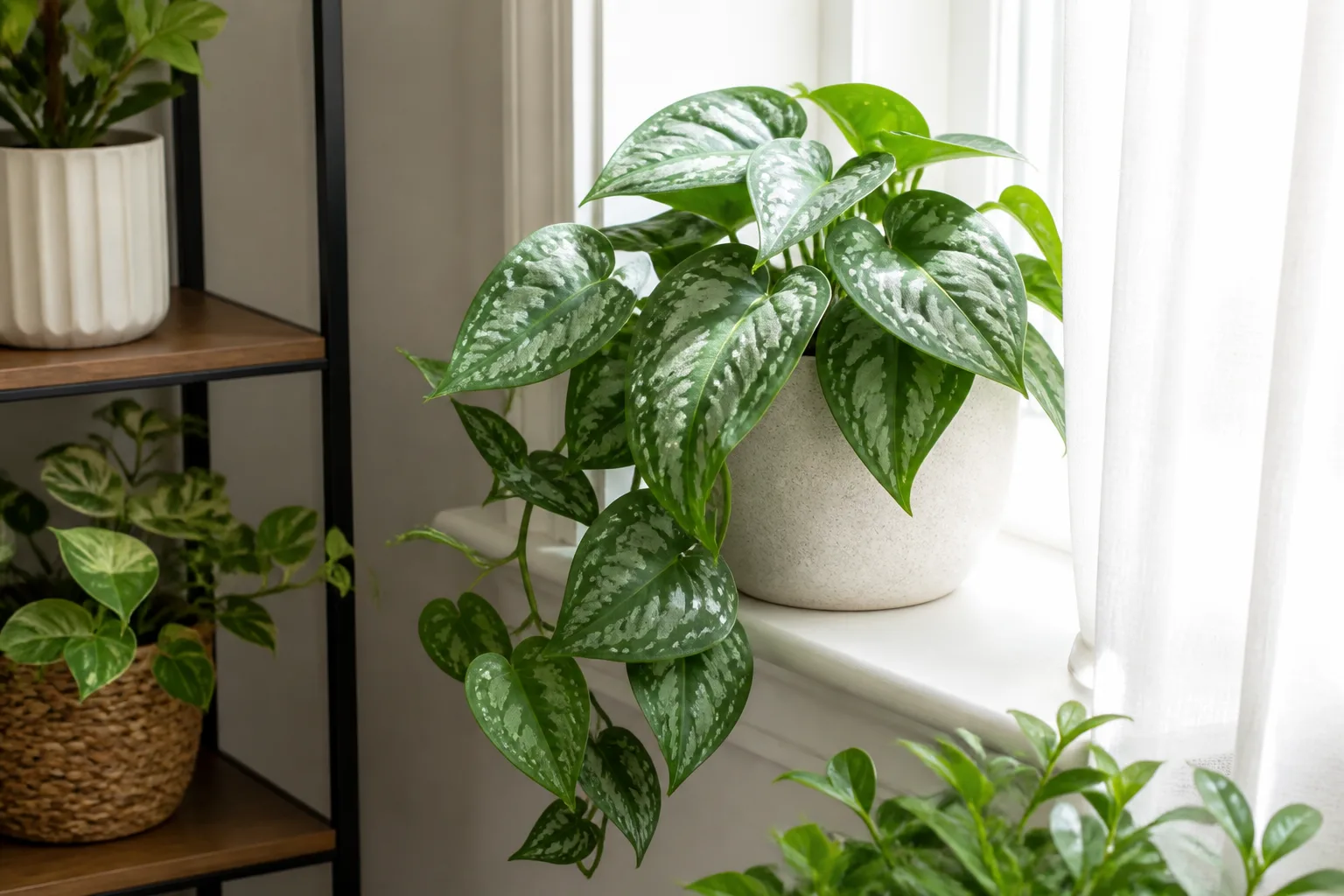
Direct sun—especially hot afternoon rays through closed glass—strips variegation and burns tissue. Too little light produces stretched internodes, smaller pale new leaves, and washed-out silver that makes the plant look like plain green ivy. A dim plant also dries more slowly, which raises overwatering risk if you keep the same summer watering cadence through a dark winter.
The practical test is always new growth from the tip. A well-placed satin pothos pushes firm leaves with crisp silver markings. Old damage will not heal, but the youngest leaf tells you whether the current spot works. Rotate the pot a quarter turn every week or two so both sides of the vine receive similar light and do not lean hard toward one window.
Soil Mix and Drainage
Satin pothos wants moist, well-drained, slightly acidic potting soil—not garden dirt and not a water-holding succulent mix. NC State specifies fertile, moist, acidic, well-drained soil even for outdoor plantings in zones 10–12; indoors, that means a quality peat- or coco-based houseplant mix amended with perlite for extra pore space.
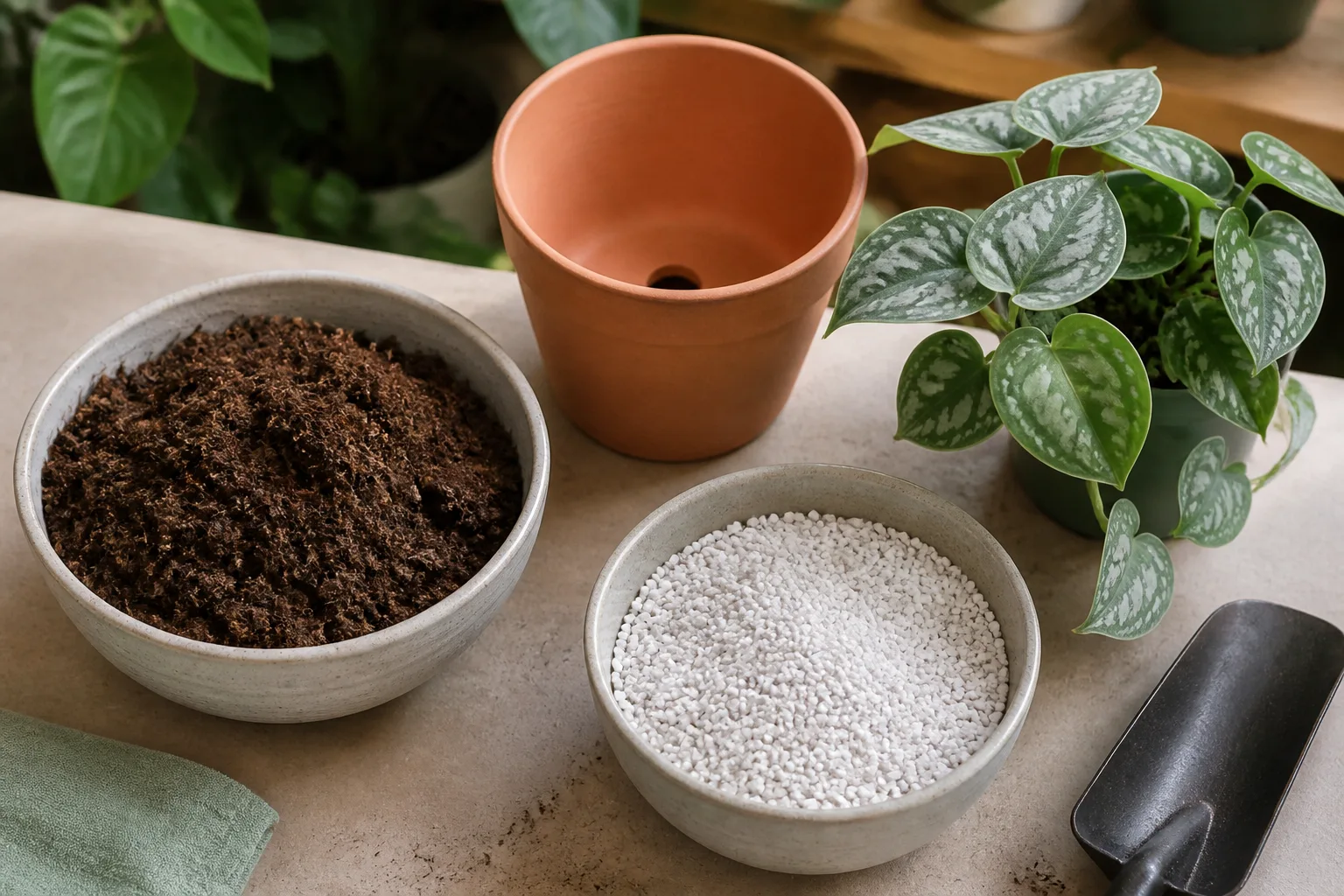
The pot must have a drainage hole. Satin pothos tolerates brief dryness better than it tolerates soggy roots. If water pools in the saucer for hours after every watering, the mix is too dense, the pot is too large, or the plant is in too little light to use moisture at the rate you are supplying it.
A workable starting blend for most homes: two parts indoor potting mix to one part perlite. Terracotta dries faster than glazed ceramic—useful in low-light winter rooms, less ideal if you already struggle with underwatering. For mix ratios and repot timing, the soil guide for Scindapsus pictus goes deeper without repeating the whole watering loop here.
Watering Without Root Rot
Water satin pothos when the top two inches of potting mix feel dry—not on a fixed weekly calendar. Poke your finger in, lift the pot to feel weight, or use a moisture meter if you tend to guess wrong. Then water slowly with room-temperature water until a little drains from the bottom and empty the saucer within thirty minutes.
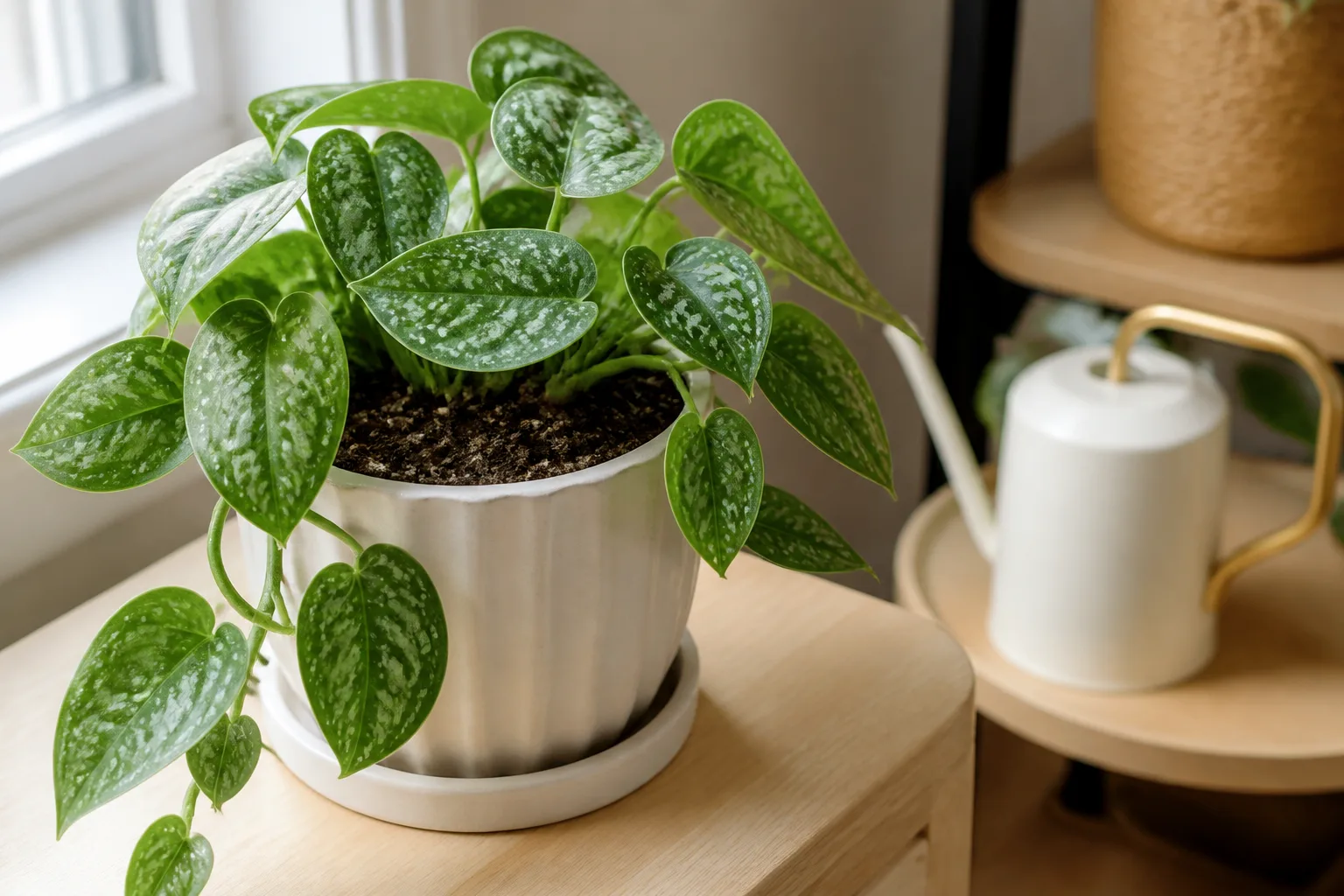
Overwatering is the fastest way to kill this plant. NC State lists yellow leaves as a sign of too much water and curling leaves as a sign of too little. Wet soil with several yellowing lower leaves often means roots are stressed; tight upward curl with bone-dry mix and light pot weight means thirst. Match the symptom to the soil, not to the calendar.
In bright, warm, actively growing months you may water every 7 to 10 days. In cool, dim winter months the same plant may need water only every 14 days or longer. Large hanging baskets and moss-pole specimens in chunky mix dry on a different schedule than a small nursery pot—always check the specific container.
How to Read Dry-Down Cues
If you are unsure whether to water, combine three checks: soil depth dry, pot weight, and leaf posture. Dry top two inches plus light pot plus slightly limp but not yellow foliage usually means water now. Wet mix plus heavy pot plus yellow lower leaves means stop watering and inspect drainage before the next cycle.
When in doubt after a scare, wait one extra day rather than reflex-water. Satin pothos recovers from brief underwatering more easily than from rotting roots. If yellowing continues after you corrected a wet cycle, slide the root ball out and look for brown mushy roots—the root rot guide walks through trim-and-repot recovery.
Temperature and Humidity
Satin pothos is a tropical vine that prefers 65 to 85°F (18 to 29°C) during active growth, per NC State. It does not tolerate cool air or direct sunlight well—winter window sills that drop below the mid-60s at night, or blasts from a car AC vent during transport, can trigger leaf curl and stall new growth for weeks.
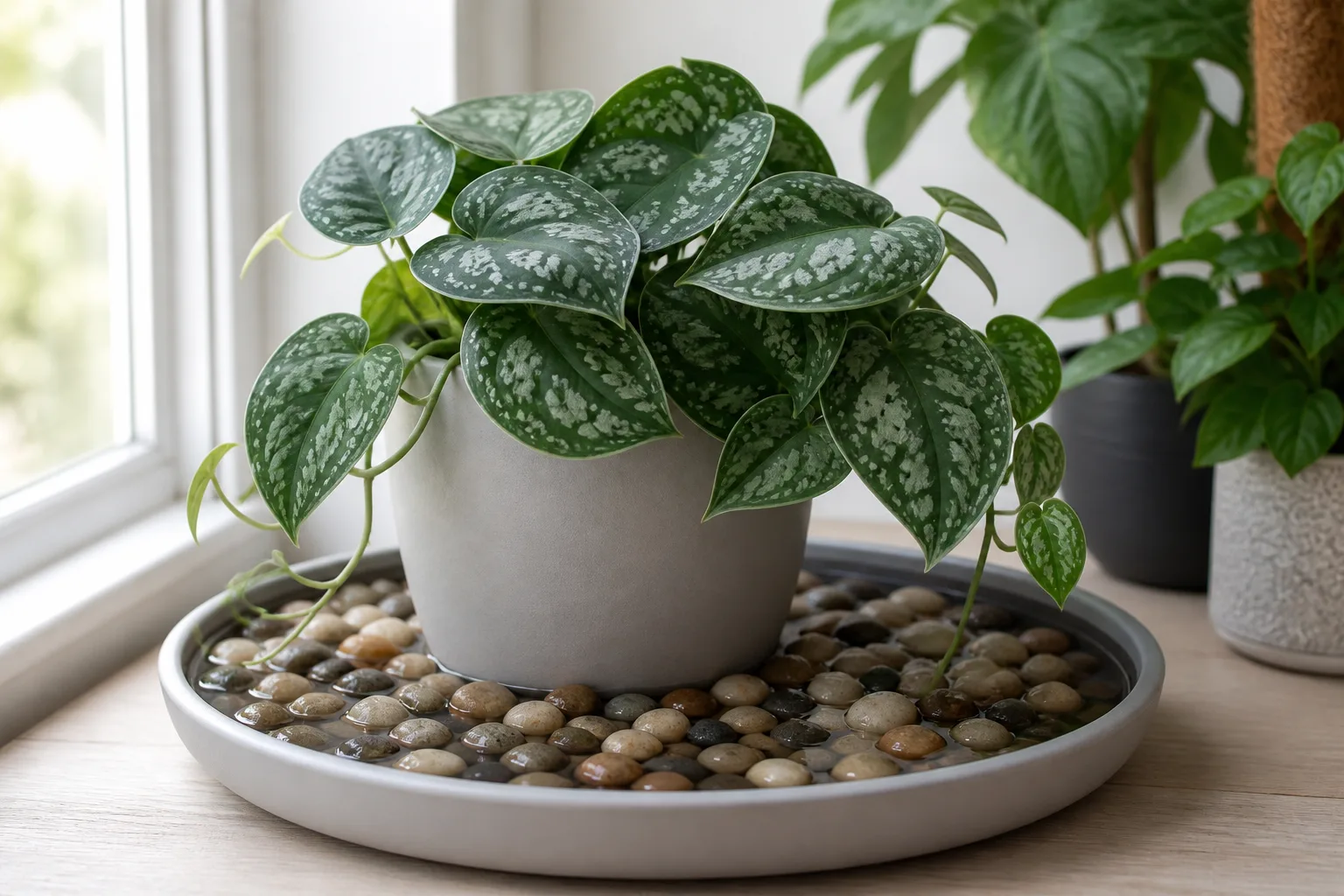
Relative humidity around 40 to 60% keeps leaf edges clean in most homes. Below that—common when central heat runs—tips may crisp even when watering is correct. Raise ambient humidity with a pebble tray (pot base above the waterline), plant grouping, or a small humidifier within a few feet of the foliage. A hygrometer removes guesswork in dry apartments.
Avoid relying on misting as your main humidity strategy. Scindapsus pictus produces aerial roots along the stem that can absorb surface moisture; frequent misting on a plant that is already adequately watered can push roots toward rot while doing little for overall room humidity. If you mist, do it in the morning on days when the soil is appropriately dry, and never substitute mist for fixing dry winter air at the room level.
Fertilizer During Active Growth
Feed satin pothos monthly from spring through fall with a balanced, water-soluble houseplant fertilizer diluted to half the label strength. NC State notes that commercial potting mixes often include starter fertilizer; after repotting into fresh mix, pause feeding for six to eight weeks to avoid salt buildup on already-enriched soil.
Hold fertilizer in winter when growth slows and the plant uses less water. Pale new leaves in bright light after a corrected watering routine may indicate hunger; crusty white deposits on the soil surface mean you are feeding too often or too strong. Flush the pot with plain water once, then resume at half strength on the next active-growth cycle.
Never fertilize a stressed plant—one with yellowing leaves from overwatering, recent cold shock, or heavy pest damage—as a “pick-me-up.” Fix the underlying problem first. The fertilizer page for Scindapsus pictus covers seasonal timing in more detail.
Climbing vs Trailing Growth
Satin pothos can hang or climb, but the growth form changes the leaves. Vines allowed to climb a moss pole or trellis develop larger leaves because the plant mimics its native tree-climbing habit and allocates energy differently than a purely trailing specimen. Hanging baskets produce elegant cascades with somewhat smaller foliage—still beautiful, just a different look.
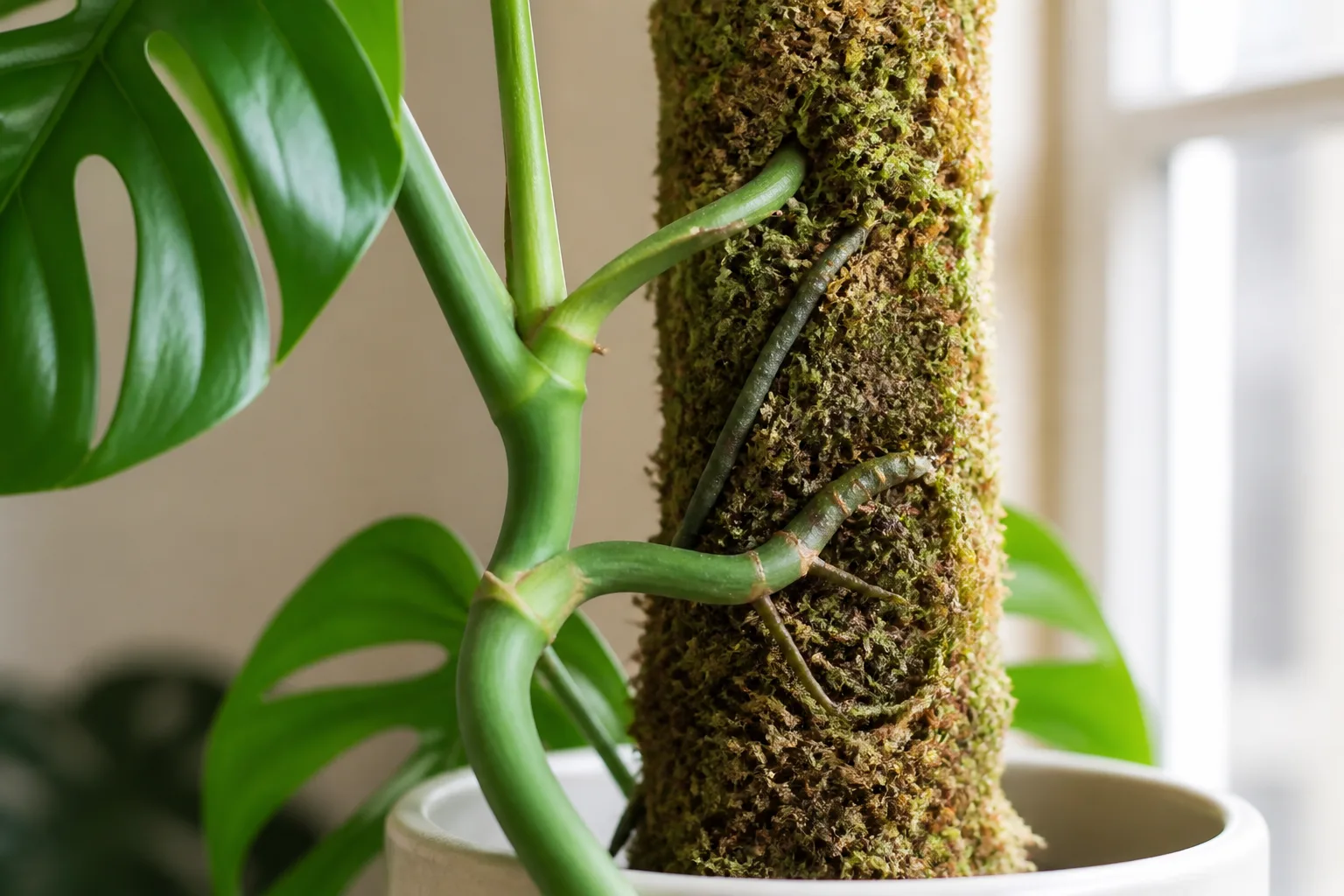
If you want maximum leaf size, give the vine a moss pole or coco coir support, tuck aerial roots into damp sphagnum, and keep the pole moist during active growth. Soft plant ties or velcro tape hold stems without crushing tissue. For support comparisons, see moss pole vs trellis.
Trailing is lower maintenance and perfect for shelves and macramé hangers. Whichever style you choose, keep the lowest leaves out of sitting water and away from heating vents that desiccate tissue while the root zone stays wet.
Satin Pothos Varieties and Cultivars
All satin pothos share Scindapsus pictus genetics, but cultivars differ in leaf size, silver coverage, and growth vigor. Knowing which you own explains why your plant looks different from a friend’s “silver pothos” photo online.
| Cultivar | Leaf look | Buying note |
|---|---|---|
| ’Argyraeus’ | Smaller dark green leaves; defined silver edges | Classic nursery form; moderate growth |
| ’Exotica’ | Larger heart-shaped leaves; broad silver splashes | Often sold as Scindapsus Exotica; needs brighter light to keep pattern |
| ’Silvery Ann’ / ‘Silvery Anne’ | Lance-shaped light green leaves; large silver splotches | High variegation; slower in dim rooms |
| Silver Splash / Shimmering Falls™ | Dark green with mottled silver | NC State lists Shimmering Falls™ Silver Splash |
| Silver Hero / Silver Lady | Heavy silver to near-white foliage | Stunning but less forgiving of low light |
Big-box stores often mislabel cultivars. Judge the plant by leaf shape and silver pattern, not the pot sticker, and give new purchases two weeks to acclimate before repotting or moving to a dramatically brighter window.
Pruning for Fuller Vines
Prune satin pothos any time to remove damaged, yellow, or pest-hit leaves. For shape and fullness, cut back long bare vines in spring when the plant is entering active growth—NC State notes that pinching stems keeps the plant tidy and encourages branching.
Use clean scissors or pruners and cut just above a leaf node. Each node is a potential new shoot; removing the tip redirects energy to side buds lower on the vine. Do not remove more than one-third of live foliage in a single session unless you are recovering from severe legginess.
Save healthy cuttings for propagation rather than composting them. The pruning guide covers tool hygiene and recovery timing if you need a dedicated reference.
Propagating Stem Cuttings
Propagate satin pothos from stem cuttings in spring and summer when the parent plant is actively growing. NC State lists stem cuttings as the standard propagation method for this species.
Take 4-inch tip cuttings with one to two nodes each. You can root in water—change water weekly and transplant when roots are an inch long—or root directly in damp potting mix, which often produces sturdier plants. For soil rooting: lay the cutting on moist mix, press nodes into the soil, and secure with a propagation pin or bent wire so the node contacts the medium. Keep humidity high with a loose clear bag or propagation box, and place in the same bright indirect light as the parent.
Expect visible new growth in three to five weeks when temperatures are warm. Transition to normal watering once roots resist a gentle tug. The dedicated propagation page and water vs soil propagation guide cover transition shock if you started in water.
Repotting and Root Health
Repot satin pothos every one to two years, or when roots circle the pot or emerge from drainage holes. Spring, at the start of active growth, is the best window—avoid repotting into a much larger container during winter slowdown unless rot recovery demands it.
Choose a pot one to two inches wider than the current one with a drainage hole. Gently loosen the outer root mass, set the plant at the same depth, backfill with fresh indoor potting mix, and water once to settle. Hold fertilizer for several weeks if the mix includes starter nutrients.
If roots are brown and mushy, trim them back to firm white tissue, repot into fresh mix, and reduce watering until new growth appears. A sour smell from the soil or persistent fungus gnats often precedes visible root damage—act before the whole vine collapses.
Pests, Diseases, and Prevention
NC State reports no serious insect or disease problems under good culture, but scale, spider mites, mealybugs, and thrips can appear on stressed plants. Fungal leaf spot and botrytis show up when foliage stays wet in stagnant air.
Inspect leaf undersides monthly. A few mites or scale bumps yield to a thorough shower and repeat wipe-downs; larger infestations need insecticidal soap or horticultural oil labeled for indoor use, applied per label directions away from hot sun. Quarantine new plants for two weeks before placing them near your collection.
Root rot from poorly drained or chronically wet soil is the main disease threat indoors. Prevention beats cure: drainage holes, appropriate watering, and enough light for the plant to use the water you give it.
Troubleshooting Leaf Problems
Curling leaves usually mean the plant is out of balance—overwatering, underwatering, cold shock, low humidity, pests, or too much direct sun. Check soil moisture and temperature first; they explain most cases faster than guessing fertilizer or repotting.
Faded silver variegation points to insufficient light in most homes. Move the plant closer to a bright window with sheer protection, or add a grow light for winter. Variegated cultivars like Silvery Ann fade faster than ‘Argyraeus’ in dim corners.
Yellow lower leaves often indicate overwatering or natural aging of the oldest foliage. If only one or two bottom leaves yellow while the rest look healthy and soil dries normally, removal is fine. If multiple leaves yellow while soil stays wet, inspect roots immediately.
Brown crispy tips in winter usually mean dry air or inconsistent watering, not a mysterious mineral deficiency. Fix humidity and watering rhythm before chasing fertilizer. For symptom-specific paths, see yellow leaves, curling and drooping, and low humidity on the plant hub.
Pet Toxicity and Safe Placement
Satin pothos is toxic to cats, dogs, and horses, per the ASPCA. The toxic principle is insoluble calcium oxalate crystals—the same class of irritant found in true pothos and many aroids. Chewing leaves or stems can cause oral irritation, pain and swelling of the mouth, tongue, and lips, excessive drooling, vomiting, and difficulty swallowing.
Keep vines on high shelves, inside cabinets, or in rooms pets cannot access. Trailing stems are especially tempting to cats. If you suspect ingestion, contact your veterinarian or ASPCA Animal Poison Control at (888) 426-4435 promptly. For broader placement guidance, see toxic plants for dogs.
Conclusion
Satin pothos rewards a simple contract: bright indirect light, well-draining soil, water when the top two inches dry, and humidity above the winter-heating floor. Give it a moss pole if you want bigger leaves, propagate stem cuttings when vines get long, and read yellow or curled foliage as soil-and-light messages—not fertilizer emergencies.
Remember it is Scindapsus pictus, not true pothos—slightly less thirsty, equally toxic to pets, and worth the extra attention to silver variegation. Nail those basics and this vine becomes one of the more photogenic trailing plants you can grow indoors without constant drama. When one care factor needs a deep dive, start at the Scindapsus pictus plant hub and branch to the specific page from there.