How to Care for Roses in Fall Before Winter
Prepare roses for winter with a frost-based fall checklist covering cleanup, watering, pruning, mulch, graft unions, climbers, and potted plants.

Fall rose care is mostly about helping the plant slow down cleanly, not pushing one more flush of soft growth. The useful sequence is simple: keep the root zone from drying out, stop high-nitrogen feeding well before hard frost, clear diseased debris, avoid routine hard pruning, and add winter protection only where the rose and climate call for it.
The detail that changes the plan is not the month on the calendar. It is the combination of rose type, whether the plant is grafted, your local first hard frost, and the way your garden handles wind and freeze-thaw cycles. A hardy own-root shrub in a sheltered bed may need little more than sanitation and mulch; a grafted hybrid tea, a climbing rose, or a rose in a small pot may need a much more deliberate winter setup.
The fall rose-care plan in one minute
If you need a practical order of operations, use this checklist and then read the sections that match your plant:
- Six to eight weeks before your usual first hard frost: stop routine fertilizer, especially high-nitrogen products; continue watering when the soil is dry.
- As growth slows: stop routine deadheading if you want rose hips, and let the plant finish the season without trying to force new flowering growth.
- Throughout fall: remove dead, broken, diseased, or dangerous canes; rake up visibly diseased leaves and old debris.
- Before the ground freezes: give a dry bed a deep soak at the soil line, allowing the surface to drain rather than leaving a soggy crown.
- After the rose is dormant and a hard freeze has occurred: mound soil or loose mulch over the graft union when the cultivar and climate need it.
- In late winter or early spring: pull winter protection back gradually, inspect what survived, and do the main structural pruning when buds begin to swell.
This order prevents the most common contradiction in fall care: pruning hard to “prepare” a rose, then feeding it to replace the growth you just removed, then covering a damp pile of fresh shoots. The goal is stability, not activity.
Match protection to rose type and climate
Roses are not equally vulnerable, even when they grow in the same bed. A tough shrub rose may carry its canes through winter with minimal help, while a grafted hybrid tea can lose its tender top if the bud union is exposed to a severe cold snap. A rose’s hardiness label is a starting point, but wind exposure, soil moisture, snow cover, and a sheltered wall can make the real garden feel warmer or colder than the zone map suggests.
Grafted, own-root, climbing, and container roses
Look near the base of the plant for a swollen knot or knuckle where the desired flowering variety joins the rootstock. That is the graft union, also called the bud union. If cold kills the scion above it but the rootstock survives, the plant may regrow with different flowers or a different growth habit. Protecting that joint is more important than wrapping every upper cane.
Grafted hybrid teas, floribundas, and grandifloras are the group most likely to reward extra winter protection in cold regions. Shrub and landscape roses—especially own-root selections adapted to your area—often need less intervention. Own-root means the canes and roots are the same plant, so a top-killed stem can often regrow true to type from the base, although that does not make an unadapted cultivar invulnerable.
Climbing and rambling roses have a separate problem: their long canes catch wind, rub against supports, and can be broken or rocked at the crown. Their pruning schedule also depends on whether they flower on old wood, so a severe fall cut can remove next year’s flowers. Container roses are vulnerable because a pot exposes the root ball to colder air on every side; the same rose can survive in the ground and fail in a small, elevated pot.
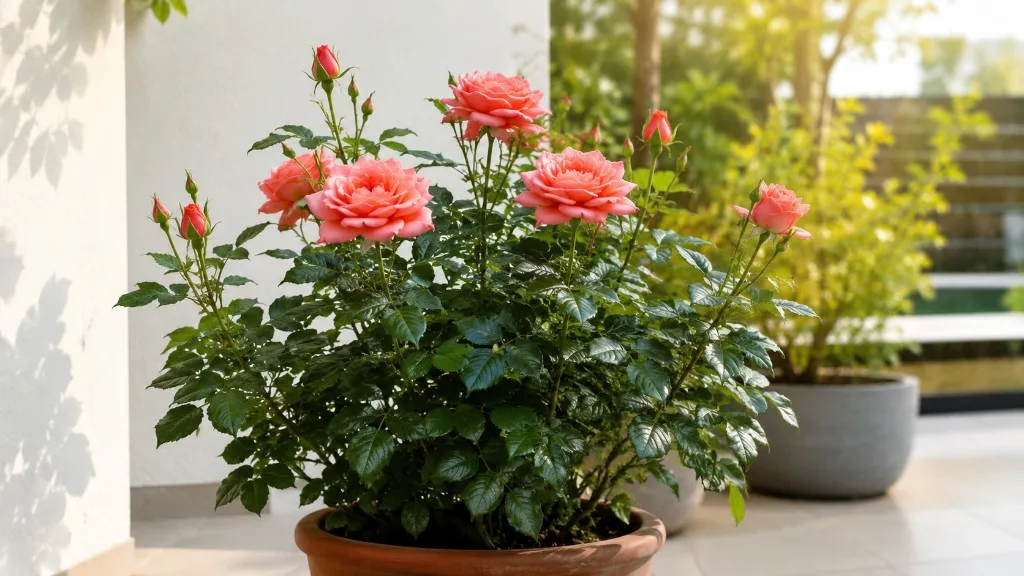
Use a frost-based calendar
Fall work is easier when you count backward from the average first hard frost and then watch the actual forecast. The calendar date is only a planning reminder; an early freeze after a long warm spell can arrive before the rose has slowed, while a mild autumn may keep it actively growing for weeks.
Six to eight weeks before the first hard frost
This is the useful cutoff for routine feeding and cosmetic shaping in many temperate gardens. The exact window depends on your local climate, but the principle is consistent: late applications of nitrogen can encourage soft shoots that have not had time to mature before freezing. The Colorado State University Extension’s autumn guidance puts the emphasis on stopping fertilizer and allowing roses to move toward dormancy rather than encouraging more growth. (Colorado State University Extension’s rose-bed guidance)
Continue checking soil moisture during this period. If rain is regular, you may not need to change anything; if the autumn is dry, water deeply at the base and let the upper surface begin to dry before watering again. Do not use fertilizer as a cure for yellow leaves, small flowers, or a late-season flush—those symptoms have several possible causes, and late feeding can create a new winter problem.
This is also the time to inspect ties, trellises, and narrow paths around a large rose. Solving a wind or access problem before the canes become brittle is safer than making an emergency cut during a storm. Mark any rose that needs heavier protection so you can gather soil, mulch, stakes, or breathable fabric before the first hard freeze.
After dormancy and the first hard freeze
Wait until the plant has clearly slowed—often after several cold nights and a hard frost—before building a winter mound. If you pile warm, wet material around a still-active rose too early, you can hold moisture against the crown and create a protected pocket that stays milder than the surrounding soil. The target is insulation after dormancy, not a cozy collar in October.
N.C. Cooperative Extension describes fall cleanup, dry-weather watering, and later protection as a sequence rather than a single afternoon job; its regional example also shows why timing differs by climate. (N.C. Cooperative Extension’s winterizing notes) In a mild-winter garden, the “after dormancy” step may be light or unnecessary. In a cold, windy garden, it may be the moment to cover a graft union and secure long canes.
Clean the rose bed without stripping it bare
Sanitation is one of the highest-value fall jobs because disease does not disappear simply because the plant stops flowering. Rake up fallen leaves with black spot, rust, or other obvious disease symptoms, remove dead flower debris and broken pieces, and dispose of visibly diseased material according to your local waste rules. Do not add clearly infected leaves to a casual backyard compost pile that will not reach reliable pathogen-killing temperatures.
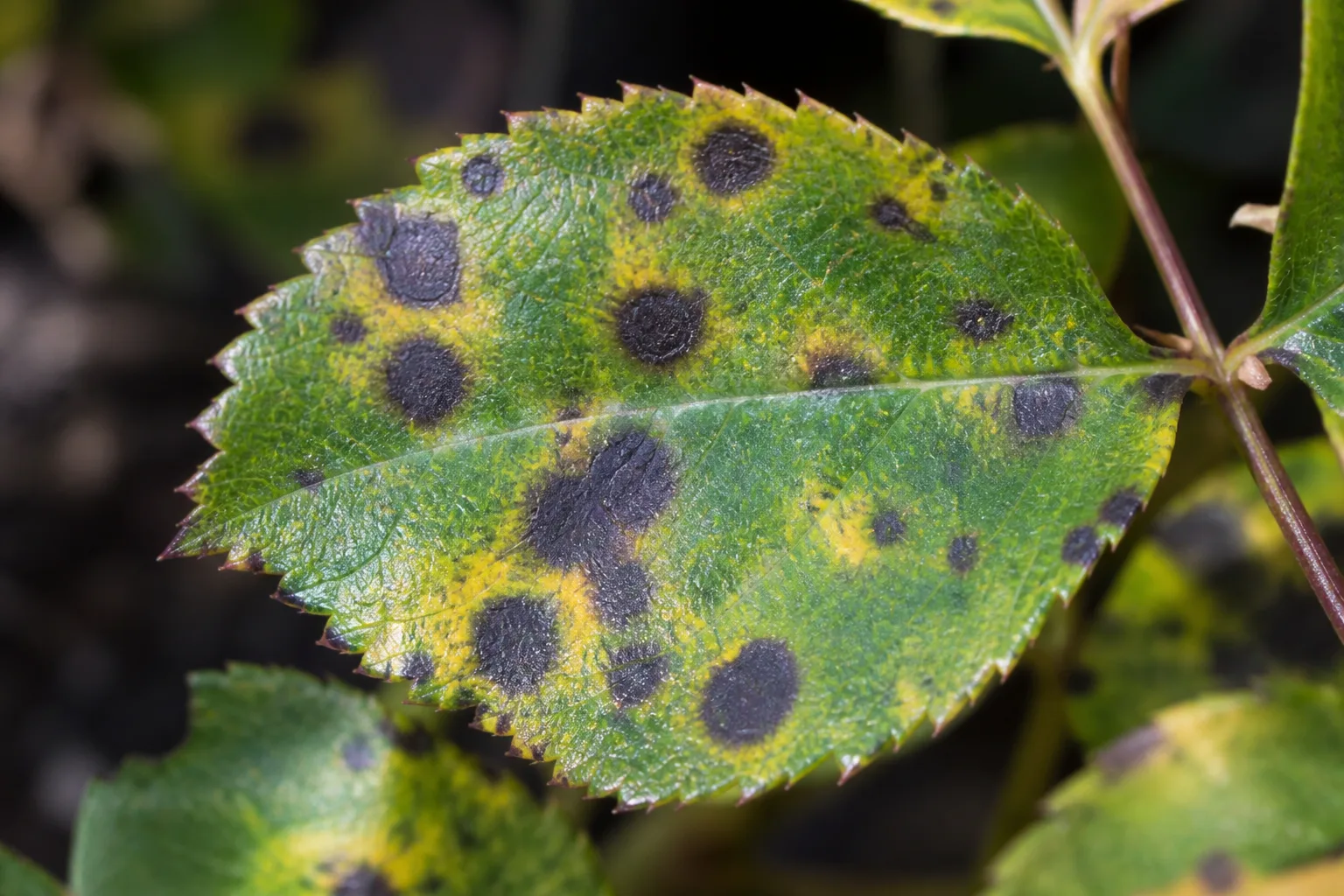
The Garden Gate winter-preparation guide recommends clearing around the plant and paying special attention to grafted roses after a hard freeze. That cleanup does not mean stripping every green leaf from a rose that is still actively growing. Let healthy foliage finish its work; remove leaves that have fallen, are diseased, or are trapped in a wet layer against the crown.
Avoid digging aggressively around the rose’s base while raking. Rose roots can be shallow near the crown, and scraping soil away to collect every leaf can do more harm than leaving a few clean fragments. Use a hand rake or gloved fingers, then refresh the surface with a loose mulch layer once the plant is dormant.
Water the root zone during a dry autumn
Roses should enter winter hydrated, but “hydrated” does not mean permanently wet. Dry soil can leave roots and canes more vulnerable to cold injury, while saturated soil removes air from the root zone and can encourage crown or root problems. Test the soil a few inches down with your finger or a narrow trowel; if it is dry and rain has been scarce, give the plant a slow, deep soak at the soil line.
Water early enough that excess drains before a hard freeze, and direct the stream below the foliage. Wet leaves that stay damp into a cold night add disease pressure without giving the roots useful moisture. A soaker hose or a low-flow wand is better than a strong spray that splashes soil onto canes.
Once the rose is dormant, check during an extended dry spell or a snowless cold period rather than following a summer schedule. In Colorado’s dry climate, CSU Extension recommends a warm-day winter watering check and uses about an inch per month as a regional benchmark; that is not a universal prescription for rainy climates or poorly drained beds. Water only when the ground is workable and the plant’s root zone is genuinely dry.
Stop feeding and routine deadheading
Stop regular fertilizer six to eight weeks before the expected first hard frost, and avoid late high-nitrogen feeds that push succulent new growth. A rose does not need a last-minute dose of fertilizer to “store energy” for winter; healthy roots, mature canes, adequate moisture, and a suitable cultivar matter more than forcing a final flush.
Do not spread fresh manure or a strong fertilizer over a dormant rose as a substitute for soil testing. If your soil is deficient, correct the deficiency on a seasonal schedule based on a test and the product label. Autumn is a poor time to improvise a heavy feeding plan because you cannot control how quickly the plant responds or when the next freeze arrives.
Routine deadheading is also optional in fall. During the main growing season, removing faded flowers can redirect the plant toward more blooms, but late in the year many gardeners let the flowers develop into rose hips, the colorful fruit that signals the plant is moving toward seasonal rest. Leave some hips if you enjoy their winter color or want to provide food for birds; remove only diseased, damaged, or hazardous growth.
Fall pruning: remove hazards, save the main cut for spring
For most roses, fall is for selective cleanup, not a severe annual haircut. Heavy pruning stimulates new growth and removes cane wood that might otherwise help protect the crown through winter. The main shape and renewal cut is usually better in late winter or early spring, when you can see which canes actually survived and buds are beginning to swell.
Make the fall exceptions practical:
- Remove dead canes and brittle stubs back to healthy tissue.
- Cut out diseased wood and disinfect the blade before moving to another rose.
- Remove broken stems and branches that can tear in wind or ice.
- Thin a cane that crosses and rubs another, especially if the rubbing wound is open.
- Shorten a very long, loose cane only as much as needed to keep it from whipping, rocking the crown, blocking a path, or striking a window.
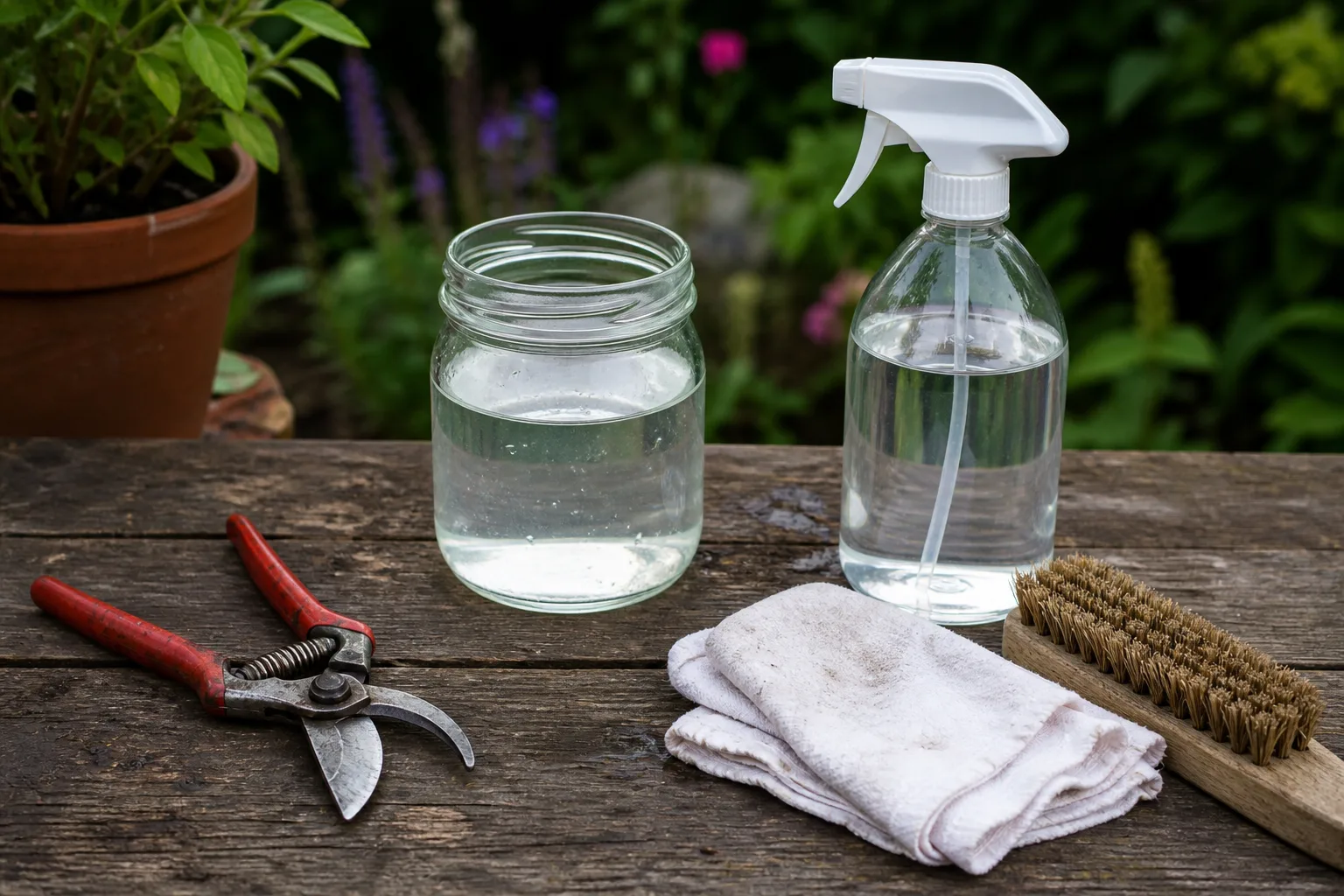
Use sharp bypass pruners for small canes and a saw or loppers for wood that would be crushed by hand pruners. Wear eye protection and thorn-resistant gloves, and clean soil and sap from the blades before disinfecting them. Cut just above a healthy bud when you need to shorten a stem, but do not turn a fall safety cut into a full plant redesign.
The Gardening Know How rose-winter guide, written by a Colorado Native Rosarian and American Rose Society consulting master rosarian, notes that long canes may need reducing for winter damage while heavy pruning should wait. That distinction is useful: cut because a specific winter risk demands it, not because a bare-looking shrub seems more “finished.”
Protect the graft union and roots
Winter protection works best when it shields the part of the plant that is least replaceable. Start at the crown and graft union, then decide whether the upper canes need a separate windbreak or cover. A loose mound moderates temperature and reduces the repeated freezing and thawing that can heave soil around roots; it is not meant to make the rose warm.
How to mound soil and mulch
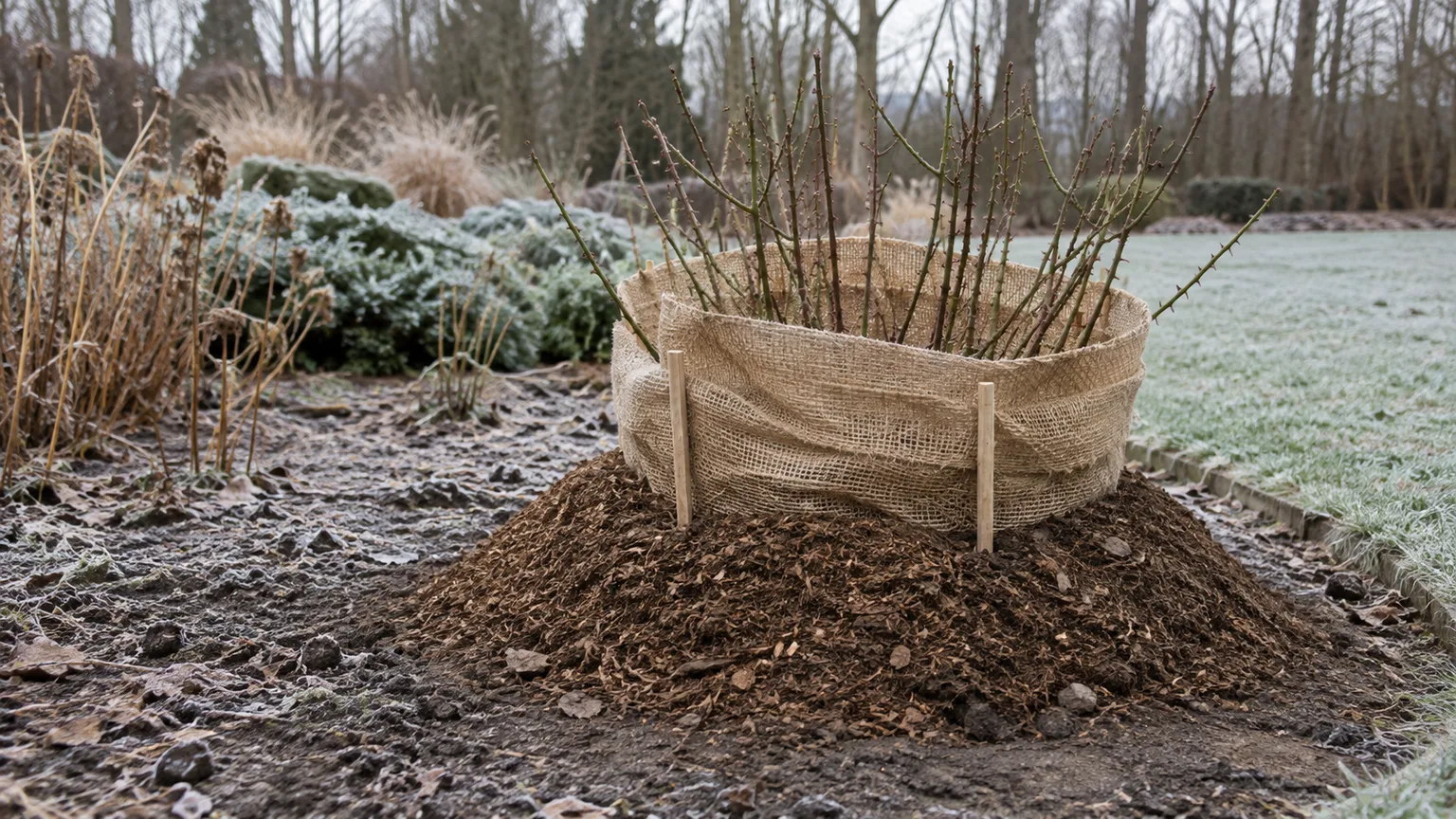
For a grafted rose in a cold or exposed garden, bring clean soil from another part of the yard and mound it over the base after dormancy and a hard freeze. Do not scrape soil away from the root zone to build the mound; exposing feeder roots creates a second problem. A mound of roughly 6 to 12 inches over the graft union is a commonly cited range, with the higher end reserved for colder, windier conditions and tender cultivars.
Cover the mound with loose mulch or dry leaves if your climate needs more insulation, but keep the material airy. Coarse bark, pine mulch, or clean fall leaves can work; compacted wet material against the canes is a poor winter blanket. If you use a ring of wire or stakes to hold leaves, leave enough space for air movement and check that the wind cannot turn the enclosure into a rubbing cage.
There is an important seasonal difference here. A normal growing-season mulch ring should sit a few inches away from the canes so the crown stays dry and visible. A winter mound intentionally covers the graft union because the plant is dormant and the goal has changed from moisture management to cold protection. Pull that mound back in spring instead of leaving the union buried indefinitely.
Cold-climate and climbing-rose methods
In a mild winter, a hardy shrub rose may need no upper-cane wrap at all. In a colder garden, you can loosely surround a tender rose with stakes and breathable burlap, or use a rose cone with ventilation. The cover should block wind and buffer temperature, not seal the plant in humid plastic. Anchor fabric so it cannot flap against thorns and bark.
Climbers and ramblers need their own plan. Tie long canes loosely to a support so they cannot whip, or, where the cultivar and climate justify it, untie and lay flexible canes into a shallow trench before covering them with soil and dry leaves. The classic “Minnesota tip” approach goes further by bending tied canes down into a trench; it is labor-intensive and risky if the canes are stiff, so do not force a mature cane that will crack at the crown.
Before burying a climber, identify whether it flowers on old wood. A winter method that preserves cold survival but destroys every flowering cane is not a successful plan. In many gardens, securing the canes, protecting the crown, and pruning only broken or dangerously exposed wood is the better trade-off.
Container roses need a different winter plan
The root ball in a container is surrounded by cold air, so a potted rose can experience colder roots than an in-ground rose in the same weather. The pot also dries faster during winter wind and can crack if wet mix repeatedly freezes and expands. Treat the container as a root-protection problem first and a cane-wrapping problem second.
If the container is small enough, sink it into the ground up to the rim in a sheltered bed after the rose has gone dormant. This uses the soil’s mass to buffer temperature. If digging is not practical, move the pot to an unheated garage, cold frame, or protected spot against the house where it remains cold and dormant rather than warm enough to keep pushing leaves.
Check the mix occasionally during a dry winter and water lightly on a mild, above-freezing day when the root ball is dry. Do not keep the pot sitting in a saucer of water, and do not put a dormant rose beside a furnace or in a heated living room where low light and warm temperatures can trigger weak growth. The Garden Gate guidance also notes that container roses can be sunk or moved to a protected location, with occasional winter watering.
Early frost, lingering blooms, and other exceptions
An early frost does not automatically mean a healthy rose has been ruined. If the plant is still flowering, leave healthy canes alone and focus on moisture, cleanup, and the specific tissues at risk. For a one-night frost, a breathable sheet can protect flowers and tender foliage when supported so it does not rest heavily on the plant; remove it after temperatures rise. Do not use plastic against the leaves, and do not confuse overnight frost protection with a sealed winter cover.
If the rose is still actively producing long, soft shoots when a hard freeze is forecast, do not chase every green tip with the pruners. Water the root zone if dry, stop fertilizer, and wait for the damage to become visible. After the freeze, remove blackened or broken tips back to healthy wood, but save structural pruning for the dormant-season window.
If you planted a new rose late in the season, prioritize establishment and root protection. A newly transplanted rose has not built the same root system as an established shrub, so it deserves more consistent moisture and a conservative approach to pruning. If a rose is drought-stressed, diseased, or recently moved, extra wrapping will not fix the underlying issue; stabilize the root zone and diagnose disease before adding more material around the crown.
Spring uncovering and recovery checks
Winter protection should come off in stages, not in one dramatic reveal on the first warm afternoon. When the risk of severe freezes has passed and the rose shows signs of waking, pull the outer mulch back first, then reduce the soil mound over several days if the forecast remains moderate. Leave a thin protective layer until the weather is reliably settled, but do not let wet material smother new shoots.
Inspect the base for rodent nesting, broken ties, rubbing fabric, and canes that were bent or girdled. Remove any dead wood with clean tools, then wait for bud swell to guide the main prune. A cane can look brown on the outside and still contain living tissue lower down, so test gradually rather than removing an entire framework on the first pass.
Once the rose is actively growing, refresh the regular mulch ring so it conserves moisture without touching the canes. Resume feeding only when the plant is growing and your normal rose-care schedule calls for it. Spring is also the time to evaluate whether winter protection was excessive: if a hardy own-root shrub sailed through under a heavy mound, a lighter method may reduce rot, labor, and unnecessary disturbance next year.
Conclusion
The best fall rose care is a sequence of small, well-timed decisions. Let the plant finish its season, stop feeding before frost, water when the soil is dry, remove disease debris, prune only for a real winter risk, and protect the graft union or container roots when the climate demands it.
Use the least intervention that solves the actual problem in your garden. A hardy shrub in a sheltered bed may need only clean soil and a normal mulch ring; a grafted hybrid tea in a cold, windy site may need a soil mound, loose mulch, and a breathable windbreak. When spring arrives, uncover gradually and prune from evidence—not fear—and your roses have a better chance of returning with strong, healthy growth.



