Drooping Leaves on Scindapsus Pictus: Causes, Checks & Fixes
Quick answer
Drooping leaves on Scindapsus Pictus mean the vine has lost turgor-most often from underwatering (light dry pot) or overwatering (wet soil, firm stems going soft). First step: lift the pot and probe moisture 4–5 cm deep before you water.
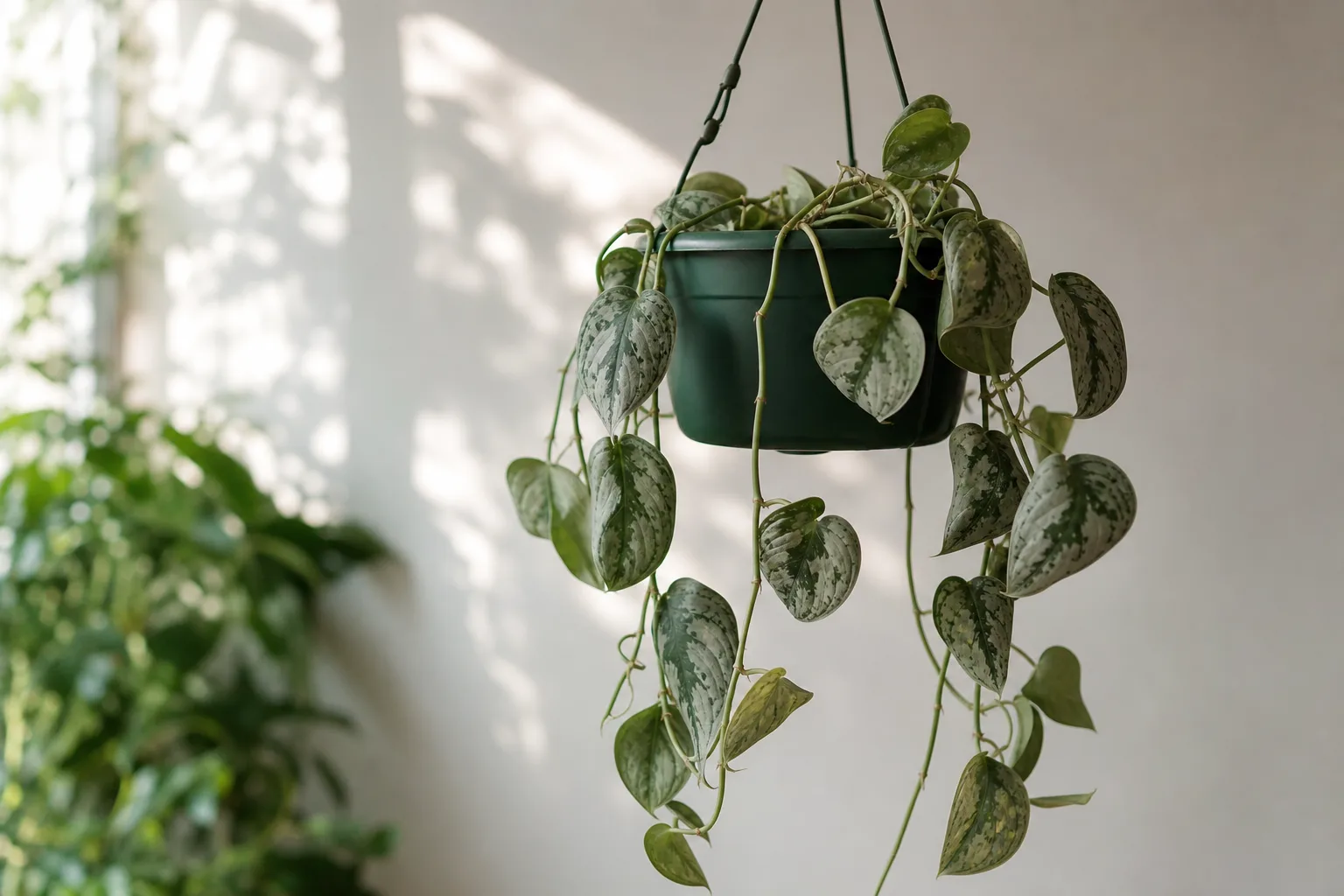
Drooping Leaves on Scindapsus Pictus: Causes, Checks & Fixes
This guide covers drooping leaves on Scindapsus Pictus. See also the general Drooping Leaves guide, watering, and light pages for this plant.
Drooping Leaves on Scindapsus Pictus: Causes, Checks & Fixes
Quick answer
Drooping on Scindapsus Pictus is a visible loss of turgor-the internal water pressure that keeps heart-shaped satin leaves stiff and trailing vines upright. When roots cannot supply enough moisture, or damaged roots fail to absorb it, foliage hangs soft and heavy even though the plant may still look green. On this trailing aroid, droop often hits whole vine sections at once because long stems have little structural support compared with self-heading houseplants.
The cause is almost always water movement, not a leaf disease. Wilted or drooping leaves may indicate soil that is too dry or too wet-rotting roots cannot take up water even when the mix feels saturated. Dry soil and a feather-light pot mean the plant needs a thorough soak. Wet heavy soil with limp vines means roots are struggling-often from overwatering-and adding more water makes things worse. First step: lift the pot and probe moisture 4–5 cm deep before you react. That single check separates the two most common fixes on satin pothos.
Why Scindapsus Pictus leaves droop
Scindapsus Pictus is a tropical Araceae vine adapted to periodic rain and partial shade in Southeast Asia. Indoors it wants evenly moist, well-drained mix-not constant saturation and not weeks of drought. Drooping appears when the balance breaks.
Underwatering is a frequent trigger. This plant tolerates brief dry spells, but when the top half of soil stays dry too long, roots cannot keep up with water lost through thin satin-textured leaves. Vines go limp while stems often remain firm. Leaves may curl inward at the same time-a paired signal; curling leaves may indicate underwatering on this species, while yellow leaves often signal overwatering.
Overwatering and root stress produce the opposite trap: soil stays wet, but vines droop anyway because roots in waterlogged soil cannot absorb the oxygen they need and stop taking up water effectively. Lower leaves may yellow while upper leaves still hang limp. Mushy stems at the soil line and sour-smelling mix are late-stage warnings. Poorly drained peat-heavy mix without perlite keeps this aroid wet long after you thought you watered lightly, and root rot may occur in poorly drained or wet soils.
Low light plus slow drying causes chronic low-grade droop many growers miss. A satin pothos in a dim corner uses little water, yet calendar watering keeps the root zone damp. The plant looks slightly limp and pale, stops pushing new silver-marked leaves, and never fully crashes until rot appears.
Recent repotting or relocation can cause temporary droop even when moisture is adequate. Disturbed fine roots take days to re-establish. A move from stable shelf light to a hot west window-or the reverse-can trigger drooping leaves as the plant adjusts transpiration to new conditions.
Cold exposure slows root function abruptly. Scindapsus Pictus prefers room temperatures ranging from 65 to 85°F and suffers when air drops below about 60°F. Drafts from AC vents, winter window sills, or cold package rooms can make vines droop while soil moisture looks fine.
Root-bound pots create uneven water access. A crowded root ball may stay dry in the center while the surface looks damp, or dry out in one day during active growth. Either pattern can show up as section-by-section droop along trailing stems.
What drooping looks like on Scindapsus Pictus
Learn the species pattern before you treat every limp leaf the same way.
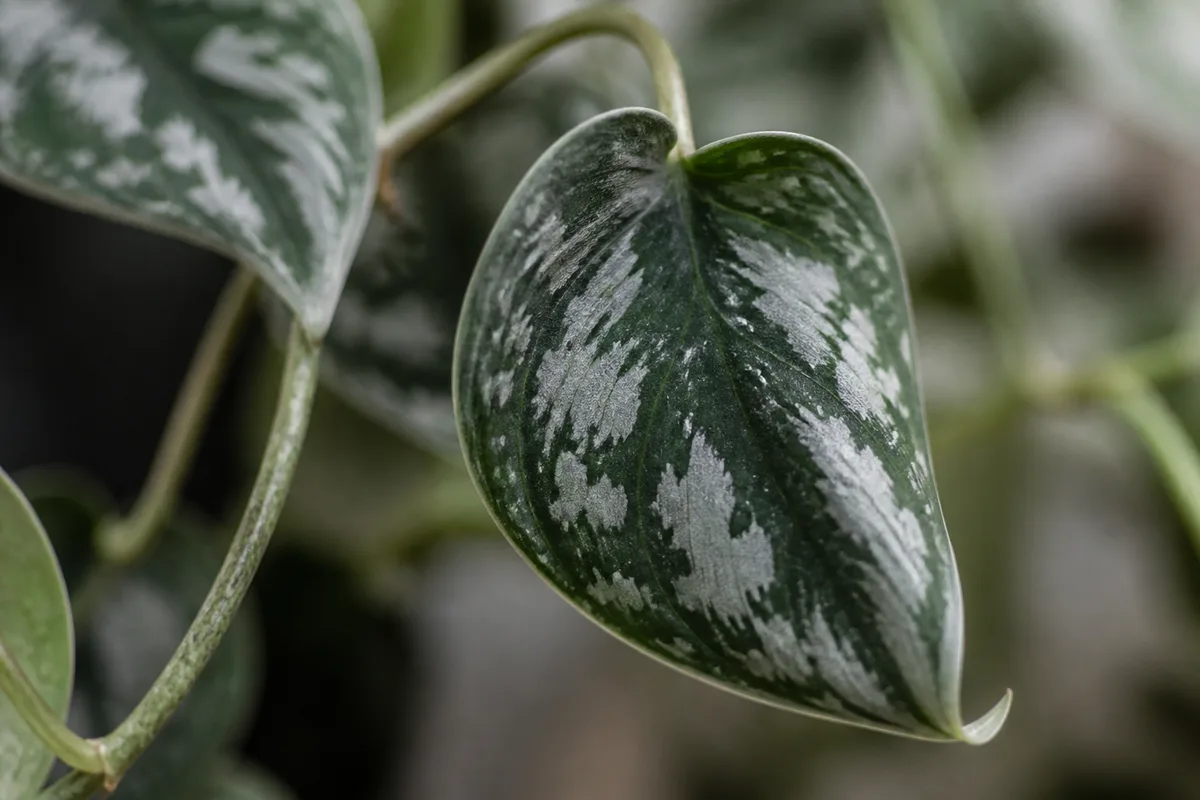
Drooping Leaves symptoms on Scindapsus Pictus - compare with healthy tissue on the same plant.
Typical drooping signs:
- Soft downward hang along vines - Petioles and leaf blades lose stiffness and point toward the floor. Trailing stems that normally arch gracefully now look collapsed.
- Green leaves that feel thin - Color may stay green early on. The tissue feels papery or floppy rather than satin-smooth and firm.
- Whole sections droop together - One long vine or one side of a hanging basket may sag while another section still looks normal-especially when light or airflow differs across the plant.
- Soil clues match the droop - Bone-dry mix throughout with a very light pot fits drought droop. Wet mix that has not dried in a week with a heavy pot fits waterlogged roots.
- Stem texture at the crown - Firm stems with dry soil suggest underwatering. Soft, discolored tissue where stems meet wet soil suggests rot advancing from the base.
How drooping differs from related symptoms on this plant:
- Inward curl without full droop - Often an earlier underwatering signal. Curl can precede obvious sagging along vines.
- Yellow lower leaves on wet soil - Points to overwatering more than simple droop. Yellowing and droop together on damp mix need drying, not another soak.
- Crispy brown tips - Usually low humidity or fluoride stress, not primary droop. Tips can brown while the rest of the leaf still hangs limp from a separate water issue.
- Leggy sparse vines - Low light stretch over weeks. Leggy growth is structural; droop is a sudden or recent loss of turgor.
How to confirm the cause
Work through these checks in order:
- Pot weight - Lift the container. If the pot is light, the plant is in need of water. A heavy pot with limp vines suggests saturated roots or rot-not thirst.
- Moisture at depth - Probe 4–5 cm into the mix with a finger or dry skewer. Dusty dry at that depth confirms underwatering. Cool, clinging wet soil that has not dried in many days confirms overwatering stress.
- Stem firmness - Pinch stems just above the soil line. Firm tissue with dry soil fits drought. Soft, mushy, or discolored tissue with damp soil means stop watering and inspect roots.
- Leaf and vine pattern - Widespread sag on multiple trailing stems with dry soil fits drought. Lower yellow leaves plus limp green upper leaves on wet soil fits root failure from overwatering.
- Recent events - Note repotting within the last week, a move to a new window, a heat wave, or a vacation dry spell. Temporary droop after repotting often resolves once roots settle if moisture stays even.
- The perk test (dry soil only) - If stems are firm and soil is dry, give one thorough watering and recheck in 12–24 hours. Drought droop typically re-turgid within a day. No improvement with increasingly wet soil means look at roots, drainage, or light-not more water.
If soil is wet and stems are soft, do not water again hoping leaves will rise. That pattern needs drying and likely root inspection.
First fix for Scindapsus Pictus
Lift the pot, probe moisture deep in the mix, then choose one path-do not water and dry at the same time.
If the pot is light and soil is dry 4–5 cm down: Water thoroughly until excess drains from the bottom, then empty the saucer. Soak slowly across the surface so the entire root ball wets-not just the top crust. For severely shrunken dry mix, bottom-water 30–45 minutes in a tray until the surface darkens, then drain fully.
If the pot is heavy and soil has stayed wet for days: Stop watering immediately. Move the plant to bright indirect light so the mix dries faster. Tilt the pot to confirm drainage holes are open. If stems are still firm, wait until the top half of soil dries completely before one cautious soak. If stems are mushy or soil smells sour, unpot, trim rotted roots, and repot into fresh airy mix-do not simply wait and hope.
Do not mist leaves as a substitute for fixing root-zone moisture. Do not fertilize a drooping plant. Do not repot on day one unless rot is confirmed or mix has failed completely.
Step-by-step recovery
After the initial moisture correction:
- Wait 12–24 hours - Mild drought droop usually shows visible stiffening within a day. Temporary post-repot droop may take three to seven days.
- Repeat slow watering if mix was hydrophobic - Dry peat sometimes needs two thorough sessions in one week before the center stays evenly moist.
- Improve light if placement was dim and wet - Bright indirect light helps the plant use water at a steady rate so the pot dries predictably between soaks.
- Inspect roots when wet droop persists - Slide the plant out if vines stay limp after the top half has dried once and you watered correctly. Healthy roots are firm and white or tan. Mushy brown roots need trimming and repotting into perlite-amended mix.
- Trim only fully collapsed leaves - Leaves that stay limp and creased after turgor returns will not flatten again. Remove them for appearance once the plant is stable.
- Resume rhythm - Water when the top half of soil dries. Track your pot’s dry-down speed rather than a calendar.
If rot has consumed most of the root system but firm nodes remain on stems, take cuttings while stabilizing the parent. Scindapsus Pictus roots readily from stem sections with nodes.
Recovery timeline
Simple drought droop often improves within 12–24 hours of a proper soak. Leaf blades stiffen first; older crispy margins stay damaged permanently.
Overwatering-related droop with firm stems may take three to seven days of drying before vines regain tone. Root-trim repots can take two to four weeks before new growth along vines looks normal.
Temporary droop after repotting or relocation usually resolves within one week if moisture stays even and the plant avoids cold drafts. Judge success by firm stems and fresh unfurling leaves with crisp silver variegation-not by old sagging tissue.
Lookalike symptoms to rule out
Wilting versus drooping - These terms overlap in casual use. On Scindapsus Pictus, both describe limp foliage from failed turgor. Drooping often appears as a softer sag along trailing vines; severe wilt looks collapsed and may progress faster. The diagnostic path is the same: check soil moisture first.
Underwatering curl without obvious droop - Inward leaf roll can appear before vines fully sag. Treat curl and early droop the same when soil is dry.
Overwatering yellow leaves - Yellow lower leaves on wet soil are a stronger overwatering signal than droop alone. Prioritize drying and root checks.
Spider mites - Fine stippling, webbing, and dusty undersides-not typical droop from moisture alone. Confirm with a white paper tap test under leaves.
Low humidity - Dry air browns tips and margins while soil moisture is adequate. Raising humidity helps leaf edges; it does not replace a dry root zone.
Too much direct sun - Hot direct rays can scorch and collapse leaves even when soil is moist. Check whether the plant sits in afternoon sun through glass.
Mistakes to avoid
Do not water every drooping Scindapsus Pictus without checking soil first. Overwatering kills more of these plants than underwatering, and wet-root droop looks deceptively like thirst.
Do not assume droop always means dry soil. Rotting roots cannot absorb water, so leaves hang limp in saturated mix.
Do not give small sips on a schedule. Shallow watering leaves the root ball dry in the center while the surface briefly dampens-especially in root-bound or hydrophobic pots.
Do not move the plant repeatedly between rooms while diagnosing. Each relocation adds stress and makes droop harder to interpret.
Do not fertilize to perk up limp vines. Fix moisture and roots first.
Do not repot into a much larger container hoping it solves droop. Oversized pots stay wet too long around small root balls and invite rot.
Do not mist instead of soaking dry roots. Misting does not correct root-zone water balance on this species.
How to prevent drooping next time
Build a check habit tied to this plant’s actual dry-down speed:
- Probe weekly - Touch the top 4–5 cm of mix or lift the pot. Water when that zone is dry, even if that means twice in one week during bright summer growth or skipping two weeks in dim winter.
- Use airy mix - Potting soil amended with perlite drains faster than straight peat. Confirm drainage holes stay open.
- Match light to water use - Bright indirect light produces stronger growth and faster drying. Dim corners need less water but also produce weaker vines more prone to chronic sag.
- Avoid cold drafts - Keep the plant away from AC blasts and sub-60°F window sills in winter.
- Repot before extreme root-bound drying - When the pot dries in one day and droop returns every few days, plan a modest spring repot into fresh mix-not a huge jump in pot size.
- Empty saucers - Never let the pot sit in standing runoff that re-wets the root zone from below.
Scindapsus Pictus performs best when the upper half of the root zone dries between thorough soaks-not when it swings between desert drought and soggy peat.
When to worry
Most drooping resolves once moisture matches what roots can actually use. Escalate when:
- Drooping persists more than 48 hours after a correct thorough soak on dry soil
- Wet soil, sour smell, and soft stems appear together
- Many lower leaves yellow while vines stay limp on damp mix
- Stems stay collapsed after two proper drying cycles and one careful rewater on a formerly wet plant
- New growth stops for more than three weeks despite corrected care
- Roots are mostly mushy when you inspect
At that point, propagate healthy stem cuttings if any firm nodes remain and treat the parent as a long recovery-or replace it if the crown has rotted completely. This plant is resilient, but damaged roots and collapsed tissue do not reverse overnight.
Related Scindapsus Pictus guides
- Scindapsus Pictus overview
- Scindapsus Pictus watering
- Scindapsus Pictus light
- Wilting on Scindapsus Pictus
- Underwatering on Scindapsus Pictus
- Overwatering on Scindapsus Pictus
- Root Rot on Scindapsus Pictus
- All Scindapsus Pictus problems
Conclusion
Use this page to confirm drooping leaves on Scindapsus Pictus by pattern and pot checks-not by treating every houseplant the same. When symptoms overlap with sibling pages, follow the linked guide for the matching cause before stacking fertilizer, repotting, or pesticide.