Wilting on Scindapsus Pictus: Causes, Checks & Fixes
Quick answer
Wilting on Scindapsus Pictus is not fixed by watering on autopilot. Probe soil moisture at 4–5 cm (1.5–2 in.) depth and lift the pot first-dry light mix usually means thirst; wet heavy mix with limp vines often means damaged roots.
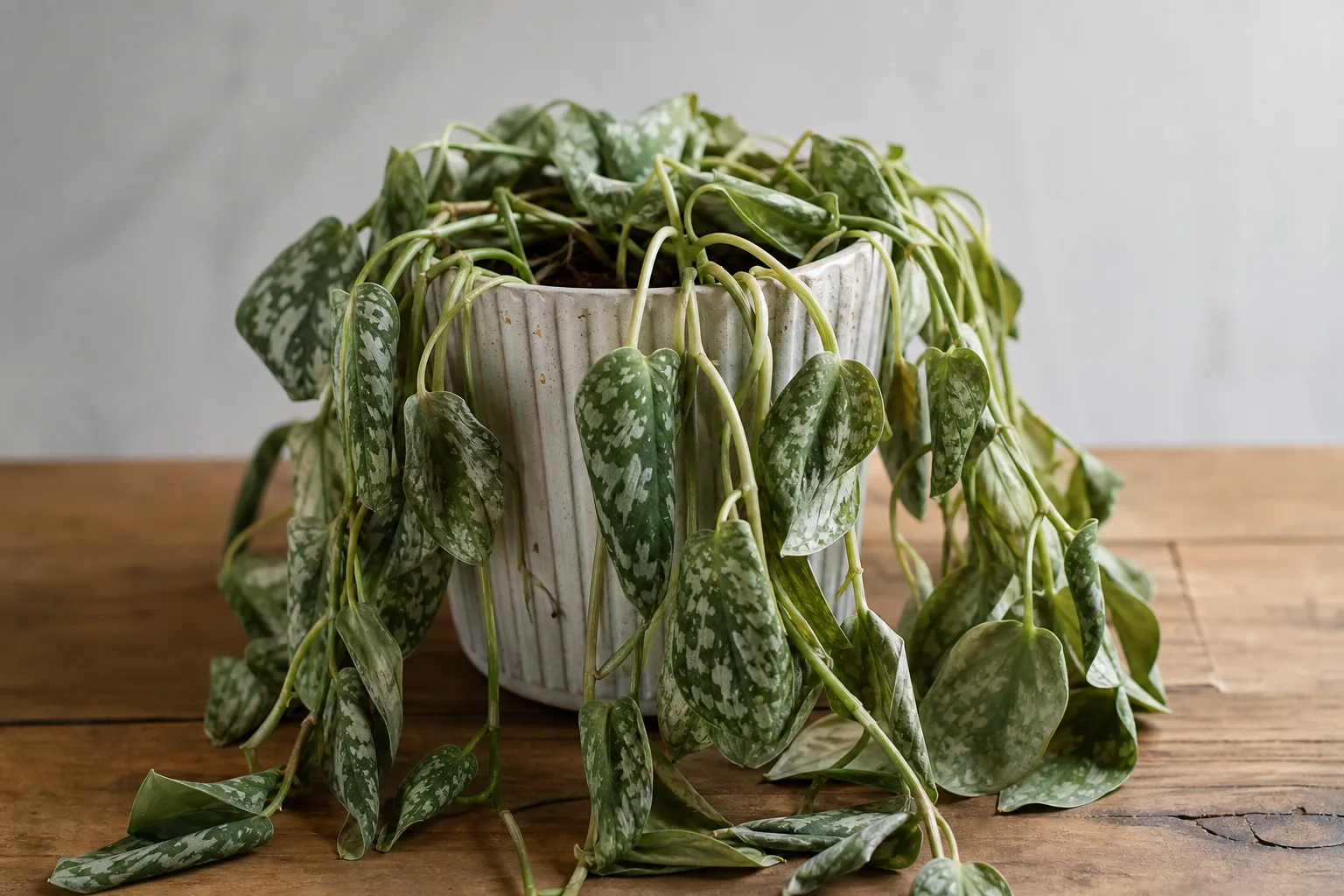
Wilting on Scindapsus Pictus: Causes, Checks & Fixes
This guide covers wilting on Scindapsus Pictus. See also the general Wilting guide, watering, and light pages for this plant.
Wilting on Scindapsus Pictus: Causes, Checks & Fixes
Quick answer
Use this page for acute collapse - when multiple trailing vines on Scindapsus Pictus (Scindapsus pictus, often sold as satin pothos or silver pothos) lose firmness at once. For softer sectional sag along one vine, see drooping leaves on Scindapsus Pictus. For daily dry-down rhythm, see the Scindapsus Pictus watering guide.
Wilting means the vine has lost turgor-satin-textured leaves and stems cannot hold themselves up because water is not reaching foliage fast enough. The same limp look comes from opposite problems. Dry roots cannot supply sufficient moisture to stems and leaves; rotting roots cannot take up water either, even when the mix feels wet.
First step: check soil moisture before you touch the watering can. Stick your finger 4–5 cm (1.5–2 in.) into the pot, lift the container, and compare how heavy it feels to right after a good drink. Dry, dusty mix with a lightweight pot usually means underwatering. Clammy, heavy mix with sour smell or yellowing lower leaves points toward overwatering and possible root rot. Acting on sight alone is how healthy satin vines get drowned.
Dry-wilt vs wet-wilt at a glance
| Soil at 4–5 cm (1.5–2 in.) | Pot weight | First move |
|---|---|---|
| Dry, dusty | Light | One thorough soak; drain saucer |
| Wet for days | Heavy | Stop watering; improve airflow |
| Even moisture, afternoon only | Normal | Move away from hot glass; no water change |
| Wet after recent repot | Heavy | Wait for top inch to dry; avoid stacking fixes |
Wilting vs drooping on this plant
Both describe limp foliage from failed turgor, but intent differs:
- Wilting (this page) - Sudden, often plant-wide collapse. Multiple vines hang flat at once. Common after a missed watering in a bright room, a heat spike, or advanced root failure on wet soil.
- Drooping - Softer sag along one or two vine sections, sometimes chronic in dim corners. May develop slowly over days without full plant-wide crash. See drooping leaves on Scindapsus Pictus for that pattern.
The diagnostic path is the same: probe moisture depth and pot weight first. NC State Extension notes that on this species curling leaves may signal underwatering while yellow leaves often signal overwatering-pair those leaf signals with soil checks before you pour.
Severity ladder
Use this to gauge urgency before you act:
| Stage | What you see | Urgency | First move |
|---|---|---|---|
| Mild | Afternoon limpness; firms by morning; soil moisture even | Low | Relocate from hot glass; recheck depth probe |
| Moderate | Plant-wide limp vines; dry light pot OR wet heavy pot | Medium | Dry soil → soak once; wet soil → stop watering |
| Severe | Collapsed hanging mass; crispy or papery leaves | High | Rehydrate gently if dry; inspect roots if wet |
| Critical | Soft stem base, sour smell, fast spread on wet mix | Urgent | Unpot, trim rot, repot or propagate cuttings |
Trailing aroids like satin pothos show plant-wide collapse faster than self-heading houseplants because long stems have little structural support-when root supply fails, the whole hanging mass drops at once.
What wilting looks like on Scindapsus Pictus
On this plant, the first clue is often the satin leaves losing their slight arch. Instead of firm, matte green hearts decorated with silver-gray blotches, affected foliage hangs flat or folds along the midrib. Trailing stems may look slack along the pot edge or cascade limply over the rim. In mild cases only the outermost leaves droop; in severe cases the whole hanging mass collapses.
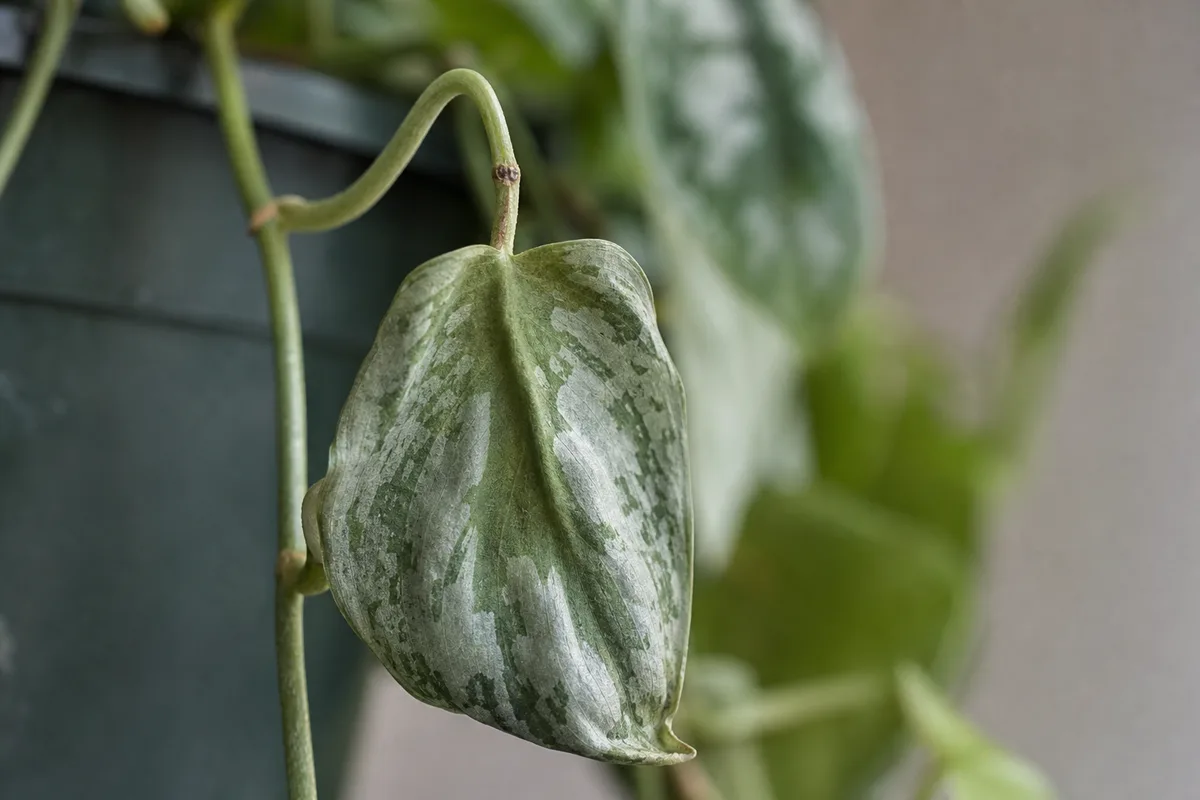
Wilting symptoms on Scindapsus Pictus - compare with healthy tissue on the same plant.
Dry-wilt, wet-wilt, heat-wilt, and shock-wilt patterns
- Dry-wilt: Soil looks pale and pulls slightly from the pot wall. Leaves feel thin and may curl inward before they fully collapse. Older foliage can show dry brown edges. The pot is noticeably light when lifted.
- Wet-wilt: Soil surface stays dark for days. Lower leaves yellow while the plant still looks thirsty. Leaves feel soft and limp, not crisp. A musty or sour smell from the drainage hole is a rot warning-escalate to root rot recovery if stems soften.
- Heat-wilt: Foliage droops in late afternoon near a sunny window or heating vent, then firms up overnight while soil moisture stays even. No yellowing spread, no sour smell.
- Shock-wilt: Limpness starts within a few days after repotting, a long move, or a sudden light change. Roots were disturbed and uptake lags temporarily.
Scindapsus Pictus wilting is easy to confuse with everyday drooping. Wilting is the more dramatic loss of firmness-often plant-wide and sudden-whereas light droop on one vine may correct itself after a single watering cycle. If multiple vines collapse at once, treat it as wilt and diagnose from the root zone up.
Why Scindapsus Pictus wilts
This is a slow-growing tropical Araceae vine with satin-textured foliage and aerial rootlets along the stems. It drinks steadily when in medium to bright indirect light and slows in winter or deep shade. Wilting almost always traces to a break in the water pathway-not random bad luck.
Underwatering is the most straightforward cause. Scindapsus Pictus tolerates some drought, but long gaps without water-especially in small hanging baskets, bright rooms, or near heating-deplete moisture through the whole root ball. Fine roots dry out and cannot supply stems quickly enough. Curling leaves and soil pulling from pot edges are classic underwatering signs; see underwatering on Scindapsus Pictus when dry soil is the confirmed pattern.
Overwatering and root rot produce the crueler pattern: wet soil, wilted leaves. Excess water reduces oxygen in the soil, which damages fine roots and leaves the plant unable to take up water. Satin pothos roots may rot in poorly drained soils, and wet-wilt is often the first visible clue before widespread yellowing on lower leaves. Advanced rescue steps live on the overwatering and root rot guides.
Low light plus heavy watering is a common Scindapsus trap. In dim corners the plant uses water slowly, so the same weekly schedule that works in a bright room leaves roots sitting wet. Leggy, faded silver-blotched growth in a dark hall paired with wilt usually means culture, not disease-see not enough light if stretch and pale blotches accompany limpness.
Heat and airflow stress can outpace root supply on hot afternoons. Short periods of wilting do not harm plants when soil moisture is ample and the plant firms up by evening. Prolonged heat without humidity adds leaf scorch and lasting damage on thin satin foliage.
Root-bound or hydrophobic soil creates uneven moisture. A dense root mass in a small pot dries the surface while the core stays dry-or repels water so surface sips never reach deep roots. Both lead to wilt despite your efforts. Hanging baskets in bright light often dry in one day; cachepots without drainage slow drying and raise wet-wilt risk.
Cold exposure slows uptake and compounds wilt. Satin pothos grows best at room temperatures ranging from 65 to 85°F; cooler air below 60°F can damage foliage and stress roots, especially when soil stays wet.
Recent repotting or root disturbance temporarily reduces uptake. Scindapsus Pictus usually rebounds if the new mix drains well and you avoid watering before the root ball actually needs it.
Pest-related limpness is less common than water stress but worth ruling out when one vine section sags while soil moisture looks fine. Spider mites cause stippling, webbing, and dusty leaf undersides-section limpness without a dry or wet pot pattern. Aphids cluster on new growth and can weaken young tips. Tap a white paper under suspect leaves before you soak a plant that does not need water.
How to confirm the cause
Work through these checks in order. You are separating thirst from uptake failure before changing anything else.
- Surface and depth moisture - Dry at 4–5 cm (1.5–2 in.) with a light pot strongly favors underwatering. Wet deep mix with limp leaves favors root stress.
- Pot weight - Compare to a known well-watered weight. A big drop in weight over a few days confirms drying.
- Leaf texture and color - Inward curl with dry soil suggests drought. Soft yellowing lower leaves with wet soil suggests rot.
- Smell and drainage - Sour odor, blocked holes, or a full saucer support overwatering. No smell and open drainage with dry mix support thirst.
- Light and recent care - Did you move the plant, repot, or skip water during travel? Did afternoon sun hit a south window?
- Root inspection (if wet-wilt suspected) - Gently slide the plant from the pot. Healthy roots are firm and white or tan. Brown, mushy, or slimy roots confirm rot.
If soil is dry and roots are firm and pale, you do not need to unpot further-rehydrate first and reassess in 24 hours. If soil is wet and wilt persists after you stop watering for several days, unpotting is necessary.
First fix to try
Check moisture, then make one targeted move-do not stack fixes.
- If soil is dry and roots are firm: Water thoroughly until excess drains from the bottom, then empty the saucer. For very dry mix that has shrunk from the pot sides, bottom-water in a tray until the surface darkens, then drain completely. That single deep soak is the correct first response-not repeated small sips that only wet the top.
- If soil is wet and the base smells off or lower leaves are yellowing: Stop watering immediately. Move the plant to bright indirect light with good airflow, empty any saucer water, and plan a root inspection within a day or two if limpness continues. Do not add more water because the leaves look sad-see overwatering on Scindapsus Pictus.
- If soil moisture is even and only afternoon droop appears: Shift the pot back from hot glass or vents. No watering change needed unless the depth probe shows dryness.
Do not fertilize, repot, or prune heavily on day one. Scindapsus Pictus under stress needs a stable root zone, not a pile of new interventions.
Step-by-step recovery
When underwatering caused the wilt
After the first thorough soak, let excess water drain fully. Place the plant back in its normal bright indirect spot. Within a few hours to one day, leaves should feel noticeably firmer. If some edges browned during drought, trim those leaves once the plant is turgid again-they will not green up.
Resume watering when the top half of the mix dries-roughly every 7–10 days in active growth, less in winter. Lift the pot weekly until you learn its dry weight rhythm. Full dry-down guidance is in the watering guide.
When overwatering or root rot is likely
- Stop watering and clear the saucer.
- Unpot and rinse soil from roots under lukewarm water.
- Trim all brown, mushy, or slimy roots with clean scissors; wipe blades between cuts.
- Let cut surfaces air-dry for a few hours.
- Repot into fresh, well-drained mix with 20–25% perlite in a pot sized to the remaining root mass, with open drainage holes.
- Water lightly once to settle mix, then let the top inch dry before the next drink.
- Remove fully yellow or collapsed leaves that will not recover.
Severe cases where most roots are gone and the stem base is soft may not be saveable. Follow the full root rot on Scindapsus Pictus protocol if rot has spread. If a small section of firm stem with a healthy node remains, propagate that cutting in water or moist moss rather than trying to rescue the whole collapsed plant.
Annotated recovery example
A satin pothos in a dim hall hanging basket wilted plant-wide with yellow lower leaves and soil that stayed wet for ten days. Pot weight was heavy; stems at the crown were still firm. The grower stopped watering, moved the basket to bright indirect light, and emptied the saucer daily. After seven days the top half of mix dried; one cautious soak followed. Vines stayed limp-roots on inspection showed brown mush on the bottom third. After trim and repot into perlite-amended mix sized to the trimmed root ball, new satin leaves appeared at vine tips in about three weeks. Old yellow foliage was removed; recovery was judged by new growth, not perkiness on damaged leaves.
When heat stress is the culprit
Move the pot out of direct sun and away from heater blasts. Maintain even soil moisture with your normal dry-down check. Afternoon wilt should stop within a few days of stable conditions.
Recovery timeline
Mild thirst wilt often improves within hours to one day after a proper soak. Moderate underwatering may take two to three days for all vines to firm up. Root rot recovery is measured in weeks: look for new satin leaves at growing tips and a stable stem base, not instant perkiness on old foliage.
Leaves that fully yellow or feel papery after wilting usually drop. That is normal. Success means the plant stops collapsing and pushes new growth.
Lookalike symptoms
| What you see | Likely cause | Key difference |
|---|---|---|
| Limp leaves, dry light soil | Underwatering | Pot light; perks after one deep water |
| Limp leaves, wet heavy soil | Root rot / overwatering | Stays wilted after watering; yellow lower leaves |
| Afternoon limpness, firm by morning | Heat stress | Soil moisture stable; no rot smell |
| Limpness after repotting | Transplant shock | Started within days of root disturbance |
| One vine section limp, fine soil | Spider mites or aphids | Stippling, webbing, or clusters on new growth |
| Long bare vines, pale silver blotches | Low light (leggy growth) | May not wilt fully; stretch more than collapse |
Drooping leaves on Scindapsus Pictus overlap with wilting, but wilting is the acute turgor crash-often sudden and plant-wide. Use soil moisture to split thirst from rot in either case. For sectional sag without full collapse, use the drooping leaves guide.
Mistakes to avoid
- Watering without checking - The most common error on trailing aroids; plants can wilt when overwatered as well as when dry. Wet-wilt gets worse when you add more water.
- Misting instead of watering roots - Surface moisture does not fix dry root balls or rotting roots. Aerial rootlets along satin pothos stems can absorb mist water and mask a dry root zone.
- Repotting immediately into a much larger pot - Extra wet soil around a stressed root mass prolongs rot.
- Moving to harsh direct sun - Sunburn adds leaf damage on top of wilt stress.
- Feeding a wilted plant - Fertilizer on stressed roots can burn tissue. Wait until new growth is steady.
- Ignoring saucer water - Standing water re-saturates roots and invites fungus gnats when soil stays wet too long.
Scindapsus Pictus care cross-check
Wilting prevention on this plant comes down to matching water to how fast the pot actually dries in your room. For full species context, see the Scindapsus Pictus overview.
- Light: Medium to bright indirect light keeps growth steady and water use predictable. Dim light slows drying and raises rot risk if you water on habit-see the light guide.
- Water: Allow the top half of the mix to dry between drinks. Calendar schedules fail when seasons, pot size, or light change.
- Soil: Standard potting mix with 20–25% perlite; pH near 6.0–6.5. Dense garden soil or peat-heavy bags that never dry invite wet-wilt-see the soil guide.
- Container: Drainage holes are non-negotiable. Empty saucers after every watering.
- Humidity and temperature: 40–60% humidity and roughly 18–29°C (65–85°F) suit steady growth. Cold drafts below about 15°C (60°F) slow uptake and compound wilt.
How to prevent wilting next time
Build a simple check habit: finger or dowel to 4–5 cm (1.5–2 in.) depth, plus a weekly pot lift. Water only when the top half feels dry-not because a reminder fired on your phone. The watering guide covers soak-and-drain technique and seasonal rhythm.
In bright rooms or small hanging baskets, expect faster dry-down and more frequent watering in summer. In winter or low light, stretch the interval. After travel, probe depth before assuming the plant needs a drink.
When repotting, size up only one step and refresh with airy mix. After repotting, wait until the top inch dries before the next thorough watering.
If wilt repeats on wet soil despite careful intervals, treat drainage and root health as the problem-not the variety. Scindapsus Pictus is resilient when the root zone breathes and dries on an honest rhythm.
When to worry
Escalate quickly if:
- The stem base near soil turns soft, black, or mushy
- Wilt spreads across all vines while soil stays wet for a week
- Most roots are brown and slimy on inspection
- New growth stops and older leaves yellow in clusters after a wet spell
Those patterns suggest advanced root rot. Salvage firm stem cuttings for propagation if the main plant is failing-full steps on root rot on Scindapsus Pictus.
Mild thirst wilt on dry soil is the opposite urgency-rehydrate soon, but you usually have a comfortable window if leaves are only starting to droop rather than fully collapsed and crispy.
Related Scindapsus Pictus guides
- Scindapsus Pictus overview
- Scindapsus Pictus watering
- Scindapsus Pictus light
- Drooping leaves on Scindapsus Pictus
- Underwatering on Scindapsus Pictus
- Overwatering on Scindapsus Pictus
- Root rot on Scindapsus Pictus
- Spider mites on Scindapsus Pictus
- All Scindapsus Pictus problems
Conclusion
Wilting on Scindapsus Pictus is a diagnostic signal, not a single disease. The same limp satin vines can beg for water or warn that roots are drowning-wilted leaves may indicate soil that is too dry or too wet, while too much can trigger root rot in poorly drained mix. Your first and best tool is a depth moisture check paired with pot weight. Dry means soak once and drain; wet means stop watering and inspect roots. Recovery follows new firm growth at the vine tips-honest care on drainage and dry-down rhythm keeps this forgiving plant from becoming a repeated wilt emergency. When symptoms are sectional rather than plant-wide, start with drooping leaves; when culture is the question, anchor on the watering guide.