Not Enough Light on Scindapsus Pictus: Causes, Checks &
Quick answer
Not enough light on Scindapsus Pictus shows as long bare vines, dull silver blotches, and slow growth. First step: move the pot to bright indirect light within a few feet of an east or filtered south window-not direct sun.
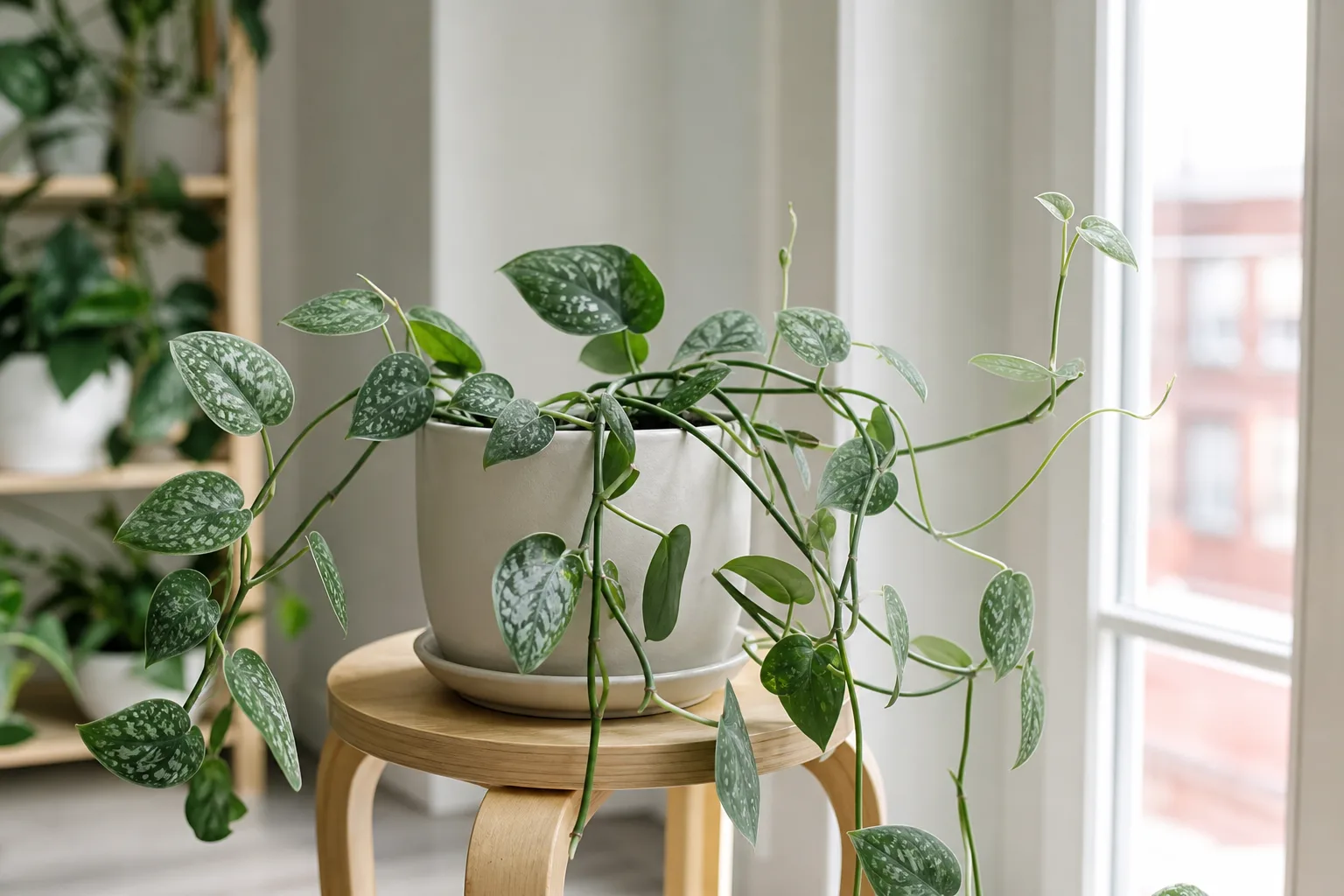
Not Enough Light on Scindapsus Pictus: Causes, Checks & Fixes
This guide covers not enough light on Scindapsus Pictus. See also the general Not Enough Light guide, watering, and light pages for this plant.
Not Enough Light on Scindapsus Pictus: Causes, Checks & Fixes
Quick answer
Scindapsus Pictus (Scindapsus pictus-Satin Pothos, Silver Pothos) is sold as forgiving, but its silver-splashed leaves are a light gauge. When placement is too dim, vines stretch with long bare gaps between leaves, new blades shrink, and the signature mottling dulls toward plain green.
First step: move the pot to bright indirect light within a few feet of an east-facing window or a south window softened by a sheer curtain. Do not jump to fertilizer, Scindapsus Pictus repotting guide, or heavy pruning until the plant has better light for two to three weeks. Low light slows photosynthesis and water use-fixing placement comes before any other care change.
What not enough light looks like on Scindapsus Pictus
Unlike plants that simply stop growing in shade, Scindapsus Pictus keeps reaching. The trailing habit makes low-light stress easy to spot once you know what to compare.
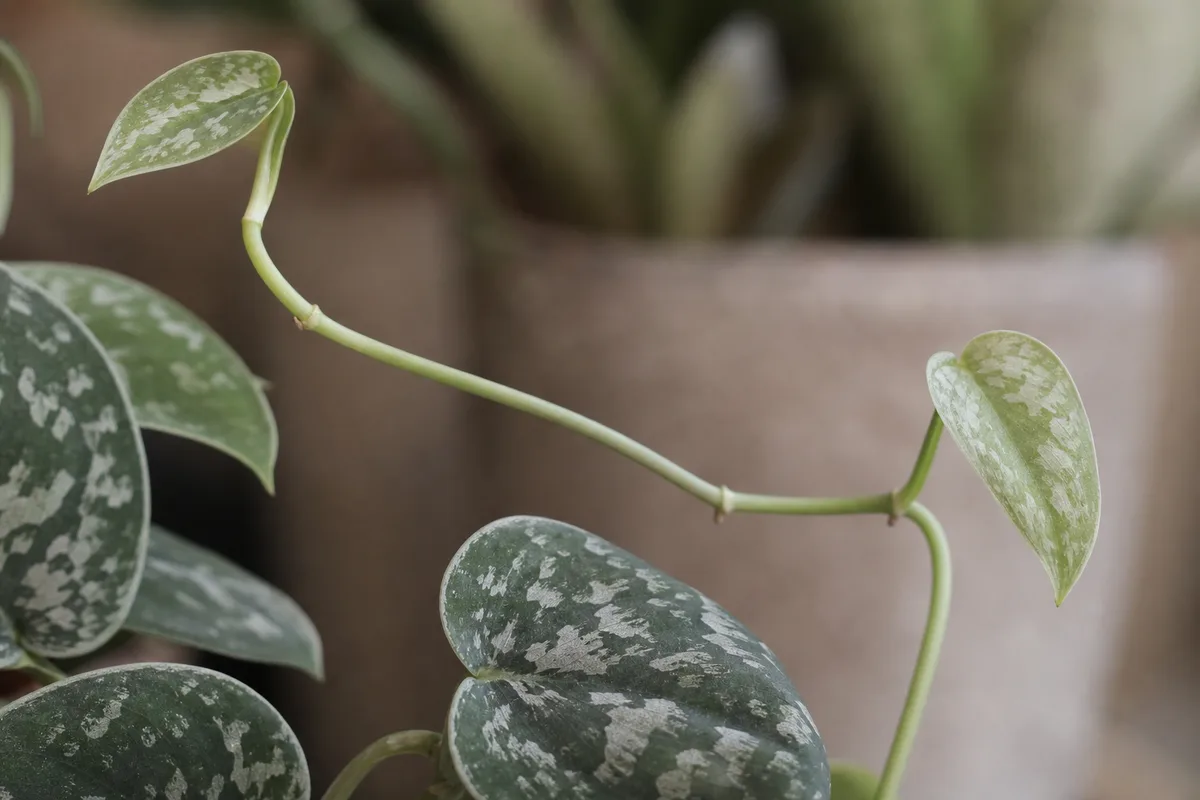
Not Enough Light symptoms on Scindapsus Pictus - compare with healthy tissue on the same plant.
Typical signs:
- Leggy vines with internodes several inches apart instead of compact spacing
- Smaller new leaves at the growing tip compared with older leaves near the soil
- Faded silver variegation-blotches turn dull gray-green or nearly disappear on new growth
- One-sided lean as stems grow toward the brightest window or lamp
- Slow or stalled growth despite otherwise normal watering
- Soil that stays damp for unusually long because the plant is not using moisture quickly
The satin-textured juvenile leaves are normally matte green with showy silver-gray blotches on the upper surface. When light is adequate, new leaves hold that contrast. In chronic shade, the plant prioritizes stem length over leaf size and pigment-classic etiolation.
What low light does not look like: Crispy brown patches on sun-facing leaves suggest too much direct light, not too little. Yellow lower leaves with soggy mix point to overwatering, often worsened by dim placement but not the same diagnosis alone. Crisp, curling leaves with bone-dry mix fit underwatering better than light stress.
Why Scindapsus Pictus struggles in dim light
Scindapsus Pictus evolved as a tropical climbing vine in Southeast Asia, attaching to tree trunks with rootlets and spreading into filtered canopy light. Indoors it still wants that bright-but-diffused pattern-not a dark hallway where human eyes feel comfortable.
Marketing labels call it “low light tolerant,” which is partly true: it may survive far from windows longer than a fiddle leaf fig or croton. Survival is not the same as the compact, silvery look most growers want. In weak light the plant stretches toward any photons available, producing thin stems and plain green leaves.
Variegation is especially light-dependent. The silver patches contain less chlorophyll than green tissue. In shade, the plant builds more green area per leaf to capture energy-so variegation fades on new growth even when older leaves still show pattern.
Scindapsus Pictus also has a moderate growth rate and stores little water compared with succulents. In dim corners it photosynthesizes slowly, so the same Scindapsus Pictus watering guide that worked in brighter light leaves roots sitting in moist mix. That secondary stress is why low light on Scindapsus Pictus overview so often pairs with yellow leaves or fungus gnats-not because light directly yellows foliage, but because weak growth and wet soil overlap.
Temperature matters alongside light. The plant prefers room temperatures around 65–85°F. Cool, dark rooms in winter combine short days with slow drying-a common seasonal trigger for leggy spring growth that never fills in.
How to confirm the cause
Work through these checks before moving the plant or changing water:
- Window distance - Hold your hand at the pot level. Within about two feet of an unobstructed east or filtered south window usually counts as bright indirect for tropical foliage. Beyond six feet in a dim room is low light for Scindapsus Pictus.
- Direction and obstruction - North windows may suffice only if the room is bright. Heavy sheers, tinted glass, bookshelves, or a pot tucked below a windowsill can cut usable light sharply.
- Growth direction - Stems leaning or new leaves only on the window side confirm the plant is hunting light.
- New vs. old leaves - Compare the newest leaf at each vine tip to a mature leaf halfway down the stem. Smaller size and weaker silver on new tissue while the rest of the plant looks older and plain suggests ongoing shade stress.
- Soil moisture pattern - Stick a finger 4–5 cm into the mix. If it stays wet for ten days or more while growth is slow, low light may be reducing water uptake. Confirm roots are still firm-not mushy-before blaming light alone.
- Season check - Leggy growth that worsens through winter in an unchanged spot often reflects shorter days, not a sudden disease.
If the plant sits in direct sun and shows bleached or brown patches, you are dealing with excess light-move it back from the glass rather than forward.
First fix for Scindapsus Pictus
Move the pot to bright indirect light today.
Place it within a few feet of an east-facing window, or near a south window with a sheer curtain between glass and leaves. Let the plant sit there without repotting, fertilizing, or heavy pruning for at least two weeks so you can read the response on new growth.
Rotate the pot a quarter turn weekly once it is in better light so trailing stems do not lean one-sided again.
Do not compensate for dim growth by watering more often-that invites root problems. Do not blast the plant with direct afternoon sun to “fix” legginess quickly; Scindapsus Pictus does not tolerate direct sunlight and scorched leaves will not recover.
Step-by-step recovery
After the brighter placement:
- Adjust watering to the new light level - Water when the top half of the soil is dry. In brighter indirect light the pot should dry faster than it did in shade. Lift the pot; a lighter weight confirms it is time to water.
- Pinch or trim bare stems - Once new growth looks stronger, pinch just above a node on long naked vines to encourage side shoots. Wait until light has improved; pruning alone in shade rarely produces bushy regrowth.
- Add a grow light if windows are insufficient - A full-spectrum LED positioned above trailing foliage for 12–14 hours daily can supplement north-facing or interior rooms. Keep the lamp far enough that leaves do not heat up.
- Train or support if desired - Scindapsus Pictus climbs with rootlets when given a moss pole or trellis. Better light plus a vertical support often yields larger leaves than letting vines dangle in shade.
- Hold fertilizer - Skip feed until new leaves show normal size and silver pattern for two to three weeks. Fertilizer on a stressed, low-light plant pushes soft growth that still looks weak.
If multiple vines are mostly bare, keep the healthiest stems and trim the worst etiolated sections after the plant stabilizes-those stretched internodes will not compact retroactively.
Recovery timeline
Expect visible change on new growth, not old leaves. Within two to three weeks of bright indirect light, new leaves should emerge closer together with stronger silver mottling. Bare stem sections already formed in shade stay bare unless you pinch and new side shoots fill in over one to two months.
A full basket or shelf display may need a season to look lush again after a long stretch in a dark corner. Judge success by tip growth and pot weight drying on a normal schedule-not by whether every old faded leaf reverts.
If nothing improves after four weeks in confirmed bright indirect light, look for root rot, pests on leaf undersides, or chronic overwatering before assuming light is still the only issue.
Lookalike symptoms to rule out
Overwatering / root rot - Yellow lower leaves, mushy stems, and sour soil smell while the plant sits in dim light can mimic “decline,” but unpotting reveals brown mushy roots. Root rot may occur in poorly drained or wet soils. Fix drainage and watering even after you improve light.
Underwatering - Leaves curl and soil pulls from pot edges with a light, dry pot. That pattern fits drought, not etiolation. Low light plants need less water but not zero.
Nutrient deficiency - Uniform pale green on all new leaves in bright light may suggest feed shortage. In shade, pale plain leaves are usually light stress first-correct placement before fertilizing.
Spider mites or mealybugs - Stippling, webbing, or white cottony clusters on undersides are pest issues. Leggy stretch without pests points back to light.
Direct sun scorch - Bleached, papery, or brown patches on leaves facing the window mean too much sun. Moving closer to south glass without a curtain causes this-not the fix for legginess.
Mistakes to avoid
Do not assume “low light tolerant” means a bathroom with no window or a shelf six metres from glass is fine for strong variegation.
Do not move instantly from deep shade to unfiltered south sun-acclimate over one to two weeks with a sheer curtain to prevent scorch.
Do not increase watering because the plant looks “unhappy” in a dark corner-slower growth uses less water.
Do not fertilize heavily to “push” silver color back-weak etiolated stems produce soft, plain leaves even with feed.
Do not expect old stretched internodes to shrink; recovery shows on new nodes after light improves.
Do not repot on day one unless roots are rotting. Transplant shock stacks on light stress without solving the main problem.
Scindapsus Pictus care cross-check
Light and water work as a pair on this plant. Medium to bright indirect light with well-draining potting mix and perlite lets the top half of soil dry on a predictable rhythm. Humidity around 40–60% supports leaf texture but does not replace adequate light for variegation.
If you hang baskets high in dim corners for aesthetics, expect plain green trails unless you add a nearby grow light. Trailing stems left unevenly rotated develop one-sided fade on the shaded side of the basket.
How to prevent low light next time
Place new Scindapsus Pictus where it receives bright indirect light from day one-not where the pot looks best on a dark bookcase. Watch the first two sets of new leaves; widening internodes mean move it closer to the window early.
Clean windows and open blinds seasonally; winter daylight drop causes leggy growth even when the pot never moved.
When shifting the plant to a brighter spot in spring, increase light gradually if the jump is large-from a back room to a south sill, use a sheer curtain for the first week.
Pair placement checks with pot weight before watering so low-light winter slowdown does not turn into chronic wet soil.
When to worry
Low light alone is rarely fatal on Scindapsus Pictus, but prolonged dim placement plus overwatering can rot roots. Treat as urgent if stems soften at the base, soil smells sour, or yellowing spreads while mix stays wet-unpot and inspect roots while also improving light.
Replace or heavily trim plants whose vines are mostly bare etiolated stems with no healthy nodes near the soil if root inspection shows advanced decay. Scindapsus Pictus propagates easily from firm stem cuttings once conditions are stable-take backup cuttings before the last healthy tissue fails.
Simple legginess with firm stems and healthy roots is not an emergency. Move to brighter indirect light, adjust water, and pinch over time.
Conclusion
Not enough light on Scindapsus Pictus announces itself through stretched vines, faded silver variegation, and slow growth-not through mystery wilting. Move the plant to bright indirect light first, let new leaves tell you recovery is working, and trim bare stems only after tips look stronger. Match watering to the faster drying that comes with better light, and the satin foliage you bought the plant for can return on fresh growth even when old leaves stay plain.
When to use this page vs other Scindapsus Pictus guides
- Scindapsus Pictus watering guide - Use for routine moisture checks before assuming not enough light is the main issue.
- Scindapsus Pictus problems hub - Browse all 3 common issues on this species.
- Leggy Growth on Scindapsus Pictus - Different entry point when symptoms overlap with not enough light.
- Yellow Leaves on Scindapsus Pictus - Different entry point when symptoms overlap with not enough light.