Aphids on Scindapsus Pictus: Causes, Checks & Fixes
Quick answer
Aphids cluster on soft new Scindapsus Pictus vine tips and leaf undersides, leaving sticky honeydew on satin leaves. First step: isolate the plant and rinse vines thoroughly in the shower before applying any spray.
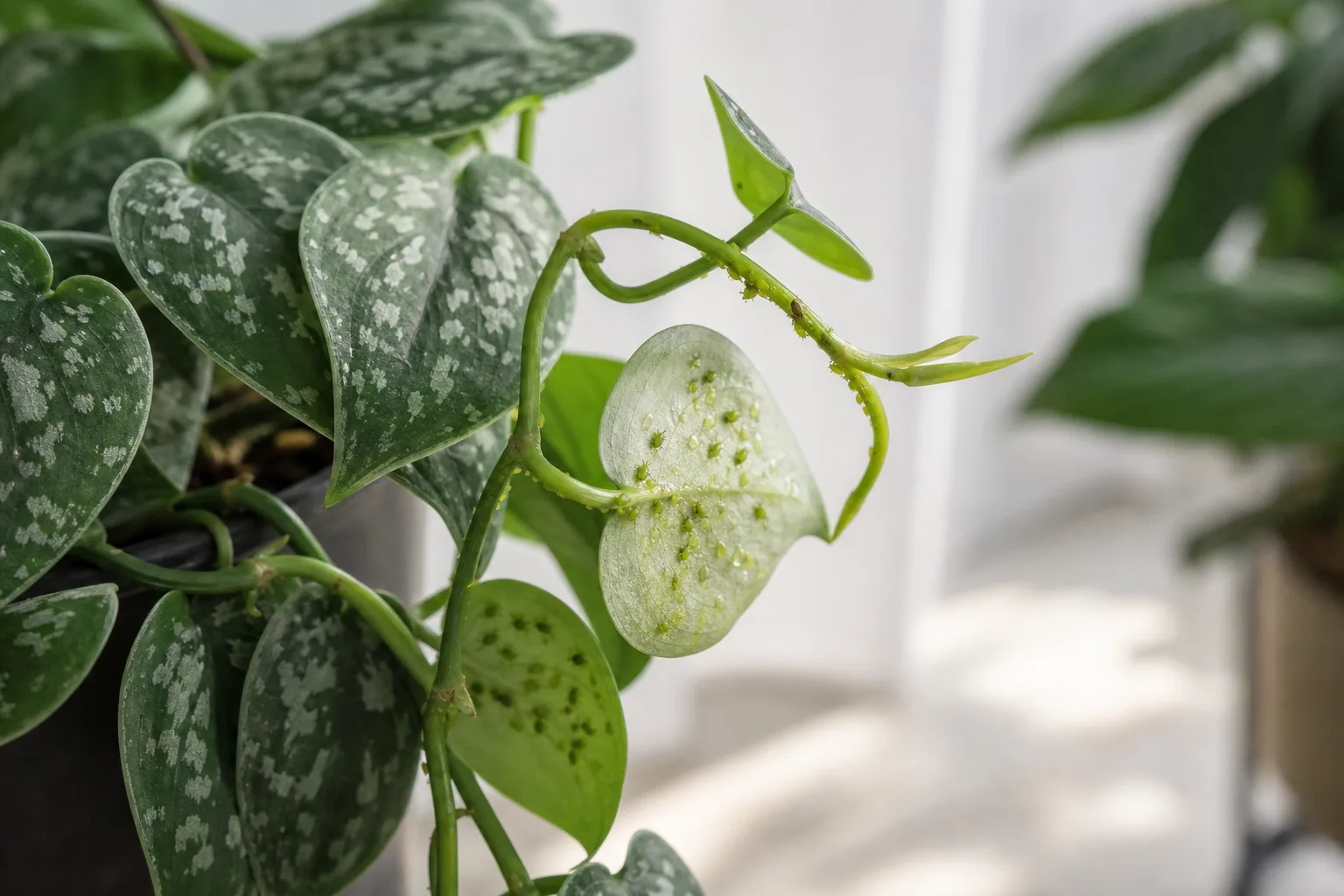
Aphids on Scindapsus Pictus: Causes, Checks & Fixes
This guide covers aphids on Scindapsus Pictus. See also the general Aphids guide, watering, and light pages for this plant.
Aphids on Scindapsus Pictus: Causes, Checks & Fixes
Quick answer
Aphids on Scindapsus Pictus show up as soft clusters on the newest vine tips and along the pale undersides of heart-shaped leaves, often leaving shiny honeydew that makes the satin silver surface look dull or tacky. Ant trails and black sooty mold on upper leaves are common secondary signs.
First step: isolate the plant and rinse trailing vines thoroughly in the shower, targeting leaf undersides and soft stem tips. Let foliage dry in indirect light the same day. Only move to insecticidal soap if live aphids remain after two or three rinse cycles.
Because Scindapsus Pictus is toxic to cats and dogs, keep treated plants away from pets until foliage is dry and rinse hands after handling wet vines.
Why Scindapsus Pictus gets aphids
Scindapsus Pictus-often sold as Satin Pothos or Silver Pothos-is a trailing Araceae vine with soft juvenile leaves that unfurl continuously at each growing tip. Aphids commonly cluster on new growth and the undersides of leaves-exactly the tender tissue at each vine tip.
Indoor conditions favor slow buildup. Hanging baskets and high shelves make it easy to admire the silver pattern from above while missing colonies tucked under heart-shaped leaves. Warm room temperatures in the 65 to 85 degrees Fahrenheit range suit both the plant and aphid reproduction, and lack of natural predators indoors means populations can double within days if you wait.
New introductions are the most common entry route. Aphids hitchhike on nursery stock, on cuttings shared between growers, or on plants summered outdoors and brought back inside without inspection. Skipping quarantine is the fastest way one infested Satin Pothos spreads aphids to nearby pothos, philodendrons, and other trailing Araceae on the same shelf.
Over-fertilized or stressed vines attract aphids faster than balanced plants. Heavy nitrogen pushes soft, lush shoots that are easier to feed on. At the same time, a vine kept in weak light with chronically wet mix grows weakly-stressed plants are easier targets even when they are not pushing excessive new growth.
Ants complicate control. Ants harvest honeydew and protect aphid colonies from predators. Ant trails on basket chains, pot rims, or nearby window sills often appear before you spot the insects themselves on the vine tips above.
What aphids look like on Scindapsus Pictus
Typical aphid signs:
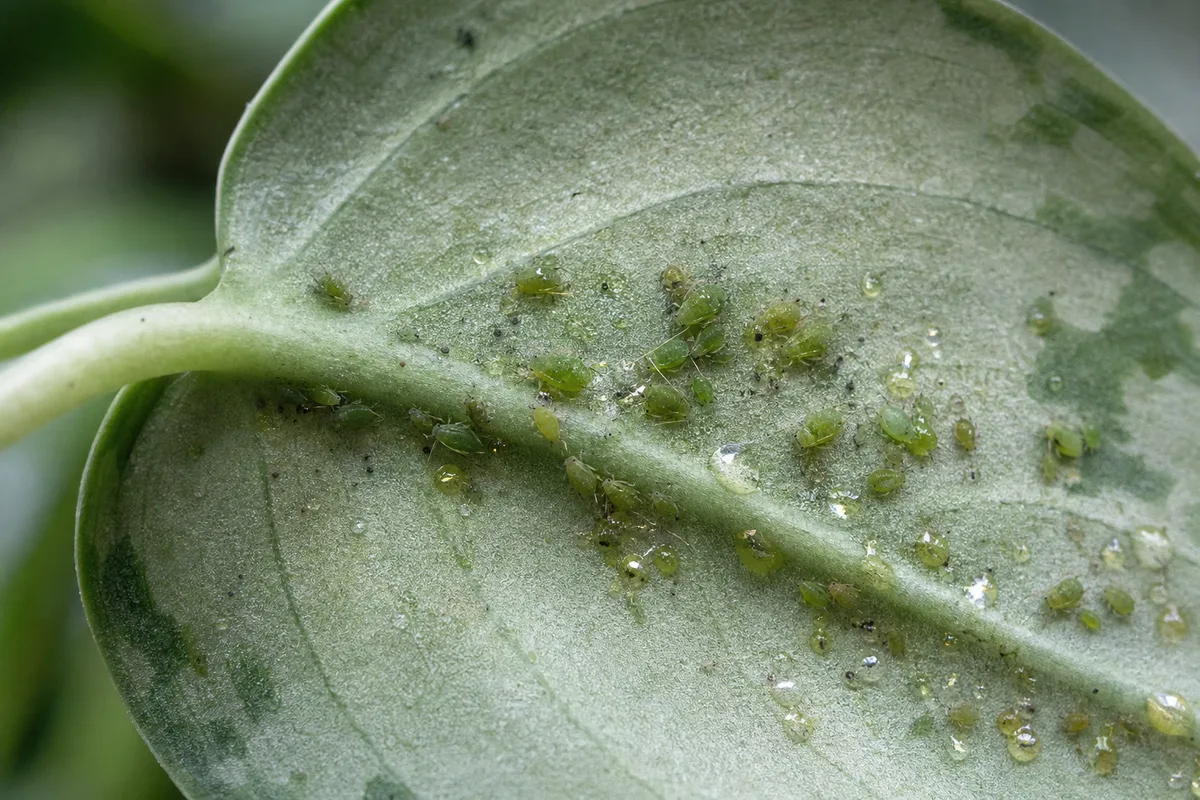
Aphids symptoms on Scindapsus Pictus - compare with healthy tissue on the same plant.
- Tiny green, black, pink, or gray soft-bodied insects packed along the newest vine tips and where leaves meet stems
- Clusters on the pale, unblotched undersides of heart-shaped juvenile leaves
- Curled, puckered, or twisted new leaves that fail to open flat-silver mottling may look uneven on damaged tissue
- Shiny, tacky honeydew on satin upper leaf surfaces where drips land, dulling the normal shimmer
- Black sooty mold that wipes off with a damp cloth-mold grows on honeydew, not leaf tissue directly
- Ants on pot rims, saucers, or hanging hardware below active colonies
- Whitish cast skins left behind as aphids molt on stems and leaf axils
Aphids are small-often 1/16 to 1/8 inch long and pear-shaped with visible legs and antennae. They do not fly when disturbed; they cling to the vine. That distinguishes them from whiteflies, which burst into a small cloud when you shake a trailing stem.
On Scindapsus Pictus, damage shows first where growth is softest: the tip of each trailing runner and the newest leaf still partially furled. Older leaves farther down the vine often look normal even when the tip is heavily colonized.
How to confirm the cause
Work through these checks before spraying:
- Location on plant - Aphids concentrate on soft vine tips and young unfurling leaves, not random mature foliage halfway down a runner. Yellow lower leaves with wet mix suggest overwatering, not insects.
- Underside inspection - Lift trailing stems and check the pale backs of upper leaves with a hand lens. Colonies hide in the cordate leaf base and tight axils that top-down views miss on hanging plants.
- Shake test - Hold white paper under a stem and shake gently. Aphids fall as small dots that stay put. Flying white insects mean whiteflies, not aphids.
- Honeydew and mold - Rub a shiny patch on a silvery leaf. Honeydew feels tacky; sooty mold smears black and wipes away. Hard waxy bumps that do not move are scale, not aphids.
- Ant trails - Ants marching up pot sides or basket hooks strongly suggest aphids or other honeydew producers on stems above.
- Neighbor plants - Scan pothos, philodendrons, and other trailing houseplants on the same shelf. Many aphid species colonize a wide range of indoor plants.
- Soil and light cross-check - Push your finger into mix. Scindapsus Pictus should have the top half dry before the next watering. Curling with dry, pulling-away mix points to drought stress, not sap feeders. Weak light plus wet mix stresses the vine and invites reinfestation after treatment.
If you find pear-shaped insects matching the above pattern, aphids are confirmed. If leaves are sticky with no insects, ants, or wipe-able mold, inspect for scale or mealybugs before assuming aphids.
First fix for Scindapsus Pictus
Rinse trailing vines in the shower with lukewarm water, targeting leaf undersides and soft stem tips.
Large houseplants can be sprayed in a shower to knock off soft-bodied pests. Hang or tilt the pot so water runs through foliage without repeatedly flooding the mix. Use enough pressure to dislodge colonies from tender tips, but avoid blasting mature leaves so hard that stems snap. Let foliage dry in medium to Scindapsus Pictus light guide the same day-wet satin leaves sitting in a dim corner overnight raise fungal leaf spot risk on an already stressed plant.
Do not reach for insecticide on day one if you have not confirmed live aphids. Do not fertilize a pest-hit vine hoping to push replacement growth-that produces more tender shoots aphids prefer. Do not repot unless roots are clearly failing; Scindapsus Pictus repotting guide stacks stress on top of pest stress.
Step-by-step recovery
After the initial shower rinse:
- Repeat water sprays every two to three days until live aphids are gone on close inspection of vine tips and leaf undersides.
- Apply insecticidal soap if colonies persist after several rinses. Cover undersides and stem axils thoroughly. Insecticidal soaps kill only insects contacted during application-repeat every five to seven days through one full pest generation.
- Test soap on one leaf first if you are treating a prized cultivar like Exotica or Silvery Ann. Wait 24 hours and check for leaf spotting before spraying the whole plant.
- Wipe sooty mold off coated leaves with a damp cloth once honeydew production stops. Trim heavily blackened or permanently distorted new leaves if they no longer contribute to the vine’s appearance.
- Manage ants if they protect colonies. Ant barriers on pot rims or temporarily moving the plant can help natural predators reach aphids on outdoor summer vines.
- Isolate badly infested pots from other houseplants until control holds for at least two weeks with no new colonies on tips.
- Adjust care - Confirm the vine gets medium to bright indirect light, not dim corners that produce soft leggy growth. Let the top half of mix dry between waterings. Improve airflow between crowded shelf plants.
If you share space with pets, keep the isolated plant on a high shelf or closed room until sprays dry. Scindapsus Pictus contains calcium oxalate crystals that irritate mouths if chewed-rinse treated leaves and wash hands after handling.
Recovery timeline
Water knockdown shows results within two to three days when colonies are moderate. A full soap course may take one to two weeks with label-interval repeats. Sooty mold fades as honeydew dries up; expect cleaner new tips with normal silver mottling within one to three weeks once insects stay gone.
Curled young leaves often flatten as the next leaf opens cleanly. Old leaves that puckered or yellowed under heavy feeding rarely return to perfect form-judge success by firm new vine tips, not legacy damage on lower runners.
Vines summered outdoors in partial shade often recover faster once back inside because natural predators may have reduced colonies before you noticed them-still inspect and rinse before returning the plant to indoor shelves.
Lookalike symptoms to rule out
Sticky leaves without insects may mean scale insects or mealybugs producing honeydew. Scale looks like hard or waxy bumps on stems; mealybugs show white cottony clusters in leaf axils.
Spider mites cause fine stippling and webbing on leaf undersides, not soft pear-shaped clusters. Mites thrive in hot dry indoor air-confirm with a tap test over white paper.
Underwatering curls leaves and pulls dry mix away from pot edges without insect clusters, honeydew, or ants. Rehydrate evenly and wait 24 hours-drought curl usually softens without sticky residue.
Edema can pucker Scindapsus leaves when mix stays wet in cool dim conditions. Edema shows as small corky bumps or blisters without insects or tacky honeydew on the surface.
Whiteflies fly when disturbed and leave flat pale nymphs on undersides. They share honeydew and sooty mold signs with aphids but need shake-test confirmation.
Overwatering and root rot yellow lower leaves, soften stems at soil line, and smell sour in mix-without insect clusters on vine tips. Fix drainage and Scindapsus Pictus watering guide before treating for pests.
Mistakes to avoid
- Spraying before confirming pests - Sticky residue alone is not enough. Find live aphids or consistent honeydew with ants before committing to repeated sprays.
- Treating once and stopping - Aphids reproduce quickly indoors. One rinse or one soap application rarely clears a colony completely.
- Using dish soap - Do not mix homemade soap products as they can burn satin foliage. Use products labeled for plants.
- Heavy fertilizing during infestation - Nitrogen-rich growth feeds the next aphid generation.
- Returning the plant to the shelf too soon - Two weeks with no new colonies on tips is a safer isolation window than a few days.
- Ignoring ants - Until ant access is reduced, aphid colonies often rebuild even after thorough rinses.
- Soaking mix repeatedly in the shower - Rinse foliage without turning the pot into a swamp. Wet roots in low light compound stress.
How to prevent aphids next time
Quarantine every new Scindapsus Pictus-or any trailing houseplant-for at least two weeks before placing it near existing vines. Inspect soft tips and leaf undersides at purchase and again before mixing collections.
Scout new growth weekly during warm months when vines push fresh leaves fastest. A quick underside check during routine watering catches colonies before honeydew spreads down a hanging basket.
Keep bright indirect light so growth is steady rather than overly soft and leggy. Water when the top half of mix is dry, and avoid stacking fertilizer on a vine that is already pushing lush tips.
If you summer vines outdoors, rinse and inspect them before bringing them back inside. Open windows in warm weather can also admit winged aphids that colonize indoor plants.
Preserve beneficial insects outdoors by avoiding broad-spectrum sprays on patio plants unless necessary-lady beetles and lacewings control aphids naturally when chemical pressure is low.
When to worry
A few aphids on one new tip are common and manageable with prompt rinsing. Escalate when colonies cover multiple runners, new leaves consistently fail to unfurl, the plant stops producing tips altogether, or sooty mold blocks light across much of the trailing canopy.
Discard only as a last resort-when most vine tips are dead, stems are mushy at the soil line from rot compounded by stress, or you cannot isolate the plant from a large collection and reinfestation is continuous. Scindapsus Pictus roots easily from stem cuttings if you need to salvage clean tissue from an otherwise lost plant.
Conclusion
Aphids on Scindapsus Pictus target the soft silver-tipped growth that makes this vine attractive in the first place. Isolation, thorough shower rinses, and repeated insecticidal soap on undersides protect new leaves while older distorted tissue ages out. Confirm insects before spraying, cross-check watering and light so the vine is not reinfestation-prone, and scout trailing tips weekly-the damage you prevent on satin foliage is easier to manage than sooty mold on a full hanging basket.
When to use this page vs other Scindapsus Pictus guides
- Scindapsus Pictus watering guide - Use for routine moisture checks before assuming aphids is the main issue.
- Scindapsus Pictus problems hub - Browse all 3 common issues on this species.
- Yellow Leaves on Scindapsus Pictus - Different entry point when symptoms overlap with aphids.