How to Grow and Care for Pagoda Dogwood
Learn how to grow pagoda dogwood with the right light, soil, water, pruning, propagation, seasonal care, and solutions to common problems.
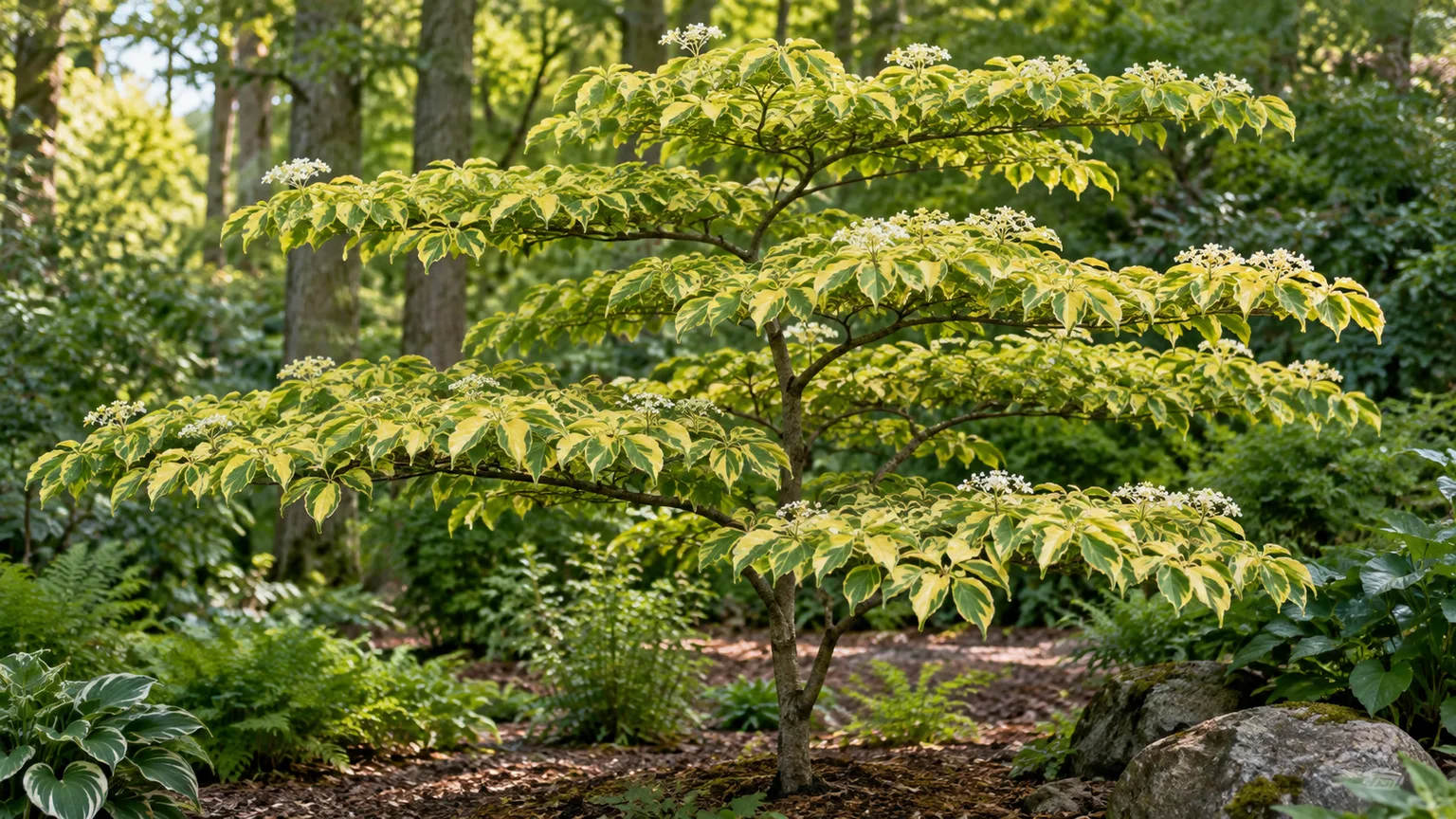
Pagoda dogwood (Cornus alternifolia) is a small native tree or large shrub with a silhouette that does most of the decorating. Its branches leave the trunk in distinct horizontal tiers, giving the canopy a pagoda-like profile even before the spring flowers appear. Flat clusters of creamy white to yellowish flowers open near the branch tips, dark blue-black fruits follow in summer, and the foliage can shift from fresh green to copper, red, or purple in fall.
The best way to grow this dogwood is to copy the conditions of a cool woodland edge: bright filtered light, soil that stays moderately moist without remaining saturated, and a root zone protected from heat. It is not a tree for a waterlogged low spot, a harsh reflected-heat corner, or the middle of a heavily fertilized lawn. Once the site is right, care is relatively light. The first two years deserve the most attention; after that, the tree’s health depends mainly on moisture balance, airflow, and avoiding trunk injury.
Decide Whether Pagoda Dogwood Fits Your Site
A mature pagoda dogwood is usually a multi-stemmed shrub or small tree about 15 to 30 feet tall and similarly broad, although conditions and cultivar make a large difference. The straight species is a better fit for a naturalistic border, woodland edge, or spacious foundation planting than for a narrow strip beside a walkway. Its branches are wide and intentionally horizontal, so allow room for the tiers to remain visible instead of planning to shear them into a column.
This species is generally hardy in USDA Zones 3 through 7. Hardiness, however, does not cancel out poor drainage or summer heat. In a hot southern site, give it more afternoon protection and keep the root zone cool. In a cold area, spring planting and a sheltered, well-drained position may be safer than a late fall purchase. A location near a stream or ravine can be excellent if water moves through the soil; a low pocket that holds water after storms is not equivalent.
Identify the Straight Species and ‘Golden Shadows’
The straight species has green leaves and a naturally broad, layered habit. ‘Golden Shadows’ is a smaller trademarked selection, often reaching roughly 10 to 12 feet tall with a similar spread, with leaves marked in green and gold. ‘Argentea’, sometimes called silver pagoda dogwood, has pale margins and a more silvery effect. Read the nursery label for the mature dimensions of the plant you are actually buying; the name “pagoda dogwood” alone does not tell you whether the tree will fit a small yard.
Variegated foliage also changes the light decision. Bright filtered light helps the gold or silver margins show, but intense afternoon sun can scorch them, especially when the root zone dries. Dense shade may protect the leaves while producing a thinner, less balanced plant. If you need a compact specimen near a patio, a named cultivar is more predictable than a seed-grown tree, but a natural woodland planting may benefit from the variation of the straight species.
Choose Light That Changes With the Season
Pagoda dogwood prefers partial sun or dappled shade, much like the understory beneath a high canopy. Morning sun and afternoon shade are a dependable combination in warm regions. Farther north, the tree can tolerate more direct light if the soil does not dry rapidly and the leaves are protected from reflected heat.
Inspect the site in midsummer, not only when bare branches make every location look sunny. A deciduous canopy can turn spring sun into deep summer shade, while a nearby wall or driveway can add heat and reflected light. Aim for several hours of direct light filtered by surrounding trees, or a bright open edge with protection during the hottest part of the day. Too little light often shows as sparse growth and weak flowering; too much heat combined with dry soil appears as curled or browned leaf edges.
Build a Cool, Drained Root Zone
The ideal soil is loamy, organic, and well drained, with a slightly acidic reaction. Pagoda dogwood can tolerate a wider pH range than the word “acid-loving” sometimes suggests, but it performs best when the soil is neither strongly alkaline nor compacted. The University of Florida’s plant profile lists C. alternifolia as a woodland tree adapted to these conditions: https://hort.ifas.ufl.edu/database/lppi/sp097.shtml
Test the drainage before planting. Dig a hole roughly as deep as the root ball and fill it with water; if water remains for many hours, investigate the site rather than simply adding more compost to the hole. On heavy clay, plant slightly high with the root flare visible, improve drainage across the bed, or choose a naturally raised position. A pocket of rich amended soil surrounded by dense clay can collect water around the roots, creating the bathtub effect that causes decline.
Work finished compost into a broad planting area only when the soil needs organic matter. Do not create a highly fertile island around a tree that evolved in a relatively lean woodland soil. Keep lawn fertilizer away from the root zone, particularly high-nitrogen products that encourage soft shoots and abundant leaves at the expense of balanced growth and flowers.
Plant Pagoda Dogwood Without Burying the Crown
Plant in spring after the soil is workable, especially in colder zones, or in early fall where roots have time to settle before the ground freezes. Choose a nursery plant with a sound trunk, evenly distributed branches, and no wounds at the base. Container trees may establish faster than very small seedlings, but a small plant that is correctly planted will often outgrow a larger tree placed too deeply.
Dig a hole two to three times wider than the root ball and no deeper than its soil mass. Set the tree so the root flare sits at or just above the surrounding grade. Remove circling roots from a container only as much as needed to direct them outward, then backfill with the native soil you removed. Water slowly to settle air pockets, and do not pack the soil hard around the trunk.
Keep grass and competing roots away from the planting circle. A 2- to 3-inch layer of organic mulch helps moderate soil temperature and moisture, but leave several inches of clear space around the trunk. Mulch touching the bark keeps it damp, hides damage, and can encourage decay. Stake only when wind or an unstable root ball requires it, and remove supports once the tree can stand independently.
Water for Establishment, Then Water With Restraint
During the first growing season, check the soil beneath the mulch every few days in hot or windy weather. Water deeply when the upper few inches begin to dry, allowing the water to move through the entire root ball and into the surrounding soil. A newly planted tree may need weekly irrigation when rain is absent, but soil type and weather should decide the interval.
In the second year, lengthen the time between waterings as roots spread. An established tree still benefits from water during a prolonged drought, especially in a sunny or sandy site, but constant shallow irrigation is counterproductive. It keeps the surface wet, encourages shallow roots, and can leave the crown vulnerable to rot. Water at the soil line in the morning when possible, rather than repeatedly wetting the foliage.
If leaves wilt after watering, check the soil before adding more. Heat can cause temporary midday droop even when roots have adequate moisture, while saturated soil can produce the same visual symptom by starving roots of oxygen. A probe or trowel tells you more than a calendar. The goal is a cool, evenly moist root zone with time for excess water to drain.
Use Mulch and Fertilizer Strategically
Mulch is useful for maintaining the woodland-floor conditions this tree prefers. Reapply it as it decomposes, keeping the layer moderate and the trunk exposed. Shredded leaves, composted bark, or other stable organic mulch can improve the surface environment without turning the bed into a wet, deep pile.
Routine fertilizer is rarely necessary if the tree is growing steadily and the foliage has normal color. If a soil test identifies a deficiency, correct that specific deficiency according to the test rather than guessing with a general feed. Do not fertilize late in the season, when a flush of tender growth may be more vulnerable to cold. A thin spring compost dressing is a gentler option than repeated high-nitrogen applications.
Read the Tree’s Seasonal Rhythm
Pagoda dogwood starts slowly in cool spring weather. Buds may remain quiet while nearby perennials leaf out, particularly after a cold winter. Late spring brings the flattened flower clusters; the flowers are subtler than the large bracts of flowering dogwood but reward close viewing and may carry a light, sweet fragrance.
Summer fruit develops into dark berries that birds may use. In fall, the leaves can show red-purple, copper, or reddish tones before dropping. Winter reveals the branching pattern, which is one reason not to crowd the tree with shrubs that hide the lower tiers. Seasonal variation is normal: drought, shade, cultivar, and local weather all affect the strength of flowering and fall color.
Prune to Preserve the Tiered Form
Pagoda dogwood needs light corrective pruning, not an annual haircut. Late winter or very early spring, before new leaves emerge, is a practical time to see the framework and remove dead, damaged, crossing, or badly placed branches. Make cuts just outside the branch collar and avoid leaving stubs.
If you want a tree form, remove selected lower branches gradually while the plant is young. Do not strip too much canopy at once; the leaves are the plant’s energy-making system, and a severe change can stress a slow-establishing tree. For a multi-stemmed shrub, keep several well-spaced stems and remove weak suckers or crowded growth at the base.
Clean tools between cuts when removing diseased wood. Never top the tree or shorten every branch to the same height, because that destroys the natural horizontal architecture and encourages weak regrowth. If a branch is yellow, cracked, or obviously infected, cut back to healthy wood and dispose of the material rather than composting it.
Select Cultivars for Size and Foliage
Choose the straight species when you want a larger, green-leaved native tree with a relaxed woodland presence. Choose ‘Golden Shadows’ when its smaller size and gold-marked foliage suit the design, and place it where filtered light will protect the variegated leaves. ‘Argentea’ offers pale margins but can require similar attention to heat and moisture balance.
Compare mature width as carefully as height. A small tree can still occupy a broad circle, and the lower branches may extend toward paths or windows. Ask whether the plant was propagated as a named cultivar or raised from seed. Seed-grown plants will not reliably reproduce the exact variegation or form of a cultivar, while a nursery-propagated selection gives you a clearer expectation of what you are buying.
Propagate the Straight Species Responsibly
Stem cuttings are a practical way to reproduce a non-trademarked pagoda dogwood, but rooting can take patience. In early summer, take a 5- to 6-inch cutting from healthy, current-season growth. Remove the lower leaves, dip the base in rooting hormone if desired, and insert it into a sterile, airy medium such as a propagation mix with perlite or coarse sand.
Cover the pot with a loose clear bag or propagation cover to retain humidity, but keep leaves from touching the plastic and provide bright indirect light. Keep the medium lightly moist, never waterlogged. Check for resistance after several weeks rather than tugging daily. Once roots have formed, gradually ventilate the cutting, pot it into regular soil, and grow it on until the root system can hold the soil together.
Do not propagate ‘Golden Shadows’ without checking the plant’s current legal status and nursery terms. A trademarked name and a plant patent are not the same thing, but both can affect how a named cultivar may be reproduced and sold. The safest route for a home gardener is to buy a properly labeled plant from a reputable nursery.
Grow Pagoda Dogwood From Seed
Seed is best for the straight species and for naturalistic plantings where individual variation is welcome. Collect ripe fruit in fall, remove the fleshy coating, and sow the cleaned seed in a prepared outdoor bed or a container of well-drained medium. Protect the bed from rodents and mark it clearly so it is not disturbed.
Pagoda dogwood seed typically needs a period of cold, moist stratification before it will germinate, followed by warmer conditions. Outdoor sowing can provide this cycle naturally, although germination may be uneven and slow. Keep the bed weed-free and evenly moist after emergence. Let seedlings develop a substantial root system before moving them; a seedling that looks small above ground may already be vulnerable to root disturbance.
Seedlings do not come true to the foliage of variegated cultivars. If uniform gold or silver markings matter, use a nursery-propagated plant rather than hoping seed will reproduce the parent.
Handle Containers and Difficult Sites
Pagoda dogwood is primarily an in-ground plant. A very large container can hold a young specimen for a time, but the root system, eventual height, and need for a cool root zone make long-term container culture difficult. Use a pot with generous drainage, protect it from intense summer heat, and remember that container soil can dry or freeze faster than ground soil.
On a slope, the tree can work well if runoff is controlled during establishment. Plant across the slope rather than directly in a channel, and use temporary erosion protection if rain can wash soil away. In a rain garden or permanently wet swale, choose a species adapted to saturated soil instead. Pagoda dogwood can handle moisture, but repeated standing water is a poor match.
Prevent and Diagnose Common Problems
Browning Leaves and Leaf Scorch
Brown edges during a hot, dry spell usually point first to heat or water stress, especially when the tree is in exposed afternoon sun. Check soil moisture, recent wind, reflected heat from paving, and whether roots are constrained. If the soil is wet, do not respond with more irrigation; improve drainage and allow the root zone to breathe.
Brown spots or premature leaf drop can also follow prolonged leaf wetness, crowding, or a fungal leaf disease. Remove fallen leaves if disease recurs, improve airflow through selective pruning, and water at the ground. A single damaged leaf is not a reason to spray the entire tree.
Yellow Branches and Golden Canker
A whole leaf turning yellow in autumn is normal; a branch or section of trunk developing conspicuous yellow, orange, or tan discoloration is different. Golden canker can kill the wood above an infection. Prune infected branches well below the discolored area during dormant weather, disinfecting the tool between cuts, and dispose of the removed wood.
If discoloration reaches the main trunk, consult a qualified arborist before making a major cut. Keep the tree vigorous through correct watering and avoid wounds from mowers, string trimmers, and careless stakes. A damaged trunk is an entry point for several problems, not just canker.
Pests, Deer, and Mechanical Damage
Scale, borers, leafminers, and occasional chewing insects may appear, but stressed trees are more likely to suffer lasting damage. Inspect the undersides of leaves and the trunk before applying anything. Preserve beneficial insects, and use a targeted treatment only when the pest is identified and the damage warrants it.
Deer and rabbits may browse young growth or damage bark, especially when other food is scarce. A temporary trunk guard or fence is often more reliable than assuming a native tree will be ignored. Keep guards from rubbing the bark and remove them periodically to inspect for trapped moisture or pests.
Support Flowers, Fruit, and Wildlife Value
The best way to encourage flowers is to provide the right site rather than push growth with fertilizer. Adequate light, steady establishment moisture, and good drainage support flowering more reliably than a heavy feeding schedule. Excess nitrogen can produce lush vegetative growth with fewer flowers, while drought stress or root damage can reduce both bloom and fruit.
Pagoda dogwood’s flowers and berries can add seasonal interest and food value, although fruit production varies with weather and pollination. Leave some fallen leaves and winter structure when practical, and combine the tree with other locally appropriate native plants for a more useful habitat. The tree is not a replacement for a diverse planting, but it can add a valuable layer at the woodland edge.
Conclusion: Match the Tree to the Woodland Edge
Pagoda dogwood succeeds when you treat it as an understory tree, not as a thirsty lawn specimen. Give it filtered light, a cool and well-drained root zone, room for its horizontal branches, and consistent water while it establishes. Then reduce intervention: mulch moderately, fertilize only for a known need, and prune only to maintain health and structure.
For a compact garden, ‘Golden Shadows’ offers a smaller frame and luminous foliage, but it still needs protection from harsh heat and wet soil. When leaves brown or branches yellow, inspect moisture, light, wounds, and disease before reaching for a product. With that site-first approach, pagoda dogwood provides flowers, fruit, fall color, and distinctive winter form for years without becoming a high-maintenance tree.