How to Grow and Care for African Daisies
Learn African daisy care by plant type: planting, watering, pruning, summer heat, winter protection, cuttings, and when seed will not match a cultivar.
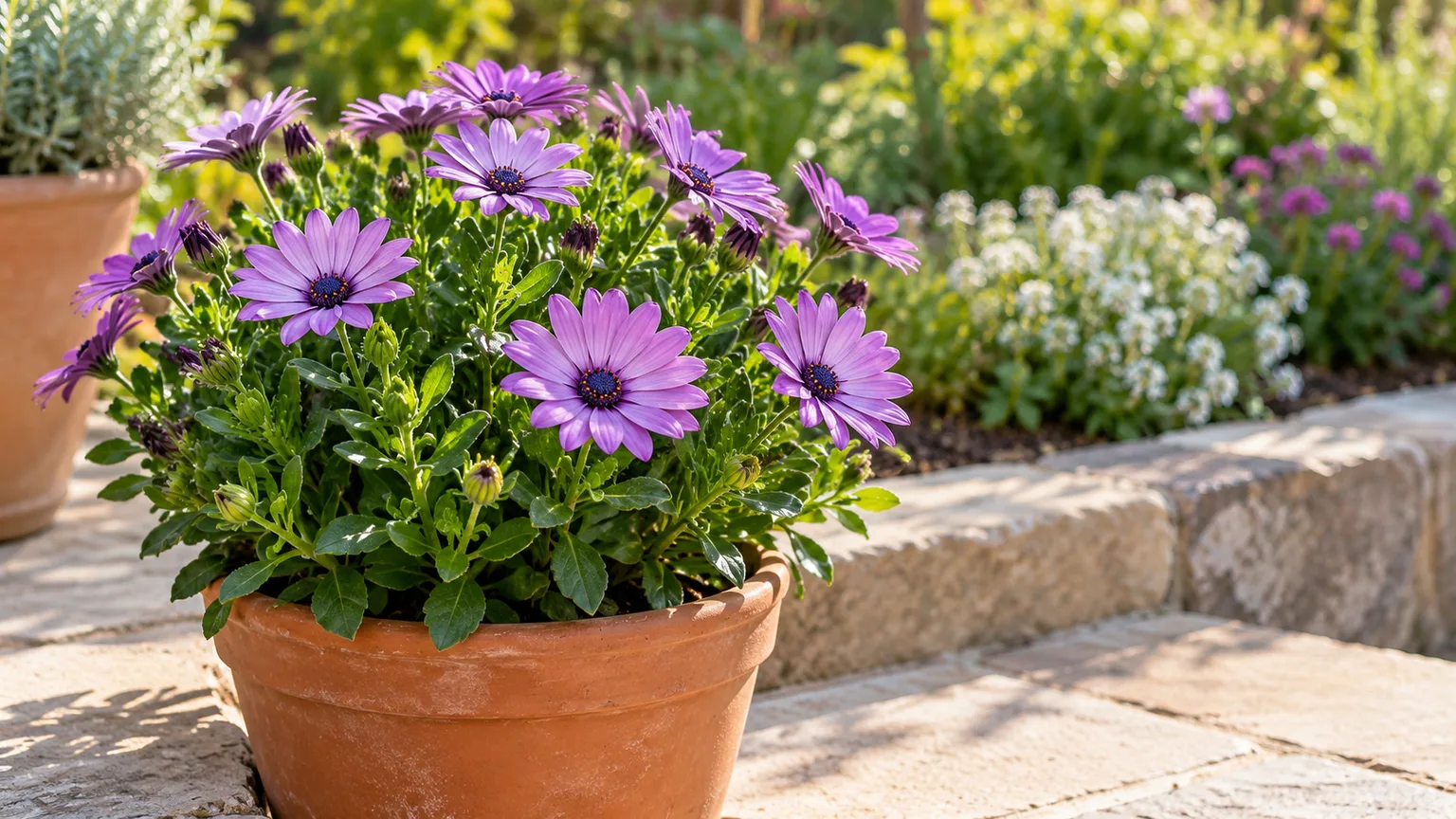
The first step in growing an African daisy is reading its plant tag. “African daisy” is used for several different flowers, and the sunny, colorful bedding plant most often sold under that name is commonly labeled Osteospermum or Cape daisy. Other plants—including annual Dimorphotheca species, gazanias, and gerberas—also carry the common name, so advice about hardiness, seeding, and watering does not automatically transfer from one to another.
For the garden-center Osteospermum group, the reliable basics are straightforward: give it bright sun, keep its roots out of standing water, and expect flowering to respond to temperature as well as care. Most cultivars bloom strongly in mild weather, may pause during a hot spell, and differ in how well they survive winter. Your label, local climate, and a check of the soil tell you more than a single zone number or watering calendar can.
Start With the Label: “African Daisy” Is Not One Species
The common name is useful at the garden center, but it is not a precise botanical ID. North Carolina State Extension lists “African daisy” among the names used for Dimorphotheca sinuata, a low, spreading annual also called Cape marigold, and notes that Arctotis, Dimorphotheca pluvialis, Gazania, and Gerbera are also called African daisies. Those plants differ in habit and life cycle, even though their flowers share the familiar daisy shape.
Osteospermum and Dimorphotheca names overlap in the garden trade
Most brightly colored, compact plants sold as patio or bedding flowers are labeled Osteospermum, often with a cultivar or series name. Botanical naming adds a wrinkle: Kew’s Plants of the World Online currently accepts Dimorphotheca ecklonis and lists Osteospermum ecklonis as a synonym. A 2025 taxonomic study also explains that perennial D. ecklonis and D. fruticosa cultivars are widely grown under the horticultural name Osteospermum. That means a label using either genus may describe related plants in the same ornamental trade, while “African daisy” alone is even less specific.
There is also a distinct seed-grown annual often sold as Cape marigold. Dimorphotheca sinuata has orange or yellow flowers, tends to spread, and can reseed in suitable dry, sunny sites; North Carolina State Extension describes it as an annual from South Africa. A compact purple, pink, white, or bicolor Osteospermum in a nursery pot is more likely a selected bedding cultivar. Do not infer the plant’s exact species from flower color alone; use the botanical name and cultivar printed on the tag.
The distinction matters for the questions that cause the most disappointment. A hardy species, a tender hybrid, and an annual that sets seed may all be sold under overlapping common names. When you know only “African daisy,” the safest approach is to treat hardiness and seed behavior as unknown until you can check the label or ask the seller.
Choose a Site That Fits the Plant and Your Summer
Osteospermum flowers best in a bright, open position. Illinois Extension recommends full sun and describes the plant as useful for spring and fall because many cultivars flower less during summer heat. UMass Extension similarly reports that most Osteospermum flower most profusely from early spring into midsummer, slow during hot weather, and often resume when cooler nights return. “African” in the common name is not a promise that every modern cultivar enjoys prolonged heat.
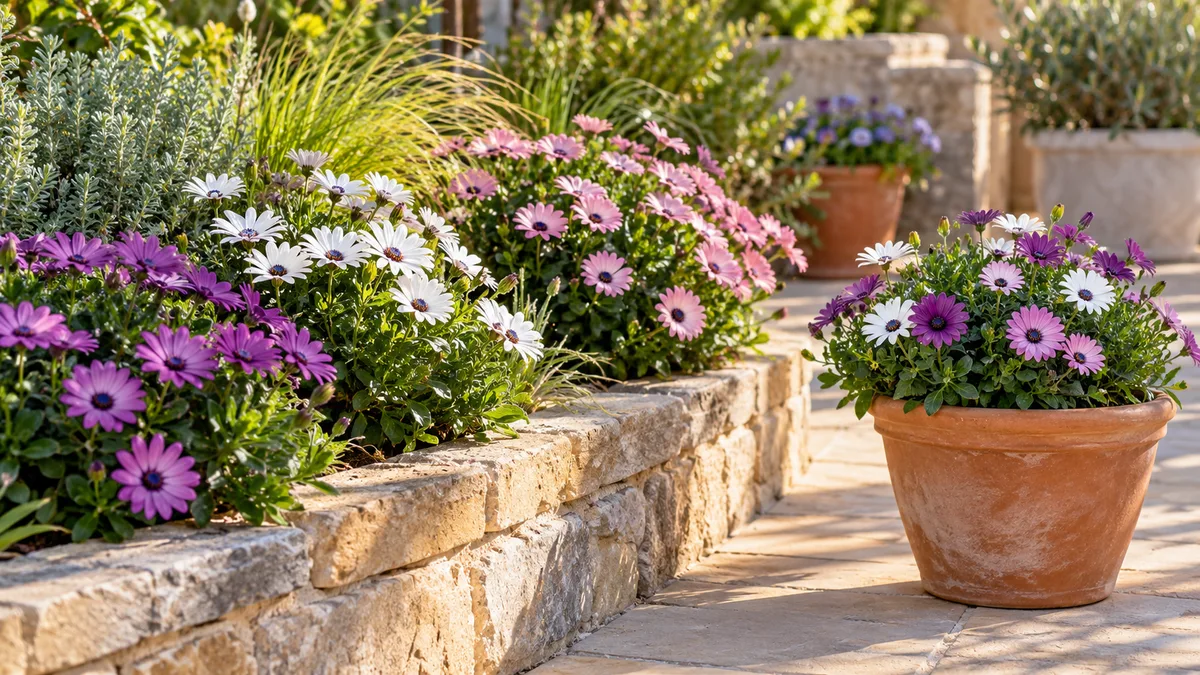
Give it strong sun, then account for heat
Aim for a spot that receives about six hours or more of direct sun when the weather is mild. Morning sun with some protection from punishing late-afternoon heat can be a better compromise in a very hot inland climate, especially for a plant that wilts or dries rapidly in a pot. In a mild summer region, reducing sun too much can trade heat relief for fewer flowers, so watch the plant rather than assuming shade is always an improvement.
Plants need enough light to stay compact and make buds. A leggy plant with long gaps between leaves is often reaching for light; moving it to a brighter position is more useful than adding fertilizer. Flowers may close at night and on cloudy days. That is a normal response in many types, not evidence that the plant needs more water, although some newer cultivars are selected to remain open longer.
Use the flower display you want to guide placement. A container near a sunny path makes it easy to enjoy flowers that open in daylight. In a mixed border, place the plant where it will receive sun but where nearby companions can carry color during a summer pause. A low-growing, seed-grown Cape marigold may suit a sunny, dry edge; a compact named Osteospermum is often a better choice for a patio pot or the front of a flower bed.
Choose a bed or container with sharp drainage
Both beds and pots can work. In a garden bed, avoid a low pocket that stays wet after rain or irrigation. In a container, choose a pot with unobstructed drainage holes and a free-draining potting mix; a decorative cachepot is fine as an outer sleeve only if you empty water from it after watering. A large pot is not automatically better if it holds wet mix for too long.
Follow the cultivar’s mature width on its tag when spacing plants. Compact series may stay low and mounded, while trailing or vigorous forms can spread much farther. Crowding them shoulder to shoulder reduces airflow around foliage and makes it harder to spot pests or wet-soil problems. Use the smallest spacing on the tag only when you are prepared for the plants to meet as they mature.
Containers are especially useful when you want to move a plant into shelter before frost. They also dry faster than beds in hot, windy weather, so expect to check them more often. If you are unsure whether a tender plant will survive your winter, a movable pot gives you an option that an in-ground planting does not.
Plant After Frost Danger, Not by a Fixed Calendar
In a cold-winter climate, set nursery plants outside after the usual frost danger has passed and nights are no longer routinely cold. A short, light frost may be tolerated by some cultivars, but it is not a dependable planting target; a hard freeze can injure or kill tender plants. The timing therefore follows your local last-frost pattern and the hardiness information for the specific cultivar, not a single date that works across the country.
Harden off plants that have been grown under cover. Over several days, expose them to outdoor light and breeze for increasing periods, bringing them back in if the forecast threatens frost. This gradual transition reduces sun and wind shock. When planting, set the root ball at the same depth it was growing in its nursery pot, firm the soil around it, and water the root zone so the mix settles without leaving the crown submerged.
Prepare garden soil or potting mix
The most important soil trait is drainage. A moderately fertile garden soil that drains after rain is usually sufficient; add finished compost if the bed is depleted or compacted, but do not try to turn the planting hole into a rich, water-holding pocket. In dense clay, a raised bed or container may be a more reliable fix than adding a little sand to one hole.
For pots, use fresh outdoor container mix rather than garden soil, which can compact in a pot and stay wet around roots. Choose a mix that drains while still holding enough moisture for roots to take up water between checks. Do not put a layer of gravel in the bottom as a substitute for drainage holes; it does not correct a waterlogged mix. If the potting mix has a starter fertilizer, wait before adding more so the plant is not fed twice at once.
Most home gardeners do not need to measure pH or chase a narrow acidity range for a seasonal flower display. If a plant repeatedly struggles in otherwise well-drained soil, check the actual growing conditions and cultivar needs before making a pH adjustment. Matching the plant to the site and preventing saturated roots are more useful first steps.
Care From Spring Through Fall
Once established, a well-sited African daisy is a manageable bedding plant, but “low maintenance” does not mean that a pot can go dry for a week in midsummer. The care rhythm changes with weather: new transplants need steady moisture while roots spread, established bed plants can rely more on rainfall, and container plants need more frequent checks because the limited root zone heats and dries quickly.
Water by root-zone feel
Water a new planting thoroughly, then keep its root zone evenly moist while it establishes. After that, check the soil before watering. If the upper inch or two feels dry and the deeper mix is beginning to dry, water slowly until moisture reaches the root ball and excess drains from the pot. If the soil still feels cool and damp below the surface, wait and check again later.
This method works better than a universal “one inch every week” rule. A clay bed after rain, a sandy raised bed in wind, and a small black pot on hot concrete lose water at very different rates. In hot weather, check containers daily; that does not mean they need water every day. Water based on how quickly the root zone dries, and avoid letting a pot stand in a full saucer.
Too much water is a real risk in cool, wet weather. Persistently wet soil deprives roots of air and encourages root or stem rot, especially when a plant is crowded or the container drains poorly. If leaves yellow while the mix stays wet, do not assume the plant needs fertilizer. Check drainage and moisture first. Conversely, wilted foliage in bone-dry mix calls for a deep drink, followed by a change to the watering routine rather than repeated shallow splashes.
Feed lightly; avoid pushing leafy growth
A bed with compost-rich, reasonably fertile soil may need little additional feeding for one season. In a pot, nutrients wash out with repeated watering, so a balanced flowering-plant fertilizer used according to its label can help during active growth. If the mix already contains controlled-release fertilizer, do not layer on frequent liquid feed until that initial supply has run down.
More fertilizer is not a shortcut to more flowers. Excess nitrogen can encourage soft, leafy or stretched growth at the expense of a compact plant, and excess salts can damage roots in containers. If the plant is green and growing but not flowering during a heat spell, fertilizer is unlikely to solve the problem. First check light, root health, and temperature, and resume modest feeding only when the plant is actively growing.
The UMass Extension greenhouse production guidance gives precise feeding and temperature targets for commercial crops, but those rates are designed for controlled production and should not be copied directly into a home pot. For a home gardener, the product label, the potting mix, and the plant’s response are the safer guide. Stop feeding a plant that has slowed down in heat or is being held cool for winter.
Deadhead, pinch, and prune at the right stage
Deadheading means removing a faded flower and its stalk, not simply pulling off loose petals. Follow the stalk down to the next healthy leaf pair, side shoot, or developing bud and snip just above it. This keeps a plant tidy and may encourage additional flowers on cultivars that continue setting buds. Some newer series shed spent blooms or flower freely without meticulous deadheading, so treat the task as helpful maintenance rather than a rule that determines whether every plant will bloom.
Pinching is a different job. On a young, unbudded plant, remove the soft growing tip once or twice to encourage side shoots and a fuller shape. UC Cooperative Extension Master Gardener guidance for Osteospermum describes early pinching as a way to build branching; the trade-off is that each pinch delays the first flowers while new branches form. Skip it on a compact nursery plant already carrying buds or on a short growing season when you want the earliest display.
If established stems become long or ragged, trim them back by roughly one-third to a healthy leaf node rather than shearing all growth into old, leafless wood. A light cutback can refresh the shape after the first flush, but timing matters: do not make a hard haircut during severe heat or when the plant is drought-stressed. Wait until temperatures ease and new growth is visible. If a plant has a hollow, woody center and few green shoots low on the stems, replacing it or rooting a cutting is often more dependable than cutting it nearly to the ground.
When Flowers Slow, Read the Weather First
Flowering depends on more than deadheading. In many Osteospermum cultivars, spring and fall are the strongest bloom periods, while high summer temperatures slow bud formation. Illinois Extension explicitly recommends these cultivars for early-spring and fall color because many go out of flower in summer heat; UMass Extension describes the same broad pattern. A temporary bloom pause in healthy foliage is therefore not automatically a care failure.
Heat pauses and closed flowers can be normal
When buds stop appearing as hot nights arrive, keep the root zone watered appropriately, protect a container from the hottest reflected afternoon heat if it is wilting, and wait for cooler weather before judging the plant. Do not force a bloom flush with extra fertilizer or severe pruning. If the cultivar is advertised as heat tolerant, that means it may handle heat better than other varieties, not that it must flower through every heat wave.
Many African daisies open in bright light and close after dusk or in cloudy weather. Check again on a sunny day before assuming the flower is damaged. If unopened buds persist through mild, bright conditions, then look for water stress, root rot, or insects. This simple distinction avoids unnecessary watering of soil that is already wet.
Check light, water, roots, and pests before feeding
Use the pattern of symptoms to choose the first check:
- Long, floppy stems with few buds: move the pot to stronger light and avoid high-nitrogen feeding. Pinch or trim only if the plant is growing actively.
- Yellowing leaves in persistently wet mix: clear the drainage holes, empty standing water, and let the root zone begin drying. If the base is soft or roots smell sour, inspect for rot.
- Wilt in dry, hot soil: soak the root ball thoroughly and check again later. A plant that remains wilted in wet soil may have damaged roots rather than a need for another drink.
- Sticky new growth, clusters of small insects, or pale stippling: inspect leaf undersides for aphids, whiteflies, or mites. Rinse small infestations off and keep checking new growth; use only a product labeled for the plant and pest if further control is needed.
- Gray or spotted foliage in a crowded, damp planting: improve spacing and airflow, keep irrigation off leaves when possible, and remove badly affected material.
UMass Extension identifies powdery mildew, Phytophthora, and Verticillium among production problems, alongside pests such as aphids, thrips, and mites. In a home garden, the practical prevention is to avoid waterlogged roots, provide air movement, inspect regularly, and avoid carrying an infested pot indoors for winter without checking it first. If a plant has a persistent wilt or spreading disease despite corrected conditions, replacing it may be safer than keeping a failing plant beside healthy ones.
Plan for Winter Before Cold Weather Arrives
Whether an African daisy comes back depends on which plant you have and what winter delivers. “Perennial” describes the plant’s life cycle under suitable conditions; it does not mean a tender cultivar will survive a hard freeze in every garden. Some species or selected cultivars are grown as short-lived perennials in mild areas, while many retail bedding hybrids are treated as annuals where winter freezes are routine.
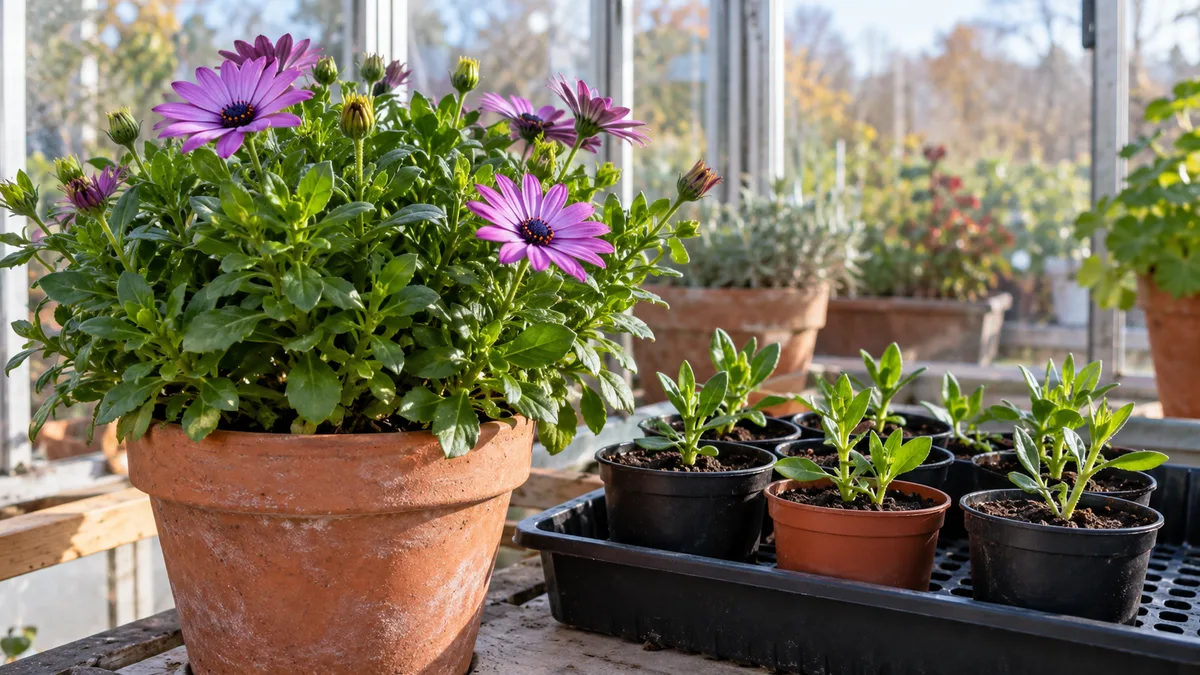
Decide whether your plant can return as a perennial
Check the botanical name and cultivar on the tag, then look for a hardiness rating that applies to that cultivar. The RHS profile, for example, lists Osteospermum ‘Stardust’ as H3, a rating for relatively mild conditions, and advises growing it in light, moderately fertile, well-drained soil in a warm, sunny position. That rating is specific to a named selection and a UK system; it is not a blanket claim that every plant sold as African daisy will overwinter in a particular USDA zone.
For U.S. gardeners, use the USDA hardiness zone as one screening tool, then verify the cultivar’s stated range and account for site conditions. A sheltered wall, raised bed with drainage, and reliable winter mulch may improve the odds in a mild region; a pot exposed to wind can be colder than the nearby ground. In a place with prolonged freezes, treat an unverified plant as seasonal color and plan either a protected pot, a cutting, or a replacement for spring.
BBC Gardeners’ World notes that many Osteospermum are tender or half-hardy and are grown as annual bedding plants, while some varieties can return with winter protection. That is more useful than promising a hardiness zone for the entire common-name group. If a plant is inexpensive and the winter is severe, replacing it may be the simplest and most reliable option; if it is a favorite named cultivar, preserve a cutting before the weather changes.
Overwinter a pot or save a cutting
For a potted plant you want to keep, bring it under cover before frost threatens. Check the leaves and stems for aphids or whiteflies, remove damaged growth, and place it in a bright, cool, frost-free room, conservatory, or greenhouse. A cool, bright rest is generally easier to manage than a warm, dim living room, where stems can stretch and pests may multiply. Keep the mix slightly moist rather than wet; water only when the root zone is beginning to dry, and do not fertilize while growth is slow.
If a whole mature plant is too large or you have limited indoor space, take one or more stem cuttings in late summer while the parent is healthy. Choose a nonflowering shoot, cut a few inches below a node, remove the lower leaves and any buds, and insert the bare lower node into a clean, free-draining propagation mix. Keep the mix lightly moist, give the cuttings bright indirect light and warmth, and cover loosely to retain humidity while allowing ventilation. Check for resistance to a gentle tug after a few weeks; once rooted, pot them separately and grow them in a bright, frost-free place.
Cuttings are insurance, not a promise that every cultivar will root equally fast. The UMass production guide describes Osteospermum as routinely propagated vegetatively and notes root-rot risk during propagation, which is why an airy medium and restrained watering matter. BBC Gardeners’ World recommends cuttings in spring or late summer as a way to preserve plants through winter. Keep more than one cutting if the cultivar is valuable, but discard any that blacken or collapse rather than sealing rot into a humid cover.
Grow From Seed Only When Variation Is Acceptable
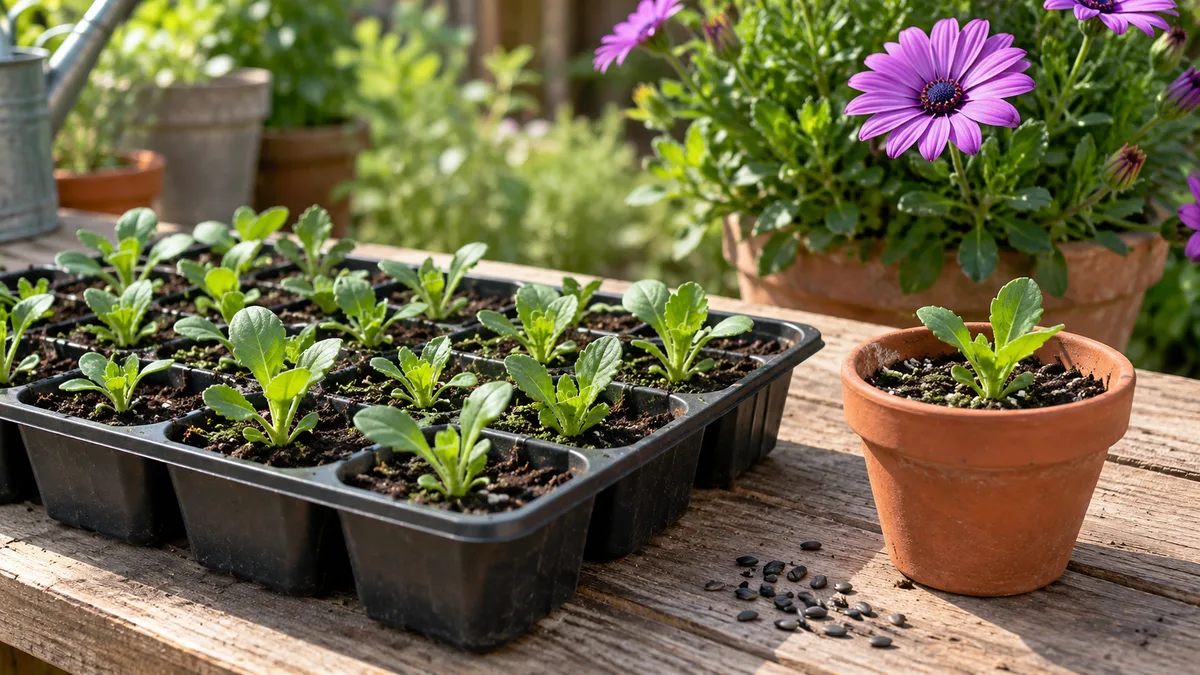
Seed is a good choice when you want a batch of plants, a species such as a seed-grown Cape marigold, or a named seed series that is sold specifically for seed propagation. Use the packet’s timing and sowing depth because seed requirements differ among species and commercial lines. Keep the medium evenly moist during germination, then give seedlings the brightest light available and harden them off before planting outside after frost danger.
Do not expect seed saved from every patio Osteospermum to reproduce the parent exactly. Many named bedding cultivars are hybrids or selected clones maintained by cuttings, so their seedlings may vary in flower color, form, vigor, or habit. Gardener’s Path makes the same practical distinction: seed can grow a Cape daisy, but offspring from many garden cultivars will not necessarily look like the plant that produced the seed. If you want the exact color and flower shape of a named plant, take cuttings or buy a fresh labeled plant. If you are happy to be surprised, try seed and keep the strongest seedlings.
Conclusion
Grow the plant named on the tag, not an assumption attached to the phrase “African daisy.” For most bedding Osteospermum, that means a sunny site, fast-draining soil, watering guided by how quickly the root zone dries, and light pruning that leaves healthy green growth. A midsummer pause is often a response to heat; it is not fixed by extra fertilizer or a hard cutback.
Before winter, decide whether your specific cultivar is worth protecting. A mild-climate gardener may keep a hardy selection in the ground, a container grower can move a favorite under cover, and a cold-climate gardener can root a cutting or treat the plant as annual color. If you choose seed, expect variation unless the packet identifies a seed-propagated series. Those few choices—correct label, drainage, season, and propagation method—make African daisies far more predictable from one year to the next.