Haworthia Care Guide: Light, Water, Soil, and Growth
Learn Haworthia care indoors: choose bright filtered light, gritty soil, and a root-check watering rhythm, with fixes for rot, pests, and stretched growth.
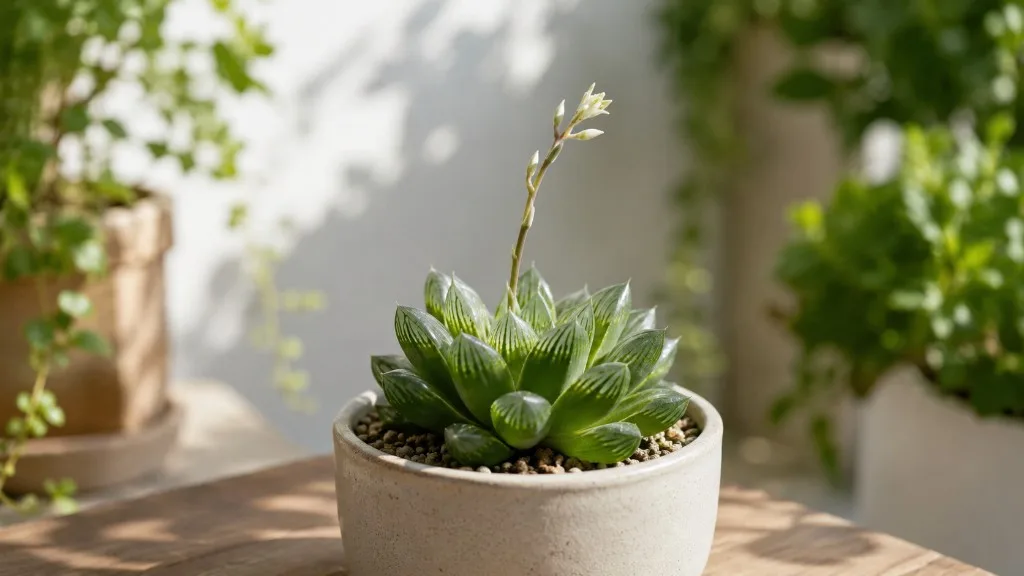
The compact rosettes sold as Haworthias are among the easier succulents to keep on a windowsill, provided you resist two common mistakes: treating every one as a full-sun desert plant and watering by the calendar. A bright spot, an airy potting mix, and a quick check below the soil surface will solve most routine care questions.
One useful wrinkle comes before the watering can: “Haworthia” on a nursery tag can mean a plant in the true genus Haworthia or one of its close relatives, Haworthiopsis. The familiar zebra plant is usually the latter, and the genus split helps explain why a care guide should offer a flexible baseline rather than one rigid prescription.
Start with the name on the label
Haworthias are small, perennial leaf succulents in the family Asphodelaceae, native mainly to South Africa. The group’s shape and markings vary widely: some plants have soft, rounded leaves with clear-looking tips; others have firm, narrow leaves with raised white bumps or bands. Many stay compact in pots, though mature clumps and individual species vary in size.
Botanical names on older labels can lag behind current taxonomy. The South African National Biodiversity Institute explains that the former broad genus Haworthia was divided into Haworthia, Haworthiopsis, and Tulista; Kew’s Plants of the World Online accepts Haworthiopsis fasciata and lists the old name Haworthia fasciata among its synonyms. If your zebra plant still carries the older label, that does not mean it needs a completely different setup: the names matter for identification, while the right response still depends on the plant’s leaves, roots, season, and room. (PlantZAfrica’s Haworthia overview; Kew Plants of the World Online)
This distinction also prevents a misleading comparison with aloe. The rosettes can look related at a glance, but an aloe usually has larger leaves and toothed margins, while many Haworthia have translucent leaf tips or a tighter, smaller rosette. If the label only says “zebra,” keep the botanical name with the plant or take a photo of the tag before buying a care product or applying a species-specific outdoor recommendation.

Light: bright and filtered usually beats full sun
Start with bright light near a window, not a dark shelf and not a sudden move into hot afternoon sun. In the Northern Hemisphere, an east-facing window is a forgiving starting point; a south- or west-facing window can work if the plant sits back from the glass or the strongest rays are softened. Reverse the directions in the Southern Hemisphere.
Most common indoor Haworthia and Haworthiopsis do well with bright indirect light plus a little gentle direct sun. A Wisconsin Extension guide notes that many species occupy protected sites and can scorch when moved straight into stronger sun, while North Carolina State Extension says the plants tolerate lower light but show their best color in brighter conditions. This balance matters: “succulent” does not automatically mean “leave it on a blazing sill.” (University of Wisconsin–Madison Extension; NC State Extension)
Read new growth rather than judging only the plant’s current color. A rosette that keeps its compact shape and produces firm leaves is receiving workable light; a plant that sends out narrow, elongated leaves is likely underlit. Red or bronze coloration can be a normal stress response in some plants, but pale patches, tan scarring, or a bleached side facing the window point to too much direct sun.
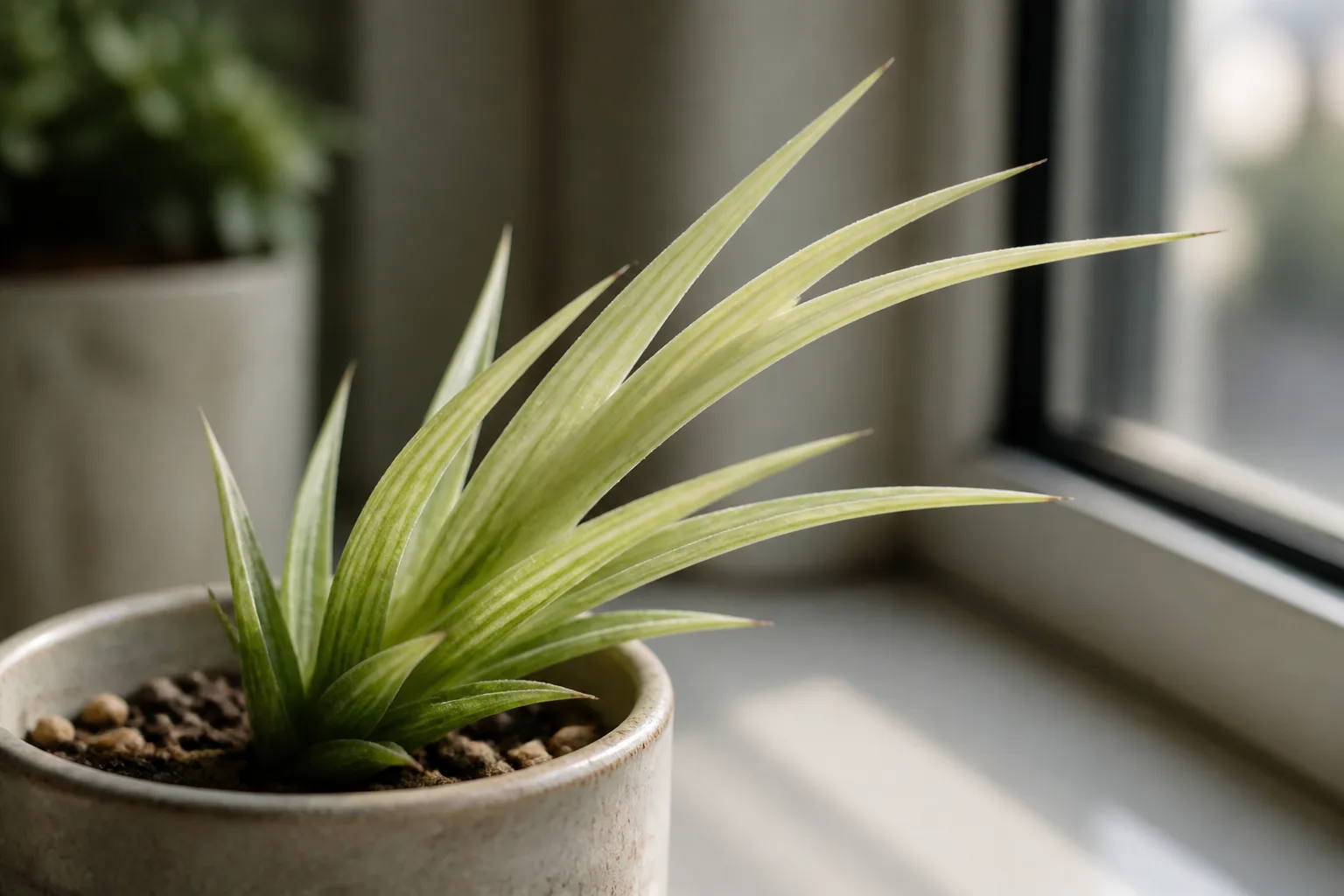
Change light gradually. Move a plant from a dim room to a brighter window in stages over about one to two weeks, or use a sheer curtain during the transition; this is especially important after buying a greenhouse-grown plant or bringing an indoor plant outside. Sunburn scars do not turn green again, so judge success by healthy new leaves rather than waiting for damaged tissue to recover.
Water: drench, drain, and wait for dry soil
Water when the potting mix has dried through most or all of the root zone, then wet the mix thoroughly and let the pot drain. Do not use a fixed weekly schedule: a small Haworthia in a warm, bright room can dry much faster than a larger plant in a cool room, a dense peat-heavy mix, or a pot without a drain hole. North Carolina State Extension and the Royal Horticultural Society both advise allowing the medium to dry between waterings; the RHS also cautions that cool, damp winter conditions raise rot risk. (NC State Extension; RHS Haworthia growing guide)
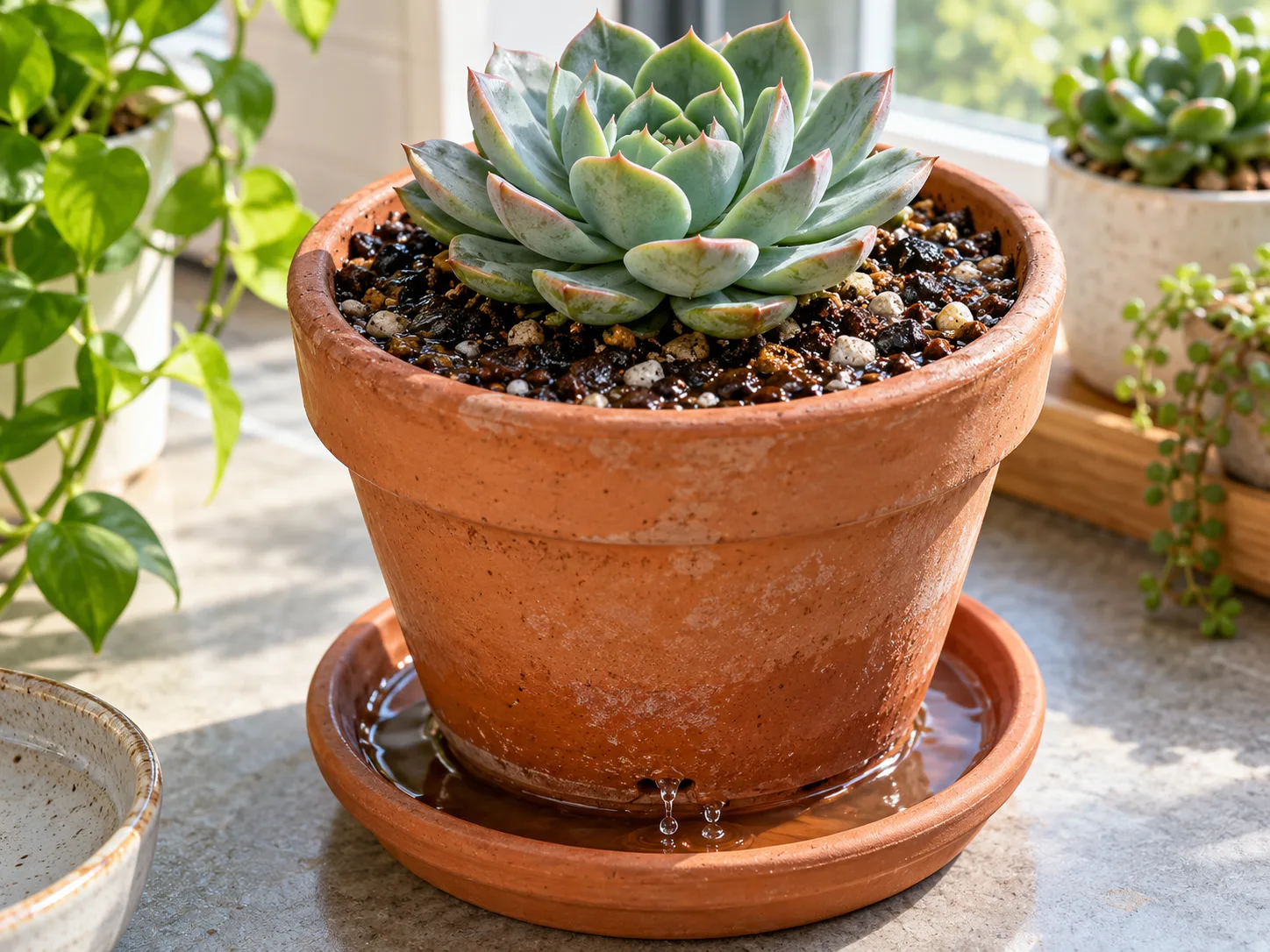
When the mix is dry, pour water onto the soil until it runs from the drainage hole, empty the saucer, and return the pot only after it stops dripping. A full soak followed by a dry interval wets the whole root ball; repeated sips keep only the surface damp and may leave lower roots dry. Avoid leaving water lodged between tightly packed leaves, especially if the room is cool or airless, but do not mistake a drop on a leaf for the main cause of root rot: roots suffer when the pot stays wet and oxygen-poor.
A reliable moisture check
Use more than the top inch of soil. Push a clean wooden skewer into the mix near the pot wall and withdraw it after a short wait; if it comes out damp or with soil clinging to it, wait. A pot that feels light compared with its post-watering weight is another useful cue, particularly once you have handled it a few times.
Before watering, make three checks:
- Check below the surface. The mix should be dry well into the root zone, not just crisp on top.
- Check the pot. It should have a clear drainage hole and no standing water in its saucer or decorative cachepot.
- Check the plant. Slightly thinner leaves in dry mix can mean thirst; limp, yellowing leaves in wet mix call for a root check, not another drink.
The calendar helps only as a reminder to inspect. University of Wisconsin–Madison Extension points out that Haworthia species come from areas with different rainfall seasons, so it is difficult to generalize their growing season; the RHS recommends a cooler, drier winter rest for Haworthias. For an unidentified houseplant, water less often when growth and drying slow in cool, dim conditions, but let the plant’s actual dry-down—not the month—decide when water is due. (Wisconsin Extension; RHS)
Soil and pot: make root-zone drainage visible
Choose a mix that releases excess water quickly but still holds enough moisture for roots to take it up. A commercial cactus or succulent mix is a workable base; if it stays damp for days in your home, blend in coarse pumice, perlite, or horticultural grit. Wisconsin Extension suggests mixing a standard potting soil with a similar volume of drainage material and warns that fine sand can clog air spaces rather than improve drainage. (Wisconsin Extension)
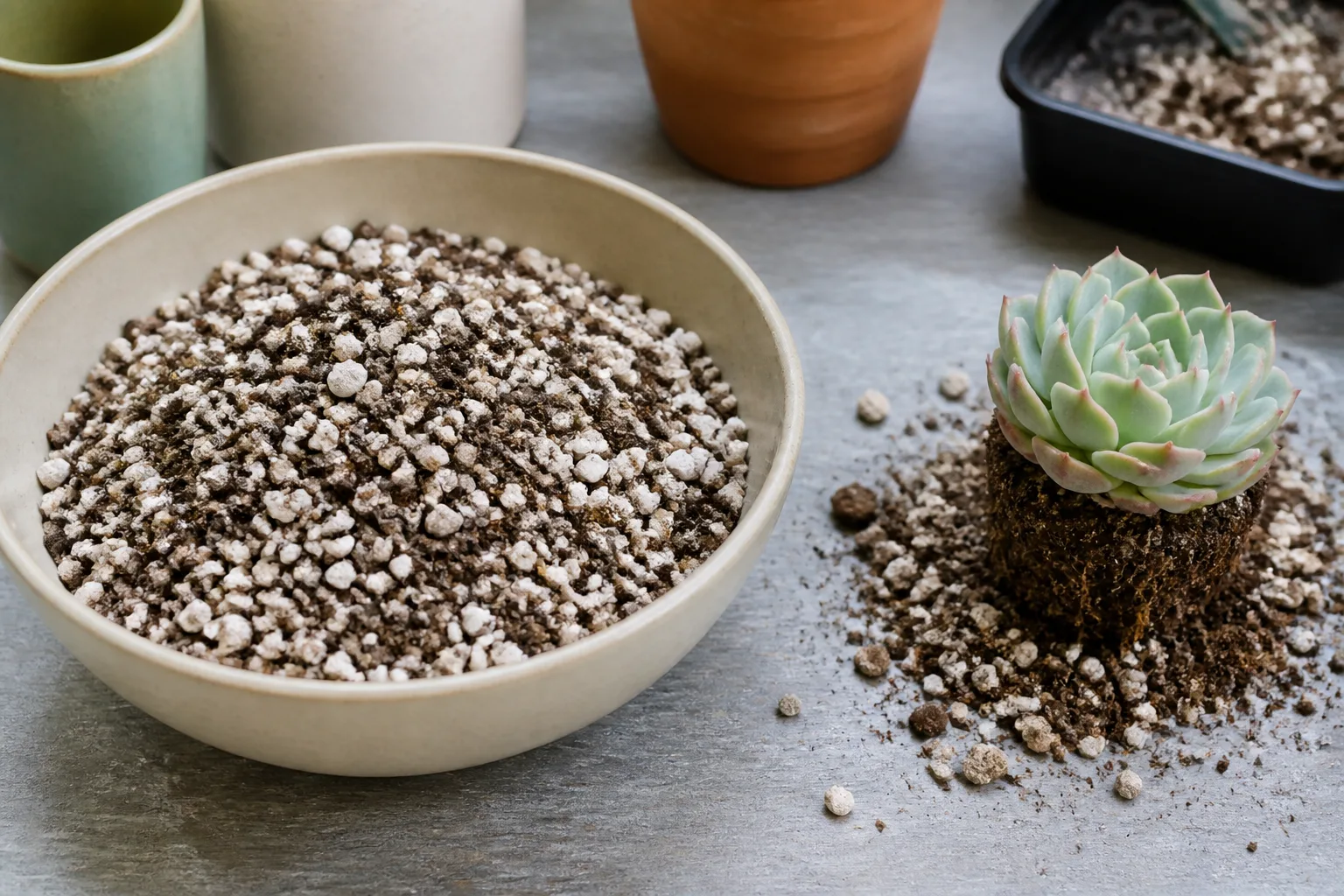
The best mix depends on the room and container. A warm, dry apartment can support a little more organic material than a humid room with cool winter windows, where extra mineral material and slower watering reduce the time roots sit wet. The point is not to copy a precise recipe from another grower; it is to check whether water exits promptly and whether the mix dries at a predictable pace.
Use a pot with a drainage hole and size it for the root system, not just the visible rosette. Some plants have thick, long roots that need more depth than a shallow decorative bowl suggests, while a small offset in a very large pot may sit in unused wet mix. Unglazed terracotta dries faster than plastic or glazed ceramic, which helps in a damp home but means more frequent checks in hot, dry conditions; a decorative outer pot is fine if you remove the nursery pot to drain after watering.
Temperature and a season-aware routine
A stable indoor room is usually easier than a porch with large temperature swings. The RHS gives a broad growing range of 10–26°C (50–80°F) and advises keeping Haworthias above 10°C; Wisconsin Extension notes that some plants may tolerate brief exposure into the low 40s Fahrenheit if their soil is not continuously wet, but also cautions against frost. For a plant with an uncertain label, protect it from freezing and cold, wet soil rather than testing its hardiness. (RHS; Wisconsin Extension)
Warm weather does not always mean more water. A Haworthia that is actively growing in bright, moderate temperatures may use water steadily, but a heat-stressed plant in a hot window or on a scorching patio may slow down; adding water to hot, stagnant, already damp mix can worsen root loss. Shade the pot during a heat wave, improve air movement, and check the mix again before watering.
You can grow many types outdoors during frost-free weather if you provide bright shade or filtered light and a fast-draining bed or pot. Hugh Conlon, a horticulturist and garden advisor, describes Haworthias as plants of lightly shaded sites and recommends protecting them from harsh afternoon sun; Wisconsin Extension also emphasizes gradual acclimation when moving houseplants outdoors. Bring the pot back inside before nights turn cold, and do not assume that a single USDA zone range applies to every species sold under the name. (Hugh Conlon, What Grows There; Wisconsin Extension)
Feeding and everyday maintenance
Haworthias are not heavy feeders, and fertilizer cannot compensate for poor light or persistently wet soil. During visible growth, a dilute balanced fertilizer or succulent fertilizer used sparingly is enough for most potted plants; follow the product label, err on the weak side, and skip feeding when the plant is not growing. If the mix already contains a controlled-release fertilizer, wait before adding more.
Household humidity is usually adequate, and misting adds little value to a succulent with water-storing leaves. Wipe dust from leaves with a dry soft brush or cloth so it does not hide new growth or pests, and remove dead basal leaves only when they come away easily. Avoid pulling healthy leaves or cutting the center of the rosette just to make the plant look tidy; that growing point is where the next leaves form.
Repot when roots or mix give you a reason
Repot when roots fill the container, a crowded cluster is pushing against its pot, or the mix has broken down and stopped drying well. A Haworthia that is slightly snug can still grow and may flower or produce offsets; annual repotting is unnecessary for a slow-growing plant. For zebra forms, Epic Gardening likewise recommends repotting when the clump reaches the pot’s edge, then stepping up modestly or dividing offsets rather than moving a plant on a rigid schedule. (Epic Gardening’s zebra plant guide)
Choose a replacement pot only modestly larger than the roots and preserve the depth at which the rosette was growing. Shake away loose old mix, inspect roots, and trim only parts that are black, hollow, or mushy with a clean tool; firm tan or pale roots can be healthy. If you find rot, a larger pot and fresh mix alone will not repair damaged tissue, so remove the soft parts first and reduce the risk factors that kept the roots wet.
Repotting is also the cleanest time to separate a pup. If the roots are healthy and you only disturbed a small amount of them, return the plant to dry mix and resume watering after the roots settle; if you cut damaged roots or offsets, wait until the cuts have dried before watering. Do not bury the leaf bases to stabilize a loose plant, because a buried crown stays damp and can rot.
Propagate the dependable way: separate offsets
Offsets, or pups, are small rosettes growing beside the parent plant. They are usually the simplest way to propagate Haworthia and many Haworthiopsis because they are already attached to an established plant and often begin developing roots of their own; the South African National Biodiversity Institute describes offset separation as a common propagation method for Haworthiopsis. (PlantZAfrica Haworthiopsis guide)
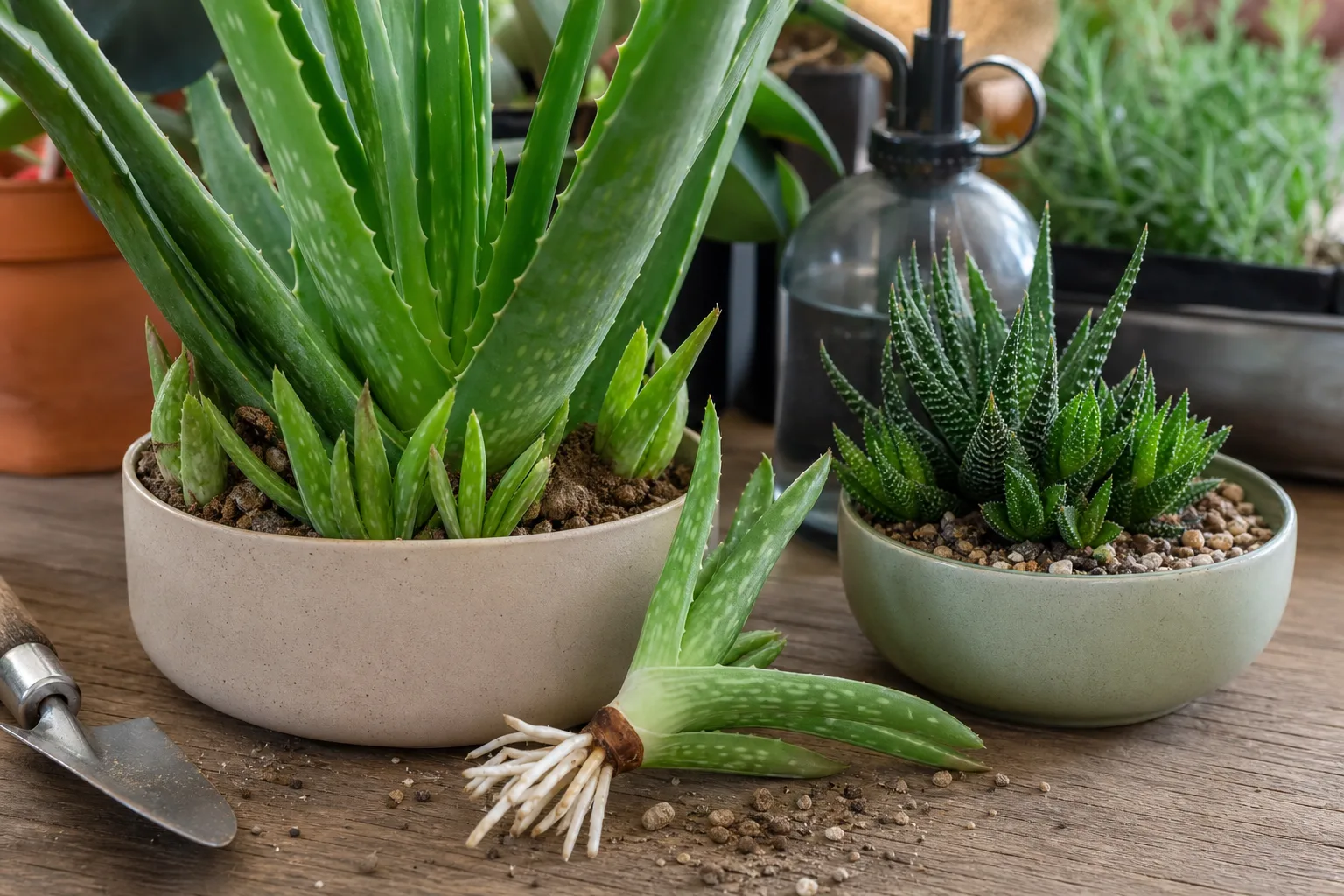
Wait until a pup is large enough to handle and has at least a few roots or a clearly formed base. Remove the plant from its pot, brush away mix, and locate the narrow connection between parent and offset; then separate with a clean, sharp blade, keeping roots attached to the pup when possible. If it pulls away cleanly without tearing, a blade may not be necessary.
Set the cut pup in a dry, airy place out of direct sun until the wound is dry to the touch, then plant it in a small pot of the same fast-draining mix. Keep the pot warm and in bright indirect light, and wait until the cutting surface has healed before watering lightly; once you see new growth or anchoring roots, resume the parent plant’s routine. A pup with no roots can survive, but it may take longer to settle, so avoid repeatedly tugging it to test for progress.
When seed or leaf propagation is worth trying
Leaf propagation is less predictable than offsets, and success depends on whether the entire leaf base comes away intact and whether that species forms plantlets from leaves. Use a healthy, mature leaf, let the base dry, and treat the attempt as an experiment rather than a guaranteed shortcut; do not sacrifice a rare or valuable plant if an offset is available.
Seed is a slower route for growers who want to raise several plants or observe variation. It requires flowers to be pollinated and seed to mature, and seedlings may not look exactly like a named parent, especially when hybrids are involved; label seed lots and keep species or cultivars separate if preserving identity matters. The SANBI species accounts note that seedlings take time to develop and that artificial pollination may be needed for some Haworthiopsis, so offsets remain the practical choice for most home growers. (PlantZAfrica Haworthiopsis guide)
Choose a plant by its leaf form
The familiar “zebra Haworthia” is only one look within a diverse group. A leaf’s firmness, shape, and surface are useful clues, but store labels are often old or broad; buy the plant that suits your space, then use the botanical name to look up any species-specific needs. The Sanbi and Kew records are useful when the name on a tag conflicts with current classification.
True Haworthia: windowed leaf tips
Many true Haworthia have translucent areas at the leaf tips or leaf faces, often called windows. Haworthia cooperi and H. cymbiformis are common examples; their plump leaves may look glassy when light shines through them. In habitat, some species grow partly beneath sand or stones, and the clear tissue lets light reach photosynthetic cells inside the leaf while much of the plant remains sheltered. The Royal Horticultural Society describes these windows as an adaptation in H. cooperi. (RHS Haworthia guide)
The windows are attractive but can be easy to bruise, and the softer leaves may show damage more readily than a robust zebra plant. Give these plants a bright position with protection from intense midday rays, and avoid pressing or twisting their leaves when repotting. A flattened, translucent top is not a cue to water more; check the roots and mix first.
Haworthiopsis: firm leaves with raised markings
The zebra forms sold as Haworthia attenuata or H. fasciata are now placed in Haworthiopsis. They usually have firmer, more opaque leaves with raised white spots or bands, although patterns and growth habits vary across the genus; Kew records Haworthiopsis fasciata as the accepted name while retaining Haworthia fasciata as a synonym. (Kew Plants of the World Online; PlantZAfrica Haworthiopsis guide)
These zebra plants often tolerate somewhat brighter light than soft-leaved window types, but that is not permission to move a greenhouse-grown specimen into full afternoon sun. Keep the same drainage-first approach and adjust exposure in small steps, using the condition of new leaves as feedback. If a label says simply “Haworthia,” the care baseline in this guide is a safe starting point, but not a substitute for learning the particular species.
Troubleshoot from soil and roots first
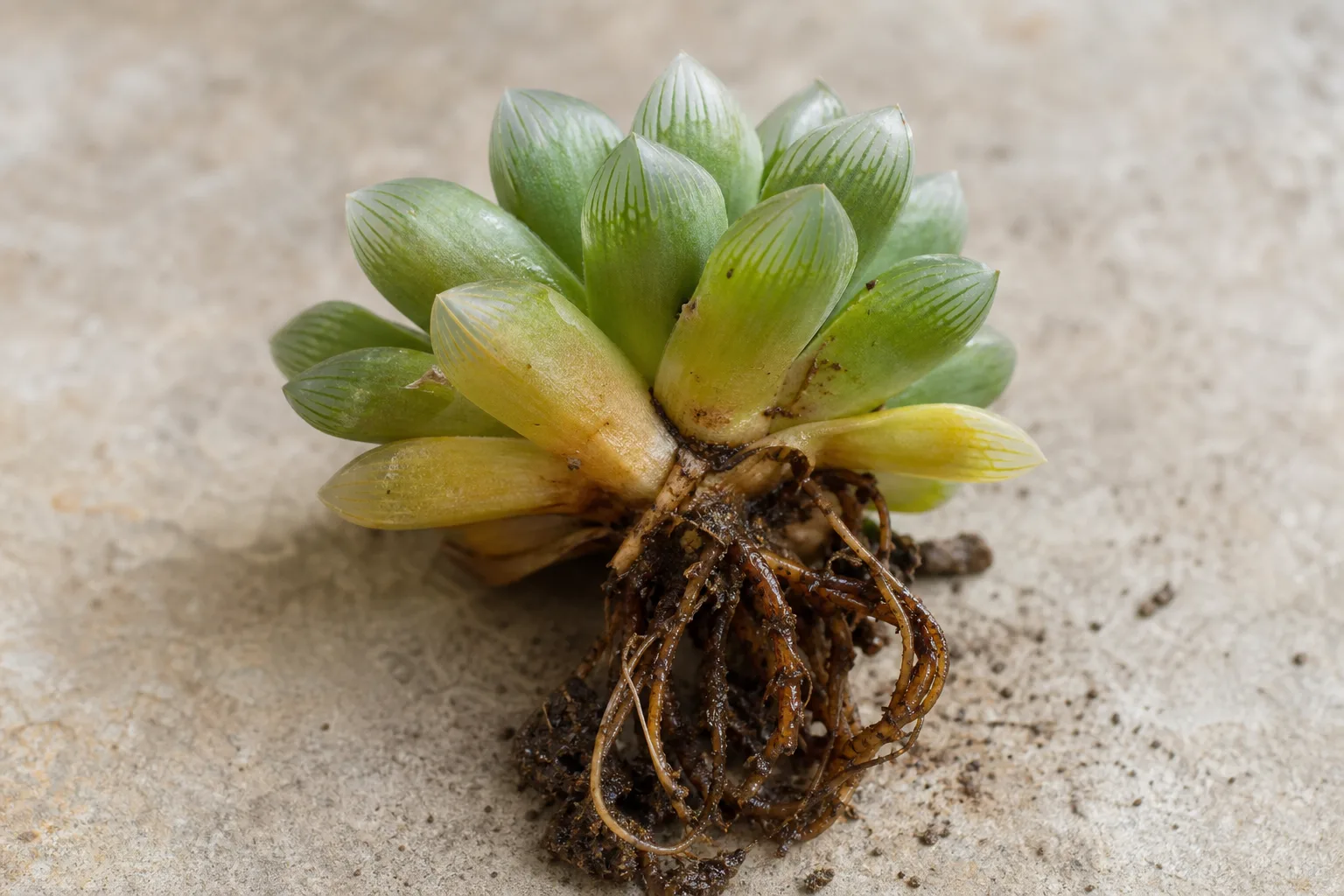
When a Haworthia looks tired, do not diagnose it from one leaf color. Shriveling can follow drought, but it can also happen after overwatering has killed roots; yellowing or drooping can reflect sun, cold, or a damaged crown. Check soil moisture, drainage, and the firmness of the plant before changing its care.
| What you see | Check next | Safer first response |
|---|---|---|
| Thin, folded leaves; mix dry throughout | Are roots firm and the crown intact? | Water thoroughly once, then allow the mix to dry again. |
| Soft, yellow, or translucent leaves; mix remains wet | Are roots dark, hollow, or mushy? | Stop watering and inspect the root ball for rot. |
| Pale or tan patch on the window-facing side | Did strong direct sun reach that side recently? | Move to bright filtered light; damaged tissue will not recover. |
| New leaves are long, narrow, or spread apart | Has light been weak for weeks? | Increase light gradually and judge the next leaves. |
Soft, shrinking, or yellow leaves
A genuinely thirsty plant often has a dry potting mix, a light pot, and leaves that are thinner or slightly folded but not mushy at the base. Give it one thorough watering and let excess water drain; do not compensate with frequent small sips. If the leaves remain limp after the mix dries and you water correctly, the roots may be unable to take up moisture, so unpot and inspect instead of repeating the watering.
Root rot is more likely when the mix is wet for a long time, the lower leaves turn yellow or translucent, and the crown or roots feel soft. Remove the plant from its pot, cut away only decayed tissue with a clean blade, and let healthy cut surfaces dry before replanting in fresh, airy mix and a pot that fits the remaining roots. Save firm pups if the main rosette has collapsed; a completely soft growing point may not recover.
Scorched color vs. stretched growth
Sunburn usually appears on the side that faced the bright window: a bleached, pale, or tan patch that stays even after you move the pot. Keep the plant out of direct afternoon rays and wait for healthy new leaves; damaged leaves cannot be restored with fertilizer or extra water. A brief red or bronze tint without scar tissue can be a light response rather than injury, so assess texture and growth, not color alone.
Low light shows up differently: the center keeps producing thinner leaves, the rosette opens or leans toward the window, and the plant gradually loses its compact form. Move it closer to bright filtered light or add a suitable grow light, but increase exposure gradually if the plant has been in shade. Old stretched growth does not contract, so the clearest sign of improvement is a tighter next set of leaves.
Check for mealybugs in the crown and at the roots
Inspect the tight spaces where leaves meet, not just the visible outside of the rosette. Mealybugs look like small white cottony deposits and may hide below the leaf bases; root mealybugs can appear as white wax around roots or along the inside of a pot. Isolate an infested plant so pests do not spread to nearby succulents.
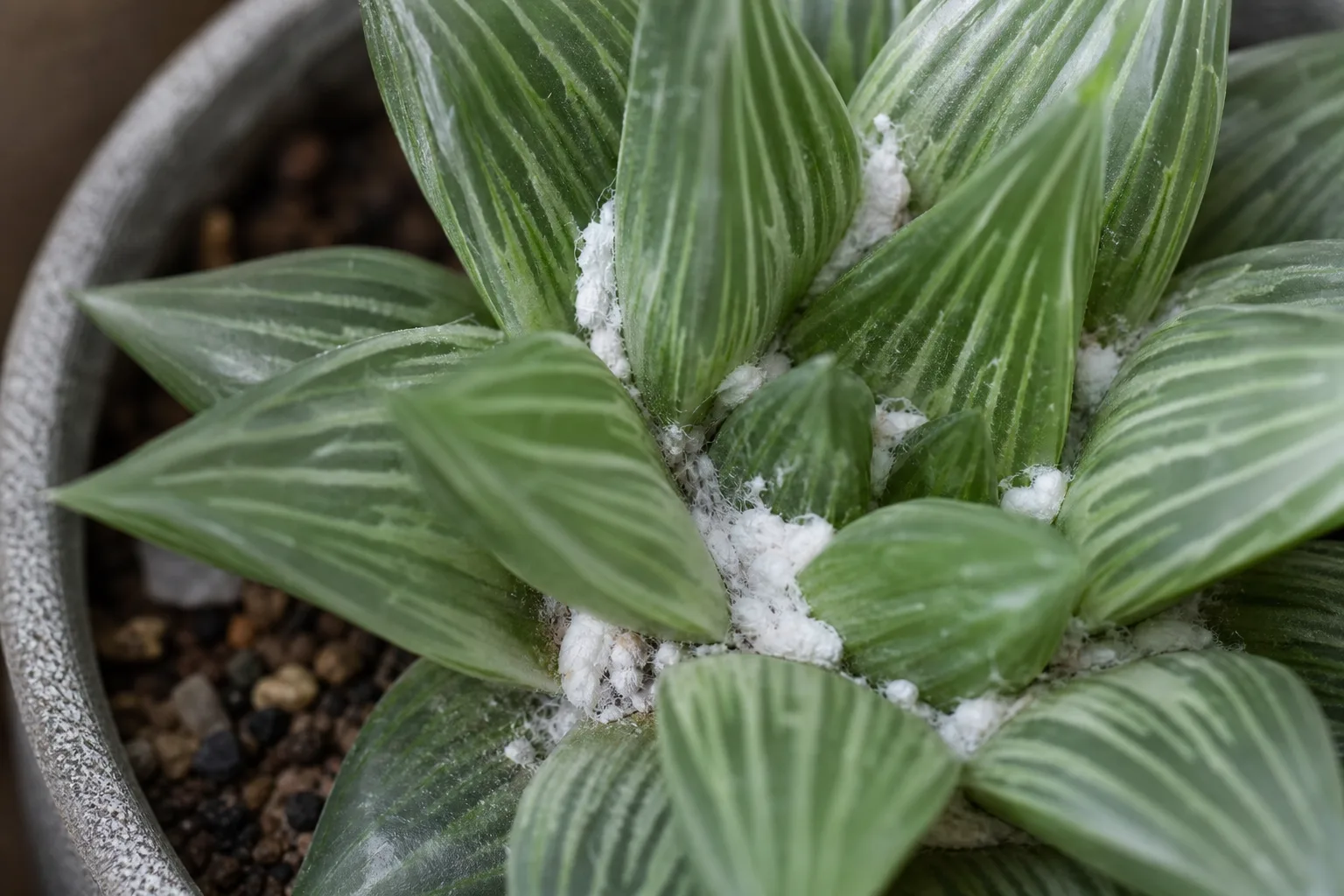
For a small infestation, remove visible insects with a cotton swab and a little rubbing alcohol, taking care not to drench the crown; test a small area first and keep the plant out of direct sun until dry. Recheck leaf axils and nearby plants every few days because hidden insects or egg sacs can remain after the first cleanup. Fungus gnats usually point to a mix that stays wet too long, so correct drainage and watering conditions before reaching for a spray; use only products labeled for the plant and pest if additional treatment is needed. (Epic Gardening’s zebra plant guide; Hugh Conlon, What Grows There)
Flowers, pets, and outdoor use
A mature plant may send up a slender flower stalk with small white or pale flowers, often with a greenish line. Flowering is a normal part of growth, not proof that the plant is dying; you can leave the stalk while flowers are open and trim it at the base when it dries. Seed production requires pollination and patience, so most indoor owners can simply enjoy the bloom and remove the stalk afterward.
ASPCA lists zebra Haworthia, under the name Haworthia fasciata, as non-toxic to dogs, cats, and horses. That listing applies to the named plant, not automatically to every similar succulent or every mislabeled hybrid, and “non-toxic” does not mean a pet should eat it; ask a veterinarian if an animal chews a plant and develops symptoms. (ASPCA Zebra Haworthia listing)
Outdoor growing is possible in warm, frost-free locations, but match the species and the site instead of relying on a broad zone number. Use a sheltered rock garden or draining pot, provide afternoon shade, and protect the plant from prolonged rain and cold; bring container plants in before frost. Some Haworthiopsis species are listed as threatened in South Africa, including H. attenuata, where habitat loss and unsustainable collection are concerns, so choose nursery-propagated stock rather than removing plants from the wild. (PlantZAfrica Haworthiopsis guide; SANBI Haworthiopsis attenuata account)
Conclusion
For a Haworthia sold as a houseplant, begin with bright filtered light, a pot with a drainage hole, and a mix that dries through before the next watering. Check soil and roots before reacting to shriveled, pale, or soft leaves; small changes are easier to reverse than a rushed rescue after rot sets in.
Treat the nursery name as a clue, not a complete care prescription. Whether your plant is a true Haworthia or a zebra-form Haworthiopsis, a measured routine—watching new growth, adapting water to room conditions, and dividing only established pups—will keep it compact and make problems easier to catch early.