How to Grow and Care for Date Palm Trees in Warm Climates
Grow date palm trees with practical guidance on hot-climate siting, male and female palms, hand pollination, offshoots, winter protection, and ripe dates.
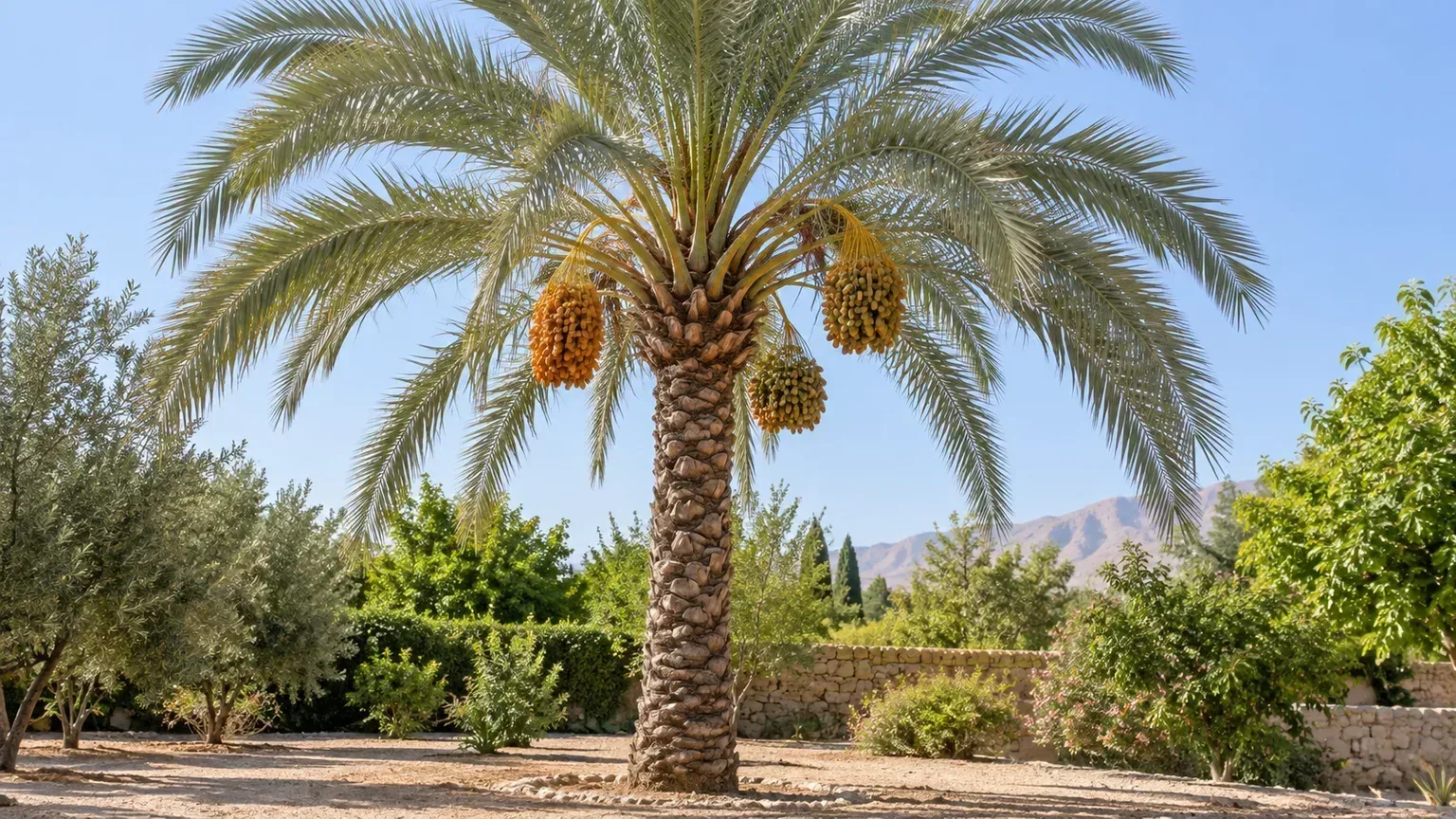
A date palm can survive in a garden and still never give you a bowl of dates. The tree needs a long, hot growing season, a female palm, pollen from a male, and enough dry warmth for the fruit to mature. If your climate is cool or humid, treat Phoenix dactylifera as an architectural foliage plant and consider fruit a bonus rather than a likely crop.
For a fruiting tree, start with a named, female cultivar propagated from an offshoot, plant it where it will receive full sun and drain freely, and plan for pollination before flowers appear. Date palms are slow, large, and sometimes difficult to manage once mature; a seedling in a pot is a long-term experiment, not a quick route to homegrown dates.
Can Your Climate Ripen Dates?
Date palms are adapted to hot, sunny regions. The tree tolerates drought once established, but dependable fruit needs more than a warm summer afternoon: flowering, fruit set, and ripening all need sustained warmth, and ripe dates develop best when the fruiting season stays relatively dry. Gardenia notes that fruit forms less readily in cool or moist climates, while a peer-reviewed review reports flowering above about 18°C (64°F) and fruit formation above about 25°C (77°F) in the cultivation conditions it summarizes. Those temperatures are useful context, not a guarantee for every cultivar or location. (Gardenia’s date palm profile; MDPI review of date palm pollination)
This is why a palm may grow leaves for years but fail to make ripe dates in a coastal, rainy, or short-summer garden. A fruit cluster can set and then stall, split, or decay if the season is too cool or wet. Before buying a tree for food, ask a local nursery, grower, or extension service whether a specific fruiting cultivar reliably ripens in your area.
Hardiness zones are not a fruiting guarantee
Hardiness zones describe average extreme winter lows; they do not tell you whether a cultivar will flower, set fruit, or finish ripening. Gardenia lists date palms as hardy to around 25°F (about -4°C), while warning that leaves may be badly damaged. Treat that as a rough survival reference, not a temperature to target or a promise that a tree exposed to that cold will recover undamaged. (Gardenia’s date palm profile)
Use your zone only as an initial screen. Then consider frost duration, wind exposure, soil drainage in winter, and—most important for fruit—the length and dryness of the warm season. In marginal climates, a sheltered south-facing site may improve survival, but it cannot replace the heat a cultivar needs to ripen its crop.
Choose the Right Date Palm
The fruiting date palm is Phoenix dactylifera. It has a single trunk, a crown of long, feather-shaped fronds, and inflorescences that emerge from tough coverings called spathes. Date palms can eventually reach roughly 50 to 80 feet tall and spread 20 to 40 feet, so the plant that looks manageable in a nursery pot becomes a major landscape tree. (Gardenia’s date palm profile)
Buy from a nursery that identifies the species, cultivar, and sex when those details matter. A named female cultivar propagated from an offshoot is the best starting point for predictable fruit. Seedlings vary genetically, and their sex is not reliably apparent while they are young; a seed-grown palm may turn out male, female, or a fruit type unlike the date that supplied the seed.
Date palm vs. Canary Island date palm
The Canary Island date palm, Phoenix canariensis, is a common ornamental look-alike, but it is not the fruit crop most people mean by “date palm.” The two share the genus Phoenix, yet P. dactylifera is the species cultivated for edible dates. Check the botanical label instead of relying on a common name or a photo; buying the wrong species can leave you with a handsome palm and the wrong expectation. (RHS date palm profile; MDPI review of date palm pollination)
Choose a Hot, Sunny Site With Room to Mature
Choose the sunniest open location you have, ideally one with at least six hours of direct sun and more in a fruit-growing climate. Avoid a low pocket where cold air settles or water collects after rain. Leave clearance from roofs, overhead wires, walls, paving, and walkways for the mature crown and the long, stiff leaflets; the fronds can be sharp, and fallen fruit can be messy.
Date palms tolerate many soil textures, but they do not tolerate a root zone that stays waterlogged. A sandy or loamy soil that drains well is an easy fit; heavy soil can work only when water moves through it freely. Do not put a palm into a hole that becomes a basin after irrigation. If the site drains slowly, plant on a broad, raised mound or choose a different location rather than trying to fix a wet planting hole with a small amount of sand.
Salt tolerance and drought tolerance do not mean the tree prefers neglect. A young palm needs moisture while roots establish, and a fruiting tree benefits from steady access to water during active growth. Think “deeply watered, then allowed to drain,” not “kept constantly wet.”
Planting a Date Palm Without Burying the Crown
Plant during a mild part of the warm season, when the tree can establish without cold soil or punishing heat immediately after transplanting. Set the root ball at the same depth it grew in its nursery container; do not bury the trunk base or the growing point. Dig a hole wide enough to loosen the surrounding soil, but no deeper than the root ball.
Handle the root ball gently and water it before planting if it is dry. Backfill with the native soil unless a soil test or local recommendation points to a specific amendment. Firm the soil enough to remove large air gaps, water slowly to settle it, and add a thin mulch layer over the surrounding root zone while keeping mulch away from the trunk.
Staking is not automatically necessary. If wind rocks the root ball, use a temporary support that holds the palm steady without cutting into the trunk, then remove it once the roots anchor the plant. A loose palm that moves at the base will establish poorly; a tight strap left on too long can injure it.
Water Deeply While Roots Establish
For the first growing season, check soil moisture several inches below the surface rather than watering by the calendar. When that root-zone soil begins to dry, water slowly enough to soak the root ball and nearby soil, then let excess water drain. The exact interval changes with heat, soil texture, rainfall, and irrigation; a sandy site in summer may need water far more often than a heavy soil in cool weather.
After establishment, a date palm handles dry spells better than many fruit trees, but drought tolerance is not the same as best fruit production. During flowering and fruit development, avoid long periods of severe water stress. At the other extreme, frequent shallow watering keeps roots near the surface and can leave the trunk base persistently wet.
In the Phoenix area, an ISA-certified arborist recommends slow, deep watering over the wider root area and cautions against applying a fixed schedule to every site. Treat that as regional guidance, not a universal prescription: the same interval will not suit a cool climate, clay soil, or a palm receiving monsoon rain. (Happy Tree Guys’ Arizona date palm guidance)
Feed for Palm Growth, Not a Guaranteed Harvest
Do not use fertilizer to compensate for poor drainage, deep shade, cold weather, or a missing pollinator. If growth is weak or fronds discolor, first check planting depth, root-zone moisture, drainage, cold injury, and whether the palm is simply shedding old lower leaves. Nutrient problems and root stress can look similar, and adding fertilizer without diagnosis can add salts or worsen the underlying issue.
Where palms are routinely fertilized, use a product labeled for palms and follow its rate and timing instructions for the site. A soil test can help identify pH or mineral constraints, especially in alkaline soils. Apply fertilizer to the root area rather than piling it against the trunk, and do not feed a dormant or cold-stressed palm in an attempt to force new growth.
Pollination: Why a Female Palm May Stay Fruitless
Date palms are dioecious: individual trees bear male or female flowers, not both. Only a female produces the familiar date clusters, and its flowers need pollen from a male. Wind can transfer pollen naturally, but commercial growers commonly pollinate by hand because a dependable fruit set requires pollen to reach receptive flowers at the right time. One healthy male can supply pollen for many females in managed production, but that commercial ratio is not a guarantee for a backyard tree. (MDPI review of date palm pollination)
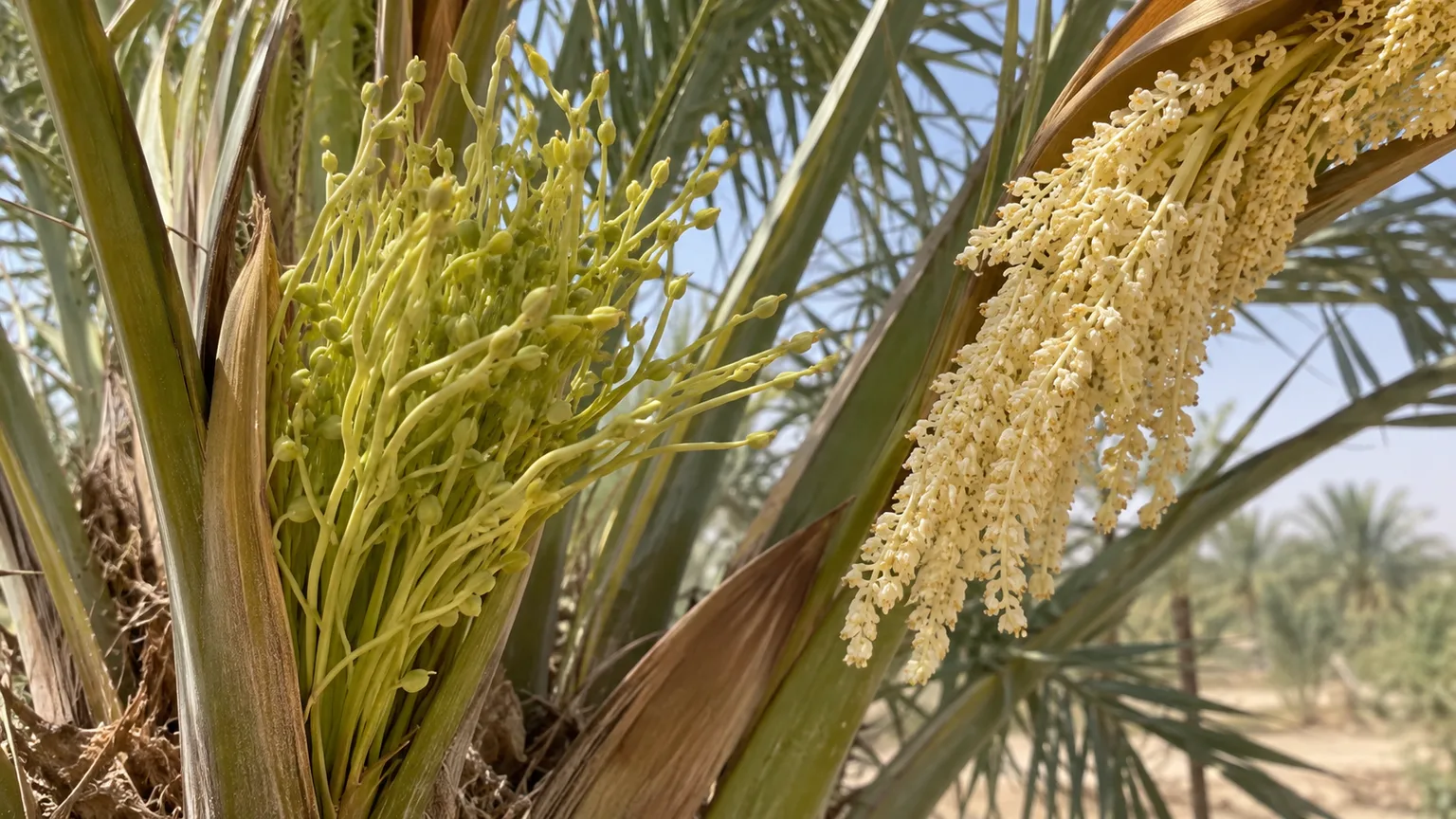
If a mature palm flowers but does not develop useful dates, check these causes in order: it may be male; it may be female without access to male pollen; pollen may have missed the receptive period; or the climate may be too cool, wet, or short-season for fruit to finish. A very young palm may simply not be old enough to flower. Small, misshapen, or prematurely dropping fruit can also reflect weak pollination or stress rather than a need for more fertilizer.
When and how hand pollination works
The flower clusters emerge inside spathes. Watch for a spathe to split open and expose fresh strands; this is the short window when female flowers can receive pollen. The exact timing varies with climate and cultivar, so ask a local date grower or extension office for the right stage in your region rather than relying on a single calendar date.
For a reachable palm, a basic hand-pollination approach is:
- Confirm that the tree is a flowering female and identify a male palm or a reliable source of date-palm pollen.
- Work when the female spathe has opened and its flower strands are fresh, not after they have aged or dried.
- Transfer pollen directly onto the exposed female strands, or place fresh male strands among them, using clean, dry handling.
- Mark the treated cluster and check later for fruit set; a light cluster may need another assessment before you conclude that pollination failed.
The pollen source can affect fruit set and some fruit traits, and commercial methods vary in equipment and technique. If the crown is beyond safe reach, do not climb a tall palm or lean a ladder against it to pollinate; hire a qualified palm professional or accept an ornamental crop. (MDPI review of date palm pollination)
Thin and Harvest Dates at the Right Stage
After pollination, dates pass through stages from hard, green fruit toward softer, colored, and eventually drier fruit. The useful harvest stage depends on the cultivar and how you plan to eat or store the dates. Some varieties are eaten while still firm and colored; others are best after they soften or dry further. There is no single brown color that means every date is ripe.
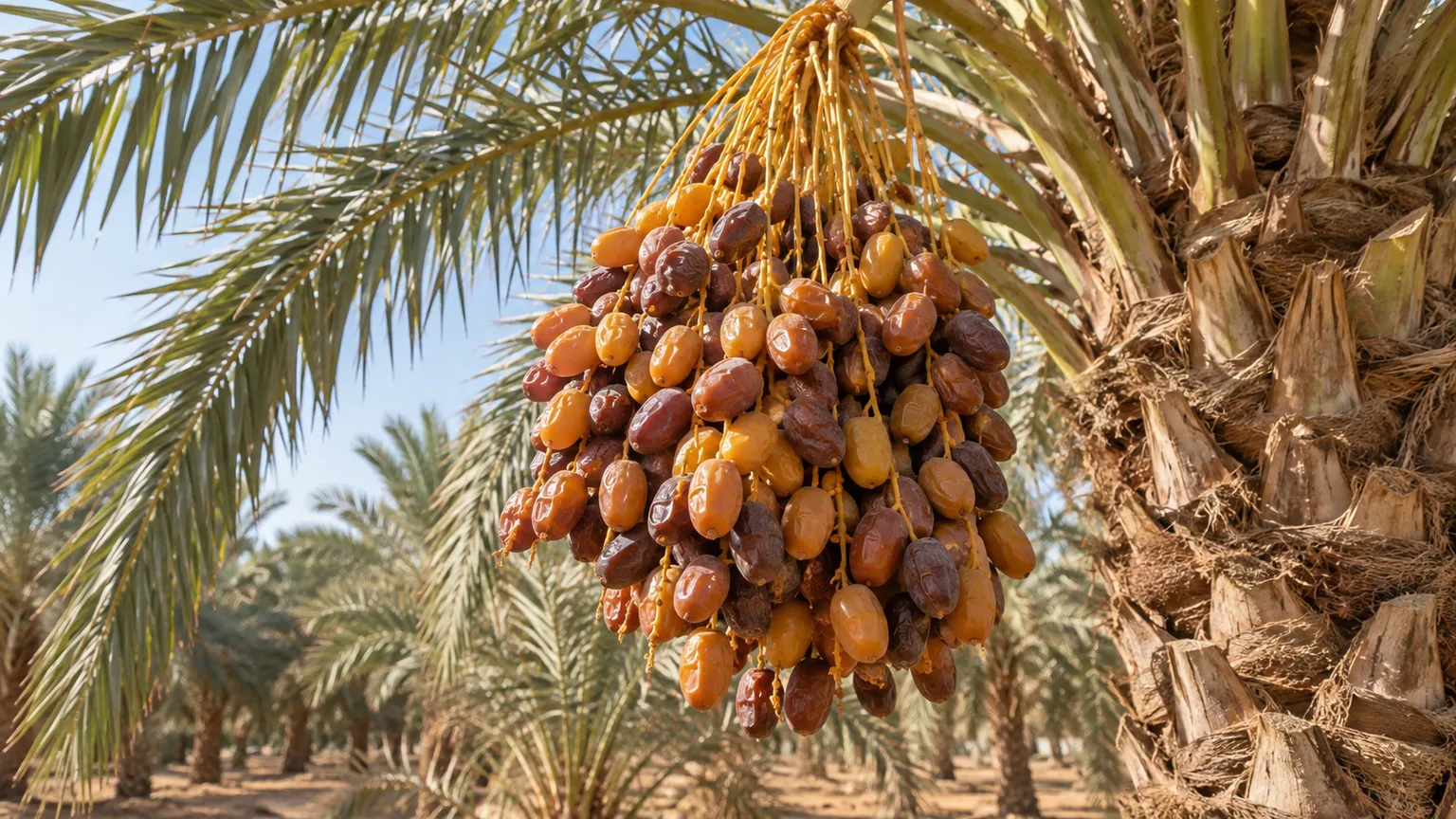
As clusters develop, growers sometimes thin fruit or remove some bunches to improve airflow and reduce the load on the palm. For a home tree, do not strip a young or stressed palm of most of its crop in pursuit of larger fruit. Remove damaged or rotting fruit and crowded clusters only when you can do so safely, and avoid cutting the central growing point or healthy fronds.
Harvest when the fruit has reached the color and texture expected for its cultivar and tastes sweet rather than sharply green or astringent. If the dates are still firm and wet, leave them longer only when the forecast stays warm and dry; prolonged rain or high humidity can make a nearly ripe crop split or spoil. Catching ripe dates before they fall also keeps fruit off paths and reduces cleanup.
The crown of a mature date palm can be far above the ground, and the fronds have sharp spines. Do not climb, cut bunches from an improvised ladder, or stand beneath a heavy cluster. Use a trained tree-care professional when the fruit cannot be reached from stable ground.
Growing Date Palms in Containers or Indoors
A container is useful for a young palm in a climate where you need to move it away from frost. Choose a sturdy pot with drainage holes only modestly larger than the root ball, and use a loose, fast-draining palm or loam-based container mix. Set the plant outside in full sun during warm weather, acclimating it gradually if it has been indoors; move it before cold nights threaten the leaves or crown.
Indoors, give the palm the brightest light available and water thoroughly when the upper part of the mix begins to dry, then empty the saucer. Growth will be slower in low light, and the large fronds eventually need more room than most homes provide. The RHS describes date palms under glass as tender plants grown in full light, with more water in active growth and less in winter. (RHS date palm profile)
Treat an indoor date palm primarily as an ornamental. Fruiting indoors is unlikely because the tree must mature, receive adequate heat and light, flower as a female, and be pollinated. A small pot on a windowsill does not remove those biological requirements, and repeated repotting will not make a genetically variable seedling become a named fruit cultivar.
Propagate With Offshoots or Seeds
An offshoot, sometimes called a sucker, grows near the base of a mature palm. It is vegetative growth from the parent, so it preserves the parent’s sex and cultivar more reliably than a seed. Offshoots are the practical route when you want a known female fruiting variety, though separating one without damaging its roots is skilled work and not every palm produces suitable offsets.
Seeds are easy to experiment with but poor for predictable fruit. A seed from a grocery-store date may germinate, yet it will not reproduce the named cultivar exactly, and you will not know whether the seedling is male or female until it matures enough to flower. Gardenia reports germination over a period of months and earlier fruiting from offshoot-grown palms than from seed-grown plants; use any stated year count as a broad possibility, not a schedule promised to a home grower. (Gardenia’s date palm profile)
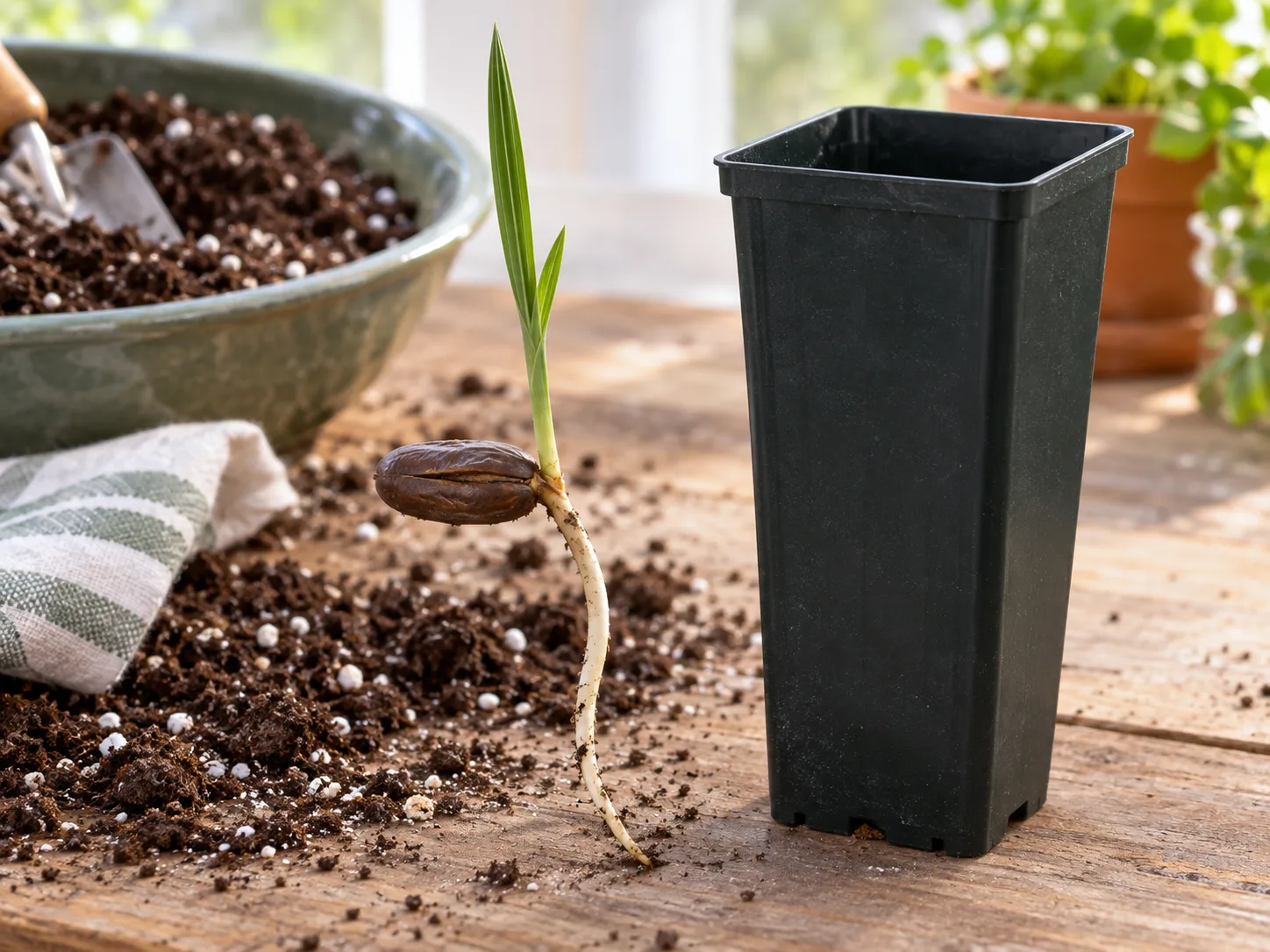
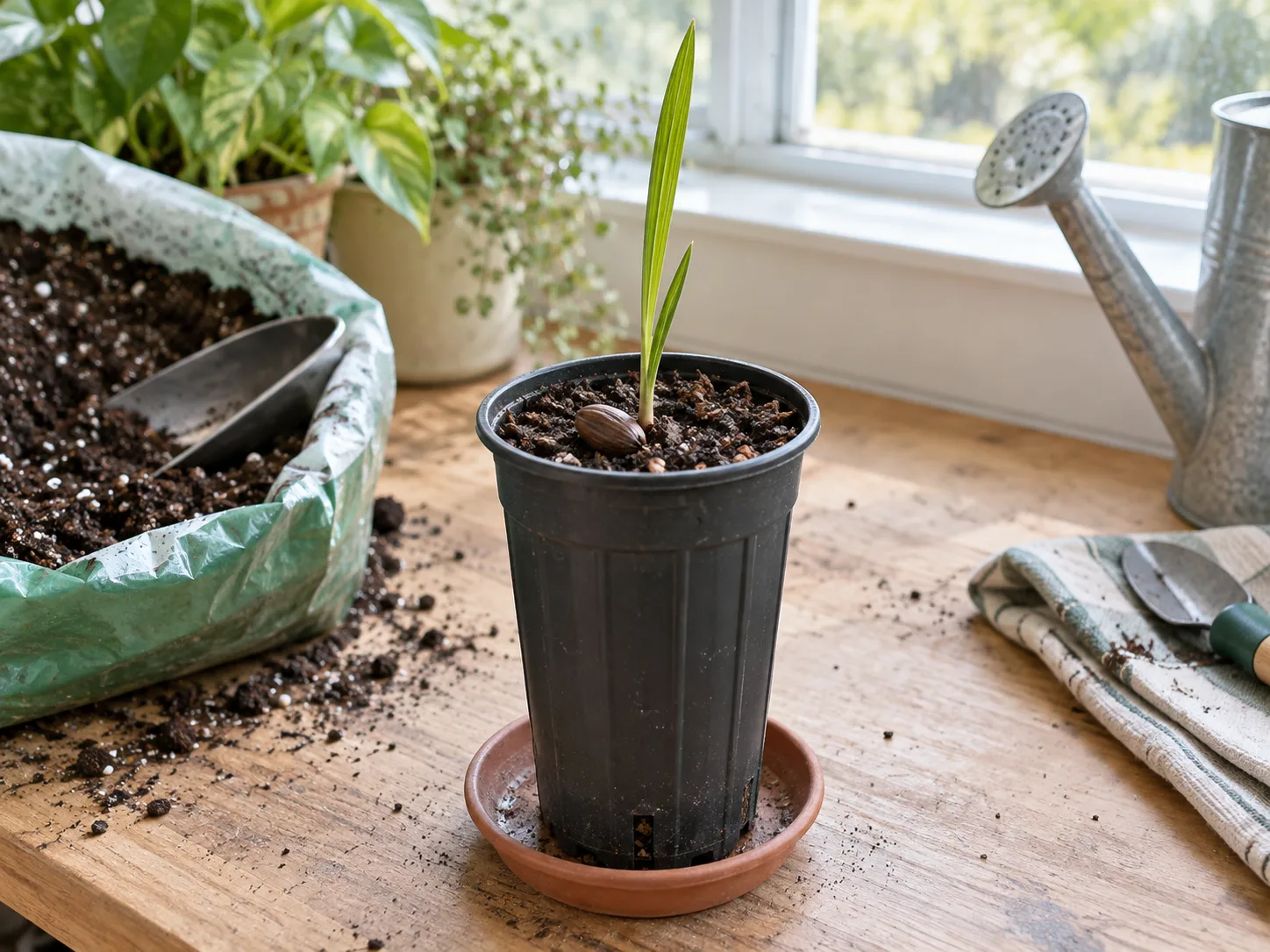
To start a seed, clean away the fruit flesh, sow it in a small pot of moist, free-draining mix, and keep it warm. Do not keep the mix saturated under a sealed cover; stagnant wet conditions invite rot. Once a shoot appears, give the seedling bright light and move it to a larger pot only when roots and leaves have filled the starter space. Expect years of foliage growth before you know whether it can ever produce useful dates.
Prune Only What the Palm Can Spare
Date palms do not need shaping like a branching fruit tree. Remove only fronds that are fully dead, broken, or clearly diseased, and leave green fronds in place; they still support growth. Cutting off healthy leaves to expose the trunk can weaken the palm, and cutting into the central spear or crown can destroy the single growing point.
The lower fronds often brown as the crown grows upward. Let them dry before removal, use clean tools, and do not tear or strip the trunk. The RHS lists no routine pruning for date palms, while an Arizona arborist advises retaining green fronds and limiting removal to dead or hanging growth. (RHS date palm profile; Happy Tree Guys’ Arizona date palm guidance)
Do not attempt to prune or harvest a tall specimen yourself. Fronds can be heavy and spiny, and climbing a palm without professional equipment risks severe injury and trunk damage. For a large tree, hire an insured arborist or palm-care specialist who knows how to preserve the crown and avoid over-pruning.
Recognize Pests and Disease Early
Yellow lower leaves alone do not identify a pest. Old fronds naturally die as the palm grows, while drought, waterlogging, cold, salt buildup, and nutrient imbalance can all affect foliage. Look for a pattern: damage concentrated on new growth, a soft or leaning crown, dark lesions, unusual sap, holes, or chewed plant tissue calls for a closer inspection.
Red palm weevil is a serious, region-dependent pest of date and other palms. Infestations can be hard to detect early because larvae develop inside the palm; later warning signs may include brown sticky ooze with a fermented odor, chewed palm tissue, dying offshoots, or structural decline. Those symptoms are not a do-it-yourself diagnosis. If you are in a region where the weevil occurs and see them, contact a local plant-health authority or qualified arborist promptly, and do not move potentially infested palm material. (IntechOpen review of red palm weevil detection)
Black scorch disease, associated with Thielaviopsis punctulata in a peer-reviewed study of Saudi date palms, can involve drying leaves and bending at the neck or crown. Other causes can look similar, so do not apply fungicide based on a photograph or a single symptom; ask a local extension diagnostician to confirm the cause and advise on treatment. (MDPI study of black scorch on date palm)
Protect Date Palms From Cold and Wet Winters
Cold injury often appears as browned or collapsed fronds after a freeze. Protect a young outdoor palm from brief cold snaps with a sheltered position and breathable frost fabric, and keep the crown dry where possible. Do not wrap wet foliage tightly for an extended period or leave fabric in place through warm weather; trapped moisture and heat can create a different problem.
If a hard freeze is forecast, a container palm can be moved under cover only if it is still manageable to move safely. A mature in-ground palm cannot be made reliably fruit-bearing in an unsuitable climate through wrapping alone. In regions with cool, wet winters, focus on drainage and protecting the growing point, then wait until the freeze has passed before removing damaged leaves; green tissue may still be functioning.
Conclusion
Grow a date palm for fruit only when your site offers sustained heat, full sun, fast drainage, and a way to pollinate female flowers. Choose a correctly identified fruiting cultivar from a reputable nursery, give it enough room to reach full size, water deeply without keeping its roots soggy, and prune sparingly.
In cooler or humid climates, a date palm may still be an impressive container or greenhouse plant, but surviving winter is not the same as ripening dates. Decide whether foliage alone would satisfy you before planting; if fruit is the goal, match the cultivar and pollination plan to your local growing season first.