Foxtail Fern Care: Light, Water, Soil & Winter
Identify a true foxtail asparagus fern and keep its bottlebrush plumes healthy with check-based watering, the right light and soil, and clear winter advice.
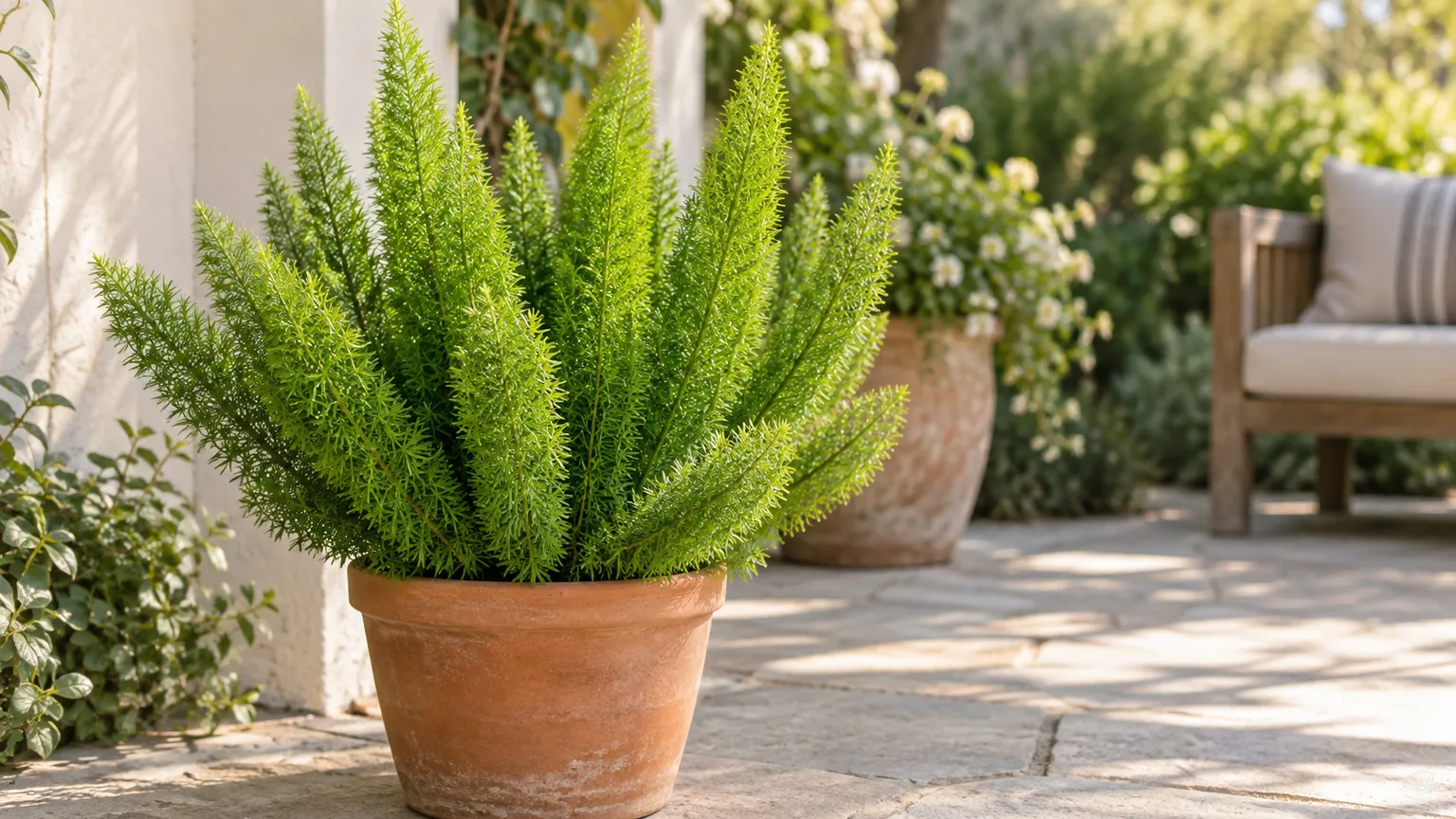
Foxtail fern is an upright, feathery-looking asparagus relative—not a true fern—and it grows best in bright filtered light, a freely draining mix, and soil that is watered thoroughly but allowed to partly dry between drinks. Its fleshy roots store some water, so it can handle a brief dry spell; they do not make it immune to drought or soggy soil. Give it warmth, protect it from frost, and remove old plumes at the base to keep the plant tidy.
| Care need | Practical starting point |
|---|---|
| Light | Bright indirect light indoors; dappled shade or gentle morning sun outdoors |
| Water | Water when the top inch or two of mix is dry; drain excess fully |
| Soil | Rich, airy potting mix with good drainage |
| Temperature | Warm growing conditions; bring containers in before frost |
| Maintenance | Trim dead stems; divide a crowded root crown in spring |
The most important first step is confirming that the plant is actually the compact, bottlebrush-shaped foxtail form. Related plants sold as “asparagus fern” have different habits, so a label can lead to misleading advice. Once identified, use the care checks below as a starting point and adjust to your pot, light, and local weather.
What Counts as a Foxtail Fern?
The name usually refers to Asparagus densiflorus ‘Myersii’, also spelled ‘Meyersii’ in horticulture references and sometimes sold under the name ‘Myers’. Its short, crowded side branches make upright, fluffy plumes that resemble bottlebrushes or fox tails. A mature plant is commonly described as about 1 to 3 feet tall and 3 to 4 feet wide, so allow room for its base to spread rather than treating it like a narrow tabletop fern. University of Wisconsin–Madison Extension describes the cultivar’s upright, dense plume habit and variable trade names.
Despite the common name, it is in the asparagus family, Asparagaceae. The green structures that look like leaves are flattened, leaf-like stems called cladodes; the tiny true leaves are scale-like. Below the soil, fleshy tubers and a spreading root crown help the plant store water and gradually fill its container. NC State Extension lists ‘Meyersii’ as the cultivar with congested, fox-tail or bottlebrush branches.
Check the growth shape before following a care card. ‘Sprengeri’ types tend to produce longer, arching stems that spill over a basket, while foxtail ‘Myersii’ stays more upright and densely plumed. Asparagus setaceus is another look-alike in the trade, but its much finer, lacy foliage climbs or scrambles; NC State treats it as a separate species profile, and the Missouri Botanical Garden describes it as a twining vine with mature stems that can reach 10 to 20 feet. NC State’s A. setaceus profile and the Missouri Botanical Garden description make that difference clear. A useful caution when researching: the horticulture article from Epic Gardening covers A. setaceus, not the foxtail cultivar. If you own that different species, use the site’s broader asparagus-fern growing guide as a comparison, not as a substitute for this cultivar-specific profile.
Choose the Right Indoor or Outdoor Spot
Choose a place with good airflow, room around the crown, and light that is bright but not punishingly hot. Indoors, set the pot near a bright window where the plant receives plenty of ambient daylight; a little gentle morning sun can help, but a hot, exposed afternoon window may scorch or fade the plumes. Rotate the pot occasionally if growth leans toward the light.
Outside, a sheltered patio or garden edge with dappled light is a dependable starting point. In mild climates the plant can grow in the ground, but its roots expand and can make later removal difficult. A container makes it easier to move the plant away from cold snaps and to contain an enthusiastic root system. In cooler regions, treat it as a seasonal patio plant or houseplant rather than relying on it to survive winter outdoors.
Observe the plant after a move. If the newest growth is pale, stretched, and sparse, it may need brighter conditions. If foliage yellows soon after exposure to strong afternoon sun, move it into filtered light. Acclimate an indoor plant gradually over a week or two before leaving it in brighter outdoor conditions; a sudden change in light and wind can stress foliage even when the final site is appropriate.
Light: Bright and Filtered, with Gentle Sun
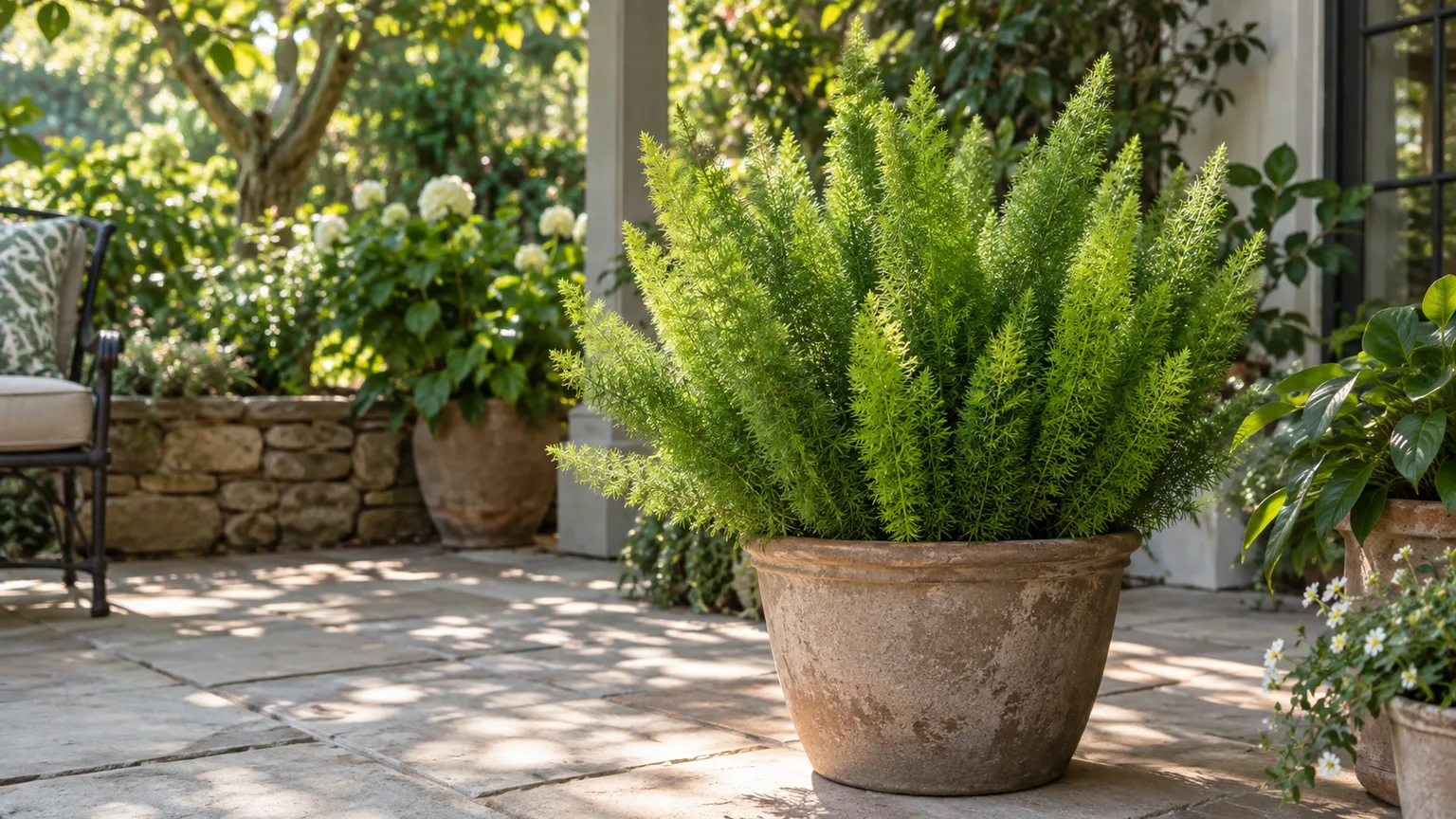
Aim for bright indirect light indoors or partial, dappled shade outdoors. The species tolerates a range of light, but the cultivar’s dense shape is easiest to maintain when it gets enough brightness without spending the hottest part of the day in harsh sun. NC State Extension notes shade tolerance and warns that afternoon sun in warmer climates can yellow foliage; a horticulture profile for ‘Myers’ likewise recommends dappled shade. NC State’s plant profile and Better Homes & Gardens’ cultivar-specific care entry support that filtered-light approach.
Indoors, an east-facing window often offers a useful balance. A bright north-facing room may work if the plant is close to the window; a southern or western exposure may need a sheer curtain or some distance from the glass. Do not judge light only by how bright a room feels to you: corners can be dim for a plant even when they seem comfortable for reading.
Outdoors, dappled shade under a high canopy or bright shade beside a wall can work well. In a cool coastal climate, a plant may tolerate more direct sun than it would in a hot inland summer. Introduce stronger light gradually and watch the foliage over several days. If the plant grows loosely but stays green, light may be marginal; if plumes bleach, yellow, or crisp on the sunny side, reduce the intensity.
Water: Check the Pot, Not the Calendar
Water according to the mix, pot size, light, and season—not a fixed weekly schedule. Push a finger about an inch into the surface; for a large pot, check a little deeper. When that layer feels dry, water slowly over the entire root zone until excess runs through the drainage holes. Empty the saucer or cachepot so the roots are not left standing in water.
The fleshy tubers can buffer a short missed watering, but that reserve is not a reason to let the entire root ball dry repeatedly. In a warm, bright, fast-drying spot, the plant may need water more often. In winter, in lower light, or in a large moisture-retentive pot, it may need much less. Wisconsin Extension notes both the water-storing tubers and the plant’s preference for consistent moisture, with drier conditions during winter; use those points together rather than interpreting drought tolerance as a preference for dryness. The extension care notes are a useful seasonal reference.
If water runs down the gap between a dry root ball and the pot wall, apply it in two or three slow passes, pausing briefly between them. If the soil stays wet for many days, check for blocked drainage, a pot that is much larger than the root mass, or dense old mix. Persistent wetness is more concerning than a single heavy watering because the roots need both water and air.
Use room-temperature water when convenient. Very hard water can leave deposits on potting mix and containers, but routine distilled water is usually unnecessary unless your tap water is unusually mineral-heavy or the plant shows a repeated problem. Avoid spraying the foliage as a substitute for watering the roots; extra humidity is less important than sound drainage and consistent root-zone moisture.
Soil and Container: Protect the Fleshy Roots
Use a general-purpose indoor potting mix that holds some moisture but drains freely. If your mix stays dense and wet, loosen it with perlite, pumice, or fine orchid bark. The goal is not a desert-dry succulent blend; it is a balance where water reaches the tuberous roots and excess drains away without leaving the whole pot airless.
Choose a sturdy pot with unobstructed drainage holes. The roots can become crowded and press against the sides, so a thin nursery pot may distort over time. When repotting, move up only one pot size—roughly 1 to 2 inches wider than the existing root mass—rather than placing a small plant in a huge volume of damp soil. A pot that is oversized for the roots dries slowly and can make watering mistakes harder to spot.
For garden planting, use a site that does not remain waterlogged after rain. Mix organic matter into poor soil, but do not bury the crown deeply. Leave room for mature width and consider a container if you are uncertain about winter protection, local spread, or the plant’s identity. A decorative outer pot is fine if the inner nursery pot can drain and be removed for watering.
Temperature, Frost, and Indoor Humidity
Foxtail asparagus fern is a warm-climate perennial commonly grown as a houseplant or seasonal outdoor plant where winters are cold. Protect it from frost: bring a container indoors before the first cold night rather than waiting for foliage to blacken. A broad horticulture reference places asparagus ferns in warm-climate perennial use, but exact survival depends on cultivar, exposure, soil drainage, and how cold lasts; do not treat a hardiness-zone label as a guarantee for a particular patio or garden bed.
For indoor plants, ordinary comfortable room temperatures are generally suitable. Avoid cold drafts from exterior doors and winter window glass, as well as hot, dry air directly from a heater. Better Homes & Gardens advises avoiding prolonged temperatures below about 55°F (13°C) for the foxtail form. If a plant has spent summer outside, move it in before the weather approaches that range, and inspect the foliage and pot for insects before bringing it indoors.
Average home humidity is often workable. If indoor air is very dry, group plants or use a room humidifier, but do not keep the pot sitting in water or rely on a pebble tray to correct dry root conditions. Brown, brittle tips can result from several causes—including missed watering, intense sun, or dry heated air—so check the whole growing setup before adding humidity as the only fix.
Fertilize Lightly While Growth Is Active
Feed during active spring and summer growth, not when the plant is cold, dry, or barely growing. A conservative starting routine is a balanced liquid houseplant fertilizer diluted to half the label strength about once a month. Water the mix first if it is dry, then apply fertilizer according to its label; concentrated fertilizer against dry roots can cause damage.
Care references vary: some recommend more frequent half-strength feeding in the growing season, while Wisconsin Extension advises monthly spring feeding and stopping in winter. For a container plant, begin with the gentler monthly approach and adjust only if growth is healthy but persistently weak and the light and roots are sound. Do not use extra fertilizer to compensate for low light, a pot-bound root system, or waterlogged soil.
Pause feeding in fall and winter when growth slows. If white crust accumulates on the mix or pot rim, or leaf tips brown after repeated feeding, flush the pot thoroughly with clean water and reduce or pause fertilizer. Fresh potting mix also supplies nutrients for a time, so a newly repotted plant usually does not need immediate additional feeding.
Prune for Shape Without Flattening the Plumes
Foxtail fern does not need routine shaping like a hedge. Remove a plume that is fully yellow, brown, broken, or dead by cutting its stem near the soil line with clean pruners. This makes room for fresh growth and leaves the naturally rounded plant shape intact. Wear gloves and handle stems carefully: asparagus ferns can have small sharp projections that catch skin.
If only the tip of a healthy plume is brown, first check light, watering, salts, and room conditions. Cutting every plume back to a uniform height can leave blunt ends and remove healthy green growth without addressing the cause. If a plant is badly damaged or overgrown, selective removal at the base is usually tidier than shearing across the top.
Clean pruner blades between plants, especially if you are removing diseased tissue. Wipe away plant sap and debris after use and let the tool dry. Regularly clear fallen cladodes from the pot surface; the fine debris can hide pests and keep the crown unnecessarily damp.
Repotting and Division: When and Why
Repot when roots crowd the container, emerge from drainage holes, deform a flexible pot, or the mix dries unusually quickly despite appropriate watering. Another clue is a dense root mass with little potting mix left. Repotting every year is not automatically necessary; inspect the plant and its roots instead of following a calendar. Early spring, as growth resumes, is a convenient time because the plant can recover during the active season.
Choose a sturdy container only slightly larger than the old one. Ease the root mass out, loosen a small amount of tightly circling outer roots, and remove clearly dead or mushy material with clean tools. Keep firm pale tubers attached where possible. Set the crown at about its previous depth, fill around it with fresh mix, and water until excess drains. If the plant is simply crowded and you want more plants, divide it at this stage.
Divide a Crowded Crown in Spring
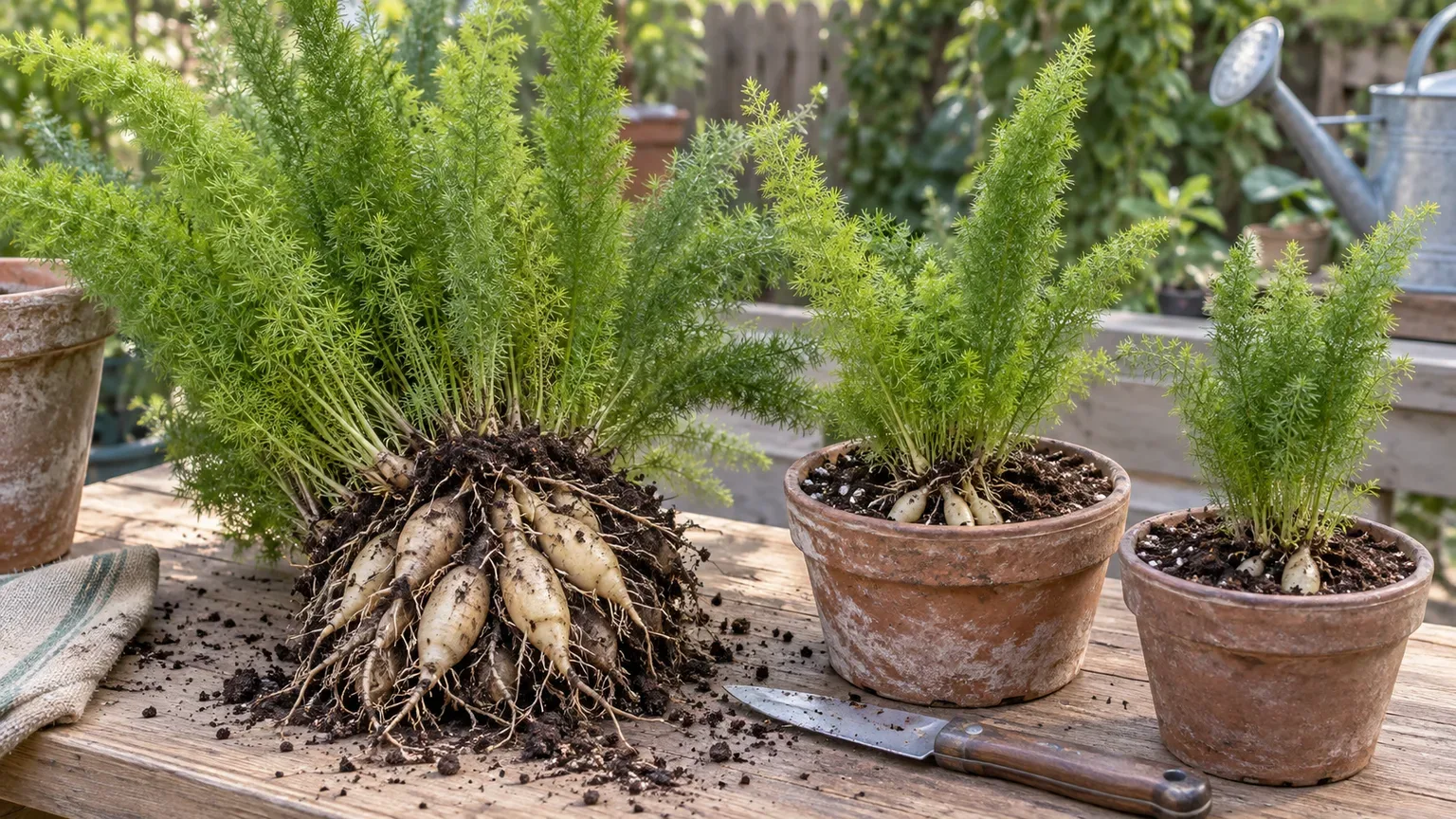
Division is generally faster and more reliable than raising seed for a home grower. Water the plant lightly the day before if the root ball is very dry, then slide it from the pot. Brush or rinse away enough mix to see the crown and where natural sections separate. The root system may look like a tangle of pale, fleshy tubers; avoid cutting indiscriminately through every root just to make many small pieces.
Use a clean, sharp knife or pruning saw to split the crown into two or more sections. Each division should retain a healthy growing point or cluster of stems plus a substantial share of live roots and tubers. A large division establishes more quickly than a tiny piece. Remove only roots that are clearly rotten, hollow, or damaged, and wear gloves while working around prickly stems.
Pot each section in a container with drainage, using fresh, airy mix and keeping the crown at its former depth. If you are not sure how to separate the root mass, start with one clean split instead of making several uncertain cuts. The goal is a viable plant on each side, not a specific number of divisions.
Settle New Divisions Without Keeping Them Soggy
Water the newly potted divisions thoroughly once, let them drain, and place them in bright shade or bright indirect light while they recover. Keep the mix lightly and evenly moist at first, but allow surface drying and never leave the pot in standing water. Avoid strong direct sun and fertilizer until the divisions show renewed growth.
Some older stems may yellow or pause after division as the plant adjusts. Remove only dead stems; do not repeatedly dig up the roots to check progress. Once new shoots appear, return to the normal check-based watering routine and gradually provide the intended light. If a section collapses and the base is soft or foul-smelling, unpot it to inspect for rot rather than adding more water.
Can Foxtail Fern Grow from Seed?
Yes, seed is possible, but it is slower and less predictable than division. A mature plant may produce small flowers followed by red berries when conditions and pollination permit. Wisconsin Extension reports that asparagus-fern seeds can germinate in a few weeks under favorable indoor conditions, but availability and germination can be irregular. Seed-grown plants may also vary and may not reproduce a named cultivar exactly, so division is the better choice when you want another plant like the parent.
If you try seed, wear gloves when handling berries, remove the pulp, and sow fresh seed in a clean, moist seed-starting mix. Cover lightly, keep warm, and provide bright indirect light while the medium stays evenly moist—not waterlogged. Use a clear cover only until germination begins, then ventilate it to limit mold. Pot seedlings individually once they are sturdy enough to handle.
Do not collect or distribute berries outdoors without considering local conditions. Birds can spread seeds, and extension references warn that asparagus ferns have become invasive in some warm U.S. locations. That broad warning does not establish that every foxtail cultivar is invasive everywhere; it is a reason to check local extension or invasive-plant guidance before planting outdoors and to prevent unwanted fruit from dispersing.
Diagnose Yellowing, Brown Plumes, and Sparse Growth
Yellowing is a symptom, not a diagnosis. Check what changed first: a move into direct sun, a cold night, a longer gap between waterings, a pot that stays wet, or a recent division can each produce stress. Examine both the newest and oldest growth and feel the mix several inches down before changing care.
| What you see | First checks | What to do |
|---|---|---|
| Many plumes turn yellow after a sunny move | Hot afternoon exposure; dry root ball | Shift to filtered light and recheck moisture |
| Yellow, soft stems with persistently wet mix | Drainage; standing water; crown firmness | Empty the saucer, improve drainage, and inspect for rot |
| Dry, brittle tips or whole plumes | Long dry spells; heater draft; intense light; salt buildup | Water deeply when partly dry, move from heat or harsh sun, and review feeding |
| Long, thin, pale growth | Low indoor light | Move closer to a bright window and rotate gradually |
| A few older stems fade while new shoots emerge | Normal aging or recovery after division | Remove dead stems at the base and monitor new growth |
Do not respond to every yellow leaf by watering more. If the mix is already wet, additional water may worsen root stress. Likewise, adding fertilizer to pale growth can burn roots if light or drainage is the actual issue. Correct one likely cause at a time and give the plant a few weeks to show whether fresh growth improves.
Watch for Pests, Leaf Spot, and Crown Rot
Inspect the undersides of stems and the plant’s interior when growth looks stippled, sticky, webbed, or unusually sparse. Aphids, mealybugs, spider mites, and whiteflies are reported on asparagus ferns. Isolate an infested houseplant, rinse accessible pests from foliage, and repeat inspections every few days. For a confirmed pest, choose a treatment labeled for that pest and plant, then follow its directions; do not apply household chemicals or mix products.
Brown or black spots that spread, especially when foliage stays damp and airflow is poor, may point to a leaf-spot problem. Remove affected material, avoid wetting foliage late in the day, and improve spacing and airflow. A plant with a mushy crown, foul odor, or soft dark roots may have crown or root rot. Unpot it, remove rotted tissue with a clean tool, and repot surviving firm portions in fresh, freely draining mix. If no firm crown remains, discard the plant and mix rather than trying to preserve diseased roots.
NC State Extension notes leaf spot, root or crown rot, mites, aphids, and mealybugs among possible issues for asparagus fern. These signs overlap with watering and light stress, so identify the pattern before treating. Avoid pesticide rates or remedies not specifically labeled for the product and plant you have.
Flowers, Berries, Pet Safety, and Responsible Outdoor Planting
Mature plants may produce small pale flowers and then red berries, though indoor plants do not always bloom. The berries are ornamental, not edible. Keep them away from children and pets, use gloves if handling fruit or sap, and remove fallen berries where animals can reach them.
Veterinary poison-control listings classify Asparagus densiflorus cv. ‘Sprengeri’ as toxic to cats and dogs; they describe skin irritation after repeated contact and stomach upset if berries are eaten. Those listings specify ‘Sprengeri’, not the foxtail ‘Myersii’ cultivar, so they do not establish a cultivar-specific dose or risk level. Because the plants are closely related and the common labels are often confused, the prudent choice is to treat the plant and berries as inaccessible to pets. If an animal chews it or develops symptoms, contact a veterinarian or animal poison-control service promptly. ASPCA’s listing and LSU School of Veterinary Medicine’s entry document the Sprengeri scope.
Outdoor caution is also regional. Wisconsin Extension reports asparagus fern as invasive in some warm U.S. locations, including Florida, Texas, and Hawaii, while cold-winter areas do not have the same persistence. That source discusses asparagus fern broadly rather than proving that ‘Myersii’ is regulated in every named place. Before planting it in the ground or letting berries remain, check current local invasive-plant guidance. A movable container and prompt berry cleanup are sensible precautions where spread is a concern.
Conclusion
For a healthy foxtail fern, start with the right plant: the dense, upright ‘Myersii’/‘Meyersii’ asparagus-fern cultivar. Give it bright filtered light, a draining potting mix, warmth, and a thorough drink when the upper mix has begun to dry. Protect it from frost, remove dead plumes at the base, and divide a crowded crown in spring when you want more plants. When growth turns yellow or brown, inspect light, moisture, drainage, and temperature before changing several things at once. The plant’s tubers make it forgiving of a brief missed watering, but careful observation—not a rigid schedule—is what keeps those bottlebrush plumes full.