How to Grow and Care for Siberian Iris in Your Garden
Learn where Siberian iris thrives, how deep to plant its rhizomes, when to divide crowded clumps, and how to fix weak flowering with climate-aware care.
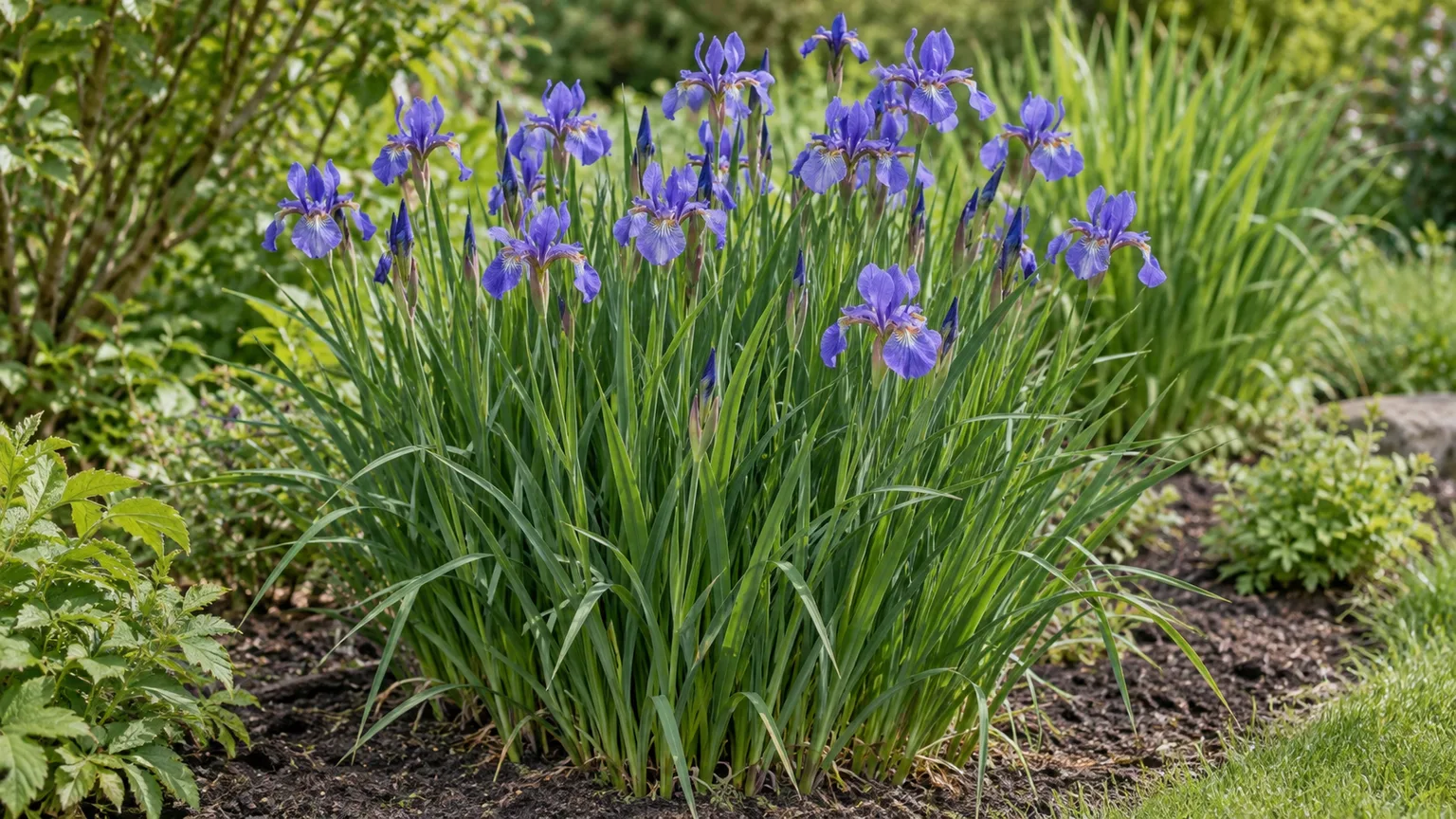
Siberian iris is at its best where the soil stays cool and evenly moist, the roots can breathe, and the plant gets enough sun to hold its flower stems upright. It is a hardy, long-lived perennial with narrow blue-green foliage and smaller, beardless flowers than the familiar bearded iris. Get the site right and it asks for little; put it in dry shade or keep its roots waterlogged and the clump may thin, flop, or bloom poorly.
One point prevents several common planting mistakes: a Siberian iris is a rhizomatous perennial, not a bulb or corm. Its roots form a dense, fibrous clump, and its short rhizomes are planted below the surface, unlike the thick, exposed rhizomes of many bearded irises. The group sold under this name also includes named hybrids, so use the cultivar label when choosing for height, flower color, and winter conditions.
What “Siberian iris” means in a plant label
The species Iris sibirica is native to parts of Central and Eastern Europe, but nursery plants labeled “Siberian iris” are often named cultivars or hybrids. The Missouri Botanical Garden describes the Siberian iris group as chiefly hybrid, with ancestry that commonly includes I. sibirica and I. sanguinea. The group shares a useful garden profile—narrow, grassy foliage, clumping growth, and beardless flowers—but a cultivar’s height, color, bloom timing, and hardiness can differ. The Missouri Botanical Garden’s group and cultivar notes are a better guide to a named plant than a generic species label alone.
Look closely at the flower if you are unsure what you bought. Siberian iris has three upright standards and three lower falls, usually with a yellow or white signal near the base; the falls do not carry the fuzzy “beard” seen on bearded iris. Its slim leaves form a vase-shaped clump rather than the broad, splayed fan of a bearded type. Gardens Illustrated’s profile likewise describes Siberian iris as a rhizomatous perennial with narrow foliage and branched stems carrying up to five violet-blue flowers. Gardens Illustrated’s Siberian iris profile offers a useful visual description.
That distinction matters beyond identification. Siberian iris generally prefers soil that remains more evenly moist than the conditions used for bearded iris, and its rhizome is covered with soil when planted. Do not copy a planting method for a different iris group just because the flowers look related.
Choose a cultivar for your space and winter
Start with the mature height and flower color on the nursery label, then check the cultivar’s local hardiness recommendation. ‘Caesar’s Brother’ is a tall, deep-purple selection; ‘Butter and Sugar’ pairs white petals with yellow markings; and ‘Blueberry Fair’ is known for ruffled blue flowers. NC State Extension lists these and other named cultivars, illustrating how much color and size can vary within the group. NC State Extension’s plant profile gives cultivar examples and regional growing notes.
Most garden references describe Siberian iris as hardy in cold-winter climates, but that does not mean every cultivar blooms reliably in every warm region. NC State notes that a mild winter can reduce flowering for some plants, particularly in warmer parts of its range. If winters where you garden are short and mild, ask a local extension office or specialist nursery which Siberian iris selections have performed there. Choose the named plant for your climate, not just the color in a catalogue photo.
Allow room for a mature clump and the cultivar’s flower stems. Many plants settle into a leafy mound about 2 feet tall, while taller selections can reach 3 feet or more in flower. A compact cultivar suits the front or middle of a border; a tall one can sit behind lower perennials where its narrow foliage will not hide them. Check the stated spread before planting several divisions in a row.
Find the balance of sun and soil moisture
Choose a site where the root zone holds moisture through spring and early summer without remaining a stagnant puddle. Siberian iris can suit a rain garden, pond margin, or naturally moist border, but it is not an aquatic plant that needs to stand in deep water. NC State Extension describes it thriving near streams and pond edges when soil stays evenly moist, and tolerating some drought after establishment. NC State’s culture notes support both parts of that balance.
Sun exposure changes with summer heat
Full sun is the safest starting point for strong flowering in cooler climates. In a hot-summer region, light afternoon shade can reduce heat stress while still leaving the plant enough direct light to flower. Dense shade is a poor trade: stems stretch toward light, the clump can lean or flop, and bloom usually declines. If a healthy, crowded iris has stopped flowering, check its light before adding fertilizer.
Moist soil still needs air and drainage
Aim for soil that is moisture-retentive, fertile, and loose enough for excess water to drain. Siberian iris tolerates a wider range of soils than a strict “acid soil only” label suggests: RHS lists it for chalk, clay, loam, and sand, while recommending moisture with good drainage. The RHS profile shows that soil type alone is not the decision; how the site handles water matters.
If your soil is sandy and dries quickly, incorporate mature compost over the bed and mulch lightly to slow moisture loss. If it is heavy clay, improve the planting area broadly with organic matter and avoid a low pocket that collects runoff. Do not fill one small planting hole with loose potting mix inside dense clay; that can create a sump around the roots. A site that drains slowly after ordinary rain is a reason to choose a raised area or a different plant.
The soil may be slightly acidic to neutral, but do not apply sulfur or acidifying fertilizer solely because a general profile gives a pH number. Test the soil first if a measured pH problem is suspected. Siberian iris is more likely to suffer from the wrong moisture balance, deep shade, or a congested clump than from a small pH difference within a garden soil’s normal range.
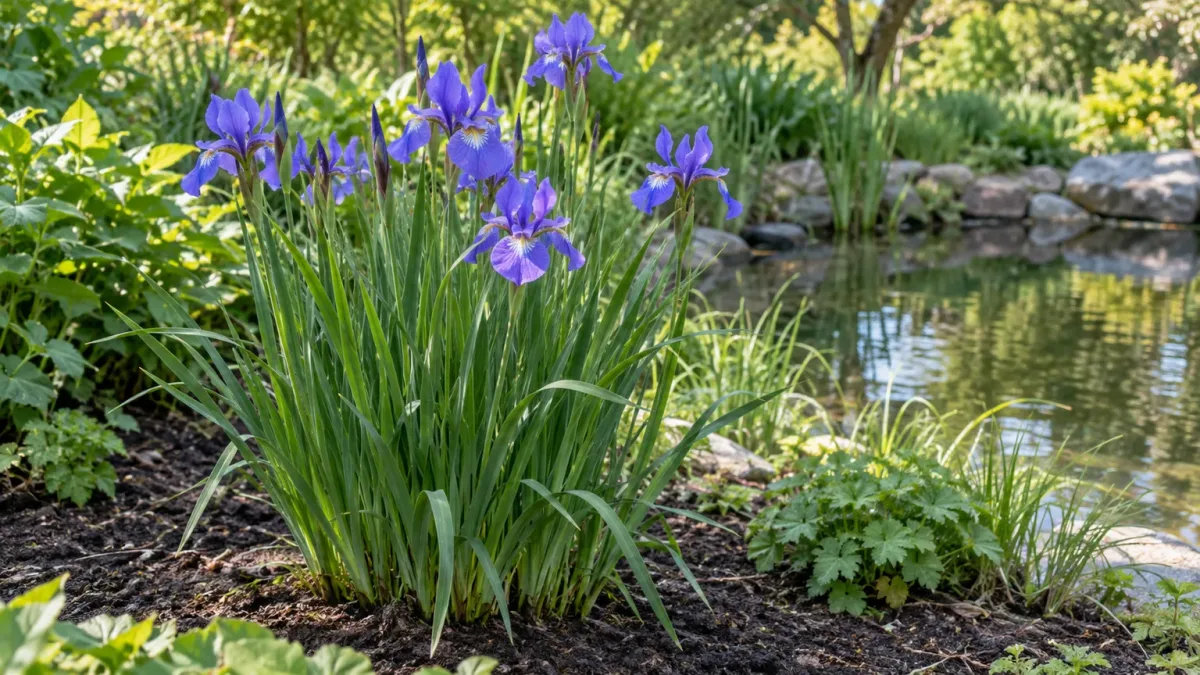
Plant rhizomes at the right depth
Planting depth is one of the easiest places to mistake Siberian iris for a bearded iris. Siberian iris rhizomes should be covered rather than left exposed on the soil surface. The Missouri Botanical Garden gives a planting depth of about 1 to 2 inches and spacing of 1 to 2 feet for Siberian iris group plants. Its culture recommendations are a sound starting point; keep the cultivar’s mature size and local soil conditions in view.
Set bare-root divisions with their fans upright
Spread the roots downward and outward, then set the short rhizome about 1 to 2 inches below the finished soil surface. The leaf fan should remain upright, with its base just at the soil line rather than buried under a mound. Space separate plants about 12 to 24 inches apart, using the wider end for a vigorous or taller cultivar and for a planting that should stay airy.
Firm the soil gently so there are no large air gaps around the roots, then water the planting thoroughly. Do not tamp the bed hard or pull upward on the foliage to check whether the division is secure. A fresh division needs contact with moist soil more than it needs extra compost, fertilizer, or a deep layer of mulch over the crown.
Set nursery plants at their existing soil line
For a potted nursery plant, slide it from the container and inspect the roots before planting. If the roots are circling tightly, loosen only the outermost layer enough to encourage them into the bed; avoid tearing the whole root ball apart. Set the plant so the top of its root mass is level with the surrounding soil, then water it in and keep the root zone evenly moist while new roots establish.
The best planting window varies with winter severity. In regions with hard winters, spring gives a new division time to root before the ground freezes. In milder areas, late summer or early fall—after flowering and while the soil is still warm—can work well. RHS recommends division from midsummer to early autumn, while NC State points to fall planting in the Southeast and spring in cooler-winter areas. RHS propagation guidance and NC State’s regional notes are compatible when timing is matched to the local freeze calendar.
Water to establish, then respond to weather
Water new plants deeply after planting and keep the root zone consistently moist while roots move into surrounding soil. For a recent division, NC State advises maintaining moisture for six to eight weeks; a newly planted potted iris may also need regular checks through its first growing season. Use your fingers or a narrow trowel to check a few inches below the surface. If the soil feels dry there and rain has not replenished it, water slowly enough to wet the full root zone.
Once established, Siberian iris can tolerate a short dry spell, but drought tolerance is not the same as a preference for dry soil. It tends to look and flower better when spring growth and the weeks after bloom are not repeatedly stressed by dry ground. In a pond margin or rain garden, rainfall may already provide enough water; in a sunny sandy bed, the same plant may need supplemental watering during a dry spell. Gardening Know How also emphasizes steady moisture during establishment and watering established plants when drought persists. Its Siberian iris growing guide is useful for that practical distinction.
Avoid both extremes. Frequent shallow sprinkling wets the surface but may leave lower roots dry, while daily watering in slow-draining soil can keep the crown oxygen-starved. Water when the root zone is beginning to dry, then let excess drain. If leaves yellow while the soil remains wet, pause irrigation and inspect drainage before giving the plant more water.
Feed sparingly and let soil tests guide changes
Siberian iris does not need repeated heavy feeding to flower. Begin with a reasonably fertile bed amended with compost; if growth is weak and a soil test shows low nutrients, apply a balanced garden fertilizer in early spring at the label rate. Keep granules away from the crown and water them in. A simple soil test is more useful than adding a specialized “iris” product to soil that may already contain enough nutrients.
Recommendations for fertilizer type and timing vary among practical growing guides, so avoid treating a high-nitrogen formula or a second post-bloom feed as a requirement. Excess nitrogen can push soft leafy growth at the expense of sturdy flower stems and may make a shaded clump flop sooner. If foliage is vigorous but flowering is poor, first check sunlight, winter chill, and crowding. More fertilizer will not correct those causes.
Do not feed a newly divided plant heavily while it is trying to re-establish roots. Keep it moist, give it suitable light, and wait until it resumes steady growth before deciding it needs nutrients. If the plant is in a container, follow a conservative, labeled dose because nutrients accumulate more easily in a limited volume of potting mix.
Deadhead flowers without stripping useful foliage
After the flowers fade, cut the spent flower stems near their base if you do not want seed pods. This tidies the clump and stops it putting energy into seed; it is optional if you want to watch the pods mature or collect seed. Use clean pruners and remove only the flower stalk, not the green leaves below it.
Keep healthy foliage through the growing season. The leaves continue to gather energy after flowering, supporting next year’s growth, so cutting the whole clump back immediately after bloom can weaken future performance. In autumn, wait until the leaves yellow or brown, then remove declining foliage near the base and clear it from the bed. If disease was present, discard affected leaves rather than leaving them around the crown.
Divide a crowded clump at the right time
Division is the reliable way to renew a congested clump and keep a named cultivar true to type. A seedling from a hybrid may not resemble its parent, while a division is a vegetative copy. Do not divide by the calendar alone: look for a crowded perimeter, a thinning or dead center, smaller flowers, or a noticeable decline in flowering despite good light and moisture. NC State suggests dividing about every three years or when crowding and reduced bloom appear; many gardeners can wait longer if the clump remains vigorous.
Choose a cool, workable day after flowering, with enough time for new roots to settle before winter. Late summer to early fall is a useful window in milder regions; spring is safer where winter arrives early or soil freezes hard. Avoid dividing during a heat wave or drought, when the exposed root mass will dry quickly. Water the bed the day before if it is dry so the clump is easier to lift and roots are less brittle.
Lift the whole clump with a garden fork or spade, working around its edge rather than cutting straight through the center. Rock the tool gently to loosen the fibrous mass, then lift from beneath. Shake or rinse away enough soil to see where the leaf fans and short rhizomes separate. Cut foliage back to about 6 to 8 inches to reduce wind stress, then use a clean, sharp knife to separate viable sections. Each division should retain at least one healthy fan and a substantial share of living roots; larger pieces establish faster than tiny fragments.
Discard dead, hollow, mushy, or badly woody portions, but do not throw away a healthy section just because its roots look tangled. Replant divisions promptly at the correct depth and spacing, water thoroughly, and label the cultivar if you are keeping several colors. This sequence is more dependable than chopping the clump into the maximum number of pieces.
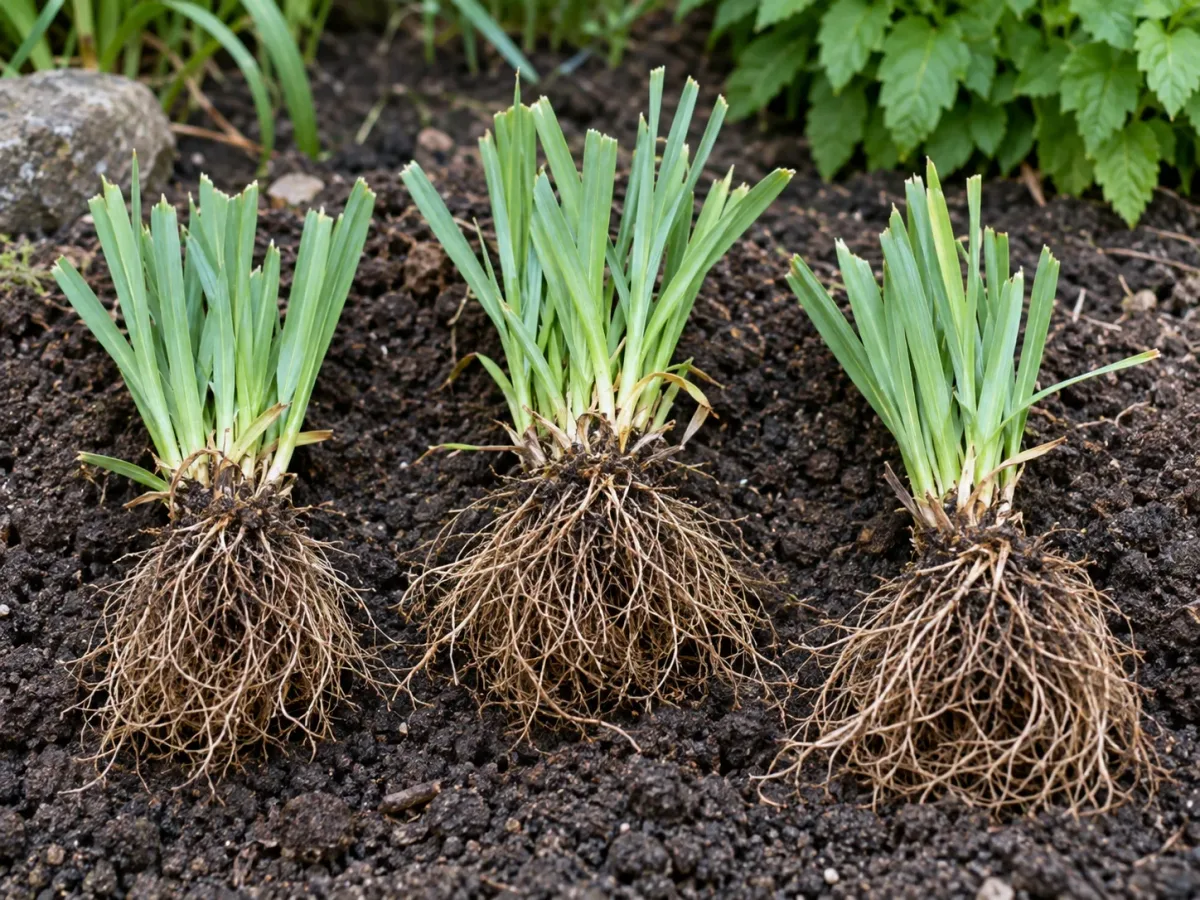
Settle new divisions before routine care resumes
Keep replanted sections evenly moist for roughly six to eight weeks, adjusting for rainfall and the speed at which the soil dries. Check below the surface rather than watering automatically every day. If an early frost is likely before roots have settled, apply a light protective mulch after the soil cools; do not pack wet mulch tightly over the crown.
Expect a divided plant to spend energy rebuilding its root system. It may produce fewer flowers the following spring, especially if the division was small or planting happened late. That pause is not a reason to dig it back up or feed it heavily. Maintain moisture, keep weeds from competing around the young fans, and assess flowering after the plant has had a full growing season.
Grow in a container only if you can manage winter
Siberian iris can be grown in a large container, but a garden bed is usually easier to keep evenly moist and protect from temperature swings. Choose a wide, sturdy pot with several unobstructed drainage holes and enough depth for the roots; a tiny decorative pot dries quickly and leaves little room for the clump to mature. Use a moisture-retentive, free-draining potting mix rather than a sharply drying succulent blend.
Plant a division at the same depth used in the ground, with the rhizome covered and the foliage fan above the mix. Check the pot more often during warm, windy weather, but empty any outer saucer so the roots are not left sitting in stagnant water. Divide or repot when the clump outgrows the container or the mix has broken down—not simply because a year has passed.
Do not bring the pot into a warm room for winter. Siberian iris is a hardy outdoor perennial that benefits from a winter rest, and warmth can disrupt its normal seasonal cycle. In a very cold region, protect the container from repeated freeze-thaw exposure by moving it to an unheated sheltered spot or insulating the pot while leaving the plant outdoors. Do not let the root ball dry out completely during winter.
Troubleshoot a Siberian iris that will not bloom
When a healthy-looking clump produces leaves but few flowers, check the likely causes in order rather than changing several parts of its care at once.
- Too much shade: If the clump receives only a short stretch of weak light, move or divide it into a brighter site. In hot climates, preserve afternoon shade but aim for stronger morning or midday light.
- Recent planting or division: A small new division may need a full season to rebuild roots before it flowers well. Keep it steady rather than dividing it again.
- Crowding: A dense clump with a hollow or declining center is a candidate for division. Replant healthy outer sections and discard dead tissue.
- A mild winter: Some cultivars flower less reliably after a warm winter. Check whether the selection is suited to your region before assuming water or fertilizer is the cause.
- Excess nitrogen or poor drainage: Lush, floppy leaves can point to too much fertilizer or too little sun; yellowing in wet soil calls for a drainage check, not a feed.
NC State notes that Siberian iris benefits from a cold winter and that warmer winters can hinder blooms for some plants. A single warm season does not prove the cultivar is unsuitable; watch the next cycle and compare it with the plant’s light, moisture, and clump condition. If the same pattern continues, ask a regional extension service for cultivars proven locally rather than trying to induce bloom with an acidifier or repeated fertilizer.
Watch for slugs, soft rot, and foliage trouble
Siberian iris is generally less troubled by some pests that affect bearded iris, but it is not problem-free. Slugs and snails may chew leaves or flowers, especially in damp, shaded beds. Inspect at dusk or after rain and look for fresh ragged holes and slime trails before deciding that insects are responsible. The RHS also lists slugs, snails, thrips, and several diseases as possible issues. The RHS plant profile provides a concise pest and disease list.
Soft, dark tissue at the crown or a foul smell in persistently wet soil suggests rot rather than ordinary autumn dieback. Remove badly affected plant material with clean tools, improve drainage, and avoid replanting the same diseased portion into a wet pocket. If only a few outer leaves are yellowing while the crown and new growth stay firm, check whether those are aging leaves before disturbing the roots. The first action is to inspect the crown and soil moisture, not to spray or fertilize.
Wear gloves when dividing or cutting the plant, and wash sap from skin. Iris rhizomes and roots can irritate people and pets if chewed or handled; Pet Poison Helpline notes that the irritating compounds are concentrated in the rhizome and that ingestion can cause drooling, vomiting, diarrhea, or lethargy in pets. Keep divisions and discarded roots away from animals, and contact a veterinarian or animal poison-control service if a pet has chewed the plant. Pet Poison Helpline’s iris guidance explains the pet risk.
Prepare the clump for winter
Once the growing season ends, let the foliage yellow naturally, then remove dead leaves and flower stems. The clump’s narrow leaves may turn straw-colored after frost; that is normal seasonal dieback, not a signal to keep watering or feeding. Clear diseased debris so it does not remain pressed around the crown.
In places with freeze-thaw cycles, a loose layer of mulch applied after the soil has cooled can reduce heaving. Keep the mulch breathable and avoid burying the crown under a wet, compacted mound. Established plants in the ground are hardy, but the cultivar and local winter pattern still matter; a newly planted division and a container are more exposed than a settled garden clump.
Continue to respect the plant’s winter rest. Siberian iris should remain outdoors through cold weather rather than being moved into a heated garage or house. If a potted plant is sheltered, keep it cold and check occasionally that the root mass has not dried completely.
Use Siberian iris where its moisture habit helps
The narrow foliage gives a border texture similar to ornamental grass, while the spring flowers provide a clear seasonal accent. Use Siberian iris in groups where the clumps can fill out, along a moist path, in a rain garden that drains between storms, or near—not submerged in—a pond margin. NC State describes it as a useful cut flower and a moisture-loving perennial, and the Missouri Botanical Garden notes its value along streams and pond edges. Those settings make use of its tolerance for evenly moist soil without treating it as a water plant.
Pair it with other plants that accept the same light and moisture conditions, leaving enough air space for the leaves to dry after rain. In a mixed border, place lower plants at the front and leave a clear view of the iris flowers rising above the foliage. If the bed is dry, sunny, and difficult to irrigate, choose a drought-adapted perennial instead; trying to compensate for the wrong site with frequent shallow watering is more work and less reliable.
Conclusion
For a dependable Siberian iris clump, start with the cultivar label and the soil, not a fertilizer schedule. Give it sun suited to your summer climate, moisture that reaches the roots without leaving them stagnant, and a planting depth that covers its rhizome. Keep the foliage after bloom, divide only when the clump becomes crowded or flowers decline, and protect new divisions while they re-establish. If flowers are sparse, check shade, winter conditions, and crowding before changing soil chemistry or feeding more.