How to Grow and Care for Viburnum Shrubs
Learn how to grow viburnum shrubs with species-specific advice for light, soil, watering, pruning, pollination, berries, and common pests.
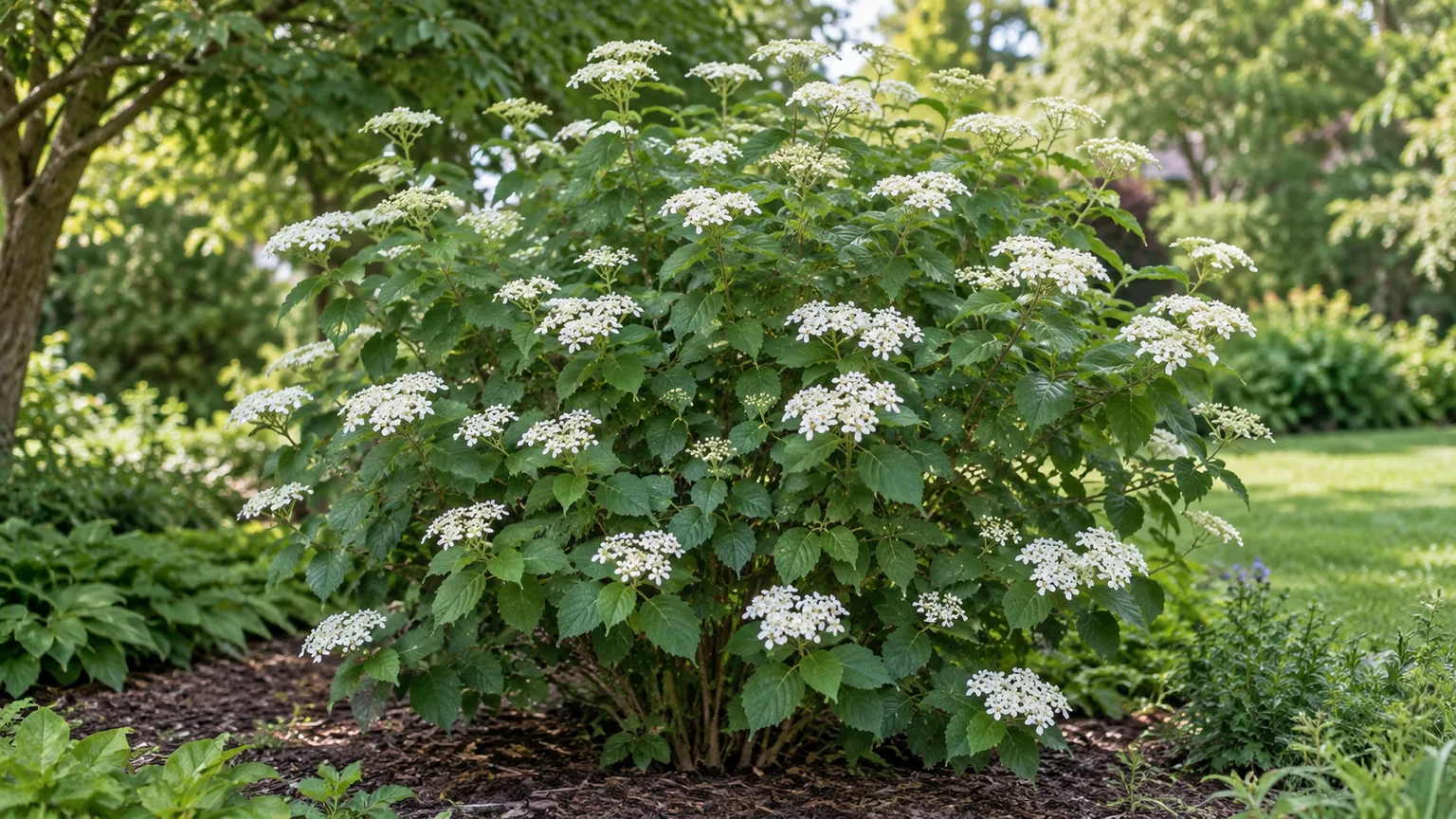
Viburnum is a genus, not one uniform shrub. Its members range from compact plants suited to a smaller border to large shrubs or small trees, and some are evergreen while many lose their leaves in winter. The care decision that saves the most trouble happens before planting: identify the species or cultivar, check its mature width, and match its moisture and light needs to the site you actually have.
Once established in a suitable place, many viburnums need little routine attention. The common failures are usually avoidable: planting a large shrub in a narrow bed, keeping roots soggy, pruning away flower buds, or expecting berries from a plant that needs a compatible pollination partner.
Choose a viburnum that fits your site
The word “viburnum” covers shrubs with different shapes, hardiness, bloom seasons, leaf habits, and soil preferences. NC State Extension Plant Toolbox describes the genus as deciduous or evergreen shrubs and small trees, with mature heights that can range from about 4 to 20 feet. That spread is why generic spacing or watering rules can mislead: begin with the name on the nursery tag, then use that plant’s mature dimensions and site notes to make the plan.
If the label is missing, ask the nursery to identify the plant before you buy it. Check that the name includes a species or cultivar, not just “viburnum,” and look up its mature height and width rather than judging by the container size. A shrub that looks modest in a one-gallon pot may eventually be too broad for a foundation strip or narrow walkway.
Compare common types by size and garden use
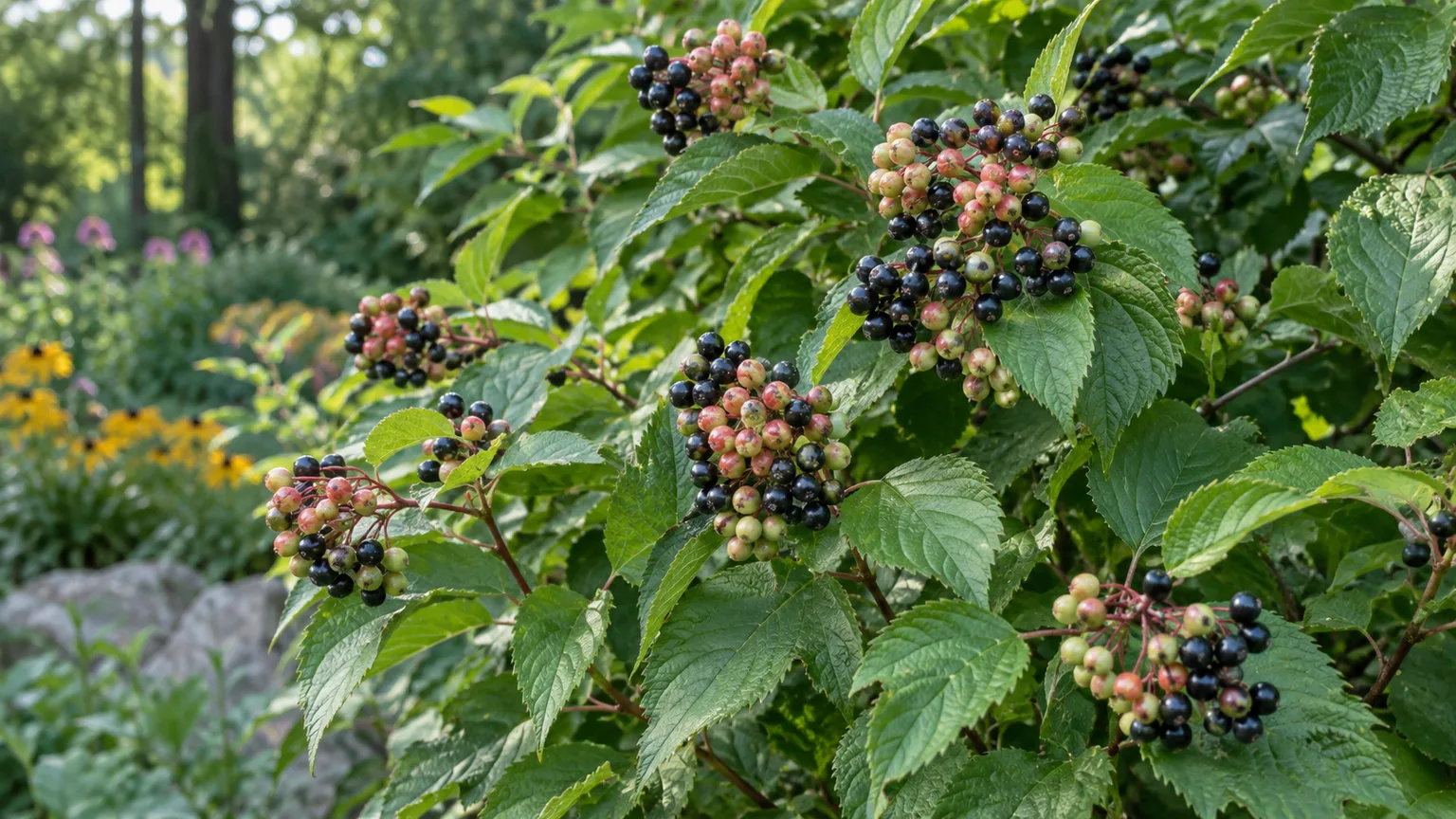
Arrowwood viburnum (Viburnum dentatum) is a useful example of a medium-to-large native shrub for a sunny or partly shaded site with average to moist soil. NC State’s arrowwood profile lists it around 5 to 10 feet tall and 6 to 10 feet wide, with white spring flower clusters, blue-black fruit, and useful fall color. It can work as a hedge or wildlife planting, but give it room to reach its natural width rather than planning to keep it permanently clipped small.
For a smaller shady area, mapleleaf viburnum (V. acerifolium) is a more natural candidate; Penn State Extension describes it at roughly 3 to 6 feet and notes its ability to grow in dry shade. Korean spice viburnum (V. carlesii) is often chosen for its fragrant spring flowers, while doublefile viburnum (V. plicatum f. tomentosum) has a layered, horizontal form that needs space to show its branching. Judd viburnum (V. × juddii) is a fragrant hybrid with different dimensions and site preferences again; consult its plant tag or the Missouri Botanical Garden Plant Finder before choosing a spot.
Native status is another useful filter, especially if you want a shrub that supports local insects and birds. Penn State Extension notes that native viburnums can provide nectar and pollen for pollinators, host food for some butterfly larvae, and fruit for birds. “Native” still does not mean “right for every yard,” though: a native species can outgrow a small bed or need moister soil than your site provides.
Decide whether flowers or berries matter more
A viburnum can flower beautifully and produce few berries. Many viburnums are partly or strongly self-incompatible, so one shrub may set only a light crop even when it is healthy. Penn State Extension explains that a useful fruit display can require two compatible, genetically distinct plants of the same species, or sometimes compatible species, with blooms that overlap.
Ask the nursery for a pollination partner that is compatible with the exact plant and blooms at the same time. Two shrubs that were propagated as identical clones may not solve the problem simply because they are separate plants. If you only want flowers, a partner may not matter; if fruit is a priority, confirm compatibility and bloom timing before purchase. Leave the spent flower clusters on the shrub unless you need to tidy them, because cutting them off also removes developing fruit.
Give viburnum the light and soil it needs
Most viburnums flower best with several hours of direct sunlight, but many tolerate partial shade. The right balance depends on the species and the local climate. Full sun can improve bloom and fruit on one shrub, while a woodland species may look stressed in a hot, exposed bed; use the species profile rather than applying one rule to the whole genus.
Balance sun, shade, and heat
For a flowering hedge or specimen shrub, start with a location that receives morning or midday sun and has some protection from harsh late-afternoon heat if summers are hot. A little shade is not automatically a problem, but dense shade often means fewer flowers, slower drying foliage, and a looser shape. If the planting site sits beneath mature trees, account for root competition as well as the shade cast by their canopy.
Mapleleaf viburnum is one example that can fit dry shade, while arrowwood is more adaptable to sunny or partly shaded sites. North-facing walls, deep shade under dense evergreens, and hot reflected heat beside pavement each create a different growing environment. Watch the site through the day and choose a species suited to those conditions instead of trying to compensate later with fertilizer or frequent watering.
Keep soil moist but well drained
Most garden viburnums prefer soil that holds some moisture but drains after rain or irrigation. NC State’s genus profile describes a preference for moist, well-drained, fertile soil, and its arrowwood profile lists tolerance across several soil textures and moisture conditions. Species differ, so do not assume that a plant described as “moisture-loving” will thrive with its roots submerged in a permanently wet planting hole.
Before planting, notice how long water stands after a heavy rain. If the bed stays saturated, move the shrub, improve drainage across a broad area, or select a species that tolerates wetter conditions. In compacted clay, simply filling a small hole with potting mix can create a water-holding pocket; loosen the surrounding ground and use the native soil as backfill. Most viburnums do not need a special acidifying amendment. Test soil before changing pH, and do not add fertilizer to compensate for poor drainage.
Plant viburnum at the right depth and spacing
Plant container-grown viburnum in spring after the soil is workable or in early fall while roots still have time to settle before severe cold. Avoid planting into frozen or waterlogged ground, or during a spell when you cannot keep the root ball from drying. Water the nursery container before planting so its roots begin evenly moist.
Dig a hole no deeper than the root ball and two or three times as wide. Loosen circling roots gently, set the top of the root ball level with the surrounding ground, and backfill with the soil you removed. Water slowly to settle it around the roots; do not bury the stem flare or build a raised mound of soil against the base.
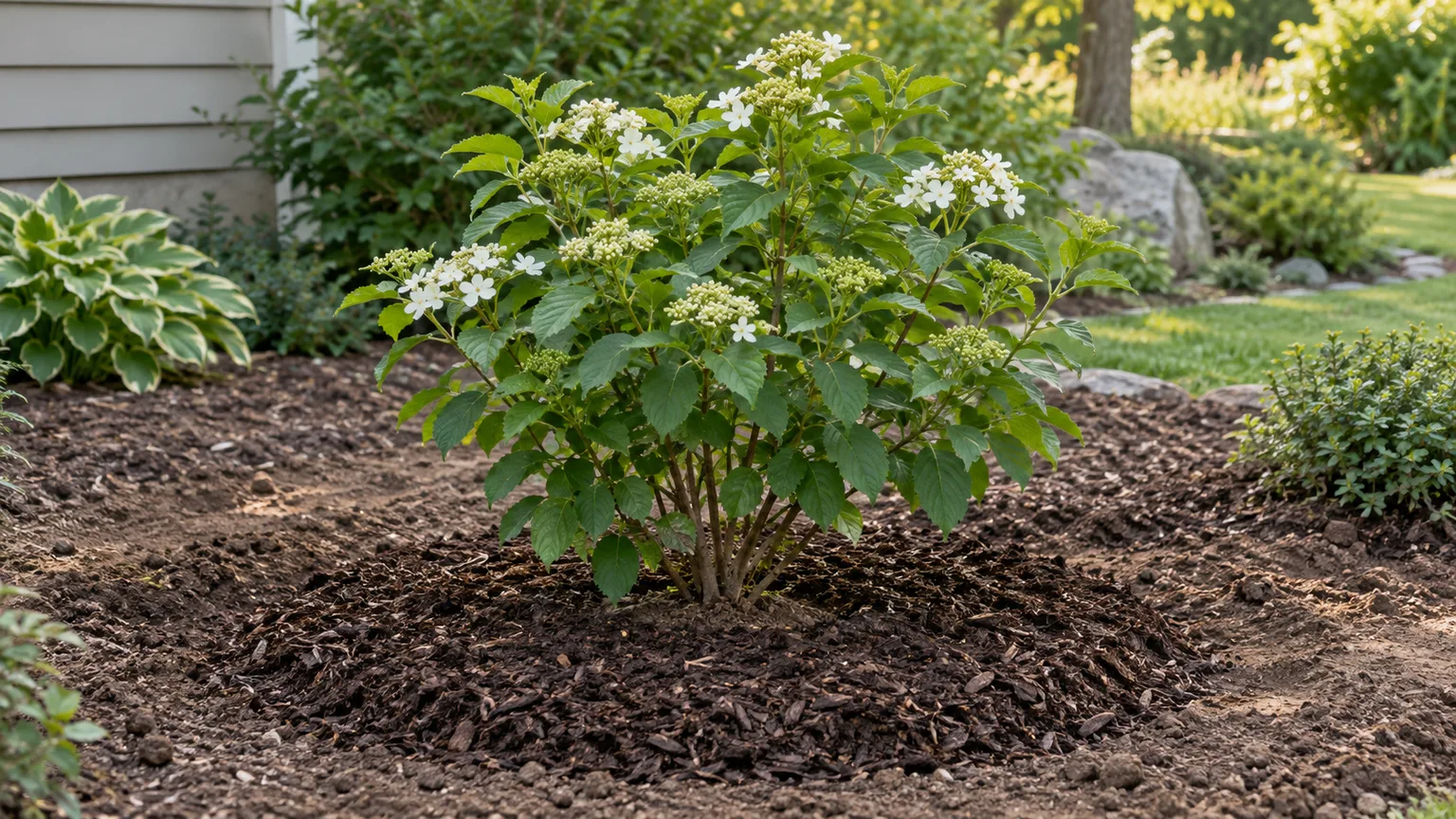
Space shrubs according to their mature width and the effect you want. For a free-standing specimen, allow enough room for the branches to spread without rubbing a fence or blocking a path. A hedge can be planted closer, but use the specific cultivar’s width as your guide and leave enough airflow that the plants do not become a solid, overcrowded wall. There is no reliable universal “four-foot” spacing for a genus with such a broad range of sizes.
Water, mulch, and feed with restraint
During the first growing season, keep the root ball and nearby soil evenly moist while the shrub establishes. Check the soil instead of watering by calendar: nursery mix can dry faster than the surrounding bed, and rain that wets the leaves may not reach the roots. Water slowly at the base when the root zone begins to dry, then allow excess water to drain.
After establishment, many viburnums tolerate short dry spells, especially native species adapted to local conditions. During prolonged heat or drought, check several inches below the surface and give a deep soak if the soil there is dry. Frequent shallow sprinkling encourages roots to stay near the surface; constant saturation deprives roots of oxygen and can lead to decline. A plant in a container will dry much faster than one in the ground and needs more frequent checks.
Spread about 2 to 3 inches of organic mulch over the root zone to moderate soil temperature and slow moisture loss. Keep the mulch a few inches away from stems and the crown; a mound against the trunk holds moisture where bark needs to stay dry and can conceal damage. Replenish mulch as it breaks down rather than piling on a thick new layer each year.
Skip routine fertilizer if the shrub is growing well and its leaves look healthy. Poor growth can come from shade, drought, waterlogged roots, or competition, none of which an extra dose of nitrogen will fix. If a soil test shows a deficiency, choose a product and rate based on that test and its label. Excess nitrogen can encourage leafy growth at the expense of flowers, and repeated feeding is not a substitute for choosing a suitable site.
Prune after flowering to protect next year’s buds
Many spring-flowering viburnums form flower buds on wood produced during the previous growing season. A hard cut in late winter or early spring can therefore remove the buds that were about to open. A practical general rule is to do planned shaping just after flowering, then leave the new growth to mature for the rest of the season.
That timing needs one adjustment if berries matter: wait until the fruit display has finished before shaping. Homes & Gardens’ viburnum pruning guidance makes the same distinction for fruiting types, while Gardening Know How also advises pruning around the flowering cycle rather than applying one calendar date to every cultivar. A winter-flowering viburnum may need pruning after its own bloom period, not after the spring season as a whole.
Make light shaping cuts without shearing
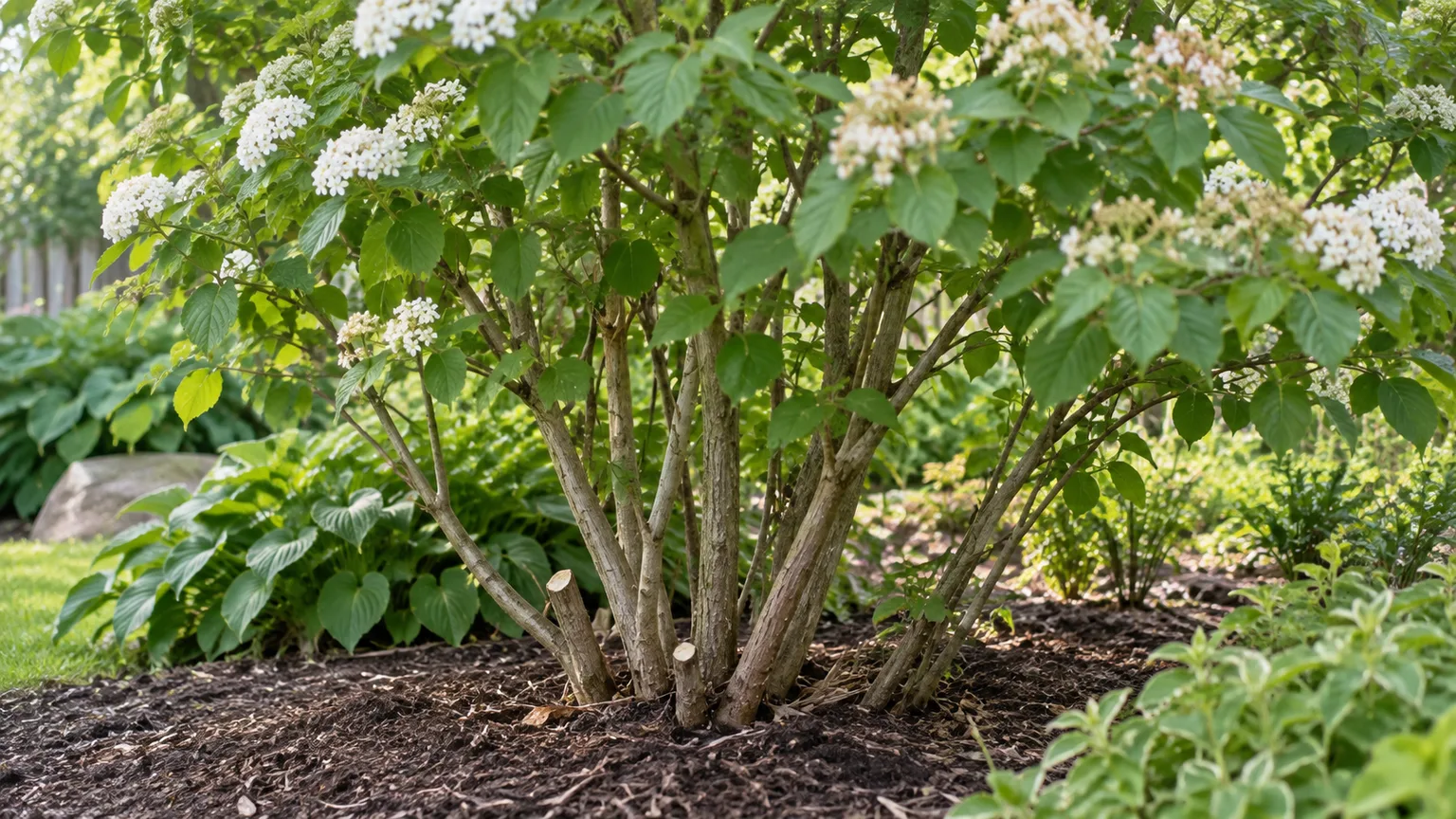
First remove dead, broken, or diseased stems, cutting back to healthy wood or to the branch’s point of origin. Then step back and look at the shrub’s natural outline. If it needs shaping, remove a few crossing, crowded, or badly misplaced branches rather than shearing every surface into a flat wall; shearing stimulates a dense outer shell that can shade the interior and hide weak growth.
Use sharp bypass pruners for small stems, loppers for thicker branches, and a pruning saw for wood that is too large to cut cleanly with loppers. Make each cut just outside the branch collar instead of leaving a long stub or cutting flush into the trunk. Clean tools between plants when removing diseased material, and do not remove healthy flower clusters if you want berries.
Rejuvenate an overgrown shrub gradually
An old viburnum that has become tall and crowded usually responds better to staged renewal than to a single severe haircut. Over several years, remove some of the oldest stems close to the ground after flowering, keeping younger vigorous stems to maintain the shrub’s framework. Homes & Gardens recommends spreading renovation over time rather than taking too much old wood in one go; that approach also preserves some flowers and lets you judge how the plant responds.
If you must reduce the shrub substantially to make it fit, first ask whether it is simply the wrong plant for the space. Repeatedly cutting a large species far below its natural size can trigger vigorous shoots while leaving an awkward shape, and it may remove most of the next season’s buds. A compact cultivar or a better-sited replacement can be less work than years of corrective pruning.
Troubleshoot poor flowering or missing berries
Start with the plant’s recent history. If leaves look healthy but there are no flowers, check whether it was pruned before bloom, planted in heavy shade, stressed by drought, or damaged by a late frost. A young shrub may also need time to establish before it makes a full display. If the plant is growing lush green shoots but few flowers, reconsider fertilizer use and nitrogen in nearby lawn feed.
If it flowers but does not fruit, check for a compatible pollination partner with overlapping bloom before changing watering or fertilizer. Also consider whether the cultivar is selected mainly for ornamental flowers, whether the flower clusters were cut off, and whether birds have already eaten the berries. NC State Extension notes that viburnum fruit can be an important wildlife food; a bare branch in late summer may mean the shrub is doing its ecological job, not failing.
When leaves turn yellow, brown, or drop early, distinguish a seasonal change from a pattern that is spreading. A few old leaves yellowing in fall is expected for deciduous kinds. Widespread yellowing in spring or summer calls for a soil-moisture check first: drought and waterlogged roots can look surprisingly similar above ground. Inspect both leaf surfaces and stems for insects or lesions before reaching for a spray.
Grow viburnum in a container only when the variety fits
Most viburnums eventually become too large for a small pot, but a compact cultivar can work in a deep, sturdy container with drainage holes. Use the mature size on the tag, not the plant’s nursery-pot size, to decide. If the shrub is expected to reach several feet across, plan for a large container and regular root-zone checks, or grow it in the ground instead.
Use a free-draining container mix and a pot only modestly larger than the root ball at first; an oversized volume of wet mix can stay cold and saturated. Water thoroughly when the upper layer begins to dry, allowing the excess to drain. Container roots experience colder and hotter swings than roots in the ground, so in cold climates move the pot to a sheltered unheated location or insulate around it during severe winter weather. Do not bring a dormant hardy shrub into a warm living room.
Propagate viburnum from cuttings
Buying a labeled nursery plant is the most dependable route when you want a particular size, flower form, or pollination partner. Propagation from cuttings can be rewarding, but success varies among species and cultivars, and a cutting-grown plant is genetically identical to its parent. That means it will not count as a genetically different pollination partner for a clone of the same cultivar.
For a small experiment, take several healthy, nonflowering current-season shoots and use a clean blade to make cuttings several inches long. Remove the leaves from the lower portion, insert the cuttings into a clean, free-draining propagation mix, and keep the medium evenly moist in bright indirect light. A clear cover can hold humidity, but vent it regularly so the cuttings do not stay wet and stagnant; discard any that turn mushy. Not every cutting will root, so take extras and wait for new growth and a stable root system before potting them on.
Dormant hardwood cuttings are another method for some woody shrubs. Iowa State University Extension’s guide to propagating trees, shrubs, and vines from hardwood cuttings explains that method in detail, but viburnum rooting success is species-dependent. Keep the parent plant’s label and pollination needs in mind; a clone can make a good replacement shrub, but it will not add genetic diversity.
Watch for leaf beetles and other problems
Viburnums may attract aphids, scale, mites, or fungal leaf diseases, but a minor blemish does not automatically need treatment. Check whether the problem is increasing, whether new growth is affected, and whether the shrub is stressed by poor drainage or drought. Improve the growing conditions and remove only badly affected material; avoid spraying a broad insecticide before you know what is causing the damage.
Find and remove viburnum leaf beetle egg sites
Viburnum leaf beetle (Pyrrhalta viburni) is an invasive pest in parts of North America. Its larvae feed in spring and can skeletonize leaves; adults later chew irregular holes. The insect also lays eggs in pits along small twigs, where they overwinter. Arrowwood is among the species that can be vulnerable, so inspect the shrub if you see lace-like damage or repeated defoliation.
From fall through early spring, look along young twigs for rows of small capped pits. If you find egg-bearing tips, prune those twigs off and remove them from the site before larvae hatch. Ohio State University Extension identifies removal of infested twigs after egg laying as an effective mechanical step for small shrubs, while Wisconsin Extension advises selecting less-susceptible viburnums, such as doublefile, Korean spice, or Judd types, where the beetle is a known local problem. “Less susceptible” does not mean immune; monitor any viburnum you plant.
If the damage is severe or the beetle is new in your area, contact a local extension service for current, location-specific advice before using a pesticide. Product labels, timing, and pollinator exposure matter, especially around bloom. Do not use a treatment just because a plant has holes: caterpillars, other beetles, and environmental stress require different responses.
Prepare the shrub for winter
Most viburnums are outdoor shrubs, but cold tolerance varies by species and cultivar. Check the plant tag for its hardiness range and consider exposure as well as the average winter temperature. A plant on a windy, exposed corner or in a pot may need more protection than the same species planted in sheltered ground.
Water during dry autumn weather until the ground freezes, then maintain a moderate mulch layer over the roots without covering the stems. Avoid late-season pruning that might stimulate tender growth or remove buds set for the next bloom. Evergreen kinds can lose moisture through leaves in winter; shelter them from drying winds where practical, and water the soil before a freeze if autumn has been dry.
A container-grown viburnum needs extra attention because its roots are above ground and more exposed to cold. Move the pot near a protected wall or into an unheated garage during the harshest weather, keeping the plant dormant and the mix from drying completely. Resume normal outdoor care when local conditions suit the species rather than following a single calendar date for every region.
Conclusion
Successful viburnum care begins with choosing the right species for the space. Give it the light and drainage it prefers, water consistently while it establishes, mulch without burying the stems, and prune after its bloom—and after fruiting if berries matter. If a shrub struggles, check site fit, moisture, pruning history, and pollination before adding fertilizer or treatment; those checks usually reveal the next useful step.