How to Grow Serrano Peppers: A Complete Growing Guide
Grow serrano peppers from seed to harvest with a clear timeline, warm-soil cues, container advice, steady watering, and practical fixes for flowers that drop.
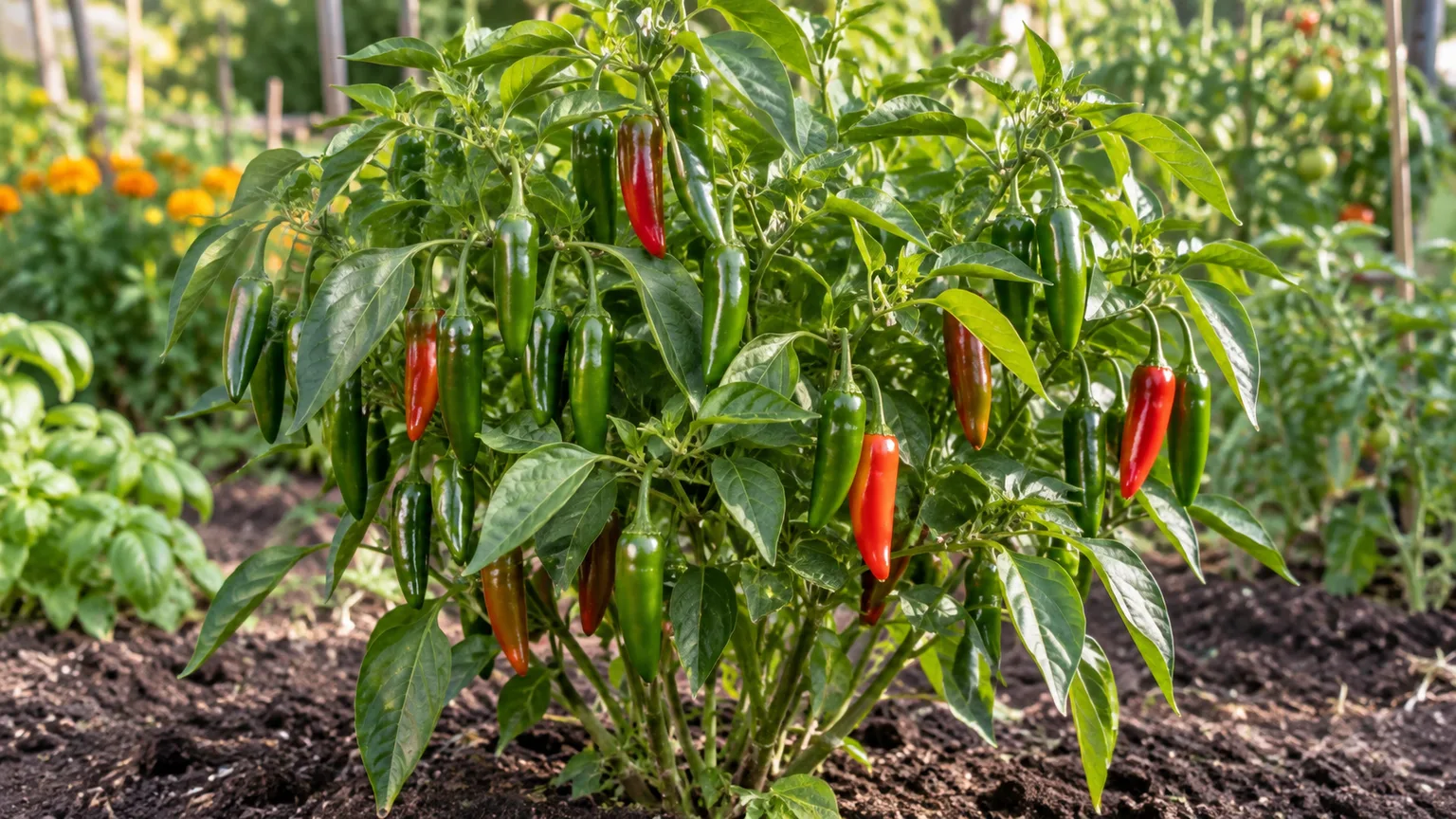
Serrano peppers are productive when their roots stay warm, the soil drains well, and the plant receives steady moisture through flowering and fruiting. A reliable plan is to start seed indoors about eight weeks before outdoor planting, raise sturdy seedlings under bright light, and wait to transplant until frost has passed and the soil has warmed. The main setbacks are usually a cold start, a container that dries too quickly, uneven watering, or a hot spell that interrupts fruit set.
Serranos are not difficult, but do not rush them into a chilly spring bed. Use the local frost date as a guide and soil and night temperatures as the final planting test. Fruit can be harvested green or left to ripen to the cultivar’s mature color.
Understand the crop and choose a cultivar
Serrano is a hot-fruited cultivar group within Capsicum annuum, the same broad species that includes jalapeños and sweet bell peppers. Plants commonly grow into branching bushes around 2 to 3 feet tall, sometimes larger in long, warm seasons. The smooth, narrow fruit is usually about 2 to 4 inches long, but length, plant size, color, and days to maturity change with the cultivar and growing conditions. Treat the seed packet’s description as the best guide to the particular plant you bought.
Serranos are often harvested green, but leaving a few peppers on the plant lets them reach their mature color. Depending on the selection, that can be red, orange, brown, or another advertised shade. A seed listing for ‘Serrano Del Sol,’ for example, describes a hybrid type with early maturity and specific virus-resistance claims; the Cornell Vegetable Varieties for Gardeners database gives an older 55-to-75-day maturity range. Confirm the current packet’s maturity count and resistance codes before using that record to plan a short season. ‘Serrano Tampiqueño’ is another named type, but all varieties need the same basic combination of warmth, drainage, light, and even moisture.
Serrano or jalapeño: compare heat and fruit
A serrano is generally smaller and slimmer than a jalapeño, and it often tastes hotter, but neither the cultivar name nor color can promise how much heat an individual pepper will have. Iowa State University Extension lists serranos around 10,000 to 25,000 Scoville heat units and jalapeños around 2,500 to 10,000; real peppers vary, and the ranges nearly meet at the boundary. Grow a cultivar for its flavor and use rather than expecting every fruit to match a number on a chart.
Capsaicin is made in glands on the pale inner membrane, or placenta, that connects to the seeds. The seeds themselves do not produce the heat, though their surfaces can pick up capsaicin because they touch that tissue. This matters when handling peppers: removing the seeds alone does not necessarily remove most of the heat, while removing the inner ribs usually has a larger effect.
Build a calendar around warm weather
In a climate with winter frost, start Serrano seeds indoors roughly eight weeks before your expected outdoor planting date. That is a planning interval, not a fixed date: if spring stays cold, keep the seedlings protected rather than putting them out just because the calendar says it is time. For a short growing season, look for an early cultivar or buy a sturdy transplant, and check whether the packet counts maturity from sowing or from transplanting. Seed companies do not all calculate “days to maturity” the same way. University of Maryland Extension estimates most hot peppers at 70 to 85 days from transplanting, while a Serrano-specific guide may count from planting or sowing. Use the seed label for your particular cultivar as the best crop-planning reference and treat broad ranges as estimates.
There is also a difference between a pepper that has reached usable green size and one that has fully changed color. Under good conditions, fruit may take about 45 to 55 days from flowering to full color, with cooler weather adding time; Oregon State University Extension’s pepper guide gives that range for peppers generally. A Serrano-specific guide from Homes & Gardens describes roughly 70 to 90 days from planting to harvest. These estimates use different starting points and growing conditions, so use them to plan a window rather than promise a picking date. Watch the plant and fruit as well as the calendar.
Start seed indoors with bottom heat
Fill a clean tray or small pots with pre-moistened, sterile seed-starting mix. Sow two or three seeds per cell about one-quarter inch deep, then cover lightly and label the cultivar. Warm the mix to about 80 to 90°F with a thermostatic heat mat if available; pepper seeds germinate slowly and unevenly when the mix is cool. The University of Minnesota Extension recommends bottom heat in that range, while practical guidance from Fine Gardening notes that warm chile seed can emerge in roughly five days to two weeks. Older seed and cooler media can take longer.
Keep the mix evenly damp, not waterlogged. A humidity cover can slow drying before germination, but remove it as soon as the seedlings emerge so trapped moisture and stagnant air do not linger around the stems. Once the first leaves open, move the tray under a bright overhead grow light; a dim window often produces seedlings that stretch, lean, and become hard to transplant. A timer that provides about 14 to 16 hours of light a day is a practical indoor setup, consistent with the Fine Gardening seed-starting guide. Keep the light close enough to prevent legginess, following the fixture’s directions so the leaves do not overheat.
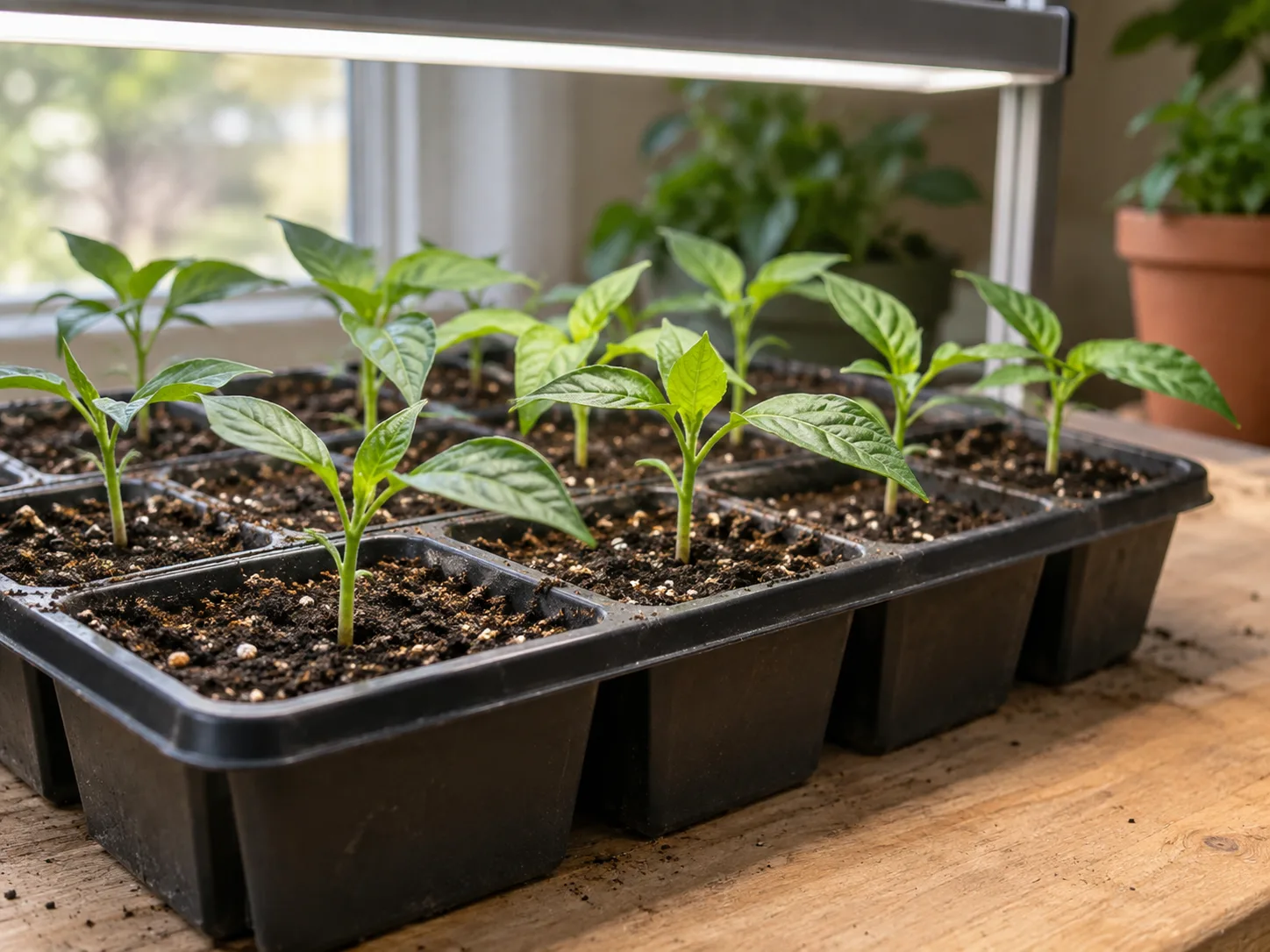
Thin each cell to its strongest seedling rather than leaving a crowd to compete. When a seedling has a few true leaves and the roots hold the plug together, pot it into its own small container with a well-drained mix. Handle it by the leaves or root ball, not by pinching the soft stem. If the mix already contains starter fertilizer, do not add a second feed automatically; young roots are easy to damage with a concentrated dose.
Pot up and harden seedlings without stalling them
Before a seedling moves into its final bed or pot, it needs to adjust to direct sun, wind, and outdoor temperature. Over seven to fourteen days, set it outside for a short period in a sheltered, partly shaded location, then gradually extend the time and increase the light. Bring it in overnight at first and whenever frost or cold nights are forecast. The transition is not a test of toughness: sudden full sun can scorch leaves, while cold roots can stall a plant that looked healthy indoors.
Transplant only after the frost risk has passed and the root zone is warm. A useful home-garden threshold is soil at least 60°F and nights reliably above about 50°F; Oregon State University Extension advises waiting for warm soil, and University of Minnesota Extension places outdoor transplanting after nighttime lows rise above 50°F. If your local extension service gives a more conservative threshold for your region, follow it. A warm week followed by a cold front can still check growth.
Choose a sunny site and prepare the soil
Choose a spot with at least six hours of direct sun; eight to ten hours is preferable where the climate allows it, according to University of Maryland Extension. Serranos need that light to build a sturdy canopy and mature fruit, but in very hot, dry locations a little late-afternoon shade can reduce stress. The best site is warm, sheltered from strong wind, and not a low pocket where water stands after rain. In a short-season climate, a raised bed or a large container can warm and drain earlier than heavy ground soil.
Peppers grow best in fertile, well-drained soil with a slightly acidic to neutral pH. A soil test is more reliable than adding amendments by guesswork; Oregon State University Extension gives a preferred pH range of 6.0 to 7.0. Mix finished compost into poor soil before planting, but do not treat a large quantity of fresh manure or high-nitrogen fertilizer as a shortcut to production. If the bed is compacted or holds water, fix the drainage or use a raised bed instead of keeping the root zone wet.
Rotate peppers away from tomatoes, potatoes, eggplants, and other nightshades when possible. They share soilborne diseases and pests, so moving the crop to another bed for three or four years can reduce carryover; University of Minnesota Extension recommends that interval. Companion planting does not replace rotation, drainage, or leaf inspection.
Transplant after the root zone and nights warm up
Water the seedling before planting so the root ball holds together. Set plants about 18 inches apart, with roughly 24 to 36 inches between rows if you are planting in rows; follow the cultivar label if it specifies a different mature size. Serranos branch, and space for airflow makes it easier to inspect stems and harvest without snapping branches. Plant in the late afternoon or on a calm, cloudy day if you can, then water at soil level to settle the mix around the roots.
Keep the transplant at the same soil depth it had in its pot. Peppers do not need to be buried deeply like some tomato transplants; covering the stem with a wet band of soil can make it more vulnerable to rot. For a seedling in a peat pot, cover the pot rim completely so it does not wick moisture away from the root ball. If you use a row cover to protect a new transplant from wind or a cold snap, monitor temperature beneath it and vent or remove it as the weather warms.
Grow one Serrano in a roomy container
A single Serrano can crop well in a container on a sunny patio or balcony. Use a pot of about five gallons with several unobstructed drainage holes, and fill it with fresh, high-quality potting mix rather than dense garden soil. Oregon State University Extension and University of Maryland Extension recommend a five-gallon container for one pepper plant; the extra root room holds moisture longer and gives a branching plant more support than a small decorative pot. A smaller three-gallon pot may keep a plant alive, but expect to check moisture more often and accept that growth and fruiting can be limited.
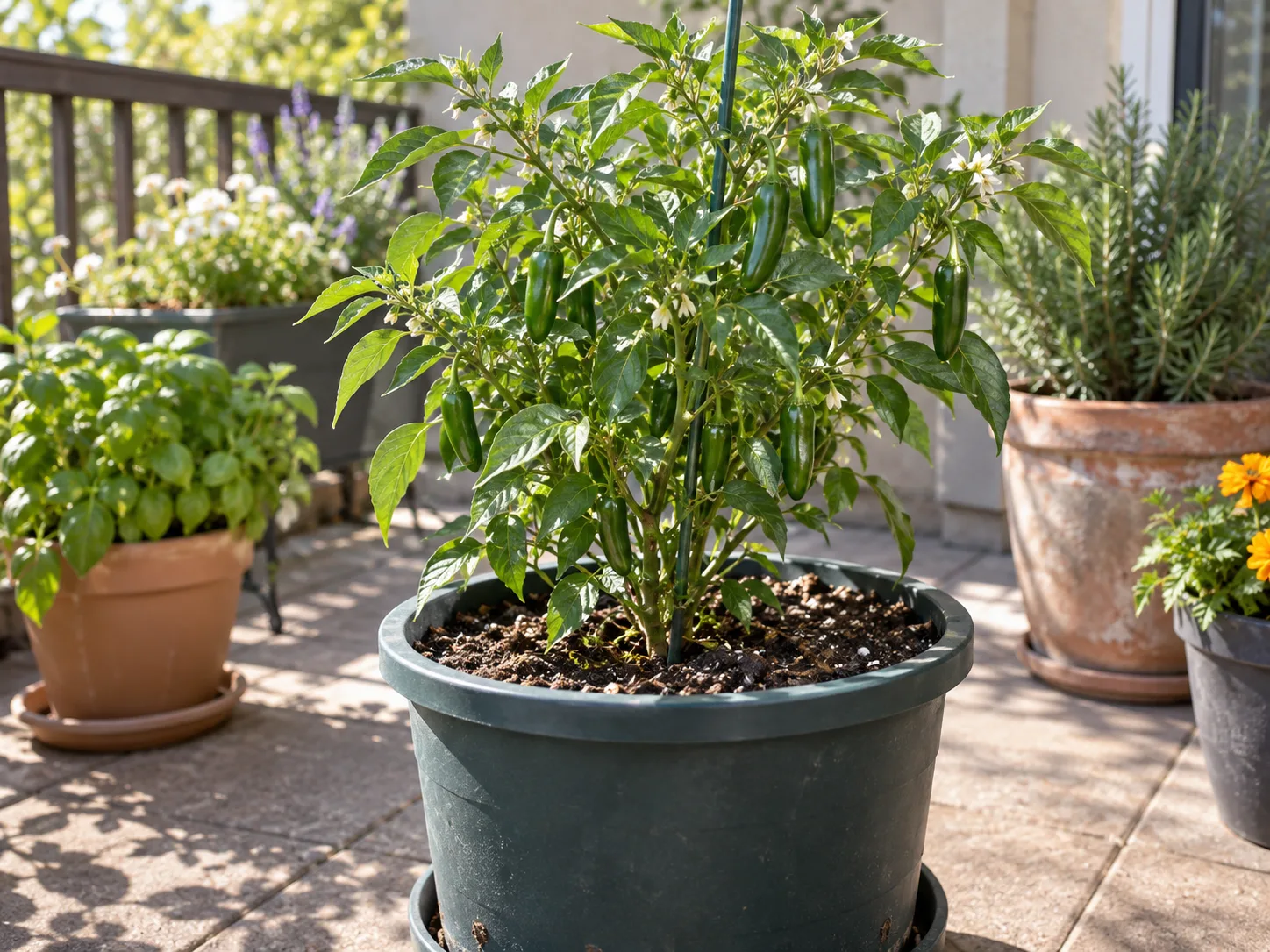
Raise the pot slightly on feet or a stable stand so water can drain freely, and do not leave it standing in a saucer of runoff. Put the container where it gets sun for most of the day but can be shifted if a prolonged heat wave causes flower drop. Dark containers on pavement can heat quickly, and small pots lose water faster than in-ground beds. In warm, windy weather, check the mix daily; watering frequency should follow the moisture in the root zone, not a fixed weekly schedule.
Keep flowers and fruit healthy with steady care
Once established, a Serrano needs steady care more than frequent intervention. Keep a healthy canopy, maintain even moisture, control weeds without digging deeply near roots, and inspect the plant weekly, especially leaf undersides and branch joints.
Water by the root zone, not the clock
For in-ground plants, about one inch of rain or irrigation a week is a starting guideline, not an automatic prescription. Sandy soil, wind, heat, raised beds, and heavy fruit load can increase demand; clay that stays wet may need less frequent watering. Feel the soil several inches down and water deeply when the root zone is beginning to dry. A brief surface sprinkle encourages shallow roots and does little to buffer the plant through a hot afternoon. Drip irrigation or a slow soak at the base keeps leaves drier and sends water deeper.
Container plants need closer checks, especially after they flower and carry fruit. Water thoroughly until some drains through the bottom, then let excess escape; do not keep the pot saturated. It may need water every day in hot weather, but a cool, rainy spell can change that. Repeated swings from bone-dry to soaked can weaken flowers and small fruit and contribute to blossom-end rot. Utah State University Extension and Oregon State both emphasize deep watering and steady moisture rather than alternating drought and flooding.
Wait until soil is warm before adding mulch. Utah State Extension advises delaying straw or grass clippings until soil reaches about 75°F; once warm, a thin layer can slow evaporation and weeds. Keep it away from the stem to avoid holding moisture against the crown.
Feed moderately and avoid excess nitrogen
Start with a soil test if the bed is routinely overfertilized, grows lush foliage with few flowers, or has a history of poor fruit set. If the soil is fertile and compost has been added, Serranos may need only a modest vegetable fertilizer applied according to its label. Container mixes may already contain a slow-release feed, so check the bag before adding another dose. Avoid high-nitrogen lawn fertilizer and do not assume that more feed means more peppers.
If a soil test supports feeding, use a product labeled for vegetables and apply only the stated amount, keeping granules away from stems and watering them in. Oregon State Extension describes splitting a soil-test-guided fertilizer dose between pre-plant preparation and early flowering. The practical signal is the plant: excessive dark, leafy growth with few flowers can mean too much nitrogen, while weak pale growth can have several causes including cold roots, poor drainage, or inadequate light. Diagnose conditions before adding a nutrient. Excess nitrogen can delay fruiting and maturity, and a blossom-end problem is not automatically proof that the soil lacks calcium.
Diagnose flower drop and fruit problems
A pepper can flower without setting fruit, especially when temperature or moisture is outside its comfort range. Serrano flowers are self-fertile; a second plant is not required, although University of Maryland Extension notes that insects can cross-pollinate nearby pepper varieties. In a sheltered greenhouse, gentle movement of the plant can help shake pollen loose, but outdoor wind and insects usually move it. When flowers fall during a hot spell, first check weather and soil moisture rather than buying pollination products or adding fertilizer.
| What you see | Likely first checks | Practical response |
|---|---|---|
| Flowers or tiny peppers fall | Very hot days, cold nights, dry soil, or windy low-humidity conditions | Keep root-zone moisture even, ventilate covers, and wait for weather to moderate before changing the feed |
| Dark, sunken patch at the blossom end | Moisture swings and poor calcium movement into growing fruit | Water consistently and avoid heavy nitrogen; remove badly damaged fruit |
| Pale or tan patch on the sun-facing side | Fruit exposed after leaf loss or during hot, dry sun | Preserve healthy leaf cover, water evenly, and add temporary afternoon shade during extreme heat |
| Wilting while the mix stays wet | Poor drainage or possible root damage, not thirst alone | Empty standing water, check the drainage holes, and let the root zone regain air |
Utah State University Extension notes that pepper fruit may fail to set during nights below about 55°F or days above 90°F. University of Maryland Extension describes poor set when nights fall below 60°F or rise above 75°F, or when days exceed 95°F. These ranges differ because they are practical warning points rather than universal cutoffs; both sources point to temperature stress as a reason flowers or young fruit can drop. Very hot days and warm nights can interrupt flowering, and plants often resume setting fruit when conditions improve. Keep the root zone steady during the wait; repeated overwatering can create a second problem while trying to solve the first.
Blossom-end rot is a physiological disorder, not a contagious disease. It appears as a dark, leathery or sunken patch on the flower end of an expanding fruit and is commonly tied to inconsistent water uptake. Adding calcium without correcting watering may not help. Sunscald, by contrast, appears where a pepper is suddenly exposed to strong direct sun; keep the plant’s healthy foliage in place and avoid aggressive pruning in a heat wave. These distinctions prevent a common overcorrection: feeding or spraying a plant for a problem caused by weather or water.
Stake branches and prune only when needed
A loaded Serrano branch can bend or break, especially after rain or when a container is moved. Put a short stake or a small tomato cage in place at transplanting, before a crowded root system makes support harder to install. Tie the main stem loosely with soft garden tie, leaving room for it to thicken, and support a heavy branch rather than pulling it upright by its fruit. Wind protection and a balanced canopy can prevent more damage than late pruning.
Routine pruning is not required for a good crop. Remove broken, diseased, or badly crossing stems with clean snips, but do not strip healthy leaves to expose peppers to more sun. Topping seedlings can delay flowering and is not necessary to make a plant branch. If you need to reduce a large potted plant before moving it indoors, shorten it gradually and preserve enough healthy nodes for regrowth rather than taking most of the canopy at once.
Choose green pods or wait for full color
You can harvest Serranos when the pods have reached the size and firmness described for your cultivar. Many are picked green while they are glossy and firm, often around 3 to 4 inches long. Snip each fruit with clean scissors or pruners, leaving a short piece of stem attached; twisting or pulling can tear a fragile branch. Pick every few days during a heavy crop so mature fruit does not stay on the plant longer than you need it to.
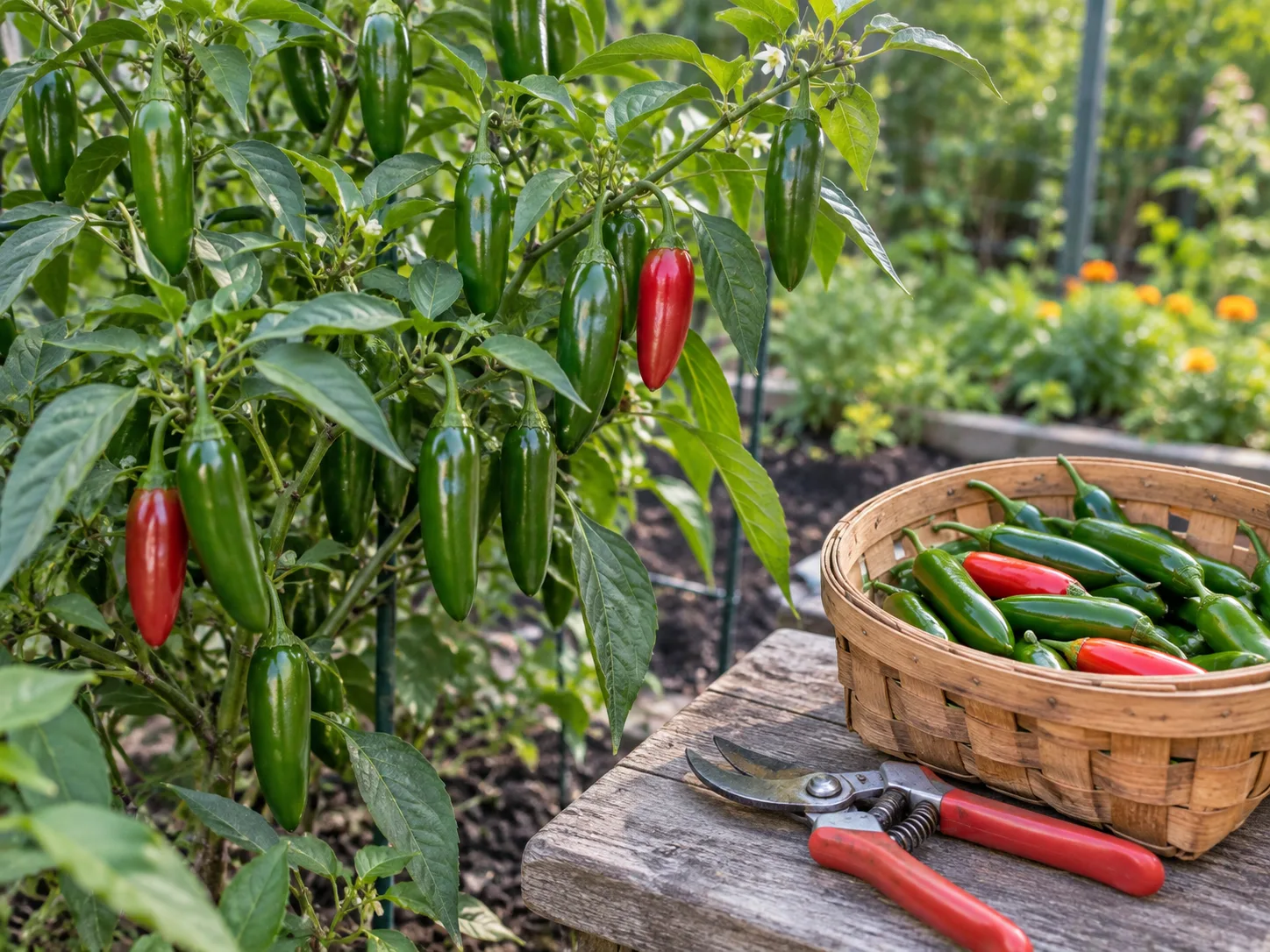
A green harvest gives you the classic crisp, bright flavor used in fresh salsa and cooking. Leave selected pods on the plant if you want to see the full ripe color and a different, often deeper flavor. Color can vary with cultivar, so red is common but not universal. Full color also takes time: Utah State University Extension estimates about 35 to 45 days from flowering to full color for peppers under good conditions, with temperature and variety affecting the interval.
Choose the stage that suits your use: mature green pods give an earlier harvest, while selected fruit left on the plant lets you compare flavor and save fully ripe seed. Regular picking can encourage continued flowering, but weather and plant health still govern the next crop. Before frost, harvest mature green peppers rather than risk them outdoors.
Handle capsaicin and store the harvest well
Serranos can irritate skin and eyes, so wear disposable or washable gloves if you are sensitive to hot peppers or handling a large harvest. Keep your hands away from your face while cutting, then wash hands, tools, and work surfaces with soap and water. Do not touch your eyes after handling the fruit. The irritation comes from capsaicin transferred from the inner ribs and fruit tissue; rinsing the pepper seeds alone does not make a hot pepper mild.
Keep dry, unwashed peppers in the refrigerator and rinse them before cooking. University of Minnesota Extension says peppers can keep for a week or longer, though the skin may pit during extended cold storage. Freeze surplus whole or sliced for cooked dishes, or dry it in a dehydrator with good airflow. Frozen fruit softens after thawing but works well in sauces and soups. Avoid sealing damp pods, since condensation speeds spoilage.
Check for pests and prevent disease spread
Inspect the undersides of leaves and tender shoot tips for aphids, whiteflies, spider mites, and flea beetles. Aphids cluster on new growth and can distort leaves; whiteflies flutter when disturbed; mites may leave fine stippling or webbing in hot, dry conditions. A strong, targeted stream of water can dislodge small aphid colonies. Repeat inspection after a few days, because a single rinse may miss insects hidden on the underside of leaves.
Use insecticidal soap only when the pest is correctly identified and the product label permits use on edible peppers; follow the label’s rates, timing, and harvest interval. Household dish detergent is not a reliable substitute and may injure foliage. Avoid spraying open flowers when pollinators are visiting, and do not use broad-spectrum insecticide as a preventive measure. If chewing damage appears overnight, inspect stems and leaf undersides for larger caterpillars or cutworms and remove them by hand when practical.
Good spacing, clean tools, crop rotation, and watering at soil level reduce disease pressure. Remove plants with spreading symptoms instead of composting them near next year’s bed. Distorted leaves and mottled fruit can signal a virus; yellowing can also come from overwatering, cold roots, nutrient issues, or pests. Compare symptoms and soil before treating, and ask a local Extension office when a problem spreads or remains unclear.
Overwinter a favorite plant or restart next season
Serranos are frost-tender perennials in warm climates, but in places with freezing winters they are usually grown as annuals, as University of Maryland Extension explains for peppers generally. A potted plant can be brought indoors before frost if you want to keep a cultivar, though it may shed leaves or stop fruiting when winter light is weak. Inspect it for aphids and whiteflies before it comes inside, isolate it from houseplants, and place it in the brightest window or under a grow light. Water less as growth slows, but do not let the root ball stay bone-dry for weeks.
For a garden-grown plant, overwintering means lifting and potting it before cold weather, which disturbs roots and carries outdoor pests indoors. It is often simpler to save seed from fully ripe fruit or start fresh next spring. If you save seed, remember that a hybrid may not produce seedlings true to the parent, and nearby pepper cultivars can cross-pollinate. A stem cutting can preserve a favorite plant’s traits: choose a healthy, actively growing 4- to 6-inch tip, cut just below a node, remove flowers and fruit, and leave only a few leaves. Place at least one node in clean water or moist rooting medium, then keep it warm in bright indirect light; rooting can take several weeks and is not guaranteed. Pepper Geek’s cutting guide offers a practical home method. For most growers, a labelled seed packet or nursery transplant is the easier route.
Conclusion
The most reliable Serrano harvest starts before planting day: choose a cultivar with enough time to mature, keep seedlings warm and bright, and wait for warm soil and frost-free nights before transplanting. Give the plant a sunny, well-drained bed or a roomy five-gallon pot, then keep moisture steady without leaving roots waterlogged. When fruit forms, pick firm green pods for an earlier crop or let selected peppers reach their cultivar’s mature color, and use the plant’s leaves, flowers, and weather as feedback when growth slows.



