How to Grow and Care for a Yellowwood Tree
A yellowwood tree needs room, well-drained soil, and early structural pruning. Learn when to plant, how to water, why blooms vary, and what to expect.
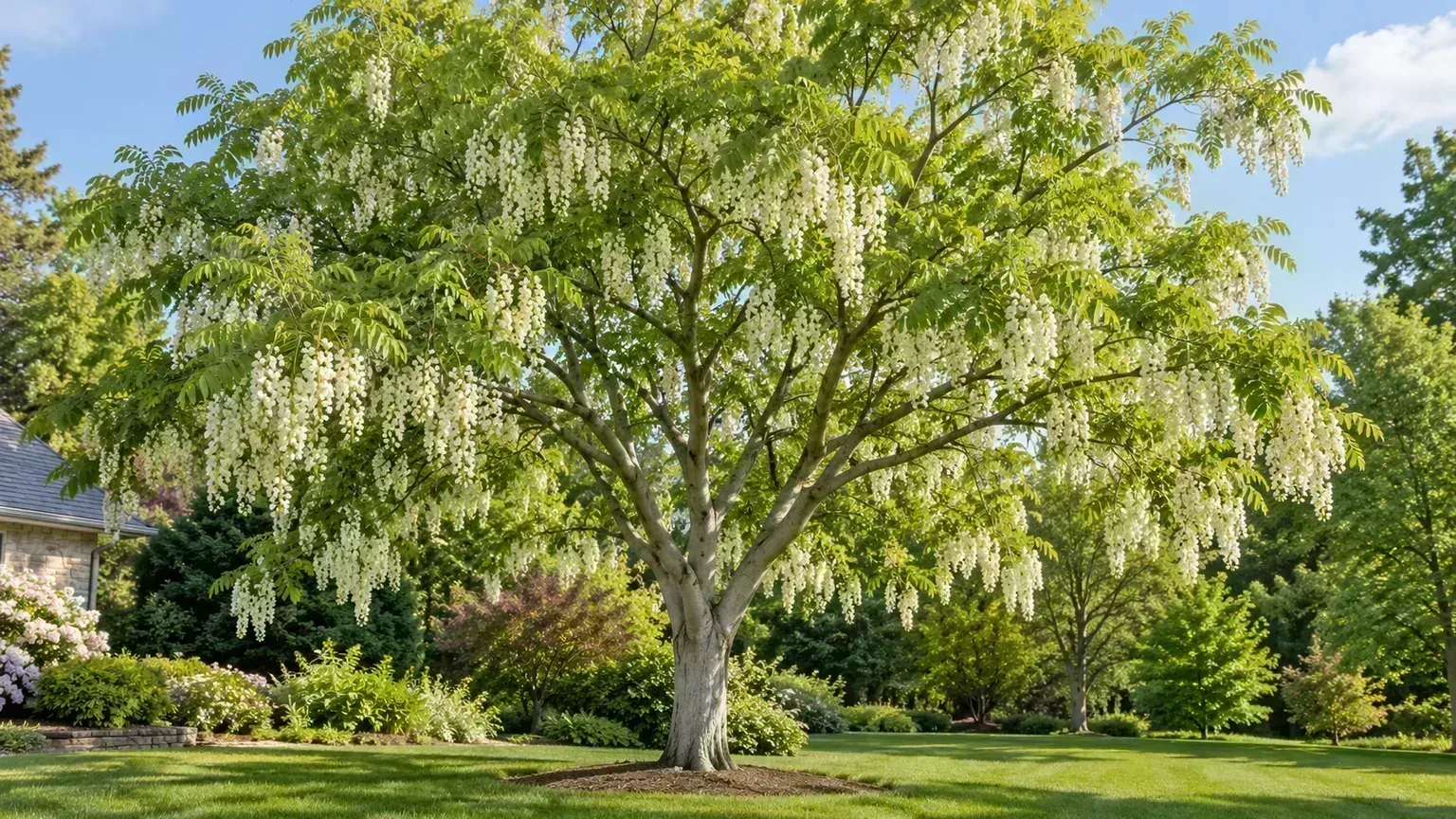
American yellowwood, Cladrastis kentukea, is a deciduous North American shade tree prized for pendulous, fragrant white flowers, clear yellow-orange fall foliage, and smooth gray bark. It is slow-growing, deep-rooted, and broad at maturity, so the best care begins before planting: give it a permanent site with room for its canopy and shelter from harsh wind. Older references may call it Cladrastis lutea; the current name used by North American botanical and extension sources is C. kentukea. NC State Extension and Virginia Cooperative Extension at Virginia Tech describe the same American yellowwood.
Is Yellowwood Tree Right for Your Yard?
Choose yellowwood if you want a long-lived-looking focal shade tree with more than one season of interest and can accommodate a medium-to-large crown. It suits a lawn, woodland edge, native garden, or spacious pollinator planting, but it is a poor fit for a narrow strip beneath utility wires or a cramped courtyard. Its mature branches are not especially robust in wind or heavy snow, and correcting poor structure becomes harder as the tree grows.
This is not an instant-shade purchase. Extension references describe yellowwood as slow-growing and usually about 30 to 50 feet tall; its mature crown can spread roughly 40 to 55 feet. Its deep root system makes moving an established tree difficult, so buy a healthy small nursery tree and settle on the final location before digging. Oregon State University’s Landscape Plants database notes its deep root system and brittle shoots; NC State also cautions that transplanting is difficult.
Yellowwood earns space in return: spring flower clusters draw bees and other pollinators, its crown provides summer shade, and the leaves turn yellow to orange before they drop. The smooth, pale gray bark gives the bare tree winter interest. Those benefits are strongest when the tree has enough light and space to form a balanced crown rather than being crowded against buildings or other trees.
Yellowwood Tree Care at a Glance
| Need | Practical target |
|---|---|
| Mature size | About 30–50 feet tall and 40–55 feet wide |
| Light | Full sun for the best flowering; partial shade is tolerated |
| Soil | Moist, well-drained loam or sandy soil; pH tolerance is broad |
| Water | Keep the root ball evenly moist while establishing; reduce irrigation as roots spread |
| Planting | Plant in a permanent site with a visible root flare |
| Pruning | Correct branch structure while young; prune in summer to limit sap bleeding |
| Hardiness | Commonly listed for USDA Zones 4–8; one Virginia Tech profile extends it to Zone 9 |
The range matters more than any one number. NC State Extension, Oregon State University, and Fine Gardening list the tree within Zones 4–8, while Virginia Tech lists Zones 4–9. Hardiness zones describe average winter lows, not protection from drying winds, late frosts, wet soil, or summer heat; ask a local nursery or extension office about performance at your area’s edge.
Choose a Site That Suits Yellowwood
Start with mature clearance and drainage, then decide whether you can offer full sun or partial shade. Avoid low spots where water stands after rain and exposed sites that funnel strong winter or prevailing winds through the crown. Yellowwood tolerates a range of soil textures and pH values, but it cannot make a poorly drained site suitable by being drought-tolerant later.
Light and flower production
Plant yellowwood in full sun if you want the most dependable flowering and a well-balanced crown. It also grows in partial shade, which can be useful in hotter climates, but a heavily shaded tree may flower less freely. A few hours of direct sun is better than deep shade, especially if spring racemes are the reason you chose the species.
Allow the canopy to receive light from more than one side. A young tree placed tight against a building may lean toward the open side, and a mature tree pressed between larger trees can develop unbalanced branches. The RHS profile recommends a sheltered position in full sun, while extension references allow partial shade as well as full sun. RHS
Soil and drainage
Aim for moderately moist, well-drained soil. Yellowwood tolerates acidic through alkaline soils and can grow in loam, sand, or clay loam, but “tolerates clay” does not mean “plant in a waterlogged hole.” If your site stays saturated after ordinary rainfall, choose a different location or a tree adapted to wet ground rather than amending only the planting hole.
Do not lime or acidify the soil just to chase a preferred pH. A soil test is useful when the ground is unusually compacted, nutrient-poor, or chemically altered, but yellowwood’s broad pH tolerance means most gardeners can focus first on drainage and root-zone moisture. The Virginia Tech plant profile lists a pH range of 4.5 to 8.0 and recommends well-drained soil. Virginia Cooperative Extension
Give Yellowwood the Space It Needs
Treat the expected crown width as a real planning measurement, not a distant possibility. Set the planting point far enough from the house, garage, driveway, overhead wires, and neighboring trees that a 40- to 55-foot canopy can expand without repeated cutting. The exact mature dimensions vary with site and growing conditions, but pruning a healthy crown to force a too-large tree into a small space defeats the purpose of choosing it.
Its roots tend to grow deeply, and that helps explain why established yellowwoods are difficult to transplant. It also means light shade plants can sometimes grow beneath the crown once the tree is established, but avoid frequent digging or trenching through the root zone. In a lawn, leave a broad mulch circle instead of mowing tight to the trunk; that reduces mower injury and grass competition while making watering easier to manage.
Yellowwood is sometimes marketed as urban-tolerant, and it does handle a variety of conditions. Still, its brittle shoots and broad crown make placement a better tool than relying on frequent storm pruning. Avoid exposed corners, narrow planting strips, and spots where a large limb would fall directly over a frequently used patio or parking area. For overhead or structural conflicts, choose a smaller tree before planting.
Planting Yellowwood: Get the Rooting Right
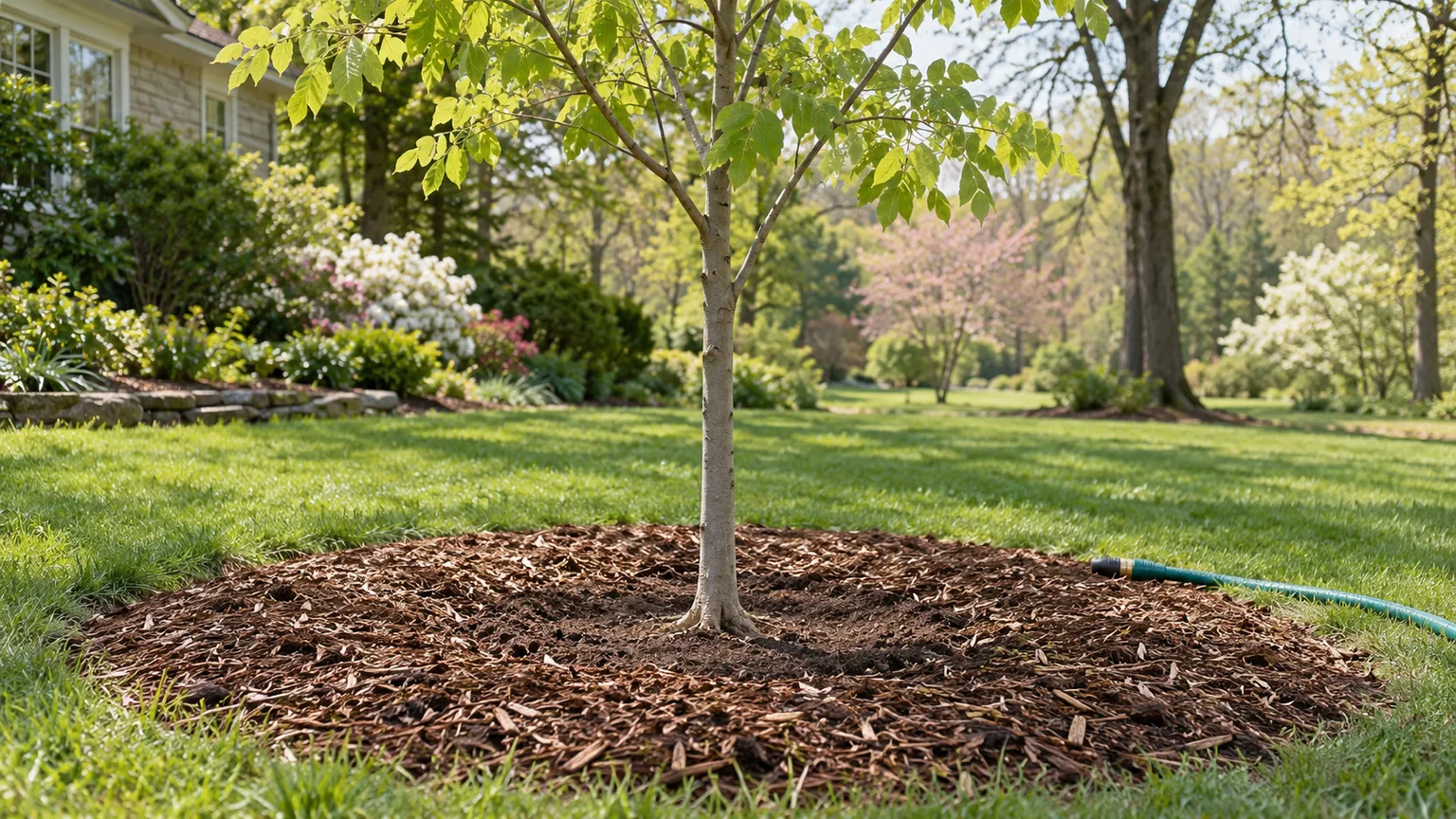
Planting correctly is more valuable than adding fertilizer or amending the backfill. A root flare buried under extra soil can leave the trunk too deep, and a small planting hole can keep roots circling instead of moving out into the yard. The basic approach is to keep the flare at or slightly above finished grade, spread the hole wider than the root ball, and water the whole root zone after backfilling.
Best planting window
In much of the United States, plant container-grown or balled-and-burlapped yellowwood in early spring or early fall, when the tree is not facing peak heat and the soil can be worked. In colder climates, early spring gives the roots the growing season to establish before winter; in regions with mild autumns, fall can work well if the ground is still warm and the root ball will not dry out. Marti Neely’s Fine Gardening regional report includes yellowwood among spring-flowering trees suitable for fall planting in the Northern Plains.
Avoid planting during a heat wave, into frozen or saturated ground, or so late in autumn that the root ball cannot settle before hard freezes. Water the nursery container before planting so the root mass is evenly moist. If a large balled-and-burlapped specimen is offered, consider that yellowwood’s deep root system makes later transplanting difficult; a smaller tree is usually easier to establish and train.
Set the root flare correctly
Find the trunk flare—the point where the trunk widens and the first structural roots begin—before digging. Nursery soil may cover it, so gently brush away loose material from the root ball top until you find the flare. Dig a planting hole two to three times wider than the root ball but no deeper than the distance from the root ball bottom to the flare; roots should rest on firm native soil so the tree does not settle too low. The Morton Arboretum’s tree-planting guide recommends a wide, shallow hole and careful attention to depth.
Set the root flare at grade or just a little above it if the soil is likely to settle. Remove the container and loosen only roots that are circling tightly; for balled-and-burlapped stock, remove rope, twine, and as much burlap or wire as practical after the root ball is stable in the hole. Backfill with the soil you removed rather than making a rich, loose pocket that roots may hesitate to leave. Water slowly while backfilling to settle soil around the roots, then recheck that the flare is still visible.
Water During Establishment, Then Adjust
For the first growing season, check the moisture inside the original root ball and the surrounding soil every few days during warm, dry weather. Water deeply when the upper few inches begin to dry, applying the water slowly enough that it soaks through the root mass instead of running off the surface. The goal is consistently moist soil around the roots, not a constantly saturated planting hole.
A general tree-establishment guideline is about an inch of water per week from rainfall and irrigation during the growing season, but treat that as a starting point, not a fixed yellowwood dose. Sandy soil, wind, heat, and a small root ball may require more frequent checks; heavy soil, rain, and cool weather may mean watering less. The Morton Arboretum recommends roughly an inch per week as a general guide, while Gardener’s Supply emphasizes checking the soil and giving thorough soakings rather than repeated light sprinkling.
After the first season, continue watering during extended dry spells until the tree is established and putting on steady growth. An established yellowwood can tolerate drought better than a newly planted one, but drought tolerance is not immunity: long dry stretches may cause leaf scorch, premature leaf drop, or reduced flowering. If leaves yellow, feel the soil before adding water; both drought and waterlogged roots can produce stress symptoms.
Mulch and Feed Conservatively
Spread a 2- to 4-inch layer of wood-chip mulch over the planting area, extending it beyond the root ball as the tree grows. Keep the mulch a few inches away from the trunk so the bark stays dry and the root flare remains visible. A wide, thin ring conserves moisture and reduces grass competition; a tall mound against the trunk does not improve root growth and can hide decay or damage.
Yellowwood does not need routine fertilizer just because it is a tree or because its leaves look pale. Let the tree recover from transplanting, then use a soil test if growth is persistently weak or leaf color is abnormal during the growing season. Yellow leaves can result from waterlogged soil, drought, normal autumn color, or a nutrient problem, and adding fertilizer before checking the cause can waste time or worsen stress. The Morton Arboretum advises waiting to fertilize until roots have re-established.
Prune Early for Stronger Branches
Structural pruning is the most important recurring maintenance for yellowwood because its narrow branch angles and brittle wood can make limbs vulnerable to splitting. Start with a young tree that has a sound main stem and well-spaced scaffold branches rather than trying to repair major defects after the crown is heavy. The task is usually light, selective pruning—not shearing or annual topping.
Build good branch structure when the tree is young
Inspect the young tree once a year after leaf-out, when you can see how branches attach and where they are crowded. Keep one clear central leader if the tree naturally has one; remove or subordinate competing leaders, crossing branches, and weak forks with tight V-shaped attachments while the cuts are still small. Favor branches that are spaced vertically and attached at a broad angle, rather than several large limbs leaving the trunk at almost the same point.
Do not strip the lower trunk or remove a large share of the canopy in one season. A young tree needs leaves to build roots and trunk strength, so spread corrective cuts over more than one year if the structure is seriously crowded. For mature or high branches, or where a heavy limb hangs over a target, hire a qualified arborist instead of climbing or making large cuts from a ladder.
Time cuts carefully on older trees
In North American landscapes, prune yellowwood in summer, after the spring bloom if it flowers that year. Virginia Tech, NC State, and UConn warn that winter and spring cuts can bleed sap heavily; summer pruning reduces that problem. Some RHS guidance allows pruning after flowering or in late autumn or early winter, so timing advice differs by region; for a US-grown tree, follow the summer window used by North American extension references. Virginia Tech and UConn Plant Database
Remove dead, broken, or dangerous wood promptly, regardless of season, and keep the cut just outside the branch collar. Do not paint routine pruning cuts or cut flush to the trunk. On an established tree, Virginia Tech suggests removing about 10 percent of smaller branches every other year to lighten the major limbs; treat that as a maintenance guideline for trees that need it, not a target to meet on a healthy, open crown.
Flowers, Pods, and Fall Color
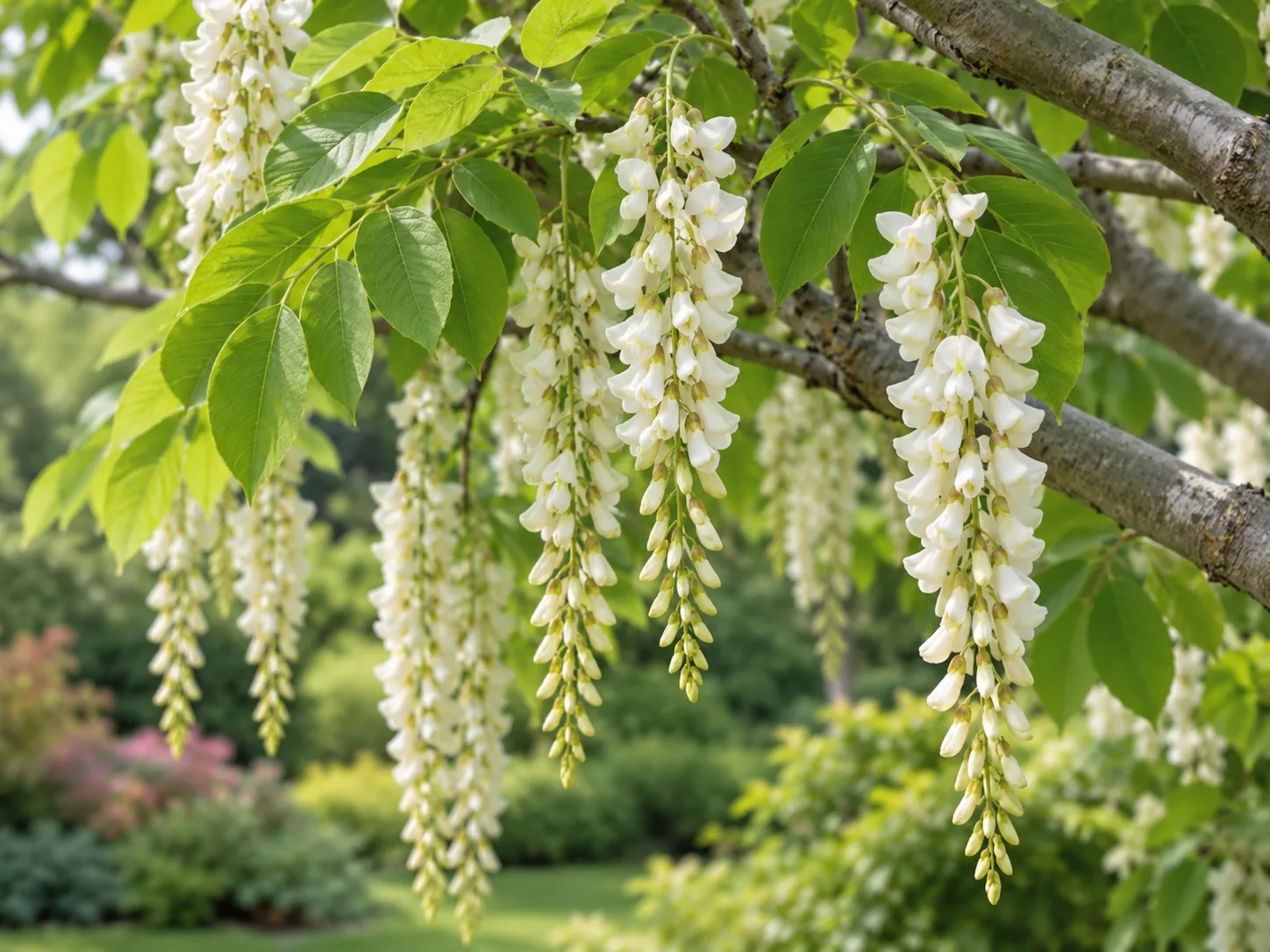
Yellowwood’s flower clusters are pendulous, fragrant, and white, with the pea-like shape typical of its family. Mature trees produce panicles that may approach a foot long in late spring or early summer; local timing shifts with latitude and spring temperatures. Purdue Arboretum Explorer records white, wisteria-like flowers in May in Indiana, while UConn lists early June for its region.
Do not expect a heavy bloom every year. Extension and botanical references describe flowering as irregular, with some sources observing heavy bloom every other year and others every two or three years; a late frost can also damage flowers. Full sun, a healthy mature tree, and sound root growth help, but no fertilizer or pruning trick can guarantee a show in a naturally light-bloom year. If your tree is young, allow it time to mature before judging its flowering performance; Purdue notes that seed-grown trees may take many years to flower.
After pollination, flat legume pods develop and turn yellow-brown as they mature. The pinnately compound leaves then shift to gold, yellow, or orange in fall, while the smooth gray bark remains visible after leaf drop. The cultivar ‘Rosea’, sometimes sold as ‘Perkin’s Pink’, has pink rather than white flowers; check that the nursery tag names the cultivar, since seed-grown trees will not necessarily repeat a selected pink-flowered form.
Propagate Yellowwood from Seed or Root Cuttings
For a homeowner, buying a small nursery tree is the most predictable route to a particular size or cultivar. Yellowwood has a deep root system, and a seedling takes years to become a shade tree; if you want to propagate it yourself, expect a slower, less predictable project. Species references consistently mention seed, while RHS and Harvest to Table also mention root cuttings; the sources do not give one uniform seed-treatment recipe.
A cautious home seed method
Watch for flat pods to mature in late summer or autumn, then collect a few when they have turned yellow-brown and are beginning to dry. Sow fresh seed in a labeled pot of free-draining seed compost in autumn and protect the pot in a cold frame or sheltered outdoor spot, following the RHS recommendation to sow as soon as ripe. Harvest to Table also describes sowing yellowwood seed in spring, so keep more than one labeled batch if you want to compare timing; germination can be uneven and a seedling may not flower for many years. RHS and Harvest to Table
Keep the medium lightly moist rather than wet, and move seedlings into individual pots once they are large enough to handle. Grow them on in a protected spot until they have a strong root system, then plant into their permanent site while small. Root cuttings are a more specialized alternative; use a reputable nursery or propagation reference for the timing and method rather than relying on a generic hardwood-stem-cutting recipe. The main practical lesson is to choose the final planting place early, because moving a well-rooted yellowwood later is difficult.
Common Yellowwood Problems and What to Check First
Yellowwood is generally not known for serious insect problems, but it can be affected by verticillium wilt, and its branches can break in wind or snow. Late frosts may damage flowers or emerging growth. A tree with a few leaves lost after a storm or a frost-damaged bloom may recover without treatment, so assess the damage before reaching for fertilizer or pesticides. NC State Extension lists verticillium wilt and wind or snow breakage; Virginia Tech reports no serious routine insect or disease problems.
For yellowing or wilting leaves, check the root zone first. If soil is dry several inches down, give a slow, thorough soak; if it is soggy, pause irrigation and address drainage rather than adding water. If symptoms persist, appear on one side of the crown, or spread despite suitable moisture, photograph the leaves and branch pattern and ask a local extension office or arborist to assess the tree. Verticillium wilt and root stress are not corrected by a blanket fertilizer dose.
For broken limbs, remove only small, reachable damaged branches with proper cuts; have large limbs evaluated by an arborist. Keep lawn equipment and string trimmers away from the smooth bark, and avoid making large pruning wounds during winter or early spring. These small prevention steps matter more than spraying a tree that has no diagnosed pest or disease.
Conclusion
Give a yellowwood tree a permanent, sheltered site with full sun or light shade, room for a 40- to 55-foot crown, and soil that drains after rain. Plant it with the root flare visible, water the root ball deeply through establishment, mulch wide without piling material against the trunk, and avoid fertilizer until there is a clear reason to use it.
The care step with the longest payoff is early structural pruning. Correct weak forks while the branches are small, then make necessary cuts in summer to reduce sap bleeding. With room to mature and realistic expectations about irregular flowering, American yellowwood can provide shade, pollinator-friendly spring flowers, fall color, and attractive bark without demanding constant attention.



