Heather Gay's 4 Decor Rules for a Happy Home
Turn Heather Gay's decor philosophy into a livable plan: reset messy surfaces, reclaim overlooked space, store with a deadline, and decorate seasonally.
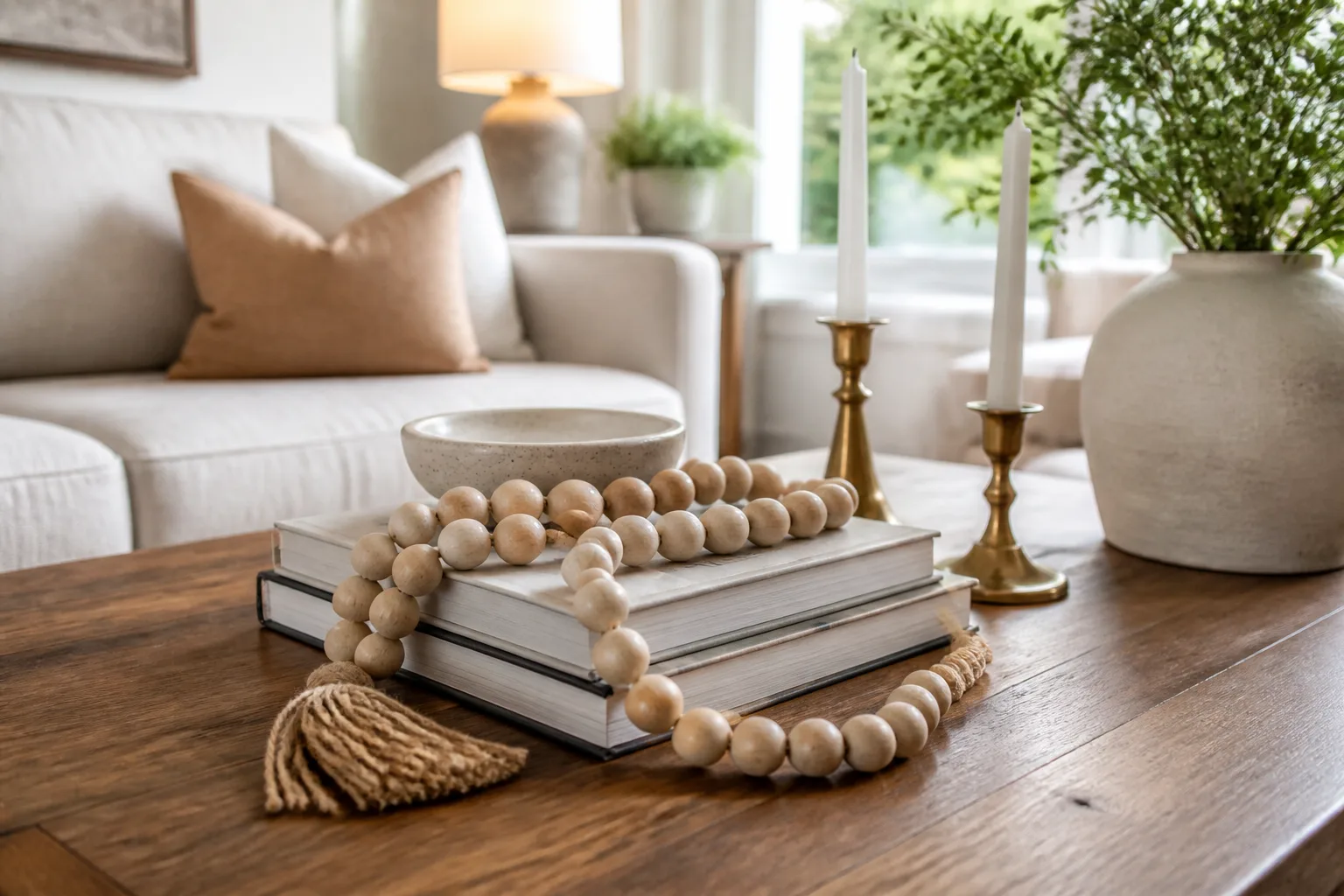
Heather Gay’s home philosophy is not minimalist, and that is part of its appeal. She has described her home as a sanctuary while also admitting that she likes a little creative chaos: products out on the bathroom counter, papers spread across a generous desk, and beloved home goods waiting for their next appearance. The useful lesson is not to copy every object. It is to build a home that can hold personality without asking you to live inside a permanent reset.
Gay’s four decor rules are really four ways of managing energy. Give mess a boundary, give neglected space a job, give excess a deadline, and let seasonal decorating bring joy without taking over. Those ideas work whether your taste is soft and frosted, colorful and maximal, or much quieter than hers.
A happy home needs both personality and reset points
A room can be full of things and still feel calm if the eye understands where those things belong. Calm does not require every surface to be empty; it requires a few dependable places where the room can return to neutral after a busy day. That is the design problem underneath Gay’s approach: not how to eliminate evidence of living, but how to make evidence of living recoverable.
Think of a reset point as a surface, drawer, shelf, bin, or small zone with a defined job. A desk can be a messy work surface during the afternoon and clear enough for dinner by evening. A bathroom counter can hold the products you use every morning, but the rest can live in a drawer. A basement can hold seasonal decor, but only if you can identify what is inside and reach it without excavating everything around it.
This distinction also keeps decor from becoming a moral test. A cluttered counter is not a character flaw, and a pristine room is not automatically a happy one. The goal is a home that supports the way you actually move, work, rest, host, collect, and change your mind.
Rule 1: Give creative chaos a container
Gay’s messy-bathroom admission sounds funny because it is recognizable: when everything is visible, it is easier to remember what you own and reach for it quickly. Her “drawer method”—spreading items out, then sweeping them into one drawer—captures a practical truth. A temporary mess becomes much less stressful when it has one known landing place.
The improvement is to make the container match the type of chaos. A shallow drawer with dividers is useful for daily products. A lidded bin is better for backups and occasional tools. A tray can corral a few items while they are in use, but it should not become an invitation to keep every sample, bottle, and accessory on display forever.
Use one reset surface, not every surface
Choose the place where you are allowed to work messily. On a desk, that might be a single large writing area; on a kitchen island, it might be one tray or one cutting-board-sized zone; in a bathroom, it might be the counter directly in front of the mirror. The boundary is physical, not aspirational. When the work expands beyond it, something has to be put away before the next activity begins.
Make the reset easy enough to perform when you are tired. Keep the drawer, basket, or cabinet within one arm’s reach, and avoid a lid that requires two hands if you will be carrying laundry or getting ready. If you need to sort five categories before putting anything away, the system is too elaborate for a daily landing zone.
Use a two-level arrangement: the top layer holds what you use most days, and a lower or separate zone holds the less frequent items. This lets you keep visibility without turning the room into a store display. You can also use a small “in progress” tray for projects, but give it a maximum footprint. A tray that cannot be lifted and moved is furniture, not containment.
At the end of the day, do not aim for perfection. Sweep obvious strays into their home, leave a single active project out if it will be used tomorrow, and clear anything that blocks the room’s next job. That three-minute reset is more sustainable than a weekly purge that feels like punishment.
Keep bathroom beauty and bathroom dampness separate
A bathroom can feel luxurious without becoming a wet storage room. Steam, splashes, and poor air movement are hard on paper packaging, unfinished wood, woven baskets, cosmetics, and decorative objects that cannot be wiped clean. The counter should support the routine, not create a second cleaning project.
Start by separating four categories: daily products, backups, tools, and decor. Daily products can stay in a washable tray or shallow drawer. Backups belong in a dry cabinet or linen closet. Tools that need to dry should not be sealed away while damp. Decor can stay only if it tolerates humidity and does not narrow the sink, cover the drain, or make the mirror harder to clean.
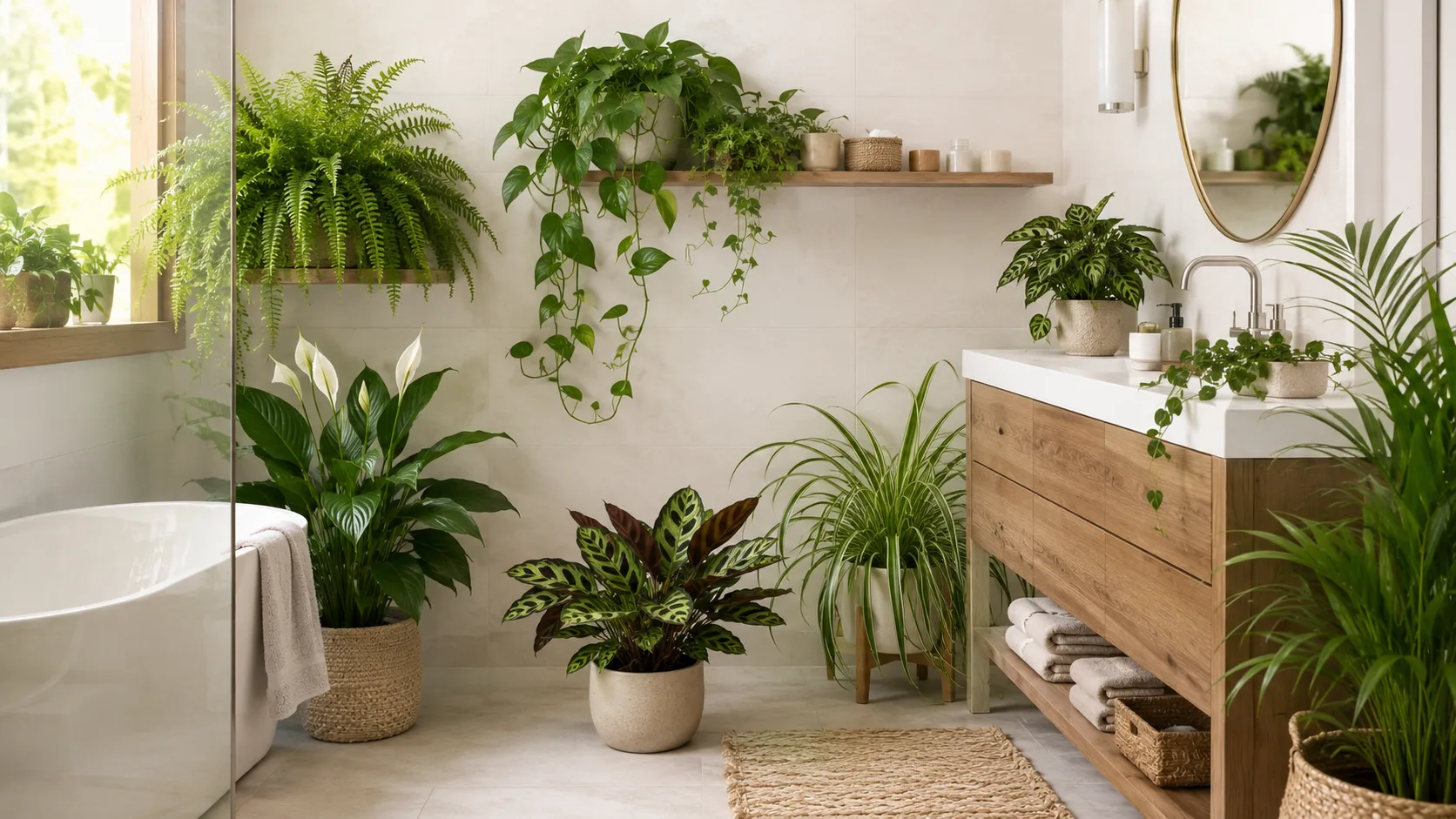
If you love the idea of a freestanding tub as a sculptural focal point, keep the surrounding floor clear enough to use and clean it. A bathtub is not a permanent laundry basket just because it is large. Place a hamper or slim lidded basket where clothes naturally land, and reserve the tub for bathing, a deliberate display, or a temporary pile that has a same-day deadline.
Ventilation matters more than a spa-like accessory. Run the exhaust fan during a shower and long enough afterward to move moisture out, or open a window when conditions allow. If a basket develops a musty smell, metal begins to spot, or paper goods warp, the solution is to change the material or location—not to add a prettier container.
For renters, the easiest upgrade is a removable tray, over-door organizer, or freestanding narrow shelf that can be lifted out for cleaning. For families, label the location rather than the contents: “morning,” “hair,” and “backups” are often more useful than a long inventory that nobody maintains.
Rule 2: Turn overlooked square footage into a working room
Gay’s office began as a spare room that had become storage. Instead of treating the room as a renovation problem, she emptied it and gave it a clear purpose with a large desk and substantial furniture. That move is powerful because a room often feels unfinished not because it lacks expensive details, but because it has no dominant job.
The first step is subtraction. Remove anything that belongs somewhere else, then decide what the room must allow you to do: write, take calls, wrap gifts, pay bills, sew, study, or store a specific collection. A multipurpose room can have two jobs, but one needs to be primary. Without that hierarchy, every surface becomes a compromise.
Design the office around the work you actually do
Start with the work surface, not the accessories. If you spread papers out, choose a desk deep enough for that habit. If you work mostly from a laptop, prioritize comfortable screen height, a clear charging route, and a nearby place for notebooks or reference material. If you sort mail, add a vertical file or wall pocket so paper does not migrate into every room.
Size the desk to the room’s circulation. A huge top can be wonderful for a visual thinker, but it should not block a door, radiator, closet, or window. Leave enough clearance to pull out the chair and carry a box behind it. A beautiful office that forces you to twist around furniture every morning will slowly turn back into storage.
Give the visible side of the room one intentional point of weight. That might be a large desk, a bookcase, a cabinet, or a substantial lamp. Smaller objects can gather around it. This is why heavy furniture can make a room feel more settled: it gives the eye an anchor instead of asking a collection of little items to create structure.
Use closed storage for the work you do not want to see between sessions. Open shelves are good for books, a few meaningful objects, and supplies used every day. Closed drawers or doors are better for paper, cords, shipping materials, and half-finished projects. If everything is open, the office will visually announce every task you have not completed.
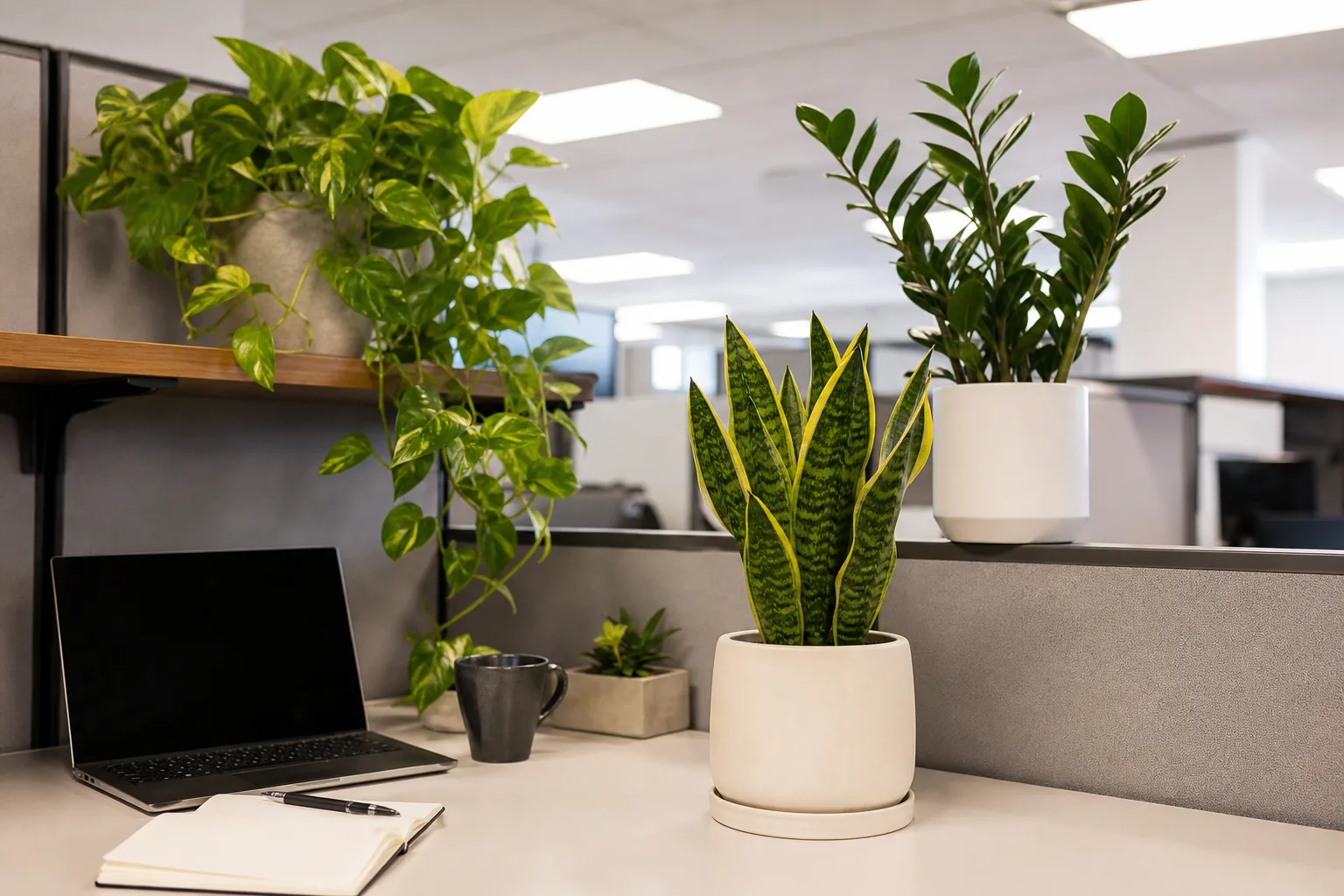
Safety belongs in the design brief. The U.S. Consumer Product Safety Commission’s furniture guidance recommends anchoring furniture and televisions to the wall because tip-overs can happen quickly, including when an adult is nearby. Treat tall bookcases, dressers, and narrow cabinets as safety equipment when they are climbable, top-heavy, or placed where a child could pull on them; use the manufacturer’s hardware or an appropriately rated anti-tip kit and follow the installation instructions.
Make a small office feel finished without a full renovation
In a small room, use a “one large, two small” formula: one visually confident piece such as a desk or cabinet, two supporting pieces such as a chair and lamp, and only then the supplies. This keeps the room from filling with low, unrelated furniture. A single long shelf can sometimes replace several small organizers, provided it is mounted or supported for the load and does not become an unreachable ledge.
Create a start-and-stop ritual. A start ritual might be opening the blinds, turning on the task light, and placing the notebook on the desk. A stop ritual might be stacking papers into one file, returning the pen cup, and leaving a clear rectangle for tomorrow. These actions make the room feel purposeful even if the work itself is messy.
If you need the room to serve guests, keep the guest function reversible. Use a desk that can double as a console, a sleeper chair rather than a full extra bed, or a cabinet that closes. Do not buy multipurpose furniture that performs neither job comfortably. Flexibility should reduce friction, not disguise indecision.
Rule 3: Store abundance with a cooling-off period
Gay calls herself a collector of home goods, but she pairs that appetite with a waiting period. Items that are not on display go into boxes; if she still remembers and wants an object after a year, it can return, and if not, it can be donated or discarded. That is more useful than a blanket “one in, one out” rule for anyone whose collections are part of their identity.
The logic is not that time proves an object is worthless. Time reveals whether the object has a role in your current home. A piece can be beautiful and still not deserve storage, especially if it needs a future room, a future style, or a future version of you to justify it.
Use the one-year box test
The test works best when it is specific rather than punitive. Put a seasonal accent, duplicate vase, or “maybe” object in a sturdy container. Write the date and a short category on the outside, then place the box where you can reach it without dismantling the basement. Do not use a vague label such as “decor.” Try “fall mantel,” “extra frames,” or “pink ceramics.”
At the review date, ask four questions:
- Did I look for this object, or did I only notice it while sorting?
- Do I have a real location and use for it in the next year?
- Would I buy it again at today’s price and with today’s storage limits?
- Is the cost of keeping, cleaning, and moving it worth the pleasure it gives?
If the answers are mostly no, release it while the decision is fresh. If the object is sentimental, do not force a fake yes-or-no choice. Photograph it, keep one representative piece, give it to a person who will use it, or create a smaller memory box with a defined size. Sentiment deserves respect, but it does not require unlimited square footage.
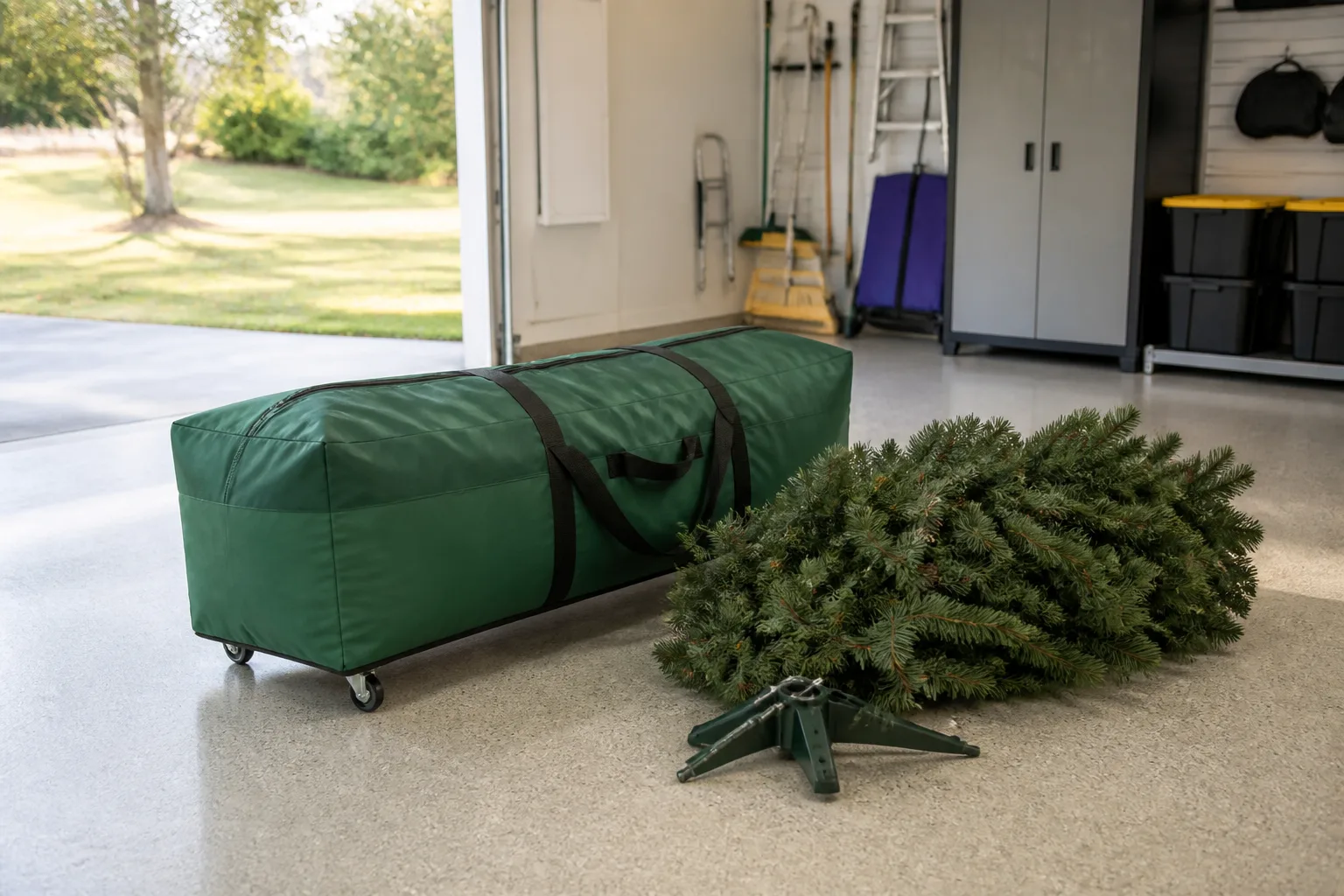
The waiting period also protects you from the emotional swing that follows a shopping trip. Do not decide that a new purchase must be displayed immediately just because it is new. Let it sit in the review zone for a day, then compare it with what you already own. A duplicate can be a happy accident when it is intentional; it is clutter when it takes a cabinet hostage.
Choose a dry, visible storage boundary
Basement storage is useful only when it is dry, accessible, and searchable. Keep decor off the floor on shelving or a pallet, leave a little air space around boxes, and do not store paper, fabric, untreated wood, or electronics beside a known leak, condensation-prone wall, or utility appliance. If the room smells musty or shows moisture damage, fix that condition before moving keepsakes into it.
Group objects by the moment you will need them, not only by material. “Winter entry,” “spring table,” “Halloween,” and “guest room” are more actionable categories than “ceramic,” “metal,” and “miscellaneous.” Put the next season’s bin toward the front and the just-finished season’s bin near the inspection area. Storage should shorten the next decorating session.
Use transparent bins only when light exposure will not harm the contents, and opaque bins when paper, textiles, or delicate finishes need darkness. Add a simple inventory note inside the lid or on a phone. You do not need a database; you need enough information to stop buying a second skeleton mermaid, candleholder, or string of lights because you cannot remember whether you own one.
Leave a small amount of empty capacity. A storage zone filled to the ceiling has no room for the next deliberate purchase and makes every retrieval a wrestling match. If there is no spare space, the answer is not a bigger bin. Review the category, release the least useful pieces, and preserve the boundary that makes the system calming.
Rule 4: Make seasonal decor playful but bounded
Seasonal decorating is where a home can feel most alive—and where a collector can accidentally create visual noise. Gay’s frosted whites and pinks, faux tree, pumpkins, rabbits, and in-between-season accents show the appeal of a home that changes with the calendar. The trick is to give each season a recognizable mood without making every room compete for attention.
Start with the permanent room. Identify the colors and textures already doing important work, then choose one or two seasonal shifts that support them. You might add a berry-toned throw and a bowl of branches in fall, swap to linen and pale green in spring, or use frosted white with blush accents in winter. A seasonal layer should feel like a guest joining the room, not a second decorating scheme evicting the first.
Build a palette that can evolve
Choose a base, an accent, and a texture. The base is the color that can stay for more than one season, such as cream, wood, black, green, or a muted blue. The accent carries the calendar—pumpkin orange, spring pink, deep red, or icy silver. The texture supplies the change without requiring another object in every corner: velvet, linen, wool, paper, glass, dried branches, or a natural evergreen.
This approach keeps playful decor from becoming childish unless childish is the deliberate goal. A rabbit can be charming; ten unrelated rabbits in every room may turn a seasonal note into a theme park. Repeat one motif in two or three places, then let the rest of the room stay quiet. Repetition creates a connection; saturation creates fatigue.
Swap before you add. Seasonal styling can come from pillow covers, a folded throw, a table runner, a wreath, a vase arrangement, or a changed lampshade rather than an entirely new collection. Lemon Thistle’s practical seasonal decorating advice makes the same useful case for changing textiles and small accents while leaving most of a room intact. Store the removed pieces in the bin that will return next, so the swap creates no mystery pile.
Swap by zone, not by hauling the whole house
Choose two or three high-impact zones: the entry, the dining table, the mantel or media console, the kitchen island, or one bathroom shelf. Give each zone a limit before you decorate. For an entry, that might be one wreath, one vessel, and one seasonal textile. For a mantel, it might be one tall anchor, a low cluster, and negative space at both ends.
The Fine Gardening guide to seasonal containers offers a helpful parallel for outdoor displays: a container can change with the season while the overall structure stays in place. Indoors, the same principle means keeping a dependable vessel, tray, or shelf and changing only the contents. It reduces purchasing, shortens setup time, and lets a room keep its identity between holidays.
Pack for the next use. Keep fragile ornaments nested, wrap sharp or delicate pieces, coil lights loosely, and let textiles dry before they go into a closed bin. If an item needs a repair, label it as a project or remove it from the active collection. Do not make next year’s decorating session begin with a surprise broken hook, dead battery, stained pillow cover, or mystery cord.
Let plants add life without becoming clutter
Plants can do the work of several decorative objects because they add color, shape, movement, and a changing season in one living element. They also expose whether a styling decision is realistic: a plant needs the right light, watering access, drainage, airflow, and room to grow. Treat those needs as part of the design rather than trying to hide them.
The best plant display is not the one with the most pots. It is the one in which foliage improves the room’s scale and the containers repeat a material, color, or shape already present. A single broad-leaved plant can anchor a quiet corner; a trailing plant can soften a shelf; a fine-textured fern can keep a group from looking like a row of identical green balls.
Match plant shape to furniture scale
Use a tall, upright plant beside low furniture, a rounded plant on a side table, and a trailing plant where its stems can fall without crossing a walkway. Large rooms can handle one or two large plants better than a field of tiny pots, while small rooms often benefit from a single strong silhouette and one smaller companion.
Thompson & Morgan’s houseplant-display guidance emphasizes the same design variables—shape, texture, color, and size—and warns that too many architectural forms can make a display chaotic. Gardeners’ World houseplant coverage is a useful reminder to choose the plant for the growing conditions first. A beautiful pot cannot compensate for a plant that is placed in unsuitable light.
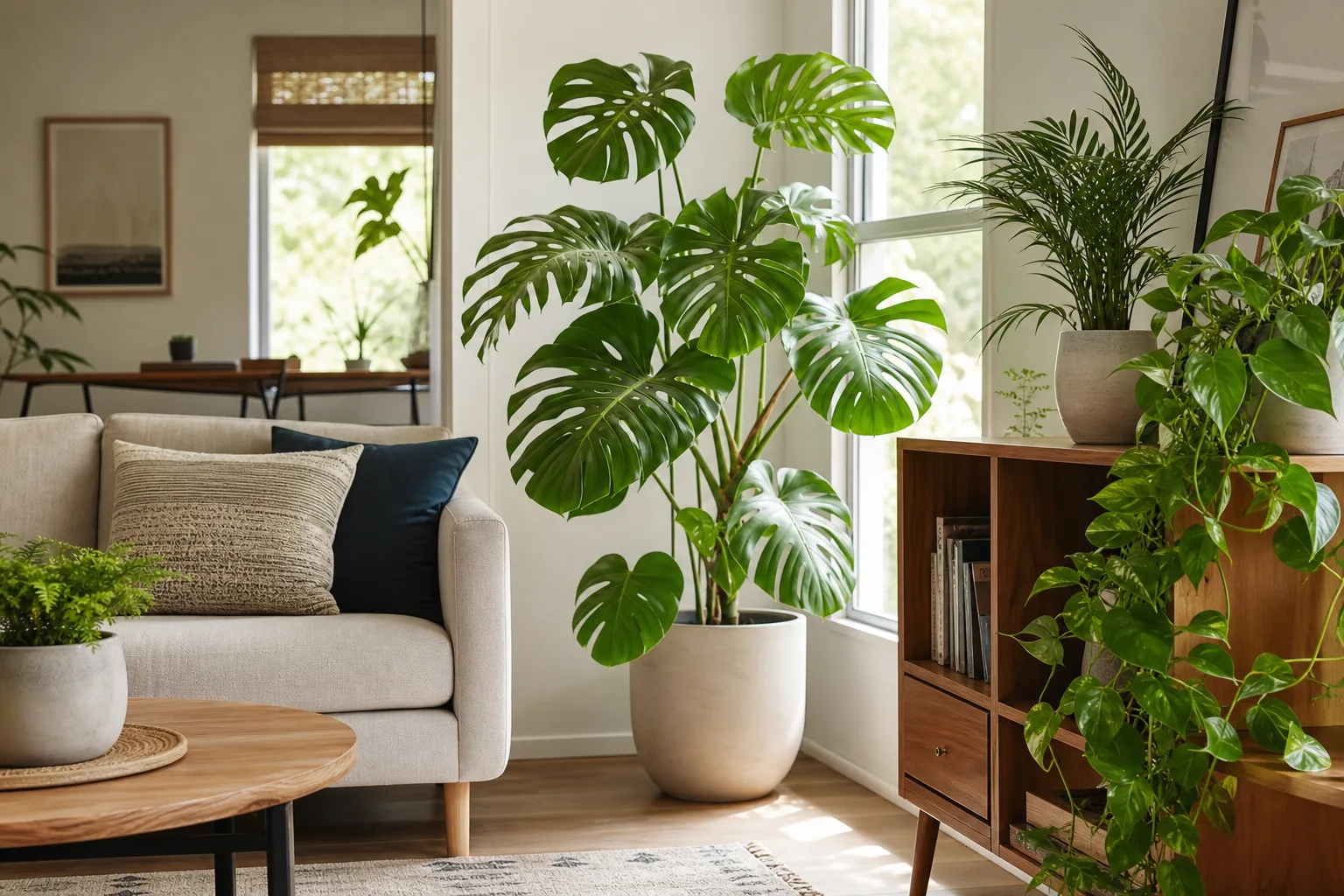
Keep plant care visible and safe. Use a nursery pot inside a decorative cachepot when you need to remove the plant for watering, and protect wood or painted surfaces with a waterproof saucer. Leave a clear route to the sink, do not put heavy pots on unstable upper shelves, and anchor a shelf or cabinet when the load or location calls for it.
Seasonal styling should not force a plant into a holiday costume that compromises its health. Change the pot cover, surrounding textile, or nearby object instead of wrapping foliage tightly, blocking light, or leaving a damp decorative sleeve against the soil. If a plant outgrows the composition, prune it only when the species tolerates pruning, move it, or let it graduate to a larger space.
A practical reset for each room
Use the four rules as a short audit rather than a weekend-long makeover. Start in the room that causes the most daily friction, set a timer for 20 minutes, and make decisions that improve the next use of the space.
- Bathroom: Keep daily products together, move backups to dry storage, remove anything that blocks cleaning, and set one small surface for temporary items. If a basket or wood accessory smells musty, change the material or improve ventilation before styling around it.
- Office: Clear the floor and desk, name the primary job, keep supplies for that job within reach, and move dormant projects into one labeled drawer or bin. Check that tall furniture is stable and anchored where needed.
- Basement or storage room: Pull the next seasonal bin forward, inspect the floor and walls for moisture, group boxes by use, and release any category that no longer fits the available capacity.
- Living room: Keep one visual anchor, remove duplicates from open shelves, and use a tray for small objects that need to move together. If a plant is crowding a path or leaning toward a window, fix the placement rather than adding another decorative support.
- Entryway: Give keys, bags, shoes, and seasonal accents separate landing points. A home feels calmer when the things that arrive every day do not have to share a decorative surface with objects that appear once a year.
Finish by taking a photo from the doorway. The picture reveals what the room is communicating from a distance: one clear focal point, a usable route, and enough empty space for the eye to rest. If the room looks better but functions worse, undo the change. Livability is the final design test.
What to borrow from Heather Gay—and what to edit for your home
Borrow the permission to like things. A home that contains collections, color, seasonal rituals, and visible work can feel more personal than a room where every object has been edited into neutrality. Gay’s approach is a useful rebuttal to the idea that happiness requires a permanently empty counter.
Borrow the systems, too: contain the mess, assign forgotten space a job, pause before storing or buying, and let the calendar bring small changes. But edit each rule for your circumstances. If you live in a humid apartment, a basement box test may not be safe for textiles. If you have young children, a beautiful open shelf may need anchoring or a different location. If you have mobility limits, a low, easy-to-reach drawer may serve you better than a tall cabinet that looks tidier.
Also edit the scale. A large desk, substantial furniture, or freestanding tub can be satisfying in a roomy home and awkward in a compact one. Translate the principle rather than the object: give yourself a surface you can spread across, a place that holds a clear job, and a storage boundary that makes the room easier to reset.
Finally, let the rules expire when they stop helping. If the “creative chaos” drawer becomes a packed black hole, empty it and reduce the categories. If the one-year box becomes a permanent warehouse, shorten the review or reduce the number of boxes. If seasonal decor takes an entire day to install and remove, limit the zones. A happy home is not loyal to a system; it keeps the system that returns time, comfort, and delight.
Conclusion
Heather Gay’s decor rules work because they make room for both abundance and recovery. You can keep the oversized desk, the playful seasonal pieces, the collection of home goods, and the lived-in bathroom—as long as each kind of mess has a boundary, each neglected space has a purpose, and stored objects have a future decision date.
Start with one room. Create one reset point, reclaim one overlooked surface, label one storage box, and choose one seasonal zone to refresh. The result does not need to look minimalist or match anybody else’s home. It only needs to make your particular life easier to live in and more enjoyable to come home to.



