6 Things Not to Buy at a Yard Sale
Yard sale bargains can hide pests, recalls, weak construction, and costly repairs. Use this practical checklist before bringing a home find inside.
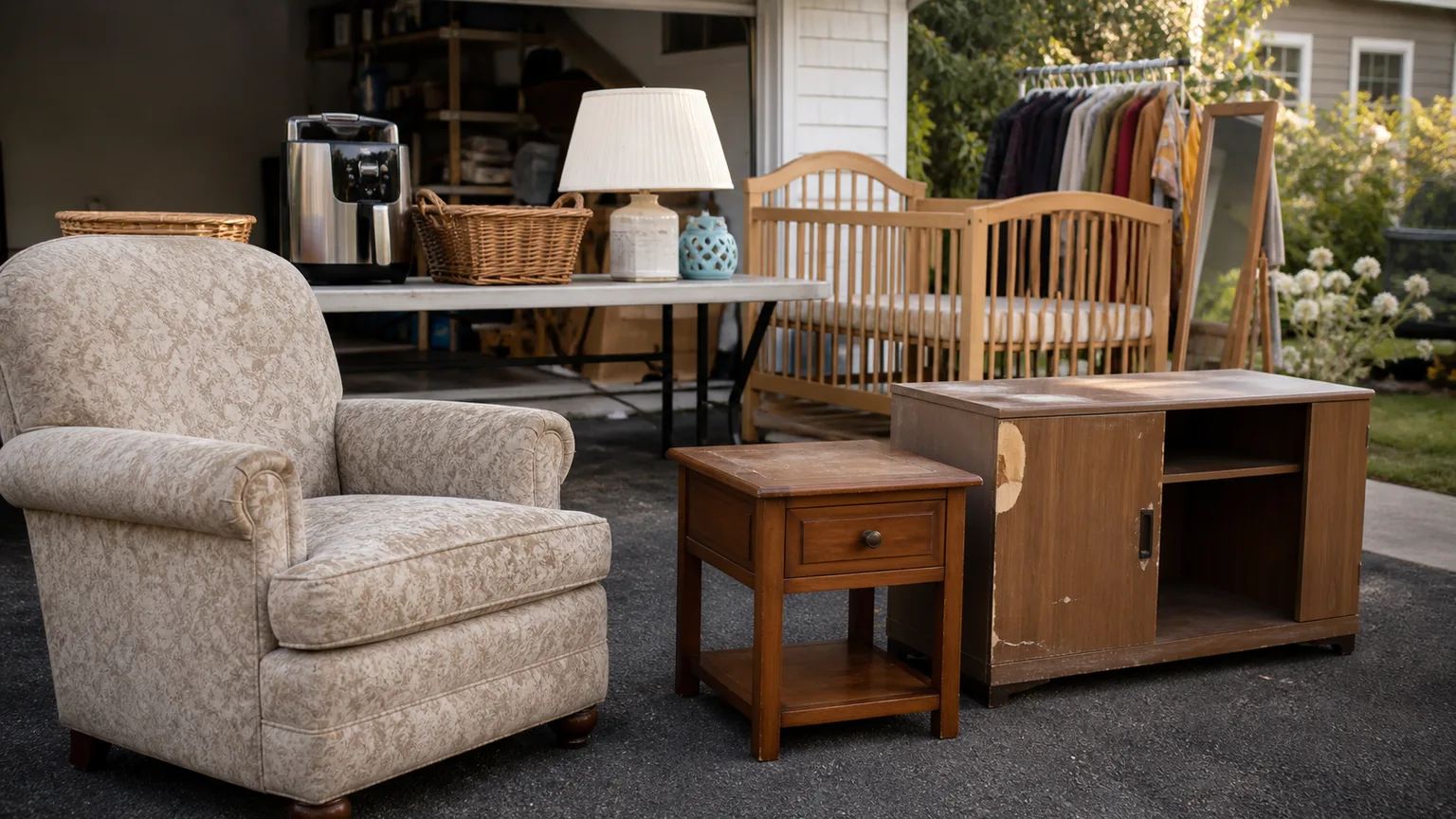
A low price is not the same as a good deal. At a yard sale, you are often buying an item without a return window, service history, complete instructions, or a reliable way to see what happened to it before it reached the driveway.
The best rule is not “never buy anything used.” It is never pay for a risk you cannot inspect, clean, repair, or price honestly. That rule points to six categories worth skipping in their ordinary yard-sale form, plus the safer alternatives that still let you shop secondhand.
Use the 60-Second Risk Test Before You Buy
Before you admire the finish or negotiate the price, ask four questions: Can I verify its history? Can I inspect all of it? Can I clean it completely? Can I replace the part that fails? If the answer is no to two or more, the bargain deserves a hard pass.
Risk also rises when an item is used for sleep, food, electricity, or a child’s safety. A scratched side table is usually a cosmetic decision; a mattress, crib, or appliance can create a problem that is expensive—or impossible—to reverse after you bring it home.
1. Mattresses and Box Springs
A used mattress is the clearest yard-sale no because its most important qualities are hidden. You cannot reliably see its complete sleep history, internal wear, moisture exposure, or whether pests have been inside the seams and core.
The mattress manufacturer Serta explains why used mattresses are difficult to evaluate: they can be hard to sanitize, their foam and springs may have deteriorated invisibly, and the remaining lifespan is uncertain. Even if the surface looks clean, the price does not account for the comfort, support, and warranty you give up.
Why a Clean-Looking Mattress Is Still Unknowable
Bed bugs, dust, body oils, spills, and moisture do not announce themselves at a quick glance. A mattress can also be uncomfortable or structurally tired in ways that become obvious only after several nights, when the seller’s driveway test is no longer useful.
Box springs deserve the same caution. Their fabric underside, wooden frame, and internal supports give pests and odors places to hide, while a sagging or broken support can change how a new mattress performs.
If you are tempted by a nearly new guest-room mattress, ask what you would do if it failed tomorrow. If the honest answer is “replace it anyway,” the yard-sale price is only delaying the cost. Buy new from a retailer with a clear return policy instead.
The Rare Exception: Sealed or Display-Only
There is a narrow exception: a factory-sealed mattress with a verifiable model and date, or an old mattress you are buying strictly for a film set, photo prop, or other non-sleeping display. That is a different purchase because you are not trusting an unknown used sleep surface with your body.
Do not let a plastic cover, a “guest room only” story, or a clean sheet turn an ordinary used mattress into the sealed exception. If it has been slept on, transported loose, stored in a garage, or exposed to unknown moisture, treat it as a skip.
2. Upholstered Sofas, Chairs, and Recliners
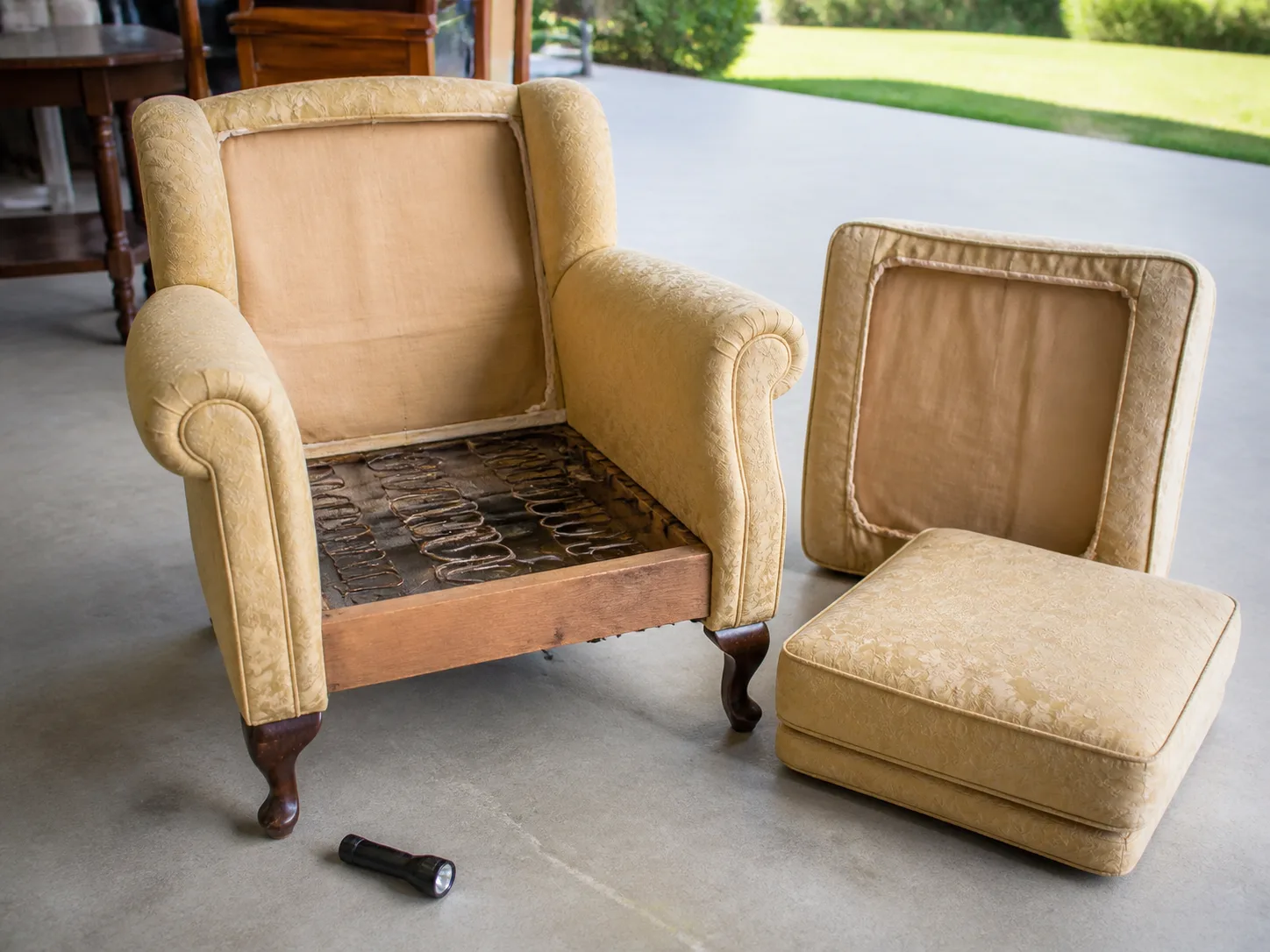
Upholstered seating can be a terrific design find, but a yard sale is the hardest place to assess it properly. Fabric, foam, seams, webbing, springs, and the underside can all hide damage, odor, allergens, or bed bugs, and professional reupholstery can quickly cost more than a comparable clean piece.
The Oklahoma State University Extension guide to reducing bed-bug risk while thrift shopping identifies stuffed sofas and chairs as common hiding places and recommends checking cushions, seams, frames, springs, and undersides. That is a useful inspection standard, but it also shows why a five-minute driveway look is often not enough.
What to Inspect If You Are Considering One
Remove every cushion. Look along piping, zippers, folds, staple lines, and the fabric underneath; then turn the piece over and inspect the frame and spring area with a flashlight. Dark spotting, cast skins, live or dead insects, a musty smell, dampness, or a dirty-looking concentration around seams is a walk-away signal.
Do not confuse “I can steam it” with “I can guarantee it is clean.” Steam and vacuuming can be part of a careful treatment plan, but they do not make unknown history disappear. If you still choose a hard-to-resist chair, keep it outside or in a garage while you inspect and clean it, and do not put it beside your bed or sofa on day one.
The better secondhand upholstery find is one with removable, washable covers, a clean and accessible frame, a price that leaves room for professional cleaning, and a clear plan for quarantine. If the piece already smells strongly of smoke, mildew, perfume, or pet urine, leave it behind; covering the odor is not the same as removing the source.
3. Cribs and Other Sleep-Related Baby Furniture
Cribs are not ordinary vintage furniture. They are safety equipment, and a yard-sale buyer usually cannot verify the exact model, original hardware, recall history, prior modifications, or whether the crib has been assembled correctly over time.
The U.S. Consumer Product Safety Commission’s crib-safety checklist calls for a firm, tight-fitting mattress, no missing or broken hardware, no cracked or missing slats, and slat spacing no wider than 2 3/8 inches. A crib that looks charming but is missing one bracket or has a support that pulls loose is not a bargain; it is an incomplete safety system.
Why Age and Missing Parts Matter
A seller may honestly say the crib was safe for their family, but that does not confirm that it meets current requirements or still has every original part. Improvised screws, a replacement mattress that leaves a gap, a repaired side, a decorative modification, or chipped and peeling paint can change the risk.
Use the CPSC recall database to check the exact make and model, not just the brand name. If the label is missing, the model cannot be identified, the instructions are unavailable, or the hardware is incomplete, pass. The same rule applies to bassinets, play yards, and other sleep products where a small missing piece can create a gap or entrapment hazard.
A solid wood changing table or toy chest can sometimes be evaluated as ordinary furniture, but do not use a secondhand piece as a baby sleep surface simply because it can be repainted. Baby gear is the category where buying new—or using a verified source that can document the product—is worth more than the vintage look.
4. Small Appliances and Electronics Without a Verifiable Model
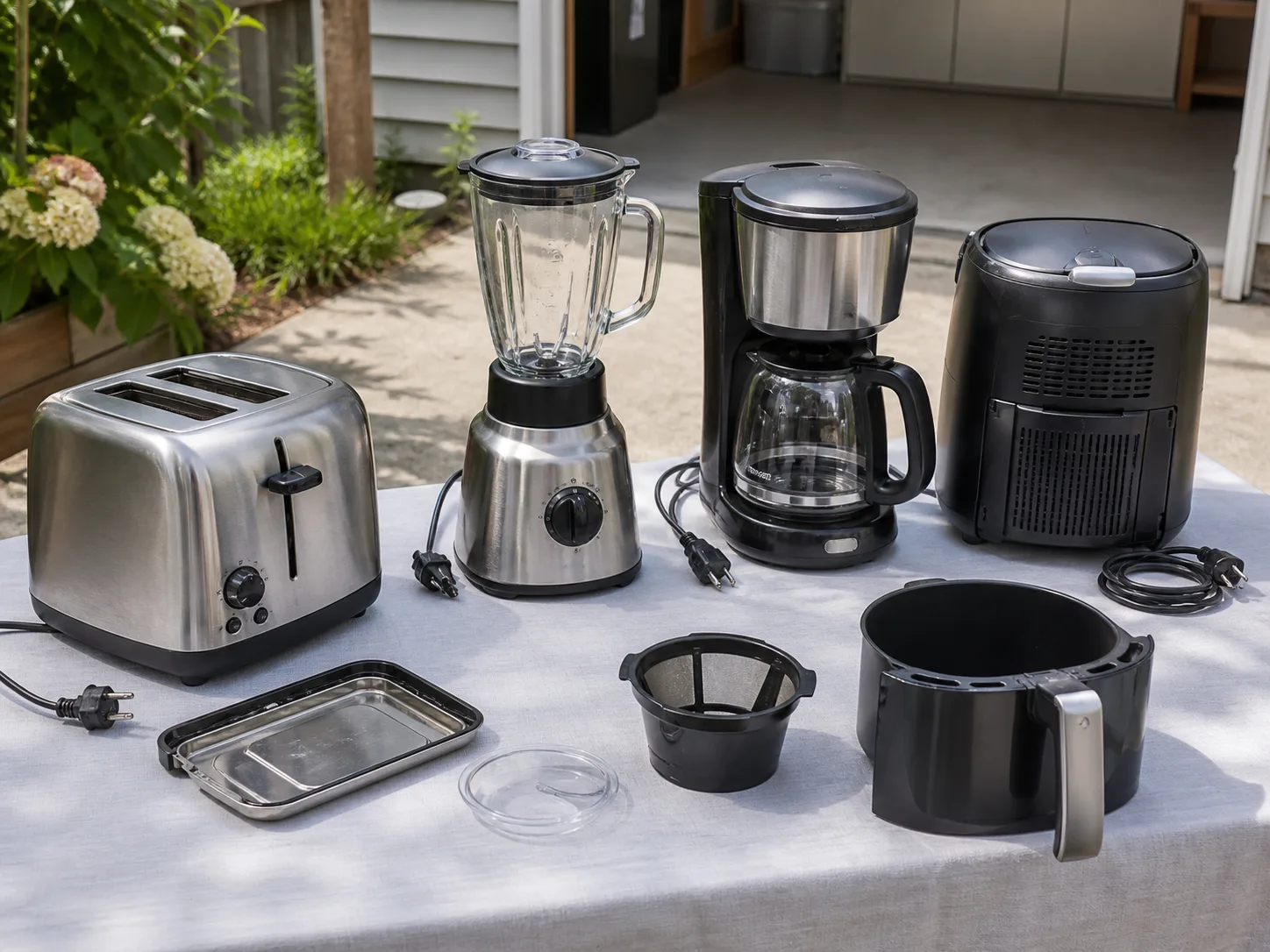
A toaster, blender, coffee maker, air fryer, space heater, lamp, or hair appliance may be cheap because it is old, recalled, damaged, incomplete, or simply unreliable. A yard sale gives you little time to evaluate electrical components that you cannot see, and a quick “it turns on” test does not prove safe operation.
For a current example of the warning signs, Chowhound’s appliance-safety coverage emphasizes checking recalls, ventilation, safety certification, cleaning access, and the reputation or traceability of the brand. The practical takeaway is simple: the more heat, current, food residue, or moving parts an appliance involves, the less attractive an unverified bargain becomes.
The Three Checks: Recall, Cord, and Function
First, photograph the model and serial information and search the CPSC recalls page before paying. If you cannot find a model number, cannot read the label, or cannot confirm that a recall remedy was completed, skip the item.
Second, inspect the plug and cord for cuts, flattened sections, melted plastic, exposed wires, scorch marks, or a loose connection. Look at vents, switches, hinges, heating elements, and removable food-contact parts. Any burning smell, crack, sticky residue, missing guard, or sign of overheating is a no.
Third, test only a clean-looking appliance with an intact cord and an accessible outlet, and do not run a questionable item indoors just to prove it works. A motor that starts, a toaster that glows, or a blender that spins for ten seconds still may fail under heat or load. If it needs an extension cord, replacement jar, proprietary battery, or unavailable part, include that cost before you negotiate.
If you want a used appliance, look for a recognizable model, a manual or parts source, a visible safety certification mark appropriate to your country, and a seller who will let you inspect it without pressure. If the seller says “it worked last year” but will not let you see the label, let the bargain go.
5. Flat-Pack or Mass-Produced Furniture With Structural Damage
Mass-produced furniture is not automatically bad. A clean, complete, well-assembled bookcase or side table can be a sensible used purchase. The problem is paying solid-wood expectations for a piece made of particleboard or fiberboard after moisture, moving, or repeated assembly has already weakened it.
Look beyond the finish. Push gently on opposite corners to feel for racking, open every drawer, inspect the back panel, and examine the screw holes, cam fittings, shelf pins, and bottom edges. Swollen board, stripped fasteners, a bowed shelf, a cracked leg, or a back panel pulling away from the frame is structural damage, not “a little wear.”
Add Repair Cost Before Calling It a Deal
Price the entire recovery: replacement hardware, a new back, edge banding, paint or veneer, delivery, and your time. If the bargain requires a new top, new legs, a custom drawer, and a second trip for parts, the price tag is not the cost.
Some flat-pack pieces are designed to be assembled once. Repeatedly removing and tightening fasteners can enlarge the holes, and a warped panel may never return to square. Buy the piece only if the repair is a project you genuinely want, not because the seller has called the damage “easy.”
A strong used furniture candidate has tight joints, a dry and square carcass, complete shelves and hardware, and a repair path that is obvious before you pay. If the item must hold books, a television, or anything heavy, be stricter about wobble and missing anti-tip hardware.
6. Veneer-Damaged, Water-Damaged, or Musty Wood Furniture
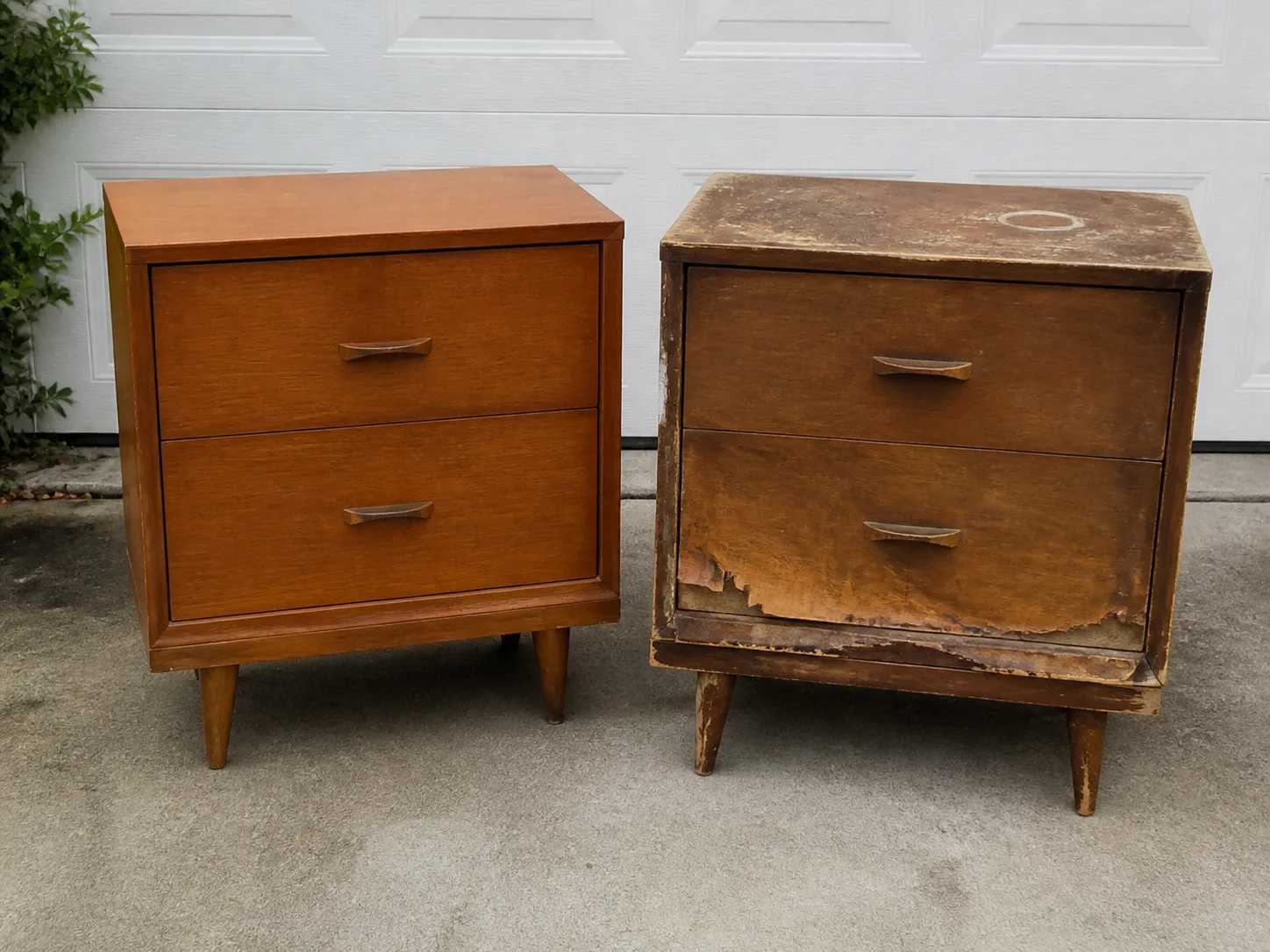
Small scratches and faded finish can be part of a good vintage piece. Bubbling veneer, lifting edges, missing sections, swelling from water, black staining, and a persistent musty smell are different: they suggest a surface or moisture problem that may extend beyond what you can see.
Veneer is a thin wood surface. When it is loose, you may need to remove unstable sections, match grain and thickness, replace damaged substrate, glue and clamp, repair edges, and refinish the entire visible area. That can be satisfying work, but it is not the same as wiping on polish.
Cosmetic Wear Versus a Failing Surface
Run your hand lightly across the top without pressing down. A stable scratch or dull patch is often cosmetic; a soft spot, raised bubble, cracked edge, or panel that flexes under light pressure deserves a closer look. Open drawers and inspect the underside, back, feet, and areas around hardware for swelling or previous leaks.
Moisture damage is a reason to slow down, not a reason to panic. A piece stored in a damp garage may dry out, but swelling, delamination, mold-like spotting, or a smell that returns after airing out can make the repair unpredictable. Do not bring a visibly moldy or persistently musty piece into a living space and hope paint will seal the problem.
Buy a damaged wood piece only when you can identify the material, isolate it from other furniture, and accept the possibility that the repair will become a parts or disposal job. If you want a quick decorating win, choose sound furniture with honest scratches instead.
What You Can Safely Buy Instead
The easiest used bargains are items whose condition is visible, whose surfaces are cleanable, and whose failure does not create a safety or pest problem. That usually means hard, non-upholstered goods rather than sleep products, baby gear, or heat-producing appliances.
Good candidates include solid wood tables with tight joinery, metal shelving without rust-through, ceramic planters and vases, glassware you can inspect for chips, baskets that can be washed or lined, mirrors with secure backs, and tools with intact handles. Even these need a quick inspection; “hard good” is a risk category, not a guarantee.
For furniture, favor construction you can see: solid panels, stable joints, complete hardware, and surfaces that respond to ordinary cleaning. For decorative items, decide whether you will use them for food, children, pets, or only display; an old painted object that is fine on a high shelf may be inappropriate for a child’s room or a kitchen.
How to Inspect a Yard-Sale Find Before It Enters Your Home
Do the inspection before negotiating, while the item is still outside and the seller can answer questions. Photograph labels and hardware, ask what is included, and walk away if the seller rushes you past the underside, seams, cord, model plate, or damaged area.
Use this order:
- Start with the hidden side: underside, back, seams, drawers, feet, vents, and screw points.
- Look for history clues: stains, droppings, cast skins, water rings, scorch marks, repairs, missing labels, and mismatched hardware.
- Test movement: open drawers, check doors, rock the frame gently, and confirm that shelves and supports sit squarely.
- Verify identity: record the model, serial, brand, dimensions, and any recall or parts information.
- Price the next step: cleaning, transport, replacement parts, professional repair, and disposal all count.
Safe Transport and Quarantine
Soft furniture should not go straight from a yard sale into a bedroom or living room. Keep it away from your existing furniture, inspect it in bright light, vacuum hard-to-reach areas outside, and use a practical cleaning or heat-treatment plan appropriate to the material. The Oklahoma State guidance recommends inspecting before purchase, cleaning furniture after returning, and quarantining when possible; it also cautions that you should not assume a secondhand seller has sanitized every item.
Do not spray a mystery pesticide on a sofa, mattress, crib, or child’s furniture. If you see a suspected bed bug, preserve the evidence for identification and contact a local Cooperative Extension office or qualified pest professional. The cheapest-looking item in the driveway becomes the most expensive if it spreads a problem through your home.
When a “Never” Item May Still Make Sense
The six categories are default skips for ordinary use, not a ban on restoration. A designer, prop stylist, or experienced restorer may knowingly buy an upholstered chair to strip to the frame, a veneer-damaged cabinet for parts, or an old crib as a decorative display after removing it from service.
The distinction is whether you are buying the item as a usable product or buying raw material for a controlled project. Before paying, write down the project boundary: what will be discarded, what will be replaced, where the piece will be isolated, and how it will be disposed of if pests, mold, or structural damage are worse than expected.
Never make an exception for a safety-critical item that will be used as-is. A missing crib part, recalled appliance, damaged electrical cord, or unknown mattress history is not made safe by a low price, a charming finish, or the seller’s confidence.
Conclusion
The smartest yard-sale shopper is not the person who buys the most. It is the person who can identify which problems are visible and fixable—and which ones can follow them home, fail under use, or put someone at risk.
Skip unverified mattresses and box springs, questionable upholstered seating, cribs and sleep-related baby gear, model-less appliances, structurally damaged flat-pack furniture, and veneer or moisture-damaged wood unless you are deliberately buying a restoration project. For everything else, inspect the hidden side, verify the identity, calculate the full cost, and keep questionable finds outside until you know what you brought home.



