How to Protect Tomato Plants from Cold Weather
Protect tomato plants from cold with a temperature-based plan for spring seedlings, overnight covers, containers, cold damage, and fall fruit.
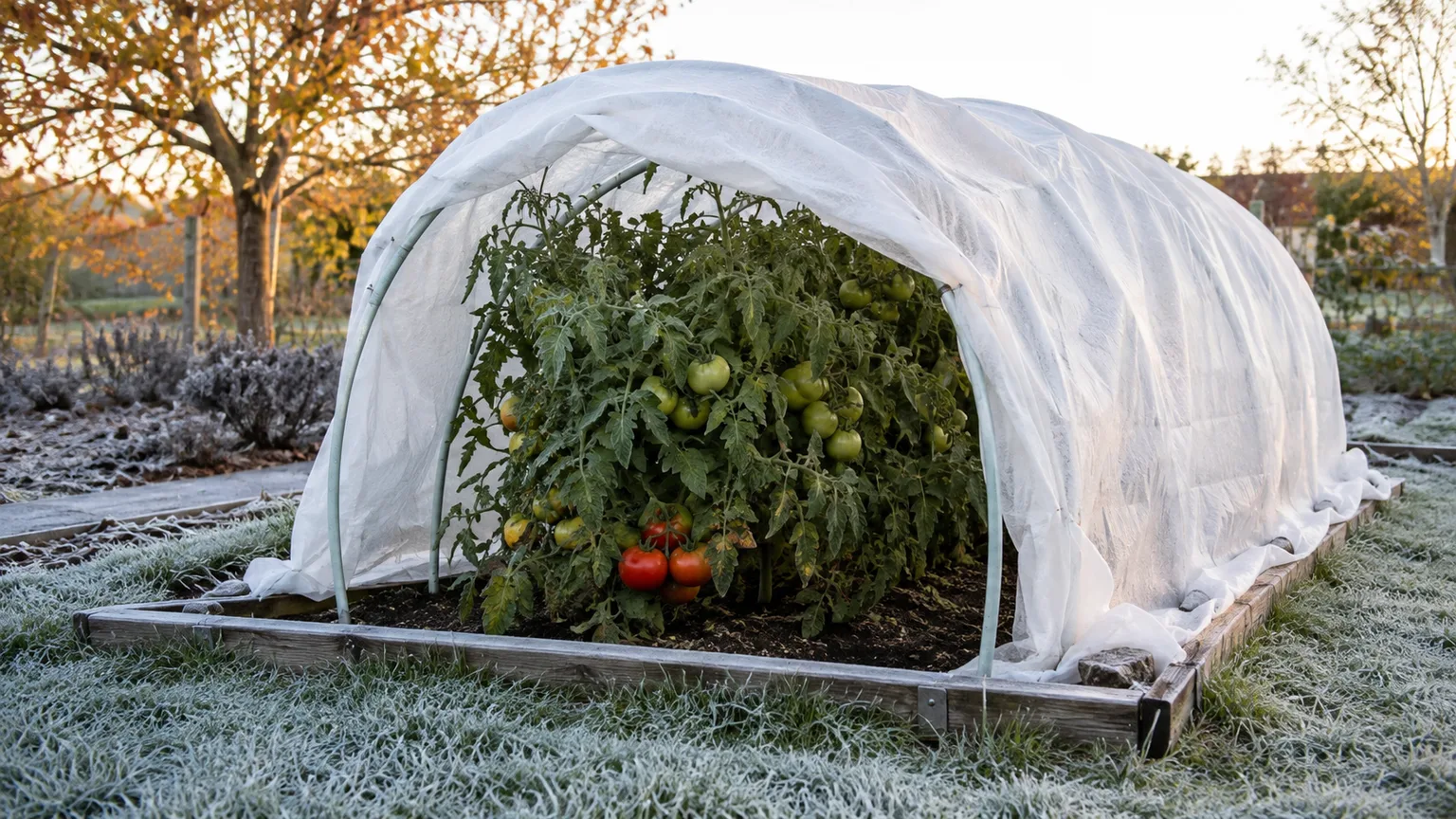
Tomatoes are warm-season plants: a chilly night can pause growth, while frost can injure leaves, stems, flowers, and fruit. The right response depends on whether you have a newly hardened seedling, a mature vine carrying fruit, or a pot you can move—and on how cold the plant’s own garden will get, not just the forecast for town.
For a brief cold snap, cover an in-ground plant before temperatures fall, keep the material anchored and ventilated, and uncover it after the morning warms. If a hard freeze is coming, treat a cover as a small buffer rather than a rescue plan: move a container to shelter or harvest the fruit that has a chance to ripen indoors.
How Cold Can Tomato Plants Tolerate?
There is no single night temperature that cleanly separates a healthy tomato from a damaged one. Tomatoes are frost-tender, and they grow and set fruit best in warm conditions. Cold exposure above freezing can slow growth or disrupt flowering; once frost forms or plant tissue freezes, exposed foliage and fruit can be damaged. How long the cold lasts, the plant’s stage, wind, moisture, and shelter all matter.
Use 50°F (10°C) as a soil-temperature minimum for planting only after the last killing frost has passed, not as proof that cold nights are harmless. Wisconsin Extension advises hardening tomato seedlings outdoors gradually and avoiding exposure below 45°F (7°C) during that transition. Those are useful guardrails, not guarantees for every cultivar or garden; a tender seedling in a pot can chill faster than an established vine in a protected bed. University of Wisconsin Extension’s tomato guide gives the planting and hardening recommendations.
The NC State tomato guide describes tomatoes as a long-season crop whose harvest depends on a sufficiently long frost-free period. That matters in both spring and fall: early planting can leave a transplant sitting in cold soil, while late-season protection only buys time for fruit already developing. NC State Extension’s tomato-growing guide also explains why choosing varieties by days to maturity helps in shorter seasons.
Distinguish Chilly Weather, Frost, and a Freeze
Gardeners often use “cold,” “frost,” and “freeze” as if they mean the same thing. They describe different risks. Chilling is cold stress without frozen plant tissue; frost is ice forming on exposed surfaces; a freeze means air or plant tissue reaches 32°F (0°C) or lower. A weather app may report air temperature several feet above ground, while leaves and low garden surfaces can cool more.
That difference changes what to do. A run of cool nights may slow new growth and fruit ripening, but a brief cold spell above freezing is not automatically a reason to pull a healthy plant. A forecast near freezing calls for preparation, and a forecast well below freezing or lasting for many hours calls for a backup plan beyond a bedsheet.
Use These Temperatures as Decision Points
| What you see in the forecast or soil | What it means for tomatoes | Practical response |
|---|---|---|
| Soil below about 50°F (10°C) | The root zone is still cold for transplanting | Wait for warmer soil and for the local risk of a killing frost to pass |
| Seedlings exposed below 45°F (7°C) while hardening off | The transition is too cold for tender transplants | Bring trays back under cover; resume acclimation during a milder part of the day |
| Repeated nights in the 40s°F (4–9°C) | Cold stress is possible even without a freeze | Protect small or recently transplanted plants and watch for stalled growth |
| Frost or temperatures approaching 32°F (0°C) | Exposed tomato tissue may freeze | Cover before dusk, move pots, or harvest vulnerable fruit |
| A hard or prolonged freeze | A simple cover may not keep the plant above freezing | Do not rely on fabric alone; move containers and bring in fruit worth saving |
The first two rows come from tomato-specific planting guidance; the final rows describe escalating risk, not guaranteed injury at an exact minute or reading. Frost cloth and low tunnels can provide a few degrees of protection under suitable conditions, but they do not create heat. NC State Extension’s season-extender guide gives a typical 4–5°F (2–3°C) frost-protection range for row covers and low tunnels.
Check the Temperature Where the Tomatoes Grow
A regional forecast is a starting point. A tomato bed at the bottom of a slope, beside a cold wall, or in an open field may be colder than a sheltered patio. Cold air settles in low places on calm nights, while a sunny wall or a nearby structure can hold warmth longer. The same yard can contain both a frost pocket and a relatively protected corner.
If you grow tomatoes every year, place a minimum–maximum thermometer near the canopy, out of direct sun and away from a wall or cover. Compare its readings with the forecast over several cold nights. That simple record tells you whether your garden usually runs colder than the forecast and when your particular bed needs a cover.
Also note the kind of night ahead. Clear, calm conditions can let leaves and soil lose heat quickly; wind can make an exposed bed harder to protect and can lift a loose sheet. Secure covers to the ground and inspect the low point of the garden, not only the plants beside the house.
Prevent Spring Cold Injury Before You Plant
Spring protection starts with timing. Start seeds indoors according to the variety’s expected maturity and your local last-frost window, but do not assume a large seedling is ready for a cold bed. Wait until the danger of a killing frost has passed and the soil has warmed; Wisconsin Extension uses 50°F (10°C) as a minimum soil temperature for tomato planting. In a cool region or heavy soil, waiting for a warmer, more stable stretch is often kinder to the transplant.
When you buy starts, ask whether they have been hardened off. A plant that has spent its life in a warm greenhouse can be sunburned, wind-stressed, or chilled when moved straight outdoors. If a late cold night is forecast just after planting, cover the young plant or use a temporary cloche; do not expect a few warm afternoons to compensate for several cold nights.
Harden Seedlings Off in Gradual Steps
Harden seedlings over about 10 to 14 days. Start with a short period outdoors in a sheltered, bright spot during the warmest part of the day. Increase exposure to sun and breeze gradually, bring plants in overnight, and pause the schedule when temperatures are forecast below 45°F (7°C). The point is to acclimate leaves and stems without asking a tender plant to endure a cold night before it is ready.
Do not harden by withholding water until a seedling wilts or by setting it in direct midday sun for a full day. Keep the root ball evenly moist, and avoid leaving trays outside where wind can dry small cells rapidly. Once the plants have adjusted and the soil and forecast are suitable, transplant them; a cover can still help during a surprise cold spell.
A Cold Night Is Forecast: A Practical Sequence
Start with the lowest temperature, how long it is expected to last, and whether frost is forecast. Then look at plant stage and location. For a brief dip near freezing, a well-secured cover can protect a healthy plant; for a long hard freeze, prioritize movable pots and fruit rather than gambling the whole crop on fabric.
Before dusk, check the soil. If it is dry, water at the base earlier in the day so the root zone is not parched; do not soak the leaves as night begins. Moist soil can store more daytime heat than very dry soil, but watering is not a substitute for a cover. Overhead sprinkler protection is a different system: Wisconsin Extension says it must run before temperatures fall below freezing and continue until air is above freezing and ice has melted. That is not a casual one-time spray, so use it only if you can maintain the full, uninterrupted process.
Cover Small Plants and Rows
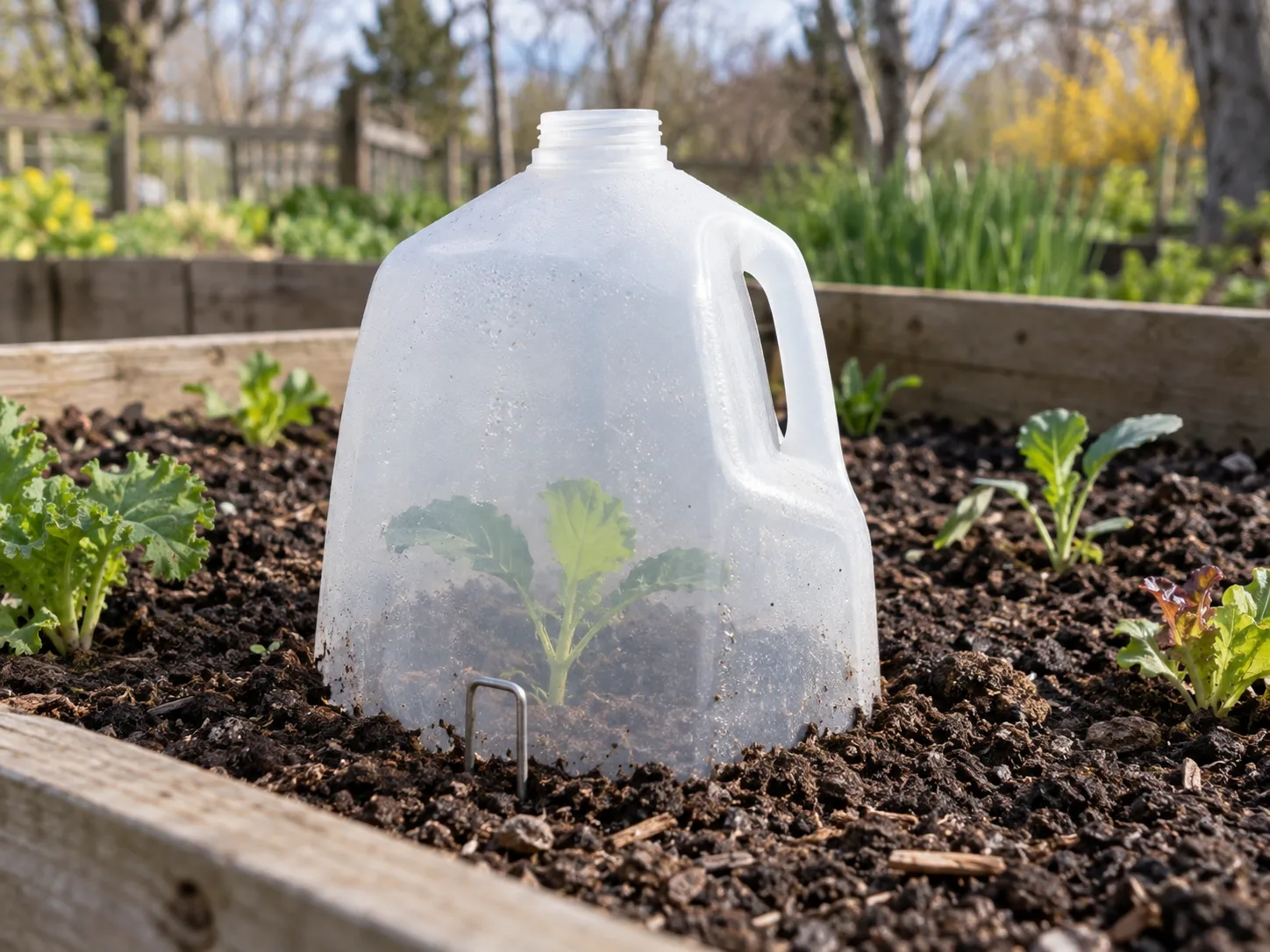
For seedlings and compact plants, use a frost cloth, a sheet, or a cloche sized to cover the plant without crushing it. Drape row cover over hoops or a sturdy frame, extend the edges to the soil, and pin or weigh them down so wind cannot open gaps. A cut plastic jug can act as a small cloche for one transplant, but open or remove it in the morning so the plant does not sit in a hot, stagnant pocket.
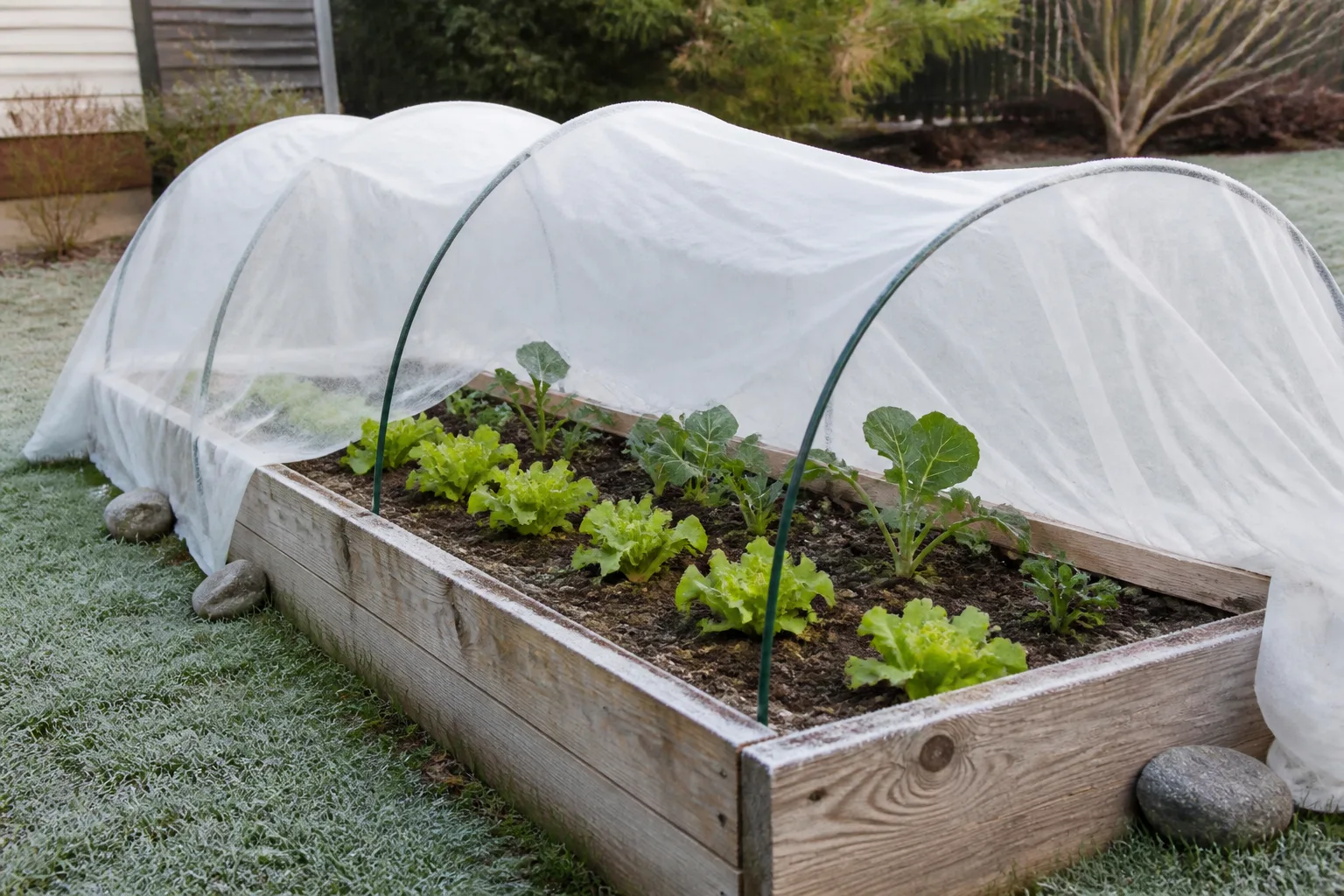
NC State Extension describes cloches as portable shelters that should close at night, be anchored against wind, and be opened or removed during the day. The same day-ventilation rule applies to small tunnels. Covers can overheat crops in sun, and tomatoes are especially poor candidates for a sealed cover left shut through a warm day. The NC State season-extension guide explains how cloches, row covers, and low tunnels differ.
Protect Mature Plants Without Crushing Them
For a caged or trellised tomato, set the cover over a frame rather than wrapping it tightly around the stems. Fabric touching leaves is not automatically harmful, but a wet, heavy sheet or a cover pulled tight can bend branches and snap fruit-laden stems. A cage, hoops, or stakes create clearance and make it easier to keep the cover from blowing away.
Bring the material down to the soil around the plant and anchor it there; the goal is to hold some of the bed’s warmth around the canopy. Do not tie a sheet around the trunk and leave the lower half open. If you use plastic, keep it off foliage and ventilate it as soon as the sun warms the enclosure. A blanket can be useful for one night, but remove it promptly after the cold passes.
Match Protection to the Plant’s Location
The easiest protection is the one that fits the plant already in front of you. A six-inch transplant can use a cloche or low tunnel. A mature vine loaded with fruit needs a higher, wider frame; forcing it under a small cover may break stems and leave much of the canopy exposed. Measure the plant before the cold night, not while trying to stretch a sheet over it at dusk.
If cold weather is expected for several nights, a reusable tunnel or cold frame can reduce nightly setup, but it needs monitoring and daytime ventilation. Wisconsin Extension notes that plastic tunnels and floating row covers can extend the harvest beyond the first light frost when removed during the day. Epic Gardening’s tomato-protection guide also illustrates the practical routine of securing a cover overnight and opening it after temperatures rise.
Move Containers; Plan Around Tall Vines
A potted tomato is easier to move than an in-ground plant. Take it to a frost-free garage, enclosed porch, or other sheltered spot for the night; a cool shelter is useful for a short event, while a dark garage is not a good place to keep a leafy plant for days. Move it back when the danger has passed and conditions are suitable.
Tall indeterminate tomatoes are harder to protect than compact determinate plants because they keep growing and may outgrow a small tunnel. Do not severely prune a healthy vine just to fit a cover. If repeated frost is forecast and the plant is already declining, harvest the fruit that can finish indoors and stop spending effort on new flowers or tiny fruit that will not mature before the season ends.
What Covers Can and Cannot Do
A cover works by slowing heat loss and sheltering plants from wind; it does not warm the bed like a heater. NC State Extension gives row covers and low tunnels a typical 4–5°F (2–3°C) frost-protection range. The actual result depends on the cover, how completely it reaches the ground, wind, and how much warmth the soil stored during the day.
That range can bridge a light frost when the starting temperature is close to freezing. It cannot reliably turn a hard freeze into a safe night. Two layers may add insulation, but stacking household blankets onto a tall vine can crush it, and a cover with loose edges may provide much less protection than expected. If the forecast is far below freezing or the cold will last many hours, move potted plants and harvest fruit instead of trusting a thin barrier.
Plastic is useful over hoops because it blocks wind and lets light through, but it can heat rapidly in daytime sun and should not rest against leaves. Breathable frost fabric or a light sheet is simpler for a short overnight event. Whichever material you choose, anchor it, keep it from sagging onto fruit, and remove or vent it after the morning temperature rises. The protection that works at 2 a.m. can become a heat problem by 10 a.m.
How to Assess a Tomato After Cold Damage
Wait until the plant has thawed and the light has returned before deciding how much damage it took. Cold-injured leaves may look limp, water-soaked, or unusually dark; damage can become clearer after the tissue warms. One curled leaf is not proof of frost injury, and a plant that looks rough at dawn may still have a green growing tip and living stems.
Check the growing points and the main stem near the soil. If those are firm and green, leave the plant in place for a few mild days and watch for new growth before pruning. Remove tissue that is plainly dead or mushy once the boundary is clear. If the main stem and growing tips are blackened down to the crown, the plant may not recover; save any sound fruit and replace it when the weather is reliably warm.
Inspect fruit separately. Frost-damaged tomatoes can turn soft or water-soaked, and fruit with cracks, mold, or decay should not be stored with sound tomatoes. A brief chill above freezing may slow ripening without destroying the whole crop, so sort fruit rather than discarding every green tomato on a cold morning.
Save Fruit Before a Fall Freeze
In fall, protection is a way to gain a few more ripening days, not a plan to carry tomatoes through winter outdoors. Watch the forecast and pick ripe and turning fruit before a freeze. If a hard freeze is coming, harvest firm, full-sized green tomatoes too; then remove small fruit that is unlikely to ripen and decide whether the declining vine is worth keeping covered.
Wisconsin Extension says mature green tomatoes can continue ripening after harvest when stored in a warm, dark place with air movement, and recommends avoiding storage below 55°F (13°C) for good flavor. Keep harvested fruit dry, sort out damaged tomatoes, and check the group regularly so one decaying fruit does not spoil the rest. Bonnie Plants’ frost-harvest guide also distinguishes full-sized mature green tomatoes from small, immature fruit that may not finish well indoors.
Pick Only Tomatoes Mature Enough to Ripen
Prioritize tomatoes that have reached full size and begun to lighten or show a color break. Firm, mature-green fruit may ripen indoors; tiny, hard, deep-green fruit is less dependable. Handle tomatoes gently, leave a short stem if it comes away easily, and store the fruit in a single layer or shallow box where air can circulate.
Do not put freshly picked fruit in a sunny window to force ripening. A warm room away from direct sun is more predictable, and cooler storage can slow the process. If fruit stays green or is too immature to ripen, use it promptly in a cooked or pickled preparation rather than keeping it indefinitely.
Do Cold-Tolerant Varieties Need Protection?
Some tomato varieties set fruit or mature earlier in cool regions, and an early variety can make more of a short season. That is different from frost tolerance. A label such as “early” or “cold tolerant” does not mean the plant can take ice on its leaves or survive a hard freeze.
Choose days-to-maturity ratings that fit your local frost-free window, and favor varieties that gardeners or extension trials in your region have grown successfully. Determinate plants often deliver much of their crop in a shorter period; indeterminate vines can keep flowering and setting fruit until cold weather stops them. Neither growth habit makes a tomato frost-hardy. Farm to Jar’s season-extension discussion describes cool-climate varieties as a way to extend production, while Wisconsin and NC State Extension guidance still frames tomatoes around frost-free growing conditions.
Conclusion
Protect tomatoes according to the cold they are facing and the stage they are in. Delay spring planting until frost risk has passed and soil has warmed, harden seedlings gradually, and use a secured, ventilated cover for a brief cold night. Check the temperature in the bed, because a regional forecast cannot capture every cold pocket in a yard.
When a freeze is too severe or too long for a cover to bridge, move the pot or save the fruit. A few degrees of protection can extend a harvest, but it cannot make a warm-season tomato plant winter-hardy.