How Often Should You Water Strawberries? A Simple Guide
Learn how often to water strawberries in beds, raised beds, and pots, with a moisture check, heat adjustments, and signs of overwatering.
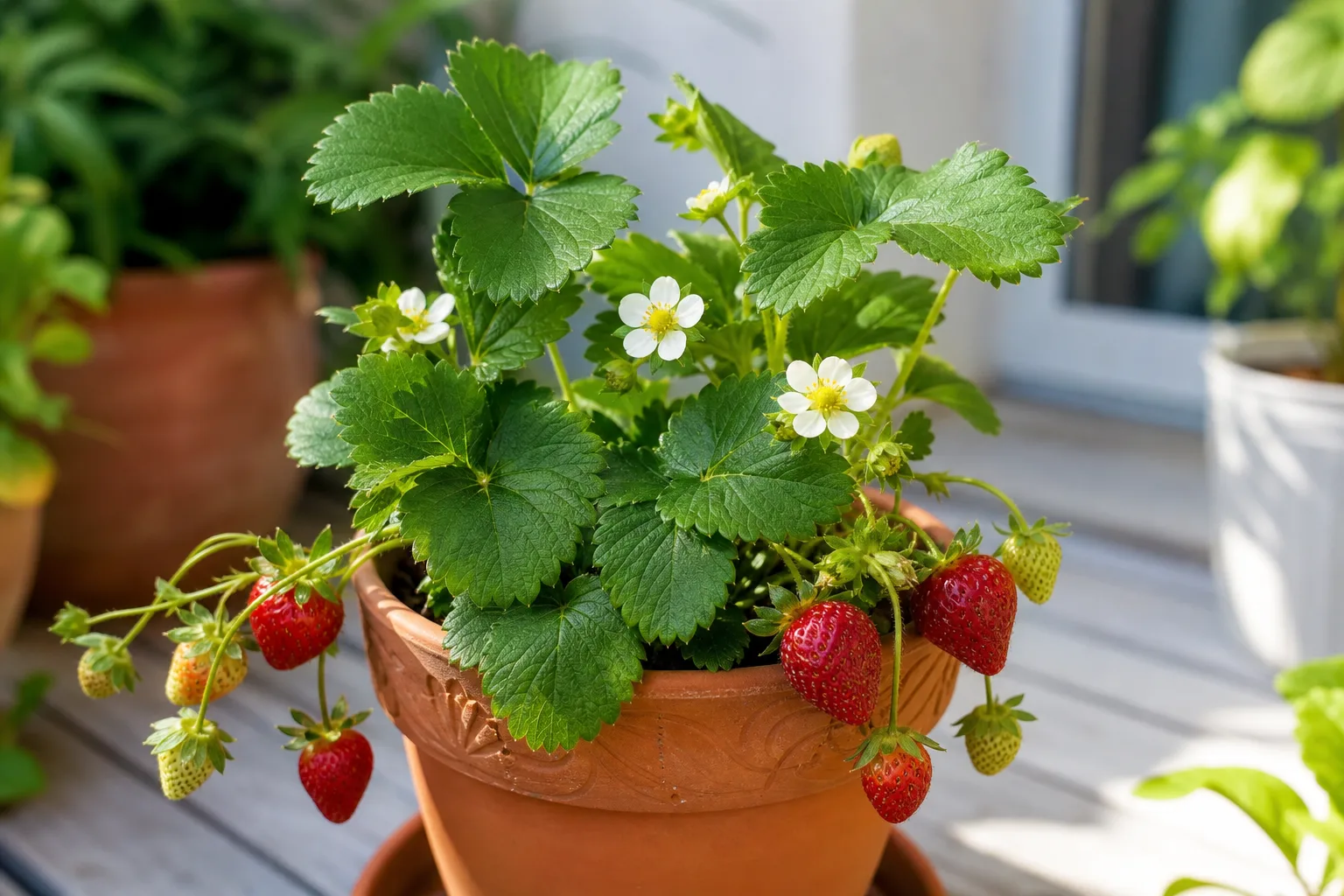
The most reliable answer is: water strawberry plants when the upper layer of soil has started to dry, then soak the root zone thoroughly without leaving it waterlogged. For many established plants, that works out to about once or twice a week during ordinary growing weather, but a small pot in hot sun may need water every day while a mulched bed after rain may need none.
The goal is not to keep the surface constantly wet. Strawberry roots are shallow, so they cannot wait through long, severe dry spells, yet they also need air around them. A good watering routine keeps the root zone evenly moist, drains excess water quickly, and changes with the plant’s stage of growth. Use the schedule below as a starting point, then let the soil and weather make the final decision.
The short answer: water by root-zone moisture
Check the soil in the morning by pushing a finger about 1 inch into the soil near—but not directly against—the crown. If that layer feels dry and crumbly, water. If it feels cool and slightly moist, check again later. If it is shiny, sticky, or saturated, wait and investigate drainage before adding more water.
For established strawberries in the ground, a useful starting target is roughly 1 inch of total water per week from rain and irrigation during active growth. That is a planning benchmark, not a command to run a sprinkler every seven days. Sandy soil, strong wind, hot weather, full sun, dense foliage, and heavy fruiting can shorten the interval. Clay soil, cool cloud cover, mulch, and a recent soaking rain can lengthen it.
This moisture-first approach is more dependable than asking whether strawberries should be watered every day. The same calendar can leave one plant thirsty and another sitting in low-oxygen soil.
Why strawberries dry out faster than you expect
Strawberries do not explore soil as deeply as many shrubs or fruit trees. Much of their active root system is near the surface, where it is exposed to evaporation and temperature swings. A plant can look fine in the morning and begin wilting by late afternoon during a hot, windy spell, especially if it is in a dark container or a shallow raised bed.
Shallow roots also explain why a light sprinkle is a poor substitute for a real watering. A few minutes of surface wetting may evaporate before it reaches the root zone. Apply water slowly enough that it penetrates rather than runs off, and pause if the soil begins to shed water from the surface.
Strawberries need moisture for leaf growth, flowers, and fruit development, but saturated soil fills the spaces that roots need for oxygen. Poor drainage can make a plant wilt even when the soil is wet. That confusing combination is one reason gardeners sometimes water a struggling plant again and make the problem worse.
The crown—the short central area where roots, leaves, flowers, and runners meet—should sit at soil level, not be buried. Water the soil around it, but do not pile wet mulch against the crown. A healthy root zone is damp after watering, then gradually becomes less wet as the plant uses the water and air returns to the pores.
A practical watering schedule by plant stage
Water newly planted strawberries thoroughly at planting time so the soil settles around the roots. For the first week, check daily and water whenever the upper inch begins to dry. The purpose is to prevent the small root system from drying while it establishes, not to keep the planting hole continuously muddy.
During the second week, many plants can move to every other day if the weather is mild and the soil holds moisture. In a heat wave, in fast-draining mix, or in a small container, continue checking daily. Once new growth looks steady and the plant no longer wilts between normal waterings, begin extending the interval while maintaining a full root-zone soak.
Once roots are established, stop watering by habit and start checking the soil. In a typical spring, one deep watering per week may be enough in a mulched bed, with an extra watering during dry wind or an unusually warm stretch. If rainfall is frequent, do not add irrigation simply because a weekly schedule says it is watering day.
Before flowering, inspect the soil beneath the leaves and around the drip line of the plant rather than only touching the exposed surface. Dense foliage can shade the soil while roots below are dry. Conversely, a damp surface after a brief shower does not prove that the root zone is wet several inches down.
Water demand is often greatest from flowering through harvest. Plants are supporting expanding leaves, flower trusses, and fruit at the same time, and drought stress can reduce fruit size and quality. Check moisture more frequently as soon as flowers appear, especially if the forecast is sunny or windy.
Do not interpret this as permission to keep the bed saturated. The better rule is consistent access to moisture: water when the root zone is drying, apply enough to reach the roots, and allow excess to drain. During harvest, inspect ripe fruit and the soil together. A berry that is small or bland can reflect many factors, but repeated drought during fruit fill is one avoidable stress.
How much water strawberries need
For an established in-ground bed, begin with the equivalent of about 1 inch of water across the planting area per week, counting rainfall. One inch over 10 square feet is about 6.2 gallons, so a 20-square-foot bed would need about 12.4 gallons if it received no rain. These calculations are useful for understanding scale, but soil infiltration and plant spacing matter more than chasing an exact number with a measuring cup.
Apply water slowly and check the result. After irrigation, dig or probe a small spot a few inches from a plant. Moisture should have moved into the main root zone, while the surface should not be running or pooling. If water disappears instantly through very sandy soil, divide the total into two slower applications. If clay soil stays glossy or puddled, improve drainage and water more cautiously.
Containers require a different interpretation. Water until a little excess exits the drainage holes, then empty any saucer. That flushes the whole mix instead of wetting only the top. The volume depends on pot size, but the signal is consistent: the mix is evenly moist, not floating in a reservoir unless the container was specifically designed for one.
How to check whether strawberry soil is dry
Use three checks together:
- Finger check: Push a finger about 1 inch into the soil. Dryness at that depth is a strong reason to water a young plant or a container; for a larger bed, use a trowel or moisture probe to check deeper.
- Lift check for pots: Lift the container before and after watering. A noticeably lighter pot is a useful personal reference once you learn its normal range.
- Plant check: Look for loss of firmness, drooping leaves, crisp edges, or fruit that is smaller than expected. Plant symptoms confirm that stress has occurred; they should not be your first watering trigger.
Check more than one spot. The sunny edge of a bed, the soil beneath a dense plant, and the center of a container can have different moisture levels. Avoid testing only the top crust, which may dry quickly while the root zone remains wet.
Watering strawberries in the ground, raised beds, and containers
In-ground beds
Water at the base of the plants and move along the row slowly enough for the soil to absorb the water. Drip irrigation or a soaker hose is efficient because it directs moisture toward the root zone and keeps leaves and fruit drier. If you use a hose or watering wand, aim below the foliage and use a gentle stream.
Raised beds
Raised beds often drain better than ground soil, but that also means they can dry sooner, particularly when filled with a light, compost-rich mix. Check the bed’s interior rather than assuming its height tells you how often it needs water. A thick organic mulch can reduce evaporation, but it cannot replace irrigation during a prolonged dry spell.
Pots and hanging baskets
Containers have less soil reserve and more exposed surface area, so they often need checking daily in summer. A pot in full sun, a small strawberry jar, and a hanging basket can dry much faster than a large container on a shaded patio. Water when the mix is beginning to dry, and make sure drainage holes are open.
Do not rely on a single top splash. Pour around the entire root zone until water begins to drain, wait briefly, and repeat if the mix was extremely dry and initially repelled water. A severely dried potting mix can allow water to run down the sides while the center stays dry; slow applications correct that better than one fast pour.
The best time of day to water strawberries
Morning is usually the best time because plants have water available before the hottest part of the day, and foliage has time to dry. Watering at the soil line matters more than the clock, but early watering gives wet surfaces a better chance to dry than late-night overhead irrigation.
If a plant is genuinely dry during a hot afternoon, water it. Do not leave it in damaging drought stress to preserve a perfect schedule. During a heat wave, a second evening check may be sensible for containers or newly planted strawberries, provided the soil is actually dry and you apply water to the root zone rather than repeatedly wetting the leaves.
The best way to deliver water to the root zone
Drip lines and soaker hoses are strong choices for a bed because they apply water close to the soil and keep the fruit cleaner. Position the line so it moistens the area occupied by the roots without pressing directly against the crown. Test a new system with a trowel; the wetting pattern is not always as wide as it appears from above.
For hand watering, use a narrow stream at the soil surface. Avoid blasting the crown, exposing roots, splashing soil onto fruit, or flattening flowers. Overhead watering is not automatically disastrous, especially when done early, but it leaves foliage and fruit wet and can make the bed more favorable to disease when conditions remain humid.
How rain, heat, wind, and mulch change the schedule
Rain counts only if it reaches the strawberry root zone. A brief shower may wet leaves and mulch while leaving the soil below dry. Check the soil after rainfall rather than assuming the plants are covered. Conversely, a long, soaking rain can supply several days of water and make extra irrigation harmful.
Heat and wind increase evaporation. In hot weather, check early, then check again later for small containers. A sunny black pot may need water while a nearby plant in a shaded, mulched bed does not. Do not automatically double the volume every time the temperature rises; shorten the checking interval first and water only when needed.
Mulch helps slow evaporation and buffers soil temperature. Apply a thin, even layer of clean straw, shredded leaves, or another suitable organic material, leaving the crown uncovered. Mulch can reduce how often you need to water, but thick or constantly wet mulch touching the crown can encourage rot and hide pests or mold.
Signs your strawberries are underwatered
Common signs include:
- Leaves that droop during the cooler part of the day and remain limp after the sun eases.
- Dry, crisp leaf edges or foliage that feels papery.
- Small leaves, fewer runners, reduced new growth, or flowers that abort.
- Smaller, less juicy fruit during repeated dry periods.
- Potting mix pulling away from the container wall or becoming difficult to re-wet.
Confirm dryness before watering. Wilting can also come from damaged roots, heat, disease, or saturated soil. If the soil is dry, water slowly and thoroughly. If the plant is severely wilted, shade a container temporarily from the harshest afternoon sun while it rehydrates, then return it to the light it needs.
Signs your strawberries are overwatered
Overwatering is a pattern of too much moisture or poor drainage, not simply one generous watering. Watch for soil that stays wet for days, a sour smell, yellowing or browning leaves, slow growth, weak roots, crown decline, and wilting despite damp soil. Root problems can also make a plant look thirsty because damaged roots cannot supply the leaves.
If the soil is saturated, stop irrigation and improve drainage. Confirm that container holes are open and that the pot is not sitting in a full saucer. In a bed, look for compacted soil, a low spot, a blocked outlet, or a hose that is delivering more water than the soil can absorb. Avoid trying to fix waterlogging by adding small amounts of water more often.
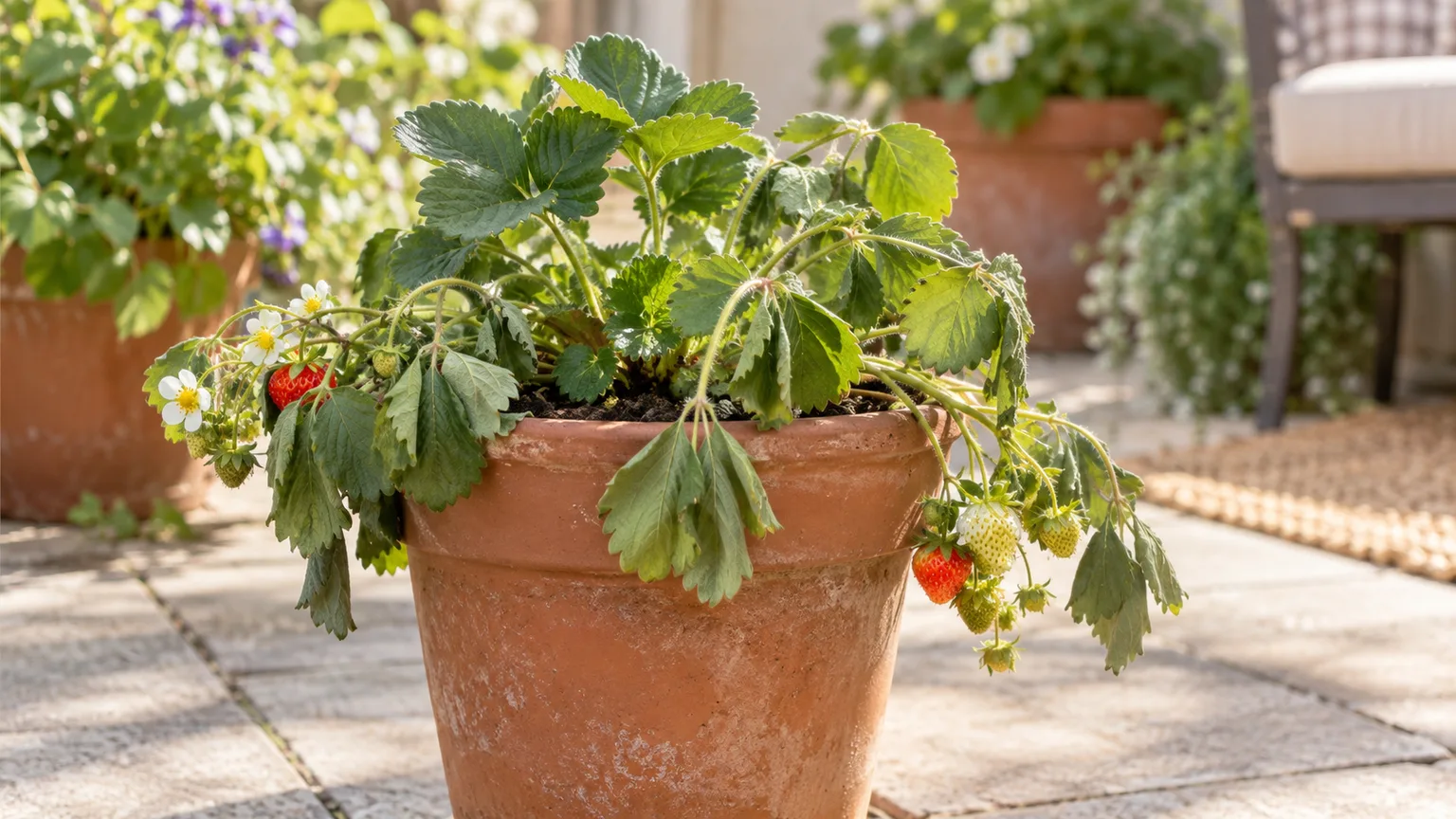
How to fix a strawberry plant that is too dry or too wet
For a dry plant, re-wet the root zone gradually. A fast pour can run around a dry root ball, especially in a pot. Apply some water, wait a few minutes, then apply more until the mix is evenly moist and excess drains. Resume checking daily until the plant stabilizes, then lengthen the interval rather than continuing with emergency-level watering.
For a wet plant, let the surface and root zone begin to dry before watering again. Move a container to a bright, sheltered spot if rain is continuing, but do not place it in intense heat immediately after root stress. Remove dead leaves and any fruit touching wet soil, correct drainage, and reassess the plant’s crown. If roots are black, mushy, or foul-smelling, the plant may need more extensive rescue than a schedule change can provide.
Avoid fertilizing a severely wilted or waterlogged plant until the root zone is functioning normally. Fertilizer does not replace water, oxygen, or healthy roots, and stressed roots are more vulnerable to additional salt injury.
A two-minute strawberry watering routine
Make watering repeatable:
- Check the forecast and recent rainfall.
- Feel the soil in at least two places, including the sunniest area.
- Look at the crown, leaves, flowers, and fruit for stress or rot.
- Water at the soil line if the root zone is drying.
- Apply enough to moisten the root zone, not just the surface.
- Confirm that excess water drains and that the crown remains uncovered.
- Recheck containers and new plantings sooner than established beds.
Keep a simple note for the first few weeks: date, rain, bed or pot, and whether the soil was dry. That record quickly reveals how your own soil behaves. It is more useful than copying a schedule designed for a different climate, pot size, or planting mix.
Conclusion: use the soil, plant, and weather together
Water established strawberries when the root-zone soil begins to dry, then soak deeply enough to reach the roots while allowing excess to drain. Start with about 1 inch of weekly water in active growth for in-ground plants, count rainfall, and adjust the interval for containers, new plantings, heat, wind, mulch, and soil type. Check more often during flowering and fruit development, keep water off the fruit when possible, and treat wilting as a clue to investigate rather than a command to water blindly.
The best strawberry watering schedule is therefore flexible but not vague: inspect, water thoroughly when needed, verify drainage, and check again before the plant reaches severe stress.
The guidance here is consistent with extension and horticultural references on strawberry root systems, crop establishment, containers, and growing conditions: University of Minnesota Extension, RHS strawberry growing guidance, Utah State University Extension, and West Virginia University Extension.