How to Get Rid of Pantry Gnats Overnight
A rotting banana brought gnats into my pantry. Here's the overnight vinegar trap, cleanup steps, and fixes that stop fruit flies and fungus gnats from returning.
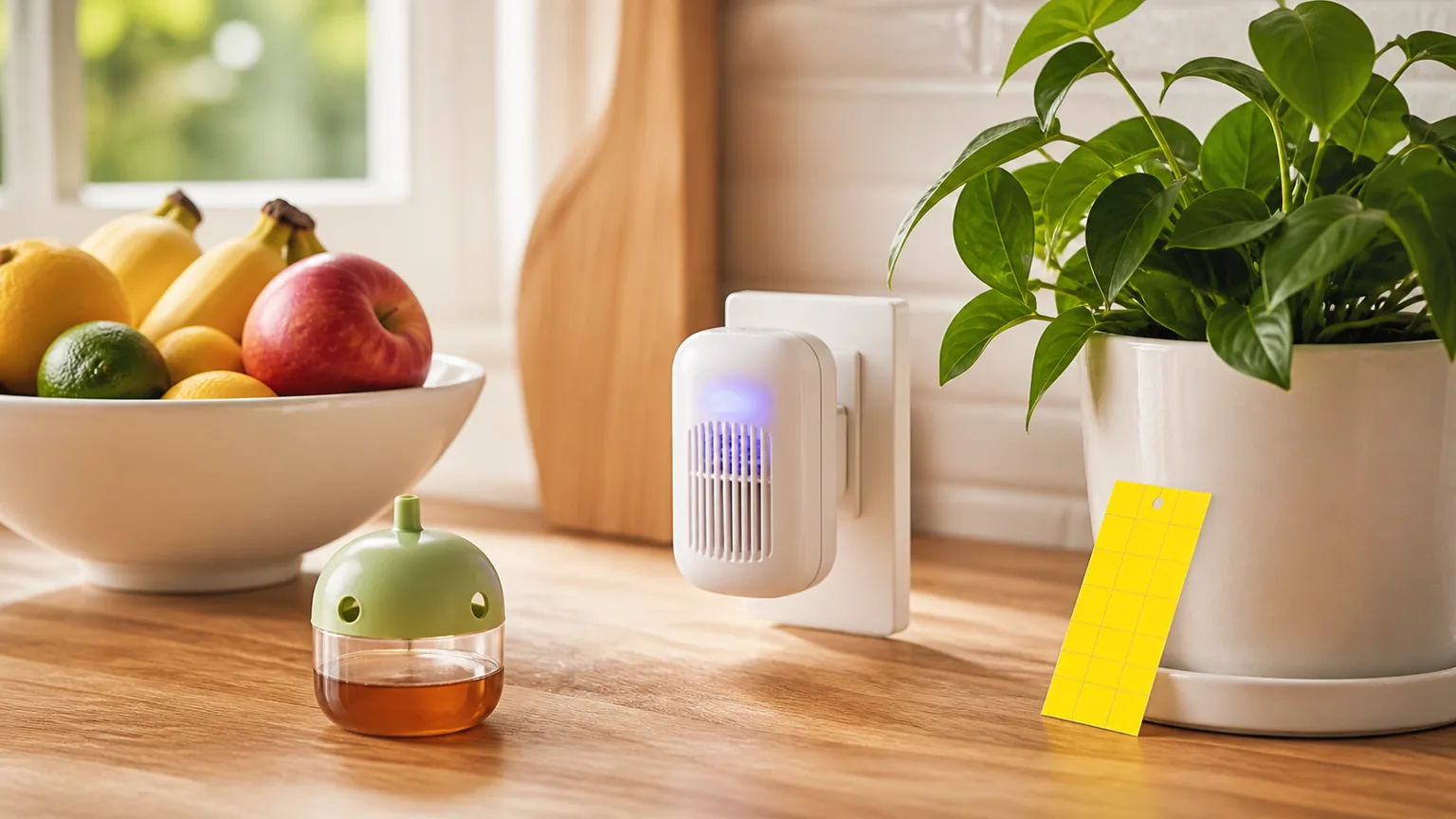
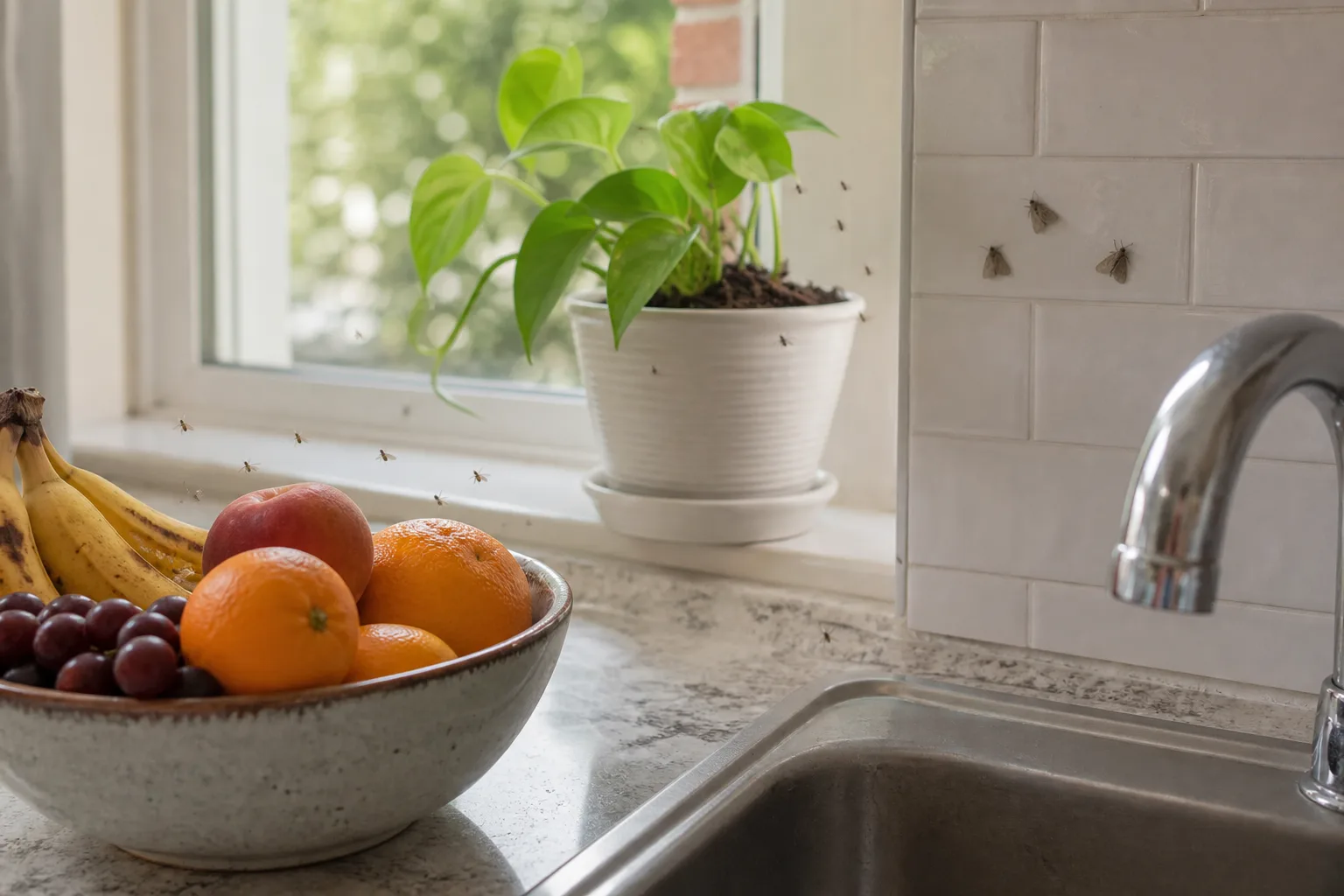
The first time I opened my pantry and saw tiny flies crawling on a blackened banana peel, I assumed I could swat my way out of it. Two days later the swarm had multiplied, hovering in a cloud every time the door moved. That is the pattern with indoor flies: adults are annoying, but breeding sites are the real problem. The good news is you can knock adult numbers down overnight with a vinegar trap while you remove whatever they’re laying eggs in.
Most pantry “gnats” are vinegar flies—the fruit flies (Drosophila) that extension guides describe as attracted to fermenting fruit, spilled juice, and damp organic debris (Texas A&M AgriLife Extension). True fungus gnats usually come from wet potting soil, not a banana. Drain flies breed in slimy pipes. All three can look like “gnats” when you’re tired and annoyed, but the fix changes depending on which one you have. This guide walks through identification, the trap that cleared my pantry by morning, and the cleanup steps that kept them gone.
What You’re Actually Dealing With (Probably Not a Generic “Gnat”)
“Gnat” is not one insect. It is what people call any small fly that appears indoors. Before you build a trap, spend sixty seconds deciding which fly you’re fighting. Traps overlap, but breeding-site removal does not—fruit flies need rotting food gone; fungus gnats need drier soil; drain flies need pipe films scrubbed out.
Fruit Flies vs. Fungus Gnats vs. Drain Flies
Fruit flies (vinegar flies) are about 1/8 inch long with a stout body and, in many species, reddish eyes. They dart quickly and breed in fermenting fruit, vegetables, wine, beer, and the yeasty slime at the bottom of a trash can or recycling bin (Texas A&M AgriLife Extension). UC IPM calls drosophilid flies “pomace or vinegar flies” and notes adults are brown to yellowish with red eyes (UC IPM). If your flies showed up after produce sat out, you are almost certainly here.
Fungus gnats are slender, mosquito-like, and often gray or black with long legs. They hover more than they dart. Larvae live in moist potting soil, feeding on fungi and organic matter—and sometimes roots (UC IPM fungus gnats). You may notice them near houseplants, running on soil surface, or flying toward a laptop screen at night. Brooklyn Botanic Garden describes them as a symptom of overwatering: fix the wet soil, and the population collapses (Brooklyn Botanic Garden).
Drain flies (moth flies) are fuzzy, moth-shaped, and tend to rest on bathroom or kitchen walls near sinks. They breed in the bacterial film inside drains—not usually inside a dry pantry shelf. If flies appear only when you run water, suspect drains before fruit.
A quick rule: red eyes + rotting produce = fruit fly. Long legs + houseplant soil = fungus gnat. Fuzzy wings + sink = drain fly.
Why Swarms Cluster Around a Pantry
Pantry doors create a small, humid microclimate. Bananas, potatoes, and onions release ethylene and moisture as they age; a single overripe banana on a high shelf can ferment out of sight while adults recruit others to the smell. Fruit flies complete a life cycle in as few as eight days under warm conditions (Texas A&M AgriLife Extension), which is why a “few” flies on Monday become a cloud by Wednesday.
They also exploit places you do not think of as food: the wet bottom of a trash bag, unrinsed wine bottles in recycling, a drip under the fridge, or potato skins in a mesh bag. Moisture plus organic matter equals larvae. Adults are just the visible tip.
The Overnight Trap That Catches Adults Fast
Traps will not eliminate an infestation by themselves—extension sources are unanimous that eliminating breeding sites is essential (Texas A&M AgriLife Extension). They will, however, pull hundreds of adults out of the air while you sleep, which is why “overnight” is a fair promise for visible relief, not total eradication.
Supplies That Work in Any Kitchen
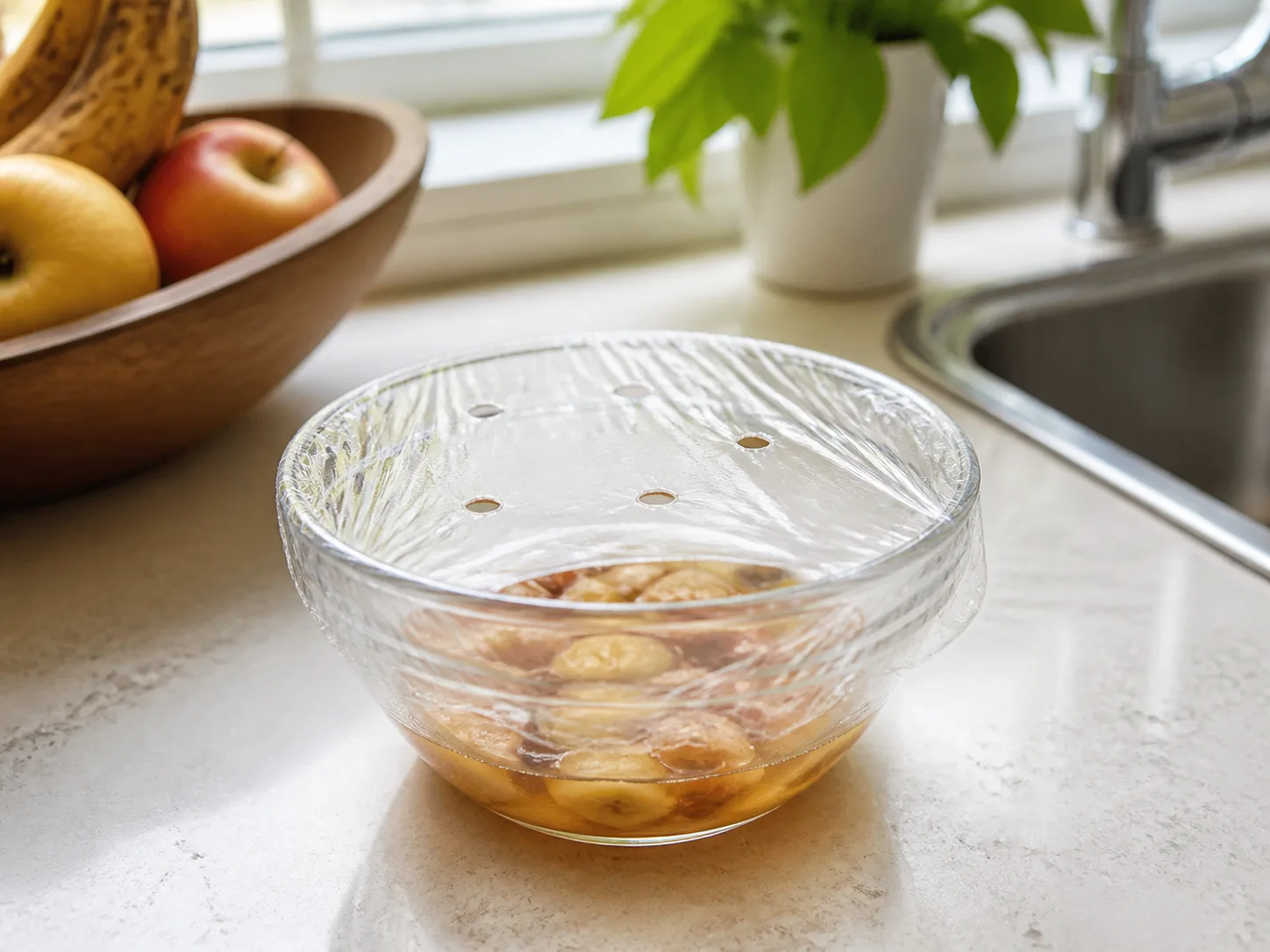
You need a shallow bowl or jar, apple cider vinegar (red wine, beer, or a piece of overripe banana also work), a few drops of liquid dish soap, and either plastic wrap or a repurposed soda bottle. Optional: a toothpick or needle to poke entry holes. Gloves help when you dispose of a full trap in the morning.
The vinegar mimics fermentation. The soap breaks surface tension so flies that land on the liquid sink instead of skating across it—Texas A&M’s indoor fly guide illustrates exactly this bowl-and-soap method (Texas A&M AgriLife Extension).
Build the Trap Step by Step
Version A — plastic-wrap bowl (best for a focused pantry swarm):
- Place a small piece of overripe fruit in a bowl if you have it; otherwise skip straight to liquid bait.
- Add about ⅓ cup apple cider vinegar and 3–4 drops dish soap. Stir gently.
- Stretch plastic wrap tightly over the bowl so there are no gaps along the rim.
- Poke 5–8 small holes with a toothpick—large enough to enter, not so large they exit easily.
- Set the trap inside or directly outside the infested zone. If the pantry has a door, leave it slightly open so flies elsewhere in the kitchen can reach the bait.
- Turn off competing strong smells if you can (burning candles, competing fruit bowls).
- Leave it undisturbed 8–12 hours.
In my case, the bowl sat on the pantry floor near the ruined banana. By morning the wrap was speckled with flies underneath, and the hovering cloud was gone from the shelves.
Version B — open bowl (faster setup, slightly smellier): Skip the wrap. Use vinegar, soap, and a drop of water in a shallow dish. Flies drown on contact. You may catch slightly fewer escape artists, but it works when you lack wrap.
Version C — bottle funnel: Cut the top off a 2-liter bottle, invert the neck into the base, and bait the bottom with vinegar and soap. Flies enter the funnel and rarely find their way out (Texas A&M AgriLife Extension).
Plastic-Wrap Bowl vs. Open Bowl vs. Bottle Funnel
Use the wrap bowl when flies are concentrated in one room and you want to limit vinegar smell. Use the open bowl for quick deployment in multiple rooms (kitchen counter plus pantry). Use the bottle funnel if you need higher capacity or have curious pets that might drink an open bowl. All three rely on the same attractant chemistry; pick based on layout, not magic.
Replace bait every two to three days or when it looks cloudy. Fermenting traps can themselves become minor breeding sites if you neglect them—do not let a trap sit for a week.
Find and Eliminate the Breeding Source the Same Night
Set the trap first, then hunt larvae while adults are distracted. Insecticides and sprays rarely solve indoor fly problems without sanitation (Texas A&M AgriLife Extension). Think like a fly: anywhere wet + organic counts.
Pantry and Counter Inspection Checklist
Work top to bottom, back to front:
- Overripe or damaged fruit—bananas on upper shelves are classic. Remove anything soft, bruised, or leaking.
- Potato and onion bags—check for a single rotten potato at the bottom of the sack.
- Open vinegar, wine, cider, or beer bottles with loose caps.
- Bread box or bakery items with mold spots.
- Pet food bowls with wet kibble residue.
- Compost caddies on the counter.
- Spills under jars—honey, maple syrup, jam rings.
Bag infested produce in a tied kitchen bag and move it directly to an outdoor trash bin. Tossing it in the indoor kitchen can restart the cycle within hours.
Trash, Recycling, and Drain Hot Spots
Pull the trash can liner and inspect the bottom of the bin—sticky juice pools are prime fruit-fly nurseries. Wash the can with hot soapy water and dry it. Rinse beer and wine bottles before they go into recycling.
For drains, do not assume bleach fixed anything. Biofilms need mechanical cleaning: brush the trap and pipe opening, then flush with hot water (Texas A&M AgriLife Extension). To test whether a drain is active, place a strip of clear tape loosely across the opening overnight; flies stuck to the tape confirm the source.
Check under the refrigerator, around the dishwasher seal, and inside the garbage disposal if you have one. Dark-eyed fruit fly species breed heavily in drains and bathrooms—not just pantries (Texas A&M AgriLife Extension).
Clean the Infested Zone Without Spreading Flies
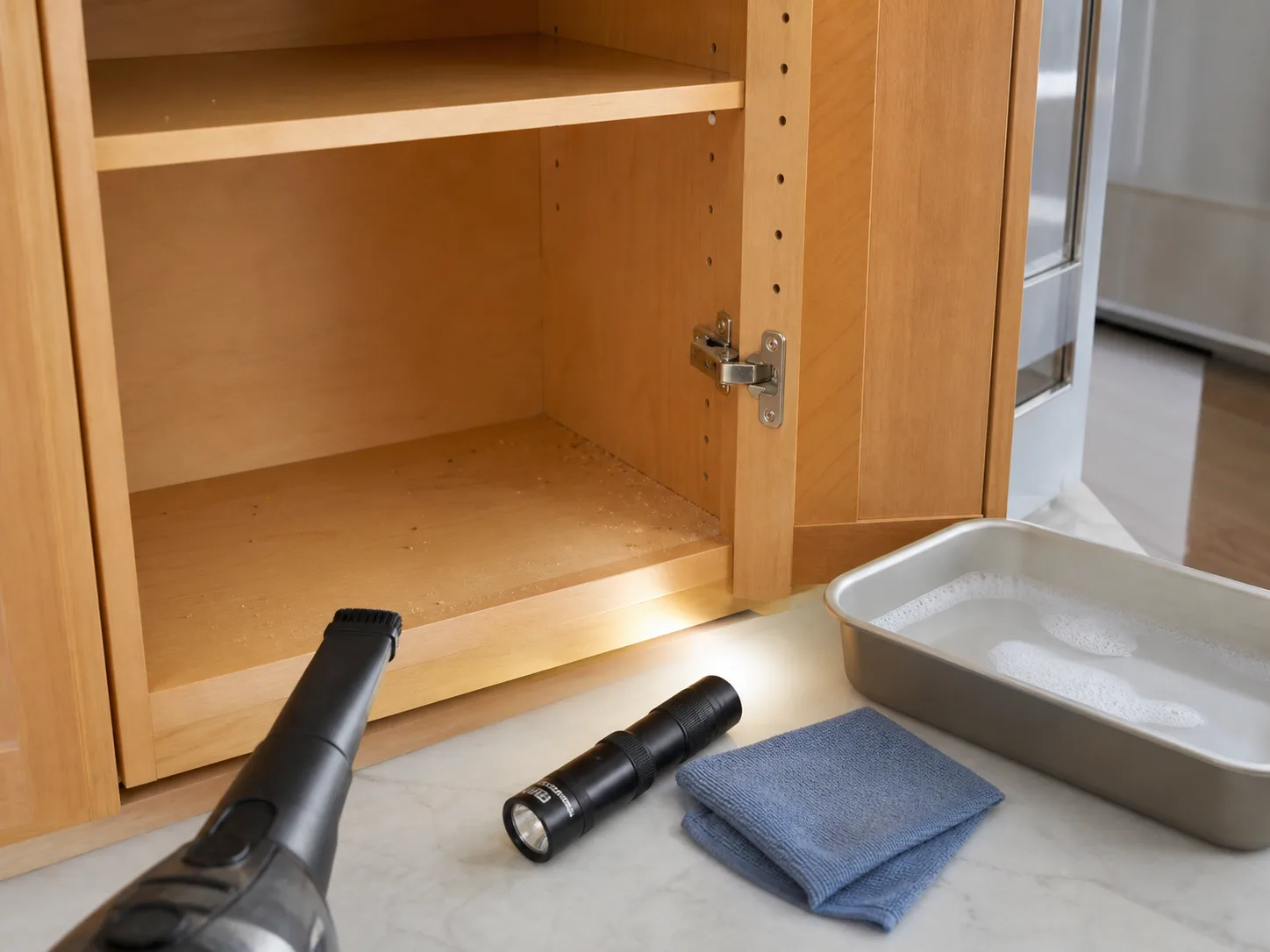
After you remove breeding material, wipe every shelf the swarm touched. For painted or laminate pantry shelves, warm water with a few drops of dish soap is enough. On unfinished wood, use a diluted vinegar solution (one part white vinegar to three parts water) to cut residue without oversaturating grain—dry immediately with a clean cloth.
Vacuum crevices where flies rested, empty the vacuum canister outside, and wash any reusable storage containers that held affected food. Do not restock the pantry until surfaces are fully dry. Moisture invites the next wave, whether fruit flies or fungus gnats.
If flies were on sealed packages, wipe the exterior or transfer dry goods to new containers. You do not need to throw away unopened pasta or canned goods unless the packaging is punctured or sticky.
When Houseplants Are the Real Source
Sometimes pantry flies are a red herring. Fungus gnats drift from a soggy peace lily in the dining room and collect near kitchen light. If traps fill slowly but you still see slender flies near plants, shift focus to potting soil.
UC IPM recommends inspecting new plants, using sterile potting mix, removing debris on soil surface, and letting the top layer dry between waterings (UC IPM houseplant problems). Brooklyn Botanic Garden’s rule of thumb: water when soil is dry to your first knuckle for most houseplants (Brooklyn Botanic Garden).
Dry-Back Watering and Yellow Sticky Traps
Move the worst plant to a brighter spot temporarily so soil dries faster. Place yellow sticky cards just above the soil line to catch adult gnats while larvae starve in drying media. If soil smells sour or roots are mushy, repot with fresh mix after trimming rotten roots.
Vinegar bowls still catch fungus gnat adults, but they will not stop eggs in soil. Until moisture drops, you are running on a treadmill.
Why Traps Alone Will Not Finish the Job
An overnight trap is a rescue move, not a maintenance plan. Adults live roughly a week; new ones emerge continuously if larvae remain in fruit slime, trash bottoms, or wet soil. Texas A&M is blunt: bait traps help monitor and reduce numbers, but eliminating the breeding site is essential for complete control (Texas A&M AgriLife Extension).
If you wake up to a full trap and zero hovering flies, you likely found the main source. If traps refill daily, you missed a secondary site—almost always trash, drains, or a plant.
Keep Pantry Gnats From Coming Back
Prevention is boring and effective:
- Store bananas and stone fruit on the counter in sight, not buried on a high pantry shelf. Eat or freeze them before they soften.
- Keep potatoes and onions in a cool, dark, ventilated spot and inspect the bag weekly.
- Take kitchen trash out when it holds fruit scraps; rinse recyclables.
- Wipe syrup and juice spills the same day.
- Fix leaky faucets and dry sponges on a rack, not in the sink bottom.
- For houseplants, water on need—not calendar—and use pots with drainage.
A single trap left permanently on the counter can act as an early-warning system: one fly in the bowl tells you something is fermenting before you see a swarm.
When to Escalate Beyond DIY
Call a licensed pest professional if you have persistent phorid flies (humpbacked, scuttling on counters) that may signal a hidden moisture leak or broken sewer line (Texas A&M AgriLife Extension). Seek help if drain cleaning and trapping fail after two weeks, or if flies appear in a commercial food-prep setting where health codes apply.
Indoor insecticide fogs can knock down adults temporarily but will not touch larvae in soil or drains, and they add chemical exposure to food areas. Reserve pyrethrin sprays for spot use after sanitation, not as a first move.
Conclusion
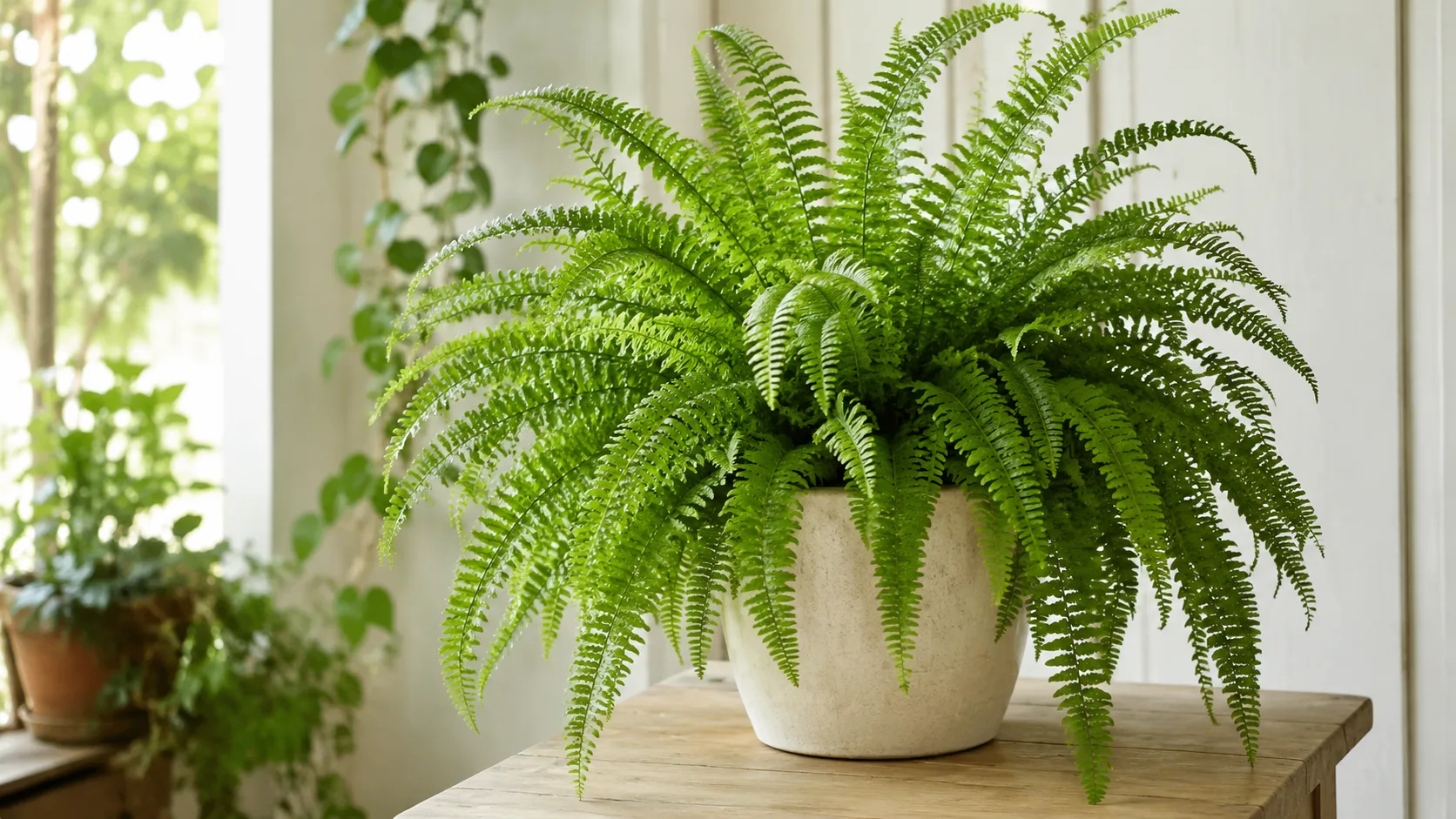
My pantry infestation ended when I paired two actions: a vinegar-and-soap trap overnight to crash the adult population, and a same-night purge of the rotting banana plus a washed trash can. Identifying the fly mattered—fruit flies needed food gone, not just poison. If your swarm returns, skip new trap recipes and hunt moisture: the wet bottom of a bin, a forgotten potato, a overwatered fern two rooms away. Fix that, and overnight relief becomes a permanent one.