How Long Do Wasps Live? Lifespans by Type and Season
Learn how long wasps live by role and species, why workers vanish in winter, and when a nest can stay versus when to call a professional.
The short answer: lifespan depends on role, species, and season
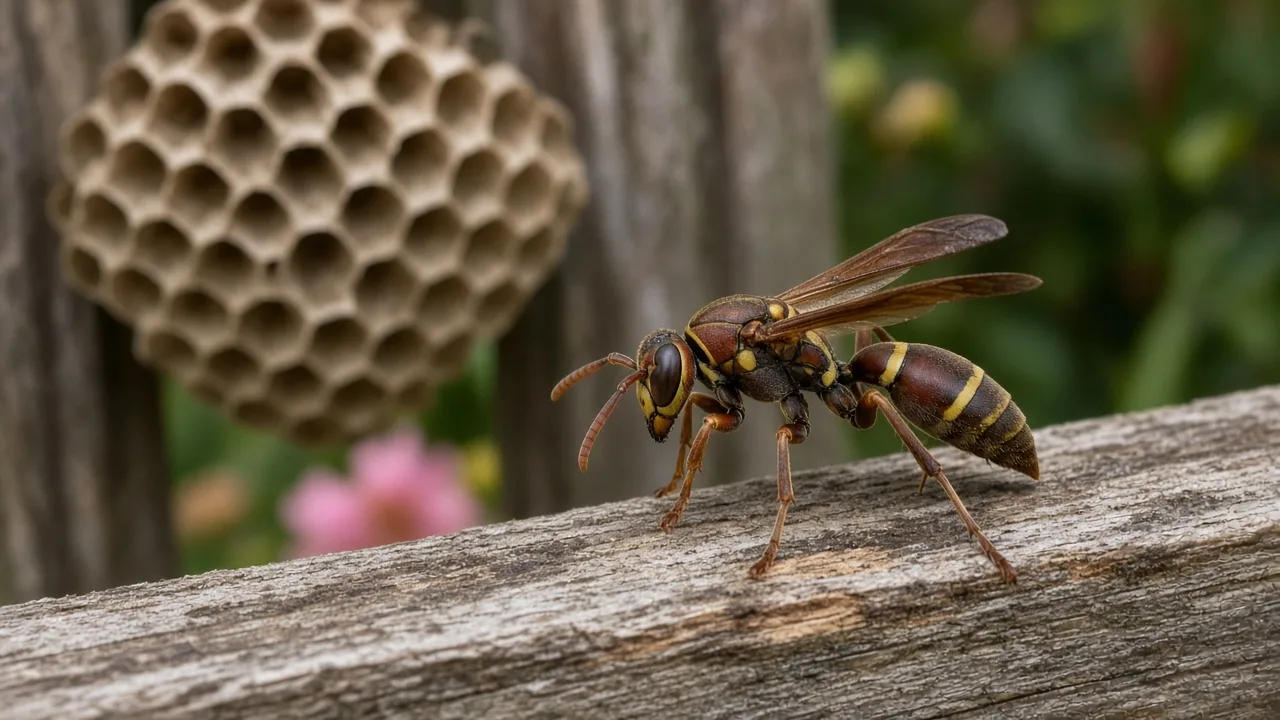
There is no single wasp lifespan. A worker yellowjacket may live only a few intense weeks, a male may survive briefly after mating, and a newly fertilized queen can pass through winter and start another colony the following spring. A solitary wasp follows a different schedule again: its adult flight may last weeks, while the developing insect remains protected in a nest cell for months.
For the social wasps most people notice around lawns, gardens, porches, and trash cans, the useful shorthand looks like this:
| Wasp or caste | Typical pattern | What that means in a yard |
|---|---|---|
| Worker yellowjacket | Often about 12–22 days as an adult | Many workers come and go, so replacing individuals keeps the colony active |
| Worker paper wasp or hornet | Usually measured in weeks, with species and conditions affecting the range | The nest can remain active for a season even though no worker is there for the entire season |
| Male, or drone | A few weeks, often ending soon after mating | Males appear late in the colony cycle and do not forage or raise young |
| Fertilized queen | Commonly survives the winter and may live about a year | One queen can outlast every worker in the colony and found the next nest |
| Solitary wasp adult | Often a few weeks | There is no large colony to defend; the long part of the life cycle is usually immature development |
These are working ranges, not guarantees. Temperature, food, predators, species, and whether the nest is annual or in a warm climate all matter. The roughly 12–22-day worker estimate is a useful benchmark for common social wasps, not a rule that every species follows. (Biology Insights) Penn State Extension describes the familiar social wasps as a group with different nesting and seasonal patterns, while Utah State University Extension summarizes the yellowjacket pattern plainly: the colony dies in fall and fertilized queens overwinter to begin again. (Penn State Extension; Utah State University Extension)
The biggest mistake is to look at a living nest and assume the same wasp has been flying around since spring. It is usually a succession of short-lived workers, produced by a queen whose longer life is the reason the colony keeps replacing them.
Why there is no single “wasp lifespan”
“Wasp” describes an enormous group of insects rather than one species. The social wasps that make paper nests are only a small portion of that group; many other wasps live alone, provision individual nest cells, or parasitize other insects without building a colony at all.
Solitary wasps and social wasps live on different clocks
Social yellowjackets, paper wasps, and hornets divide work among castes. A queen lays eggs, sterile female workers forage and care for larvae, and males appear later to mate with new queens. Their colony is an organized seasonal project, so the lifespan of an individual is less important than the timing of the whole nest.
Solitary wasps do not have workers, a queen-led workforce, or a nest full of siblings that must be defended. A female may dig a tunnel or use a small cavity, place a paralyzed caterpillar or other prey inside a cell, lay an egg, and leave. The larva develops on that stored food, sometimes remains dormant through cold weather, and emerges later as an adult. For a solitary species, “how long does it live?” often means asking separately about its immature stage and its short adult flying season.
That distinction changes how you interpret a wasp in a flower bed. A single slender wasp visiting nectar is not evidence that a large defensive colony is nearby. Penn State Extension notes that many wasps are predators of caterpillars, aphids, and flies, and that flower-visiting species can contribute to pollination as well as pest control. (Penn State Extension)
Worker, male, and queen are not interchangeable
An adult worker is a sterile female built for activity rather than longevity. She feeds larvae, gathers protein or nectar, maintains the nest, and may defend it. A male’s job is narrower: he contributes genetic material and does not raise the brood. A queen’s job is to survive long enough to lay eggs and, in an annual colony, get the next generation started.
This is why a worker’s death does not end a nest. The colony keeps functioning as long as the queen is alive and producing replacement workers. Conversely, killing or trapping a few workers around a patio does not remove the source of the traffic; it only removes a handful of short-lived foragers while the colony continues its work elsewhere.
Yellowjackets: a few intense weeks for workers
When people ask about a wasp that lands on a sandwich, hovers around a soda can, or rises from a hole in the lawn, they are often describing a yellowjacket. Yellowjackets are compact social wasps in the genera Vespula and related groups. Depending on the species, they may nest in an abandoned rodent burrow, a wall void, a hollow space, or an aerial location that resembles a protected cavity.
The seasonal sequence is more important than a single number. An overwintered queen emerges in spring, chews plant fibers into paper, lays the first eggs, and feeds the first larvae. Once those daughters mature as workers, they expand the nest, forage, and feed later broods while the queen stays inside laying eggs. Orkin’s lifecycle overview describes this same handoff from founding queen to sterile workers and then to reproductive males and females in fall. (Orkin)
Individual yellowjacket workers are commonly estimated to live around 12–22 days after emerging. That short span is not a weakness for the colony; it is built into the system. The nest continually produces new workers, so a colony can grow for months even though any one worker is measured in days or weeks.
In Pennsylvania, Penn State Extension reports that eastern yellowjacket queens begin developing nests around May or early June, the first workers appear in June, and males and new queens are produced in August and September. The exact calendar shifts with spring temperatures and region, but the pattern is useful: a small spring nest can become a much larger late-summer problem without any individual worker becoming old. (Penn State Extension)
Yellowjackets also change what they seek. While larvae need insect prey or other protein, adults increasingly visit sweet drinks, ripe fruit, garbage, and picnic food as the season moves toward fall. That food shift explains why a yard can feel calm in June and suddenly hostile near the grill in August, even though the nest’s basic biology has not changed.
Paper wasps: smaller colonies, a similar annual rhythm
Paper wasps usually make the nest that is easiest to recognize: an open, umbrella-shaped comb with exposed hexagonal cells under an eave, deck rail, porch ceiling, or shed overhang. They are slender, long-legged wasps, and their nests are often smaller than the enclosed paper structures built by hornets and some yellowjackets.
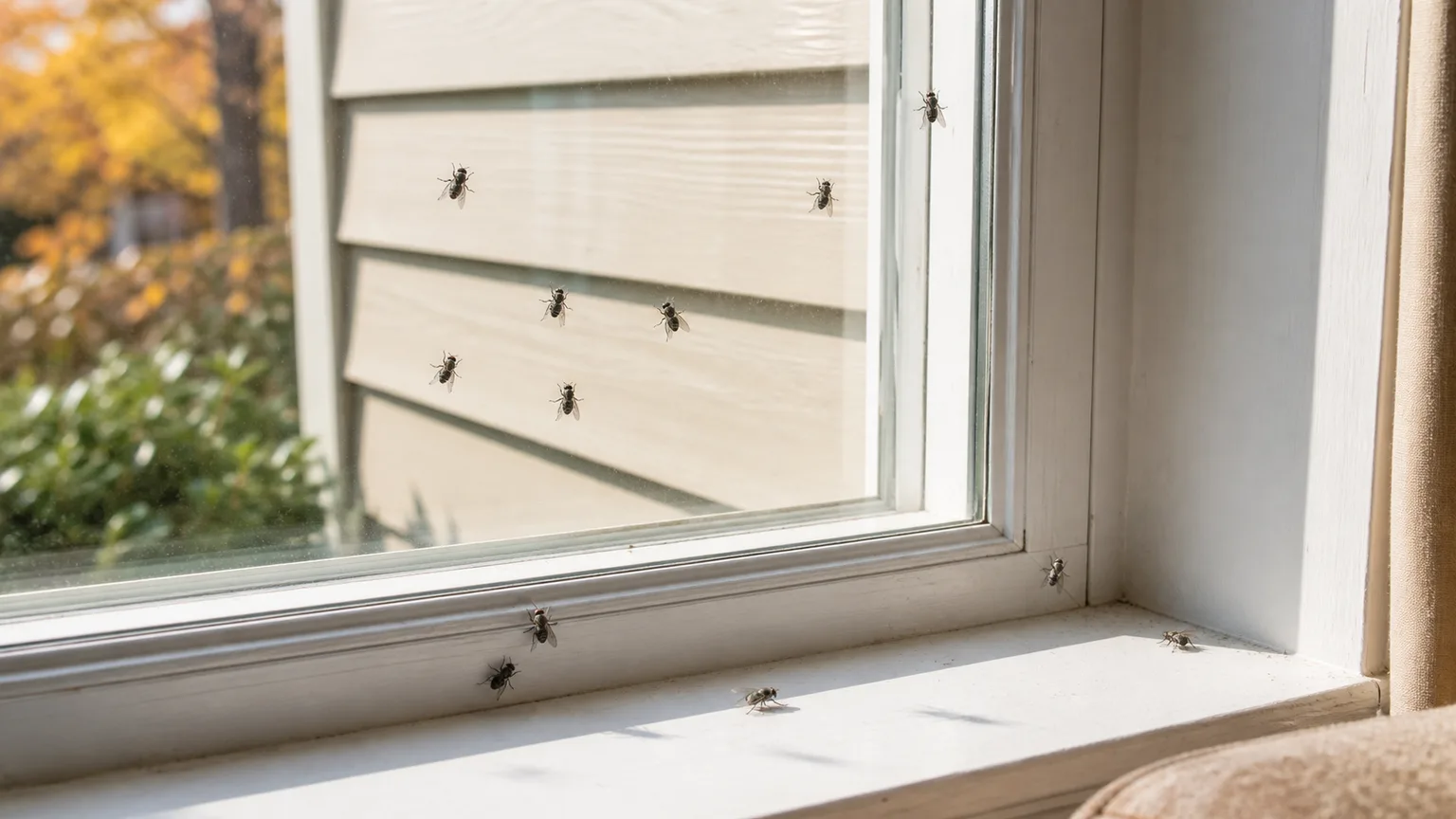
Several queens may participate at the beginning of a nest, but one eventually becomes dominant and lays most of the eggs. The remaining adults function as workers. As the colony develops, those workers forage for caterpillars and other insects to feed larvae, gather nectar for themselves, and maintain the comb. Paper wasps are therefore useful garden predators, but a nest directly over a doorway is still a real sting risk because the nest is close to a person’s hands and face.
The colony’s lifespan is usually seasonal rather than perennial. New queens survive the cold season in protected places, while the old nest and its workers are abandoned. Penn State Extension describes paper-wasp reproduction as ending in late summer in its regional guidance, with few remaining adults by the end of September in Pennsylvania; warmer or cooler regions will not match that date exactly. (Penn State Extension)
Do not assume a small open comb is automatically safe to remove. Nest size, species, time of year, location, and the household’s sting sensitivity matter more than the comb’s appearance. A tiny early-season nest under a remote shed roof is a different problem from a mature nest at eye level beside a frequently used door.
European hornets: a one-season colony with a wintering queen
European hornets are true hornets in the genus Vespa, unlike bald-faced hornets, which are yellowjacket relatives despite their common name. They are larger and heavier-bodied than many paper wasps and yellowjackets, and they may nest in hollow trees, wall voids, attics, or other cavities. Their ability to fly at dusk and around lights can make them seem more mysterious than they are.
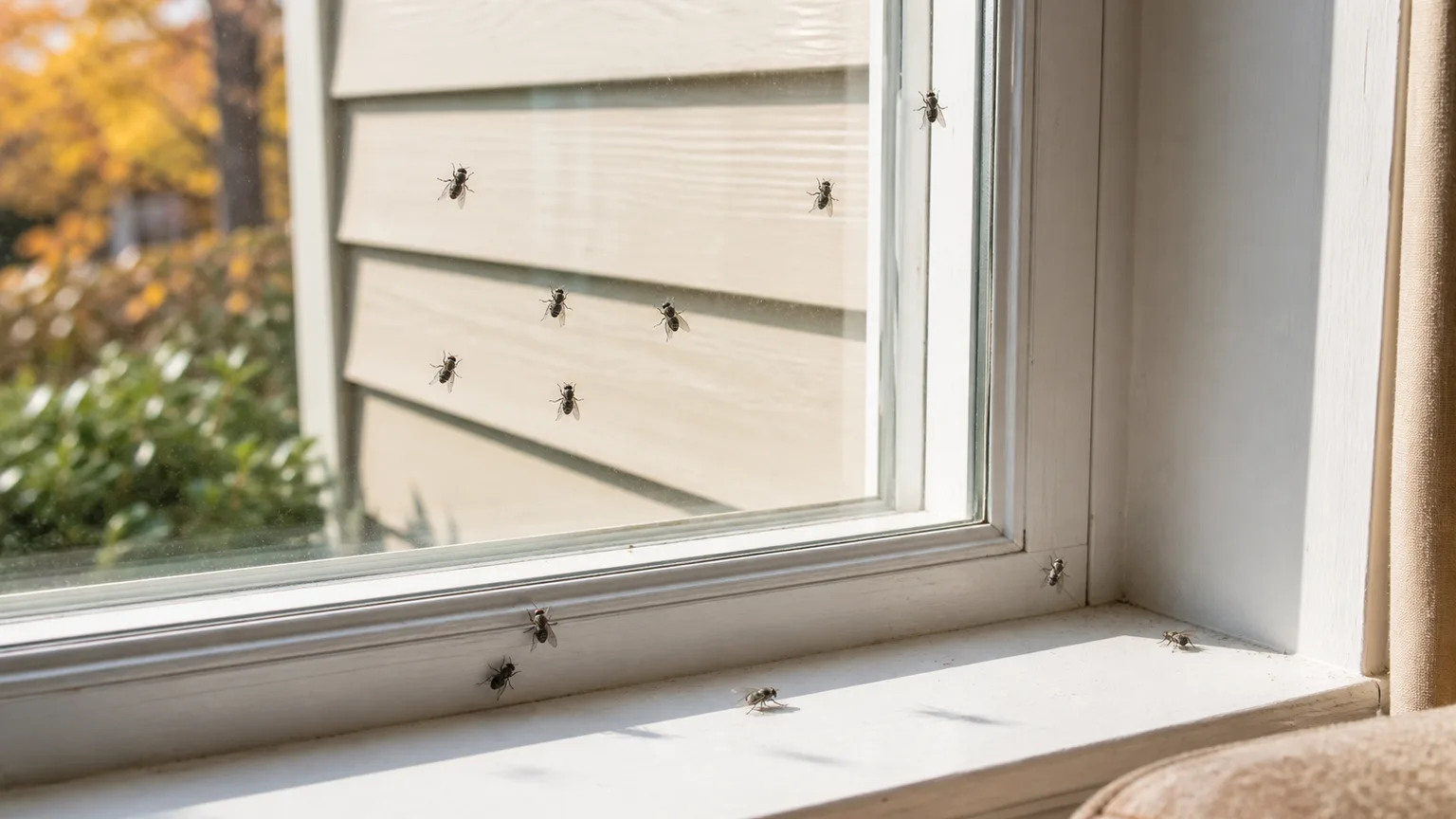
The colony pattern still follows the annual social-wasp model. A queen emerges from winter shelter, starts a nest, raises the first sterile daughters, and then relies on those workers to forage, maintain the nest, and care for later brood. Near the end of the season, the colony produces males and new queens. Males die after their reproductive role, old workers decline, and newly fertilized queens seek protected overwintering sites.
The nest may be visible for longer than the insect you noticed, but that does not mean a European hornet lives for several years. The colony is the long-lived unit; most adults are not. A cavity nest can also be hard to assess from outside, which is one reason a suspected wall or attic nest should not be opened, blocked, or sprayed casually.
The life cycle from egg to adult
The adult wasp is only one stage in a sequence. In a social nest, the queen places an egg in a paper cell. The egg hatches into a larva, which is fed by workers with insect prey, scavenged protein, or other food appropriate to the species. The larva grows, becomes a pupa, and then emerges as an adult with a caste-specific job.
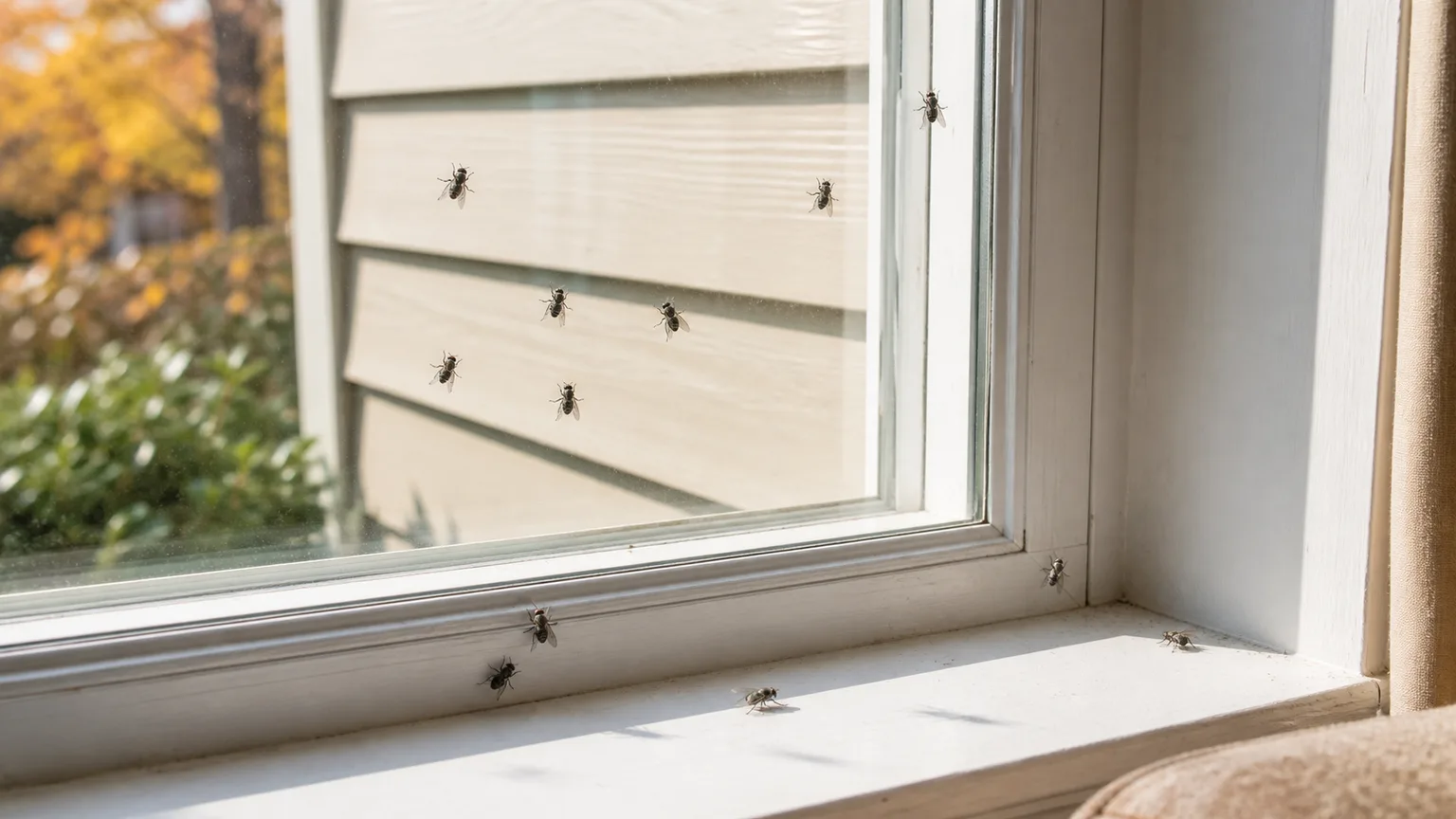
For workers, that job starts immediately. They may clean cells, feed larvae, enlarge the nest, guard the entrance, or forage. Their short adult lifespan is a period of high output, not a slow retirement. For males, adulthood is later and more specialized. For new queens, the key transition is mating and surviving the season’s collapse.
This is also why “the nest is still active” does not answer “how old is the wasp?” The nest contains eggs, larvae, pupae, newly emerged workers, older foragers, and possibly reproductive adults at the same time. The colony is a moving population, not a household of insects that all hatched together.
What winter actually does to a wasp colony
In regions with a real freeze, winter ends the annual colony’s working phase. Workers and males generally do not survive prolonged cold, and the old queen also dies. The newly fertilized queens are the exception: they enter a protected resting state in bark, leaf litter, hollow wood, rock crevices, or human structures and emerge when conditions support nest founding.
Utah State University Extension summarizes the pattern for western yellowjackets as “colony dies off every fall; fertilized queens overwinter,” while Penn State Extension describes overwintered queens returning to protected locations and beginning new nests in spring. The old paper nest is not normally a reusable apartment for next year’s colony, although a new queen may select a nearby cavity that offers similar shelter. (Utah State University Extension; Penn State Extension)
Warm climates can blur that rule. Where freezing conditions are brief or absent, some yellowjacket colonies can persist longer and become much larger than the familiar annual pattern. That is why advice based on one region’s first frost should be treated as a timing clue, not a universal deadline.
What shortens a wasp’s life
Cold weather is only one cause of death. A foraging wasp can be eaten by birds, lizards, frogs, spiders, dragonflies, mantises, or other insects. It can be injured while hunting, lose access to nectar or prey, or be killed by a pesticide application. A colony can also fail if the founding queen dies before enough workers are raised.
Weather changes the odds rather than acting like a switch. A hot, dry spell can reduce flowers and insect prey; heavy rain can interrupt foraging; an early freeze can end flight abruptly. In a protected wall void, adults may remain active later than those in an exposed ground nest, but the presence of shelter does not make every colony permanent.
Food shortage creates an important late-season effect. As larvae mature and demand for protein decreases, adults spend more time seeking carbohydrates for themselves. That brings them into closer contact with people, drinks, garbage, and fallen fruit, which makes normal seasonal behavior feel like an explosion of wasps.
Why wasps seem worse at the end of summer
Late summer combines three things: the colony is near its largest size, more reproductive adults are being produced, and yellowjackets are increasingly motivated by sugary food. At the same time, the nest may have less brood requiring constant hunting, so the workers you notice are more likely to be inspecting a patio than disappearing into the garden with a caterpillar.
Gardens Illustrated’s entomology guide describes social wasps as becoming bothersome late in the season when fewer larvae need feeding, while the adults still need energy. That is a better explanation than “wasps suddenly become mean.” Their priorities have shifted, and a crowded colony has more foragers reaching the same outdoor spaces. (Gardens Illustrated)
You can reduce the conflict without trying to sterilize the garden. Keep garbage and recycling covered, rinse sweet drink containers, pick up fallen fruit, wipe grill grease, and keep outdoor food covered. Farmers’ Almanac also recommends placing traps well away from seating and not sealing a structure opening while wasps are still using it; those are practical distance and timing rules, not promises that a scent or trap will erase an established colony. (Farmers’ Almanac)
Leave, deter, or remove? Use the nest’s risk, not its presence
The most useful question is not “Are wasps good or bad?” It is “Where is the nest, how defensive is the species, and who has to pass it?” Wasps can be valuable predators and occasional pollinators, yet a defensive colony next to a doorway can be an unreasonable risk even in a wildlife-friendly yard.
When leaving the nest alone is reasonable
Leaving a nest alone is often sensible when it is small or clearly out of the way, there is no regular foot traffic below it, no one in the household has a known sting allergy, and the species is not acting defensively away from the nest. A paper-wasp comb high under a remote shed roof is usually a different decision from a yellowjacket hole beneath the path to the mailbox.
Give any active nest space. Do not poke it, mow over a suspected ground entrance, shake the branch holding it, or use a ladder to inspect it closely. Mark the area from a safe distance and make your household’s route around it until the colony’s seasonal activity declines.
Tolerance also has a garden benefit. Penn State Extension and horticulture publications describe social wasps as hunters of caterpillars, aphids, flies, and other insects, and some adults visit flowers for nectar. The practical goal is selective tolerance: keep low-risk colonies in low-traffic places while managing genuine conflicts.
When removal deserves professional help
Call a qualified pest professional when a nest is inside a wall, attic, chimney, soffit, crawl space, or other enclosed structure; when it is large, high, hidden, or attached to a busy entrance; when yellowjackets are emerging from a lawn area that must be mowed; or when anyone nearby has a known or suspected sting allergy. University of Maine Cooperative Extension specifically advises that nests should not be disturbed unless they pose a risk, that larger established nests may require treatment, and that hidden entrances should not be plugged while the nest is active. (University of Maine Cooperative Extension)
Do not pour gasoline, burn a nest, flood a wall, or improvise a chemical mixture. Do not stand beneath an active aerial nest and spray it from a ladder. Even a nest that is near the end of its season can contain defensive adults, and the risk of a sting is a property-and-health question rather than a race against the calendar.
Reduce conflict without erasing the garden’s helpful wasps
Start with habitat and housekeeping. Seal trash cans, rinse recycling, remove fallen fruit, keep pet food indoors, clean spills, and cover sweet drinks. These changes remove the food cues that make late-season yellowjackets seem determined to patrol one table.
Next, inspect buildings in late winter or early spring, before a queen has committed to a nest site. Repair screens, close unused gaps, and address cracks around eaves and utility penetrations. If you observe an active entrance, leave it open until the colony is safely handled; blocking it can force insects into a wall cavity or into the interior of a building.
Plants and flowers do not create a simple “wasp-free” zone. Fragrant herbs or essential oils may change activity around a surface for a short time, but they do not replace sanitation or solve a nest. A better garden strategy is to keep flowering habitat and beneficial insects in the beds, then separate outdoor meals, trash, and high-traffic areas from the places where wasps are welcome.
If you use a trap for yellowjackets, put it at the property edge and far from doors, play areas, pets, and dining tables. Traps can reduce foraging pressure in a particular area, but they are not a substitute for identifying a nest or calling a professional when a colony is inside a structure.
Common myths and mistakes about wasp lifespan
Myth: every wasp lives only one day. A wasp may appear briefly at a flower, but that is not its complete adult life. Many social workers live weeks, while solitary wasps may spend much longer developing before emerging.
Myth: a wasp nest is one insect’s home for years. Most familiar social wasp colonies in temperate regions are annual. The nest may remain visible after activity stops, but the next year’s queen generally starts a new colony rather than simply moving back into the old one.
Myth: killing visible workers ends the nest. The queen and brood remain. Removing a few foragers can make a small area feel quieter for a moment, but it does not solve the colony’s source and can bring you closer to an active nest.
Mistake: using winter as a guaranteed removal date. Cold may end the colony’s active phase, but climate, shelter, and species change the timing. A wall void or warm region can behave differently from an exposed ground nest, and a spring queen may return to the same kind of cavity even if the old paper is gone.
Mistake: treating all wasps as equally dangerous or equally harmless. An adult visiting a flower is not the same risk as a yellowjacket nest under a mower path. Use the combination of species clues, nest location, traffic, defensive behavior, and household health needs to decide what happens next.
Conclusion
Most wasps do not live as long as the nest makes it seem. Workers and males are short-lived adults, often measured in weeks; queens can outlast them by overwintering and founding the next generation; and solitary species spend much of their life cycle developing alone rather than flying around in a colony.
That distinction makes the practical answer clearer. Leave a low-risk nest in a quiet part of the garden when you can, reduce food cues around patios and trash, inspect and repair likely nest sites before spring, and bring in a professional for hidden, large, high-traffic, or medically risky colonies. A wasp nest is not automatically an emergency—but its location and the people nearby matter more than the insect’s reputation.



