How to Grow and Care for Hollyhocks (Alcea)
Grow hollyhocks (Alcea) from seed with zone timing, spacing, rust prevention, named cultivars, and a first-season checklist for cottage-garden borders.
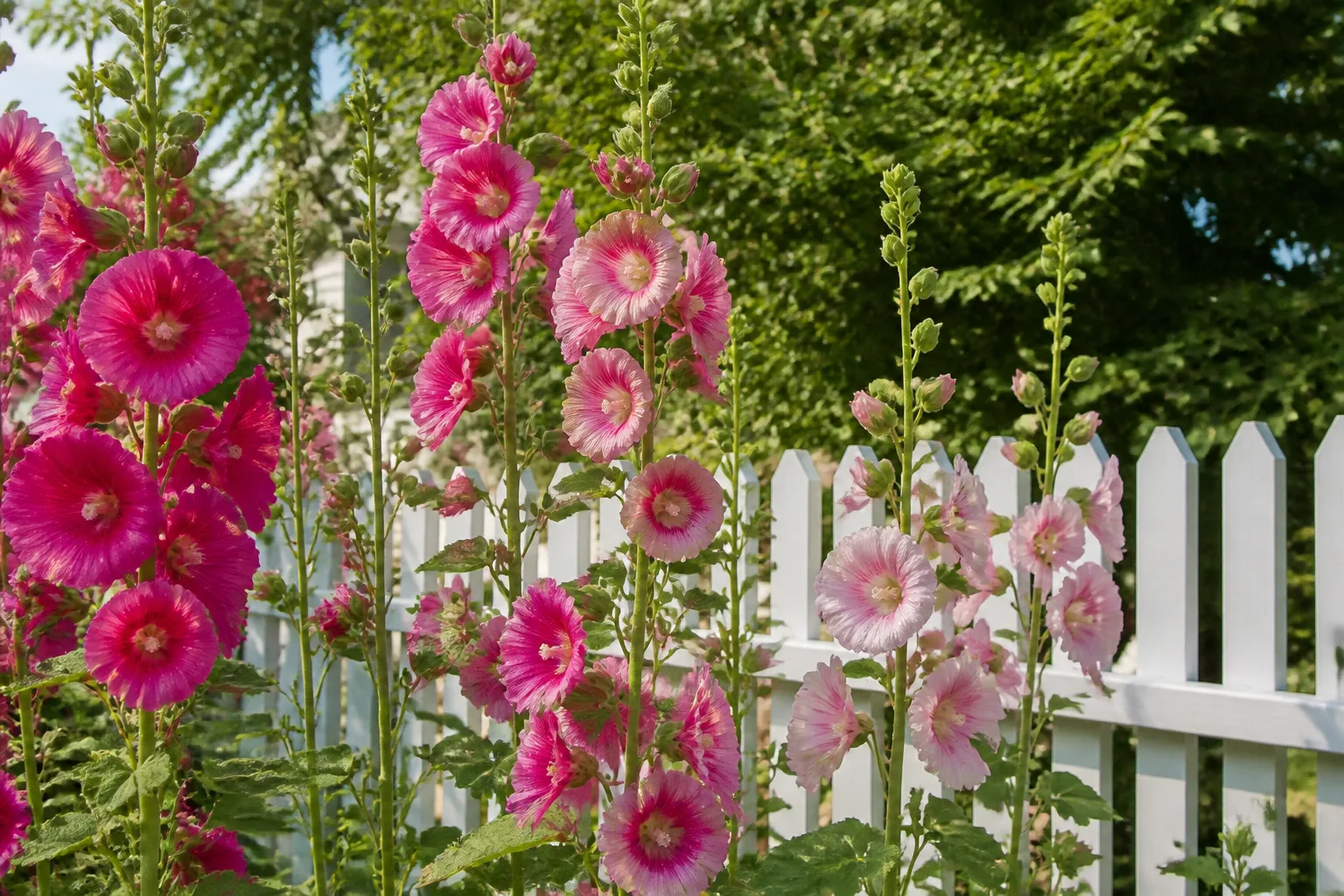
Hollyhocks turn a flat border vertical. A healthy Alcea stand can send spikes 5 to 8 feet high, opening cup-shaped flowers from the bottom of each stem upward while basal leaves stay low. That drama makes them a natural fit for the back of a cottage garden or along a fence—but height and Malvaceae genetics also mean rust, wind, and spacing mistakes show up fast.
Written by Sai Ananth and reviewed by the LeafyPixels Review Board. Recommendations were checked against NC State Extension, Wisconsin and Connecticut rust guidance, the RHS hollyhock growing guide, and Harvest to Table’s cultivar notes (September 2026). This is an outdoor cottage-border guide for gardeners along fences, back borders, or tall containers. Fungicide names, rates, and re-entry instructions are intentionally left to the current local label rather than copied from an older regional factsheet.
Know the hollyhock life cycle first
Hollyhock is a common name for several Alcea species and hybrids, with Alcea rosea the familiar garden form in the mallow family (Malvaceae). NC State Extension describes it as a biennial to short-lived perennial that readily reseeds, grows 5 to 8 feet tall and 1 to 2 feet wide in full sun, and lists rust, leaf spot, slugs, Japanese beetles, spider mites, and hollyhock weevil among its main problems. NC State Extension Plant Toolbox
Biennial rhythm and short-lived perennials
Most traditional hollyhocks spend year one as a leafy basal rosette, building roots and storing energy. Flowers usually appear in year two, after which that individual crown often declines. Some seed strains—especially those marketed for first-year bloom—can flower sooner when started early under cover, and a few plants behave as short-lived perennials in mild climates. The label on your seed packet matters more than a generic “biennial” promise.
Self-seeding and stand renewal
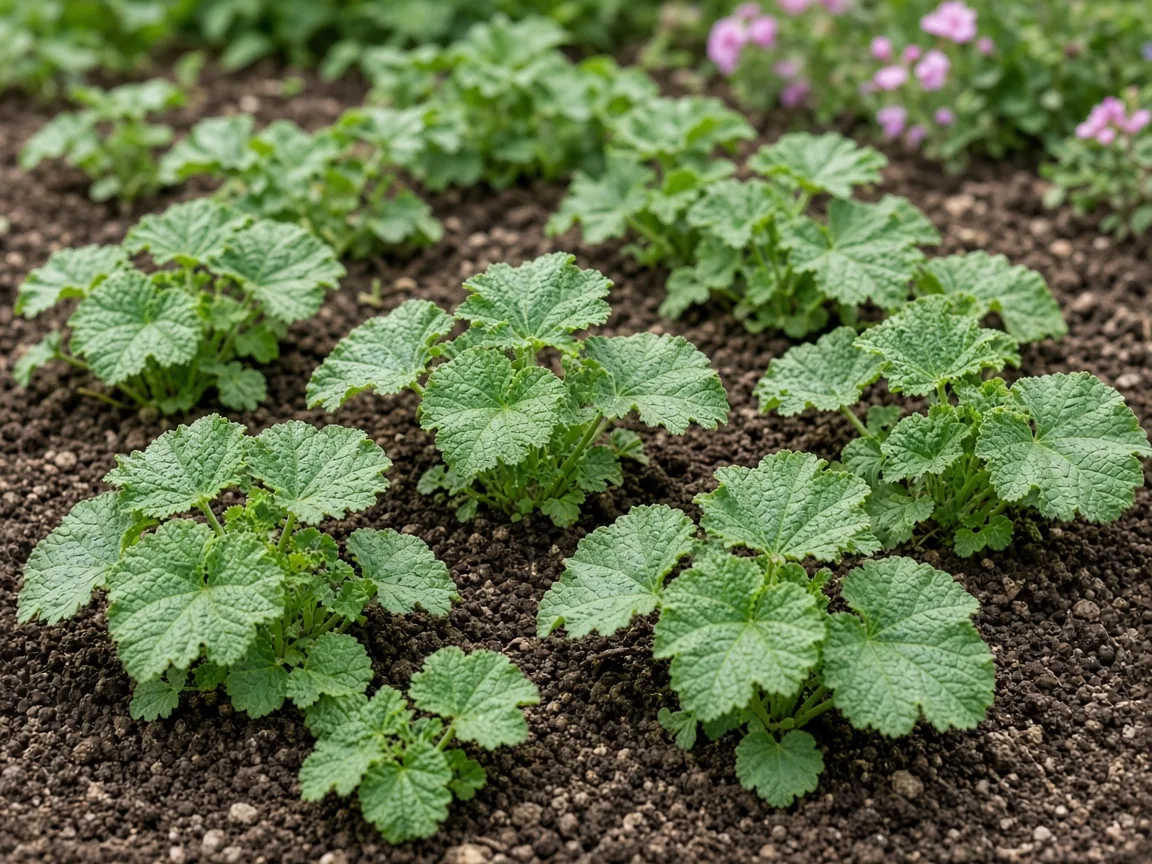
A hollyhock patch can look permanent even when each plant is not. Mature flowers form round seed capsules; seed drops, volunteers appear, and the display continues through self-seeding flowers rather than the same crown returning forever. Let a few spikes go to seed if you want that rhythm; deadhead the rest if you want fewer volunteers. Thin seedlings while small—hollyhocks develop a strong taproot and resent late moves.
Hollyhocks at a glance
| Trait | Typical garden hollyhock (Alcea rosea) |
|---|---|
| Height | 5–8 ft flower spikes; some compact cultivars shorter |
| Spread | About 1–2 ft per plant at the base |
| Sun | Full sun (6+ hours); light afternoon shade only in hot climates |
| Soil | Average to rich, well-drained; pH roughly 6.0–8.0 |
| Hardiness | NC State lists USDA zones 5a–9b; timing shifts by region |
| Bloom | Often June–August; flowers open bottom to top on each spike |
| Life cycle | Biennial or short-lived perennial; stand renews by seed |
| Main disease | Hollyhock rust (Puccinia malvacearum) |
Choose a site that prevents the biggest failures
Plant in full sun for the stiffest stems and heaviest bloom. Deep shade produces stretched, weak growth that leans toward light. In very hot regions, light afternoon shade can reduce leaf scorch, but it is a compromise—not a substitute for sun if you want tall spikes.
Sun, shelter, airflow, and spacing
Use this filter before you dig:
- Light: Six or more hours of direct sun through the flowering season.
- Shelter: A fence or wall behind the row, not a wind tunnel in front of it.
- Drainage: Moist roots after rain, but no standing water at the crown.
- Airflow: Enough room to walk between plants and inspect leaf undersides.
Space plants 18 to 24 inches apart (30–60 cm). NC State’s planting-space guidance allows roughly 12 inches to 3 feet depending on cultivar vigor; the RHS recommends about 60 cm (24 in) between plants. NC State Extension Plant Toolbox RHS hollyhock growing guide Tighter spacing looks full in spring and becomes a humid canopy by midsummer—exactly what rust favors.
| Your condition | Likely outcome by late summer |
|---|---|
| Full sun, 24 in spacing, base watering, mallow weeds removed | Strong stems; rust may appear on lowest leaves but stays manageable |
| Part shade, 12 in spacing, overhead evening sprinklers | Weak lean; rust climbs the stem quickly in humid weather |
| Sheltered south wall, compost mulch, morning inspections | Tall bloom; occasional lower-leaf removal keeps display presentable |
| Humid Gulf/Southeast summer, dense row, infected debris left on soil | Widespread defoliation; stand may need replacement next year |
Leave a small gap between the crown and a solid wall so rain and air can reach the base. For windy sites, see plants that need stakes and install supports early—before spikes load with wet flowers.
Prepare soil and plant correctly
Hollyhocks tolerate clay, loam, and sand when drainage is good. Work finished compost into thin or compacted beds rather than burying the crown in a soggy pocket of rich organic matter inside heavy clay. A light mulch reduces splash onto leaves; keep mulch a few inches away from the stem.
Set nursery plants at the same depth they grew in the pot and water in thoroughly. Disturb the root ball as little as possible. If you must move a self-sown seedling, do it at the two-to-four-leaf stage and lift as much root as you can—established taproots do not forgive casual transplanting.
Water, mulch, and feed for sturdy growth
Young plants need steadier moisture than established ones. The RHS suggests keeping the top 15 cm (6 in) of soil damp while roots establish. RHS hollyhock growing guide Water slowly at the base in the morning so foliage dries; evening overhead sprinkling extends leaf wetness and favors rust.
Once rooted, hollyhocks tolerate short dry spells, but drought during rapid stem elongation shrinks flowers and wilts lower leaves. In fertile garden soil, a spring compost mulch is often enough. Avoid repeated high-nitrogen feeds that produce soft, leafy growth—dense foliage holds humidity against the stem and invites disease.
Grow hollyhocks from seed
Seed is the most economical way to fill a fence line and replace short-lived plants. Check the packet: some strains are bred for first-year flowers; traditional types usually bloom in year two.
Direct sowing versus indoor starting
Direct sow after the soil warms in late spring or early summer. Cover seed lightly (about ¼ in), keep the surface evenly moist, and thin early so each rosette has space. Direct-sown plants commonly flower the following year—acceptable if you are planning a permanent row rather than instant color.
Indoor starting suits cold-winter regions and first-year-flowering cultivars. Sow one seed per cell in bright light at roughly 60–70°F; germination often takes 9–14 days. Harvest to Table recommends starting indoors in zones 3–8 about two to four weeks before the last frost, then setting plants out a week or two after that frost passes. Harvest to Table hollyhock guide Harden off for about a week before planting out. Starting too early yields oversized, root-bound plants that are harder to establish than patient spring sowings.
Zone and sowing timing
| Climate band | Practical sowing approach |
|---|---|
| Zones 3–8 (cold winters) | Start indoors late winter to early spring for controlled rosettes; or direct-sow after soil warms for bloom next year |
| Zones 9–11 (mild winters) | Fall sowing or transplanting can produce spring bloom; expect heat and humidity to intensify rust pressure |
| Any zone, first-year bloom cultivars | Start ‘Summer Carnival’ or similar strains early under cover; follow packet dates, not generic “plant in May” advice |
Autumn-sown seedlings in cold climates can overwinter in a cold frame where winters are severe, then plant out when growth resumes.
Stake tall spikes before wind wins
Sheltered beds may need no support, but a 6-foot spike with rain-soaked double flowers is a sail. Place a bamboo cane or slender stake beside the stem while it is still young and tie with soft loops that allow thickening. For a row, a discreet twine line on rear stakes can support multiple stems without strangling them. Install support before the first storm, not after a lean becomes a snap.
Keep hollyhocks blooming
Flowers open progressively up the raceme for weeks. Remove spent blooms if you want fewer seeds and slightly tidier plants—see how often to deadhead perennials for the general rhythm, remembering hollyhocks are not heavy rebloomers like some annuals. Leave one or two spikes to brown and dry if you want seed; cut the rest when color fades.
Single-flower forms expose stamens and tend to draw bees and butterflies; doubles are showier but heavier and less accessible to pollinators. NC State notes wildlife value for bees, butterflies, and hummingbirds—another reason singles pair well with a hummingbird-friendly border. NC State Extension Plant Toolbox
Hollyhock rust: ID, prevention, and escalation
Hollyhock rust is the defining disease. Current extension references identify the pathogen as Puccinia malvacearum, also treated under the revised name Leptopuccinia malvacearum. Initial symptoms are yellow to orange spots on upper leaf surfaces; brown pustules develop beneath, and severe infections leave leaves ragged, shriveled, or bare along the lower stem while the spike may continue blooming for a time. Wisconsin Horticulture’s hollyhock-rust factsheet and the Connecticut agricultural extension profile provide the current symptom and host references.
Wisconsin Horticulture’s updated factsheet lists the fungus as Leptopuccinia malvacearum—same disease, revised taxonomy—and notes warm, humid weather accelerates spread by wind, splashing rain, and irrigation. Wisconsin Horticulture — Hollyhock Rust
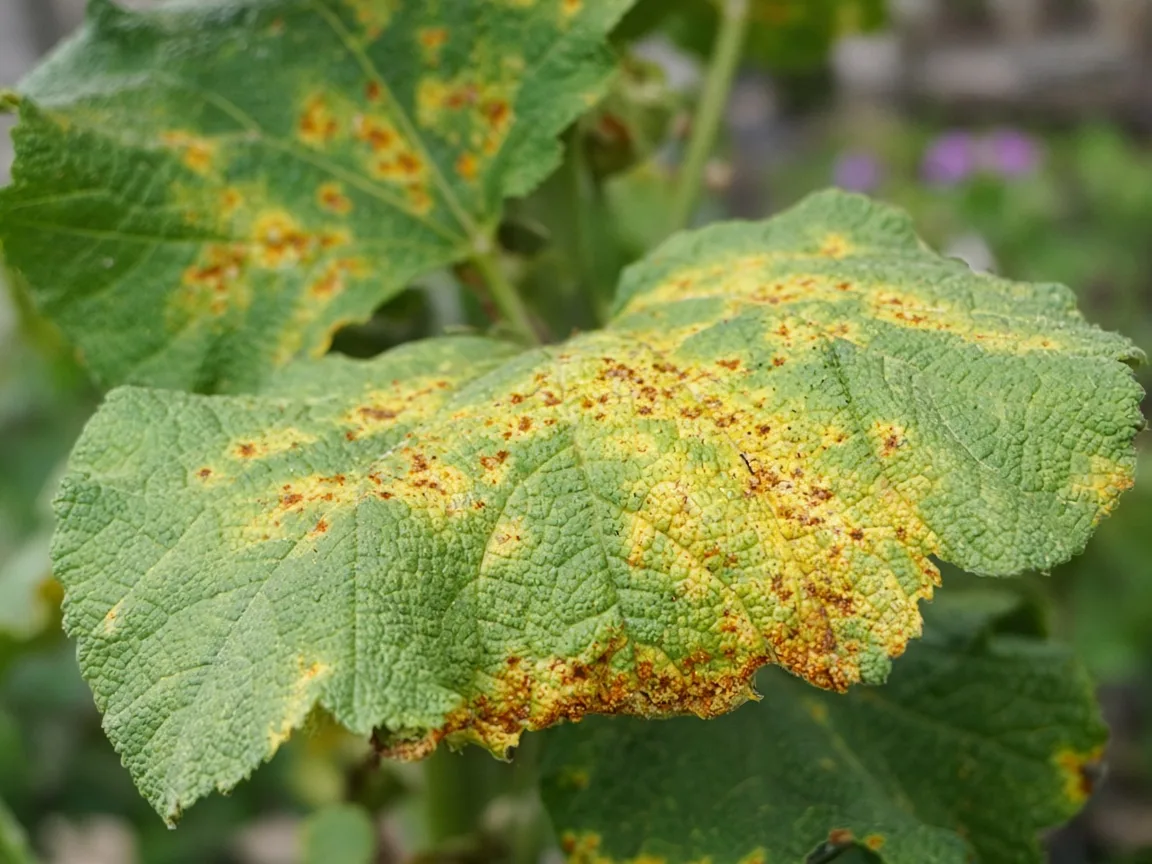
Prevention beats rescue: wide spacing, morning base watering, prompt removal of infected lower leaves, and thorough end-of-season cleanup. Do not compost heavily infected foliage in a cool backyard pile; bag or bury debris where local rules allow. Wisconsin also warns against saving seed from rusted plants and recommends inspecting transplants before purchase.
Humid climates, mallow hosts, and fungicides
In dry summers, rust may stay on the lowest leaves you can strip away. In humid regions—Gulf Coast, Southeast, and Midwest summers with warm nights—spots appear earlier, pustules release spores faster, and defoliation can reach the mid-stem by July. Treat that as season-long management: widen spacing, favor singles over heavy doubles, and plan to replace the worst plants after bloom.
Puccinia malvacearum also infects other Malvaceae hosts. Remove nearby mallow weeds when you can identify them confidently, but do not treat every plant in the family as a confirmed source without a diagnosis. Wisconsin Extension recommends sanitation and host removal as part of management. Wisconsin Horticulture’s hollyhock-rust factsheet
If only a few lower leaves show spots, remove them and improve airflow. When rust is widespread or the bed has failed several seasons despite cleanup, remove the worst plants after flowering and consider labeled fungicides as a follow-up—not a substitute for spacing and sanitation.
Wisconsin Extension advises that fungicides work best preventively or very early, but the product options and legal labels change by country, state, crop, and formulation. If you use one, choose only a product whose current label includes ornamental hollyhock or the applicable ornamental use, follow its interval and protective-equipment instructions, and do not mix or alternate products unless the label and local guidance allow it. Wisconsin Horticulture’s hollyhock-rust factsheet No spray program overrides a crowded, constantly wet planting.
Pests and other leaf problems
Slugs and snails shred young leaves—check at dusk and protect seedlings. Japanese beetles may skeletonize foliage and flowers; hand-pick or use targeted controls rather than broad sprays that harm pollinators. Spider mites cause stippling during hot, dry weather; a firm water rinse on leaf undersides can help before chemicals. NC State also lists hollyhock weevil among insect problems on A. rosea; identify the pest before treating. NC State Extension Plant Toolbox
Yellow leaves are not one diagnosis. Wet soil and root stress yellow older leaves evenly; drought wilts and crisps edges; heat curls foliage when soil is dry; rust pairs yellow upper spots with orange-brown pustules below. Match the pattern before you change watering.
Cultivars worth trying
Choose structure before color. Five reliable starting points:
| Cultivar / species | One trait to know |
|---|---|
| ‘Chater’s Double’ | Fully double blooms in mixed shades; showy but heavier and more rust-prone than singles |
| ‘Nigra’ | Deep maroon, near-black single flowers on ~5-ft plants (NC State cultivar listing) |
| ‘Summer Carnival’ | Double mix often marketed for first-year bloom when sown early indoors |
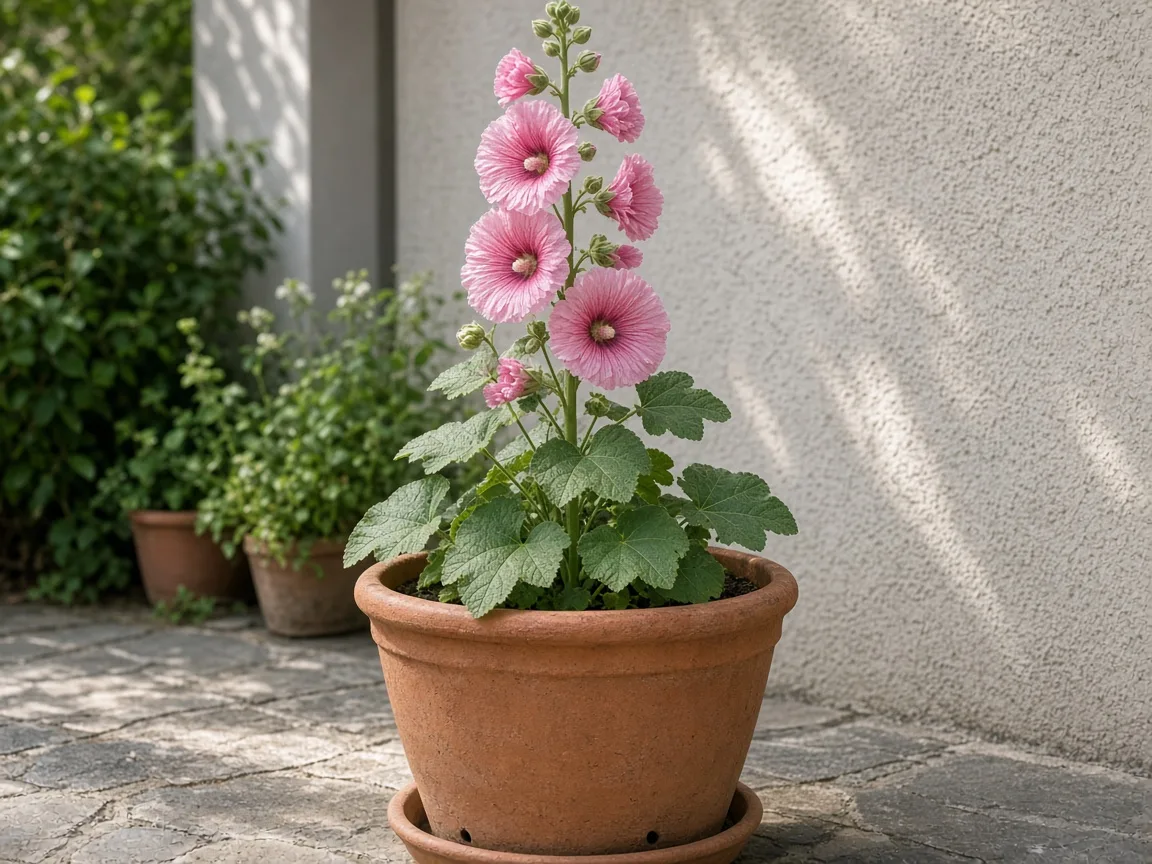
| ‘Majorette’ | Compact habit around 2½ ft—useful for containers or front-of-border color |
| Alcea rugosa (Russian hollyhock) | Yellow singles with better rust resistance than common A. rosea—helpful in humid beds, though not immune |
No cultivar replaces cleanup: Wisconsin notes some varieties resist certain rust races but not all. Rotating genetics—especially toward A. rugosa in problem beds—beats spraying the same susceptible strain forever.
End-of-season care and seed saving
Cut spent spikes unless you are saving seed; collect brown, dry capsules on a calm day and store cleaned seed in a labeled envelope in a cool, dry place. Remove all diseased leaves and stems in fall so rust is not left in garden debris. Wisconsin Horticulture’s hollyhock-rust factsheet
A light winter mulch over soil (not piled on the crown) buffers temperature swings in cold zones. In warm climates, expect shorter individual plant life and heavier rust; wider spacing and resistant species matter more than extra fertilizer.
Conclusion: your first hollyhock season checklist
Print or save this sequence for year one:
- Pick a full-sun fence or back-border site with wind shelter and 18–24 in spacing planned
- Choose cultivar for your goal: tall doubles (‘Chater’s Double’), dark singles (‘Nigra’), compact (‘Majorette’), first-year bloom (‘Summer Carnival’), or rust-prone-bed alternative (A. rugosa)
- Sow on a zone-appropriate schedule—indoor start in zones 3–8 if you want rosettes ready; direct sow when soil warms if you can wait for year-two bloom
- Water at the base in the morning; keep mulch off the crown
- Stake when stems reach 2–3 ft in exposed sites
- Scout lower leaf undersides weekly from late spring; remove spotted leaves and pull nearby mallow weeds
- Deadhead for tidiness or leave one spike for seed—your choice
- If rust wins despite sanitation, plan replacement plants and read Wisconsin fungicide label guidance before spraying
- Clean all infected debris in fall; do not cold-compost rusted leaves
Follow that list and hollyhocks stop being a mystery of “where did the flowers go in year one?” You will know whether you are maintaining a stand that self-seeds or nursing individual short-lived plants—and you will catch rust while it is still a lower-leaf problem instead of a bare-stem embarrassment in August.



