8 Plants That Need Stakes for Healthier Growth
Staking is not just for tomatoes. Learn which eight vegetables and fruits need support, what hardware to use, and when to install it.
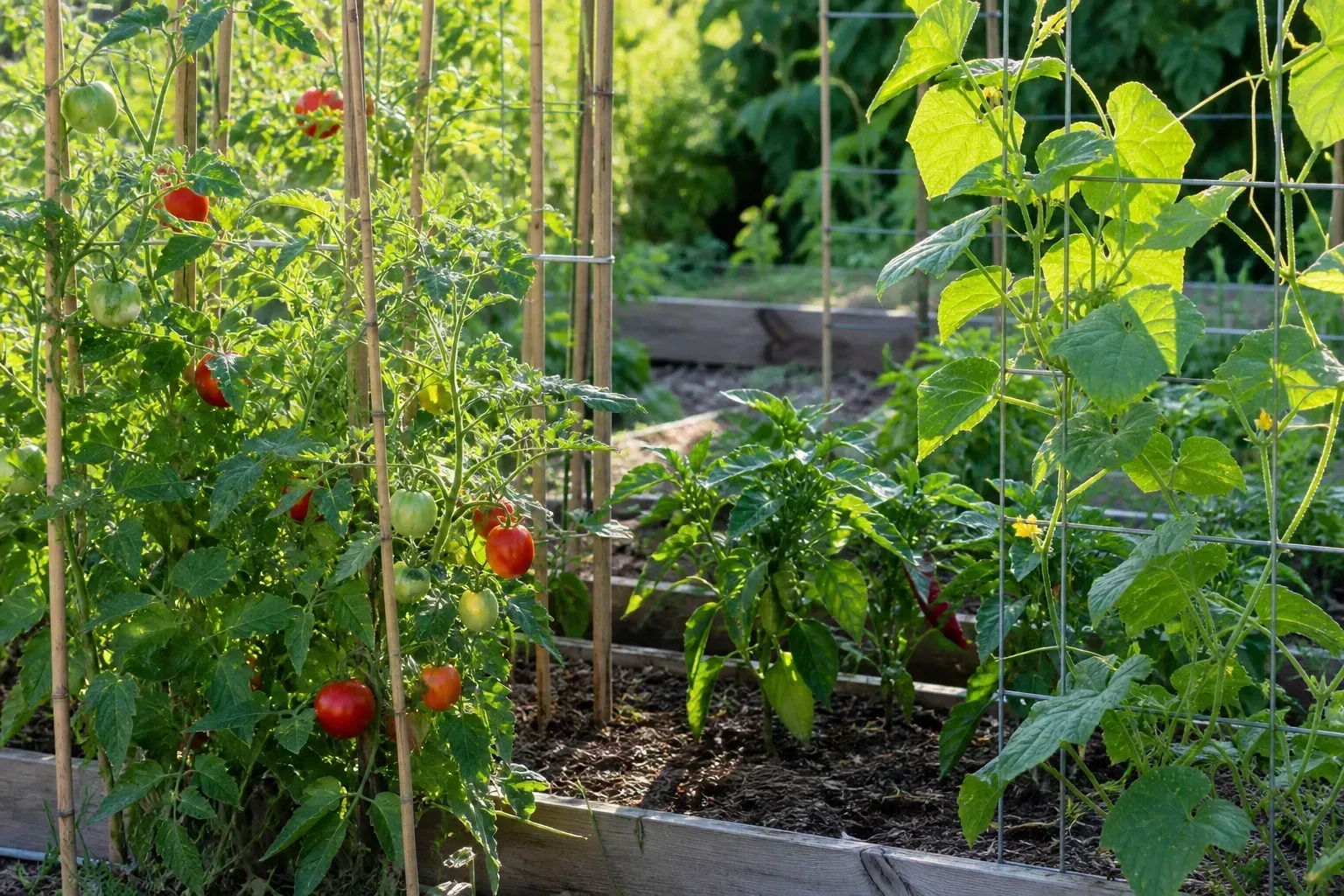
Most gardeners stake tomatoes without thinking twice. That instinct is correct — but tomatoes are only the beginning. Peppers, eggplants, cucumbers, squash, peas, beans, Brussels sprouts, raspberries, and newly planted trees all produce more reliably when you match the plant to the right support early in the season. Staking is not cosmetic. It changes airflow, keeps fruit off wet soil, makes harvest faster, and prevents stems from snapping under load or wind.
The eight crops below are the ones where support pays off most consistently in a home vegetable or fruit garden. For each one you will find the why, the hardware that actually holds, and the timing that separates a helpful stake from a plant prison.
Why Staking Is About More Than Keeping Plants Upright
Sprawling vegetables look lush until they become a mat on damp soil. Moisture trapped under leaves invites foliar diseases — early blight on tomatoes, powdery mildew on squash family crops, and botrytis on dense raspberry canes. Fruit sitting on soil rots from the bottom up, and stems kink when you try to lift them after a storm.
Staking and trellising solve three problems at once. Air circulation dries leaves faster after rain or irrigation. Fruit stays clean because it hangs above the soil line. Harvest and pruning take minutes instead of an archaeological dig through vines. Clemson HGIC notes that keeping tomato vines off the ground makes fruit easier to pick, easier to spray if needed, and improves airflow as a disease-management strategy (Clemson HGIC tomato factsheet).
The goal is not rigid vertical perfection. Plants should still move slightly in the breeze — that movement strengthens stems. Ties should be loose figure-eights, not zip cords strangling the cambium.
Choosing the Right Support: Stakes, Cages, Trellises, and Wires
Not every crop wants the same hardware. Use this quick matrix before you buy materials.
| Support type | Best for | Strength | Trade-off |
|---|---|---|---|
| Single stake | Peppers, eggplant, determinate tomatoes | Low cost, easy | Weak for tall indeterminate tomatoes |
| Wire cage | Determinate tomatoes, compact peppers | Hands-off once installed | Store-bought cones often too flimsy |
| Trellis / netting | Cucumbers, peas, pole beans | Excellent airflow | Needs training as vines grow |
| Florida weave | Row-planted tomatoes, peppers | Cheap at scale | Weekly string passes |
| Post-and-wire | Raspberries, tall cane fruits | Permanent structure | Install before planting |
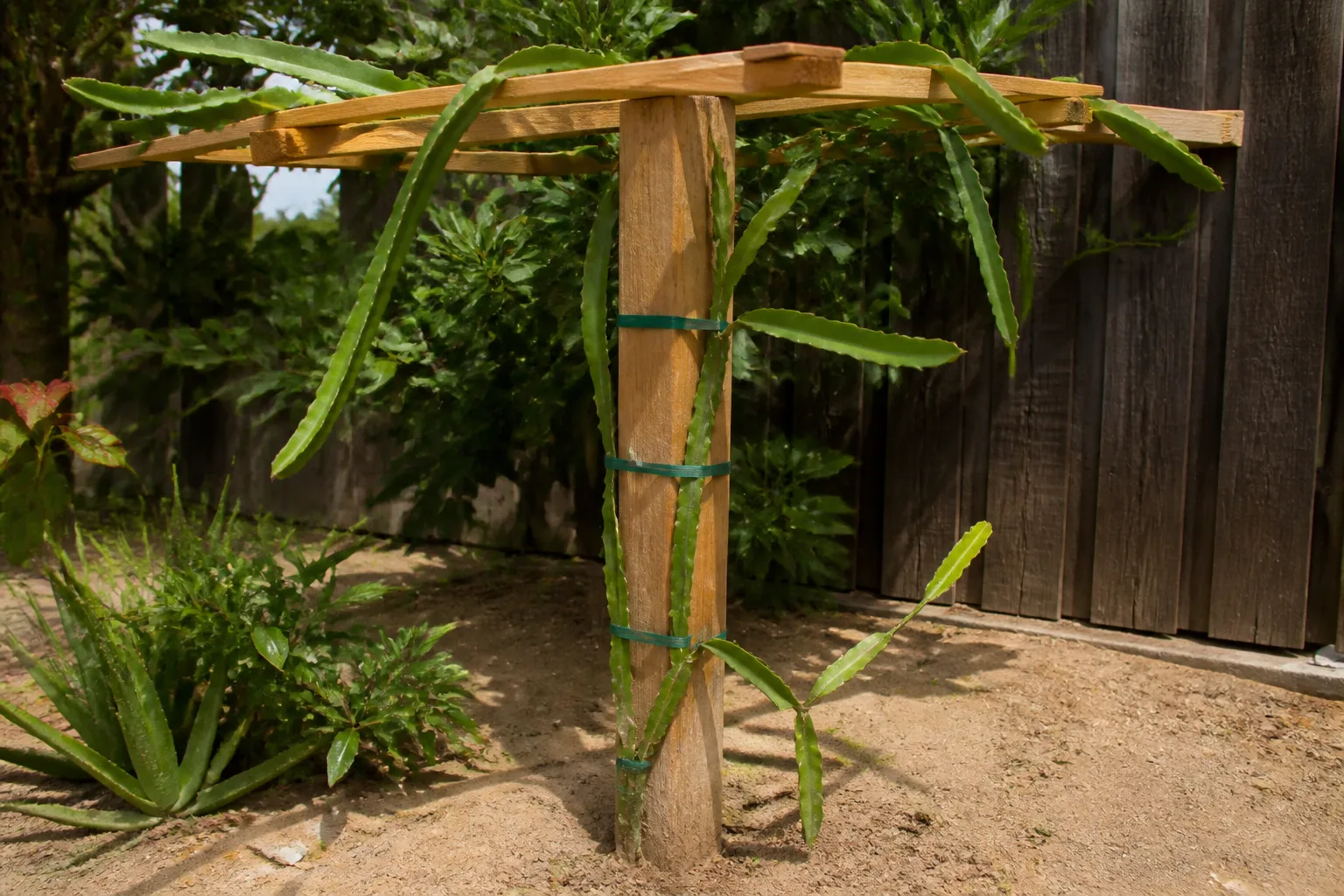
Single stakes and spiral supports
A 6-foot hardwood or bamboo stake driven 12–18 inches into soil beside the main stem works for peppers, eggplant, and bush-type tomatoes. Metal spiral stakes let the stem wind upward without clips — useful for lighter vines if you check that the spiral diameter matches stem thickness.
UGA Extension recommends beginning ties once plants reach 10–12 inches, then securing every 8 inches up the trunk with soft twine or fabric strips (UGA staking and pruning tomatoes). The same spacing applies to any single-stem crop you train vertically.
Row systems and the Florida weave
For a row of tomatoes or peppers, drive T-posts or 6-foot stakes every third or fourth plant. Run baling twine in a zigzag between posts at 10-inch height intervals — the classic Florida weave. Clemson describes stakes placed between plants with twine looped around each post and run on both sides of the row as stems grow (Clemson HGIC). Add a new twine course every week during rapid growth. This method beats individual stakes when you are growing dozens of plants in one bed.
Materials That Last a Full Season
Cheap stakes fail in August when plants are heaviest. Plan for materials that survive wind and wet soil.
Bamboo, cedar, metal, and twine
Bamboo canes are inexpensive and fine for peas and beans if you replace them yearly. Cedar or hardwood stakes resist rot better for tomatoes and eggplants. Metal T-posts cost more upfront but last many seasons — worth it for Florida weave rows and raspberry posts.
Twine: Use UV-resistant garden twine or strips of cotton T-shirt fabric. Avoid thin wire directly on stems. Clips: Plastic tomato clips work on cucumbers and squash tendrils if you leave room for stem expansion.
Height rule: Stakes should reach your target finished plant height minus what is buried. A 6-foot stake buried 1 foot supports roughly 5 feet of growth — adequate for most peppers and determinates, marginal for indeterminate tomatoes unless you top the vine.
Tomatoes: The Baseline Every Support Plan Builds On
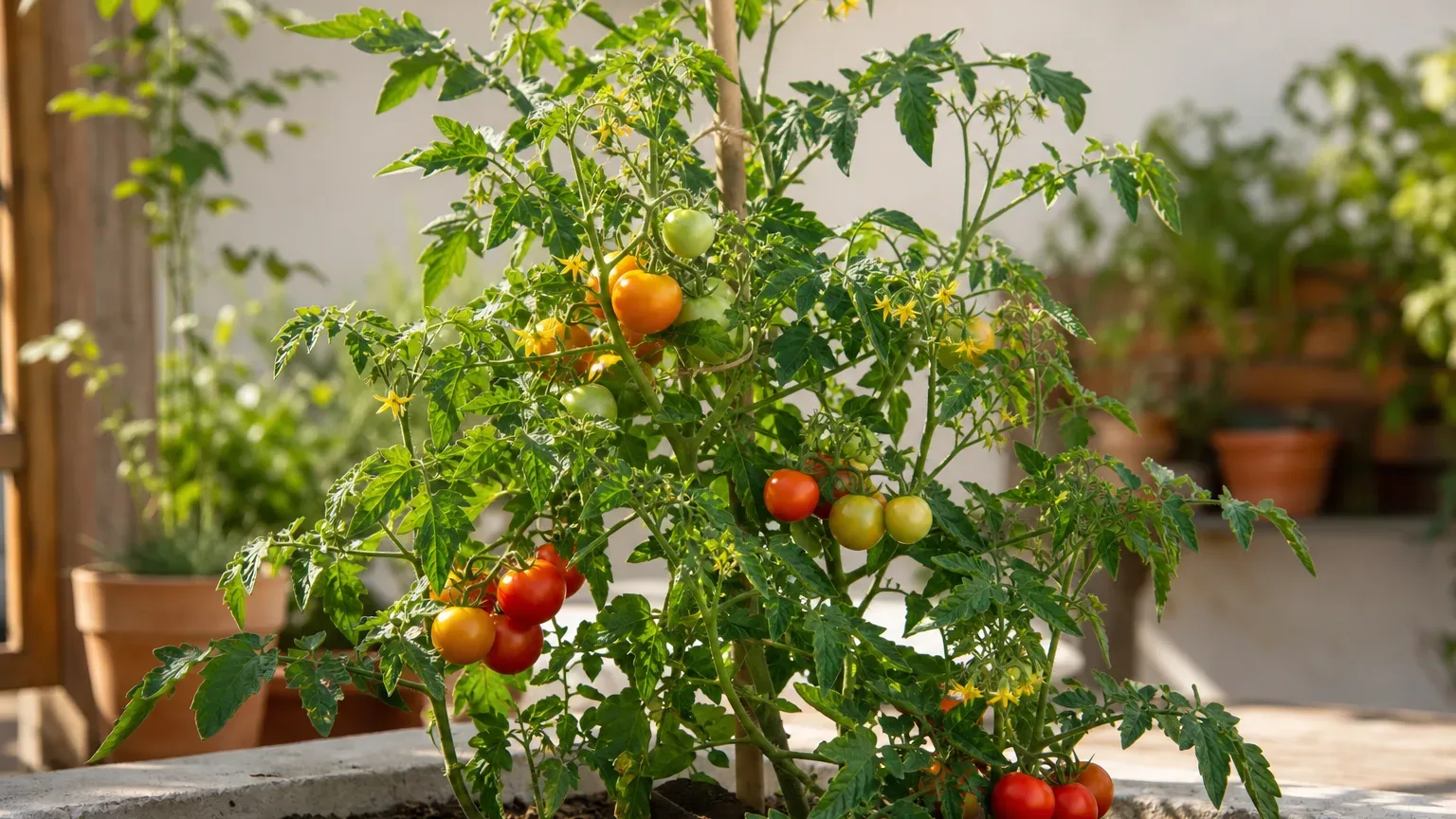
Tomatoes are the reference crop for garden supports because almost every variety benefits from some structure. Indeterminate (vining) tomatoes require support or they end up on the ground, where UGA Extension warns they become susceptible to breaking and soil-contact diseases (UGA C1150). Determinate (bush) tomatoes can technically sprawl, but staking still prevents tip-overs when fruit clusters load up.
Best supports by habit:
- Indeterminate on stakes: One or two main leaders, suckers managed, tied every 8 inches.
- Indeterminate in cages: Build cages from 4–6-inch mesh livestock fencing at least 3 feet in diameter — store cones bend under cherry tomato weight (UGA).
- Determinate: Short stake or compact cage; minimal pruning.
Install stakes at transplant, not after a thunderstorm kinks the stem. For deeper training guidance, see the tomato pruning guide and tomato growth timeline.
Peppers: Top-Heavy Fruit on Brittle Stems
Peppers are the crop most gardeners forget to stake — until a loaded bell pepper plant splits its main fork in a gust. Both sweet and hot peppers become top-heavy as fruit swells. Unlike tomatoes, peppers rarely get cages; a single slender stake beside the main stem at transplant is enough.
Place the stake 2–3 inches from the stem so you do not pierce roots. Tie at the main fork and again as lateral branches load up. In containers, use a stake taller than the pot rim so the plant does not act like a sail. Bush varieties in wide in-ground spacing may stand alone, but double-cropping varieties and large-fruited cultivars almost always need help.
Wind tip: Peppers in exposed raised beds benefit from a low windbreak or grouping with sturdier crops — staking handles vertical load, not sideways whip on brittle wood.
Eggplant: Heavy Fruit That Splits Stems
Eggplant looks sturdy until three full-size fruits hang on one branch. The stems are woody but not infinitely strong, and split stems mean lost fruit and open wounds for disease.
Use a stout stake — at least ¾-inch hardwood or bamboo — driven beside the plant at transplant. Tie the main stem every 8–12 inches, and add a secondary tie to any branch carrying multiple developing fruit. In containers, choose a pot large enough that the stake can anchor deeply; a wobbly stake in shallow soil is worse than none.
Harvest timing matters: pick fruit at glossy peak size before branches bow permanently. Staking lets you see developing fruit on the underside of leaves instead of discovering rot on soil-contact specimens.
Cucumbers: Cleaner Fruit on a Vertical Trellis
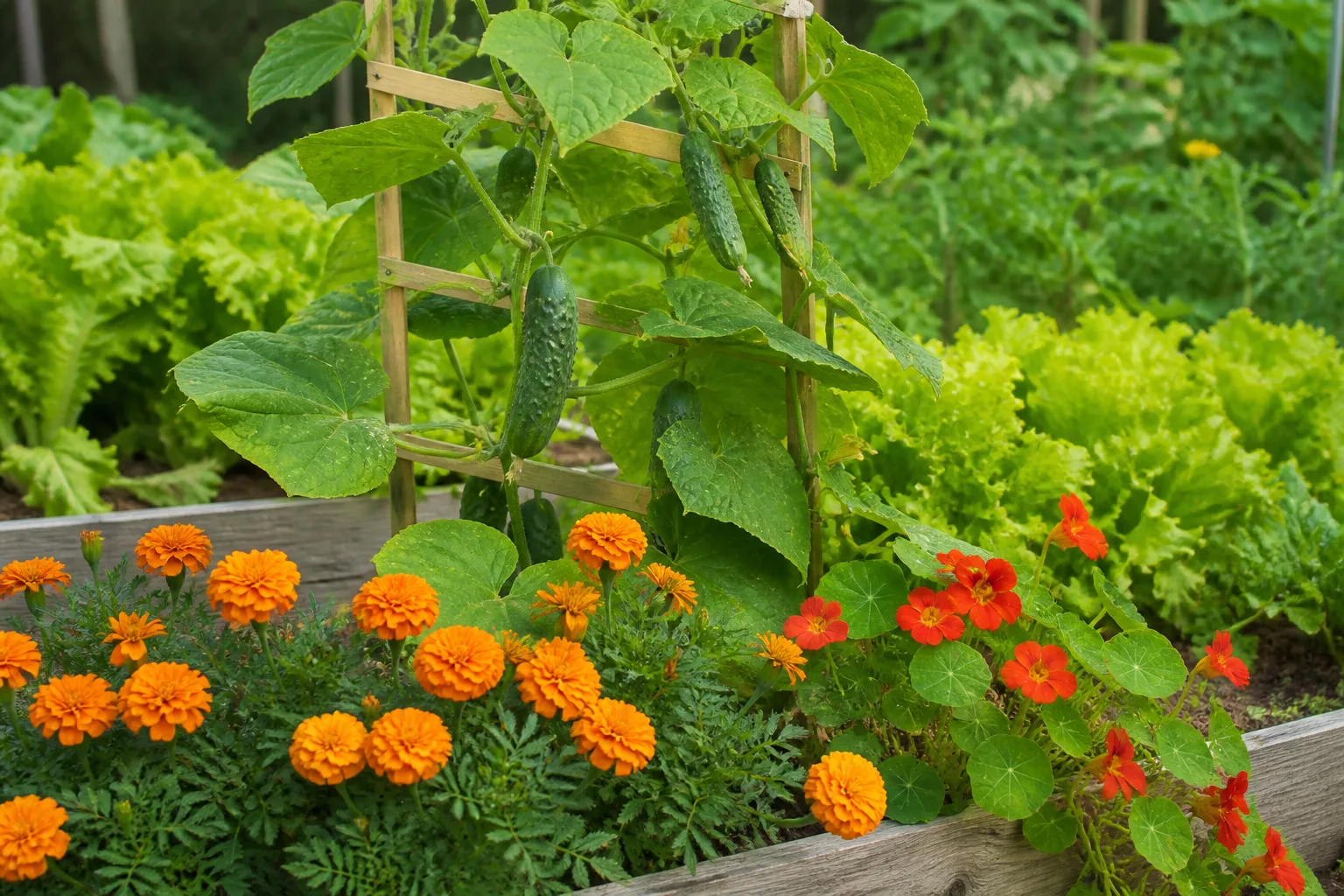
Cucumbers will happily sprawl, but vertical training is one of the highest-return staking jobs in the garden. Vines on a trellis, cattle panel, or lean-to fence produce straighter fruit, fewer soil-rot losses, and leaves that dry faster after overhead watering.
Start training when vines are young and actively reaching — gently weave tendrils onto mesh or tie the leader with soft clips every 12 inches. A lean-to trellis angled over a path (wire fencing between two posts) keeps fruit hanging on the underside for easy picking, a method Gardening Channel readers use successfully for cucumbers and beans (Gardening Channel vegetable supports).
Bush cucumber varieties need less structure, but even they benefit from a short stake in windy sites. For variety pairing and bed layout, see companion plants for cucumbers.
Summer and Winter Squash: Vertical Options Worth Trying
Squash is the sprawling champion of the cucurbit bed — which is exactly why vertical training saves space and fruit quality. Small-fruited summer squash and compact varieties can climb a sturdy trellis or spiral stake if you choose cultivars labeled for trellising and support developing fruit with fabric slings tied to the mesh.
Winter squash and large pumpkins are heavier; trellis only small-fruited types or use wide ground spacing with a stake at the main stem to prevent rolling in wind. For any vertical squash, match stake or panel strength to mature fruit weight — a bamboo cane that holds a cucumber will snap under a developing butternut.
Tie stems loosely with clips so they can expand. Check slings weekly as fruit swells. The payoff is fruit with intact blossom ends and no yellow patch from soil contact.
Peas and Climbing Beans: Built for Something to Climb
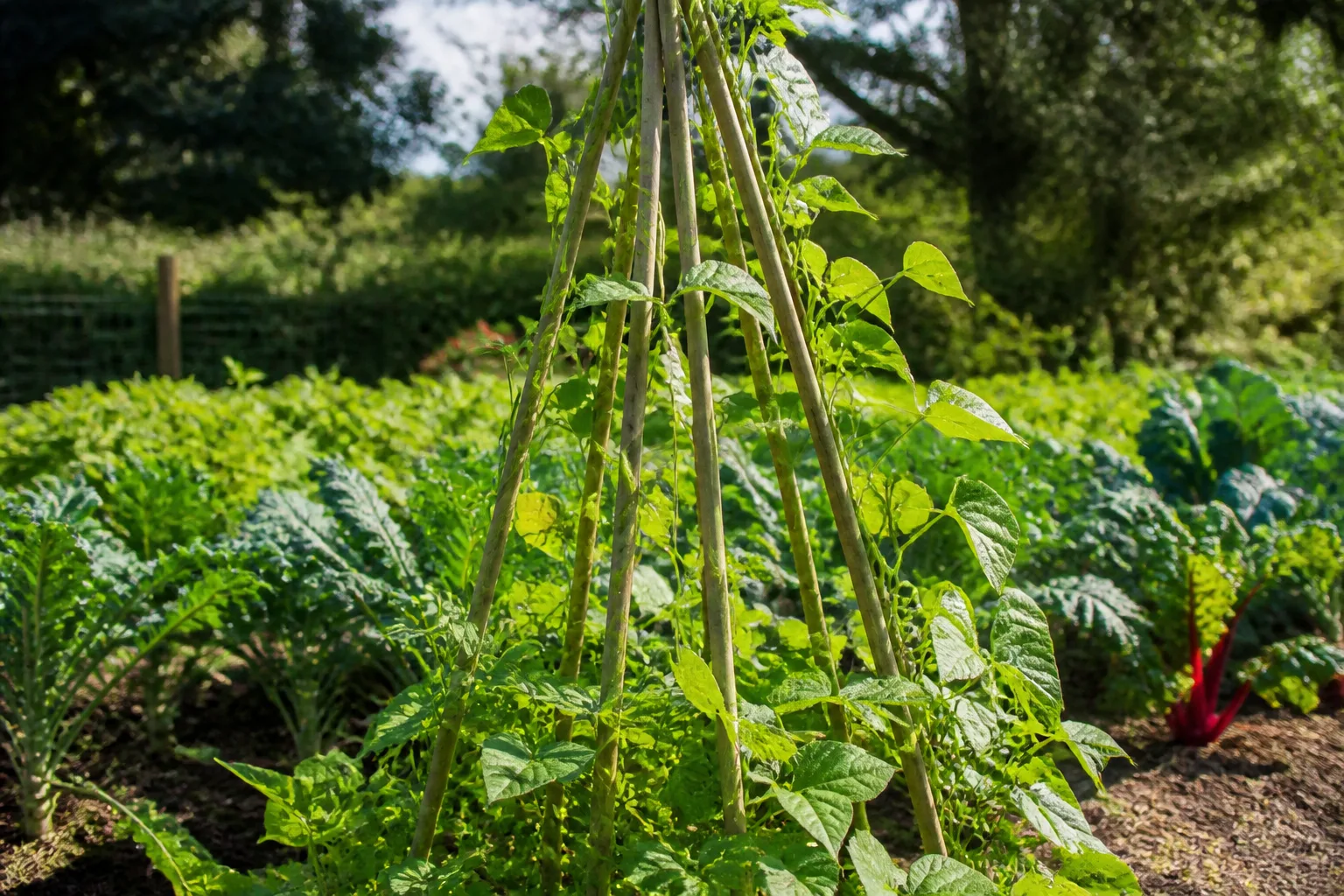
Peas and pole beans are not optional-stake crops — without vertical structure they tangle into low, humid mats that are miserable to pick through. Peas want mesh netting, string trellises, or brush pea sticks 5–6 feet tall. Sow along the base and let tendrils self-attach; add loose ties only if vines miss the net.
Pole beans need stronger architecture: bamboo teepees, A-frames, or cattle panels. Teepees make a kid-friendly fort and concentrate harvest at reachable height. Space poles so air can move between vines — cramming twenty beans on four canes invites mildew.
Bush beans generally do not need staking. If you are unsure which seed you planted, watch the first foot of growth: twining stems search upward; bushy types stand on their own.
Brussels Sprouts: Tall Stalks That Rock in Autumn Wind
Brussels sprouts produce on a tall central stalk that looks indestructible until autumn winds arrive and loaded tops act like levers on shallow roots. Staking prevents root rocking that damages fine feeder roots and loosens sprouts.
Drive a stout cane beside the main stalk when plants are knee-high. Tie at mid-stem and again before sprouts size up along the stalk. Earthing up soil around the base — mounding an inch or two of soil for extra anchorage — pairs well with staking in exposed gardens.
Top-heavy stalks in coastal or prairie gardens may need a second tie near the growing tip before the first hard frost. Harvest from the bottom upward while the stake keeps the stalk from listing into neighboring crops.
Raspberries and Cane Fruits: Posts, Wires, and Airflow
Raspberries are often planted without proper support, then become an impenetrable thicket where fruit rots in the center. Supported canes receive more light and air, which speeds ripening and cuts fungal pressure — the same reason cane fruits belong on this list even though they are perennials, not annual vegetables.
The RHS recommends installing posts and horizontal wires before planting when possible (RHS grow your own raspberries). A simple system: 8-foot posts at row ends and every 10–12 feet, with galvanized wire at 2, 3, and 4 feet. Tie fruiting floricanes to wires; train new primocanes separately for summer-fruiting types so summer pruning is straightforward.
Autumn-fruiting (primocane) varieties need less elaborate wiring but still benefit from bamboo canes or a single wire row to keep canes off the path. For a few plants in a border, individual canes tied to sturdy stakes work — but rows deserve permanent posts.
Young Trees and Flowering Shrubs: Temporary Support Only
Newly planted trees and large shrubs may need staking until roots anchor — but only when the root ball actually moves in the wind. Staking a stable tree slows trunk taper and can create a weak hinge point at the tie.
If staking is necessary, drive two stakes outside the root ball (never through it) and use a wide strap on the lower trunk, allowing slight movement. Point the stake bottom for firm soil entry; secure with soft ties that will not girdle bark as the trunk expands.
Remove stakes after one growing season — two at most in windy sites — once the root system holds firm. Ornamental shrubs and dwarf fruit trees in windy courtyards follow the same rule: support is temporary training wheels, not permanent jewelry.
When to Install Stakes (and When to Wait)
The cheapest support is the one installed at transplant or within the first two weeks after seedlings go out. Moving a stake into place later risks spearing roots and kinking stems you are trying to save.
Wind, fruit load, and settlement cues
Stake now if: transplants are tall and floppy; forecast shows sustained wind; fruit is visibly loading branches; raspberry canes are reaching shoulder height; a new tree’s root ball shifts when you push the trunk.
Wait or skip if: the plant is a self-supporting bush bean; a determinate tomato has wide spacing and you accept ground culture; a tree stands firm without rocking; you are past mid-season and the stem already hardened at a bad angle — in that case use gentle correction and ties rather than forcing straight.
Check ties every two weeks during peak growth. Loosen or relocate any tie that cuts into expanding tissue.
Common Staking Mistakes That Weaken Plants
Ties too tight girdle stems and block water flow — use figure-eight loops with slack. Stakes too short mean emergency mid-season fixes with wobbly extensions. Wrong tool for weight — flimsy cones on indeterminate cherries collapse every August (UGA). Staking trees too long produces trunks that snap after you remove support because they never developed taper.
Late staking after stems kink leaves permanent bends; prevention beats correction. Metal wire on soft stems cuts in wind rub — fabric or coated ties only. Ignoring removal on trees turns a helpful year-one stake into a bark-girdling hazard.
If a plant already fell, reset it gently after rain softens soil, stake on the windward side, and tie higher than the break point so weight pulls against the support instead of away from it.
Conclusion
Staking is one of the lowest-cost upgrades in a food garden. Match peppers and eggplant to single sturdy stakes at transplant, train cucumbers and climbing legumes on trellises early, give squash vertical options when fruit size allows, anchor Brussels sprouts before autumn wind, wire raspberries before they become a thorny maze, and treat young tree stakes as temporary.
Tomatoes remain the template: support off the ground, airflow around leaves, fruit you can actually find. Install hardware before plants need it, tie loosely, and upgrade supports when fruit load tells you the first stake was optimistic. Do that across these eight crops and you will spend less time rescuing collapsed stems and more time picking clean, full-size harvests from plants that stay healthy all season.



