How to Water Petunias: Beds, Pots, and Baskets
Water petunias when the top inch dries — but hanging baskets may need daily soaks in summer. Beds, pots, timing, and overwatering fixes inside.
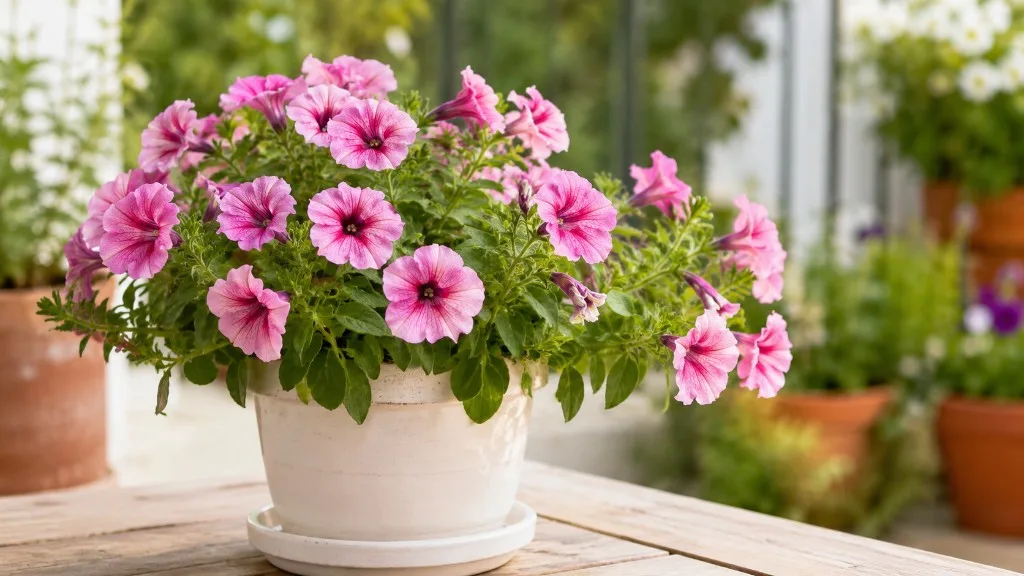
A basket of petunias can look perfect at breakfast and collapsed by late afternoon — not because you picked a bad plant, but because water demand spikes once roots fill the pot, summer heat arrives, and the plant is pushing nonstop flowers. Garden petunias (Petunia × atkinsiana) are often sold as easy annuals, and they are — but only if you treat watering as a location-specific rhythm, not a single calendar rule copied from a bed-planting guide.
The mistake most growers make is assuming petunias are drought-tough because they survive a missed watering. They can bounce back from brief dryness, but Missouri Botanical Garden notes they perform best in average, medium-moisture, well-drained soils in full sun. Bloom count is the report card: thirsty, well-fed plants in full sun out-flower stressed ones every time. This guide gives you a check-first method, frequency ranges for beds versus baskets, deep-watering technique, and a troubleshooting path when something goes wrong — without waiting for wilt to tell you it is too late.
For full culture beyond water — light, soil, fertilizer, pruning — see the Petunia care hub and the dedicated petunia watering page.
Why Petunias Are Thirstier Than They Look
Petunias carry a reputation for toughness because they tolerate brief dry spells and NC State Extension lists moderate drought tolerance once established in the ground. That label describes survival, not peak performance. A plant keeping leaves green in mediocre moisture will still drop buds and stall if the root zone stays too dry for too long.
Three biology facts explain the thirst:
Shallow, spreading roots. Petunias root broadly but not especially deep. In a 10-inch pot, most active roots sit in the top few inches of mix — the zone that dries first on a sunny patio. Gardening Know How notes that container petunias often need water far more often than bedded plants because that upper layer loses moisture to sun, wind, and pot sidewalls.
Continuous bloom is a water bill. Every open flower pulls water through the plant. Heavy-flowering grandiflora and spreading Wave types in full sun are essentially running a fountain all day. UF/IFAS Gardening Solutions recommends keeping well-drained soil moist for best performance and warns that light, frequent sprinkles encourage shallow rooting — the opposite of what you want before a heat wave.
Containers amplify heat. Dark plastic, small soil volume, and hanging exposure can push root-zone temperatures well above ambient air. A bed might hold moisture for days while a matching basket on the same porch needs water twice in one hot afternoon. NC State Extension Richmond County explicitly recommends morning and afternoon watering for containers during the hottest summer days.
The practical takeaway: treat “drought tolerant” as a recovery trait, not a reason to stretch intervals. Water for blooms, not bare survival.
The Soil-Check Method That Replaces Guesswork
Forget watering on the same weekday every week. The only schedule that works across climates, pot sizes, and heat waves is check first, then soak.
The one-inch dry-down rule. Slide your finger into the soil to the first knuckle — roughly one inch (2.5 cm). If that layer feels dry, it is time to water. If it still feels cool and slightly moist, wait. Cynthia Haynes at Iowa State Extension (cited widely in nursery education) frames the same idea: petunias dislike staying wet for long stretches, so verify dryness at the surface before adding more water.
Weight tells the truth in containers. A fully hydrated hanging basket is noticeably heavy. When you can lift it easily with one hand, the reservoir is depleted even if the surface still looks damp — a common trap with peat-based mixes.
Drainage is part of the test. Water should exit drainage holes within minutes of a deep soak. If it pools on top or the pot sits in a saucer of standing water, fix drainage before the next watering cycle. Soggy soil is not “well watered”; it is oxygen-starved.
Finger Test vs. Lift Test for Containers
Use both checks in pots and baskets:
| Check | How to do it | What it tells you |
|---|---|---|
| Finger test | Press into mix to first knuckle | Whether the root zone surface has dried enough to warrant water |
| Lift test | Raise the pot or basket slightly | Whether the whole root ball still holds water weight |
If the finger says dry but the pot still feels heavy, water anyway with a slow, low stream at the soil line. Peat-heavy mixes can turn hydrophobic when they dry completely — water runs down the inside wall and out the bottom without rewetting the center. Epic Gardening describes this as the moment light baskets still feel damp to the touch but need a patient soak to rehydrate evenly.
In garden beds, skip the lift test and use the finger probe plus a quick look at plant posture. Slight midday limp on the hottest days can be normal; limp at 8 a.m. is a red flag.
How Often to Water Petunias by Location
Frequency depends on where the plant lives, not on a universal “every three days” rule. Use the ranges below as starting points, then let the soil-check method override them.
Garden Beds and Landscape Plantings
Established in-ground petunias typically need less frequent water than anything in a container. UF/IFAS Gardening Solutions advises 1 to 2 inches of water every 7 to 10 days once plants are settled — delivered as a deep soak, not daily sprinkles. Light, frequent irrigation encourages shallow roots that suffer the first time you miss a week.
In practice, that often means one thorough watering per week in mild weather, or twice weekly during extended heat if the bed drains well and sun exposure is high. Sandy soils may need the shorter interval; clay that holds moisture may need less. Spreading Wave types used as groundcover drink more than a single-row edging of upright multiflora because leaf area and root mass are larger.
Before planting, confirm drainage. Missouri Botanical Garden stresses good drainage even more than rich soil — petunias tolerate poor fertility better than wet feet.
Pots, Window Boxes, and Raised Planters
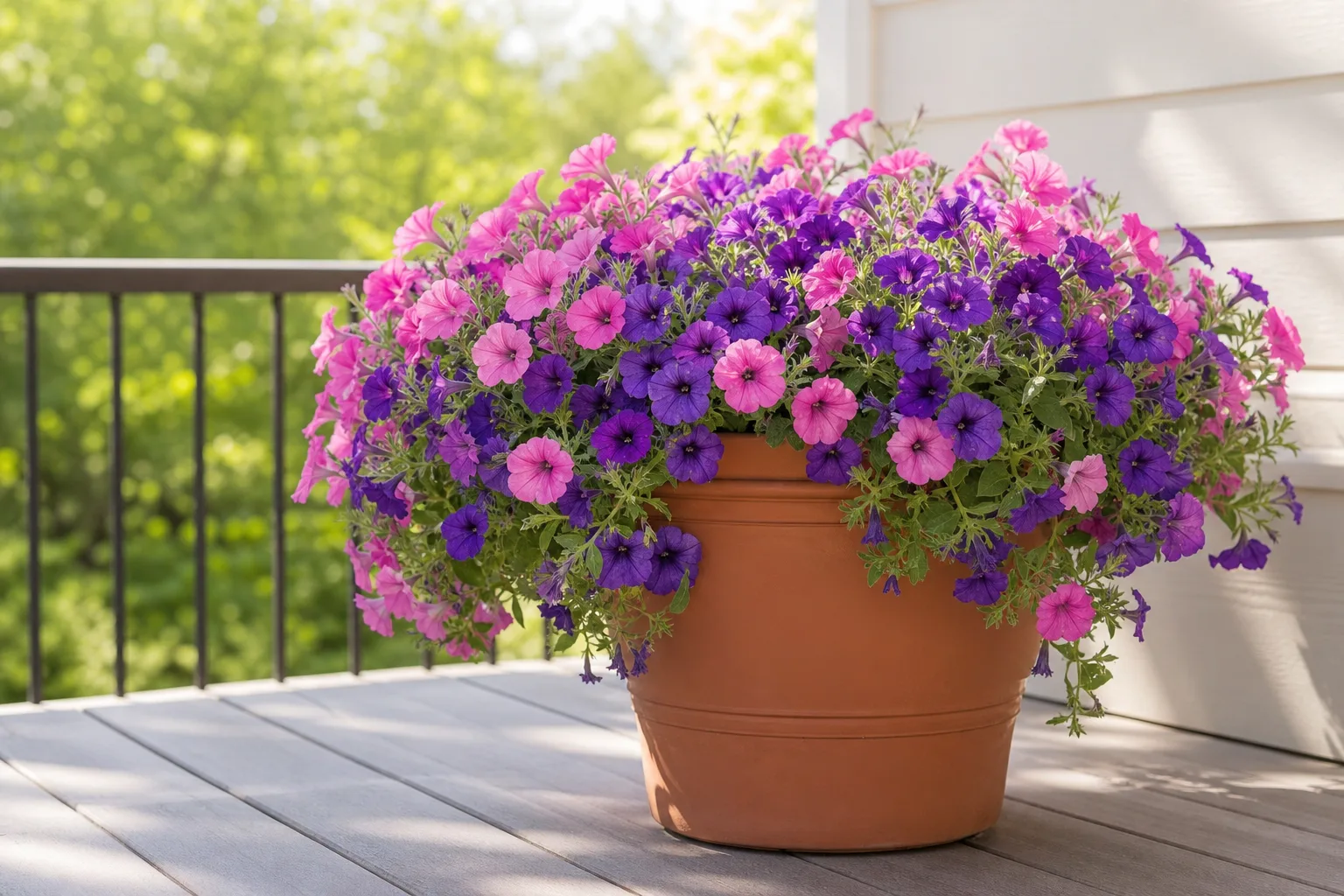
Container petunias usually need water every one to three days in active summer growth, sometimes daily for small pots in full sun. Gardening Know How notes that young container plantings may survive on weekly water early in the season but established pots often need every few days, with daily irrigation in warm climates to prevent sudden wilt.
A 12- to 16-inch patio pot with a deep reservoir and quality mix will outlast a 8-inch plastic pot every time. Match pot depth to root ambition: shallow bowls look cute but force you into a nurse-watering schedule. For container setup beyond water — mix, spacing, variety choice — see container petunias that bloom longer.
Rule of thumb: when the top inch is dry and the pot feels medium-light, soak until water runs freely from drainage holes. Empty saucers after 30 minutes so roots are not sitting in stagnant water overnight.
Hanging Baskets on Hot Porches
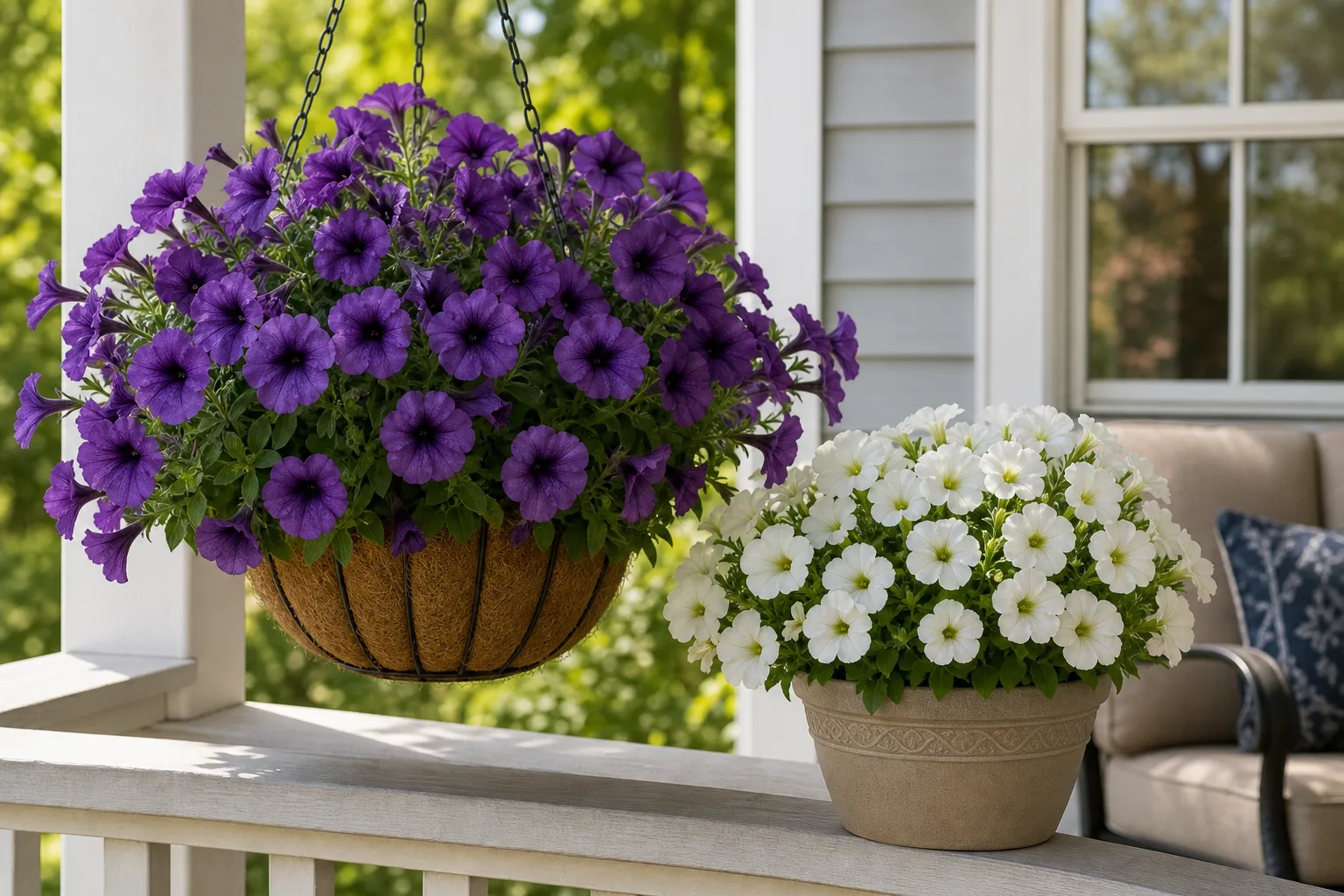
Hanging baskets are the thirstiest petunia setup. Air circulates on all sides, the soil mass is small relative to plant size, and afternoon sun can cook the mix. Epic Gardening suggests two to three thorough soakings per week as a baseline, with daily water common in heat. Richmond County Extension goes further for peak summer: morning and afternoon passes on the hottest days.
The lift test is non-negotiable here. If the basket is light before noon, water now — do not wait for evening. A wilted petunia may recover overnight, but repeated crash cycles reduce flowering and invite pests.
Best Time of Day to Water Petunias
Early morning is the default. Soil is cool, wind is lower, and foliage has all day to dry if splash occurs. UF/IFAS Pasco County extension guidance for landscape irrigation emphasizes wetting the root zone only, avoiding wet foliage when possible, and timing applications before sun intensity peaks.
Late afternoon is the backup, not the plan. If you must water after work, do it early enough that leaves dry before nightfall. Wet leaves overnight raise botrytis and petal blight risk — UF/IFAS Gardening Solutions specifically warns against wetting leaves and flowers during humid, rainy weather.
Immediate rescue trumps the clock. If a basket is collapsed at 2 p.m., water now. Petunias do not recover gracefully from severe desiccation the way some succulents might. Waiting until morning often costs you a week of bloom.
How to Water Deeply Without Wasting Water
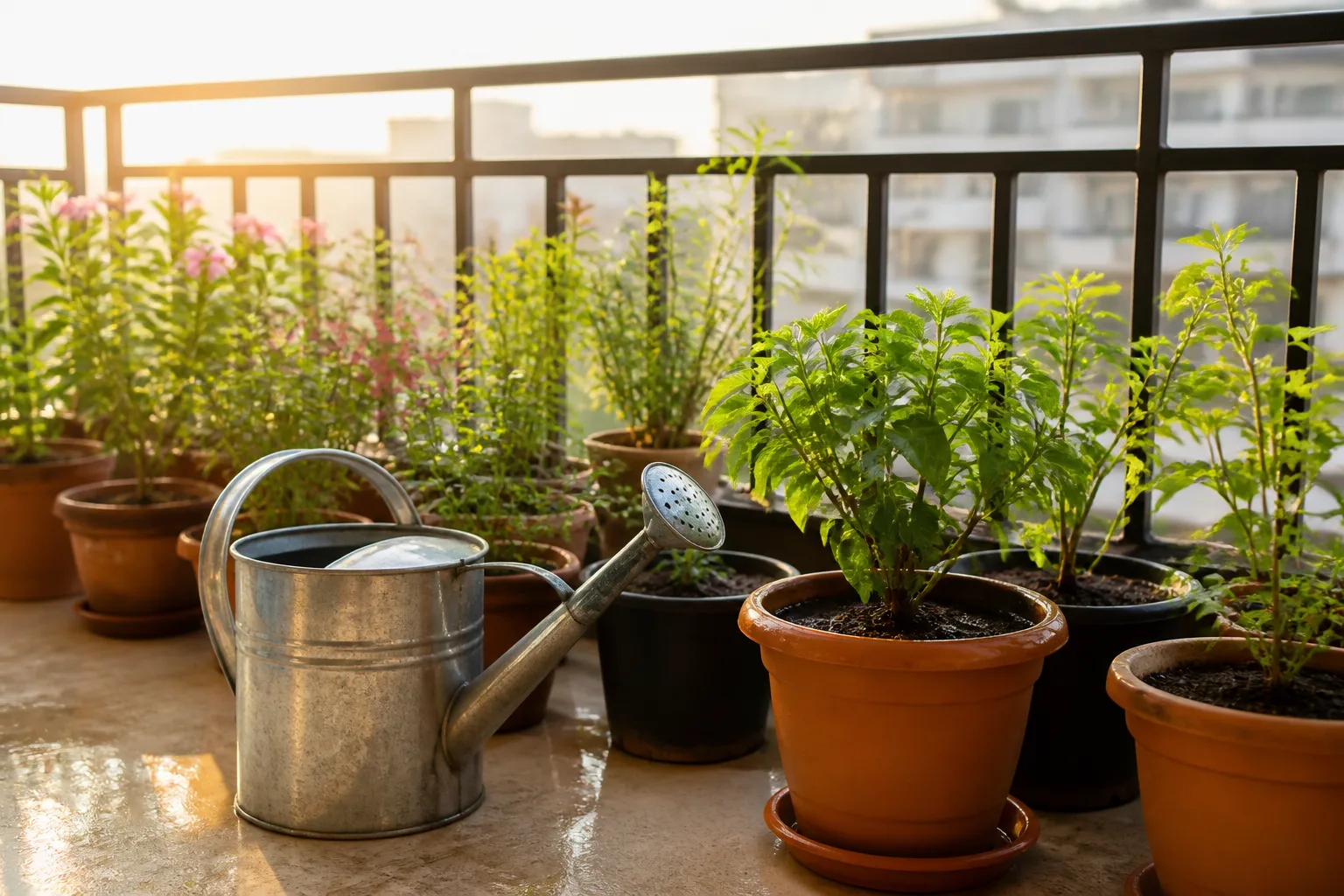
Deep and slow beats fast and shallow. The goal is to rewet the entire root ball so roots grow downward. A 10-second blast from a hose nozzle mostly wets the surface; a low stream for several minutes — or a drip line — penetrates.
Target the soil line, not the flowers. Direct water at the base of stems. This reduces splash-borne disease and keeps petals dry. Gardening Know How recommends drip or soaker hoses as ideal for saturating the root zone without broadcasting moisture across leaves.
Water until it drains. In containers, stop when excess runs from bottom holes. In beds, moisten to at least 6 inches depth when possible. UF/IFAS cautions against light frequent sprinkles that train roots to stay near the surface.
Increase frequency, not flood volume, when plants need more. During drought restrictions, extension services including UF/IFAS Pasco County advise adding more irrigation events rather than dumping excessive water per session — a useful frame when your basket needs a second drink but you should not turn the hose on full blast for twenty minutes.
Drip Lines, Soaker Hoses, and Hand Watering
| Method | Best for | Notes |
|---|---|---|
| Hand watering with breakable spray | Baskets, window boxes, small patios | Low, slow stream at soil line; check each pot individually |
| Drip irrigation | Rows, beds, large container groupings | Consistent moisture; pair with timer and rain sensor |
| Soaker hose | In-ground beds and borders | Delivers at soil level; bury slightly under mulch |
| Watering wand | Dense beds | Reach under foliage; morning use preferred |
Richmond County Extension notes drip irrigation as a worthwhile investment for petunia beds when overhead water is impractical. For broader heat-wave strategy — mulch depth, wilt triage, second daily pass — cross-read the hot-weather plant watering guide.
Spring vs. Summer Watering Adjustments
Petunia water demand is not flat across the season. Think of a dial you turn as temperature, plant size, and daylight increase.
Spring (planting through early growth): Roots are establishing, leaf area is modest, and evaporation is lower. Containers may need water every two to four days; beds may survive on rainfall plus a weekly deep soak if soil drains well. Resist overwatering cool, cloudy weeks — saturated cool soil slows root growth.
Early summer (plants filling out): As stems lengthen and first flush peaks, shift to the one- to three-day container rhythm. Beds move toward the 1–2 inch weekly target with possible mid-week supplementation during dry spells.
Peak summer (hottest weeks): This is when baskets earn twice-daily attention and beds may need two deep soaks per week in sand or on reflected-heat patios. Epic Gardening’s practical note applies here: regions that are hot and dry need more frequent checks than cool coastal climates — monitor the plant, not the calendar.
Late summer into fall: As growth slows and nights lengthen, lengthen intervals again. Let the finger test drive the dial back down. Overwatering in cool September weather is a common late-season rot trigger.
Wave Petunias vs. Grandiflora: Different Thirst Levels
Not all petunias drink at the same rate. Match expectations to genetics and habit.
Grandiflora and large double types produce fewer but bigger flowers on upright stems. They can look dramatic when slightly dry but stall bloom quickly under stress. Deadheading matters, and consistent moisture keeps large petals from crisping at the edges.
Multiflora types carry more flowers per stem and often recover faster from brief wilt. Still container-thirsty, but slightly more forgiving than huge doubles in the same pot.
Wave and other spreading vegetative hybrids were bred for heat tolerance and landscape spread — UF/IFAS notes Wave hybrids tolerate warmer temperatures than older types. That does not mean less water in a basket; a 3-foot spread in full sun is a large evaporative surface. In beds, Waves may pull more water than a single row of upright bedding petunias because root mass and leaf area are greater.
Hanging basket cultivars (Cascadia, Surfinia, and similar) prioritize pendulous habit. Assume daily checks in summer regardless of marketing language on the tag.
When in doubt, water to the pot and sun exposure, not the brand name on the label.
Overwatering vs. Underwatering: Read the Plant
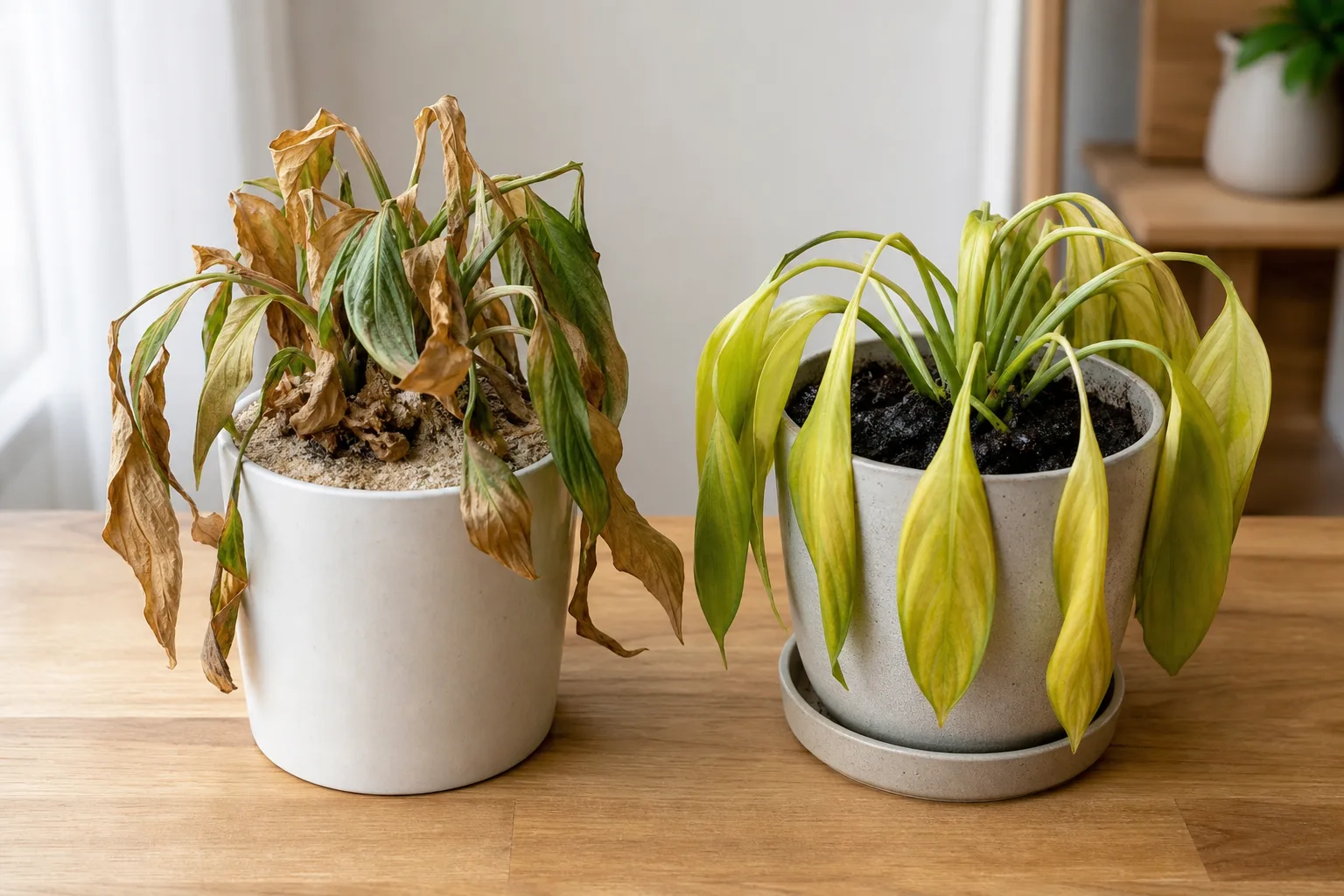
Wilting is ambiguous — both too little and too much water show limp leaves. Context and soil feel separate them.
Underwatering signals: Top inch bone dry; container very light; leaves limp but still green; flowers shrivel before foliage yellows; plant perks up within an hour of a deep soak. This is the most common summer basket failure.
Overwatering signals: Soil smells sour or stays wet for days; lower leaves turn yellow while stems may still feel soft; wilt persists after watering; roots turn brown and mushy if you unpot. Gardening Know How lists sudden yellowing followed by wilt and leaf drop as classic oversaturation progression. Once advanced root rot sets in, recovery is unlikely — prevention beats rescue.
The wet-wilt trap: If leaves droop but soil is soggy, do not add more water. Improve drainage, move the pot out of direct afternoon sun temporarily, and let the root zone approach the dry-down threshold before the next cautious soak.
Fungal issues from wet foliage: Gray mold (botrytis) and petal blight increase when humidity is high and leaves stay wet overnight. UF/IFAS recommends keeping flowers and foliage dry during irrigation — another reason morning soil-line watering wins.
Mulch, Pot Size, and Heat Tools That Cut Water Loss
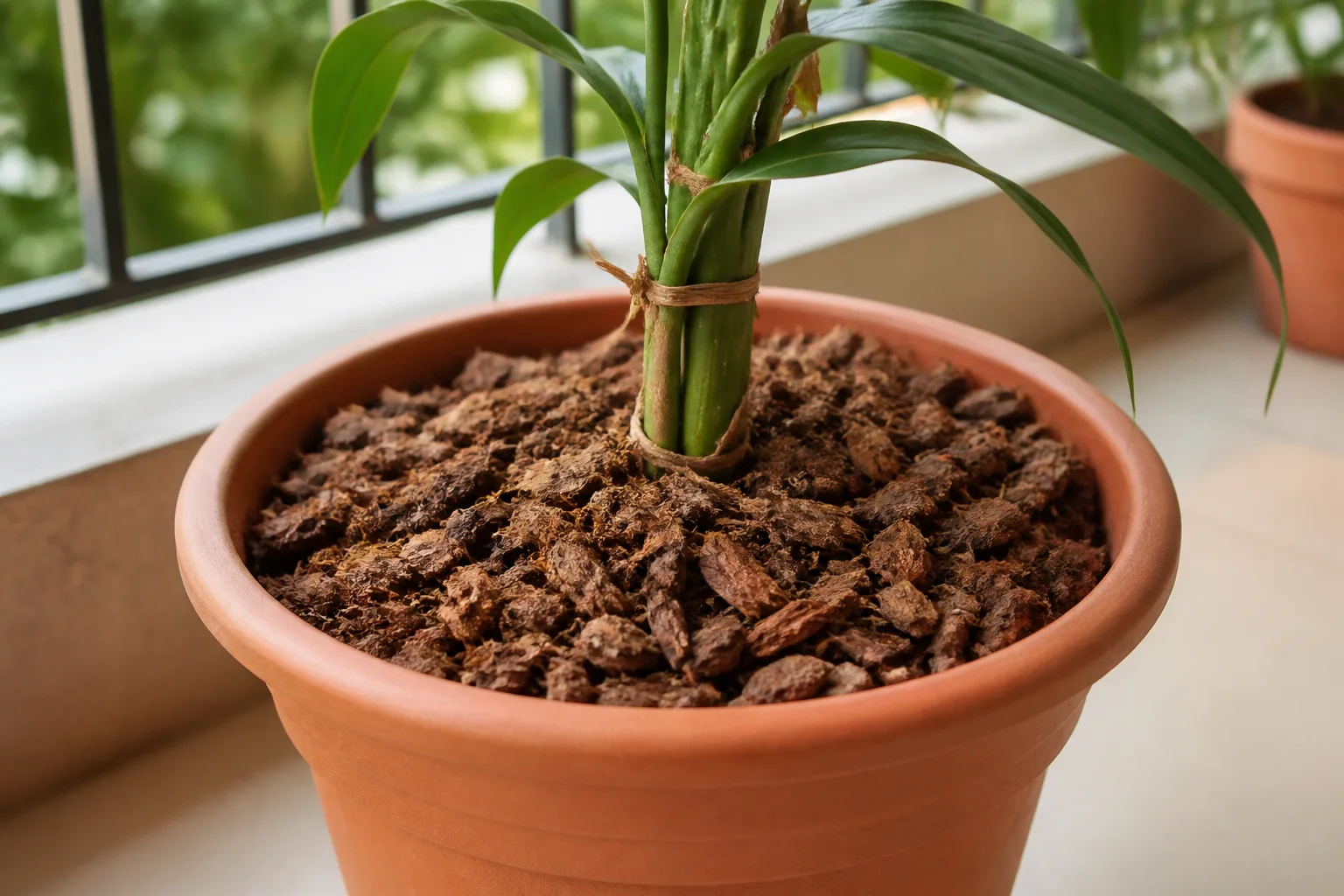
Smart setup reduces how often you chase the hose.
Mulch in beds: A 2–3 inch organic mulch layer shields soil from sun and wind, slowing evaporation. UF/IFAS Pasco County lists refreshing mulch among first steps to retain soil moisture during drought. Pull mulch slightly away from stems to avoid collar rot.
Surface mulch in containers: Lightweight materials such as buckwheat hulls on pot surfaces — a technique nursery growers use on large patio containers — cut evaporation without packing the mix. Avoid dense layers that trap water against the crown.
Pot choice: Glazed ceramic and thick resin lose water slower than thin black plastic. Larger volumes buffer heat. For hanging baskets, coir or fiber liners dry faster than solid-sided pots — plan accordingly.
Grouping pots: Clustering containers creates a slightly more humid microclimate and shades outer pots. Move the most stressed baskets to afternoon shade during heat waves if bloom quality matters more than perfect sun exposure.
Rain sensors and timers: If you irrigate beds automatically, a working rain shutoff is required in many states and prevents accidental overwatering after storms.
Fertilizer Timing With Water
Water and feed are linked. Petunias are heavy feeders when blooming hard — Richmond County Extension suggests complete water-soluble fertilizer once or even twice weekly, replacing two plain-water sessions with feed sessions during peak bloom.
Apply fertilizer to moist soil, not dust-dry roots. Dry fertilizer on dry roots risks burn; soluble feed on saturated soil dilutes safely. Ward’s Nursery growers (quoted in industry education) recommend blossom-booster liquid every other watering or timed granular scratch-ins at mid-June, mid-July, and mid-August for northern-season plantings.
Do not use fertilizer as a wilt cure. If the plant is dry, plain water first. If the plant is yellow from rot, fertilizer makes the problem worse.
For full feeding schedules and N-P-K choices, see petunia fertilizer guidance.
Five Watering Mistakes That Stop Blooms
Watering on a calendar without checking soil. Heat waves and cloudy weeks break any fixed schedule.
Misting leaves instead of soaking roots. A sprinkle greens the surface while the center of the root ball stays dry — classic basket failure.
Letting baskets go bone dry repeatedly. Petunias may revive, but each crash cycle aborts buds and invites spider mites on stressed tissue.
Standing water in saucers. Drain after every soak. Roots need air as much as moisture.
Using cold hose water on blazing hot soil. Extreme temperature shock is rare but shocking roots with frigid water on a 95°F afternoon adds stress. Fill a can and let it sit, or water earlier in the day.
Recovery When You’ve Under- or Over-Watered
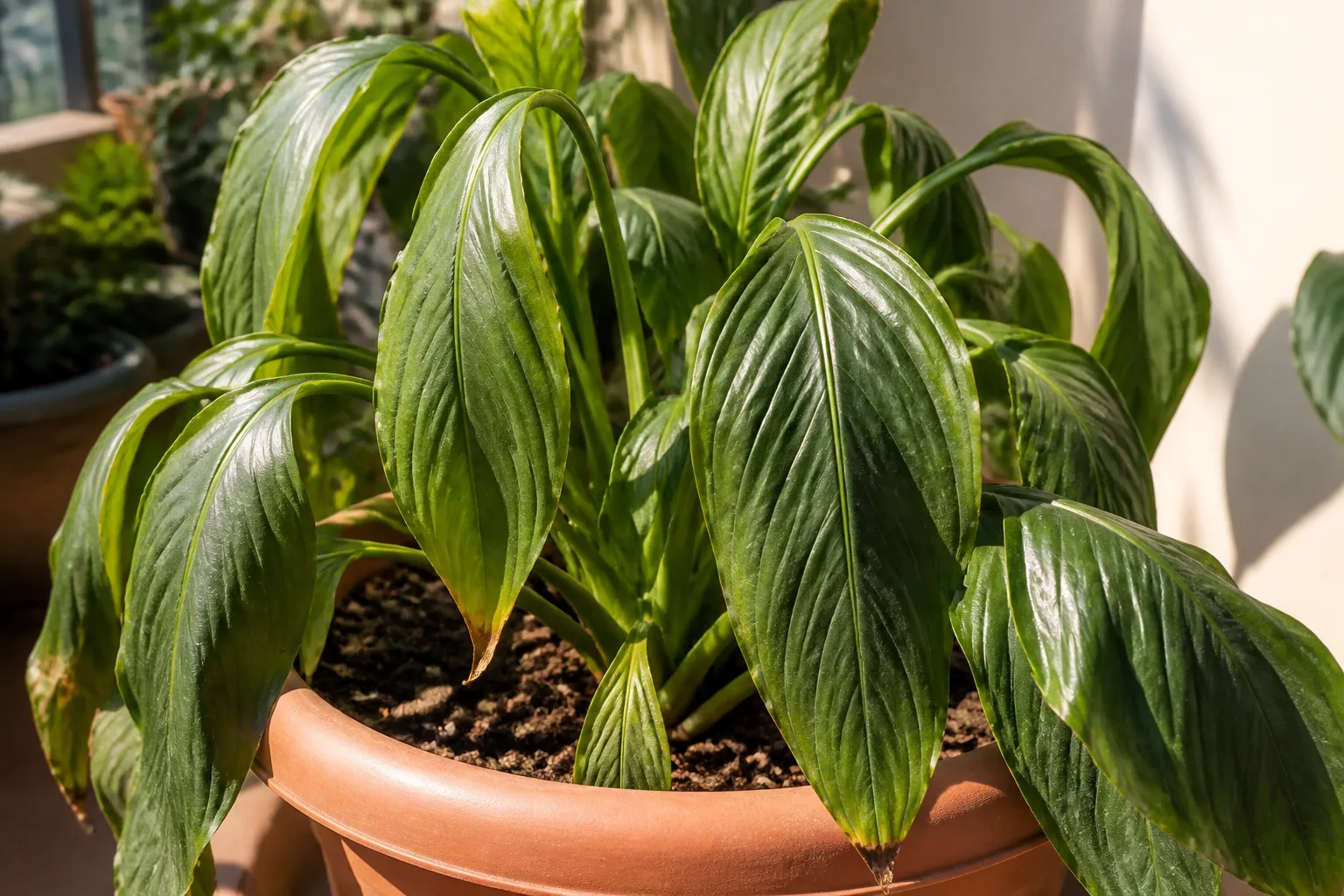
Underwatered recovery: Submerge the entire pot in a bucket of water for 10–15 minutes if mix has shrunk away from the sides, then let drain fully. Otherwise, water slowly in three passes ten minutes apart so peat rewets. Move extreme cases to bright shade for 24 hours. Expect partial flower loss; new buds return in about a week if sun and feed are adequate.
Overwatered recovery: Stop watering. Tip the pot on its side to drain any trapped water. If soil smells bad, unpot, trim mushy roots, and repot into fresh, well-draining mix — do not reuse soggy media. Hold fertilizer until new growth appears.
When to replace instead of rescue: If more than half the root mass is brown and soft, or stems are blackened at the base, start fresh. Petunias are inexpensive annuals; a clean plant often outperforms a rotting one by midsummer.
For wilt causes beyond water — pests, disease, heat — see the petunia care guide troubleshooting section.
Conclusion
Petunias reward gardeners who treat water as a daily observation habit in containers and a weekly deep-soak rhythm in beds — always verified with a finger or lift test, not a generic calendar. Check the top inch for dryness, soak until water drains, favor morning soil-line irrigation, and adjust frequency as summer heat and plant size increase. Hanging baskets on sunny porches will out-drink garden beds every time; Wave spreads drink more than a skinny edging row even in the ground.
Get the rhythm right and petunias stay among the easiest heavy bloomers you can grow. Miss it twice in a hot week and they look like a mystery disease — when the fix was almost always at the hose. Keep the soil-check method handy, link it to your location and season, and you will carry color from late spring deep into fall without guessing.



