How Often to Deadhead Perennials: A Practical Guide
Learn how often to deadhead perennials, where to cut, which flowers rebloom, and when to leave seed heads for birds and winter interest.
The Short Answer: Check Often, Cut When the Bloom Fades
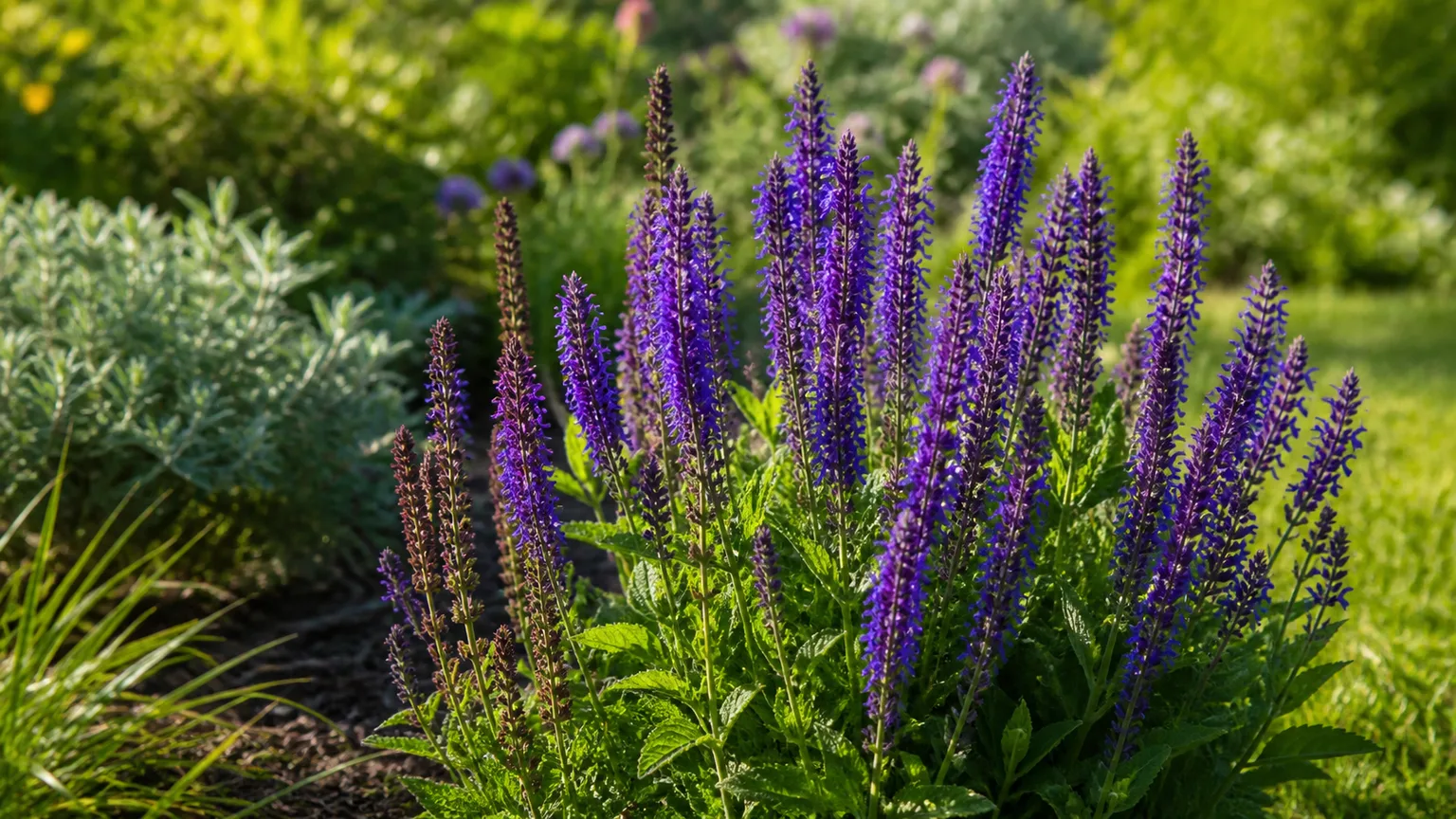
Most perennials do not need a strict daily deadheading schedule. Check flowering plants every few days during a heavy bloom period, then remove a spent flower when it is fading, browning, or dropping petals and the plant still has fresh buds or flowers to offer. For many garden perennials, that works out to once or twice a week; fast-fading daylilies may need attention daily, while a tall sedum may need no deadheading at all.
The best frequency follows the plant rather than the calendar. Penn State Extension notes that a flower’s life can last anywhere from a day to several weeks, and that heat and heavy rain shorten that life. A cool, mild week may require little work; a hot week with repeated storms can turn a bed from fresh to ragged in a few days (Penn State Extension: To Deadhead or Not?).
Deadhead more often when your goal is repeat bloom, a tidy display, or less self-sowing. Cut less—or not at all—when the plant is a one-time bloomer, sheds its own flowers, is setting seed for next year, or has seed heads you want to leave for birds and winter structure.
What Deadheading Actually Changes
Deadheading is the removal of a spent flower or flower cluster before it completes seed production. It is a small form of pruning, but it is not the same as cutting back the entire plant, shaping a shrub, or removing healthy foliage.
Once a flower is pollinated, the plant can shift resources toward fruit and seed. Removing the fading bloom can interrupt that sequence and, in plants capable of reblooming, keep the plant investing in additional buds. Clemson University Extension explains that many established perennials can be encouraged to flower a second time when spent flowers are removed, but that benefit depends on the plant rather than being a universal response (Clemson Extension: The Gardener’s Toolkit—Deadheading).
There are three separate reasons to make the cut. You may be trying to create another flush of flowers, keep brown heads from distracting from healthy foliage, or prevent a prolific plant from scattering seed through a path or neighboring bed. Those goals can lead to different decisions on the same plant: deadhead early for more flowers, then leave the final heads later in the season for birds.
Deadheading is also a useful inspection habit. As you reach into a clump, you can spot powdery mildew, chewing damage, collapsed stems, or a plant that is dry at the root zone. Removing a few wet, rotting petals may make the plant look better, but it does not cure a disease or substitute for better spacing, drainage, light, or watering.
Read Plant Signals Instead of Following a Calendar
Start with the flower. A bloom is ready when its color has dulled, petals are curling or falling, the head droops, or the flower has become visibly less attractive. Do not wait for every head on the plant to turn brown, because many perennials carry new buds, open flowers, and spent blooms at the same time.
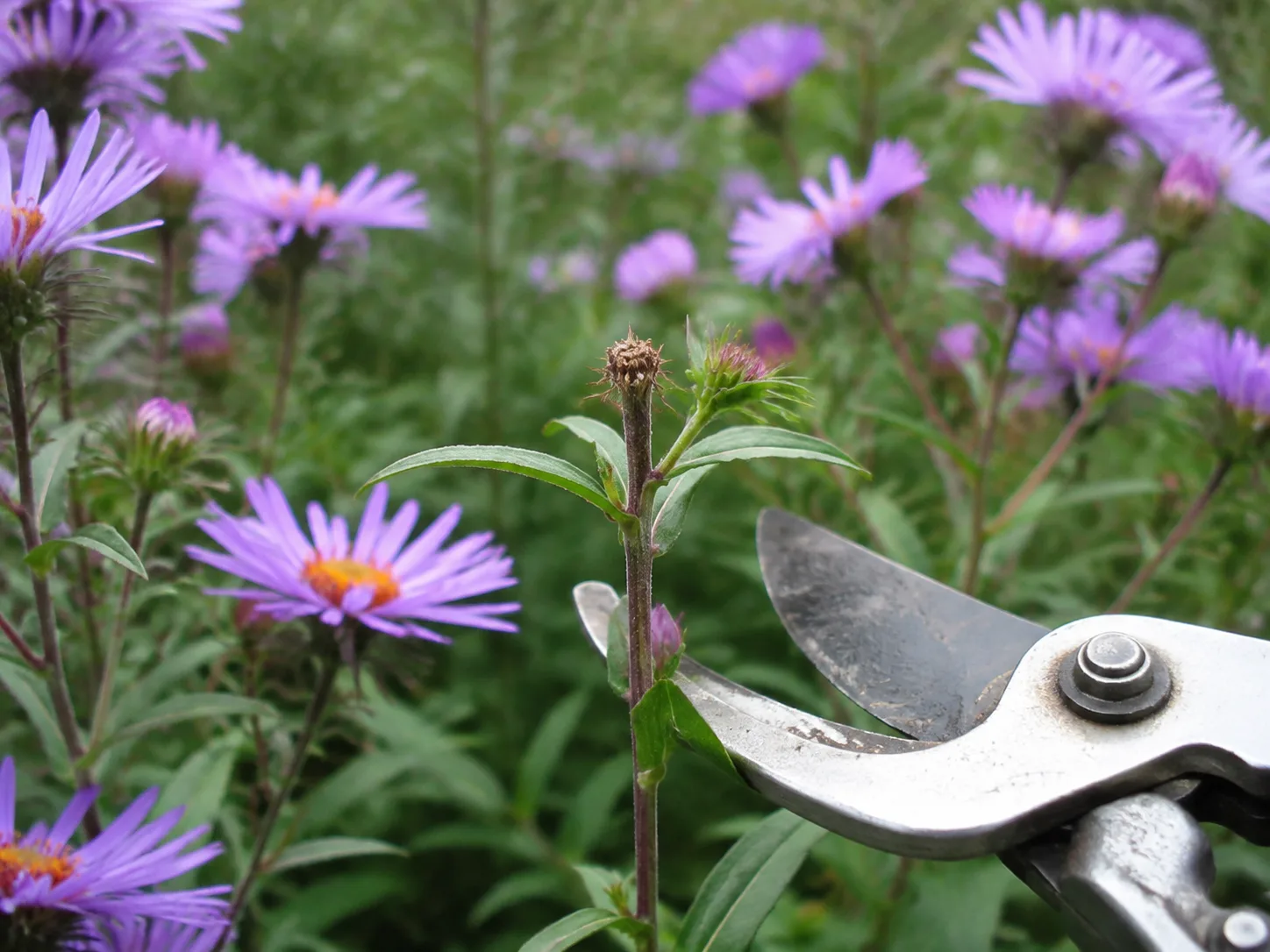
Look underneath the faded head before cutting. A fresh side bud, a branching point, or a second flower waiting lower on the stem tells you that the plant still has a reason to keep flowering. If the whole stem is finished and there are no buds or side shoots, remove the stem farther down according to its growth habit instead of leaving a conspicuous stick.
Weather changes the interval. Rain can flatten or stain flowers, while heat can make petals collapse quickly; Penn State Extension recommends evaluating the garden frequently because the flower’s lifespan, not a fixed number of days, determines when deadheading is useful. In a cool spell, a weekly check may be enough. In a hot spell, a quick pass every two or three days can keep the job from becoming a major cleanup.
The plant’s growth stage matters just as much. A newly planted perennial under drought or heat stress should not be aggressively sheared just to make it look tidy. Remove a clearly damaged flower if you need to, but correct water, shade, or transplant stress before asking the plant to make another flush.
Choose a Cadence That Fits the Flower
There is no prize for making deadheading a full-time job. Use the lightest schedule that accomplishes your goal, and remember that a daily inspection is not the same as a daily cut.
| What you see | Useful cadence | Best fit |
|---|---|---|
| Individual flowers fade in a day | Check daily or every other day | Daylilies, some blanket flowers, flowers grown for a formal display |
| New and old blooms overlap | Check every 2–4 days | Shasta daisies, coreopsis, gaillardia, pincushion flowers |
| Flower clusters last about a week | Check weekly | Garden phlox, bee balm, many salvias and veronicas |
| A tall spike blooms from bottom to top | Cut after about two-thirds of the spike fades | Delphinium, foxglove, liatris, spike veronica |
| A broad flush finishes together | Shear or cut once after the flush | Catmint, hardy geraniums, threadleaf coreopsis |
| The plant self-cleans or makes valuable seed heads | No routine deadheading | Sedum, echinacea, rudbeckia, many self-cleaning flowers |
These are starting points, not labels that override the cultivar tag. Garden Gate’s updated perennial guide shows why: two plants with similar flowers can differ in rebloom, reseeding, and the right cutting height. The useful question is not “Which plants are on a deadheading list?” but “What does this plant do after a spent flower is removed?” (Garden Gate: Deadheading Perennials).
For a mixed border, divide the work into passes. On a short daily walk, pinch the daylily flowers and obvious brown heads. Once a week, handle phlox, salvia, and daisy-family plants. After a major flush, step back and decide whether a whole stem needs cutting rather than continuing to pick off individual heads that no longer have a fresh bud behind them.
Where to Make the Cut
The correct cut is determined by the next useful growth point, not by a universal distance below the flower. Use clean, sharp snips, and aim for the smallest cut that removes the spent part while keeping healthy leaves and developing buds intact.
Single Flowers and Branched Stems
For a single flower on a branching stem, follow the stem downward until you find a healthy leaf pair, leaf node, or side bud. Cut just above that point so the remaining stem does not end in a long bare stub. The dormant-looking node may be where the plant makes its next branch or flower.
If several flowers share one stem but lower buds are still green, remove only the faded flower or the finished branch. Do not chop across the whole tip and take unopened buds with it. This is the cut that rewards patience: look first, snip second.
When a stem has finished all of its flowers, trace it back to a strong side branch or the main foliage mound. On a plant with a basal rosette, cutting the empty stalk down to that rosette usually gives a cleaner result than leaving a rigid stem above the leaves.
Spikes, Clusters, and Bare Stalks
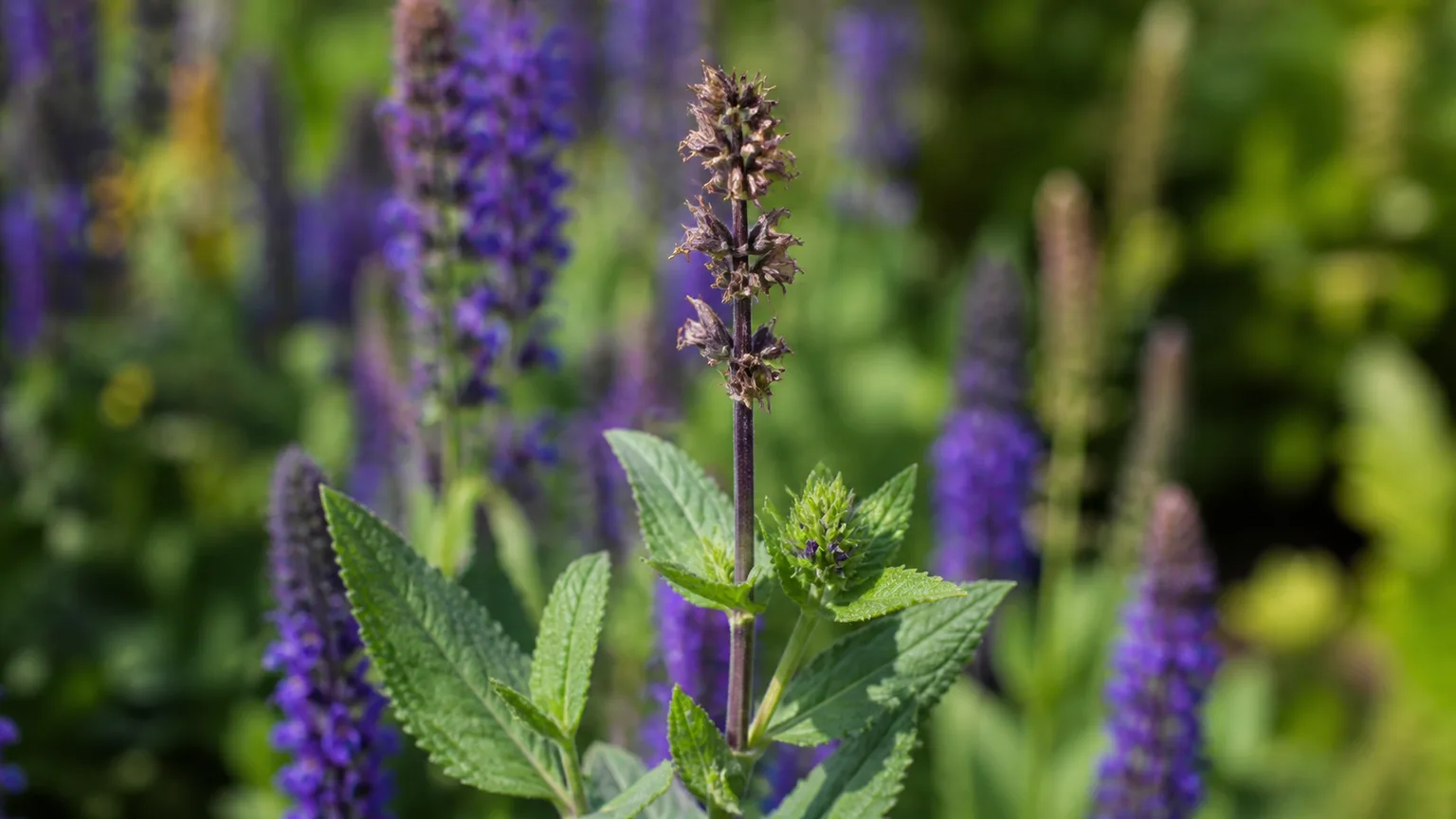
Spikes need a different rhythm. Plants such as delphinium, veronica, salvia, and liatris open flowers from the bottom upward, so cutting the spike after the first few lower flowers fade can remove a tall line of unopened buds. Wait until roughly 70 percent of the spike is finished, then cut to a side bud or to the basal foliage, depending on the plant.
Garden Gate and Fine Gardening both use this upward-blooming pattern as an important exception to the simple “cut as soon as it fades” rule. The point is to capture the remaining display while still preventing the finished spike from dominating the plant’s energy and appearance (Fine Gardening: Off With Their Heads).
For a rounded cluster such as phlox, wait until most of the cluster is past its best, then cut the cluster back to a branching point or healthy leaves. If the whole flowering stem is finished, remove it to the plant’s foliage mound. For a dense mass such as threadleaf coreopsis or catmint, a light shear after the main flush can be more effective than hundreds of tiny cuts.
Bulbs, Rhizomes, and Basal Foliage
Bulbs and rhizomatous perennials are where an overenthusiastic cleanup can cost next year’s show. You can remove a faded daffodil, tulip, iris, or daylily flower and, when the flower stalk has finished, remove that stalk too. Leave the green leaves in place until they yellow and collapse naturally.
Those leaves are still making carbohydrates that the bulb, rhizome, or crown stores for the next growing season. Do not braid, tie, fold, or cut them simply because the flowers are gone. A tidy flower bed is not worth weakening the underground storage organ that has to power next year’s leaves and buds.
Daylilies illustrate the rule well: snap off individual spent flowers as they fade if you want a clean plant, then cut the bare scape to the foliage when its buds and flowers are finished. Peonies are different again; removing faded flowers keeps the plant neat, but the foliage should remain to support the crown, and deadheading does not turn a once-blooming peony into a repeat bloomer.
Group Perennials by Their Payoff
Classifying a perennial by the payoff you want is more useful than memorizing a single “deadhead” list. The same cut may extend bloom on one plant, only improve appearance on another, and remove an important food source from a third.
Reliable Repeat Bloomers
Repeat bloomers are the best return on a regular deadheading habit. Salvia, Shasta daisy, blanket flower, coreopsis, yarrow, bee balm, pincushion flower, and some veronicas can respond with more flowers when spent blooms are removed before seed develops.
For these plants, begin when the first flush starts to look tired. Cut individual heads to side buds while the plant is branching, then make a broader cut to the foliage mound when a stem has finished. Water consistently during the recovery period, but do not assume fertilizer is the missing ingredient; poor light, drought, crowding, or an unsuitable cultivar can limit rebloom even when every dead flower is removed.
The response is also a matter of scale. A salvia that sends up several new spikes after one cut may reward a weekly walk. A mature yarrow that flowers in one broad wave may be better handled with one post-flush trim. Watch what the plant does after the first cut and adjust the next interval instead of applying the same rule to the entire border.
One-and-Done Flowers That Benefit From Tidying
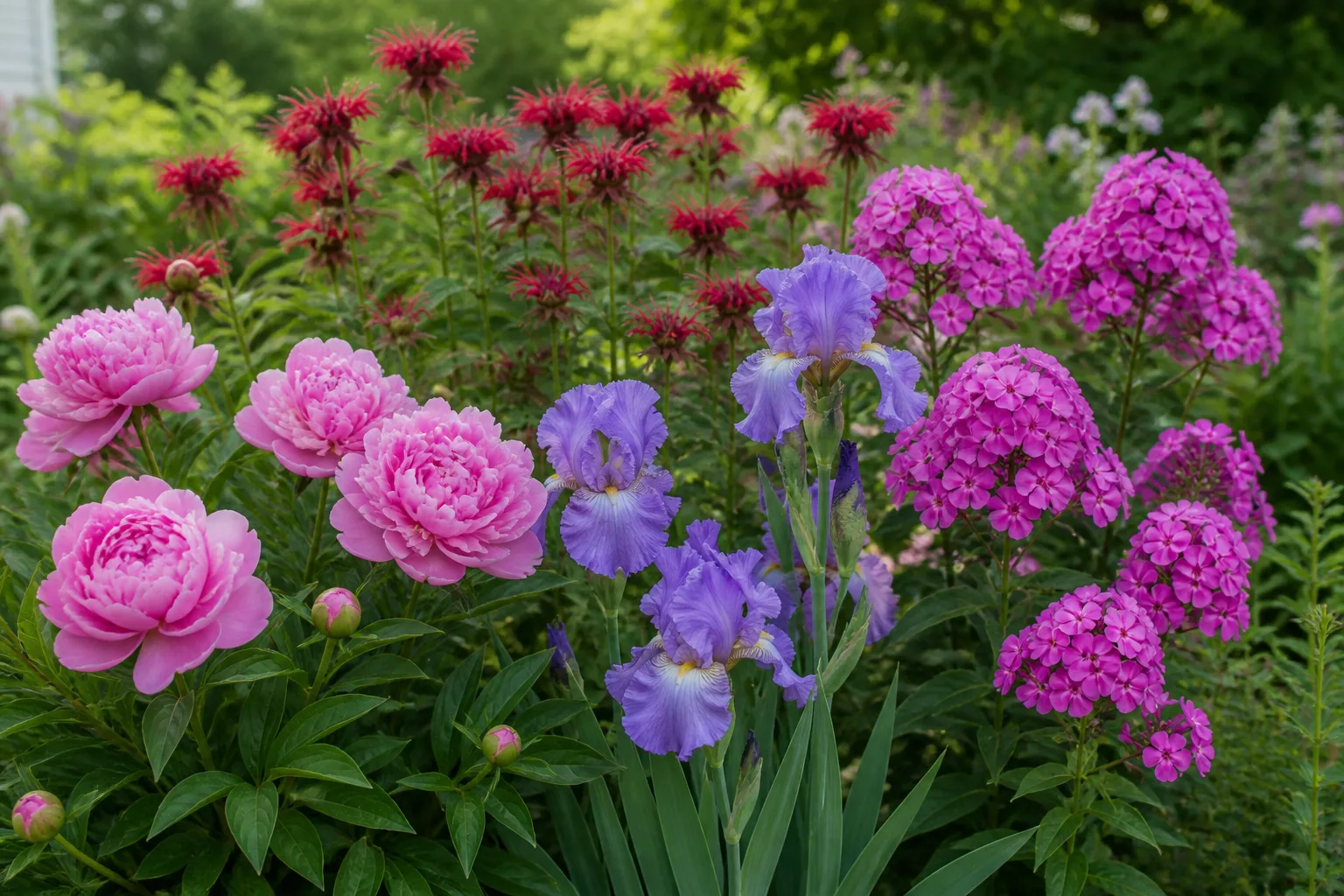
Some perennials bloom once in a defined season, and deadheading will not create a second show. Peonies, many bearded irises, hostas, and some lilies may still be worth cleaning up when the flowers fade because brown petals and seed pods distract from the foliage or because you want to limit seed production.
Call this an appearance cut, not a bloom-boosting cut. Remove the spent flower or finished stalk, then stop. Do not keep cutting healthy leaves in an effort to make a one-time bloomer flower again.
Iris and lilies need special care around foliage. Remove the dead flower and the bare flower stalk when appropriate, but leave the fan or strap-like leaves until they naturally decline. The flower is finished; the plant’s seasonal work is not.
Self-Seeders and Self-Cleaning Plants
Self-seeding perennials can be valuable when you want a loose, naturalized planting, replacement seedlings, or flowers in a difficult gap. Columbine, foxglove, hollyhock, cardinal flower, and some rudbeckias can spread from seed, so remove their heads only where you need to control placement.
Self-cleaning plants drop old flowers on their own and may not repay the effort. A flower that disappears neatly while the plant keeps producing buds does not need a gardener to duplicate that work. The better use of your time is to inspect the foliage and soil for problems.
Colorado State University Extension describes deadheading as a balance between the value of continued flowers and the value of seeds or fruit. That balance can shift within one season: cut early flowers for a longer display, then leave the last healthy heads when the garden’s pollinators have less forage and birds can use the seeds (PlantTalk Colorado: Deadheading—How to and When to).
Plant-by-Plant Deadheading Schedule
Use this table as a field guide, then confirm the behavior of your cultivar. “Weekly” means inspect weekly and cut the heads that are actually finished; it does not mean remove every flower on the same day.
| Perennial | How often to check or cut | Where and why |
|---|---|---|
| Salvia | Weekly during active bloom; repeat after each flush | Cut finished spikes to a side branch or basal foliage to encourage another round. |
| Garden phlox | About weekly while clusters are fading | Remove old clusters to a side branch; clear finished stems to limit seedlings and improve appearance. |
| Shasta daisy | Every few days to weekly | Cut spent heads to the next side shoot; remove finished stems to the foliage mound. |
| Coreopsis | Every few days during a strong flush | Pick individual heads, then lightly shear a tired mass after flowering to prompt fresh branching. |
| Yarrow | Weekly or after the main flush | Remove brown clusters to limit self-sowing and sometimes encourage later flowers. |
| Bee balm | Weekly during the first flush | Cut finished heads back to a side bud; remove collapsing, mildew-covered material rather than leaving it wet in the clump. |
| Blanket flower | Every few days in hot weather | Snip individual faded heads and keep the plant flowering toward fall. |
| Delphinium and spike veronica | Once most of each spike has faded | Wait until about two-thirds to 70 percent is finished, then cut to a side bud or basal foliage. |
| Daylily | Daily if you want a formal look | Snap off each spent flower; cut a bare scape to the foliage, but never remove green leaves for tidiness. |
| Peony | Once after petals fall | Cut the flower and developing seed pod to the first leaf for appearance; leave all healthy foliage. |
| Bearded iris | Once each flower stalk finishes | Remove faded flowers and cut the stalk to the leaf fan; leave the fan growing. |
| Tall sedum | Usually no schedule | Leave seed heads for fall structure and wildlife; cut them in spring if you prefer a cleaner start. |
The most important entries are the exceptions. Salvia and phlox benefit from attention while they are still capable of producing more flowers; peony and iris mainly benefit visually; sedum can be more valuable left intact. Treating all three as if they needed the same weekly haircut wastes time and can remove the very features that make a late-season garden useful.
When Not to Deadhead
Skip routine deadheading when the flower is already self-cleaning, when the plant is a reliable self-seeder you want to keep, or when its dry seed head adds winter structure and food. Echinacea, rudbeckia, sedum, astilbe, and some asters can stand well through fall and winter, especially in a naturalistic border.
You can also leave some heads rather than making an all-or-nothing choice. Deadhead the front edge beside a patio, allow the back half of the bed to set seed, or remove only heads that are scattering into paths. This selective approach preserves habitat and winter texture while keeping the area you see most often tidy.
Do not deadhead purely because a flower is no longer bright if it is hosting insects, holding seed for birds, or providing the structure you want in the off-season. Penn State Extension specifically highlights the value of leaving seed pods and heads through winter, including coneflower and rudbeckia seed for birds. The choice is a garden-design decision as much as a maintenance decision.
Finally, avoid cutting plants that are still green and actively growing just to finish the chore early. A perennial can look imperfect while it is still storing energy, feeding pollinators, or moving through a final flowering flush.
The End-of-Season Stop Rule
Stop deadheading when the plant is no longer making a worthwhile number of new buds, its growth visibly slows, or the weather has shifted toward frost and dormancy. At that point, another round of cuts may remove seed heads without producing a meaningful flush of flowers.
There is no universal “last day” of deadheading. In a warm climate, salvia or blanket flower may keep producing buds long after a colder garden has finished. Use the plant’s signals: smaller or fewer buds, faded foliage, hardening seed capsules, and flowers that no longer recover after rain all suggest the season is closing.
You can split the final decision. Remove diseased or collapsing material, keep a few healthy seed heads for birds, and cut back only the stems that obstruct a path. Clemson Extension recommends considering seed heads as the growing season wanes because they can provide winter food, while practical gardening guidance also recognizes that a tidy, sanitized bed may be the better choice where old foliage stays wet.
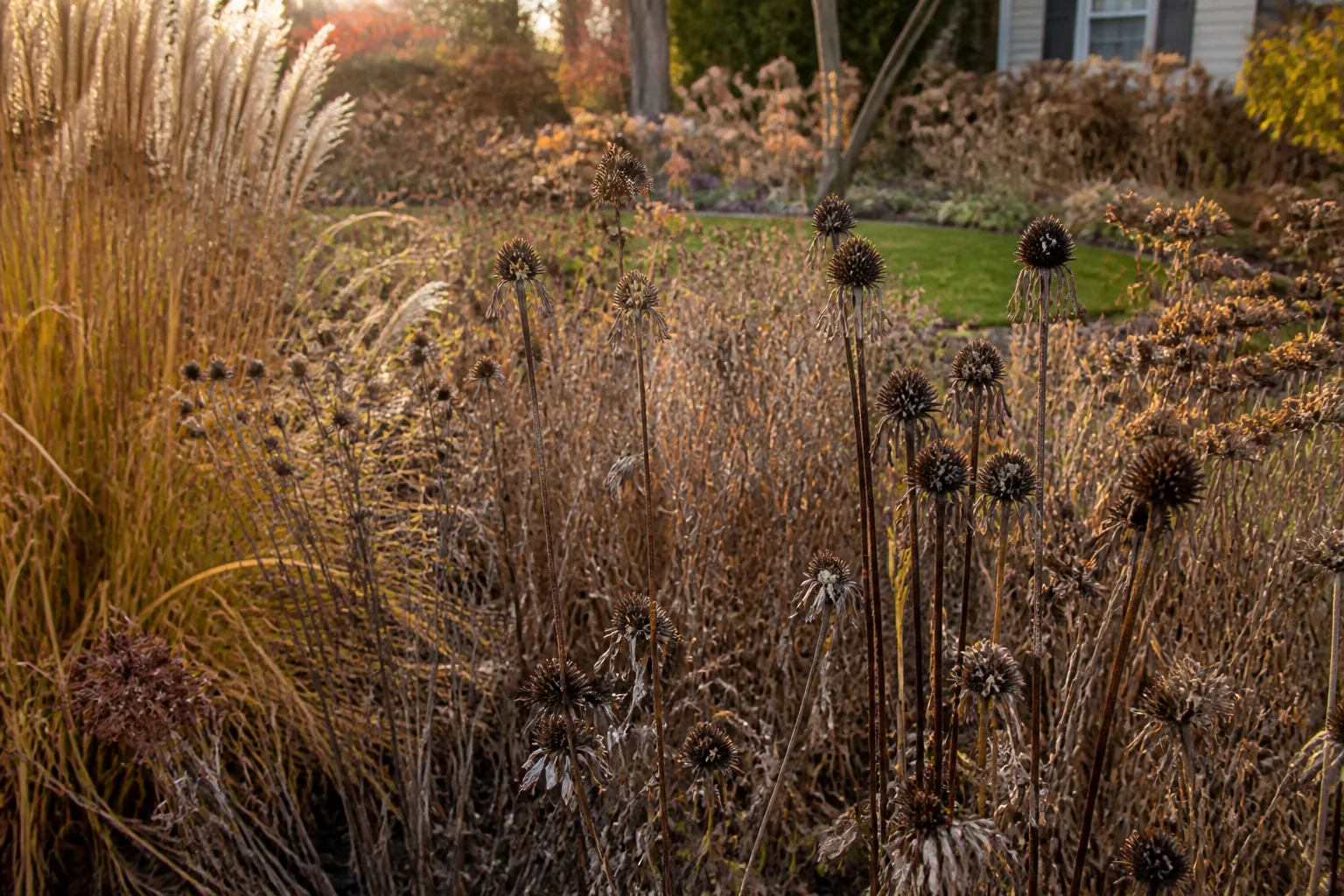
When you do make the final cut, distinguish deadheading from a full winter cutback. Remove the finished flower stalk if the plant is still green at the base, but do not mow down healthy foliage on bulbs, iris, or other plants that need it to finish storing energy. Mark the stems you leave so spring cleanup is quick and gentle.
Tools, Weather, and Sanitation
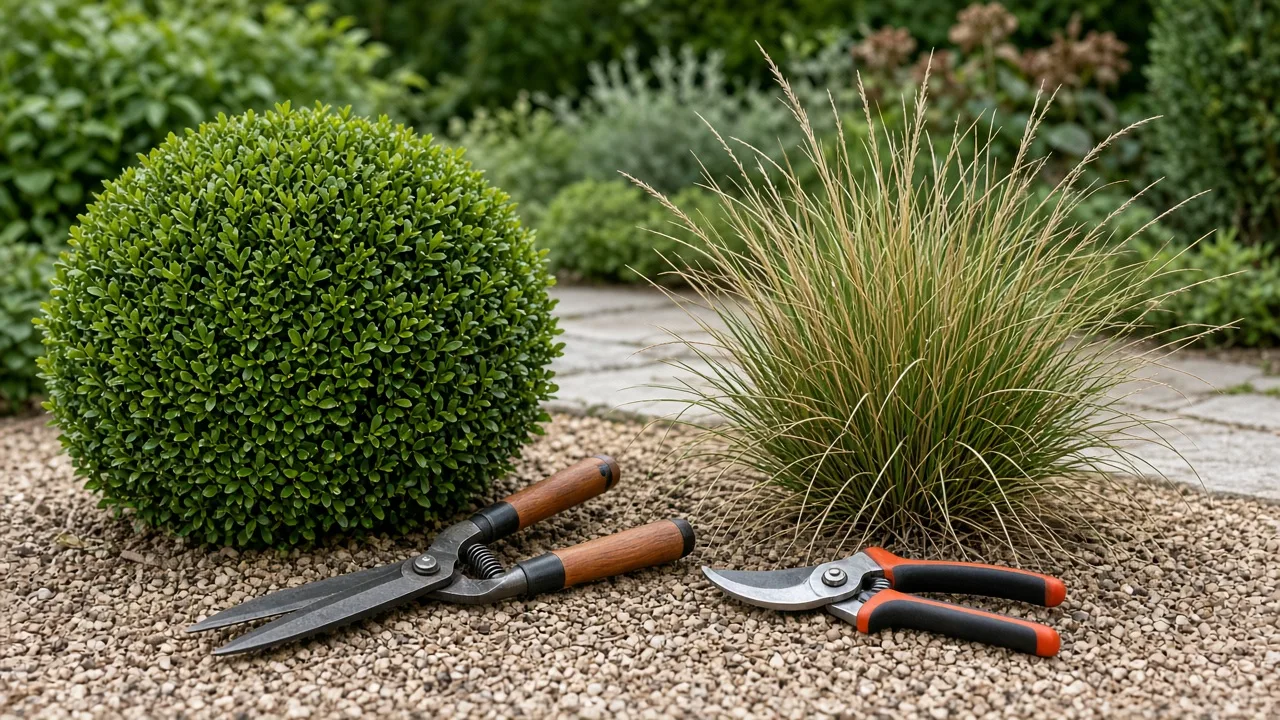
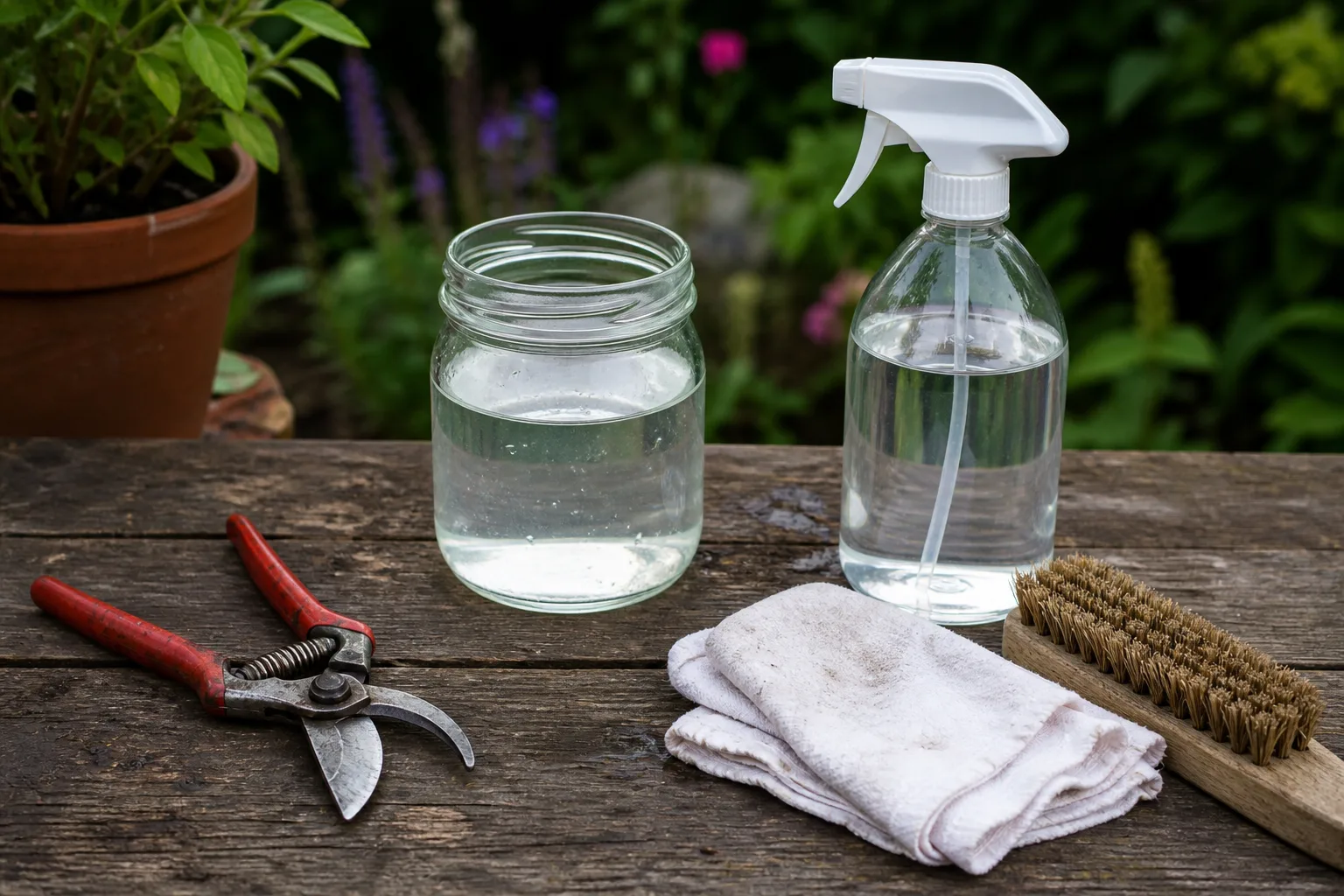
Small hand snips or bypass pruners are enough for most flower stems. Use your fingers for soft, easy-to-break stems only when the flower comes away cleanly; a sharp blade is better for fibrous or woody stalks. Garden Gate and Fine Gardening both emphasize matching the tool to the stem and the plant’s growth habit rather than using a hedge shear for every job.
Choose a dry part of the day when the foliage has dried, especially if you are moving between several plants. Wet flowers and leaves cling to blades and gloves, and the moisture makes the cleanup less pleasant. A dry window is a sensible risk-reduction step, not a guarantee that a disease cannot spread.
Brush debris from the blades as you work. If you move from a plant with suspicious spotting, powdery mildew, rust, or a collapsing stem to a healthy clump, clean and disinfect the pruners first; Clemson Extension specifically warns that contaminated blades can transfer problems between plant parts or plants.
Keep removed flowers out of the bed if they are wet, diseased, or likely to root or seed where you do not want them. Healthy, unproblematic material may suit a properly managed compost pile, but heavily diseased debris should follow local green-waste or household-disposal guidance instead of being returned to the garden.
Common Deadheading Mistakes
Cutting below the next bud is the fastest way to reduce your next wave of flowers. Look for unopened buds and side shoots before shortening the stem, particularly on salvias, veronicas, delphiniums, and daisies that branch below a spent head.
Removing bulb foliage with the flower is another costly shortcut. The flower stalk is finished, but the leaves are still working. Let them yellow naturally, even when the bed looks untidy for a few weeks.
Assuming every perennial reblooms creates unnecessary work and unrealistic expectations. Deadheading a peony can improve the plant’s appearance; it does not change the plant’s bloom cycle. Deadheading tall sedum can remove winter interest without adding another flush.
Using one cadence for the whole border makes the chore harder than it needs to be. A daily daylily check, weekly phlox pass, and one-time iris cleanup are different jobs. Group plants by their response and handle them in the same walk.
Cutting in extreme heat or drought can add stress without earning a useful flush. Remove damaged flowers if they are obstructing the plant, but postpone a major shear until the plant has adequate moisture and the weather is less punishing.
Leaving diseased debris because it is technically a deadhead can allow a recurring problem to linger. The goal is not to make every bed sterile; it is to remove clearly suspect material, clean tools when necessary, and improve the growing conditions that allowed the problem to develop.
Make Deadheading a Small, Sustainable Routine
The most sustainable deadheading routine is one you will keep. Carry a pair of snips on a garden walk, but give yourself permission to stop after one bed or one bucket. Penn State Extension and Fine Gardening both describe frequent, small evaluations as less overwhelming than waiting until every spent flower has become a large cleanup.
Use a three-question pause at each plant: Is the flower truly finished? Is there a bud or side shoot below it? Do I want more flowers, fewer seeds, or simply a cleaner look? If the answer to the first question is no, leave the flower. If the answer to the second is yes, make a precise cut. If the answer to the third is “winter habitat,” leave the head and move on.
Keep a simple note for plants that surprise you. If one salvia reblooms two weeks after a cut, put it on the weekly route. If another stays unchanged after three rounds, reserve deadheading for appearance. Garden conditions, cultivar, and weather all affect the response, so your own observation is more useful than an inflexible chart.
This approach also leaves time for higher-value work. If a perennial is flowering poorly, inspect sunlight, root-zone moisture, drainage, crowding, and the age of the clump before spending an hour removing every brown head. Deadheading can refine a healthy flowering system; it cannot rebuild one that lacks the conditions for growth.
Conclusion
Check your perennials every few days while they are blooming, and deadhead when a flower starts to fade—not because a calendar says it is time. Weekly is a good working rhythm for many plants, while daylilies and other fast-fading flowers may need more frequent attention and tall spikes may need one carefully timed cut after most of the spike is finished.
Cut to the next side bud, leaf node, or foliage mound, and leave green leaves on bulbs, iris, lilies, and daylilies until they naturally decline. Deadhead repeat bloomers such as salvia, phlox, coreopsis, yarrow, and Shasta daisies when you want another flush; treat peonies and iris as appearance jobs; and leave sedum, coneflower, rudbeckia, or chosen self-seeders when seed heads and wildlife matter more than a spotless bed.
The right schedule is the one that matches the plant and the purpose. A few thoughtful cuts can extend a display, but a few thoughtful decisions not to cut can protect next year’s growth, preserve winter habitat, and keep gardening from becoming another chore that runs the garden instead of serving it.