How Much Should You Water Plants in Fall? A Guide
How much should you water plants in fall? Learn how to check root-zone moisture and adjust for rain, soil, wind, new plantings, containers, and frost.
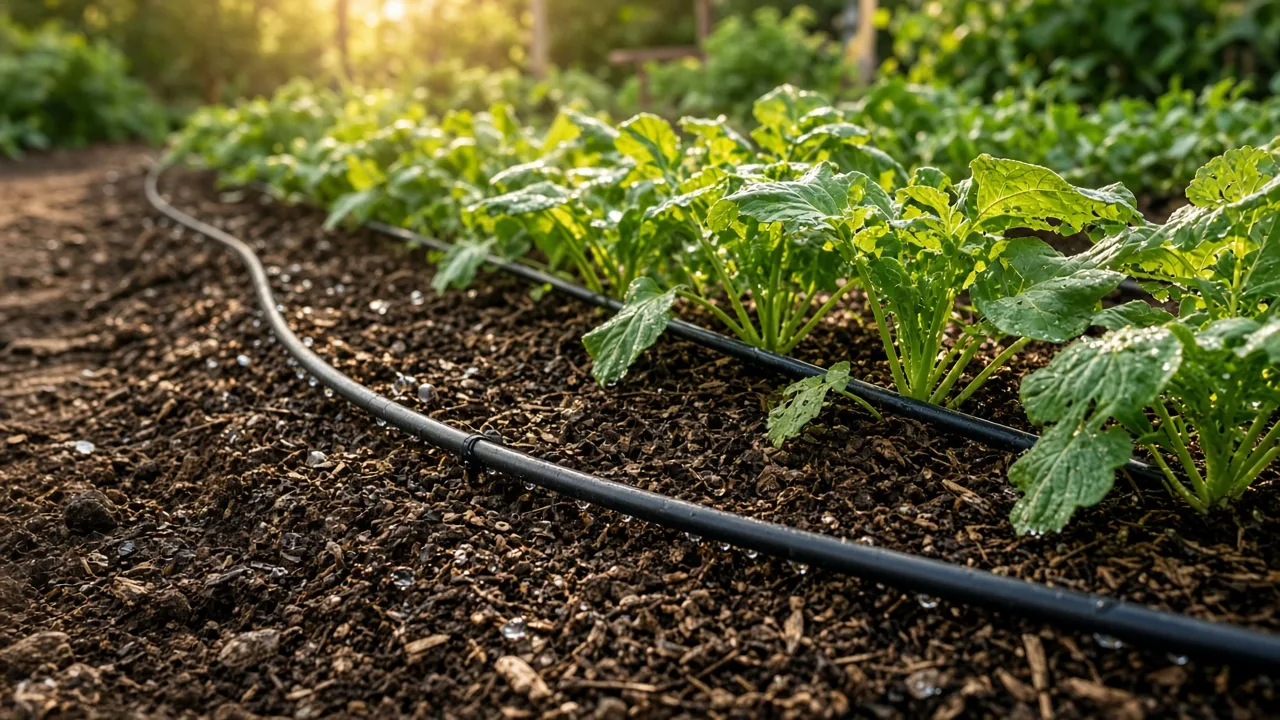
Water fall plants when their active root zone is drying, then apply enough water to soak that zone—not just wet the surface. There is no reliable universal amount or weekly schedule: a newly planted shrub, an established perennial border, a pot on a windy porch, and a bed that just received steady rain lose water at different rates.
The useful change from summer is to check more often than you water. Cooler air and shorter days usually slow evaporation, but sunny spells, dry wind, sandy soil, an exposed slope, and late-season heat can still pull moisture from a garden. Plants may also keep growing roots while their tops slow down, so autumn is not automatically a no-water season.
The fall watering rule: check the root zone, not the calendar
Before turning on a hose, look at the plant and the soil together. Check at the depth where the plant’s active roots are taking up water: a few inches down for many small annuals and perennials, and deeper around woody plants and trees. A dry crust at the surface can cover moist soil underneath; a dark surface can also hide a dry root ball beneath it.
Use a trowel or your fingers in a spot a few inches away from the stem, not directly against the crown. If the soil at root depth feels cool and damp and holds together when lightly pressed, wait and check again later. If it is dry, dusty, or crumbling through the main root zone, water slowly and then check that moisture actually moved downward.
Plant leaves are a late and imperfect gauge. Wilting can mean dry soil, but roots in saturated soil can also fail to supply water; cool-weather plants may also droop temporarily in bright afternoon sun. Check the soil before treating a wilted plant with more water, and look for a mismatch between what the roots feel and what the foliage shows.
Why plants need less water—but not always no water
Autumn reduces some forms of water loss: days are shorter, temperatures are lower, and many plants stop making as much new foliage. That often means an irrigation system can run less than it did in midsummer. It does not mean the root zone has a dependable reserve; weeks without meaningful rain can leave deep soil dry even when the lawn or top inch looks fine.
Some trees, shrubs, and perennials continue root growth after shoot growth slows, as long as the soil remains workable. Maintaining moisture through a dry spell helps those roots and prevents a plant from entering winter already stressed. Colorado State University Extension emphasizes that dry fall and winter conditions can injure roots before the damage becomes obvious in spring, especially when a region has little snow cover; Colorado State University Extension’s fall and winter watering guidance is written for Colorado’s dry climate, so use the principle locally rather than copying its regional amounts.
The other side matters just as much: lower temperatures slow drying, and many plants take up less water as they approach dormancy. Watering on the old summer timer can leave cool, slow-draining soil wet for too long. In fall, the soil check is what tells you whether “less water” means a smaller soak, a longer pause, or no supplemental water at all.
How to tell whether your garden needs a drink
A quick check in several representative spots is more useful than judging the whole bed from one patch. Test near a plant that receives full sun and one in shade, and include the edge of the bed if it lies under a roof overhang or dense canopy. A garden can have moist soil under a downspout and dry soil only a few feet away.
Check below the surface and beneath mulch
Move mulch aside before testing; a damp mulch layer can mislead you about the soil below it. Probe the root zone with a finger, narrow trowel, or soil probe, then feel the soil rather than relying only on its color. Clay may look wet while it is sticky and poorly aerated; a light, sandy soil may look dry soon after a small shower even though deeper roots still have moisture.
For a woody plant, take the sample within the area where roots extend, not at the trunk alone. The dripline—the ground beneath the outer edge of the canopy—is a useful starting boundary, but established tree roots can extend beyond the branches. Colorado State’s drought-watering guidance recommends applying water over the root area and soaking slowly; PlantTalk Colorado’s tree-watering notes also warn that hard or compacted soil may need a pause-and-repeat approach so water can infiltrate rather than run off.
Use rainfall as a credit, not a guarantee
A rain gauge tells you how much water fell in an open spot, but it cannot tell you how much reached every root zone. Leaves and roof edges divert rainfall, dense foliage intercepts some of it, and compacted or sloped ground can shed a hard shower before it soaks in. Check the soil after rain before deciding that a bed has received enough.
A simple gauge or straight-sided container placed away from a roof and sprinkler can show whether rain was a brief sprinkle or a real soak. If water ran off, pooled, or left only the top layer damp, treat the event as partial credit and recheck later. Epic Gardening’s seasonal guidance makes the same useful distinction: rainfall, temperature swings, and local exposure matter more than a preset fall timer (Epic Gardening).
Let soil texture and drainage set the pace
Soil texture changes both how fast water enters and how long it remains available. Sandy soil drains quickly and stores less plant-available moisture, so it may dry between rains sooner; a slow, thorough soak is still better than frequent splashes because a little water can disappear before reaching deeper roots. Check these beds more closely after a windy or sunny stretch.
Clay soil can hold water longer but often accepts it slowly. A fast hose stream may race across the surface, especially on compacted ground or a slope, while the soil beneath stays dry. Apply a low flow, pause when puddles form, and let water soak in before continuing; do not keep watering simply because the surface looks dry if the deeper soil is already wet.
Loam tends to balance retention and drainage, but “loam” does not guarantee that every part of a yard behaves alike. A raised bed, newly filled planting hole, amended border, or patch beside paving can have different moisture behavior from the surrounding native soil. When a plant repeatedly dries faster or stays wet longer than its neighbors, test that specific root zone and adjust the method before changing the entire irrigation schedule.
Water established garden beds slowly and deeply
For established perennials, shrubs, and trees, the goal is to wet the soil around the roots, not to wash the whole bed every time. Place a soaker hose, drip line, or gentle stream around the root area and move the water around rather than aiming continuously at the crown or trunk. A slow application encourages infiltration and reduces runoff on sloped or compacted soil.
A “deep” watering is defined by the depth of moist soil, not by how long a hose has been running. After watering, make a small check with a trowel: if moisture reached only the top inch, the session was shallow; if the relevant root zone is moist but not waterlogged, the application did its job. Colorado State Extension gives a 12-inch target for trees in its regional advice, but a shallow-rooted perennial, a newly installed shrub, and a young tree do not all have identical root depths.
For a large established tree, apply water across a broad section of the root zone, including the ground beneath the canopy and, where practical, just beyond it. Do not assume the trunk is the only watering point: most absorbing roots are farther out. In Colorado’s dry winter context, the extension rule of thumb is about 10 gallons per inch of trunk diameter, with amounts reduced for rain or snow; that is a local survival guideline for trees, not a universal dose for every garden or soil. Its full extension fact sheet explains the regional conditions behind the recommendation.
Give new plantings extra attention before winter
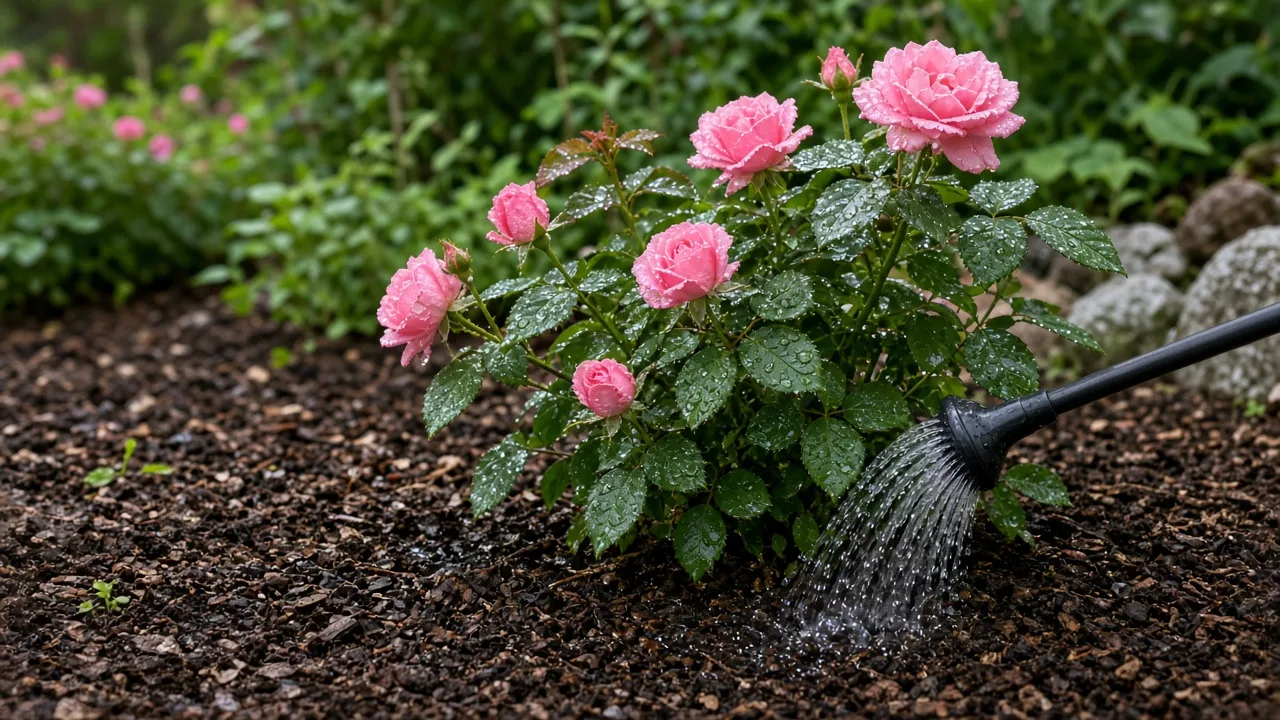
New plants have a smaller, less established root system than mature plants, so a dry pocket around the original root ball can matter even when the surrounding bed is moist. This is common after a late-season planting: the plant may look settled aboveground before its roots have spread into the surrounding soil. Check both the root ball and nearby native soil, because they can dry at different rates.
Water slowly around the root ball and just beyond it so roots are encouraged to move outward. Do not repeatedly pour a small amount right at the stem; that can wet only the surface and leave the outer portion of the root ball dry. Keep a recently planted perennial or shrub on a closer check than a mature plant, but still let soil moisture—not a fixed weekday—decide whether to water.
Young trees deserve special care during a dry, unfrozen fall because their roots have not yet explored a large volume of soil. Colorado State Extension estimates tree establishment at roughly one year per inch of trunk diameter and recommends applying water slowly to the root area; those numbers are tied to its dry-region guidance and should be adjusted for actual soil moisture and precipitation. If you planted a tree this year, check the root ball and surrounding soil separately before winter rather than assuming lawn irrigation reached it.
Keep active annuals and fall vegetables growing
Annual flowers and cool-season vegetables may still be producing leaves, flowers, or edible crops when autumn arrives. Their water needs follow active growth: a leafy vegetable bed in mild weather can use more moisture than a dormant perennial border, especially if plants are packed into a raised bed with a shallow soil volume. Continue checking the crop’s root zone while reducing summer irrigation as the weather cools.
Do not let a general “fall plants need less” rule dry out newly sown seed, new transplants, or shallow-rooted crops. Seeds need consistent moisture for germination, and young seedlings have not developed a deep network from which to draw water. At the same time, avoid leaving mature beds constantly wet after cool nights, because foliage and soil may dry more slowly than they did in summer.
Evergreen plants are a special case among ornamentals. Their leaves or needles continue losing moisture during sunny or windy periods even when growth is slow. A well-watered root zone before the ground freezes helps them enter winter with less drought stress, but water still cannot be taken up efficiently from frozen soil; keep checking during dry, mild weather rather than trying to compensate with a single last-minute soak.
Treat container plants as a separate case
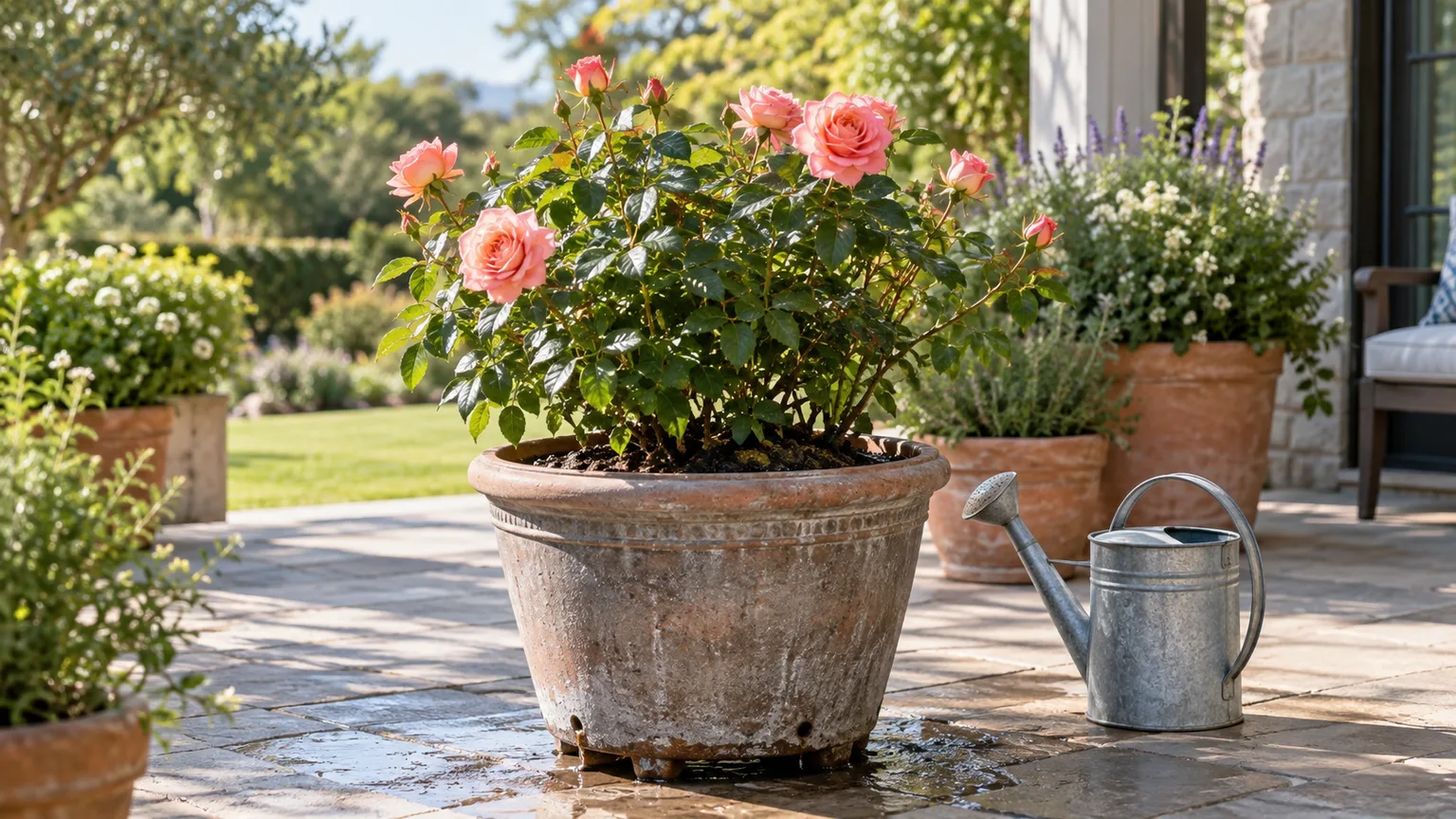
A pot has less soil volume than a garden bed, so it can dry faster even when the weather is cool. Wind moving around a porch, a dark pot warmed by late sun, a small container, and a root-filled pot all shorten the time before the mix dries; a large pot in shade may hold moisture much longer. Rain may miss a pot tucked against a wall or beneath a balcony, so look at the mix rather than assuming the forecast watered it.
Check below the surface with a finger or a wooden skewer, and learn the weight of a watered pot versus one that is drying. When the upper layer is dry to the depth appropriate for the plant, water until excess flows from the drainage holes, then empty any saucer. A little water that only wets the top can leave the lower root ball dry, while repeatedly adding water to a potting mix that is still wet can deprive roots of air.
As the plant slows down, reduce how often you check only after observing that the mix stays moist longer; do not reduce each watering to a token splash. Keep hardy outdoor pots from becoming bone dry during a mild winter, and move tender plants to their planned protected spot before hard freezes. Epic Gardening’s container guidance highlights that pots generally need closer moisture attention than plants rooted in the ground, Water until the whole root ball is wet rather than only dampening the rim of the pot.
Adjust for wind, sun, temperature, and microclimates
Cool air usually reduces evaporation, but a warm, sunny afternoon can still dry beds and containers quickly. South- and west-facing walls absorb and reflect heat; roof eaves block rain; slopes lose water through runoff; and exposed corners catch wind that speeds drying. Those small site differences explain why two plants on the same property can need different attention on the same day.
Wind is especially easy to miss because it does not leave the obvious puddles associated with heavy rain. Evergreens, new plantings, and pots on an exposed deck can lose moisture on breezy days even when the temperature feels mild. Check the soil after a stretch of dry wind rather than waiting for leaves to wilt.
Temperature changes the time of day and whether a watering is safe. Water early enough that it can soak into the soil before freezing nighttime conditions, and do not irrigate soil that is already frozen. Colorado State Extension recommends winter watering only when air and soil temperatures are above 40°F and there is no snow cover—a useful precaution in its cold, dry climate, not a single threshold that every region must use without local guidance. Proven Winners’ fall watering advice likewise distinguishes unfrozen ground from the point when plants can no longer take up water.
What “deep watering” means in practice
Water slowly enough that it enters the ground instead of running off. A hose at low flow, a soaker hose, or drip irrigation can deliver moisture at the soil line; if a puddle forms or water starts traveling downhill, pause and let it infiltrate before resuming. Recheck with a trowel or probe afterward, because the same run time can wet one soil deeply and barely penetrate another.
For shrubs and perennials, distribute water over the root area instead of concentrating it at the base of one stem. For trees, spread the application beneath the canopy and around its outer half, where many fine roots collect; a sprinkler that wets a wide area can be more useful than a single spot. Keep leaves dry when you can, particularly when evenings are cool and damp, but do not sacrifice root-zone coverage just to avoid every splash.
The amount of water can be thought of as a depth over an area, not a fixed bucket for every plant. For scale, one inch of water over one square foot is about 0.62 gallons, so a broad bed takes far more total water than a small pot to receive the same depth. This conversion is only a measuring aid: it does not say that every species needs an inch each week, and it does not account for runoff, soil storage, rainfall, or root depth.
Watering around frost, dormancy, and frozen soil
The first frost is not the same thing as a permanently frozen root zone. A light frost can arrive while the soil is still warm enough for roots to absorb water, and the plant may continue root growth during stretches of mild autumn weather. If the root zone is dry and the ground is workable, a slow watering can still be useful after a first frost.
Stop supplemental watering when the soil is frozen, saturated, or unable to drain. In regions with mild winters and unfrozen soil, plants may need occasional water during extended dry spells, especially newly planted woody plants and evergreens. In cold regions, snow cover can contribute moisture; during a dry period without snow, check only during a safe thaw and water early in the day if local extension guidance supports it.
Dormancy reduces demand; it does not make every root system equally safe from drought. Leafless deciduous shrubs lose less water from foliage than evergreens, but new plants may still have limited roots. Evergreen leaves continue to lose moisture while frozen ground limits uptake, which is why autumn hydration and winter site conditions both matter. Avoid the claim that every garden needs one final deep drink immediately before a freeze; the soil’s actual moisture and temperature are better guides.
Use mulch to hold moisture without smothering roots
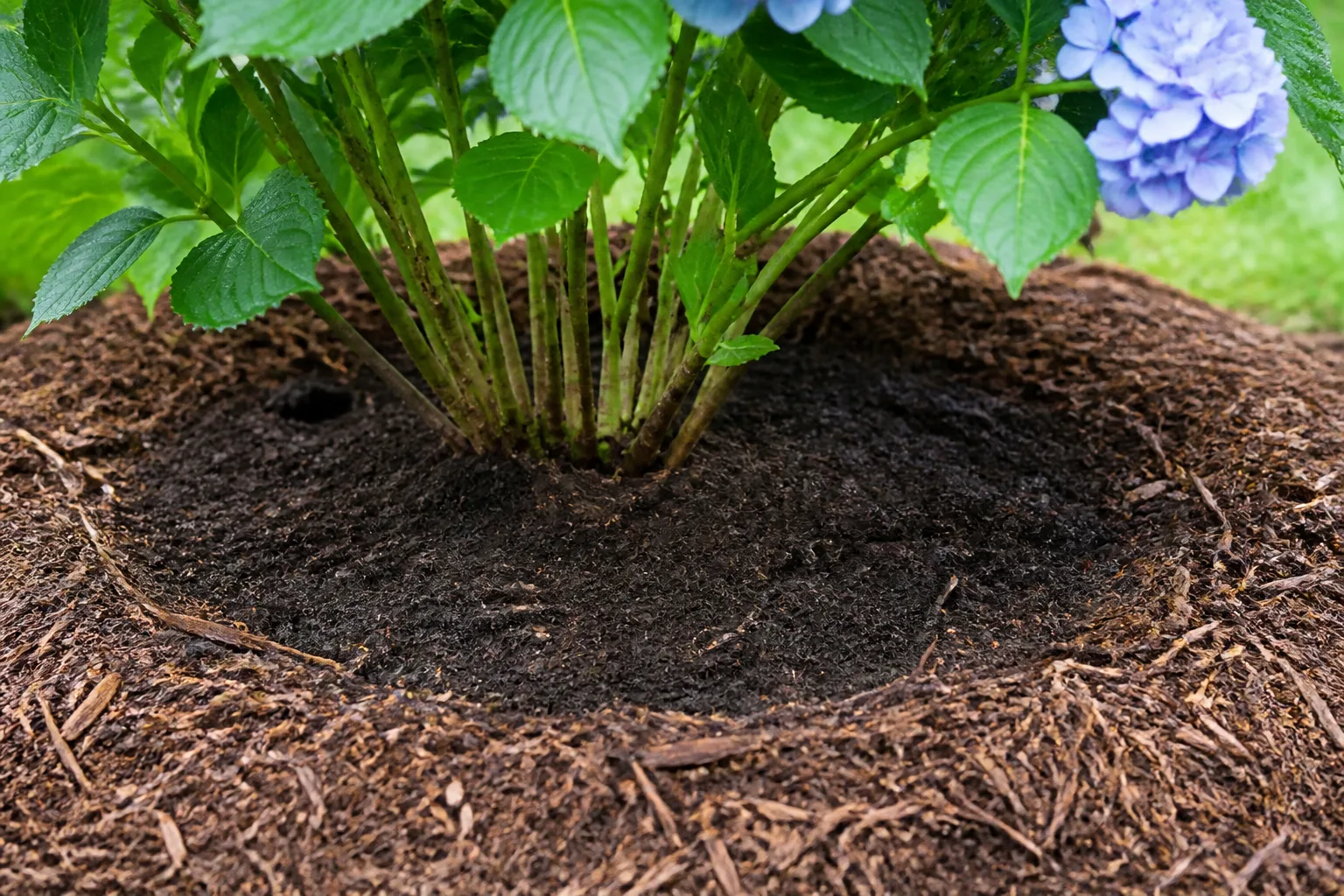
Mulch slows moisture loss from the soil surface and buffers temperature swings, making it useful during both dry autumn weather and freeze-thaw cycles. A layer around the root zone can help a slow soak last longer, but mulch cannot supply water when the soil underneath is dry. Pull it back to check moisture, then replace it after watering.
Keep mulch away from trunks and plant crowns so bark and stems do not stay constantly damp or buried. A loose layer of shredded leaves, composted bark, or another suitable organic mulch is generally easier for water to pass through than a tightly matted blanket. The practical target depends on the material and planting; avoid building a tall cone of mulch around a tree trunk.
Common fall watering mistakes to avoid
The most common mistake is following the summer timer after plant growth and evaporation have slowed. That can keep cool soil wet and poorly aerated, especially in heavy clay or a shaded bed. Review irrigation after substantial rain and seasonal temperature shifts; if a controller has no rain or soil sensor, inspect the actual root zone before letting the next cycle run.
Another mistake is treating a brief shower as full irrigation. A quick sprinkle can dampen leaves and mulch while leaving the soil dry several inches down. Conversely, a long soak can run off a compacted slope without reaching roots, so applying more water is not always the fix; slower pulses may work better.
A final “pre-frost watering” is not a magic shield against freezing damage. Moist soil can help a plant avoid entering cold weather drought-stressed, but it cannot prevent all frost injury, and water on frozen ground can sit where roots cannot use it. Water because the root zone is dry and unfrozen, not because the forecast contains the word “frost.”
Do not let one calendar rule replace a soil check
Recommendations such as weekly, biweekly, or monthly watering are starting points from specific climates, soils, and plant groups—not prescriptions for every yard. Even two neighboring beds can differ because one receives roof runoff, one sits in wind, or one contains a new planting. Use an interval only as a reminder to inspect; let the soil determine whether the hose turns on.
A simple decision routine for the next watering day
Start with the forecast and a rainfall gauge, then check the soil under mulch at the depth the plant uses. If it is moist, skip watering and check again after conditions change; if it is dry, decide whether the plant is new, actively growing, evergreen, or in a pot. Those groups deserve closer attention than established dormant plants in an evenly moist bed.
Apply water at the soil line and slowly enough to soak in. For a tree or shrub, distribute it across the root area; for a pot, wet the whole root ball until drainage begins. Wait briefly, probe again, and adjust the delivery method if the water ran off or only wetted the surface.
Before a freeze, check whether the soil is still unfrozen and whether recent rain or snow has already supplied moisture. If the ground is saturated or frozen, do not add more water; if a dry spell continues in a mild climate, revisit new plantings and evergreens during a thaw. After watering, note the conditions rather than adding a fixed date to the calendar: a few such checks will teach you how quickly each bed and pot dries.
Conclusion
In fall, the right amount of water is the amount that replenishes a drying root zone without leaving it waterlogged. Check soil beneath mulch, account for actual rainfall, and apply a slow soak that reaches the roots; then let cooler temperatures, soil texture, wind, exposure, and plant growth set the next check.
Give new plantings, active annuals, vegetables, evergreens, and containers closer attention than established dormant plants, but do not water any of them by a universal weekly rule. Keep checking while the soil is workable, reduce supplemental water when the root zone stays damp, and stop when it freezes or cannot drain. That approach protects roots through a dry autumn without turning fall care into summer irrigation on autopilot.



