How to Stop Woodpeckers From Damaging Your Home
Stop woodpeckers from damaging your home with nine humane deterrents, safe netting, repair steps, and ways to protect birds while you solve the cause.
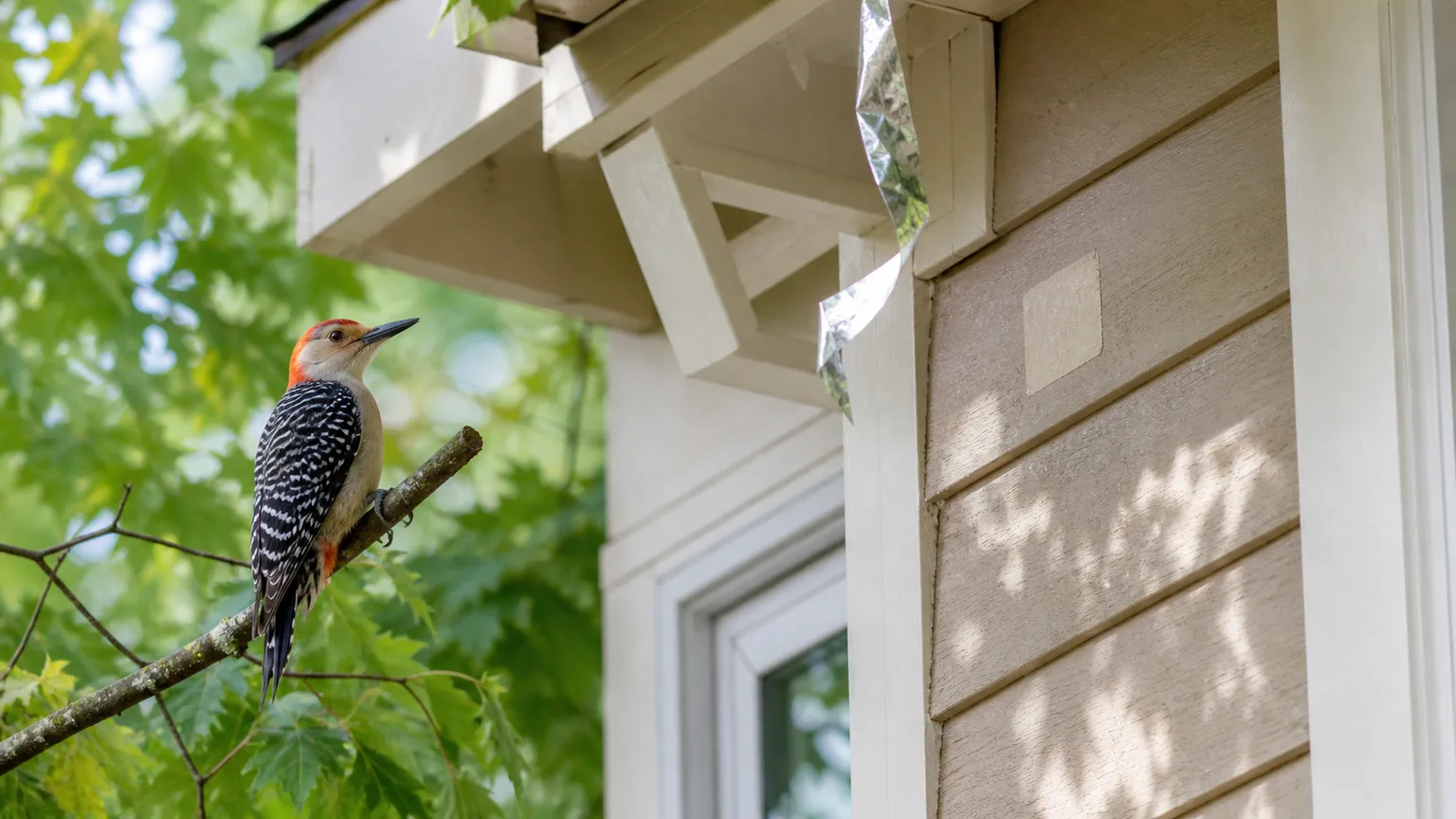
A woodpecker on your siding is not automatically trying to destroy your house. It may be drumming on a resonant surface, hunting insects under weathered wood, or excavating a cavity for shelter. The right response depends on which of those jobs the bird is doing; a motion device that interrupts drumming will not solve a carpenter-bee infestation, and sealing an active nest can create a wildlife emergency.
The practical goal is targeted exclusion: make the house a poor place to feed, drum, or nest while keeping a safe alternative available nearby. Start by identifying the damage pattern, check that no cavity is occupied, then use one or two temporary deterrents while you correct the reason the bird chose that spot. The Ohio State University Extension and Alabama Cooperative Extension System both document how insect galleries in structural wood can lead to additional damage when woodpeckers search for larvae.
Start With the Damage Pattern, Not the Bird
Walk the perimeter in daylight and photograph the affected area before hanging anything. Note the surface, height, hole size, whether the damage is fresh, and whether the sound is a sharp repeated tap or a slower series of chiseling blows. This short inspection tells you whether to prioritize a noise break, a physical barrier, an insect inspection, or a wildlife professional.
Three Reasons a Woodpecker Hits a House
Drumming is communication. A gutter, chimney cap, metal flashing, or hollow fascia can make a loud, far-carrying sound. In that case the bird may leave little or no visible damage, and it often returns at the same time each morning during the breeding season. The surface is functioning like a percussion instrument, not a food source.
Feeding is an attractant problem. Woodpeckers probe and chip at wood when they detect ants, beetle larvae, carpenter bees, or other invertebrates. A loose patch of siding, damp trim, and decaying wood can also be easier to search than sound lumber. Ohio State Extension notes that woodpeckers and flickers may riddle wood while searching for immature or adult carpenter bees, so deterring the bird without inspecting the wood can leave the main problem untouched.
Excavating is a nesting or roosting problem. A deep cavity, a neat entrance that becomes larger over time, or a bird repeatedly carrying chips away deserves more caution than a shallow scatter of feeding pits. Woodpeckers are cavity nesters, and a hole under an eave may be an active home rather than an abandoned blemish.
How to Tell Feeding Holes, Nest Cavities, and Drumming Apart
Use this table as a starting point, not as a substitute for looking inside a cavity or calling for help when the signs are ambiguous.
| Pattern | What you may see or hear | Most useful first response |
|---|---|---|
| Drumming | Loud, rapid tapping on metal or hollow trim; little visible damage | Interrupt the sound with a temporary barrier or change the resonant surface |
| Feeding | Small scattered pits, rows of shallow holes, loose or damp wood, insect clues | Inspect for insects and moisture, then protect the surface while the cause is addressed |
| Nest excavation | One deeper cavity, accumulating chips, repeated entry, or a bird entering the hole | Stop sealing or netting; watch from a distance and contact a qualified wildlife resource |
| Carpenter-bee follow-on damage | Ragged gouges around round holes, sawdust, yellow-brown staining | Arrange an insect and wood inspection before repairing the board |
The bird itself can help with identification, but species size is not a reliable damage forecast. A pileated woodpecker can make a larger opening than a downy woodpecker, yet a smaller species can still cause recurring damage if it has found a productive gallery or a good drumming surface.
A Safe First-Day Plan for Active Damage
For an unoccupied, reachable patch of siding, begin with a temporary barrier that changes the bird’s access or sightline. Do not climb onto a roof, poke a cavity, spray a bird, or seal a hole simply because the bird is absent for an hour. Absence during one observation does not prove that a nest is abandoned.
Check for Occupied Cavities Before Covering Any Hole
Stand well back and observe the opening for several daylight periods. Look for adults entering or leaving, a bird carrying chips or food, fresh droppings below the hole, or faint begging sounds. If any of those signs are present, leave the opening clear and contact your state wildlife agency, a licensed wildlife-control professional who handles birds, or a wildlife rehabilitator for the correct response.
In the United States, many native migratory birds receive federal protection, and rules can also vary by species and state. The U.S. Fish and Wildlife Service’s Migratory Bird Treaty Act information is a useful starting point; do not trap, injure, relocate, or disturb an active nest unless the appropriate authority tells you how to proceed. This is also why glue, poison, sticky gels, and loose mesh are unacceptable solutions: they can injure a bird even when the original goal was only to protect your siding.
Once you have reasonable evidence that the cavity is not occupied, take a quick baseline photo and choose one temporary deterrent. Recheck the area daily for a week. If the bird moves to a nearby board, do not keep adding gadgets at random; return to the damage pattern and look for food, moisture, or a better cavity site.
9 Humane Ways to Deter Woodpeckers From Your Home
No single device works for every woodpecker or every house. These methods are most reliable when matched to the bird’s reason for visiting and used in a sequence that prevents trapping or simply shifting the damage to the next board.
1. Cover the Target With a Temporary Visual Barrier
For non-nesting activity, break the bird’s view of the exact target with a temporary sheet of light-colored fabric, a piece of cardboard, or a rigid panel supported away from the surface. The point is to remove the landing and pecking cue while you arrange a durable repair; it is not to create a sealed pocket over a hole. Leave air space, secure the edges, and make sure no loose corner can wrap around a bird.
This works best for a single accessible patch of siding or trim. It is less useful on a wide roofline, a chimney, or a surface the bird can reach from several angles. Remove the barrier once repair is complete, and never use it over a cavity until you have ruled out a nest.
2. Hang Reflective Material Where It Moves
Reflective bird-scaring tape, narrow strips of Mylar, aluminum foil, or lightweight metal pie plates can flash and move when wind reaches them. Hang the material beside the affected area rather than stuffing it into a hole, and give it enough room to twist. A still strip becomes background scenery quickly.
Use reflective material as a short-term bridge while you inspect and repair the wood. Move its position every few days and remove it when the bird has stopped visiting. It can look untidy, create glare for neighbors, and lose its effect in a sheltered alcove, so it is a useful trial rather than a permanent promise.
3. Add Motion, Not a Permanent Plastic Predator
Flags, windsocks, pinwheels, and other moving objects can interrupt a bird’s approach path. A hawk silhouette may add a brief visual cue, but a fixed plastic owl or hawk usually becomes harmless scenery once the bird learns that it never changes position. If you use a predator-shaped decoy, move it frequently and take it down when the problem ends.
This method is a good fit for a small area under an eave or beside a porch where the wind is consistent. It is a poor fit for a calm, enclosed corner or for a bird that is excavating into food-rich wood. Motion should complement, not replace, an inspection of the surface.
4. Use a Motion-Activated Sprinkler
A motion-activated sprinkler can interrupt visits to a first-story wall, porch post, or low roof edge without contacting the bird. Aim the sensor at the approach zone, test the range so it does not spray a walkway, and move the unit after a few days if the bird starts approaching from another direction. Drain or protect the unit before freezing weather.
Sprinklers need a water source, can annoy people and pets, and may not reach an upper story. They should never be aimed into an active cavity or used in a way that soaks electrical equipment, deteriorates wood, or creates a slippery path. Treat the sprinkler as a temporary behavior change while you solve the underlying attractant.
5. Block Access With Properly Installed Netting
Bird-safe netting is the strongest physical option when a specific section of wall or eave needs to be protected for a longer period. Suspend the netting at least 3 inches away from the exterior surface, anchor every edge, and close the bottom and side gaps so the bird cannot reach the wood from behind. The net should be taut enough that a bird cannot become tangled in a sagging pocket.
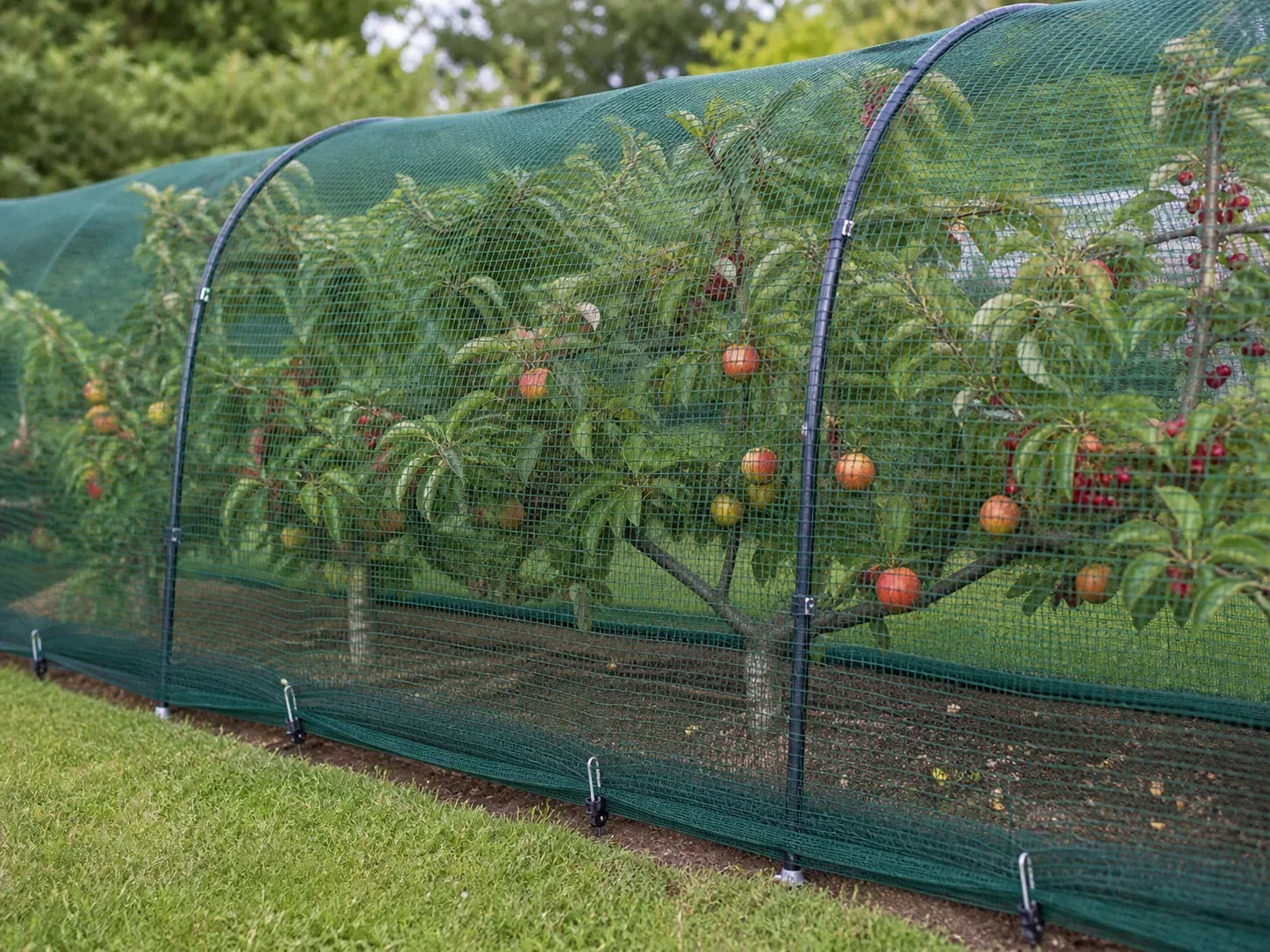
Inspect it every day at first, especially after wind. Look for holes, trapped wildlife, loose corners, and branches that bridge the gap. Do not drape netting directly over an entrance, do not leave an open pocket at the roofline, and do not install a large exclusion system on a second-story eave unless you can inspect and maintain it safely. Netting must surround the protected area rather than leave an open underside where a bird can enter. For a house, a wildlife-aware contractor can adapt that principle to the architecture.
6. Fix the Food Source, Especially Carpenter Bees
Inspect the damaged wood for nearly round holes about 1/2 inch wide, coarse sawdust, yellow-brown staining, or a bee hovering around an entrance. Those clues point toward carpenter-bee galleries rather than a woodpecker randomly choosing a clean board. The Alabama Cooperative Extension System describes how carpenter bees reuse tunnels in exposed wood and how woodpeckers can tear into those galleries while feeding on larvae.
Do not flood a hole with household chemicals or seal an active insect gallery without a plan. A licensed pest professional or local extension service can identify the insect and advise on a labeled treatment; any pesticide must be used exactly as its label directs, with attention to pollinators, pets, people, and nearby flowers. After the gallery is inactive, plug and repair the wood so the bird has no reason to reopen it.
Moisture deserves equal attention. Replace soft trim, correct a gutter or flashing leak, and let the wood dry before refinishing. A bird may be the visible part of a longer chain—water damage creates soft wood, insects move in, and the woodpecker follows the food.
7. Offer Safer Foraging and Nesting Habitat Away From the House
Protecting birds does not mean making every part of a yard equally attractive. Keep a safe dead branch, log pile, or snag at a distance from the house if your property is large enough and the feature cannot fall on people, wires, or buildings. Leave some native seed heads and insect habitat in a garden area away from the siding rather than stripping every stem and leaf from the property.
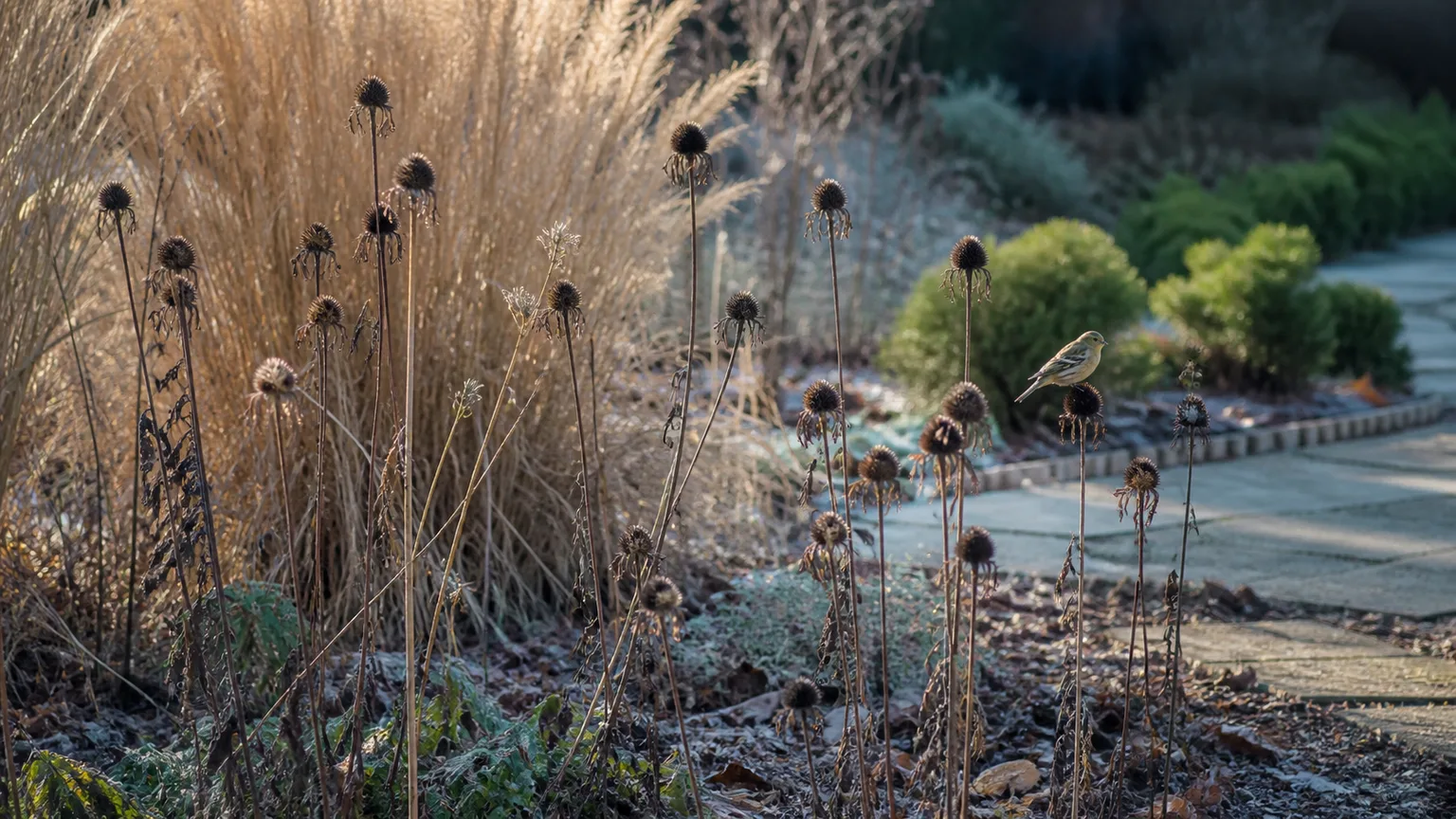
The National Park Service’s native-plant guidance explains how native plants support insects and birds, while the National Wildlife Federation habitat discussion featured by Joe Gardener emphasizes habitat, native plants, and reduced pesticide use as the foundation of a wildlife-friendly yard. The Royal Horticultural Society’s lawn habitat advice also notes that short grass can support ant-hunting green woodpeckers, a reminder that a bird’s food landscape is bigger than the damaged wall.
This is not a guarantee that a woodpecker will move to the alternative. It is a way to preserve foraging opportunities without preserving an active hole in your fascia. Keep any dead wood far enough from the building that insects and falling limbs do not create a second property problem.
8. Repair Holes and Refinish Vulnerable Wood
Repair is the lasting part of the plan, but timing matters. First confirm that no bird is using the opening and that any insect source has been addressed. Then remove loose splinters, replace wood that has lost strength, or have a carpenter cap a repeatedly damaged fascia or soffit with a suitable metal, vinyl, or composite trim.
For shallow cosmetic holes in sound wood, an exterior-grade filler can be sanded flush before priming and painting. Deep cavities, soft framing, long gouges, water intrusion, or damage around a window, roof edge, or load-bearing member deserves a professional assessment. Do not hide structural weakness behind putty.
Finish exposed wood with a sound exterior coating and keep end grain, cut edges, and joints sealed. Ohio State Extension reports that carpenter bees prefer weathered, exposed wood and are deterred by well-painted surfaces, while stain alone provides less of that protective film. Paint is not a woodpecker repellent, but a dry, repaired, closed surface removes cracks and insect access that can make a board worth revisiting.
9. Use a Nest Box Only When It Fits the Species and Site
A nest box can support cavity-nesting birds, but it is not a universal woodpecker diversion. Choose a box designed for a species that actually occurs in your area, use the recommended entrance and mounting height from a local bird organization, and place it away from the wall you are protecting. A box installed directly beside damaged siding may simply keep bird activity concentrated near the house.
Do not install a box as a substitute for responding to an active cavity. If a bird is already nesting in the house, wait for qualified guidance rather than blocking the hole and hoping it will use the box. After the nesting season, clean and inspect the box according to local wildlife guidance, and keep cats, pets, and heavy foot traffic away from the entrance.
Choose the Right Fix for Your Situation
Match the first move to the pattern you observed instead of buying all nine deterrents at once.
| Your situation | Start here | Add later if needed |
|---|---|---|
| Loud tapping on a gutter or metal flashing, little damage | Temporary visual cover, moving object, or sprinkler | Change the resonant surface during repair |
| Small holes scattered across one board | Inspect for insects and moisture | Netting or a temporary barrier while the source is fixed |
| Ragged opening around neat round holes and sawdust | Carpenter-bee and wood inspection | Targeted, label-compliant treatment followed by repair |
| One deep cavity with repeated entry | Leave it open and seek wildlife guidance | Exclusion only after the cavity is confirmed inactive |
| Repeated damage on second-story trim | Stop ladder work and document it | Wildlife-aware pest or carpentry professional |
| A bird keeps moving to nearby boards | Use a physical exclusion zone | Repair the entire vulnerable run, not just one hole |
Give a temporary deterrent several days, but do not let a “successful” move conceal a bigger problem. If the bird changes from one board to another, the house may be offering a continuous food or nesting resource that needs a broader repair.
What Not to Use and Why
Do not fill an active cavity. You could trap adults or young inside, and you may force a bird to create a second opening. The same warning applies to expanding foam, caulk, flashing, and netting placed over a hole before occupancy is checked.
Do not use glue traps, poison, sticky bird gel, mothballs, or oily household sprays. These products can injure birds, contaminate feathers, expose pets, and create a mess without solving the wood or insect condition. A pesticide intended for an insect gallery is not permission to spray the bird or the entire exterior; use a labeled product only when the identified pest and site match the label.
Do not rely on one stationary decoy or a sound machine forever. Woodpeckers can habituate to a fixed object, while repeated noise can disturb people and other wildlife without protecting the wood. Rotate temporary visual and motion methods, then finish the repair.
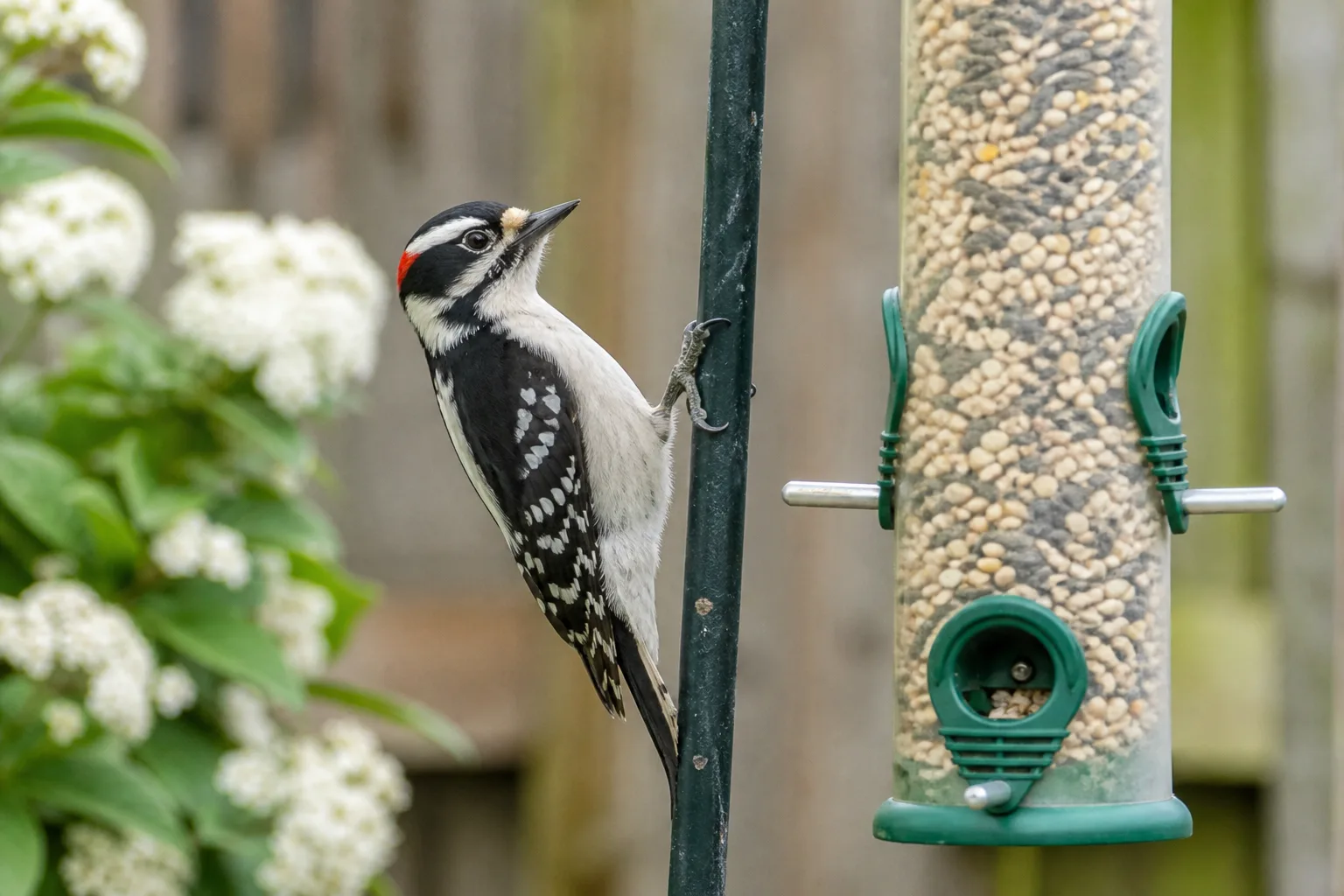
Do not feed directly beside the damaged wall. A woodpecker feeder can redirect a bird only if it is placed in a safer part of the yard and monitored. The Savvy Gardening guide to leaving plants for birds describes native plants, seed heads, dead wood, and suet as different ways to support birds; none should be used to justify increasing bird traffic at an active repair site.
When to Call a Professional
Bring in help when the issue is unsafe, legally sensitive, or structurally complicated. Contact a wildlife professional or your state wildlife agency for an occupied nest, a bird trapped inside the house, an injured bird, or a species you cannot identify. Keep people and pets away while you wait.
Call a pest professional when you find numerous insect galleries, recurring carpenter-bee holes, or evidence of ants or beetles inside siding and trim. Call a carpenter, building inspector, or structural professional when the damaged wood is a rafter, beam, header, porch support, soffit framing, or large section of fascia. Extensive ragged damage may need wood replacement or metal capping rather than another round of deterrent tape.
Finally, do not take a ladder onto a steep roof or a second-story eave to hang netting. A safe first-story installation that can be inspected daily is one thing; a large overhead exclusion system that you cannot reach is a hazard to both you and the bird. A qualified installer can close the edges, maintain stand-off distance, and confirm that the finished repair does not create a trap.
Conclusion
To stop woodpeckers from damaging your home, first decide whether the bird is drumming, feeding, or excavating. Protect an unoccupied target with temporary motion, reflective material, a sprinkler, or correctly installed netting; then inspect for carpenter bees, moisture, and soft wood before you fill or refinish anything.
The humane solution is not to make the whole yard hostile to birds. It is to remove the house’s particular reward, preserve safer habitat elsewhere, and repair the surface once it is safe to do so. If a cavity may be active, if the damage reaches structural wood, or if the work requires a dangerous ladder, stop and bring in the appropriate wildlife, pest, or building professional.



