How to Remove Blueberry Stains From Clothes Safely
Remove blueberry stains from clothes by lifting, flushing with cool water, pretreating, and washing by the care label. Learn what to do before drying.
The quick answer
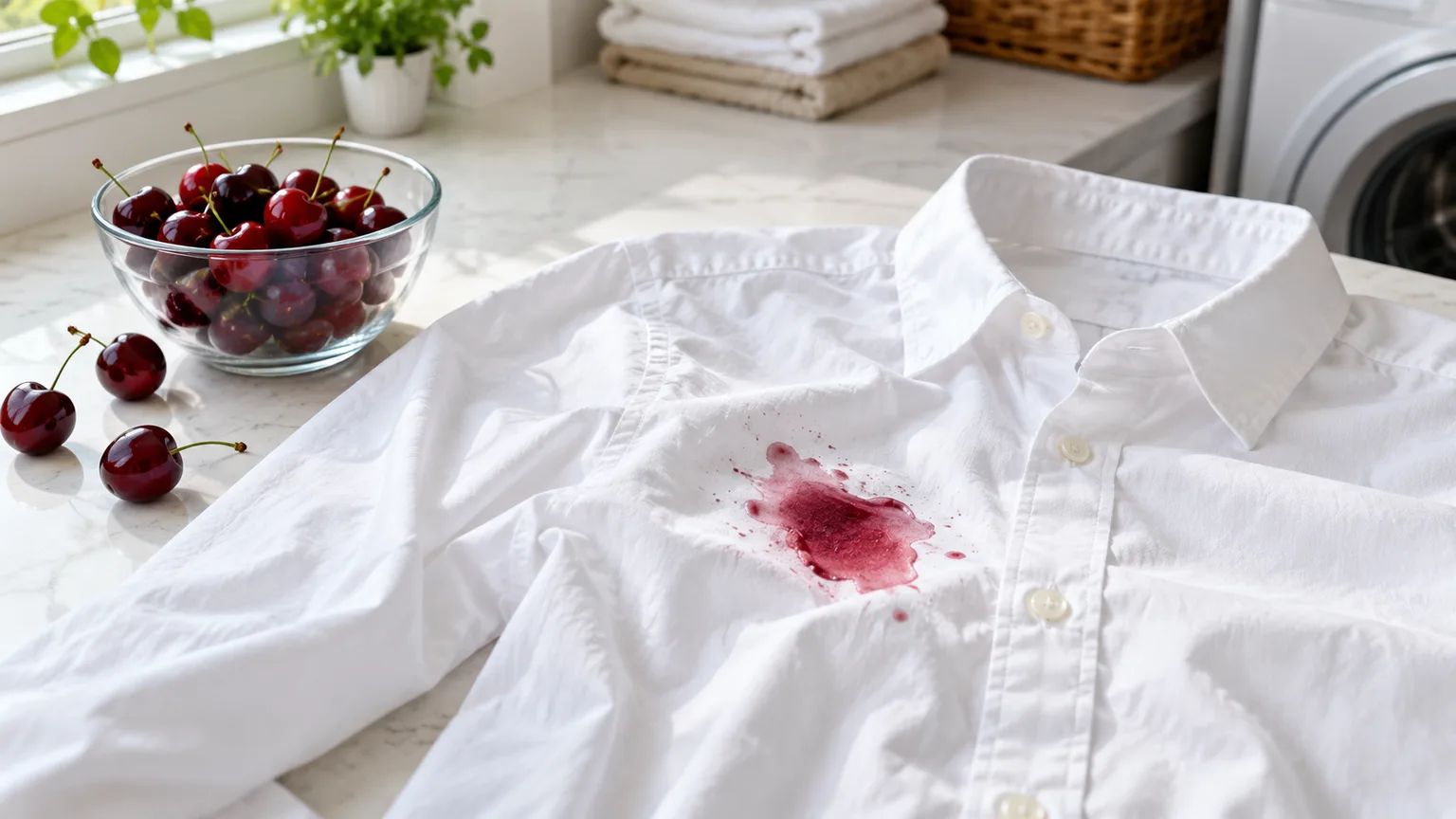
For a washable garment, lift off any blueberry pieces, blot the juice with a clean white cloth, and flush cool water through the back of the stain. Work a small amount of liquid laundry detergent or a fabric-compatible stain remover into the damp spot, wash at the temperature allowed by the care label, and inspect before using a dryer. If you can still see purple or blue, treat and wash again rather than applying heat.
The sequence matters more than a special household ingredient. Cool water first helps move fresh fruit color out of the weave; a later wash and product choice depend on the garment’s fiber, dye, and care instructions. A sturdy cotton tee and a silk blouse do not deserve the same treatment, and neither does a fresh juice splash versus a stain that has dried overnight.
If you are wearing the garment, take it off before the wet spot touches another layer or a chair. Put a clean white towel behind the stain so the juice has somewhere to go, then blot from the outside toward the center. At a restaurant or picnic, blotting is enough until you reach a sink; rubbing with a colored napkin, applying hand sanitizer, or warming the fabric with a dryer can add a second problem.
Check the stain and the garment first
Before treating the spot, check whether you are dealing with plain blueberry juice or a mixed food spill, and whether the garment can be washed with water. That quick assessment keeps you from using a good stain method on the wrong fabric or overlooking a second stain source such as cream, oil, or syrup.
Fresh berries, juice, jam, and mixed spills
Whole berries leave solids as well as colored liquid. Lift the pulp and skins before rinsing; pushing them around can spread the stain and make a wider purple halo. Juice usually spreads farther but has less texture to remove. Jam, compote, syrup, and muffin filling can leave sugar or other ingredients behind, so the fabric may feel sticky even after the obvious color lightens.
If the spill came from a smoothie, yogurt bowl, or dessert, treat the blueberry color and the other ingredients as a mixed stain. Dairy, cream, oil, or chocolate can leave residue that a water rinse alone will not remove. Start with the same gentle lift-and-flush approach, then use a laundry product whose label is suitable for the garment; do not add a second cleaner until you have rinsed the first product away.
Read the care label and test color
Find the sewn-in care label before choosing wash temperature, bleach, or even whether a sink rinse is appropriate. A care symbol that prohibits water, a delicate-fiber warning, a special finish, or an embellished surface changes the safest next step. The University of Georgia Cooperative Extension’s fruit-stain guidance specifically says to follow the garment label and test a cleaning agent on an inconspicuous area first.
For colored clothing, dampen a hidden inside seam with the product you plan to use, press it with a clean white cloth, and check for dye transfer. Let the test spot dry before judging it; a temporary darkening while wet is not the same as permanent fading. If the fabric loses color, changes sheen, or feels different, stop the home treatment. A white shirt is not automatically safe for chlorine bleach, either: the label must permit it, and trims, elastic, prints, or finishes may still be vulnerable.
How to remove a fresh stain from washable clothes
A fresh spot is the best time to act, but speed does not call for aggressive scrubbing. Work in a sink or over a basin, keep a white towel behind a layered garment when needed, and move the fruit color toward the drain rather than into clean sections of the shirt.
Lift solids and blot without rubbing
Use a spoon, dull knife, or the edge of a card to lift blueberry flesh from the surface. Scrape gently in the direction of the weave, and wipe the utensil between passes so it does not redeposit juice. Then press a white paper towel or clean white cloth onto the wet area and lift it away; use a fresh section each time.
Rubbing with a towel or brush can enlarge the stain, fuzz a knit, or push pigment into the yarns. A colored napkin can also transfer dye to wet fabric, so use white absorbent material when possible. If you are away from a sink, blot repeatedly and keep the garment from drying in direct heat; finish the water rinse when you can.
On a lined jacket or dress, separate the outer cloth from the lining with a folded white towel before blotting. That barrier absorbs the liquid instead of letting it print through to another layer. Change the towel as it picks up color, and avoid pinning the wet area against the rest of the garment while you carry it to the laundry room.
Flush from the back with cool water
Turn the garment inside out and hold the reverse side of the stain under cool running water. This directs the dissolved juice back out through the fabric instead of driving it through the front and deeper into the cloth. Keep the stream gentle enough not to stretch a knit, and continue until the runoff is much paler and the stain looks reduced.
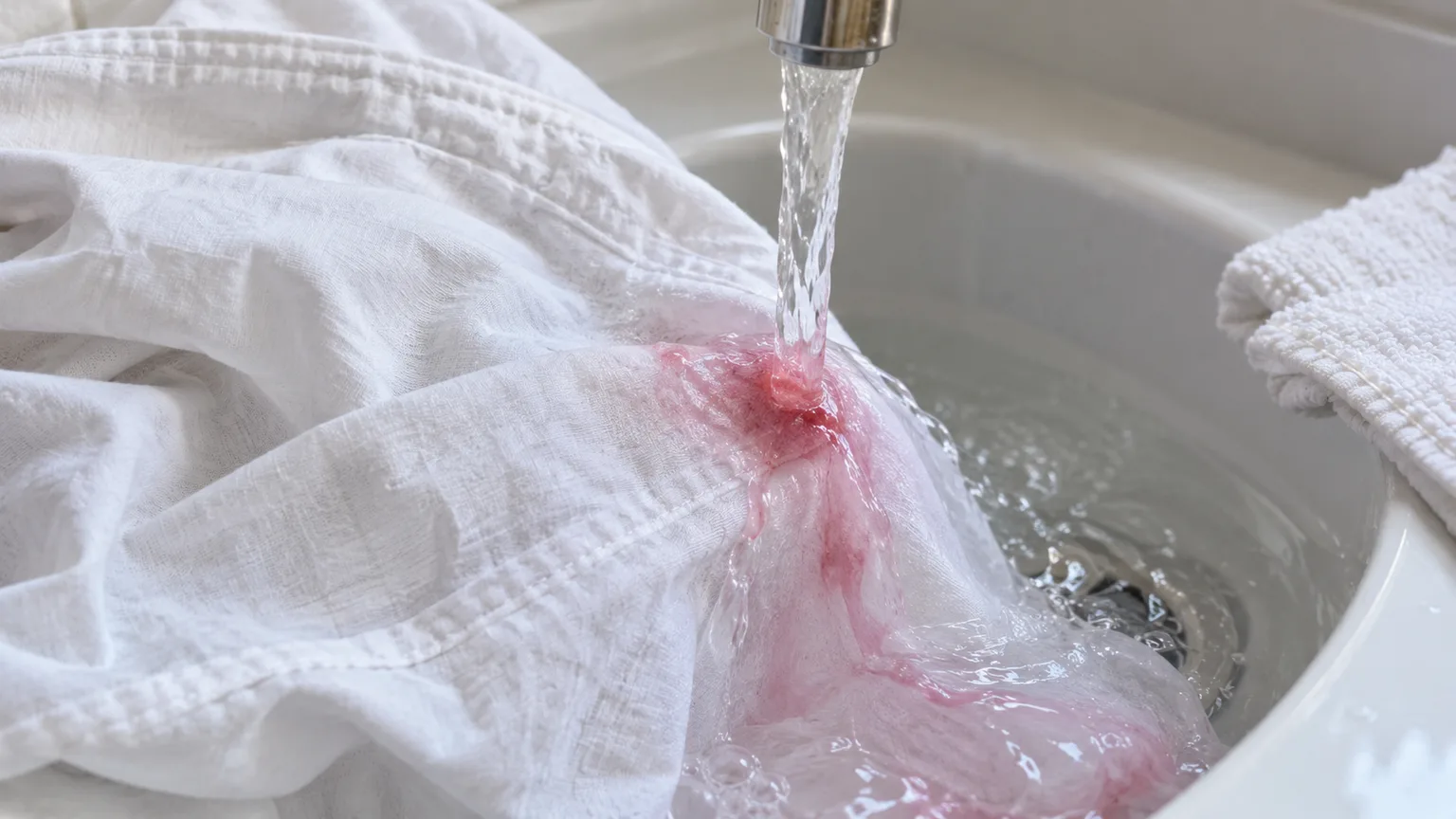
Start cool even if you plan to use a warmer machine wash later. The Good Housekeeping berry guide also begins with cold-water rinsing and then separates its laundering advice by fabric. The initial rinse and the final wash are different decisions: first remove as much loose color as possible, then respect the garment label for the full wash.
Pretreat, wash, and inspect
After flushing, apply a small amount of liquid laundry detergent or a stain remover specifically labeled for clothing and compatible with the garment. Gently work it into the damp spot with your fingertips. Use a soft brush only on sturdy fabric if the product label permits it; a toothbrush can be too rough for fine knits, prints, satin, or loose weaves. Give the treatment the contact time printed on its package instead of leaving a concentrated product on the cloth indefinitely.
Wash the item with a regular dose of detergent at the temperature and cycle stated on the care label. Do not pour extra detergent into the washer to compensate for a stain, and do not assume a hotter setting will always clean better. Good Housekeeping’s berry guidance uses different wash instructions for cotton, silk, and wool, while Martha Stewart’s berry-stain instructions emphasize testing treatments and air-drying until the stain is gone. The useful rule is to let the garment and product labels govern the temperature.
If a large spot still releases visible color after pretreatment, wash that garment by itself or with similar colors. Keep the washer load small enough for water to circulate, and do not place a stained shirt against a pale item before the rinse has removed the loose juice.
Inspect before drying
When the wash ends, look at the stain in good light while the fabric is still damp. Check both the outside and inside, since pigment may remain on the reverse or in a seam. If the area is clear, dry the garment according to its label. If a blue, violet, or grayish shadow remains, keep the item out of the tumble dryer, iron, and steamer while you decide what to do next.
Dryer heat can make a remaining stain more difficult to lift, but that does not mean one warm wash automatically ruins the garment. Let the fabric air-dry or stay damp while you repeat a compatible pretreatment. A slight damp halo can be hard to judge; inspect again when the garment dries naturally, then treat only if color remains. Do not mistake water-darkened fabric for a permanent stain, and do not use heat as a test.
Remove dried or set-in blueberry stains
A dried stain is less cooperative because the juice has had time to dry into the yarns, but it is still worth a careful attempt on washable everyday clothes. Rewet the stained area with cool water, let the moisture penetrate for several minutes, then apply liquid laundry detergent or a compatible prewash stain remover. Wash according to the label and inspect before drying; repeat the same safe sequence if color remains.
If the stain is old or survived one wash, soaking a washable garment in cool water with a small amount of detergent may help rehydrate the residue. Keep the soak within the product’s directions and the garment’s limits, and change the water if it becomes visibly colored. Do not use a long soak to compensate for a label that forbids it, and avoid leaving a colored garment submerged when its dye is unstable.
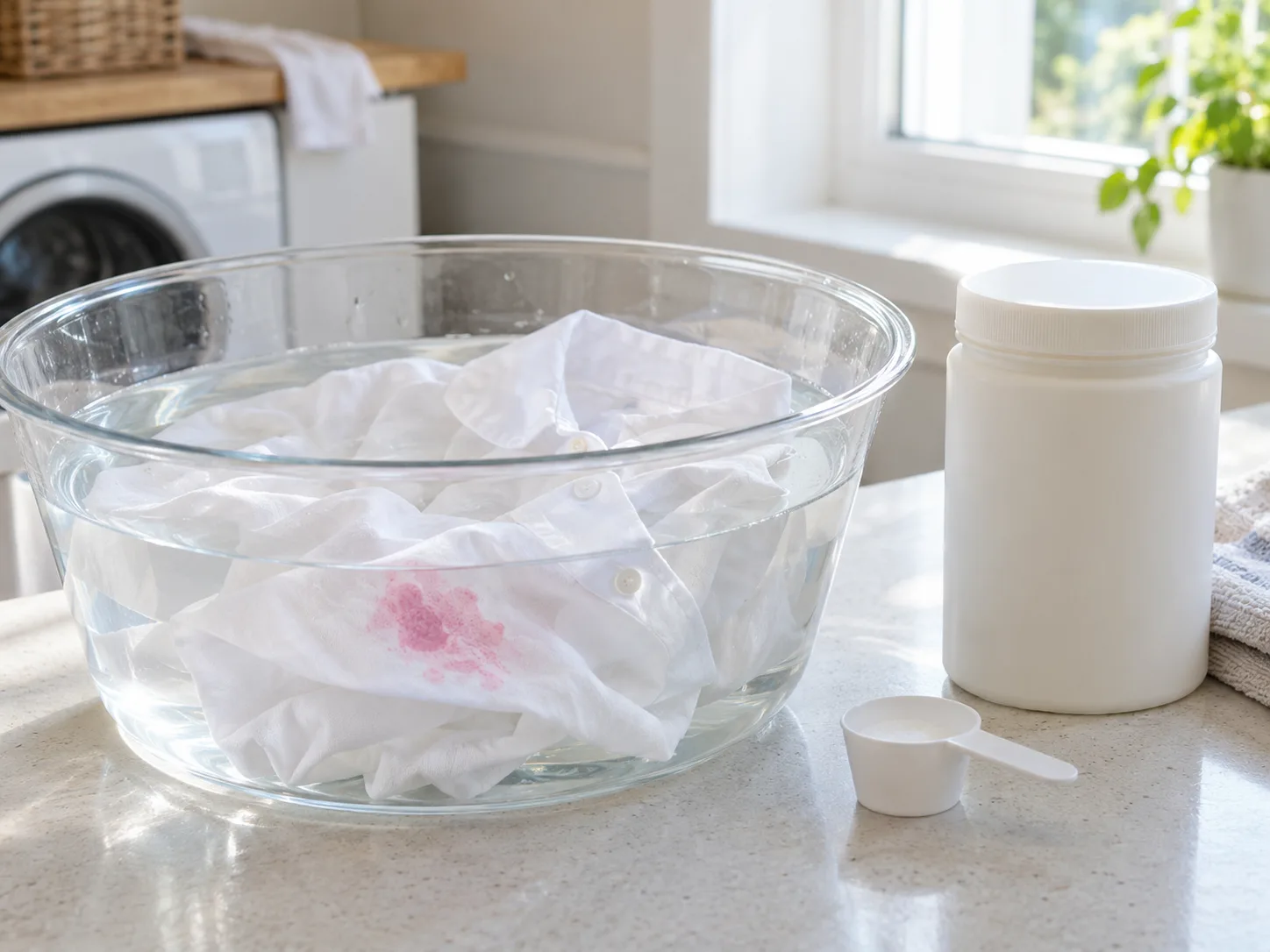
After soaking, gently press the fabric against itself rather than twisting or wringing it. Rinse the spot, pretreat again, and wash a second time if the fabric and product labels allow. If the garment has multiple layers, open seams, or a pocket directly behind the stain, check those areas too; dissolved juice can travel beyond the visible mark and reappear as a faint edge after drying.
For an item that already went through a dryer, use the same process but lower your expectations. The stain may be harder to remove, and no home treatment can guarantee that every trace will disappear. Try one or two rounds of a compatible pretreatment and wash; if the fabric begins to fade, roughen, shrink, or lose its finish, stop. On an expensive garment, professional advice is usually a better risk than stronger products and longer exposure.
Choose a treatment that fits the fabric
The first treatment should remove loose juice and washable residue with the least risk. Laundry detergent is a sensible starting point for most machine-washable garments; bleaching agents are an escalation for a color shadow, not the automatic first step. Choose the product by its label, the garment’s care instructions, and a hidden-area test rather than by whether the stain looks dark.
Laundry detergent or stain remover?
Liquid laundry detergent is convenient because it is formulated for fabric and can be rinsed during a normal wash. A prewash stain remover can be useful when the stain is vivid, larger, or still visible after rinsing, but formulas vary. Follow the product’s instructions for pretreatment time, temperature, fiber types, and colors. If the care label says dry-clean only, do not assume that a product labeled “fabric safe” overrides that restriction.
Fruit-specific extension advice varies by stain and product. The University of Georgia page begins with a prompt cool rinse and then describes a separate treatment sequence; its caution is to obey the garment care label and pretest products. In practice, avoid bar soap or dish soap as a reflexive first step: neither is necessary when you have laundry detergent, and a soapy film can complicate later treatment. If a detergent or stain remover is not lifting the spot, rinse it out fully before changing products.
Oxygen bleach and chlorine bleach
An oxygen-based laundry bleach may be a next step for a persistent berry shadow when both the garment and the product label permit it. Use the correct product for whites or colors, test an inconspicuous area, follow the specified dilution and soak time, and wash or rinse afterward as directed. Even “color-safe” bleach can affect an unstable dye, trim, elastic, or special finish; stop if your test patch changes.
Treat a bleach soak as a full-garment decision, not a way to dab a stronger chemical onto one small spot. A localized bleach application can leave a lighter ring, while a soak can expose buttons, zippers, embroidery thread, and contrasting trim to the same solution. Check the entire garment’s label and the product directions, and do not extend the time because the stain still looks purple in the basin.
Chlorine bleach is narrower. Use it only on fabric whose care label explicitly allows chlorine bleach, and follow that specific product’s dilution and timing instructions. Do not apply it directly to the garment or copy a recipe written for a different product. Never mix chlorine bleach with vinegar, ammonia, peroxide, stain remover, or another cleaner; use one product at a time and rinse thoroughly before moving to another method.
Handle cotton, synthetics, and delicates differently
Fiber content is only part of the decision. A cotton shirt might have a screen print, elastic panels, a dark dye, or a coating that changes how it responds to water and bleach. The care label accounts for the finished garment, so use it alongside the fabric name rather than substituting a generic rule for “cotton” or “polyester.”
Cotton, linen, polyester, and blends
Machine-washable cotton and linen can usually tolerate the basic sequence: lift, blot, flush, pretreat, and wash by label. Linen’s looser weave can snag or distort when brushed, so press and rinse rather than scrubbing. A cotton table napkin can often be treated more directly than a structured cotton blazer, which may contain lining, interfacing, or trim that reacts differently to water.
Polyester and other synthetics can be washable, but avoid unapproved heat and aggressive friction, especially in stretch garments containing elastane. For a blend, follow the most restrictive care instruction on the label. A colored sports shirt, for example, may tolerate machine washing but not chlorine bleach; test colorfastness before using any product that claims to brighten or remove dye-like marks.
Silk, wool, rayon, and embellished clothes
Silk and wool need more caution than sturdy cotton because water, detergent, and agitation can alter their color or texture. Use a cool-water method only if the care label permits washing, and choose a detergent specifically labeled for that fiber. Avoid enzyme-based products unless the garment and product instructions explicitly say they are suitable; never use chlorine bleach on wool or silk.
Rayon, viscose, vintage linens, beadwork, sequins, glued trim, and structured garments can also be difficult to treat safely at home. If the label calls for professional cleaning, gently lift any fruit and blot with a white cloth, then take the item to a cleaner promptly. The Drycleaning and Laundry Institute International’s stain-removal guide is organized around both stain and fabric—a useful reminder that safe treatment depends on the textile, not just the food that caused the mark.
Household remedies: what helps and what can backfire
Plain cool water is the best first tool because it is easy to rinse away and does not leave another substance in the fabric. Baking soda alone is not a dependable way to remove blueberry color; sprinkling it onto wet cloth may leave powder paste to rinse out without addressing the pigment. Salt, club soda, lemon juice, and vinegar are also not required for a successful first treatment.
Some cleaning guides recommend vinegar or sparkling water as a berry pretreatment, while extension advice emphasizes a prompt rinse, the garment label, and product testing. These methods are not interchangeable with laundry detergent, and an acid can affect dyes or finishes. If you want to test a household ingredient on a sturdy washable item, test it at an inside seam first, use a small amount, rinse thoroughly, and stop if color or texture changes. Never improvise a mixture of pantry ingredients and bleach.
You may also encounter a hot-water-pour technique for berry stains. Treat it as a limited option, not a universal shortcut: a stream of very hot or boiling water can scald skin, and it is inappropriate for garments whose labels restrict heat or water. Start with cool reverse-side flushing instead. Only consider any warmer-water technique when the item is a sturdy, colorfast, washable fabric and its care label allows that temperature; the later machine wash should still follow the label.
Hydrogen peroxide is a bleaching agent, not a harmless spot treatment. It can lighten colored fabric, and results depend on concentration, dye, and finish. Do not use it on an important garment without a compatibility check and product directions. If the stain remains, a labeled oxygen bleach formulated for laundry is easier to control than an improvised peroxide mixture.
When to call a professional cleaner
Take the garment to a professional when its label requires dry cleaning, the stained piece is valuable or sentimental, or the fabric is silk, wool, rayon, vintage, lined, or embellished and the mark does not lift with a label-approved gentle method. A cleaner may not be able to erase a stain that has been heat-dried, but they can assess the fabric and test a treatment before applying it across the garment.
Tell the cleaner that the mark is blueberry or berry juice, when it happened, whether it was fresh or already washed, and what you have applied. Mention any detergent, stain remover, vinegar, peroxide, or bleach—even if you rinsed it—so they can choose a compatible next step. Do not keep layering products while you wait; blot excess moisture and follow the cleaner’s advice.
Conclusion
For washable clothes, remove blueberry stains by lifting fruit, blotting without friction, and flushing cool water through the back of the fabric. Pretreat with a laundry product that fits the garment, wash at the care-label temperature, and inspect before drying. If a shadow remains, repeat a compatible treatment or consider label-approved oxygen bleach rather than turning to stronger chemicals by default.
Old stains can still respond, but heat exposure, unstable dyes, and delicate fibers limit what a home treatment can safely do. Read the label, test first, and stop when the fabric changes or the next treatment carries more risk than the stain. That cautious sequence gives an everyday washable garment a real chance while protecting the pieces that need a cleaner’s help.