How to Grow and Care for Bergenia
Learn where to plant Bergenia, how to keep its crown from rotting, when to divide old clumps, and what helps its glossy leaves and spring flowers thrive.
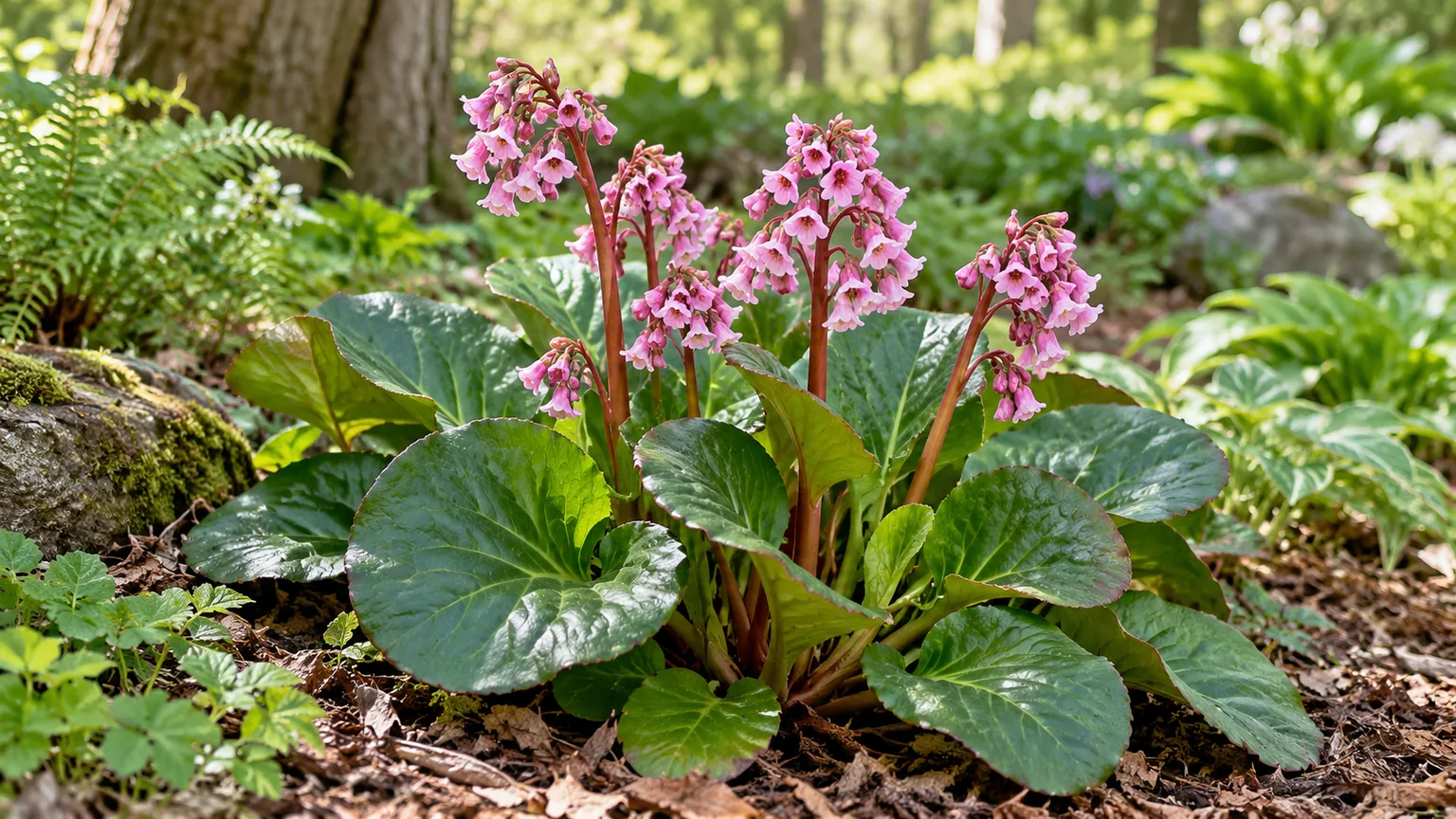
Bergenia earns its place in a garden with two seasons of interest: rounded, leathery leaves that can hold their shape through winter, and clusters of bell-shaped flowers that open in late winter or spring. It is often called pigsqueak because rubbing a leaf can make a squeaking sound. The common name is memorable; the more useful fact is that this perennial handles a range of light and soil conditions but does not like its crown sitting in stagnant water.
The best results come from matching the site to your climate, planting at the right depth, and watering differently while the plant establishes than after it settles in. These steps matter more than frequent fertilizer or routine pruning. If a mature clump becomes bare in the middle or flowers fade, division and a light check usually solve the problem.
Bergenia at a glance
Bergenia is a low-growing, clump-forming perennial in the Saxifragaceae family. Several species and many cultivars are grown in gardens, so size, leaf color, flower color, bloom time, and cold tolerance vary. Many selections reach roughly a foot tall in leaf and spread toward 1 to 2 feet over time; flower stalks rise above the foliage. Check the plant tag for the mature size and hardiness of the specific selection you buy.
| Need | Practical starting point |
|---|---|
| Light | Partial shade is a dependable choice; more sun can work in cool, moist climates. |
| Soil | Moist but well-drained; tolerate a range of textures, including clay that does not stay saturated. |
| Water | Keep new divisions and transplants evenly moist; established plants need extra water mainly during prolonged dry spells. |
| Planting depth | Set the root ball at grade and keep the crown at the soil surface. |
| Flowers | Usually late winter through spring, depending on species, cultivar, and climate. |
| Maintenance | Remove damaged leaves and spent stalks; divide only when clumps thin or flower less. |
The Royal Horticultural Society’s Bergenia growing guide describes the genus as adaptable to sun or shade and a wide range of soils, while warning that waterlogged ground can cause rot. That flexibility is not a promise that every site is equally good: a plant may survive deep shade yet flower less, or tolerate clay while failing in clay that remains wet through winter.
Where Bergenia grows best: match light to climate
For most gardens, start with partial shade, especially a spot with morning light and protection from strong afternoon sun. In cooler-summer regions, Bergenia can take more sun if the soil does not dry quickly. In warm regions, filtered shade or bright shade helps preserve leaf quality; hot afternoon sun can scorch leaves and increase the need for water. Garden Design’s care notes make the same practical distinction: plants in full sun generally need closer moisture attention than those in shade.
Deep shade is suitable when foliage is the main goal, but it may reduce flowering. If your plant makes a dense mound of leaves and few flower stalks, assess light before adding fertilizer. A bright woodland edge or a place under a deciduous tree can be a useful compromise: Bergenia receives more light before the tree leafs out, then gets shade during hotter weather. Roots beneath trees compete for moisture, though, so new plants may need supplemental water even where the canopy feels cool.
Avoid treating “shade plant” as a fixed number of hours. Watch the site through the day and across the season. A bed that is shaded in July may receive strong winter sun, and an east-facing wall can be cooler than an open west-facing border. If the leaves bleach or develop dry brown edges, move the plant toward afternoon shade or improve moisture consistency rather than immediately cutting it back.
Planting Bergenia without burying its crown
Plant container-grown Bergenia in spring or early autumn, when soil is workable and not waterlogged. Autumn planting gives roots time to settle before the next flowering period in many climates; spring is a good option where winter conditions are severe or the ground stays wet. The RHS recommends planting outside periods when soil is frozen or parched, with extra watering if a summer planting cannot be avoided.
Before planting, water the nursery pot so the root ball is damp and easier to slide out intact. Dig a hole about as deep as the root ball and wider than it, loosen the surrounding soil, and check that water can drain away. Set the plant so the point where leaves emerge—the crown—sits level with the surrounding ground. Backfill around the roots, firm gently, and water to settle soil into the gaps. Do not bury the crown under a mound of soil or mulch; persistent dampness around this junction encourages rot.
Space plants according to the look you want. A continuous groundcover fills in faster with closer spacing, while a specimen or mixed border needs room for the mature leaves to spread and air to move around them. If the label gives a mature width, use that as the upper spacing guide; allow a little less for a quicker carpet, knowing you may divide the clump later. Keep the plant’s crown visible even after the bed is mulched.
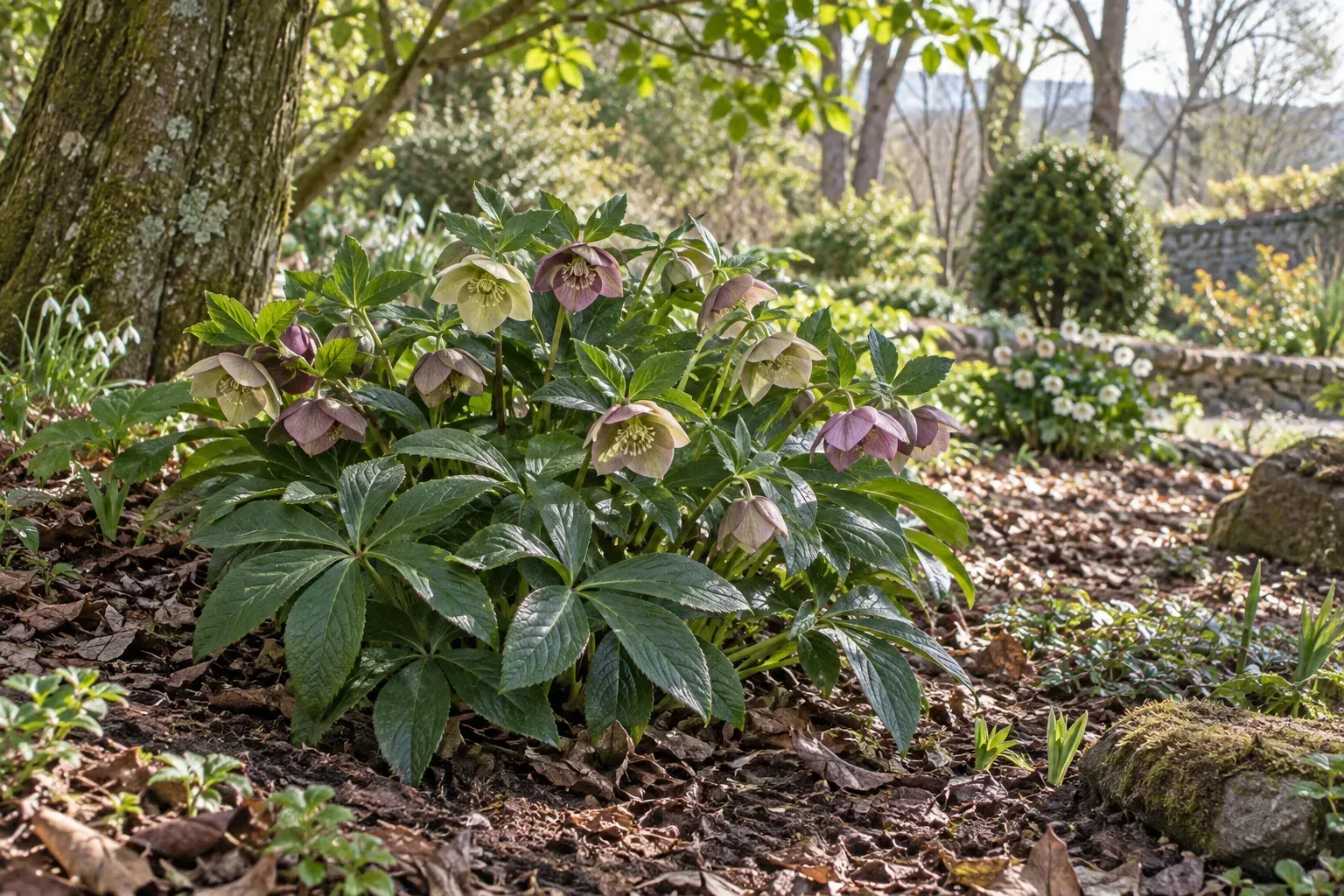
Soil, drainage, and the clay question
Bergenia can grow in loam, sandy soil, and clay, but the condition of the soil matters more than its label. Aim for soil that holds some moisture while letting excess water drain through. Clay often retains water and can be workable for Bergenia when the bed slopes slightly or has good structure; a low spot that stays saturated after rain is a different situation. The RHS specifically cautions against waterlogged soil, and Gardener’s Path likewise identifies overwatering as a key avoidable problem.
Improve compacted or low-organic-matter beds across a broad area with mature compost rather than filling a small planting hole with a radically different mix. A sharply amended pocket can hold water like a basin in dense clay, leaving roots wetter than the surrounding soil. On a persistently wet site, plant on a gentle raised mound or choose another location; do not try to solve standing water with a gravel layer beneath the root ball.
A thin surface dressing of compost can improve soil over time without forcing strong leafy growth. Bergenia is not a plant that needs rich soil to survive, and tough conditions may make leaves less lush. That is a trade-off: if you want faster coverage and larger leaves, improve the soil modestly; if the plant is healthy in lean soil, there is no need to keep amending it.
Water Bergenia by establishment stage
Water thoroughly after planting, then keep the root zone lightly and consistently moist while new roots form. Check the soil a finger’s depth below the surface instead of watering on a calendar. If it is beginning to dry, water slowly at the base; if it still feels wet, wait and check drainage. A newly planted division in exposed sun will need closer attention than an established clump under a tree.
Once established, Bergenia usually tolerates short dry periods and does not need frequent irrigation in a shaded bed. Give it extra water during a prolonged hot, dry spell, especially if it grows in sun, a raised bed, or a container. If rain is frequent and the soil stays wet, withhold irrigation and remove any mulch piled over the crown. Waterlogging can cause more serious damage than a brief dry interval.
When leaves droop, do not assume the plant is thirsty. Feel the soil first. Dry soil and limp foliage point toward water stress; wet soil with yellowing or collapsing leaves raises concern about poor drainage or root and crown problems. Correct the underlying condition before adding more water, and do not expect damaged leaves to turn green again immediately.
Fertilizer, mulch, and routine maintenance
Bergenia is a light feeder. In ordinary garden soil, a spring top-dressing of mature compost is usually enough; a balanced fertilizer is optional when growth is weak and a soil or site issue has been ruled out. Avoid repeated high-nitrogen feeding. It can favor soft foliage at the expense of a sturdy habit, and fertilizer will not correct deep shade, a crowded crown, or roots sitting in wet soil.
Mulch can moderate soil moisture and reduce weeds, especially during establishment and in exposed climates. Spread a shallow, even layer of compost or leaf mold around the plant, leaving a clear ring at the crown. Do not pile coarse mulch into the center of the rosette. If a plant has a history of rot, keep the mulch thinner and make sure water drains away rather than collecting around the leaves.
A simple seasonal check is more useful than a strict calendar. In spring, remove frost-blackened leaves and spent flower stems, then top-dress if the soil needs organic matter. During summer, watch moisture in sunny or newly planted beds. In autumn, clear diseased leaves and confirm that the crown is not buried under fallen leaves or mulch. Leave healthy foliage in place through winter; it contributes to the plant’s structure and may color up as temperatures fall.
Pruning leaves and flower stalks
Bergenia does not need shaping. Use clean, sharp pruners to remove leaves that are badly torn, blackened, or decaying, cutting close to the base without nicking the crown. If winter has left several leaves ragged, wait until fresh growth is visible so you can distinguish damaged foliage from healthy leaves that still protect the plant.
After the flowers fade, cut the stalk at its base if you prefer a tidier look. Deadheading is optional and mainly prevents the seedheads from forming; it does not guarantee a second flush of flowers. Avoid shearing the whole plant after bloom. Removing healthy leaves reduces the evergreen cover that makes Bergenia valuable outside its flowering season.
Old, damp foliage can shelter slugs and snails. Remove leaves that are decomposing around the crown and dispose of visibly diseased material rather than leaving it in the bed. Routine sanitation helps, but do not strip a healthy clump bare just because a few leaves show ordinary winter wear.
How to encourage spring flowers
Bergenia flowering depends on maturity, cultivar, light, and local weather. Most bloom in late winter or spring, but the window can shift with climate and selection. The RHS notes that some types begin in late winter, while Garden Design describes many as early- to mid-spring bloomers. A frost may damage open flowers without killing the plant, so in a frost-prone yard, favor a sheltered position or later-flowering cultivar.
If your Bergenia has not flowered, check the basics in this order: Is the plant newly divided or recently transplanted? Does it receive some bright light? Is the center crowded or woody? Has it been very dry, waterlogged, or heavily fertilized? A plant may spend energy establishing roots after division and bloom less the following season. Deep shade and an old, congested center are common reasons for a long-term decline in flowers.
Give the plant a full growing season after planting before judging its bloom. If a mature clump is leafy but sparse in flowers, improve light if practical or divide the crowded outer sections and discard a dead center. Avoid escalating fertilizer as a first response. Bergenia flowers are useful to early bees, and a healthy plant often needs only a suitable site and time rather than a bloom-boosting product.
Winter color, cold hardiness, and frost
Many Bergenia cultivars keep at least some foliage through winter, and cool weather can turn leaves red, bronze, or burgundy. Color varies by plant and climate; it is not necessarily a symptom of injury. The Missouri Botanical Garden Plant Finder lists its ‘Winterglut’ (‘Winter Glow’) selection for USDA Zones 4–8, while other species and cultivars may have different ranges. Use the tag for your specific plant rather than assuming one range applies to all Bergenia.
Cold, drying wind can damage exposed foliage, and early flowers may be injured by a late frost. In a severe winter, leaves can brown or disappear and then return in spring. Leave the crown in place and wait for new growth before deciding that the plant is dead. A loose layer of leaves or straw can buffer an exposed root zone in a cold-winter garden, but remove or thin it in spring and keep the crown uncovered.
Container plants have less insulation around their roots than plants in the ground. In cold areas, move a pot to a sheltered, unheated location or insulate the container after it becomes dormant; keep the potting mix from becoming bone dry, but do not keep it saturated. In mild climates, the main winter task may simply be clearing soggy debris so the crown has airflow.
Divide Bergenia when the center thins
A vigorous Bergenia clump can stay in place for years. Divide when the center becomes bare or woody, flowering declines, or the plant has grown beyond its space—not simply because a fixed number of seasons has passed. The RHS suggests dividing older clumps after about four or five years when they begin to thin in the middle. Spring after flowering or early autumn gives divisions time to establish before extreme heat or cold.
The plant spreads by thick, creeping rhizomes, which are modified stems. Each division should retain a healthy growing point, leaves, and roots. You can replant vigorous outer pieces and discard the old hollow center. Garden Design’s propagation guidance and the RHS both favor dividing established clumps over relying on seed when you want a quicker, predictable new plant.
Step-by-step division that protects the rhizome
- Water the plant the day before if the soil is dry, then lift the clump with a spade, digging far enough out to get beneath the root mass.
- Shake or brush away loose soil so you can see where the rhizomes branch. Pull apart smaller sections by hand; use a clean, sharp knife for a dense or woody clump.
- Keep pieces with at least one firm rhizome section, a rooted crown or growing point, and several healthy leaves. Discard soft, dark, or hollow sections.
- Replant each piece promptly at its original depth, with the crown level with the soil surface. Firm soil around the roots and water thoroughly.
- Keep the divisions evenly moist while they re-establish. If the leaves wilt in strong sun, provide temporary shade rather than watering a persistently wet bed.
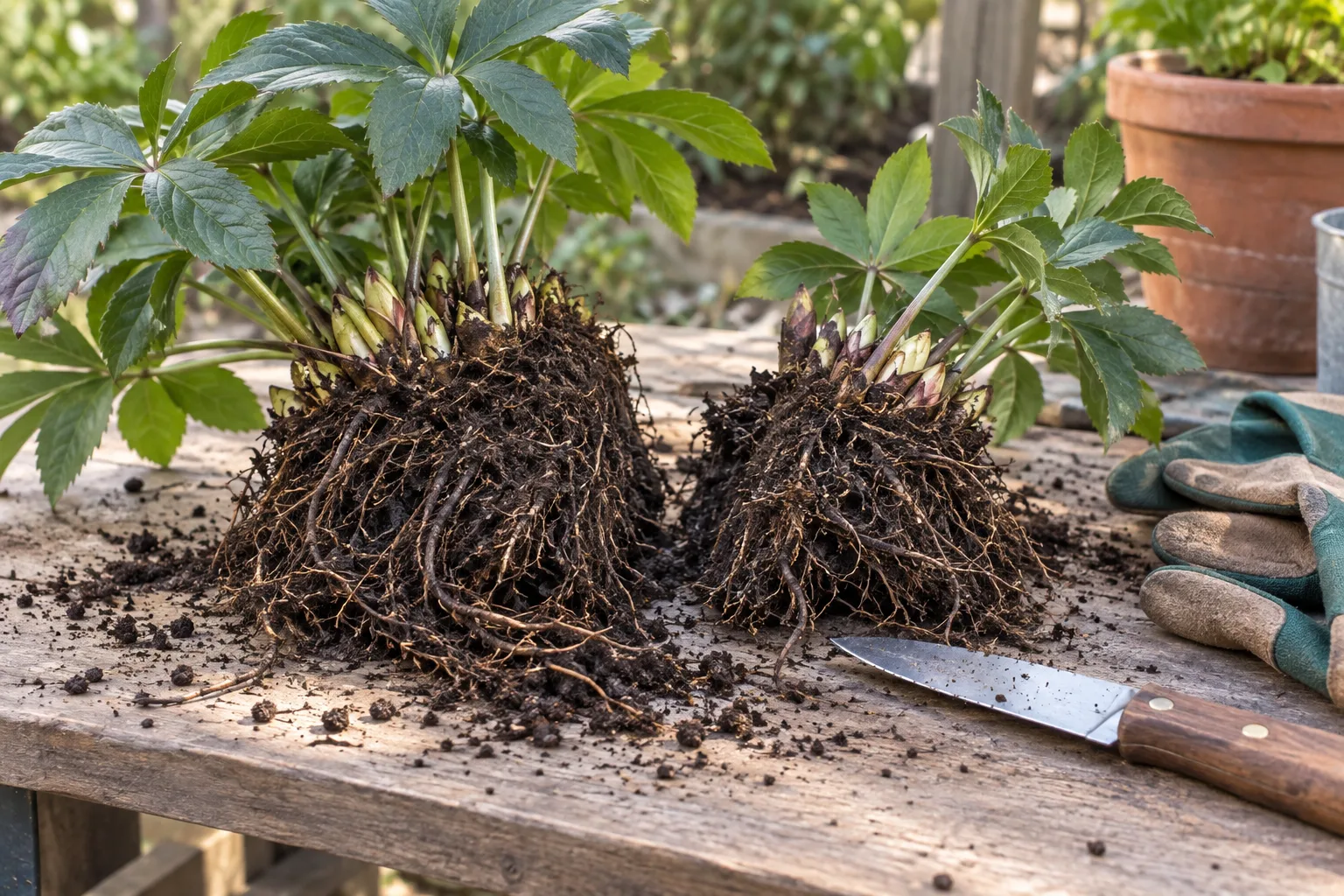
Do not make tiny divisions just to maximize the number of plants. A small piece with little root may survive but take longer to fill in and flower. Larger rooted sections establish more reliably and make a visible contribution sooner. If you need to move the original plant, have the new hole ready before lifting it so the exposed roots spend less time drying in the sun or wind.
Growing Bergenia from seed
Seed is useful when you want to grow many plants or try a species, but it is slower than division and seedlings may not match a named cultivar. If you want an exact flower color or leaf habit, buy the cultivar or divide a plant you already have. Seed-grown plants can vary, especially when they come from hybrids or open-pollinated garden plants.
Bergenia seed is fine and needs light to germinate. Sow it on the surface of a moist, free-draining seed mix and press it gently into contact; do not bury it under a thick layer of compost. The RHS recommends giving seed a short period of cold before sowing, then keeping it in good light and maintaining steady moisture. Germination can be slow or uneven, so avoid discarding a tray after only a few days.
When seedlings have several true leaves and are large enough to handle, move them into individual small pots and grow them on in bright, sheltered conditions. Harden them gradually before planting outdoors. Keep the young plants evenly moist but not waterlogged, and protect them from slugs while they are small. Expect a longer wait for flowering than with a nursery plant or a substantial division.
Growing Bergenia in containers
Bergenia’s bold foliage can anchor a mixed container or stand alone in a broad pot. Choose a container at least about 12 inches wide with multiple drainage holes; a wider, stable pot gives the leaves room and is less likely to tip as the clump expands. Garden Design recommends a container with adequate width and depth for the rhizomes and warns against soggy mix. Use a quality potting mix that drains freely rather than garden soil, which can compact in a pot.
Plant at the same depth as in the nursery container, with the crown at the mix surface. Place the pot in bright shade or morning sun in hot climates, and water when the top layer begins to dry. Containers dry faster than garden beds, but frequent watering without drainage can still rot roots. Empty decorative outer pots after rain so the plant is not left standing in water.
In winter, protect the pot in regions where the container itself can freeze hard. A sheltered position against a wall, an unheated garage, or insulation around the pot can reduce temperature swings; the plant still needs some light if it keeps its leaves. Divide and refresh the mix when the clump becomes root-bound, sparse, or too large for the pot, but avoid dividing during heat or while the plant is in active bloom.
Pests, disease, and common symptoms
Bergenia is generally sturdy, but slugs and snails may chew ragged holes in leaves, particularly in damp, sheltered beds. Look for fresh feeding and slime trails before treating the plant. Remove hiding debris, water at the soil line in the morning, and protect young divisions while they establish. The RHS also lists vine weevils among possible pests; notched leaf edges can be a clue, while larvae in containers can damage roots. If a plant wilts despite damp soil, inspect the root ball rather than assuming it needs more water.
Leaf spotting can occur, especially where foliage stays wet or airflow is poor. Remove fallen and heavily spotted leaves, avoid overhead irrigation late in the day, and thin nearby growth if the site is crowded. A few old spots are not a reason to spray automatically. Persistent spread or a rapidly declining plant calls for a closer diagnosis; leaf spots have different causes, and a fungicide will not fix waterlogged soil or damaged roots.
Crown or root rot is the main cultural failure to prevent. Yellowing, soft stems, or a collapsing center in wet soil should prompt you to check drainage and make sure the crown has not been buried. Improve the site, remove mushy tissue with a clean tool, and replant only firm, healthy sections in better-drained ground. If the entire crown is soft, recovery may not be possible; replacing the plant in a better site is more sensible than adding more water or fertilizer.
Spot the difference between drought, rot, and old leaves
Dry soil plus limp leaves usually means the plant needs a deep drink, especially if it was recently planted or is in sun. Wet soil plus yellowing or soft tissue points toward excess moisture, poor drainage, or rot. A single yellow outer leaf on an otherwise healthy evergreen clump can simply be an aging leaf; remove it once it detaches easily. These clues are not a laboratory diagnosis, but checking soil moisture and tissue firmness is a better first step than treating every yellow leaf as the same problem.
Cultivars and companion plants
Choose a cultivar for the feature you care about most: flower color, winter leaf color, size, or hardiness. ‘Bressingham White’ is known for pale flowers; ‘Winterglut’ (‘Winter Glow’) combines pink flowers with red stems and winter foliage; ‘Angel Kiss’ is a compact selection; and ‘Solar Flare’ offers variegated foliage. Names and exact traits can vary across catalogs, so compare the nursery tag with a reliable plant description. The RHS lists many Bergenia selections and notes that cultivar choices differ in leaf color, flower color, flowering time, and size.
For companions, combine Bergenia with plants that accept similar light and soil moisture. Hellebores, snowdrops, lungwort, brunnera, and shade-tolerant ferns can extend seasonal interest or contrast with Bergenia’s thick leaves. The arrangement works best when each plant has enough space: use finer-textured foliage beside Bergenia, and avoid crowding its crown with plants that need constantly wet soil. A mixed bed is easier to maintain if its plants share the same basic drainage needs even when their bloom times differ.
Does Bergenia spread or attract deer?
Bergenia expands gradually into a clump by rhizomes, rather than racing across a bed like an aggressive groundcover. Give it room to reach its mature width and divide it if it starts to crowd neighboring plants. It can be used as low groundcover or edging, but it will not instantly carpet a large area; allow time for the clumps to knit together.
Gardeners often find Bergenia less appealing to deer than many soft-leaved perennials, and it is described as deer tolerant in practical growing guides. That is not a guarantee: deer preferences shift with local pressure and available food. If browsing is a persistent problem, observe your own garden and protect young plants until they are established rather than relying on a plant list alone.
Conclusion
Bergenia is an adaptable perennial when its site gives the crown air, the roots some moisture, and excess water a way out. Partial shade is a reliable starting point, but a cool, moist garden can support more sun, while deep shade may trade flowers for foliage. Set the crown at soil level, water new plants as they establish, and avoid the combination of buried crowns and constantly wet soil.
After that, keep care restrained. Remove only damaged leaves and spent flower stalks, add compost when the soil needs it, and divide a mature clump when its center thins or bloom declines. If the plant struggles, check light, drainage, and root condition before reaching for fertilizer. Those simple checks will tell you whether Bergenia needs a better site, a drink, or a fresh start from division.