How to Grow and Care for False Indigo (Wild Indigo)
False indigo rewards the right permanent site. Learn when to plant, how to handle its taproot, what to expect from seed, and how to keep the clump healthy.
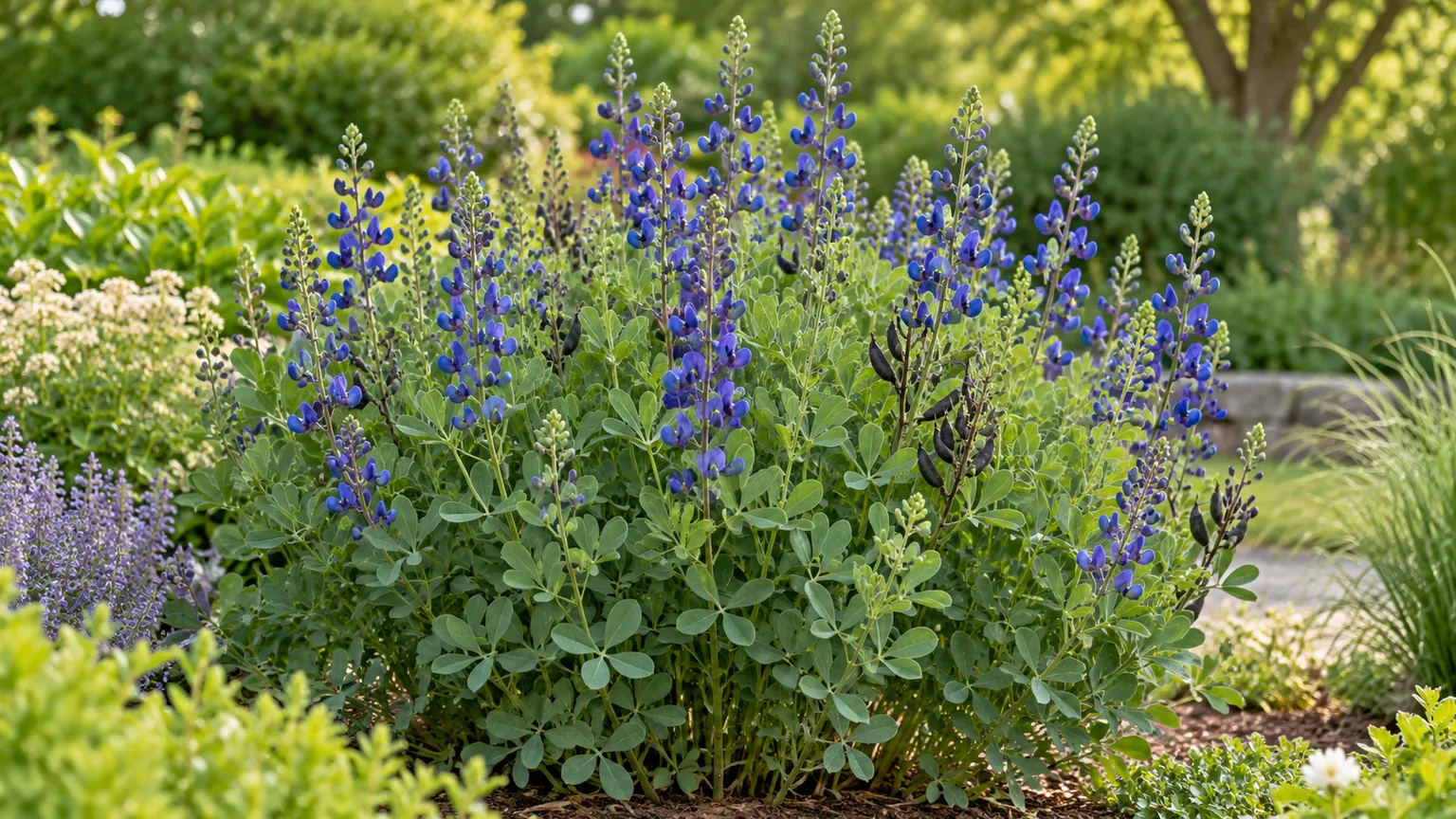
False indigo is a plant to place thoughtfully and then let settle in. Its taproot helps an established clump handle dry spells, but it also makes moving a mature plant difficult; give it sun, drainage, and enough room at the start, and care becomes simple.
Baptisia australis forms an upright, rounded mound of blue-green leaves, spring flower spikes, and dark seed pods that can persist into winter. The guide below focuses on blue false indigo while noting where other Baptisia species and cultivars differ.
Is False Indigo a Good Fit for Your Garden?
Choose false indigo if you have an open border, meadow-style planting, or sunny slope where a perennial can remain in place for years. A mature clump commonly reaches about 3 to 5 feet tall and 2 to 4 feet wide, and its profile changes through the seasons: spring flowers first, handsome foliage after bloom, then inflated pods and dry stems later in the year.
It is a poor choice for a small pot, a constantly wet bed, or a spot you may want to redesign soon. The taproot makes established plants difficult to lift, and the clump takes time to reach its full presence. Gardeners who want flowers in the first season should buy a well-rooted nursery plant; starting from seed is rewarding if you can wait several growing seasons.
False indigo is a North American native, but native status depends on the species and region. Choose a locally appropriate species or cultivar when supporting native wildlife is a priority, and give the mature clump room instead of squeezing it between short-lived fillers.
Know Which Baptisia You’re Planting
“False indigo” can mean blue false indigo, Baptisia australis, or the broader genus Baptisia. They share a legume-family background and similar upright habits, but species and cultivars vary in mature size, bloom time, and color. Check the plant tag for the botanical name and cultivar before you plan its position.
A blue B. australis is the familiar species: clover-like leaflets on gray-green stems and indigo-blue, pea-shaped flowers. After the flowers fade, seed pods swell along the stems and darken as they mature. Flowering is usually a late-spring to early-summer event, with local timing shifting according to climate and the plant’s establishment.
Species, cultivars, and flower color
Cultivars widen the palette. ‘Carolina Moonlight’ is a yellow-flowered selection; ‘Purple Smoke’ and Twilite Prairieblues offer blue or bicolor effects, while other species such as B. alba have white flowers. These are not interchangeable in height or habit, so follow the named cultivar’s spacing and zone information rather than assuming every Baptisia reaches the same size.
Hardiness references differ at the warm edge: Penn State Extension lists blue false indigo for zones 3–10, while Gardenia lists zones 3–9. Use the range on a locally sold plant as a starting point, not a guarantee; summer heat, winter drainage, and the cultivar can change performance. The NC State Extension Plant Toolbox describes the species as a clump-forming perennial suited to full sun or part shade, with best flowering in sun (NC State Extension Plant Toolbox; Penn State Extension; Gardenia).
Choose a Permanent Site
Start with sunlight, then check drainage. Full sun—roughly six hours or more of direct light—is the safest choice for a compact clump and the fullest flower display. Light shade is tolerated, especially in hotter climates, but a plant reaching for light may stretch, bloom less, or open outward under the weight of its growth.
Next, watch the site after a heavy rain. If water sits for hours or the soil stays saturated into the next day, choose a raised or naturally better-drained spot; long periods of wet soil are a greater risk than ordinary garden variation in soil pH. False indigo handles average to lean soil and dry spells once established, but drought tolerance does not mean a newly planted root ball can be left to dry repeatedly.
Leave about 3 to 4 feet between plants for a typical blue false indigo, increasing that distance for a larger cultivar or a loose, naturalistic planting. Put it toward the middle or back of a border, where the spring flower stems are visible but the foliage has room to widen. Avoid paths and utility lines where a mature clump would be repeatedly cut back or disturbed.
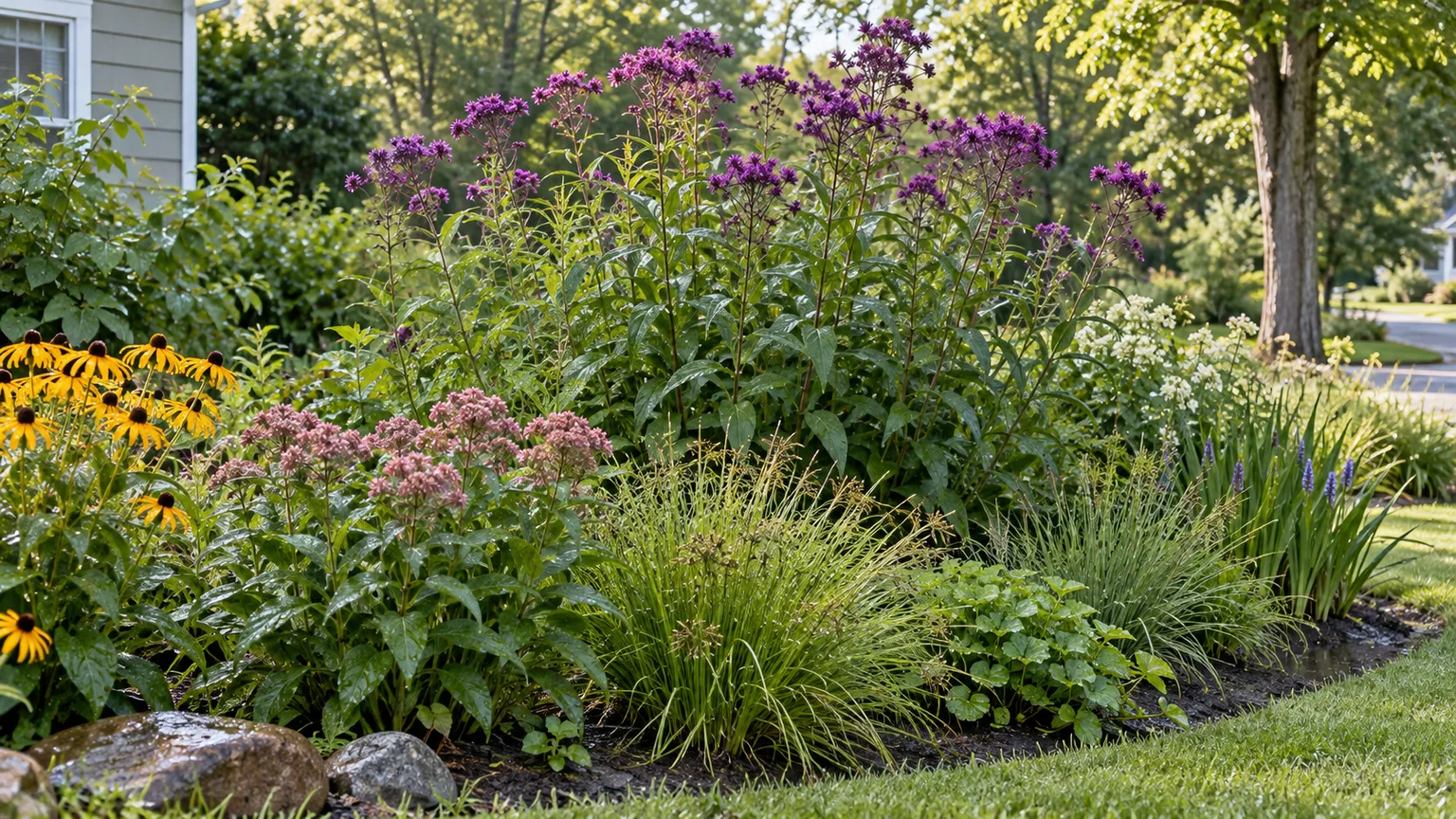
Plant Nursery False Indigo Without Disturbing Its Roots
Plant a nursery-grown false indigo in spring or early fall when temperatures are mild and you can keep the root ball evenly moist. Spring gives a new plant a full growing season to settle before winter; in regions with mild autumns, early fall planting is also practical. Avoid planting into hot, dry weather or just before a period when you cannot water.
Dig a hole slightly wider than the pot and no deeper than the root ball. Slide the plant out gently, keeping the root mass intact; do not tease apart or cut through healthy roots to make them fit. Set the crown level with the surrounding soil, backfill, press lightly to remove large air pockets, then water slowly so moisture reaches the full root ball.
New roots need contact with surrounding soil, not a heavily amended pocket. If the bed is very compacted, loosen a broad area rather than creating a rich, soft hole surrounded by hard soil; a sharp change in texture can hold water around the plant. Water again when the root ball begins to dry, and keep a modest mulch layer away from the crown.
The planting sequence
- Confirm mature size and choose a spot you will not need to move the plant from.
- Check that the site receives strong light and drains after rain.
- Dig wide, not deep, and keep the taproot and root ball intact.
- Plant at the same soil depth as the nursery pot, water thoroughly, and label the cultivar.
- Leave several feet of open space instead of crowding the young plant.
Water Deeply During Establishment
For the first growing season, check the soil every few days in hot or windy weather and less often during cool, rainy stretches. Water when the upper few inches begin to dry, applying enough to wet the root zone rather than sprinkling the foliage. The goal is steady establishment without keeping the crown soggy; soil texture and rainfall make a fixed weekly amount unreliable.
In the second season, water during extended dry spells while the plant is still expanding. Once the clump is established and growing well, natural rainfall is often enough, and occasional deep watering is more useful than frequent shallow splashes. Penn State Extension describes the plant as tolerant of drought, heat, and humidity once established, while emphasizing well-drained soil (Penn State Extension).
If leaves wilt briefly in afternoon heat but recover by evening, check the soil before adding water. If it is moist, extra watering can worsen the problem rather than solve it. Persistent wilt with wet soil, yellowing at the base, or a collapsing crown points to poor drainage or root trouble; fix the waterlogged site conditions before changing the watering schedule.
Fertilizer, Mulch, and Soil pH
Routine fertilizer is usually unnecessary. False indigo is a legume, and Penn State Extension notes its nitrogen-fixing ability; a nitrogen-heavy feed can push soft leafy growth without fixing the conditions that actually limit flowering. If growth is weak across the whole bed, use a soil test to identify a real deficiency before adding nutrients.
Do not chase a precise pH number when the plant is growing well. Slightly acidic to neutral soil is commonly recommended, but drainage and sun have more practical influence than a small pH adjustment. Work with the soil you have unless a test shows a serious imbalance or a local extension recommendation calls for a correction.
A thin layer of compost can improve surface structure in a poor bed, but do not bury the crown or keep a wet mulch volcano against the stems. In heavy clay, the better correction is often to improve the planting area broadly or use a raised mound—not to add a handful of sand to one planting hole. Fine Gardening likewise emphasizes open, porous, well-drained soil for Baptisia (Fine Gardening).
Keep the Clump Upright
A young plant may look sparse before it develops enough stems to form a rounded mound. Give it time; tightly tying those stems together can trap damp foliage and make the plant look artificial. Mature plants may open outward when flower stems are heavy, when a site is shaded, or when growth is particularly vigorous.
Treat support as a short-term aid, not a substitute for a suitable site. If the stems lean only during the flower display, a loose grow-through ring installed early in spring can hold them without compressing the clump. If the plant is consistently lanky or has stopped flowering well, look for increasing shade from trees or shrubs and consider the soil’s fertility before adding fertilizer.
Do not move an established plant simply because it has flopped once. Improve light if possible, remove only the worst obstruction, or use a discreet support; transplanting often sets Baptisia back because the root system is hard to recover intact. A post-bloom trim can also reduce the plant’s height, but it trades some seed-pod display for a tidier outline.
Prune for Flowers or Seed Pods
Prune according to the display you want. If you like the dark pods and winter structure, leave the flower stems standing after bloom. If you want a more compact mound or do not want pods, shear the flowering stems by about one-third after flowering is finished, before next season’s buds become an issue; Penn State Extension describes this as an option for a slightly shorter plant.
Avoid cutting the whole plant hard in spring once new shoots are visible. The fresh shoots are the next season’s growth, and cutting them back removes the flowers you are waiting for. Use clean pruners to remove dead, broken, or diseased stems, and do not cut healthy foliage simply because the plant is no longer in flower.
When the foliage dies back, cut dormant stems close to the ground in late winter or early spring. Leaving them through winter gives the garden a strong silhouette and lets seed pods persist; cutting in fall is also acceptable if you prefer a tidier bed. The plant does not need routine shaping several times each season.
Start False Indigo From Seed
Seed growing is the economical, slower route, and it is best for gardeners who do not need identical copies of a named cultivar. Let some pods mature on the plant, then collect them once they are dry and dark but before they split and scatter. Check pods for damage if you want seed for sowing: Penn State Extension notes that a seed-feeding weevil can affect propagation without spoiling the plant’s ornamental value.
For the simplest method, sow fresh seed in a pot or tray as soon as it is ripe and keep it outdoors in a protected cold frame. Fine Gardening recommends sowing ripe Baptisia seed in containers in a cold frame; this lets seasonal conditions act on the seed without leaving young seedlings exposed in an open bed. Keep the mix evenly damp, not waterlogged, and label the species and date.
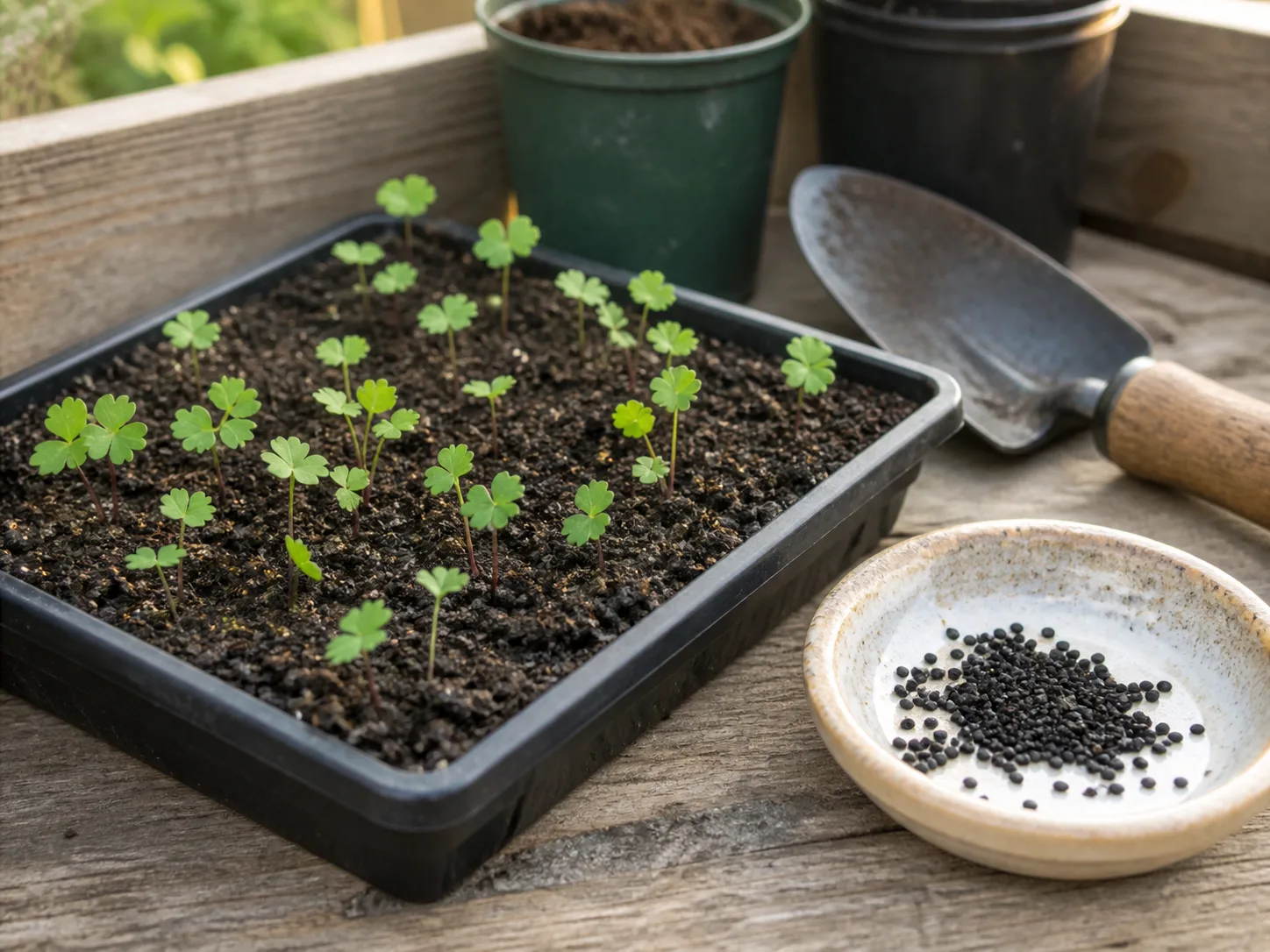
If you are using stored seed, follow the seed supplier’s current pretreatment instructions rather than assuming every batch needs the same schedule. Baptisia seed can be slow or uneven to germinate, and seedlings devote early growth to roots before they make a large above-ground clump. Transplant young plants while they are still manageable, then avoid disturbing them again; a nursery plant is the better choice if you want a quicker garden display.
Propagate With Cuttings or Division
NC State Extension lists seeds and stem cuttings as propagation options. A spring stem cutting can be useful when you want a vegetative copy, but rooting success varies and the small plant still needs time to establish; take several healthy cuttings rather than counting on a single one.
Division is described in some horticulture references, but it is not a casual way to thin a mature Baptisia. The taproot and woody crown make a large clump difficult to lift and split without substantial damage. If you must divide, do it only while the plant is dormant or just beginning growth, take as much root as possible, replant immediately, and expect a recovery period.
For most home gardeners, buying a second nursery-grown plant or raising seedlings is less disruptive than excavating a mature crown. This is one perennial where choosing a permanent location early is easier than correcting a layout several years later. NC State Extension’s plant profile specifically cautions that the deep taproot makes transplanting difficult (NC State Extension Plant Toolbox).
Bloom Time: What to Expect as the Plant Settles In
False indigo usually blooms from late spring into early summer, but the exact weeks depend on climate and cultivar. Individual flowers are pea-shaped and arranged along upright spikes above the blue-green foliage. A mature clump can make a substantial color statement, while a recently planted specimen may produce only a few stems as it directs energy into roots.
Seed-grown Baptisia is a long-game perennial. Do not judge a young seedling by its first season’s flower count; the plant may need several growing seasons to build a mature crown. A nursery plant can also pause after planting, especially if it was root-bound, planted during heat, or watered inconsistently during establishment.
When a mature plant does not flower, check the growing conditions in this order: available sun, recent pruning, age or transplant stress, and excess fertility. Adding more water or fertilizer is not a reliable bloom treatment if the plant is shaded, newly moved, or still young. The blue-green foliage remains attractive after the flowers fade, so a healthy plant still earns space beyond its short flowering period.
Leave or Remove the Seed Pods?
Pods are a second season of interest, not a sign that the plant is finished. They begin green, inflate like small pea pods, and darken as they mature; if left on sturdy stems, they add dry texture through fall and winter. Fine Gardening and Gardenia both note the ornamental value of Baptisia’s dark seed heads, while Penn State Extension describes them as useful for arrangements (Fine Gardening; Gardenia; Penn State Extension).
Keep pods when you want winter structure, seed for propagation, or a less manicured native border. Remove them after flowering if you want to reduce self-sowing, keep the plant compact, or avoid the dry stems in a formal bed. A light post-bloom shear is enough; there is no need to cut the whole plant to the ground in summer.
If you save seed, harvest before pods split and scatter, then store fully dry seed in a labeled envelope in a cool, dry place. Inspect for small holes or damaged seeds, since weevils can reduce the amount of viable seed. Wear gloves if you prefer, and keep the seeds out of reach of children; NC State Extension lists all parts of blue false indigo as low-severity poisonous if eaten.
Winter Care and a Simple Seasonal Calendar
False indigo does not need a special winter wrapping routine when it is planted in a suitable hardiness range and the soil drains well. The crown is the part to protect from persistent winter wet, not from ordinary cold. Avoid covering the base with a thick, soggy layer of leaves or mulch.
Use this seasonal rhythm:
- Early spring: remove last year’s stems before new shoots lengthen; check for winter heaving and keep mulch clear of the crown.
- Spring: watch for shoots, add a support ring early only if needed, and water a new plant when its root ball begins to dry.
- Late spring to early summer: enjoy the flowers; after bloom, decide whether to keep pods or shear for a more compact outline.
- Summer: reduce watering once the plant is established; inspect leaves after prolonged damp weather and remove badly affected debris.
- Fall and winter: collect seed before pods split, or leave the dry stems and pods for structure; cut down only if that fits your garden routine.
This approach avoids unnecessary fertilizer, frequent watering, and annual division. Penn State Extension describes Baptisia as long-lived and low-input once established, while noting that the root system makes transplanting difficult (Penn State Extension).
Troubleshoot the Few Problems It Gets
False indigo is generally resilient, so diagnose the site before treating the plant. If the whole clump is declining, inspect drainage and recent planting history first; a dry-looking leaf does not automatically mean the plant needs more water. If the plant is otherwise healthy and the damage is limited to a few leaves, remove only those leaves and monitor new growth.
Flopping, poor bloom, leaf damage, and rot
- Stems lean or split outward: check for shade and crowded growth. Add a loose support ring while stems are still short; if the plant is mature and healthy, avoid moving it just to correct a temporary lean.
- Few or no flowers: allow a young plant time to establish, then check whether it receives full sun. Recent hard pruning, excess nitrogen, or a move can also explain a weak season.
- Leaf spots, mildew, or rust: these are more likely in crowded, persistently damp conditions. Improve air movement, water at soil level, and remove infected fallen leaves; do not spray an unidentified problem.
- Crown turns mushy or stems collapse in wet ground: suspect prolonged saturation and root or crown rot. Redirect runoff or improve the planting area; a badly rotted crown may not recover.
- Seeds fail to produce seedlings: check seed age and collection condition, then follow the supplier’s pretreatment directions. A pod-feeding weevil can damage seed even when the adult plant looks fine.
These problems call for different fixes, which is why a one-size watering change is often counterproductive. Fine Gardening notes occasional leaf spots, powdery mildew, rust, and seed-eating weevils, while NC State Extension reports no major pest or disease problems overall (Fine Gardening; NC State Extension Plant Toolbox).
Use It in the Right Border and Wildlife Garden
False indigo works best where a broad perennial can stand as a specimen or anchor the middle or back of a border. Pair the early blue flowers with yellow or white spring bloomers, and let grasses or later perennials take over as the Baptisia’s flowers fade. The foliage stays useful as a blue-green backdrop; the seed pods add a darker vertical accent into winter.
The plant also has ecological value beyond its flowers. Penn State Extension identifies Baptisia as a host plant for larvae of several butterfly species, including sulphurs and the wild indigo duskywing. That means some leaf-chewing is part of its role in the garden; inspect the plant before treating anything, and avoid blanket insecticide use around a host plant.
A safety note belongs in the planting decision: the NC State Extension Plant Toolbox rates blue false indigo as low-severity poisonous to humans if eaten and lists nausea, vomiting, and diarrhea as possible symptoms. Do not use the plant as food or a home remedy, and keep seeds and plant parts away from children who may taste them; if ingestion occurs, contact a medical professional or poison-control service for case-specific advice.
Conclusion
Give false indigo a sunny, well-drained place with enough room to mature, then protect its root system by leaving it there. Water regularly while it establishes, skip routine fertilizer, and decide after flowering whether you prefer a compact mound or the dark seed pods that carry the plant into winter.
Its slow start is the trade-off for a long-lived perennial with spring flowers, durable summer foliage, and little ongoing work. If you start from seed, plan for patience; if you want a faster display, plant a nursery-grown specimen gently and keep its deep roots intact.