How to Identify and Remove Mugwort
Find mugwort in your yard? Use this practical guide to confirm the plant, remove small or established patches, handle herbicides safely, and prevent regrowth.
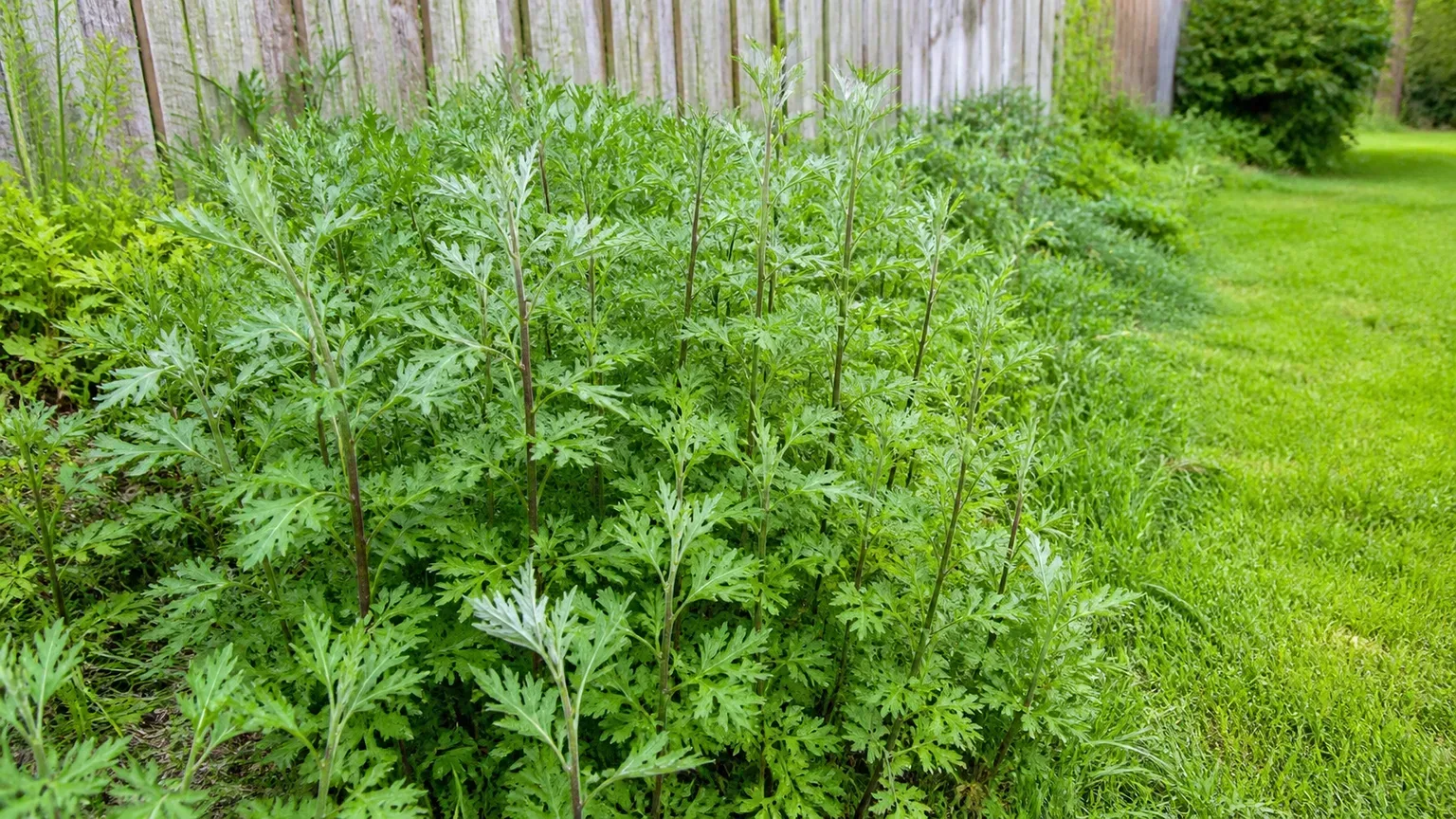
Mugwort can look harmless at first: a tall, leafy plant with a scent some people associate with herbs and foliage that resembles a garden mum. The problem is below ground. Common mugwort (Artemisia vulgaris) is a perennial that spreads mainly through persistent rhizomes, so a patch can return after the visible stems are pulled or mowed.
The practical sequence is simple: confirm the plant, contain the patch, choose a method that fits the site, and plan to check for regrowth. A few young shoots in loose soil are a hand-removal job. A mature patch woven through lawn or ornamental plants needs a different strategy, and no method should be sold as a guaranteed one-application cure.
Confirm the Plant Before You Remove It
Before you disturb the soil, take a clear photograph of the whole plant and one leaf turned over. Mugwort’s white- to gray-hairy leaf underside is the most useful field clue, but leaf shape changes with age and position on the stem, so one silhouette is not enough for a confident identification.
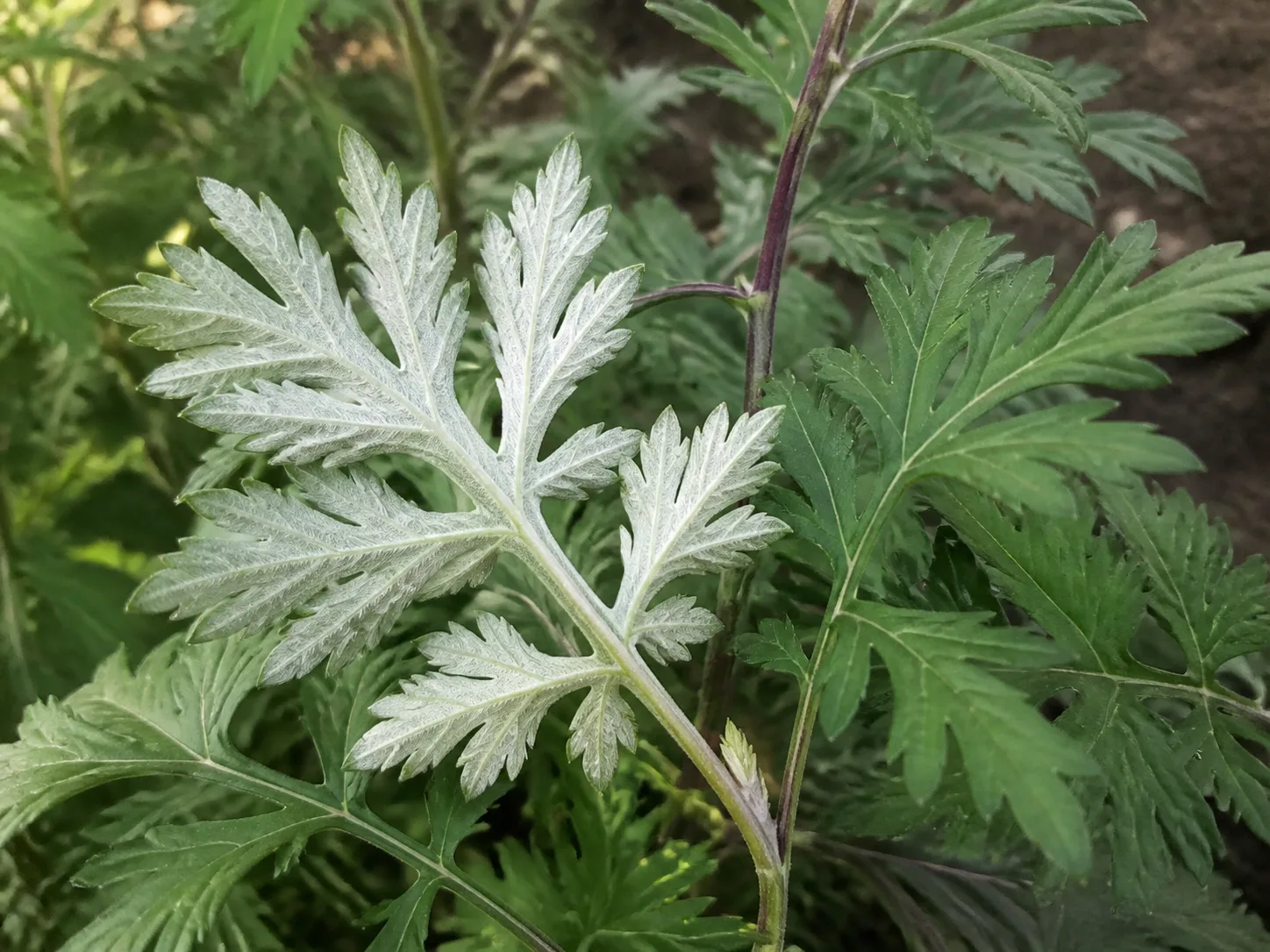
The NC State Extension plant profile describes mugwort as a fast-growing perennial weed that favors sun, good drainage, and neutral-to-alkaline soil. The UConn Extension mugwort factsheet adds the detail that matters when you are standing over a suspected patch: the lower leaves are broader and more shallowly lobed, while leaves higher on the plant can be narrower, deeper, and more linear.
Read the Leaves From Both Sides
Mature mugwort leaves are arranged alternately along the stem, not in opposite pairs. The upper surface is green and can be lobed or serrated; turn the leaf over and look for dense, soft white or gray hairs that give the underside a silvery cast. Crush one leaf only if you are comfortable handling an unidentified plant: mugwort is aromatic, often compared with chrysanthemum or sage, but scent alone is not a safe identification test.
The leaves closest to the ground usually have larger, broader lobes. Upper leaves may be more deeply divided, with narrow pointed lobes that make the plant look more fernlike. That variation explains why a new shoot at the edge of a patch may not resemble the taller flowering stems very closely.
The WVU Extension description calls the lower surface distinctly silvery because of the dense woolly hairs. If a suspected plant has smooth green leaf undersides, do not assume it is mugwort just because the leaves are lobed; photograph it and compare it with a local extension identification resource before spraying.
Check the Stems, Flowers, and Roots
Mugwort commonly reaches about 2 to 5 feet, although conditions and mowing can change its height. Stems are upright, branched, and often purplish-brown. The flowers are not showy daisy blooms: they are small yellowish-green to reddish-brown disk flowers grouped in clusters near the upper stems, generally appearing from summer into fall.
The decisive control clue is the root system. Mugwort spreads through rhizomes, which are horizontal underground stems that send up new shoots. The rhizomes can move outward from the parent plant, and small fragments can regenerate; the NC State Extension weed factsheet specifically warns that cultivation and small rhizome pieces can spread the weed.
Seed production is less consistent than rhizome spread. NC State notes that viable seed is uncommon but can matter locally, especially in the Southeast, while UConn advises mowing before seed matures to prevent dispersal. Treat seed as a secondary route that still deserves attention, not as a reason to ignore the underground network.
Rule Out Common Look-Alikes
Mugwort is often called chrysanthemum weed because its foliage can resemble cultivated mums. A garden mum, however, does not have mugwort’s characteristic white-hairy underside or a spreading rhizome system. If the plant is growing from a purchased root ball, inspect the soil and the base of the plant rather than assuming every divided perennial has the same identity.
Young mugwort can also be confused with ragweed, and very young seedlings may resemble groundsel or dogfennel. NC State’s comparison is useful here: ragweed leaves are usually more finely divided and lack the white hairs underneath, while groundsel and dogfennel seedlings also lack mugwort’s distinctive hairy lower surface.
Use at least two clues together—alternate leaves plus a pale hairy underside, or the leaf clues plus an aromatic scent and rhizome—before treating a large area. An identification mistake is especially costly when the alternative is a desirable mum, a native plant, or a broad herbicide application near vegetables and ornamentals.
Choose a Control Plan That Matches the Patch
There is a meaningful difference between suppression and eradication. Suppression means preventing flowering, reducing the patch’s energy, and stopping it from moving into new ground. Eradication means removing or exhausting all viable roots and rhizomes; that is realistic for a tiny, new infestation and much less predictable for a mature patch tangled through a bed.
| Situation | Best starting point | What to expect |
|---|---|---|
| One or a few young shoots | Hand-pull or dig when soil is workable | Recheck in one to two weeks for missed fragments or new shoots |
| A small bed patch that can be left unused | Remove surface growth, then smother with heavy-duty fabric or opaque cover | The cover must block every shoot and be checked at edges; follow-up is still required |
| Mugwort scattered through healthy turf | Mow before seed and ask for local turf guidance on a selective product | Mowing limits spread but does not reliably kill established rhizomes |
| Dense patch beside valuable plants | Targeted digging, division or relocation of desirable plants, or professional treatment | More labor and plant protection are usually safer than blanket spraying |
| Patch on a property edge or disturbed ground | Coordinate boundaries, contain soil and cuttings, and repair bare ground | New shoots can arrive from outside your yard, so prevention is shared work |
Small Seedlings and Isolated Shoots
Young plants are the best candidates for manual control because they may not yet have built a large rhizome network. Pull or dig them as soon as you can identify them, before they flower and before a small colony becomes woven through nearby roots. The goal is not to win a tug-of-war with the leaves; it is to remove the crown and as much connected underground material as the soil allows.
Manual work is most reasonable when you can count the shoots and reach the soil around them. If every hole reveals a long network of pale roots, stop expanding the disturbance blindly. Mark the patch, cover or isolate it, and choose a method that does not turn a small infestation into a larger distribution of fragments.
Established Beds, Lawns, and Borders
Site changes the decision. In a lawn, a non-selective spray that touches grass creates a second problem, so identification and local turf-label guidance matter before any chemical treatment. In an ornamental bed, a directed treatment may be possible, but desirable plants with shared roots or foliage close to the target raise the risk.
An established bed that can be emptied for a season is easier to manage than mugwort threaded through irises, shrubs, or vegetables. If you cannot protect nearby plants from digging or spray drift, consider whether moving the desirable plants temporarily, renovating one section, or hiring a licensed applicator is the more controlled choice.
Contain the Patch Before You Work
Photograph the patch, mark its visible edge, and look for shoots beyond the obvious clump. Mugwort commonly occurs in disturbed sites, roadsides, paths, and landscape edges, and its rhizomes can cross the line a gardener assumes is the boundary. Start with a small work zone and keep removed soil, roots, and cut stems on a tarp or in a container rather than dropping them into another bed.
Do not rototill, chop, or cultivate through an established mugwort patch. The same action that makes soil look clean can cut rhizomes into more pieces and move them along a bed. The NC State Extension factsheet identifies cultivation as a way mugwort spreads, so soil disturbance should be treated as a spread risk, not a default removal step.
Clean soil from spades, forks, gloves, boots, and mower decks before moving to a clean area. If the patch is flowering, work before seed matures when possible. When timing forces you to cut late, collect the cuttings rather than allowing them to dry or scatter across the lawn.
Hand-Remove a Small Infestation
Hand removal can work for a few young plants, especially in spring or early summer. The UConn guidance recommends prompt removal of very young plants before rhizomes form, while the Gardening Know How guide describes repeated manual removal as a long-term way to deprive the roots of new leaf energy.
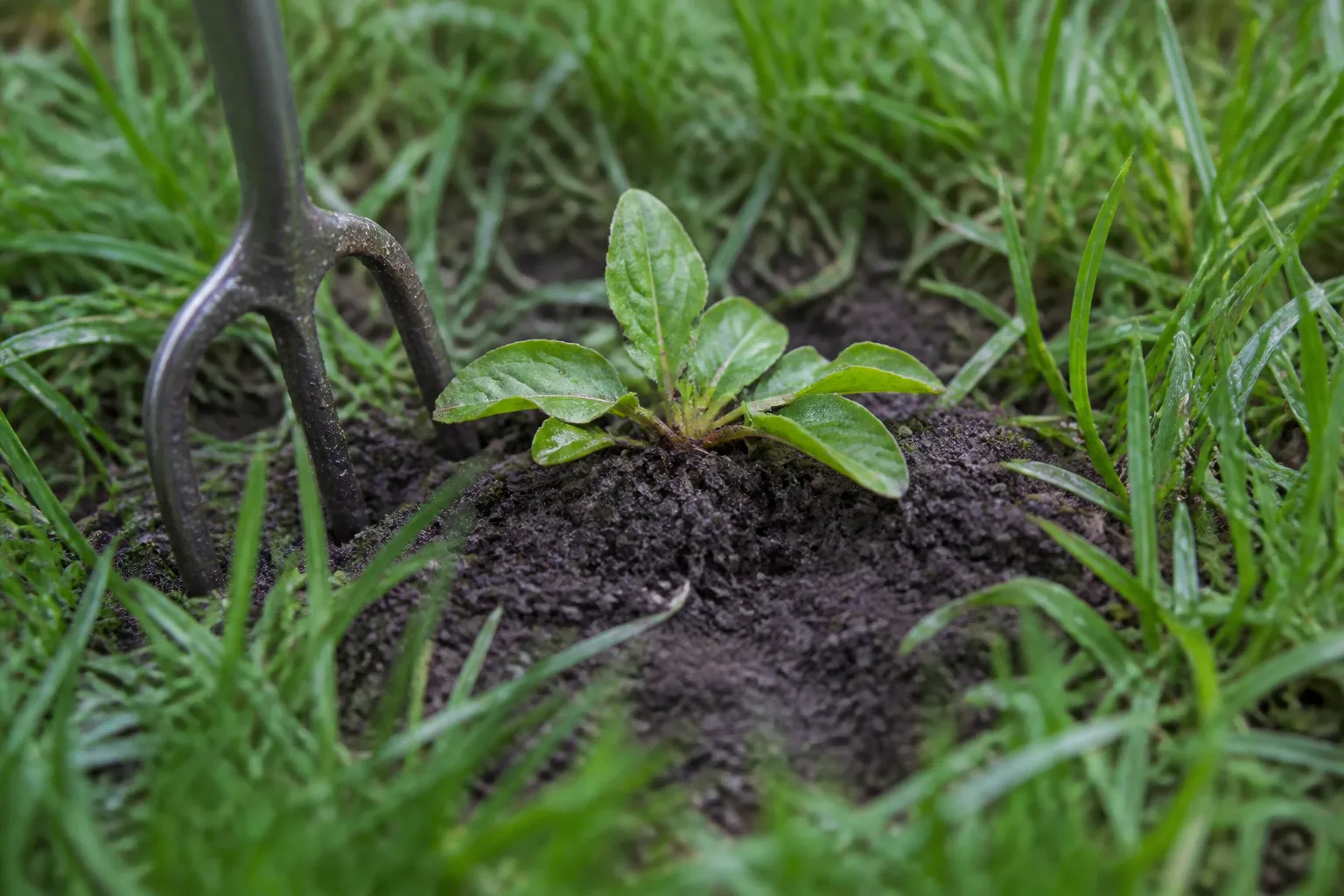
Work when the soil is moist enough to loosen but not saturated enough to collapse into mud. Grip low on the stem, loosen the crown with a narrow fork, and lift steadily. If the stem snaps, do not treat the result as finished; search the soil around the break for the crown and any obvious horizontal rhizome.
Lay the removed material on a tarp while you inspect it. Close the hole, return clean soil, and check the same spot after rain or irrigation. A new shoot does not automatically prove that the whole job failed—it may be a missed fragment—but it is a reason to return before the shoot has built more leaves or produced flowers.
Dig Without Cutting Rhizomes
Use a hand fork or narrow spade to loosen a generous circle around an isolated plant. Work from the outside toward the crown so the tool is less likely to slice through the main rhizome mass. Lift the soil as a clump, tease it apart over the tarp, and remove pale horizontal pieces rather than shaking them into the bed.
Do not excavate a broad bed just to chase every root if the patch is already established among desirable plants. Digging can be the right answer for a new arrival in bare soil; it becomes a poor answer when it creates a network of fragments around established perennials. In that situation, isolate the area, protect the plants you want to keep, and switch to an approach that reduces repeated soil disturbance.
Inspect nursery plants and divided perennials before planting them in a clean bed. NC State identifies contaminated root balls and movement of soil containing rhizomes as common ways mugwort enters a landscape. If a new plant is valuable but its root ball contains suspicious fragments, keep it in a clean container while you confirm that no mugwort regrowth appears.
Smother a Bed-Size Infestation
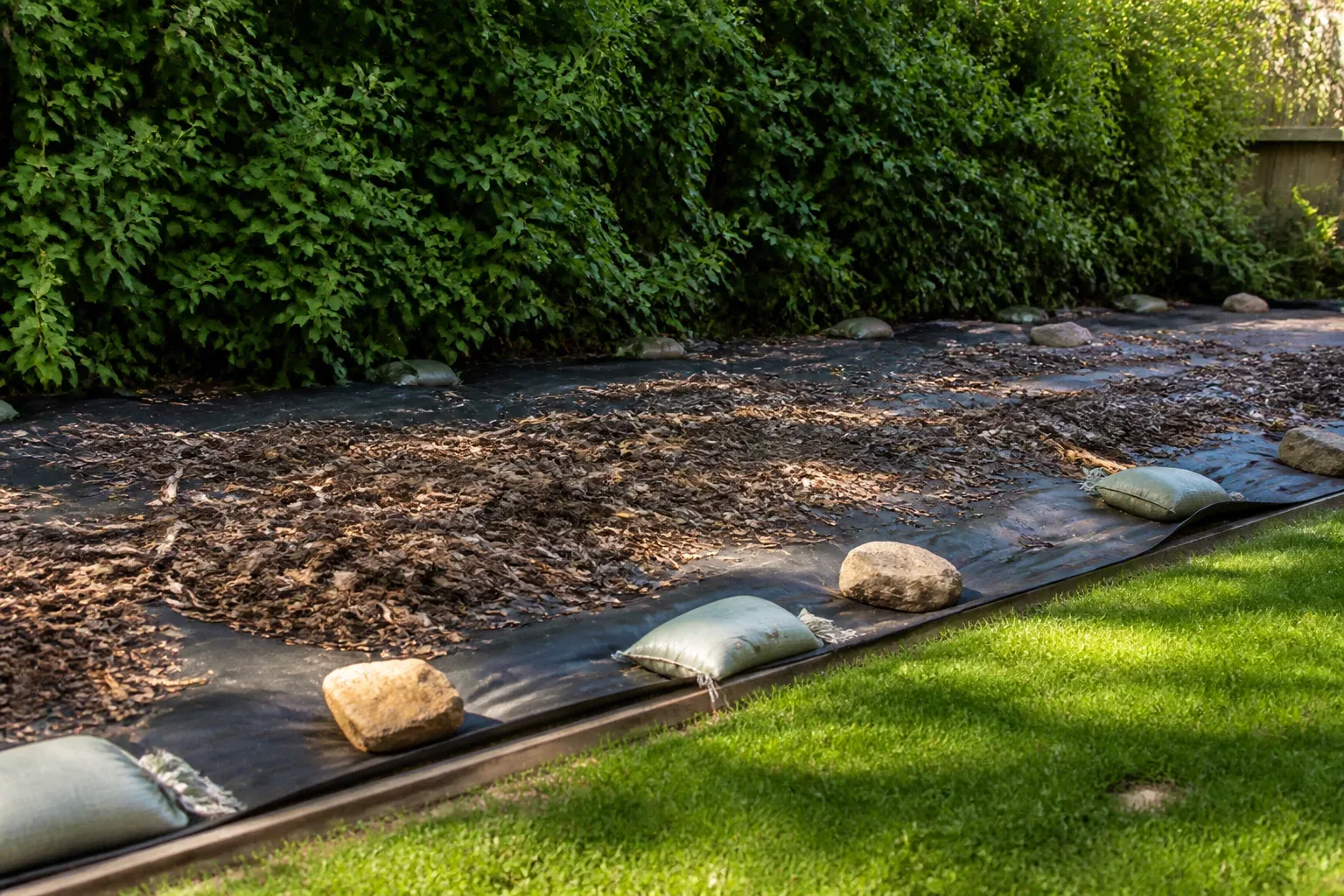
Smothering is useful when you can temporarily give up the bed and want to avoid spraying around desirable plants. Cut or remove the above-ground growth before seed matures, cover the entire patch with heavy-duty landscape fabric or another opaque, durable material, and secure the edges so new shoots cannot emerge into light. Extend the cover beyond the visible stems because the underground spread often exceeds the neat outline of the leaves.
The purpose is not to make the soil look tidy. It is to prevent the rhizomes from receiving enough light to support new growth. Inspect the edges, seams, and places where stems can push around a rock or stake; a cover with one bright gap can become a new exit route.
UConn describes heavy-duty fabric or impenetrable mulch as a possible smothering tool and warns that it may need to be combined with other controls. That limitation matters: a thin layer of decorative mulch is not the same thing as a light-blocking barrier, and a single season of cover should not be treated as proof that every rhizome is dead.
When the area is finally ready for replanting, remove the cover carefully and inspect for live shoots at the perimeter. Replant or stabilize the exposed soil promptly rather than leaving a bare, disturbed bed that invites new seedlings. Dense, well-adapted plantings can reduce open ground, but they are a follow-up measure—not a substitute for dealing with the mugwort already below the surface.
Use Mowing to Reduce Spread
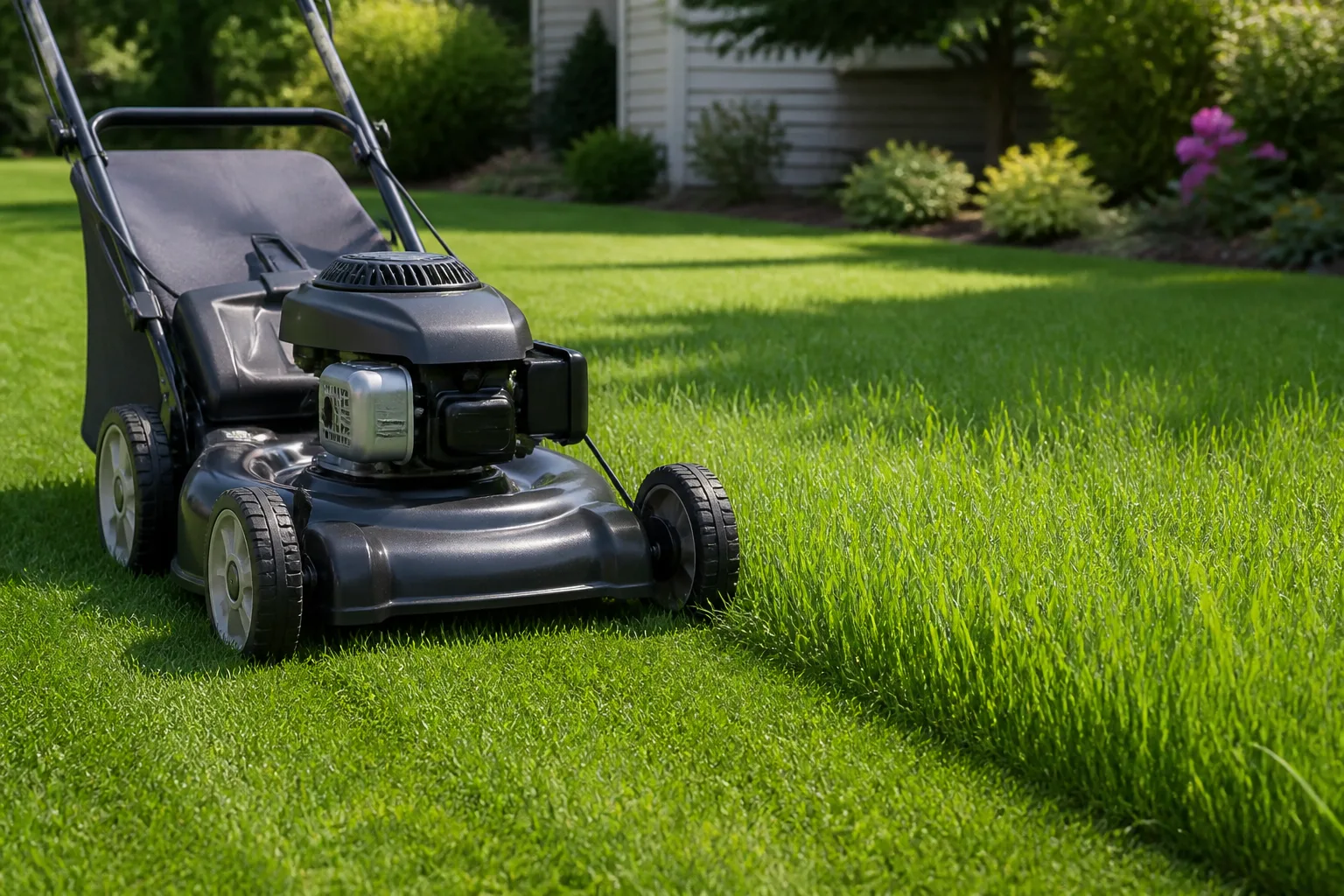
Mowing is a containment tool, not a dependable eradication method for established mugwort. The plant tolerates repeated cutting, and the rhizomes can continue sending up shoots even when the lawn looks freshly trimmed. Mowing becomes valuable when it prevents flowers and reduces the amount of seed that can move into bare or disturbed ground.
UConn recommends mowing from early summer through mid-September before seedhead production or seed maturation, with the first two weeks of September identified as a useful window in its region. Mowing after viable seed has matured can spread that seed; if late cutting is unavoidable, collect and bag the mugwort cuttings when possible. Timing depends on local weather and the patch’s development, so inspect the flower clusters instead of following a calendar date blindly.
Keep the mower high enough to avoid scalping desirable turf, and clean the deck and tires before mowing an uninfested lawn. Do not use a mower to pulverize a flowering patch or to carry cut fragments into a clean border. If the mugwort is in a bed rather than turf, hand-cut stems with a bag or tarp ready for containment.
Repeated mowing can gradually reduce the plant’s above-ground energy, but it will not turn a mature rhizome patch into a clean bed on its own. Pair mowing with turf improvement, smothering, carefully timed digging, or a labeled herbicide plan that matches the site.
When Herbicides Make Sense
Herbicides become reasonable when the patch is too large for practical digging, when mugwort is established in a site that cannot be smothered, or when protecting a lawn would otherwise require repeated broad disturbance. They are not a shortcut around identification. A product that controls a broadleaf weed may not be labeled for every turf species, and a non-selective product can injure every green plant it contacts.
Extension guidance agrees that late-summer or early-fall foliar treatment can be useful because the plant is actively growing, but it does not promise permanent eradication. UConn says glyphosate can suppress mugwort the following year and notes that triclopyr and clopyralid can provide control; NC State reports that clopyralid did not control established stands in its cited work but did affect seedlings and young shoots from small root pieces. The practical conclusion is that active ingredient, growth stage, site, and formulation all matter.
Match the Active Ingredient to the Site
For a bed, fence edge, or other place where desirable plants are absent or can be fully protected, a directed application of a non-selective product may be considered if the product label includes the use. For established mugwort in turf, a selective product may be the better category, but only if the label lists both the target weed and your exact grass or turf situation.
Do not choose a product from the active ingredient alone. Check the label for the site, target, application method, rate, temperature limits, rain-free interval, re-entry instructions, and restrictions around water or edible crops. The EPA’s pesticide-label guidance is a useful reminder that the label is the legal document defining how a registered pesticide may be used.
Common pre-emergence herbicides are not a universal answer for this problem. NC State notes that mugwort is not controlled by common pre-emergence herbicides and that few post-emergence options are truly effective. Do not apply a product simply because its package says “weed preventer”; match the product to mugwort’s biology and the site’s label.
Apply Safely and Expect Regrowth
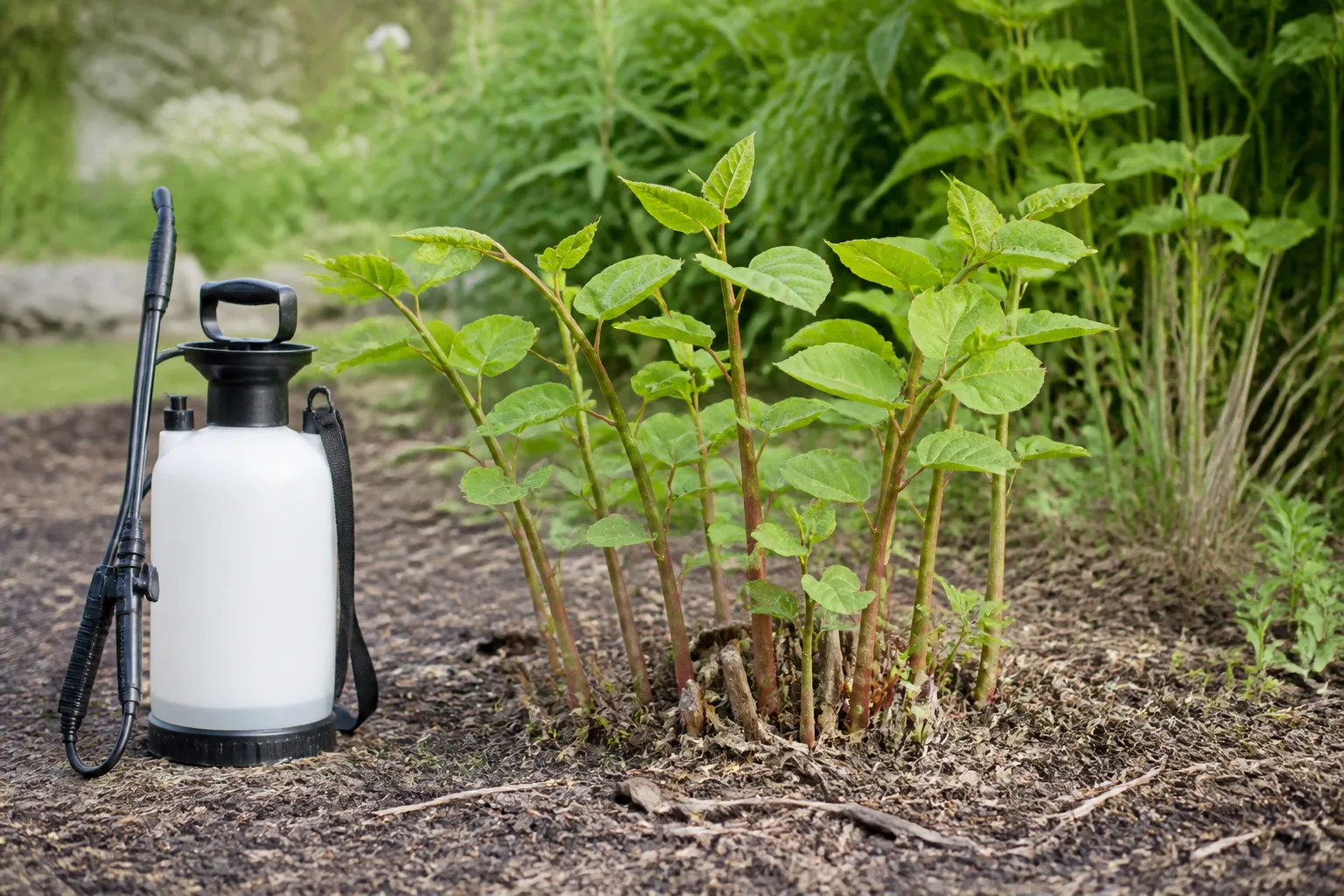
Treat only healthy, actively growing foliage and follow the product directions for mowing before and after application. Mugwort’s dense leaf hairs can make penetration difficult; UConn notes that a surfactant may be needed, but never add one unless the product label specifically permits it. A stronger homemade mixture is not a safer or more reliable version of a labeled treatment.
Choose calm weather, protect nearby plants with distance or physical shielding, and keep spray away from ponds, drains, vegetable beds, and desirable foliage. Wear the protective equipment on the label, respect the re-entry interval, keep children and pets out as directed, and wash equipment after use. If you cannot make a targeted application without drift or contact with plants you want to keep, do not spray that site yourself.
Do not mix glyphosate, triclopyr, vinegar, bleach, dish soap, fertilizer, or other household products to “boost” control. Such combinations can burn desirable plants, change how droplets move, create an exposure hazard, or violate the product label. If a first treatment fails, diagnose the cause—wrong identification, seed maturity, drought stress, rain, poor coverage, a resistant stand, or an unsuitable label—before repeating anything.
Expect delayed results and possible regrowth. A successful foliar treatment can weaken the underground system without making every rhizome disappear, so remove new shoots promptly and reapply only when the label allows it and the target is still appropriate. For a large property-edge infestation, a licensed pesticide applicator or local extension office can help design a site-specific program.
Prevent Mugwort From Returning
Prevention starts with the ways mugwort enters a property. Inspect root balls of field-grown or divided plants, avoid moving soil from an infested bed to a clean one, and do not share questionable compost, fill, or mulch with another gardener. The Gardening Channel’s practical mugwort overview also emphasizes that contaminated nursery material and durable rhizomes can turn one unnoticed plant into a much larger problem.
Keep a simple map or photograph of the original patch and inspect it at three useful moments: when spring shoots emerge, before the local flowering window, and after the first control attempt. Walk the edge as well as the center. New plants outside the original boundary may be rhizome shoots, moved fragments, or a separate introduction that needs its own prompt removal.
Reduce bare, disturbed ground around the site. In areas where mugwort has been removed, establish an appropriate lawn or planting cover after the control method permits it, repair paths and bed edges that expose soil, and avoid repeated cultivation that creates more fragments. A healthy, dense planting will not smother a mature mugwort network, but it can make new seedlings easier to see and give them fewer open places to establish.
If the patch is next to a neighbor, road edge, drainage channel, or shared fence, communicate before cutting or moving soil. Mugwort can occur outside the space you control, so a private cleanup may suppress your visible plants while the boundary continues to supply new shoots. Coordinated mowing and careful disposal are often more effective than treating only the cleanest-looking side of the line.
What to Do With the Plant After Removal
Keep roots, rhizomes, and flowering stems contained while you work. As a practical precaution, do not put mugwort fragments in a home compost pile where the material may be moved back into a bed; bag them and follow your municipality’s yard-waste or invasive-plant disposal rules. If local collection accepts the material under specific conditions, follow those instructions rather than improvising.
Do not use a plant from a sprayed or uncertain site as a culinary or medicinal harvest. Mugwort has a long history of traditional use, but the National Center for Complementary and Integrative Health says there is not enough evidence to determine whether it is safe or useful for any health condition and notes that it should not be used during pregnancy. The same page says safety for oral or topical use is not established, so removal is not the moment to experiment with teas, tinctures, or skin applications.
Wear gloves and long sleeves if handling the plant irritates your skin, and avoid working in a flowering patch when pollen worsens your allergies. NC State lists contact dermatitis among the plant’s possible problems, while UConn notes that mugwort pollen can contribute to hay fever where it is abundant. Stop handling it if you develop a reaction and seek medical advice for persistent or severe symptoms.
Conclusion
The quickest way to waste a season on mugwort is to treat its leaves while ignoring its identity and rhizomes. Confirm the white-hairy leaf underside, aromatic foliage, branched stems, small flower clusters, and spreading underground growth before you disturb the patch. Then hand-remove a few young plants, smother a bed you can leave fallow, mow before seed matures, or use a labeled site-appropriate herbicide when the infestation is too large for practical manual control.
Expect follow-up rather than a perfect one-day result. Keep fragments contained, avoid tilling, protect desirable plants, watch the patch through the next growing seasons, and repair bare soil once control permits. With that combination of accurate identification and repeated, proportionate pressure, you can stop mugwort from gaining ground even when complete eradication takes longer than one treatment.