How to Grow Love-in-a-Mist: Sowing and Care
Learn when to sow love-in-a-mist, how deeply to cover its seeds, and how to balance blooms, self-seeding, and ornamental pods in garden beds or outdoor pots.
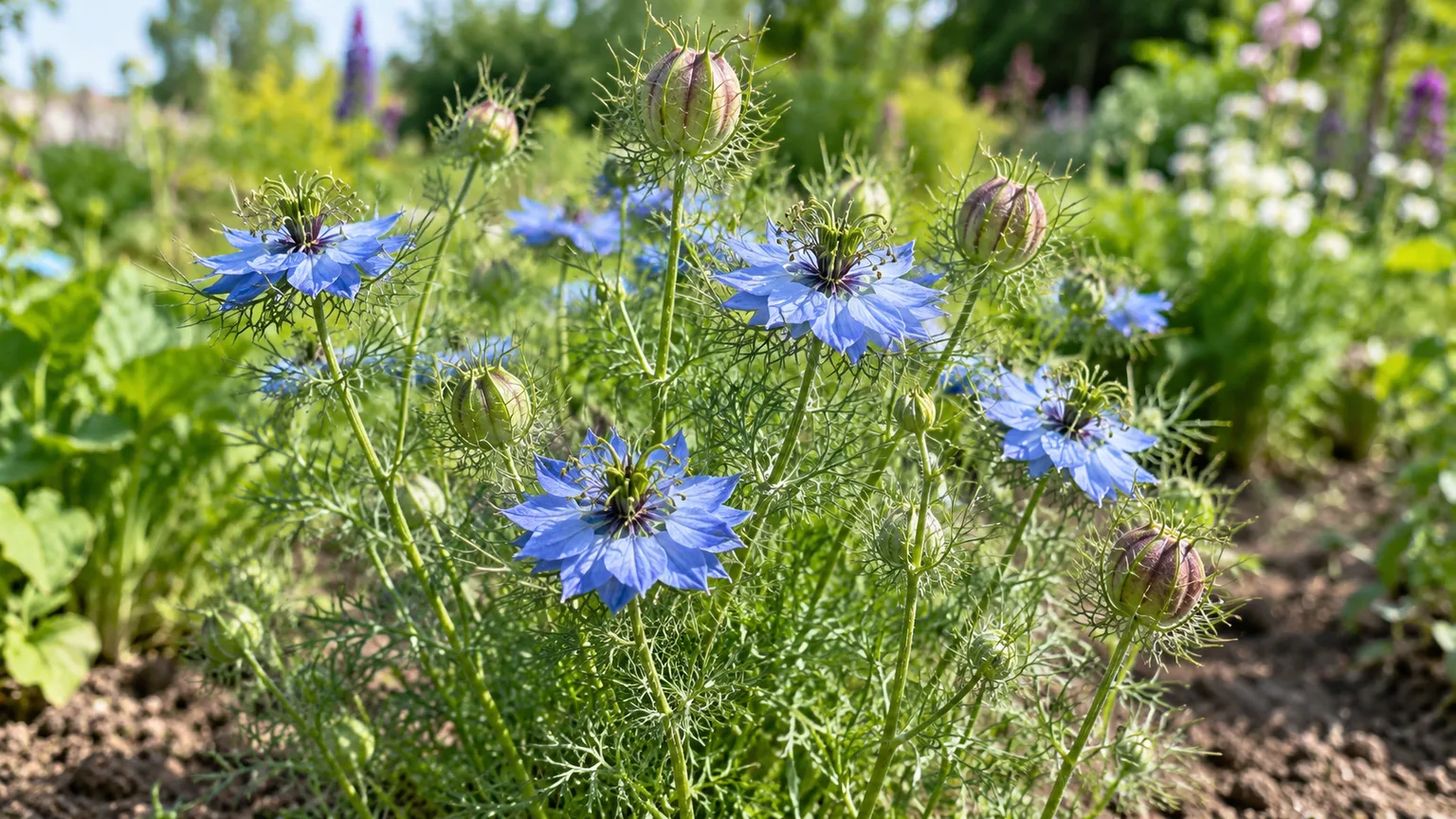
Love-in-a-mist (Nigella damascena) is a short-lived annual with a long visual season: feathery foliage fills the bed before the blue, white, pink, or purple flowers open, then inflated seed capsules take over after the petals fade. The easiest way to grow it is to sow seed directly in the place you want it to bloom, keep that patch evenly moist until seedlings establish, and time flowering for cool weather.
This is a plant that rewards a little planning more than constant care. It dislikes root disturbance, flowers for a relatively short stretch, and often reseeds itself; once you decide whether you want flowers, dried pods, or controlled volunteers, the rest of the routine becomes simple.
Is love-in-a-mist right for your garden?
Choose love-in-a-mist when you want an airy annual to soften a sunny border, fill a temporary gap, or add delicate stems to fresh and dried arrangements. Plants usually reach about 15 to 24 inches tall, though cultivar and growing conditions affect their size. Their open, finely cut foliage lets neighboring plants show through, so they work especially well in informal borders rather than as a solid screen.
The botanical name is useful when buying seed. Love-in-a-mist is Nigella damascena, a member of the buttercup family; it is not the same species as Nigella sativa, the plant grown as the culinary spice black cumin. Treat N. damascena as an ornamental and do not eat its seeds or use it medicinally. If a child or pet eats a meaningful amount, contact a poison center or veterinarian for advice rather than relying on a general plant list.
Each individual plant completes its life in one growing season. A patch can appear year after year because seed capsules release seed that germinates later, not because the original roots are perennial. That distinction helps set expectations: you renew the plants through seed, and you can decide how much of that renewal happens on its own.
Love-in-a-mist care at a glance
| Need | Practical target |
|---|---|
| Light | Full sun for the most flowers; light afternoon shade can help in very hot climates. |
| Soil | Loose, fertile but not overfed, and well-drained. |
| Sowing | Direct-sow in early spring in cold-winter regions; use fall or winter sowing where winters are mild and summers hot. |
| Seed placement | Press seed onto the surface or cover only very lightly; guidance commonly ranges to about 1/8 inch. |
| Water | Keep the seedbed evenly moist through germination and establishment; avoid waterlogged soil. |
| Spacing | Thin seedlings to about 8–10 inches apart. |
| Bloom | Usually late spring into early summer; heat can shorten the display. |
| After flowering | Deadhead for a modestly longer flower show, or leave selected capsules for drying and seed. |
NC State Extension and Wisconsin Horticulture both describe love-in-a-mist as a cool-weather annual that tolerates frost but performs poorly once heat settles in. Full sun and free-draining soil are the dependable baseline, while even moisture matters most when seeds are germinating and plants are young. NC State Extension and Wisconsin Horticulture support that overall profile.
Choose a sowing window that beats summer heat
The best sowing date depends less on the calendar than on how long your spring stays cool. Love-in-a-mist can tolerate frost, but it does not keep blooming happily through hot weather; in a region with an early summer, a seedling that emerges late may grow well and still flower for only a brief period.
In cold-winter areas, sow outdoors as soon as the soil can be worked in early spring. The plants handle cool nights, so waiting for warm summer-like weather can waste the season. In regions with mild winters and hot summers, a fall or winter sowing often gives seedlings a head start and lets them flower before heat arrives. North Carolina State Extension notes that fall sowing is often preferable, while also allowing early-spring sowing when the ground can be worked. Its plant profile is a useful reminder that the same species can be planted in different seasons depending on climate.
Spring, fall, or a second sowing?
Use spring sowing if winter is severe, the ground freezes hard, or autumn seedlings would be vulnerable to repeated freeze-thaw cycles. Use fall sowing where winters are mild enough for seed to overwinter or for small seedlings to persist; they can resume growth as conditions improve. Follow local seed-packet guidance if a cultivar has a specific recommendation, and watch how quickly spring temperatures rise in your own garden.
For a longer display, sow a small second patch about three weeks after the first while weather remains cool. Do not keep sowing on a fixed schedule into hot midsummer: later plants may germinate but stall, flower weakly, or decline before making a worthwhile display. Wisconsin Horticulture recommends successive sowings about three weeks apart, and Gardening Know How similarly notes that the flowering period for each plant is short. The practical stopping point is the approach of sustained summer heat, not a promise that one sowing interval will produce flowers all season.
Prepare a sunny bed that drains freely
Choose a place that gets several hours of direct sun and does not stay soggy after rain. Morning sun is especially useful in hotter regions because it gives plants strong light while reducing the stress of the hottest afternoon hours. In cooler climates, an open sunny site generally produces more flowers and sturdier growth than a shaded border.
Loosen the top few inches of soil so small seeds can make firm contact with a fine surface. If the ground is compacted or heavy, improve the bed with finished compost and correct drainage before sowing; do not try to solve sticky clay by adding a small amount of sand, which can make some soils harder. A low raised row or a different bed is a better choice if water regularly pools. The goal is soil that holds enough moisture for seedlings but lets excess water drain away.
Love-in-a-mist grows in a range of ordinary soils, so a precise pH adjustment is usually unnecessary if nearby garden plants are doing well. Do not add rich manure or heavy nitrogen fertilizer by default. This annual is not a crop that needs to be pushed into lush growth; a moderate, well-drained bed is more useful than a heavily fed one. The RHS lists full sun and well-drained chalk, loam, or sandy soils for Nigella damascena, which aligns with the extension guidance. RHS plant profile
Sow seed where the plants will bloom
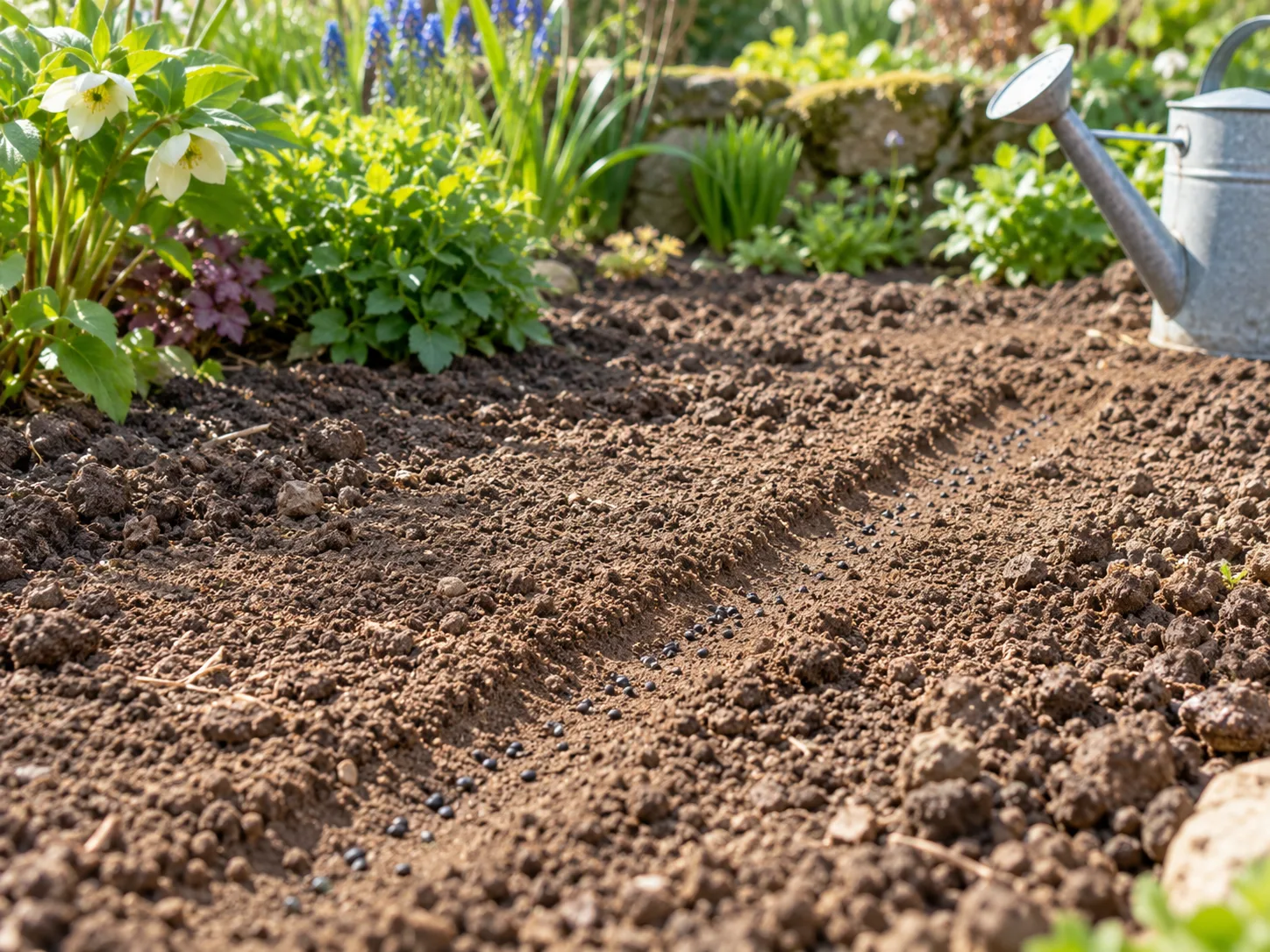
Direct sowing avoids the main weakness of love-in-a-mist: it develops a taproot and does not transplant reliably once that root has begun to extend. Mark the bed before scattering seed, because the first seedlings are fine and easy to weed out by mistake. You can sow in a narrow row for easier thinning or scatter a small amount for a more natural drift.
Rake the surface smooth, distribute seed thinly, and press it against the soil with the flat of a board or the back of a rake. Water gently so the seed stays in place. If you broadcast seed, aim for an even light scatter rather than a dense pile; you can always thin seedlings later, but a crowded patch is harder to manage and more likely to flop.
Seed depth, moisture, and germination
Published directions range from surface sowing to covering seed by about 1/8 inch. Those directions agree on the point that matters most: do not bury the small seed deeply. Press it into the soil, then use a very light dusting of fine soil or compost if your bed dries quickly or birds disturb the surface. Wisconsin Horticulture and Grow Happier Plants give shallow sowing guidance, with Grow Happier Plants listing approximately 1/8 inch as a practical depth. Grow Happier Plants’ seed guide
Keep the top layer evenly moist until germination. A gentle shower from a watering can or hose nozzle is better than a forceful stream that washes seed into a low spot. Under suitable conditions, expect seedlings in roughly two to three weeks; cooler soil, drying, or a crusted surface can make emergence slower or uneven. If nothing appears after three weeks, scratch a small section to see whether seed is still present before resowing the entire bed.
Avoid letting the seedbed dry completely during germination, but do not leave it saturated. A fine cover of compost or vermiculite can slow surface drying, though it should remain shallow. Once seedlings are visible, keep watering lightly enough that roots follow moisture downward instead of sitting in a constantly wet surface layer.
Thin seedlings before they compete
When seedlings are large enough to handle, thin them to roughly 8–10 inches apart. That spacing gives each plant room to branch and keeps air moving through the fine foliage. If you sowed a broad drift, pull the smallest crowded seedlings rather than trying to transplant them into another bed; the disturbed taproot may stall, and there is usually little advantage to moving them.
You can leave a few closer together for a softer, fuller look, but dense clumps trade sturdiness for visual mass. In rich soil, close spacing can make stems compete for light and lean after wind or heavy rain. For cut flowers, give plants the full spacing so stems have room to lengthen and you can reach them without trampling neighboring seedlings. Wisconsin Horticulture also recommends thinning to 8–10 inches.
If you started seed indoors because the outdoor window is short, use deep cells or biodegradable pots and move seedlings while small, before roots circle. Harden them off gradually and plant the whole root plug without teasing it apart. This is a fallback, not the easiest route; direct sowing in the final bed or container is usually more reliable.
Care for plants from seedlings to flowers
Give young plants steady moisture while their roots establish. After that, water when the soil begins to dry rather than on a rigid weekly schedule; sandy beds and containers dry more quickly than loam, while cool rainy weather may remove the need to water at all. Established plants can withstand brief dry spells, but prolonged drought can reduce flowering and make the display end sooner.
Full sun gives the most flowers. Where summer heat arrives quickly, a site with morning sun and light afternoon shade can reduce stress, but deep shade usually means fewer blooms and looser growth. Love-in-a-mist is a cool-season annual, not a plant that needs a hot location to flower; if it grows foliage well but produces few buds, check shade and heat before adding fertilizer.
Skip routine monthly feeding unless a soil test or a clear deficiency points to a need. In average garden soil, extra nitrogen can make foliage lush without improving the flower show. If your bed is very poor, mix a modest amount of finished compost in before sowing rather than repeatedly feeding plants after they have grown. Keep mulch thin around a seedling patch so it does not bury new growth or hold excess moisture around the stems.
Why are my nigella plants not flowering?
When love-in-a-mist fails to flower, start with timing. A late sowing may reach maturity just as hot weather arrives, while a very early sowing in a mild climate may grow through winter and flower before you expected. The plant’s flowering window is naturally brief; one flush lasting several weeks is normal, not a sign that care has failed.
Next check light and crowding. Plants in deep shade produce fewer flowers, and seedlings left close together compete for light and air. Thin where you can do so without disturbing neighboring roots, and remember that crowding is easier to prevent at the seedling stage than to repair once stems have grown tall.
Diagnose heat, crowding, and excess growth
If plants have plenty of soft foliage but few buds, consider whether they received enough direct sun and whether the bed was heavily fertilized. If seedlings are sparse or uneven, look for a dry or crusted seed surface, deep sowing, or seed washed to one edge by watering. If stems stretch and lean, improve spacing in the next sowing and choose a brighter, more sheltered patch; staking a whole mass of airy annuals is rarely worthwhile.
If the first flowers appear and fade quickly, heat is a likely factor. Deadheading can encourage a little more flowering, but it cannot reverse the seasonal shift into hot weather. For the next crop, sow earlier or try a fall sowing suited to your winter climate. North Carolina State Extension and Wisconsin Horticulture both identify heat as a limitation, while Wisconsin notes that the plants begin flowering about three months after sowing and that the overall bloom period is short.
Grow love-in-a-mist in containers
A pot works if it is deep enough for the root and drains freely. Choose a container at least 8–10 inches deep with several open drainage holes; a wider pot or trough is better than a narrow decorative vessel because plants branch and look more natural in a small group. Fill it with fresh potting mix, then sow seed directly in the final container instead of raising seedlings elsewhere.
Thin the seedlings to about 8–10 inches apart, or leave a few closer if you want a fuller display and accept shorter, more crowded stems. Place the pot outdoors where it receives strong light, and check moisture more often than you would in a garden bed because exposed potting mix dries quickly. Water thoroughly when the surface starts to dry, then let excess water drain from the saucer.
The container must be deep enough to support the taproot and heavy enough not to tip when plants reach their full height. Do not move a mature plant into a new pot to extend its season; root disturbance can set it back, and the plant is annual anyway. In a window box, use a compact cultivar and sow it in place, then let the spent plants finish naturally or pull them after seed has been collected.
Choose cultivars for color and use
The familiar choice is a blue-flowered cultivar, but garden forms also include white, pink, lavender, and mixed shades. Cultivar labels can vary slightly between seed sellers, so choose by the named flower color and expected height on the packet rather than assuming every seed mix will look identical.
- ‘Miss Jekyll’ is a popular blue selection, with forms and seed listings that may specify dark blue, light blue, white, or a mix.
- ‘Miss Jekyll Alba’ has white flowers and makes a useful contrast beside blue or pink annuals.
- ‘Persian Jewels’ is a mixed-color series suited to an informal patch when you want several shades without choosing one.
- ‘Mulberry Rose’ gives a pink-toned option, while ‘Oxford Blue’ is selected for deeper blue color.
- ‘Albion Black Pod’ is valued for white flowers and dark ornamental capsules, making it a good choice if the seed heads are part of the plan.
For a cutting garden, look for a named strain with long stems or cut-flower use and give it more space. For a small border or pot, select a more compact form and check mature height. Cultivar choice changes color, flower form, and sometimes height; it does not change the basic growing strategy of cool-season timing, direct sowing, and well-drained soil. Wisconsin Horticulture and Penn State Extension list garden forms and note that both flowers and capsules can be used in arrangements.
Decide whether to deadhead or keep the pods
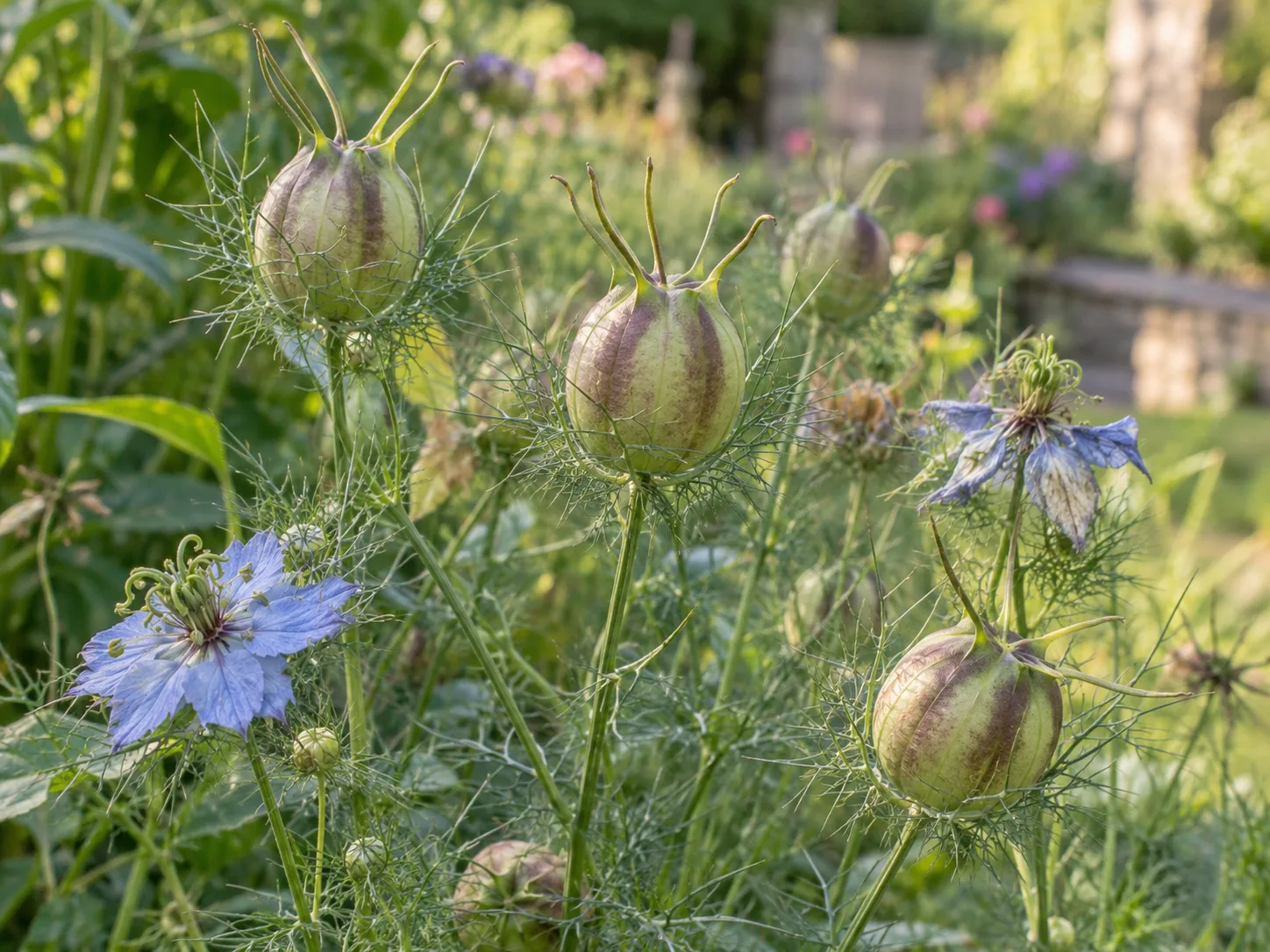
Deadheading is optional, not a required cleanup task. Removing faded flowers before they set seed can encourage a little more bloom, but it also removes the balloon-like capsules that give the plant a second ornamental phase. If you want the flowers first and pods later, deadhead only some stems and leave the rest to mature.
For fresh bouquets, cut stems when the flowers are open or the buds are fully colored, then strip leaves from the lower section before placing them in water. The fine foliage can cloud vase water if submerged. The display is delicate, so use love-in-a-mist as an airy accent with sturdier flowers rather than expecting it to carry a large arrangement by itself.
For dried arrangements or seed collection, leave capsules attached until they are formed and their stripes begin to show, then cut stems before they become brittle and split. Hang small bunches upside down in a dry, dark, ventilated place; a paper bag around the pods catches any seed that drops. Penn State Extension and Wisconsin Horticulture describe the capsules as useful in dried arrangements and advise harvesting them while still fresh enough to dry cleanly.
Manage self-seeding without losing the display
Love-in-a-mist often returns from seed, which is convenient when you want a recurring patch and a nuisance when you want a precise border. Decide before capsules split: leave a few mature stems where you want next year’s plants, and cut or remove the rest before seed falls. This keeps the benefit of reseeding without allowing every plant to contribute.
Seedlings are easier to remove while small. Learn to recognize the fine, threadlike foliage, then thin volunteers to the same 8–10 inch spacing used for a new sowing. Pull unwanted seedlings while the soil is moist so they release cleanly; if you leave them until they are crowded and tangled, selective removal can disturb the plants you intended to keep.
You can also collect seed instead of letting it scatter. Allow selected capsules to dry on the plant, cut them into a paper bag, and store the cleaned seed in a cool, dry place after it is fully dry. Label the packet with the cultivar and year, especially if you grew a color mix; seedlings from a mixed planting may not reproduce every parent flower exactly. Gardening Know How notes the plant’s tendency to self-seed and the usefulness of its pods, while Wisconsin Horticulture advises removing pods early when volunteers are not wanted.
Pests, disease, and safe handling
Love-in-a-mist is generally a low-maintenance annual, and serious pest problems are not typical. The more useful prevention is good spacing and drainage: crowded, wet foliage stays damp longer, while saturated soil stresses roots. If seedlings collapse at the soil line, remove the affected ones, let the surface dry slightly between waterings, and avoid sowing the next patch too densely.
Inspect plants while watering, but do not spray insecticide on a minor blemish or a short-lived plant without identifying the cause. Remove damaged foliage, water at the soil rather than over the leaves when practical, and let air move through the patch. If aphids appear on new growth, a firm stream of water may be enough; follow any product label if a treatment is truly needed.
Keep the plant ornamental. Nigella damascena is not the culinary black cumin Nigella sativa, and the seeds should not be used as a spice or home remedy. Store collected seed clearly labeled and keep seed capsules away from children and pets that might chew them. If anyone ingests a significant amount, contact a local poison center or veterinarian for case-specific advice; ordinary gardening contact does not call for a special treatment routine.
Conclusion: give it a cool start, then let it set seed
Sow love-in-a-mist directly where it will grow, shallowly, in a sunny bed that drains well. Spring is the straightforward choice in cold-winter climates; fall or winter sowing often suits mild-winter regions where early summer heat ends the bloom. Keep seedlings moist while they establish, thin them, and resist the urge to keep feeding or moving them.
Then choose the finish you want: remove some flowers for a modestly longer bloom, harvest striped capsules for arrangements, or leave a few to make next year’s patch. The plant asks for little once its timing and placement are right, and those two decisions determine whether it becomes a brief flourish, a cut-flower crop, or a self-renewing border.