How to Harvest Parsley and Keep Your Plants Productive
Learn how to harvest parsley without stunting regrowth: choose mature outer stems, leave the crown intact, and keep fresh leaves crisp or preserve them at home.
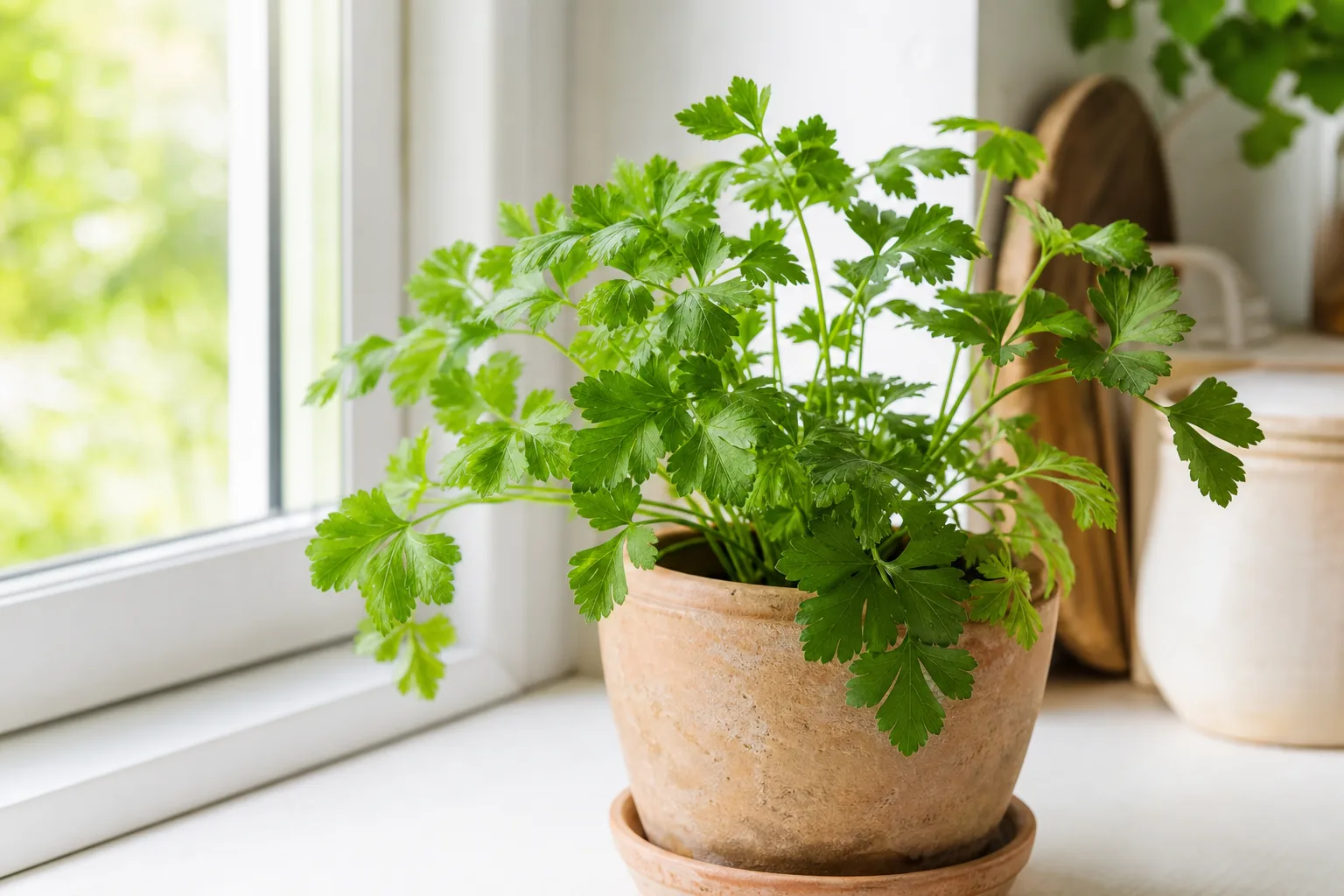
Parsley is ready for the kitchen when it has enough established outer foliage to spare, not simply when a calendar says it has reached a certain age. To keep it producing, cut complete leaf stalks low near the crown, take them from the outside, and leave the small central leaves untouched. That simple pattern works for both curly and flat-leaf parsley, in a garden bed or a container.
A good harvest also depends on what you want from the plant. A handful for dinner calls for a few careful cuts; a large batch for the freezer requires a vigorous plant and a lighter touch than “cut everything down.” And if your plant is sending up a flower stalk, the right choice depends on whether you want its last tender leaves, its seeds, or simply a clean end to the season.
Identify the Parsley You’re Harvesting
Most kitchen parsley is Petroselinum crispum, a biennial in the carrot family. It makes a low rosette of leaves in its first year, survives winter in many climates, then sends up flowering stems in its second year before setting seed and dying. Gardeners often grow it as an annual because first-year leaves are the most productive and tender; Illinois Extension notes that overwintered plants tend to bolt and produce tougher, more bitter leaves (Illinois Extension parsley guide).
The usual harvest instructions below are for leaves. If you bought a plant labeled Hamburg, turnip-rooted, or root parsley, it is grown for a swollen edible root as well as foliage. Taking its entire top as though it were an ordinary leaf crop does not improve the root; harvest the root when mature and use the leaves sparingly while the plant is growing.
Flat-leaf, curly, and root parsley
Flat-leaf or Italian parsley is the sturdy, open-leaved type many cooks prefer for chopping into sauces and soups. Curly or moss-curled parsley has tightly ruffled leaves and is often used as a garnish, though either leaf type can be harvested with the same cut. Purdue Extension describes flat-leaf parsley as stronger in flavor and better able to hold up in hot dishes, while curly parsley is milder and common in cold dishes (Purdue Extension FoodLink: parsley).
Hamburg parsley is the important exception because its root is part of the harvest. Its leaves still emerge in a rosette, but the plant needs time and space to develop the root; if the label does not clearly identify a root type, assume you are growing a leaf variety and harvest the foliage rather than digging the plant.
Know When a Parsley Plant Is Ready
Wait until the plant is established and has several mature outer leaves before taking a meaningful harvest. A seedling with only a few small leaves is still building the leaf area that fuels new growth, so taking its largest stems can set it back. If you recently transplanted parsley, give it time to settle and show fresh growth first rather than harvesting on the day it goes into the ground.
A common readiness cue is a leaf stalk carrying at least three well-developed leaf segments. That is more useful than counting weeks from sowing because parsley germination and growth vary with temperature, light, and soil moisture; a ready plant can be compact or tall, but it should have a healthy center and multiple mature stems.
Use mature outer stems, not a calendar
Look at each candidate stem rather than judging the plant by height alone. Harvest the outer leaves that are full-sized and deep green, and leave small pale leaves clustered in the center; those young leaves are the next flush. Gardeners’ Path likewise recommends harvesting once a stem has three distinct segments and cutting from the outside while leaving inner growth to mature (Gardeners’ Path parsley guide).
A six-inch plant may be ready to offer a few leaves, but six inches is not a magic threshold. In a small pot, a plant that height may still have little root room or only a couple of useful stems; in a garden bed, a shorter but fuller plant may already have enough outer foliage for a light picking.
Pick Parsley on a Cool, Dry Morning
For the cleanest harvest, pick after morning dew has dried but before the day becomes hot. Iowa State University Extension recommends this timing for herbs because cool, dry leaves are easier to handle and preserve well; the dry foliage also means you are not packing surface water into a storage container (Iowa State Extension herb harvesting guide).
Do not postpone a meal’s harvest if the only available time is later, but avoid cutting a wet plant after rain or while leaves are hot and wilted. If you must pick during heat, take only what you need, move it into shade promptly, and do not leave a warm bunch on a sunny counter while you finish other garden chores.
Harvest Parsley Without Damaging the Crown
Parsley does not grow new leaves from every point along a stripped stem in the way some herbs branch after a tip pinch. New leaf stalks rise from the crown at the base of the plant, so the useful cut is a complete outer stalk close to where it joins the crown. The goal is a low, clean cut that removes the whole leaf and its stalk without slicing into the crown or disturbing the small central shoots.
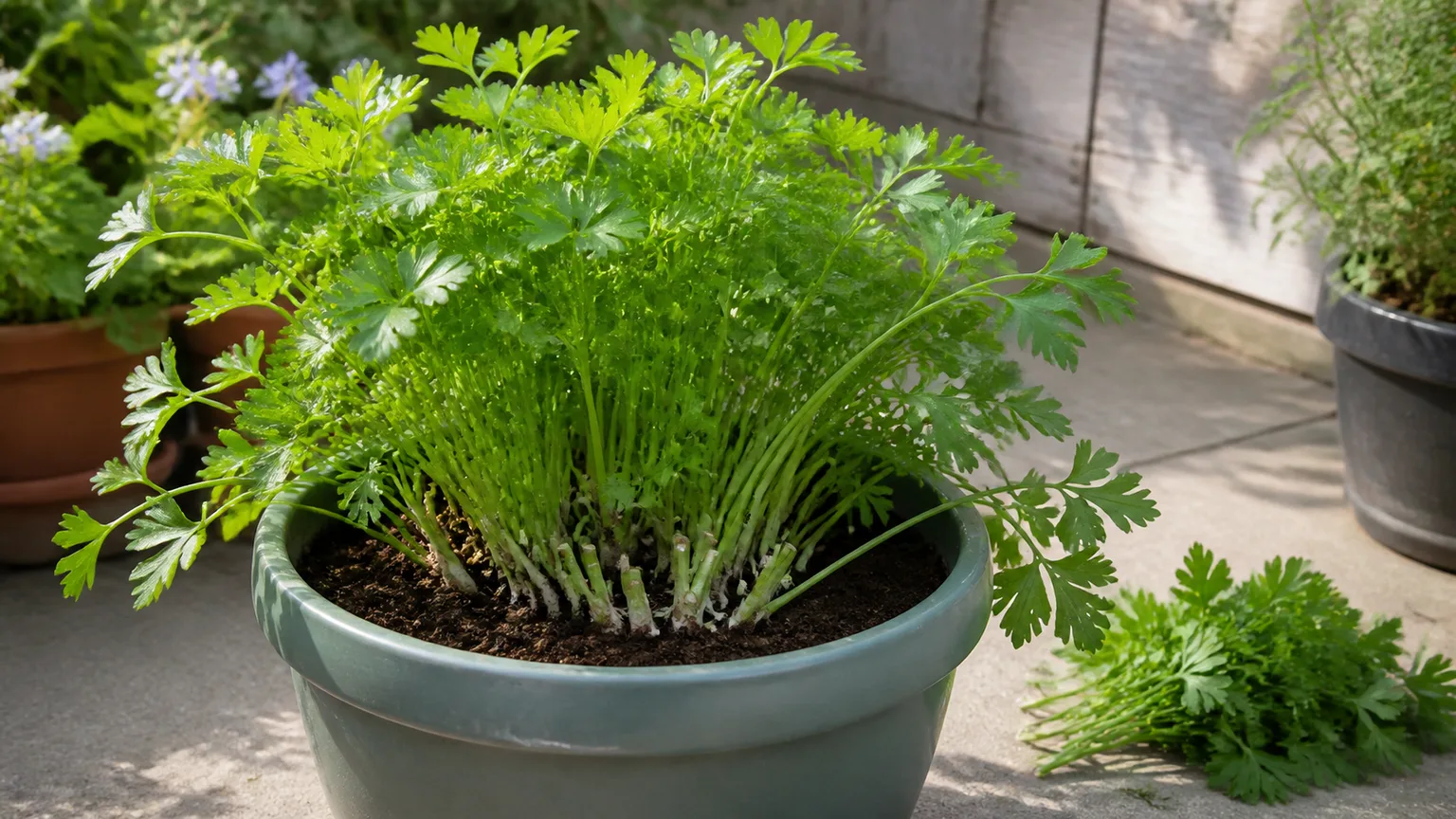
This is why “take a few leaves” can be misleading. If you pluck only the leaflets and leave a bare stalk, the leftover stem is no longer useful for the kitchen and may yellow in place; if you shave every stalk flush with the soil, you can injure the growing crown that needs to produce the next leaves.
A clean-cut method for a small or large harvest
- Choose the stems first. Select mature outer leaves and leave the smallest center growth in place.
- Trace each stem downward. Follow the leaf stalk to its base so you know where it emerges from the crown.
- Make one clean cut. Use clean, sharp scissors or snips to remove the entire stalk just above the crown; do not tug, tear, or cut into the crown.
- Keep the harvest cool. Put cut stems in a clean bowl or basket in the shade, then use or refrigerate them promptly.
Clean tools help prevent ragged cuts and reduce the chance of carrying soil or plant residue between herbs. University of Maryland Extension recommends washed scissors or clippers and a clean bowl for herb harvests, along with harvesting stems rather than picking isolated leaves (University of Maryland Extension: harvesting and preserving herbs).
For commercial parsley harvested for repeat cuttings, a Purdue production guide gives a clearance of about 1 to 1¼ inches above the crown. A home gardener does not need to measure every cut; the useful lesson is simply to cut low enough to remove the stalk but not so low that the crown is nicked (Purdue Extension parsley production guide).
How Much Parsley Can You Take at Once?
There is no exact fraction that fits every parsley plant. A small seedling, a potted plant between flushes, a vigorous first-year clump, and a plant recovering from summer heat have very different reserves. As a cautious home-garden rule, take only a few stems from a young plant and about one-third or less from a healthy established plant when you want it to keep producing soon.
| Plant condition | A sensible harvest | What to leave |
|---|---|---|
| Recently transplanted or still small | Wait for new growth, or pick a few outer stems only | Most of its leafy canopy and the center |
| Established and actively growing | A light-to-moderate cut; around one-third is a cautious repeat-harvest guide | The growing center and enough mature leaves to keep the plant leafy |
| Large, vigorous first-year plant | A larger batch can be reasonable, especially if harvesting several plants | Do not remove every stem from one plant if you expect another flush |
| Hot, dry, pale, wilted, or disease-stressed plant | Pause or take only undamaged leaves needed now | Let it recover before a substantial cut |
The familiar one-third limit is a conservative rule of thumb, not a parsley law. University of Maryland Extension gives a broader recommendation of up to three-quarters of the current season’s growth for leafy herbs when the plant has enough foliage to maintain growth; that is a general herb ceiling, not a target for every parsley plant (University of Maryland Extension). For a small container or a plant you want to harvest again soon, leave more. For a large, healthy plant at the end of its useful season, you can take more while accepting that the next harvest may be smaller or absent.
Adjust the cut to plant age and stress
If the plant is young, has just recovered from transplanting, or has been through drought, treat foliage as a reserve rather than a crop ready for a big haircut. Wait until it is growing actively again, then begin with a few mature outer stalks and see how quickly new leaves appear. If it is vigorous and well-watered, you can take a more substantial basketful, but spreading the cut across several plants is gentler than stripping one plant bare.
Watch the plant after harvesting. A healthy parsley crown should remain firm, with fresh green leaves in the center and no long period of collapse; a plant that stays limp, turns pale, or produces only tiny leaves needs a recovery check, not another large cut or a strong fertilizer dose.
How Often to Harvest for Fresh Regrowth
Once parsley is established, small harvests can be taken whenever you need them. Regular picking of the outer stalks encourages continued leaf production during the growing season, but it does not make the plant grow instantly; the next usable stems depend on light, temperature, water, and how much foliage remains. The Royal Horticultural Society recommends harvesting a few leafy stems from the outside and notes that regular picking encourages more leaves (RHS parsley guide).
There is no need to wait exactly one or two weeks after every cut. A few stems for a meal barely changes a healthy plant, while a large harvest should be followed by a pause until the center has produced enough new outer leaves to spare. If growth stalls, check moisture, heat, and the plant’s age before assuming it needs more fertilizer.
If you need more parsley than one plant can give, harvest from several clumps or keep plants at different stages. This simple succession approach spreads the demand and gives each crown more time to replace leaves, especially in a hot climate when parsley grows more slowly during the warmest part of summer.
Harvesting Parsley in Its Second Year
Parsley is biennial, so an overwintered plant may offer a spring flush before it sends up a central flower stalk. Harvest good leaves while they remain tender, but expect the plant to change as that stalk elongates: it is shifting energy toward flowering and seed rather than maintaining the same dense leaf rosette. The RHS notes that parsley in its second year concentrates on flowers and seed and stops producing leaves of the same culinary quality (RHS).
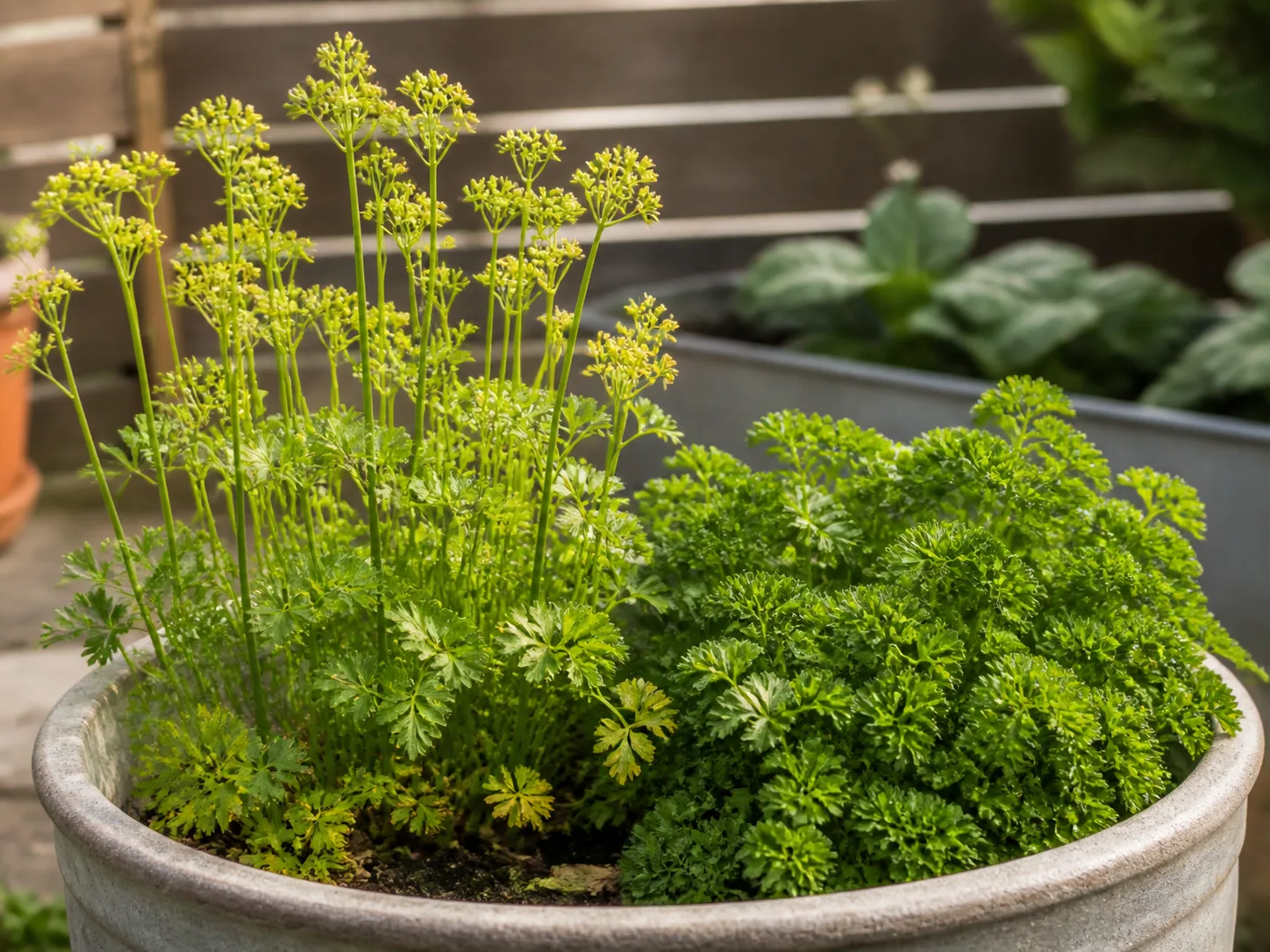
If you want leaves, harvest them before the plant is in full bloom and remove the first flower stalks while they are small. This may buy a little time, but pinching is not a reset button: the plant has completed a winter and is entering its reproductive stage, so plan to replace it with a first-year plant for a long, tender harvest.
Decide whether to remove flower stalks or save seed
If you want to save seed, leave one or more healthy plants to flower and mature. Parsley’s small flower clusters develop into dry seed-like fruits; allow them to brown, then collect them into a paper bag before they scatter. A plant left to flower will give fewer tender leaves, but it provides a simple way to replenish your patch if the seed stays true to the type you want.
If you do not need seed, cut flower stalks early and keep picking usable outer leaves while they remain tender. The plant’s leaves may become tougher as it bolts, so taste one before preserving a large batch; there is little value in freezing a bucket of foliage you no longer enjoy using.
Keep Parsley Healthy Between Harvests
A light harvest is part of care, but it cannot compensate for poor growing conditions. Parsley prefers soil that stays moderately moist without remaining soggy, and it grows best when it has enough light; during very hot weather, some afternoon shade can help prevent stress. If the soil is dry several inches down, water at the base and allow the root zone to rehydrate before taking a large harvest.
Avoid feeding parsley heavily just to force regrowth. In a garden bed with decent soil, a modest layer of compost is often enough; a potted plant may need occasional feeding during active growth, but follow the product label and avoid excessive nitrogen that produces soft foliage without fixing insufficient light or water. After harvest, the most useful care is steady moisture, room for airflow, and leaving active leaves to keep the plant growing.
Protect the crown from drought, soggy soil, and pests
Parsley wilts quickly in a small container when the root ball dries, while a crown that sits in waterlogged mix can yellow or rot. Feel the soil before watering: a dry root zone calls for a thorough drink, but a wet pot with drooping leaves calls for better drainage and a pause in watering. Remove standing water from saucers and keep mulch away from the crown.
Inspect the leaves before you cut them for food. Aphids gather on tender growth, while black swallowtail caterpillars may feed on parsley and other plants in the carrot family; if you want to support butterflies, grow a spare plant rather than losing the only leaves you plan to harvest. Leaf spots, wet rot, or heavy insect damage are reasons to remove affected foliage and improve airflow, not to store the damaged leaves in a bunch with healthy stems.
Keep the clump open by taking outer stems and clearing yellow or broken leaves as needed. If disease is spreading, avoid wetting foliage late in the day, check a local Extension diagnosis, and follow any pesticide label’s crop and harvest directions before using treated leaves; washing does not replace a required preharvest interval.
Store the Harvest for Fresh Use or Later
The fastest way to waste parsley is to cut more than you can use, leave it in the sun, and then seal damp leaves in a bag. Sort the stems soon after harvesting, remove yellow or damaged leaves, and decide whether the batch is for dinner, several days in the refrigerator, or long-term storage. Keep the leaves whole until you are ready to chop them because handling bruises them and can dull their aroma.
Storage timelines vary because sources assume different starting freshness and temperatures. Purdue FoodLink estimates up to five days in a refrigerator bag, while commercial postharvest guidance for culinary herbs assumes temperatures near 32°F and very high humidity; a home fridge and a freshly cut garden bunch do not always match those conditions (Purdue FoodLink; UC Davis Postharvest Research and Extension Center). Use the leaves while they are crisp and green rather than treating any printed day count as a guarantee.
Refrigerate whole stems for short-term use
For a small fresh bunch, trim the cut ends and stand the stems upright in a glass with an inch or two of clean water. Cover the leafy tops loosely with a clean produce bag and refrigerate; change the water if it turns cloudy and remove any leaves that begin to decay. Another option is to wrap dry stems loosely in a barely damp paper towel and place them in a breathable produce bag, checking that condensation does not collect on the leaves.
Do not wash a bunch and store it dripping wet. If you prefer to rinse it before refrigeration, shake off excess water and dry it gently first; otherwise, wash under running water just before use. Purdue Extension recommends plain water rather than soap for rinsing parsley, and UCANR’s home-preservation guidance uses a loose cover and water for short-term storage of tender herbs (Purdue FoodLink; UCANR preserving herbs).
Freeze surplus; dry only when convenience matters
Freezing is the practical choice when you have more parsley than you can use and want to preserve its fresh-green flavor for cooked dishes. Rinse the leaves, remove debris, dry them thoroughly, then freeze whole sprigs or chopped leaves in a single layer; once frozen, transfer them to a labeled airtight bag. You can also pack chopped parsley into an ice-cube tray with water for easy portions, but thawed leaves soften and are better stirred into soup, sauce, eggs, or stew than used as a crisp garnish.
A trusted parsley growing guide notes that frozen leaves retain flavor better than dried parsley for long storage, while Extension cautions that freezing can still change texture and create off-flavors; both can be true depending on the herb, freezer, and storage method (Gardeners’ Path; University of Maryland Extension). If you freeze parsley, keep the freezer at 0°F or below, label the date, and remove only the quantity you will use promptly.
Drying works when you want a shelf-stable seasoning and do not mind a milder result. Dry small bunches in a warm, dark, well-ventilated place or spread leaves in a dehydrator according to its instructions; large bunches and humid rooms slow drying and can encourage mold. The leaves are ready when they crumble and the stems snap, then store them whole in a sealed container away from heat, light, and moisture; crush them only when cooking so more aroma remains (RHS; University of Maryland Extension).
Troubleshoot a Slow or Yellowing Plant
If parsley does not send up new leaves after a cut, first check whether the crown is still firm and green. A recent transplant, cold spell, heat wave, drought, or cut too close into the crown can delay regrowth; give the plant suitable moisture and light, and wait for active growth before trimming again. Do not pull up a living crown just because it looks quiet for a few days.
Yellow leaves on the oldest outer stems can be normal as leaves age, especially when the plant is crowded or heading into winter. If yellowing spreads through the center, feel the soil and inspect the crown: dry mix points to a water problem, while persistently wet mix or a soft base suggests drainage trouble or rot. Remove only damaged leaves, improve the conditions, and leave healthy central foliage intact.
If leaf stalks look tall and thin, check light and spacing; if the plant is flowering, recognize that it is in year two rather than trying to force it back into first-year growth. Brown or spotty leaves after rain may be disease or simply damage, so inspect both sides and ask a local Extension service if the pattern is spreading. A diagnosis is more useful than spraying an edible herb based on a vague symptom.
Conclusion
Harvest parsley by taking mature outer leaf stalks low near the crown, keeping the center intact, and adjusting the amount to the plant’s age and condition. Pick when foliage is dry and cool, give the plant time to replace a large cut, and shift your plan when the second-year flower stalk appears.
For a meal, cut only what you need; for a surplus, refrigerate stems briefly or freeze them for cooked dishes. A clean cut and a sensible storage choice keep both the harvest and the plant useful.