How to Keep Cut Flowers Fresh in a Vase, Step by Step
Use this routine to keep flowers fresh longer: prepare the vase, trim stems cleanly, mix flower food to the packet ratio, and refresh water before it clouds.
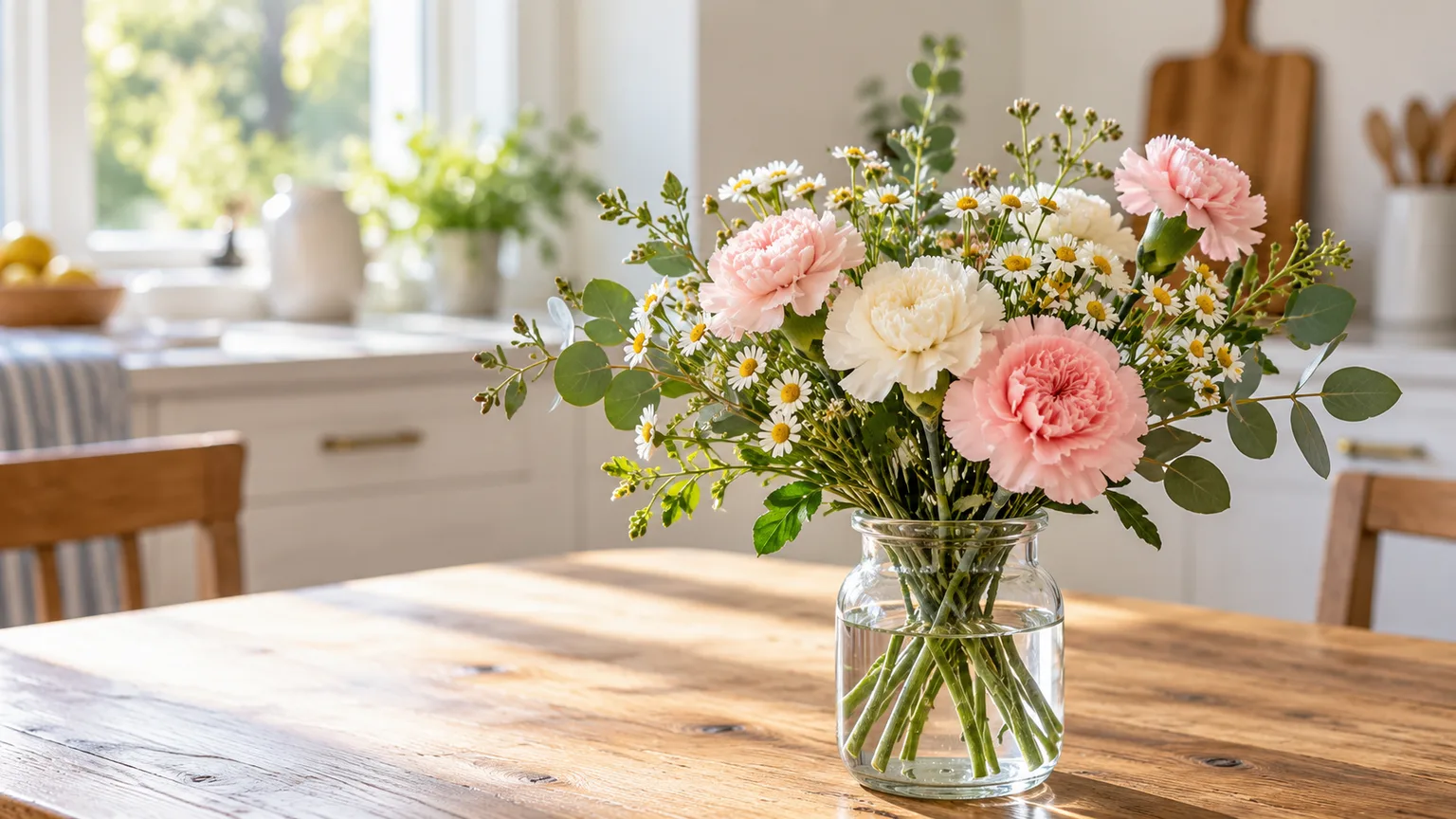
The most dependable way to keep cut flowers fresh is to give them a clean vase, fresh water mixed with the flower-food packet at its stated ratio, a clean stem trim, and a cool place away from sun, heaters, and ripening fruit. Then check the water daily and replace it before it turns cloudy. Those basics do more than a clever ingredient added to dirty water because they address the two problems a bouquet faces after cutting: it loses water and it can no longer replace everything the plant supplied while growing.
A care routine can stretch the useful life of a bouquet, but it cannot reset the clock. Flowers may already have spent days in transport or a cooler before you bring them home, and different species age at different rates. Your goal is to give each stem a clean route to water, reduce stress, and avoid adding new problems.
The shortest reliable answer
If you only have a few minutes, wash a vase, fill it with the amount of water called for on the flower-food packet, and dissolve the entire packet intended for that volume. Remove leaves that would sit underwater, trim about an inch from the stem ends with a sharp clean tool, and place the flowers in the solution right away. Put the arrangement in the coolest comfortable room in your home, away from strong sun, radiators, oven heat, vents, and bowls of ripening fruit.
After that, inspect the bouquet each day. Top up the water if stems have drawn it down, and change the solution every day or two—or earlier if it looks cloudy, smells sour, or contains fallen leaves. Wash the vase before refilling it, then mix a new dose of flower food for the fresh water. A cloudy vase is a sign to reset the water and clean the container, not a reason to pour fresh water on top of residue.
What actually makes a cut flower wilt?
A living stem moves water from its cut end to its leaves and petals. Once separated from the plant, a flower still loses moisture through its surfaces, but it has no roots to replace that water; when uptake falls behind loss, the stem and flower head soften or droop. Heat and direct sun speed water loss, while crushed or clogged stem ends and dirty water can make uptake harder.
The vase itself changes over time. Plant material releases nutrients into the water, and microorganisms multiply around submerged leaves and stem tissue; a heavy microbial load can interfere with water uptake and make water foul. The practical fix is not to sterilize your home or add a powerful chemical. It is to start clean, keep foliage out of the water, use a properly diluted commercial preservative when available, and refresh the solution before it degrades.
A flower can also wilt because it is old, bruised, or naturally short-lived, even when the water is clear. If the petals are papery or browning and the stem is soft or discolored for much of its length, a last-minute remedy is unlikely to restore the bloom. Try the recovery steps below once; if there is no improvement, remove the stem so it does not crowd the rest of the arrangement.
Start with a clean vase and the right water volume
Choose a vase that supports the stems without squeezing them tightly. A narrow neck can hold a loose bouquet upright, while a wider opening gives a dense arrangement room for air to move between stems; in either case, the cut ends should stay submerged and the flowers should not lean so far that their weight kinks a stem. Wash the vase with hot, soapy water, rinse thoroughly, and remove any film or old plant debris before arranging.
The volume matters because flower-food packets are formulated for a set amount of water. A small packet may be intended for a pint, quart, or another measured volume, so read the label rather than assuming one packet works in any vase. Too much water with too little preservative dilutes the solution; too little water with a full packet concentrates it. If the label is missing, use the packet that came with the bouquet and a modest vase volume rather than improvising a strong mix.
Fill the container high enough to cover the freshly trimmed ends, but do not use so much that leaves are submerged or the bouquet becomes unstable. When in doubt, arrange first, check the waterline, and remove any foliage that touches the solution. This small setup step makes later inspection easier because you can see when water drops or turns cloudy.
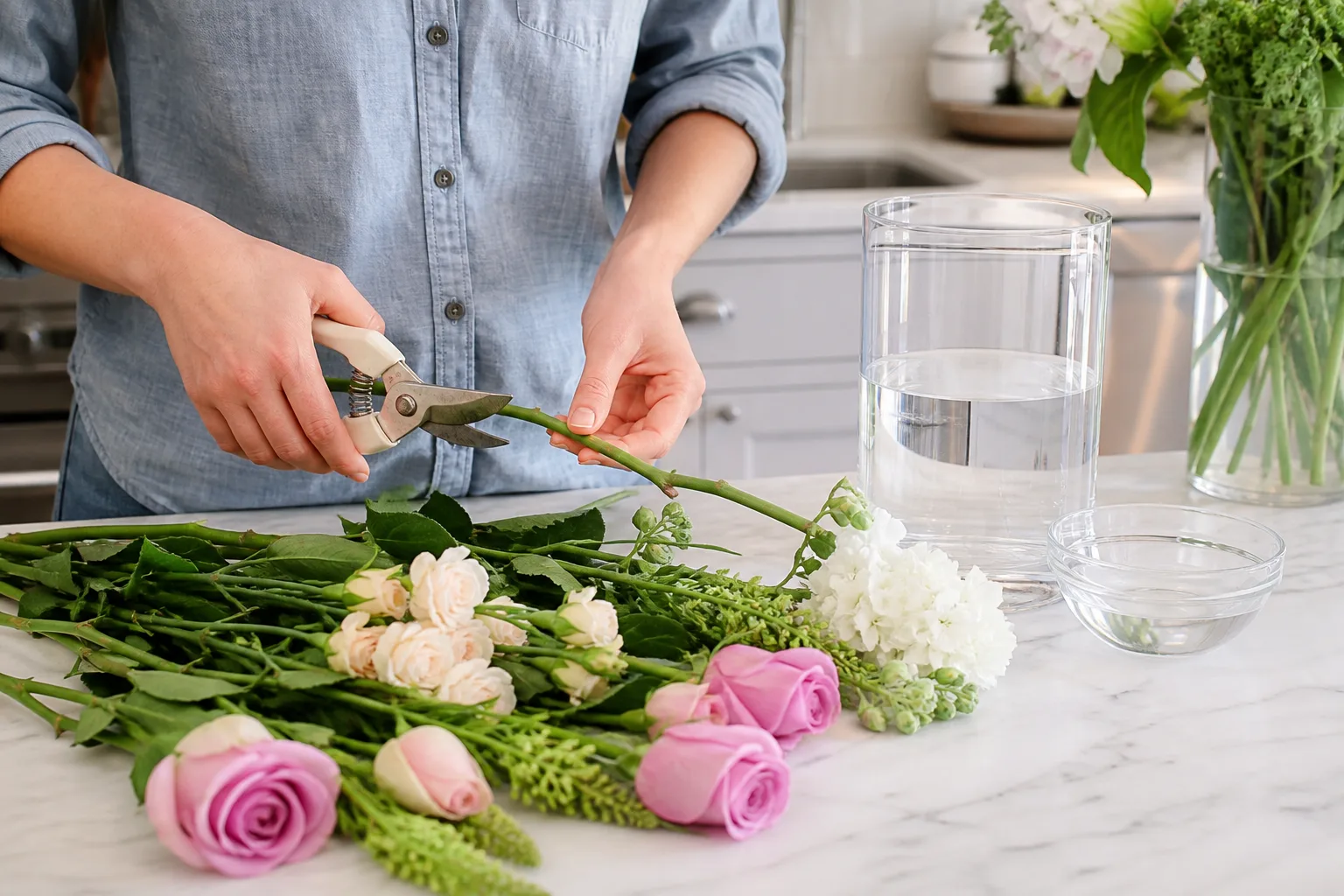
Use the flower-food packet as directed
Use the packet supplied with the bouquet whenever you have one. Commercial cut-flower food is designed to do several jobs in a measured solution: supply a carbohydrate source, adjust the water chemistry, and limit microbial growth. The exact formula varies by product and flower type, which is why the safest useful instruction is the one printed on that product’s label. Research and extension guidance describe the balance of sugar and acidity in floral preservatives, while the Virginia Cooperative Extension Master Gardener article recommends commercial preservative and emphasizes matching the dose to the water volume.
Do not save half a packet just because it seems like a lot, and do not pour extra food into a vase in hopes of forcing longer life. If you replace the water, use the amount of a new packet specified for that fresh volume. The floral-care team at Heinen’s likewise recommends reading the packet to match its contents to the volume of water and refreshing the solution as part of regular rose care.
What each ingredient is doing
Sugar supplies energy that a cut flower can no longer make reliably after separation from its leaves and roots. An acidifier lowers the pH of the solution, which can help water move through stems; an antimicrobial component helps keep bacteria and other microorganisms from taking over the vase. Those pieces work together, so a spoonful of sugar alone is not the same thing as a balanced preservative.
This is why commercial flower food is more consistent than a recipe made from whatever is in the kitchen. A package accounts for ingredient proportions and instructions, while tap-water mineral content, vase size, flower species, and homemade measuring habits vary. UMass Amherst’s fact sheet on sugar and acidity in cut-flower preservative solutions explains this formulation problem; its guidance is intended for cut-flower handling, not a guarantee that every variety will last a set number of days.
If you do not have a packet
Plain, clean water is a better fallback than a guessed recipe. Wash the vase, remove lower leaves, recut the stems, and replace the water regularly. Keep the flowers cool and inspect them every day; this routine does not provide the same nutrition or microbial control as a preservative, but it avoids an accidental concentration that can damage stems or encourage a dirty solution.
If you can get a packet later, mix it into a freshly washed vase according to the instructions. Avoid combining ingredients from several internet recipes, especially when they include bleach, vinegar, or citrus juice. A mixture that is acidic in one ratio may be irritating or unsafe in another, and combining household cleaners or chemicals can create hazardous fumes. There is no need to take that risk to care for a bouquet.
Trim stems once, correctly
Use a sharp floral knife or clean bypass pruners to remove roughly half an inch to an inch from each stem end. A clean angled cut is easy to make and keeps the end from resting flat against the bottom of the vase, but a sharp cut matters more than trying to create a very long diagonal. Dull scissors can crush soft tissue, and a ragged end may be less effective at taking up water.
Trim immediately before the stems go into the prepared vase. Do not make the cut and then leave the flowers on the counter while you finish arranging; get them into solution promptly. If you receive a wilted rose or another stem with a dry, dark, or damaged end, recut it farther up into firm tissue before placing it back in fresh solution. The Virginia Cooperative Extension Master Gardener guidance also describes recutting stems under water as a way to reduce the chance of air entering the stem, particularly when conditioning garden-cut flowers or trying to revive roses.
Underwater cutting is a useful option, not a ritual that every home bouquet requires. It can be awkward, risks slipping with a sharp tool, and is unnecessary if you make a clean cut and put the stem into water right away. Prioritize clean equipment and quick placement; use the underwater method selectively for a rose that keeps drooping after a fresh cut.
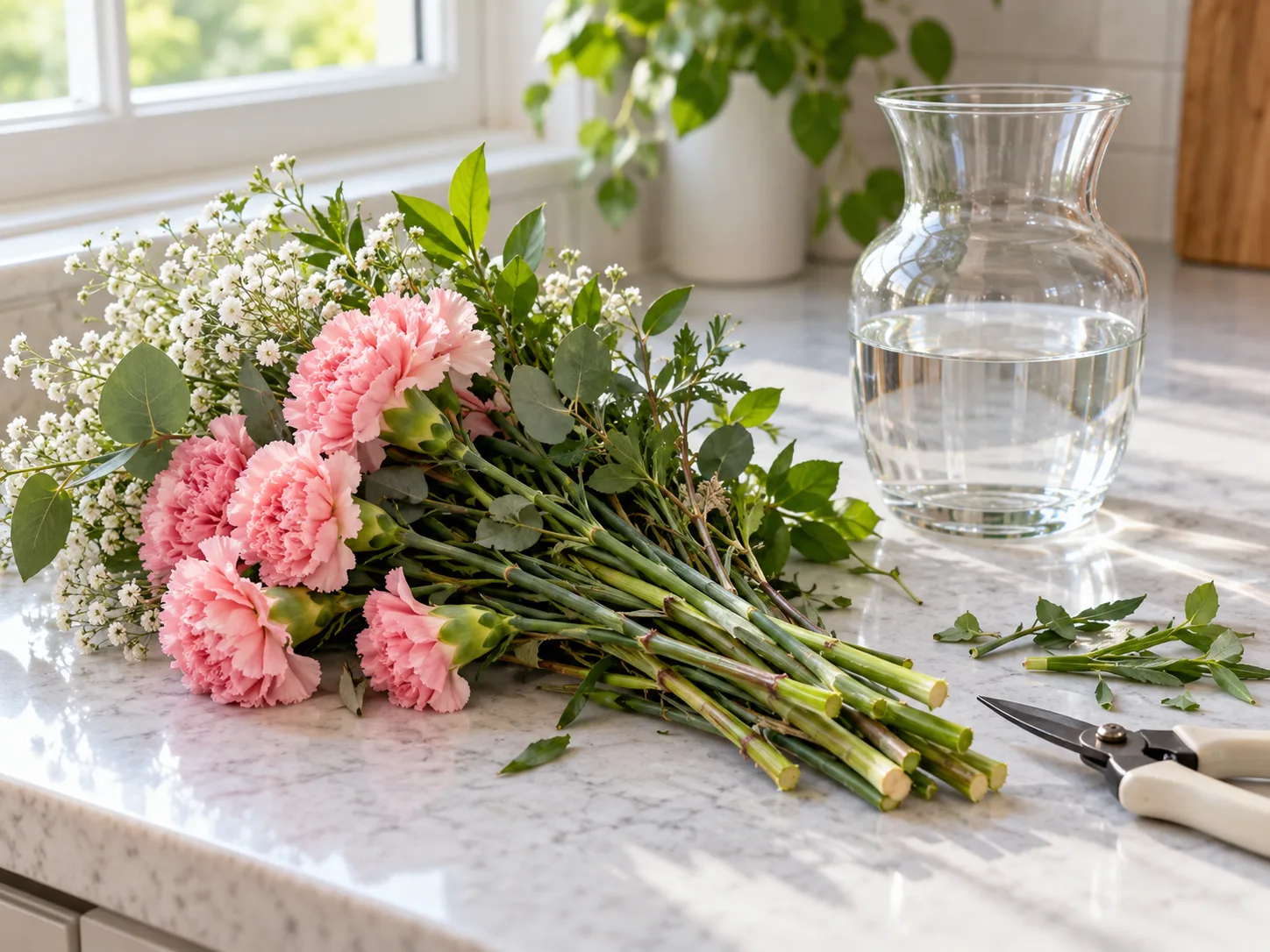
Remove foliage that sits below the waterline
Strip leaves that would touch or sit below the vase water, but keep healthy leaves above the waterline unless the bouquet looks crowded. Submerged foliage breaks down and contributes organic material to the vase; it can also make it harder to keep water clean. Remove leaves carefully rather than tearing down the stem, which can create additional damage.
Check the arrangement after you add water, because leaves can shift below the surface as stems settle. If you are using a vase with a narrow neck, trim enough lower foliage so leaves are not pressed into a wet mass at the opening. This is a practical hygiene step; it does not mean a bouquet should be stripped bare, since leaves still contribute to the arrangement’s appearance and some water loss is unavoidable.
Choose water temperature by flower type
For an ordinary mixed bouquet, clean room-temperature or slightly cool tap water is a sensible default unless the packet or florist gives specific instructions. Some professional conditioning practices use lukewarm water for many flowers because stems can take it up readily, but the right approach depends on the species, stage, and whether the flowers arrived dehydrated. You do not need to heat water precisely or add ice to every arrangement.
When stems arrive limp after a long trip, clean lukewarm water can help them rehydrate as you recut and place them in a cool room. Avoid very hot water: it can damage tissue rather than make flowers drink faster. If a florist provided care directions for a special stem, follow those directions rather than applying one temperature rule to the entire bouquet.
When cold water is the better choice
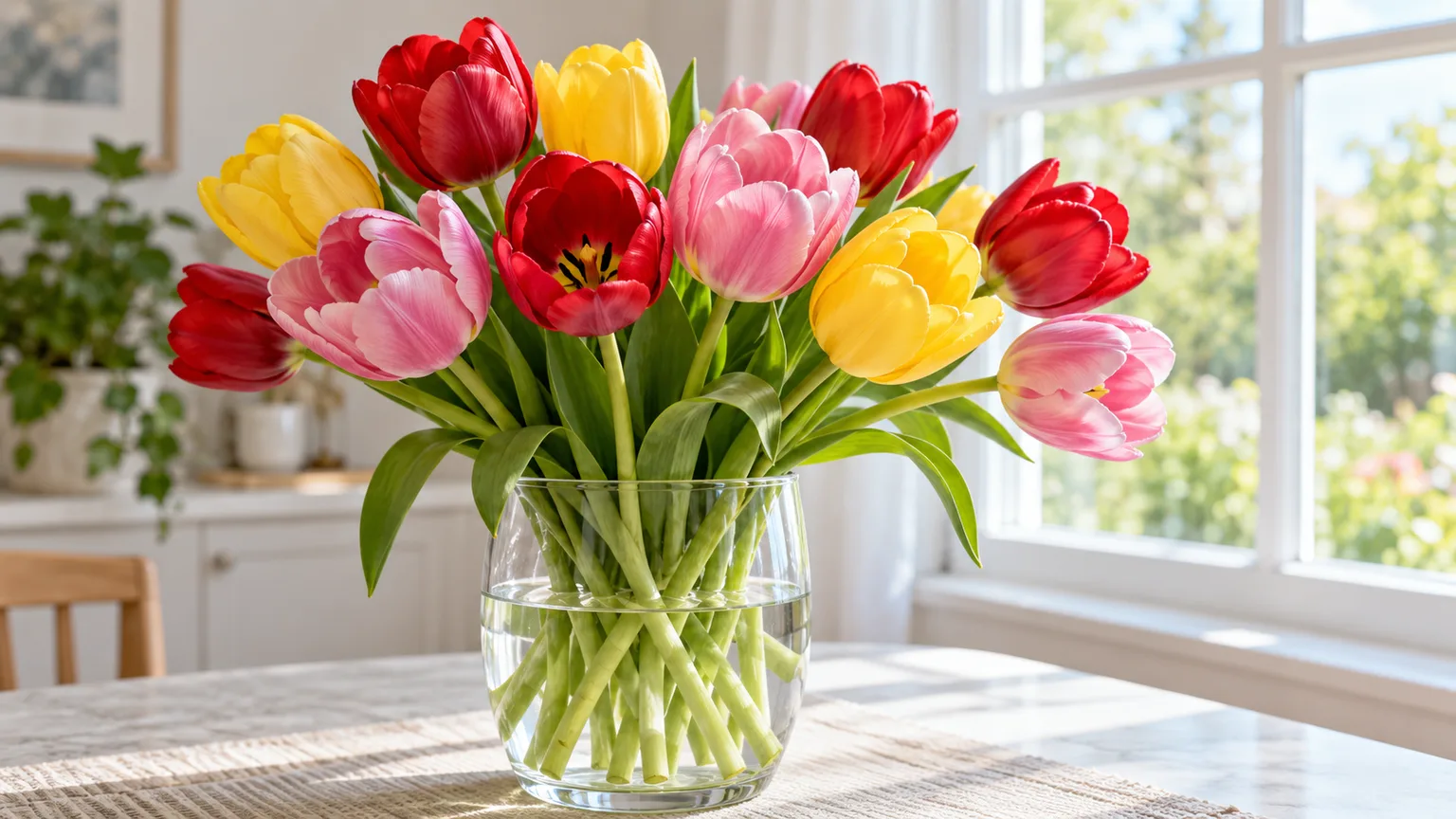
Spring bulb flowers such as tulips and irises are often conditioned with cool water, and the Virginia Cooperative Extension Master Gardener guidance specifically treats bulb flowers differently from many other cut stems. Mixed bouquets complicate this because each species can respond differently; when bulb flowers dominate, use cool water and follow the grower’s instructions. A small vase of tulips may also continue to lengthen and bend after cutting, so recut and reposition them as needed rather than expecting the stems to stay fixed.
Daffodils have another mixing issue: their cut stems release sap that can affect some companion flowers. If you want to combine them with other species, condition them separately first and follow a florist’s or grower’s specific advice. The point is not that every mixed bouquet needs separate treatment, but that a bouquet containing a known exception may need more than the standard routine.
Put the bouquet in a cool, stable spot
Choose a bright room if you like, but keep the vase out of direct sunlight and away from heaters, radiators, fireplaces, appliance heat, and warm windowsills. Cut flowers are no longer rooted, so strong light does not help them grow; it can simply warm the petals and water and accelerate moisture loss. A cool room away from temperature swings generally gives a bouquet a better chance than a sunny display spot.
Keep flowers away from ripening fruit, especially bowls of apples and other produce that release ethylene. Ethylene is a plant hormone involved in aging and can hasten decline in sensitive flowers. Penn State Extension advises growers to cool harvested flowers quickly or remove them from direct sun, and the same heat-management principle is useful at home; Heinen’s floral team also advises keeping roses away from fruit and temperature extremes.
A strong fan, air-conditioning vent, or open door can dry petals and make stems lose water faster. You do not need to hide the arrangement in a dark closet, but avoid placing it where a draft repeatedly blows across the blooms. For an event, keep flowers in a cool holding area until close to display time, then put them back in a cooler spot overnight if the room is warm.
Refresh the water before it looks bad
Check the vase once a day, even if the bouquet still looks fine. Add fresh water if the level has dropped, and replace the entire solution every day or two; change it sooner if it is cloudy, has debris, or smells off. Remove fallen petals and leaves at the same time so they do not decay in the water.
When changing the water, wash away any slippery film from the vase and rinse it well. Refill with fresh water and add flower food at the label’s ratio. If the stems look healthy and the water is still clear, you do not need to recut every stem at every water change. Recut only if the cut ends are damaged, discolored, slimy, or the flower has begun to droop despite clean solution.
If the packet contains enough for multiple changes, do not assume the unused portion stays sterile or that a half-packet is the correct dose for every refill. Follow the package directions, use a newly opened packet when the amount is uncertain, and avoid pouring leftover solution back into the packet. A clear record of what you did—fresh water, measured packet, trimmed stems—makes it easier to tell whether a struggling flower needs a rescue or simply has reached its normal end.
Rescue drooping flowers without guesswork
First check whether the water is low, cloudy, or missing entirely. Remove the drooping stem, rinse away any slime, trim the end into firm tissue with a sharp clean tool, and place it in fresh, correctly mixed solution in a clean container. Keep the flower cool and give it a few hours to rehydrate before deciding whether it recovered.
A drooping rose head may respond to a fresh cut and thorough rehydration, especially if the stem is otherwise firm and the petals still feel supple. The Virginia Cooperative Extension Master Gardener article describes recutting a drooping rose under water and submerging the entire rose briefly in warm water; that is a specific rescue technique for roses, not a treatment to apply to every flower or to a whole mixed arrangement. Keep the bloom itself dry when using that method and handle it gently so petals are not bruised.
If the stem is mushy, the flower head is brown or papery, or the petals are falling apart, discard that stem instead of repeatedly dosing the vase. Remove spent blooms promptly; one failing stem can contribute debris and create a mess around the remaining flowers. A rescue attempt is worthwhile when a healthy-looking stem suddenly droops, but it cannot reverse natural senescence or repair cold, heat, or transport damage already done.
Do sugar, aspirin, vodka, pennies, or bleach help?
Short answer: use the flower-food packet when you have it, and use plain clean water when you do not. Sugar is one ingredient in some preservatives, but sugar alone can feed microbes. Aspirin may change water acidity, yet a tablet dose is not a dependable substitute for a formulation designed for cut flowers. Vodka and coins are popular online ideas, but a single household dose does not provide reliable, measured control across different water volumes and species.
Bleach is sometimes discussed as an antimicrobial ingredient, but that does not make an improvised bleach recipe automatically safe or effective. Household bleach products vary in concentration, and mixing bleach with acidic ingredients such as vinegar or lemon juice can release dangerous chlorine gas. Do not combine cleaners or follow recipes that tell you to mix household chemicals without a trustworthy, product-specific direction.
A one-week comparison of several rose treatments may suggest which option performed best under those particular conditions. It does not establish that every brand, dose, flower species, or household recipe will behave the same way. If you want to compare methods at home, keep the test low-risk: identical bouquets, clean vases, equal water volumes, same placement, and a clear record of starting condition. Do not use medication or cleaning products as an experiment around children or pets.
Why homemade recipes are unreliable
A recipe is only useful if its concentration is appropriate for the amount of water and the specific flowers. A teaspoon measure in a tiny bud vase creates a much stronger mixture than the same amount in a large floor vase, and tap water varies by location. Online directions may also leave out the preservative’s purpose, the exact product concentration, or whether the recipe is meant for professional use.
A packet reduces this guesswork. If you have no packet, clean water, a clean vase, a fresh trim, and a cool location are a safe, repeatable fallback. Avoid spending time crushing tablets or measuring alcohol when those steps cannot correct a dirty vase, submerged leaves, an old stem, or a hot room.
How long should different flowers last?
There is no single vase-life number for a bouquet. Roses commonly last around five to seven days in home conditions, according to Heinen’s florist guidance, while some varieties can last longer with careful handling; the result depends on cultivar, maturity at purchase, transport time, room temperature, and how clean the water stays. Some durable flowers, including many carnations and chrysanthemums, may remain presentable longer than delicate seasonal blooms, but the exact range can vary widely by variety and supplier.
Use condition rather than the calendar as your guide. A flower that is still firm, hydrated, and attractive is worth keeping even if a few outer petals have browned; remove the damaged material gently if it comes away easily. A flower that has a collapsed neck, slimy stem, or heavily papery petals is unlikely to recover, even if the bouquet is only a few days old.
When buying flowers, inspect the cut ends and lower foliage as well as the open blooms. Choose stems with firm leaves, unbruised petals, and buds or partially opened flowers appropriate for the species. The fresher the bouquet begins, the more likely basic care is to pay off; vase care cannot make an older bunch behave like one cut that morning.
Cut flowers from your garden need different handling
Garden-cut flowers benefit from being harvested while cool, usually in the morning after dew has dried and before the day heats up. Take a clean bucket of water to the garden and place each stem in it soon after cutting; Penn State Extension’s postharvest guidance emphasizes harvesting flowers cool and moving them out of direct sun or cooling them promptly. Choose a stage suited to the flower: some open further after cutting, while others should be harvested when their blooms are already mostly open.
Bring the bucket into a cool place, then condition the stems before arranging. Remove leaves that will sit below water, recut the ends with a sharp tool, and allow thirsty flowers to take up water before you design the bouquet. Garden stems can carry soil and field debris, so rinse them gently if needed and clean the container between uses.
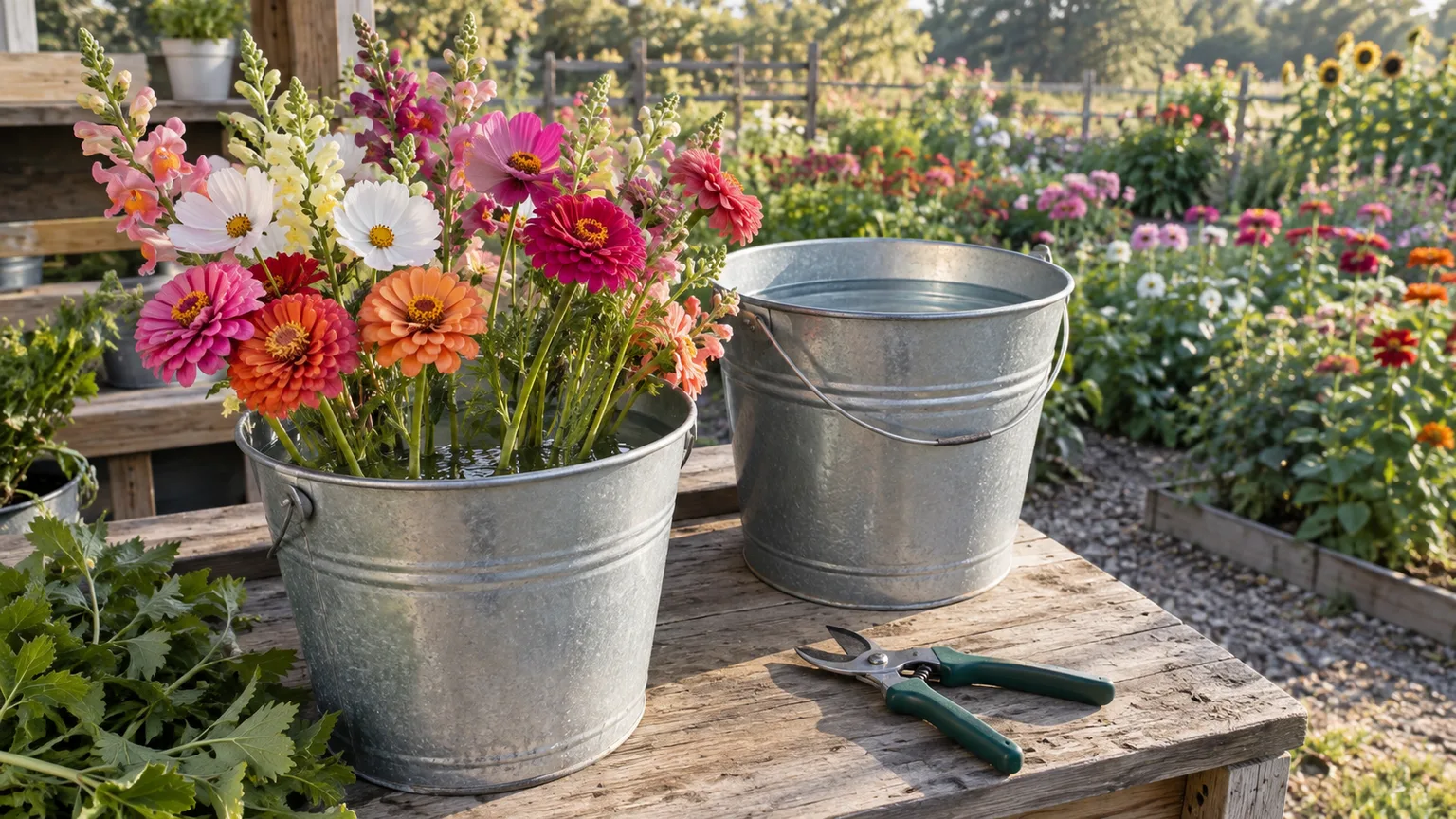
Do not apply one recipe to every garden flower. Bulb flowers may prefer cooler water, woody stems may need a different cut, and species such as lilacs or peonies have their own harvest stages and conditioning needs. The Virginia Cooperative Extension Master Gardener guide gives separate advice for roses, bulb flowers, lilacs, and peonies; use it or your local extension service when handling a flower with special postharvest requirements.
What a one-week flower-food test can and cannot tell you
A small vase comparison can help answer a narrow question: under those conditions, which tested treatment appeared to keep those roses looking best? It cannot tell you how all cut flowers respond, whether the result would repeat with another bunch, or how much of the difference came from the treatment rather than stem age, cultivar, starting hydration, vase cleanliness, or room temperature. One bunch per treatment gives no replication, so the visual ranking is suggestive rather than a controlled estimate of typical performance.
That limitation does not make the result useless. If the bouquet came with a commercial packet, using that packet as directed is a sensible first move, and a repeatable home routine is more useful than trying five unrelated remedies. The Penn State Extension postharvest guidance and the Virginia Cooperative Extension Master Gardener article support the basic handling sequence: harvest or condition flowers while cool, move them promptly into clean water, remove submerged foliage, and use floral preservative where appropriate. For rose-care context, Heinen’s floral team also recommends matching flower-food dose to water volume and avoiding heat and ripening fruit.
The UMass Amherst fact sheet on sugar and acidity in cut-flower preservatives provides further background on why preservative formulations balance ingredients rather than relying on sugar alone. Together, these sources point to a practical conclusion, not a promise: clean handling, correct dilution, fresh water, and cooler placement are the most useful things a home flower recipient can control.
Conclusion
To keep flowers fresh, start with the factors you can control: a clean vase, fresh water, the right amount of flower food, a clean stem trim, and a cool place away from direct sun, heat, and fruit. Remove foliage below the waterline and refresh the solution every day or two before it becomes cloudy. If a bloom droops, recut it and give it a few hours in clean solution before deciding whether it is spent.
Skip improvised remedies when you have no reliable reason to use them. A commercial packet used as directed is the most consistent option; clean water and good handling are the simplest fallback. The bouquet’s species and starting freshness still set the limits, but this routine gives the flowers the best chance to stay hydrated and attractive for as long as their natural vase life allows.