How to Extend the Gardening Season in Fall
Extend the gardening season with frost dates, fast crops, mulch, row covers, smart watering, and a simple weekly plan for fall success.
You can often keep harvesting after summer ends, but the winning strategy is not to make every plant endure winter. It is to match each plant to the amount of time and protection your garden can realistically provide. A leafy green may keep producing through several frosts, while a tomato that is still flowering may be a poor use of your remaining warm days.
Season extension is a sequence: find your likely first frost, count backward from the crop’s maturity date, place plants where they get the most useful light and warmth, then protect or harvest them as the forecast changes. The approach works for vegetable beds, containers, and late-season flower displays, but the details differ by climate, exposure, crop variety, and whether you are trying to reach one more harvest or overwinter a plant.
Start with your first frost and a realistic finish line
Begin with a local first-frost estimate, but treat it as a planning date rather than a promise. Frost dates describe a probability window based on historical weather; an exposed yard, a low pocket, or a sheltered wall can experience a different temperature on the same night. The Old Farmer’s Almanac frost-date reference is useful for finding a starting point, and your own thermometer and garden journal become more valuable every season.
Define the finish line for each plant. For carrots, the goal may be usable roots rather than a completely mature display. For basil, peppers, and tomatoes, the goal may be harvesting what is already developed before the first hard freeze. For kale or collards, the goal can be continued leaf production through cold weather. That distinction prevents a common mistake: using elaborate protection to preserve a plant that has no realistic path to finish its current crop.
Also separate frost, freeze, and hard freeze in your planning. A brief frost can damage exposed tender leaves while leaving roots alive. A longer freeze can freeze the soil surface and kill warm-season foliage, stems, or fruit. Covers buy time; they do not change a tomato into a cold-hardy crop or make an unheated structure safe during every winter night.
Sort plants by cold tolerance before you act
Walk the garden and make three groups. This takes ten minutes and tells you where to spend your effort.
Keep growing: kale, collards, spinach, chard, many lettuces, carrots, turnips, radishes, and some peas can continue in cool weather. Their growth slows as light and temperature decline, so “hardy” does not mean “growing at summer speed.” A cover may keep leaves usable even when new growth is minimal.
Protect for more harvests: broccoli, cabbage, Brussels sprouts, parsley, and other cool-season crops may benefit from a floating row cover, low tunnel, cold frame, or sheltered wall. These plants can tolerate cool conditions, but young transplants, wind exposure, and repeated freeze-thaw cycles still make protection worthwhile.
Harvest or move: tomatoes, peppers, beans, basil, cucumbers, squash, tender annual flowers, and tropical-looking container plants are the urgent group. A cover can soften a light frost, especially when the soil is warm and moist, but a hard freeze usually calls for harvesting, moving the container, or accepting the end of the season.
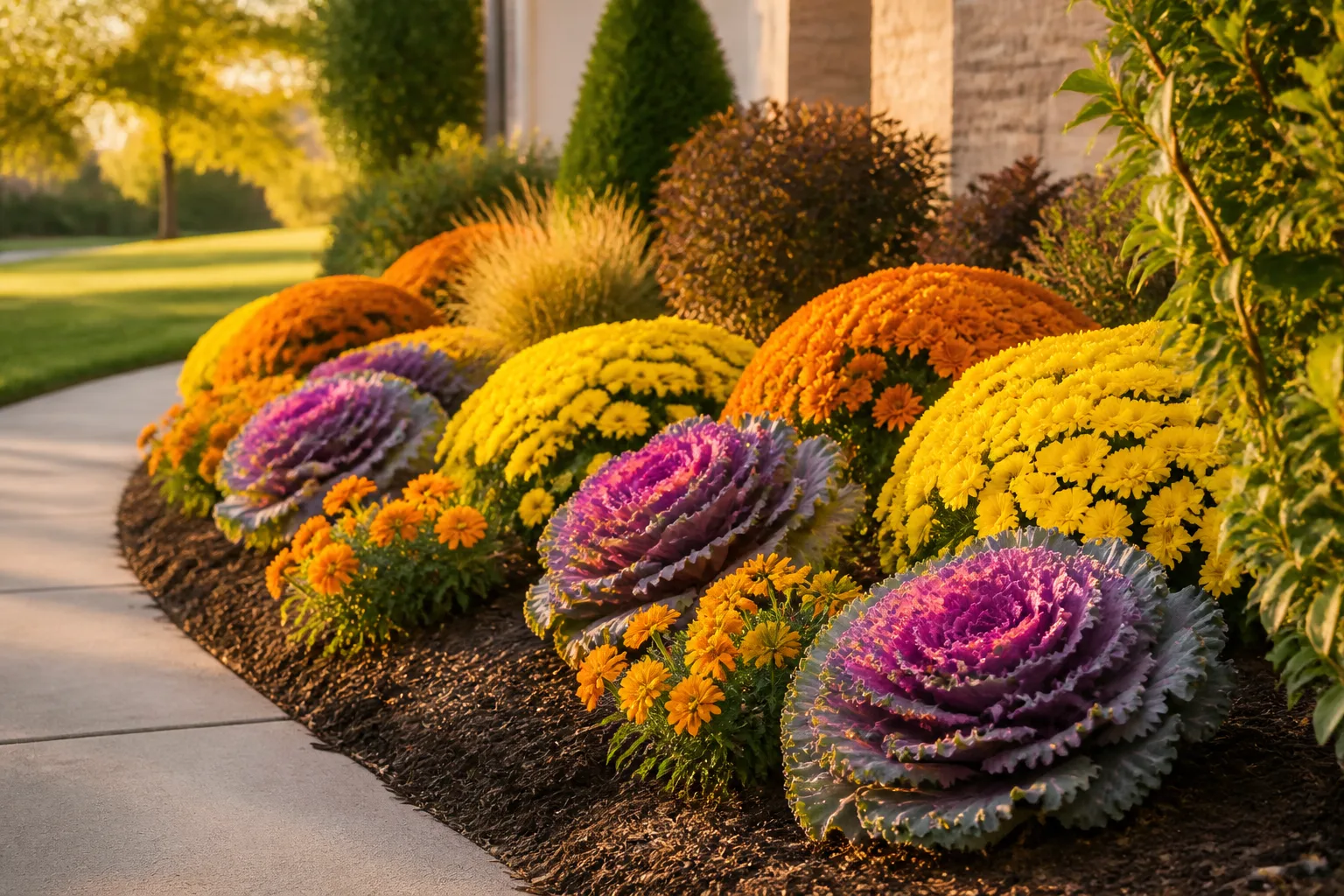
This sorting also helps with flowers. Late-flowering plants can extend garden color until the first frost, a point echoed in the seasonal guidance from BBC Gardeners’ World Magazine. Do not confuse a frost-tolerant ornamental with a perennial that is hardy in your region, though. The flowers may finish beautifully while the plant’s roots still need a different winter treatment.
Work backward from days to maturity
The most useful late-season calculation is simple:
First-frost date − days to maturity − weather buffer = latest practical planting date.
Use the seed packet or transplant tag for days to maturity, then add a buffer rather than planting on the final possible day. A crop listed at 45 days may need longer when days shorten, soil cools, or seedlings pause after transplanting. Add about 7 to 14 days for a quick crop and more if your site is shaded, your fall weather is unpredictable, or you are growing from seed rather than a sturdy transplant.
For example, if your likely first frost is October 20 and a baby-leaf lettuce takes 30 days, a bare calculation points to September 20. A safer plan might be September 6 to 13, especially if the bed receives only morning sun. For a carrot listed at 60 days, count back 60 days plus a buffer, but remember that you can harvest small roots early and leave mature roots in the ground under protection in climates where the soil does not freeze deeply.
The University of Minnesota Extension guidance on midsummer planting for fall harvest emphasizes that root crops, greens, and other vegetables can be started in late June, July, or August for fall harvest, but the exact window is local. In a warm climate, those months may be too hot for germination; in a short-season climate, they may be the only practical window.
If seed germination is the bottleneck, start trays in a cooler protected place and transplant once seedlings have true leaves. Keep the seed-starting mix evenly moist, shade it from brutal afternoon heat, and move seedlings gradually into the bed. Do not wait until the calendar says “fall” if the crop needed cool soil to germinate.
Choose the warmest, brightest microclimate
In fall, light often becomes the limiting resource before cold becomes the obvious problem. A bed that produced well in June may be shaded by a house, fence, or tall crop by October. Track the sun for a day and prioritize the spot that receives the longest uninterrupted stretch of direct light, especially from late morning through afternoon.
Warmth matters too. A south-facing wall can reflect light and release stored heat after sunset. Raised beds drain and warm quickly, but they also lose heat and moisture faster than ground-level soil. A black container on a sunny patio can warm roots during the day, yet it may also swing rapidly from warm to cold at night. Use these effects deliberately rather than assuming “raised” or “container” automatically means better.
Avoid low depressions where cold air settles. Keep tender pots off cold concrete when a frost is expected, and group containers near a wall without blocking drainage or crowding them so tightly that damp leaves stay wet. Wind protection is as important as a warmer reading: moving air increases water loss and can pull a cover loose exactly when it is needed.
Refresh soil without forcing fragile growth
Late-season crops still need a fertile, well-structured root zone, but fall is not the time to push every plant with a heavy dose of quick-release nitrogen. Apply finished compost to an emptied bed, loosen only compacted areas, and follow a soil-test recommendation when one is available. Compost improves structure and supplies a modest nutrient contribution without turning the new growth of shrubs and perennials into frost-prone soft tissue.
For vegetables already producing, inspect the leaves and growth rate before feeding. Pale, slow growth in a heavily harvested leafy crop may justify a light, label-directed feeding if soil fertility is known to be low. A mature cabbage or kale plant that looks healthy usually needs consistent moisture and harvest more than a last-minute fertilizer surge.
Avoid fresh manure, thick unfinished compost, or a fertilizer application that leaves granules against stems. These can create uneven nutrient release, odor, salt stress, or lush tissue just as temperatures become less forgiving. The right fall amendment is the one that improves the root zone without asking the plant to make a flush of growth it cannot harden before cold weather.
Water for cold nights and changing weather
Cold weather reduces evaporation, but it does not remove the need to check soil. A dry root zone is more vulnerable to temperature swings, while saturated soil reduces oxygen and stays cold. Push a finger into the soil several inches or use a moisture check near the root zone; do not water because the calendar says it is watering day.
Water deeply in the morning when the bed is dry and rain has not done the job. Morning irrigation gives leaves and the soil surface time to dry, reduces the chance of trapping dampness beneath a cover, and lets roots use the available moisture before night. Drip lines, soaker hoses, or a slow stream at soil level are better than spraying the foliage of a dense fall crop.
Before a light frost, moist soil can hold more heat than bone-dry soil, so watering the root zone the day before may help a healthy plant ride through a brief cold event. It is not a rescue for waterlogged beds, frozen soil, or a hard freeze. Never leave hoses or irrigation hardware leaking under a cover; cold, wet crowns and constantly wet leaves create a different set of problems.
After rain, lift the edge of a cover and check the bed. A fabric row cover is porous, but heavy rain can still flatten foliage and keep the canopy humid. Plastic blocks rain completely, which makes its ventilation and watering schedule your responsibility.
Plant the right crops for late-season success
Choose crops by speed, edible part, and cold tolerance, not by a generic list of vegetables. A fall garden is often more successful when it contains several short, dependable crops than one ambitious warm-season crop that is still green when the first freeze arrives.
Leafy greens and salad crops
Spinach, kale, collards, chard, arugula, mustard greens, and lettuce give you multiple harvest points. You do not need to wait for a single “maturity” date if you pick baby leaves or remove the outside leaves while the center continues growing. Sow a little at a time rather than planting the whole packet on one day; succession sowing spreads risk when one planting meets heat, heavy rain, or a sudden cold snap.
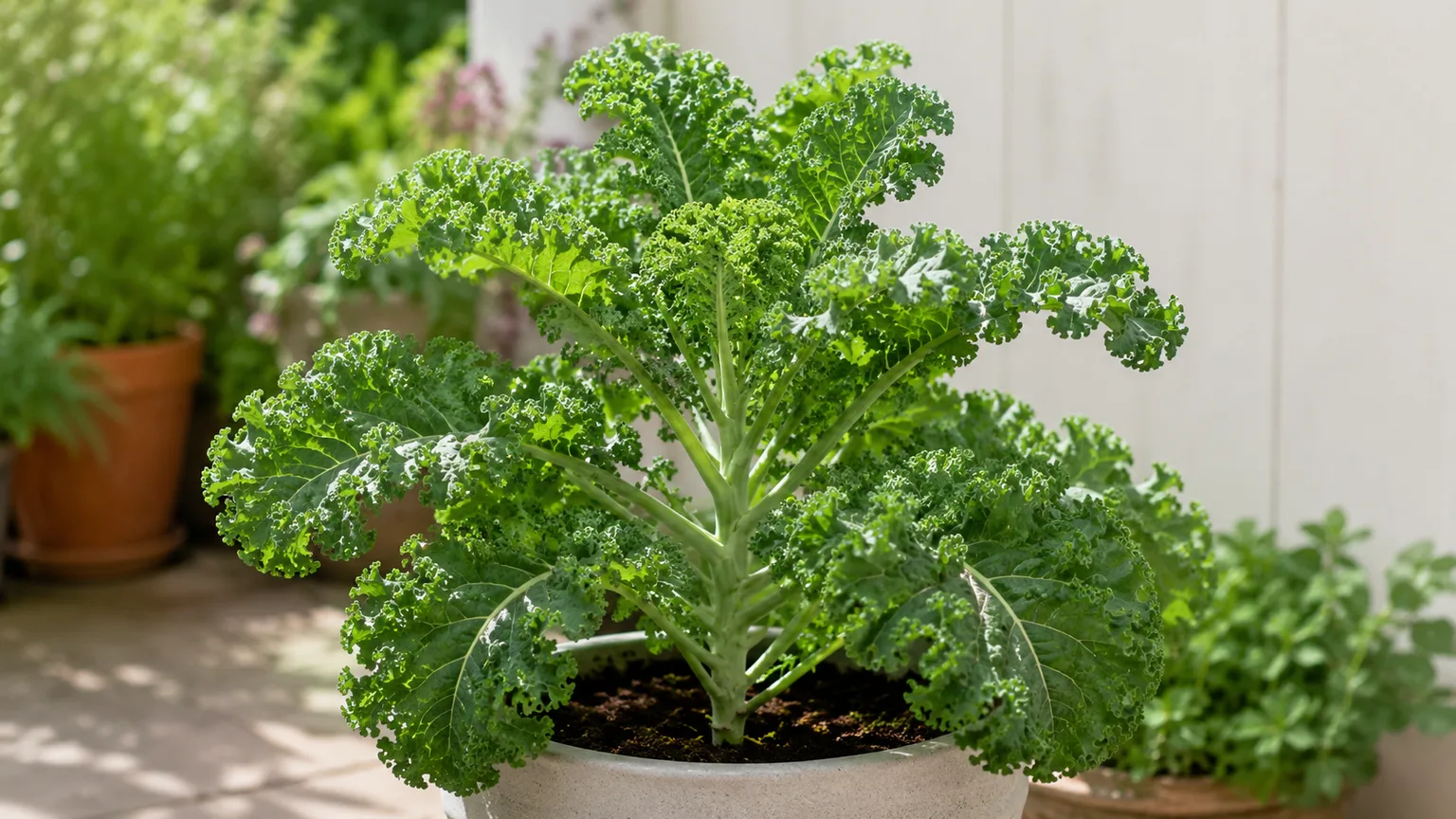
Kale and collards are especially useful in a long fall because the plant can remain productive after the first light frost. Spinach and lettuce are quicker but may need fabric when temperatures drop below their comfortable range. Keep covers above the foliage so leaves do not freeze against cold material or stay pressed into wet fabric.
Root crops, brassicas, peas, and garlic
Radishes are a fast confidence-builder when the soil is still workable. Turnips provide both greens and roots, while carrots reward an earlier start but can remain harvestable in the ground under a thick, breathable mulch in suitable climates. The Old Farmer’s Almanac’s winter-preparation guidance notes the familiar late-season advantage of crops such as kale and collards becoming sweeter after frost, but your local soil-freezing pattern determines whether roots can stay outside.
Cabbage, broccoli, and related brassicas prefer cool conditions, yet the transplants need enough time to establish before growth slows. Protect them early if cabbage moths are still active, but remember that a cover also prevents pollinators from reaching plants that need them. Most fall brassicas are grown for leaves or heads, so pollination is not the main issue; spring crops left under cover too long are a different case.
Peas can work where fall stays long and mild, especially with a trellis in a sheltered bed. Garlic is usually planted for a future harvest rather than immediate fall food; the Almanac’s planting notes describe October or November planting in many regions, but local soil temperature and winter conditions decide the best timing. Planting too early can produce excessive top growth; planting too late can leave cloves poorly rooted before the ground freezes.
Harvest in a way that keeps plants producing
Harvesting is a season-extension technique, not just the final chore. Pick beans, cucumbers, zucchini, and ripe peppers regularly so the plant is not spending energy on overmature fruit and seed. Remove damaged leaves and fallen fruit from the soil, especially when wet weather is increasing disease pressure.
For leafy greens, take the older outer leaves first and leave the center growing point intact. Cut lettuce above the crown if the variety will regrow, or harvest the whole head when a hard freeze is forecast. With kale and collards, a few larger leaves can be more useful than stripping the plant bare for one large basket.
Warm-season crops need a firm harvest decision. Pick tomatoes that have begun to color and ripen them indoors at room temperature, harvest all usable peppers before a freeze, and do not expect a blanket to preserve a plant through repeated nights below freezing. A small harvest today is often better than a perfect-looking crop lost to one unusually early freeze.
Use mulch as insulation, not as a blanket over foliage
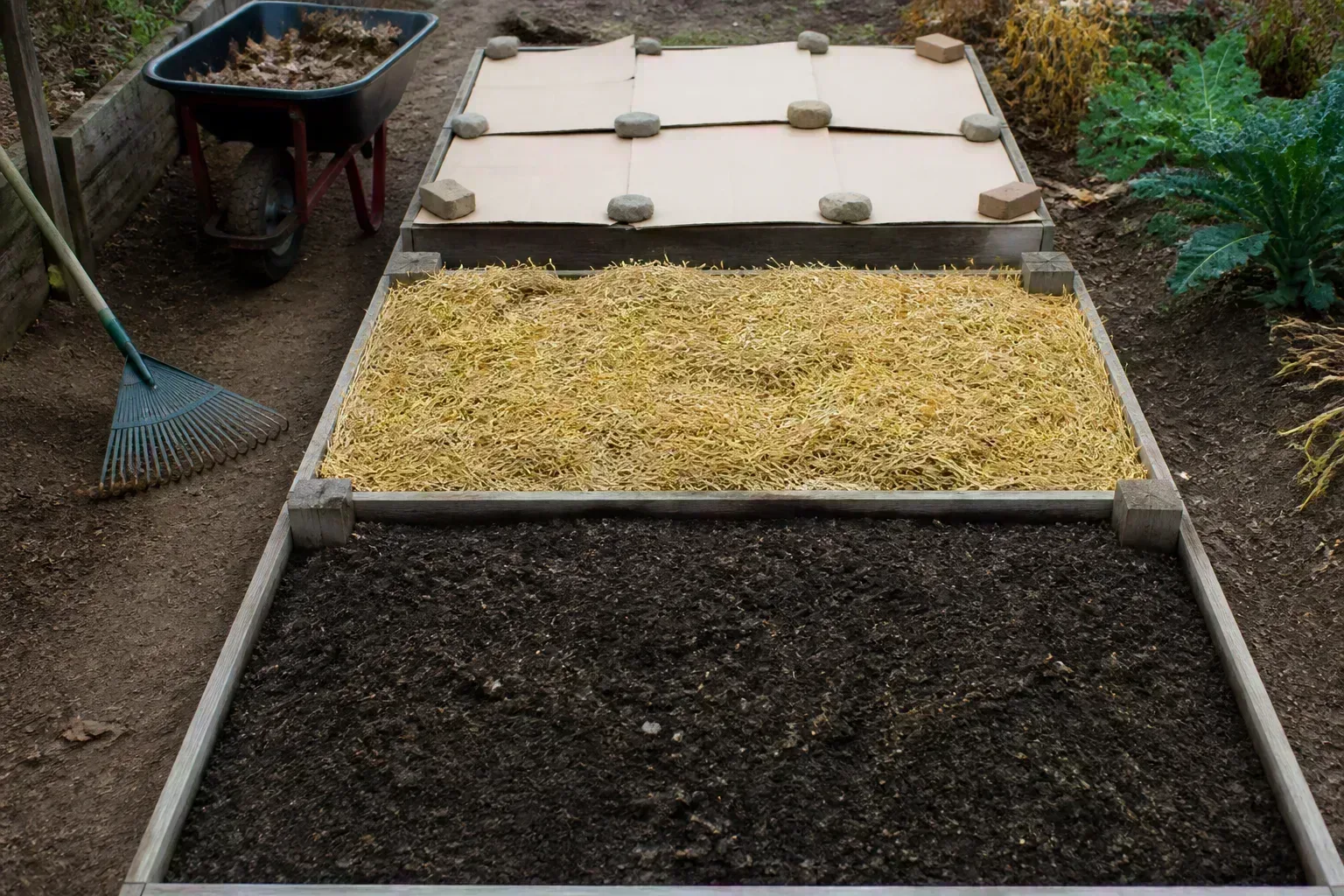
Mulch moderates soil temperature, slows moisture loss, and protects shallow roots from rapid freeze-thaw changes. Apply it after the soil has cooled somewhat but before the ground freezes hard. Keep a small gap around stems and crowns so moisture does not sit against the plant base.
Use clean straw, shredded leaves, compost, or another suitable organic material. Shredded leaves are less likely to mat than whole leaves, and straw is useful around root crops when it is free of viable weed seed. A thick layer is not automatically better: overly wet mulch can harbor slugs, smother low foliage, or make spring soil slow to warm.
Mulch belongs on the soil surface. It is not a substitute for a frost cover over lettuce, nor should you pile it against the crown of a plant that needs airflow. For carrots and other roots that you plan to harvest gradually, add enough loose material to insulate the shoulders while keeping the bed accessible and not permanently waterlogged.
Add row covers, hoops, or a cold frame
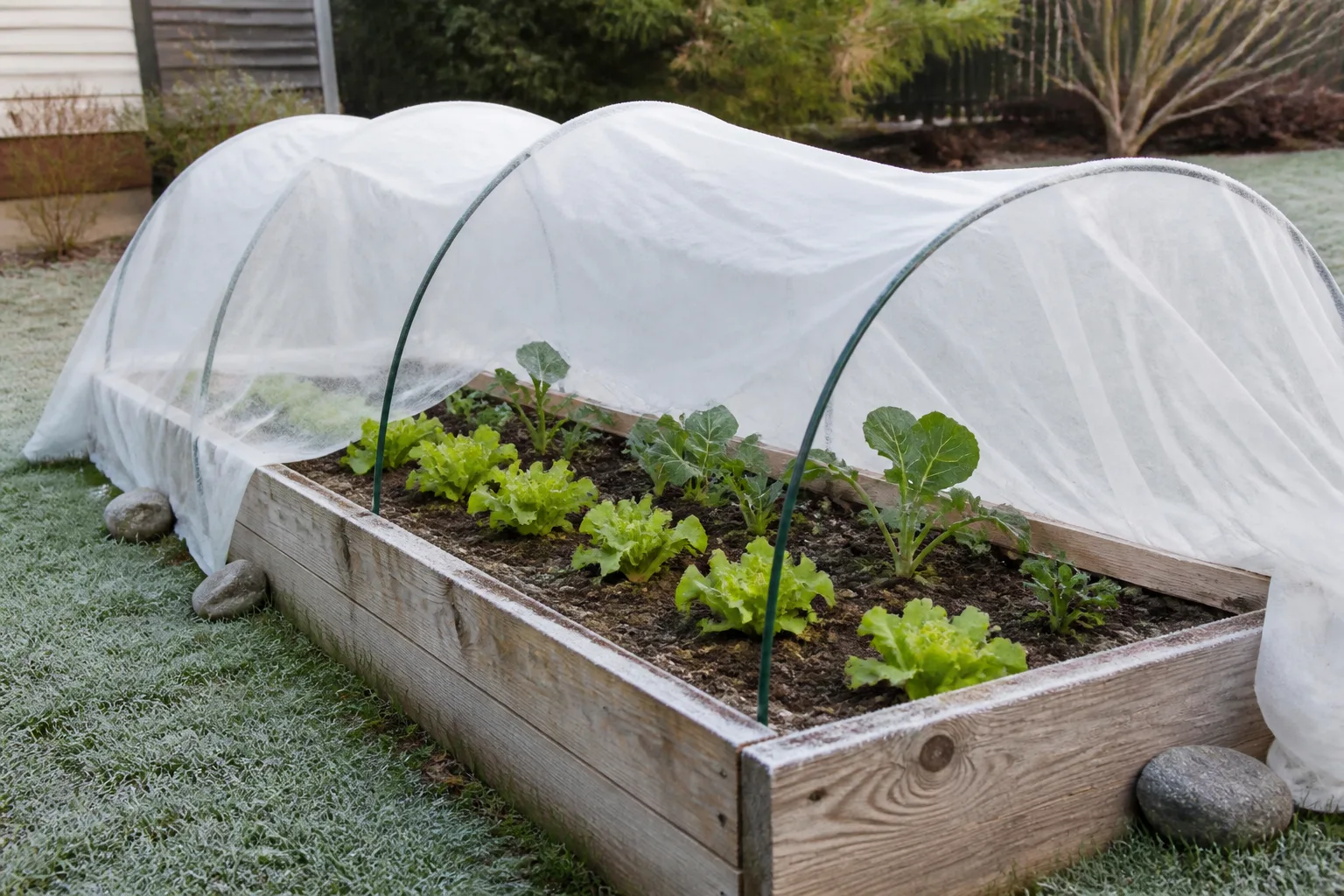
Floating row cover is often the best first investment because it is light, breathable, and quick to remove. A low hoop tunnel can capture ground heat and protect a bed from wind, light frost, and some insects. According to UGA Extension’s low-hoop guidance, a correctly installed cover can raise the temperature inside by roughly 2 to 8°F, with the actual result depending on fabric density, anchoring, wind, and conditions.
Heavier fabric generally offers more frost protection but transmits less light. That trade-off matters as autumn days shorten. A very heavy cover may protect a crop overnight but reduce the light available for growth if it stays on continuously. Check the product label for the stated temperature protection and light transmission rather than assuming all white fabric performs the same way; University of Maryland Extension’s weather-protection guidance makes the same distinction between cover weights and their protection range.
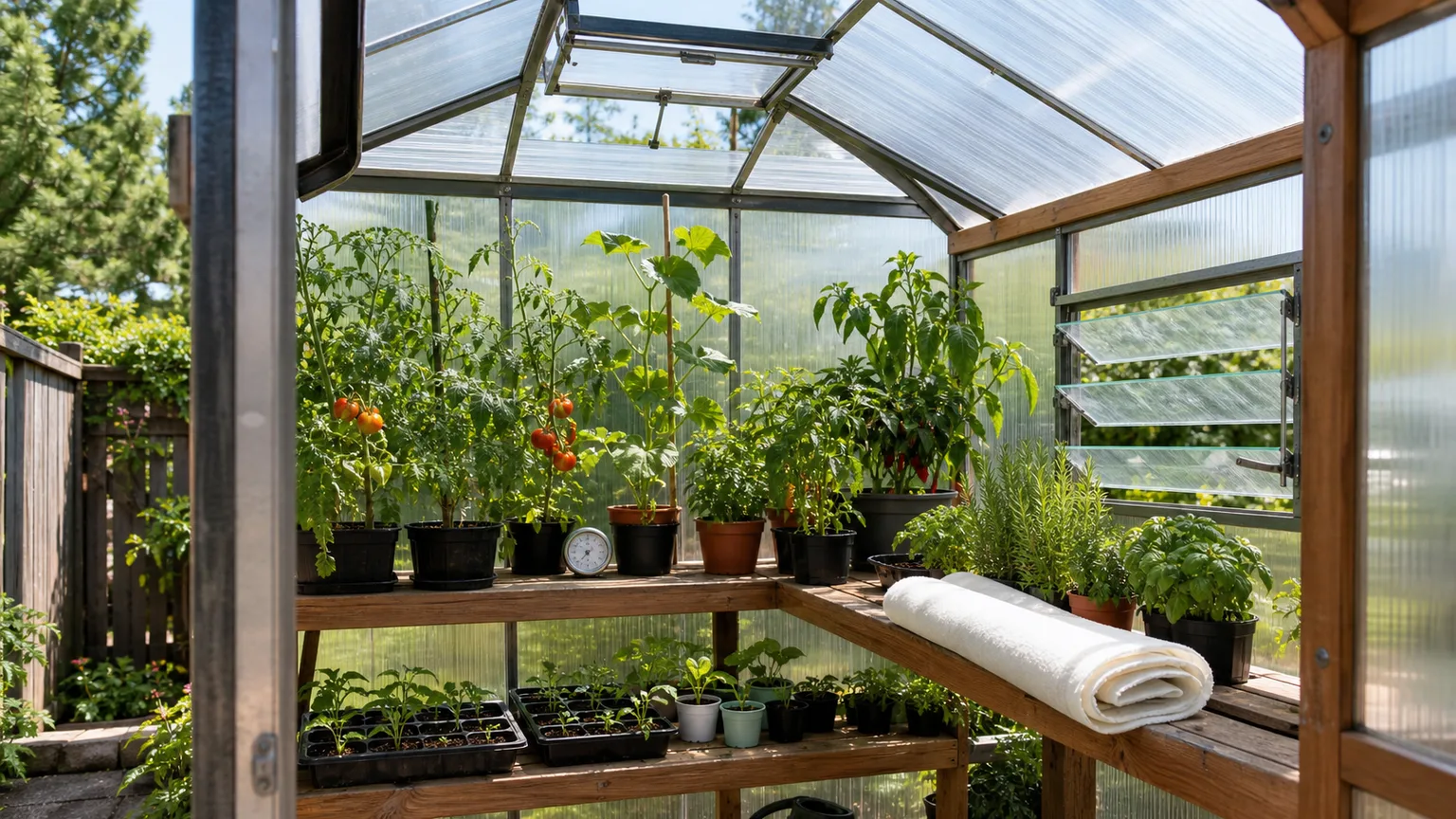
A cold frame or unheated greenhouse gives you more control and more work. It can protect seedlings, salad greens, and potted herbs from wind and frost, but it still needs monitoring. A clear enclosure may become too hot on a sunny day even when the outside air feels cold, and disease pressure rises when air never moves.
Set up breathable fabric correctly
Install hoops before you need them. Bend flexible PVC, wire hoops, or purchased supports over the row so the cover arches above the tallest plant and leaves room for growth. Fabric that rubs on leaves can cause abrasion, and a plant touching a cold, wet cover is more vulnerable than one with air space around its foliage.
Pull the fabric all the way to the ground on every side. Loose edges let the stored ground heat escape and allow wind to lift the tunnel. Use smooth rocks, boards, sandbags, or purpose-made pins that will not tear the material. UGA Extension notes that bricks, lumber, sandbags, or smooth rocks can anchor fabric, while staples can damage it.
Keep an access plan. You should be able to lift one side for harvest, inspect leaves, water when needed, and vent during a warm afternoon. If a row cover is also excluding cabbage pests, tuck the edges before the insects arrive and inspect the bed before sealing it. Remove or raise the cover when plants outgrow it, when pollination is required, or when snow and heavy rain could collapse the structure.
Know when plastic helps and harms
Plastic can capture more heat than fabric, but it is less forgiving. It blocks rain, slows air exchange, and can heat a tunnel rapidly when sunlight returns. UGA Extension explains that plastic coverings need to be pulled back daily for ventilation and excess-heat release; that is a management requirement, not an optional refinement.
Never lay plastic directly on foliage. Condensation can freeze against leaves, and contact creates hot spots, abrasion, and poor airflow. Use a frame, leave air space, and open the ends or sides as weather permits. Do not seal plastic and forget it for a week because the outside temperature is low; the inside temperature follows the sun more quickly than most gardeners expect.
For most home beds, fabric is the better default for a light frost. Choose plastic when you need a more enclosed structure and can check it daily. A cold frame with a hinged lid is useful only if you are willing to open it on bright days and close it before evening temperatures fall.
Move containers and tender ornamentals under protection
Containers give you a major season-extension advantage: mobility. Move tender pots to a bright porch, against a warm wall, into a garage overnight, or into a greenhouse when a frost threatens. Do not move them into a dark, heated room for weeks and expect healthy growth; a short emergency move is different from overwintering, which requires suitable light, temperature, and pest inspection.
Water containers before a cold night if the mix is genuinely dry, then let them drain completely. Wet potting mix in a small container can chill roots quickly, and a pot sitting in a saucer of water is more likely to develop root problems. Cluster pots for wind protection, but leave enough space for airflow and inspect leaves for mites, aphids, and whiteflies before bringing plants indoors.
For tomatoes, peppers, rosemary, and other plants you hope to keep, take cuttings or move a healthy specimen before the emergency night. The best time is before leaves are wilted, chilled, or carrying pests. Trim only what the plant can tolerate, and give the indoor plant a transition period rather than placing it immediately beside established houseplants.
Build a simple weekly frost-response routine
A repeatable routine beats reacting to a single alarming forecast. Once a week in late summer, record the likely low temperature, rainfall, crop stage, and the protection each bed already has. The goal is not to predict every cold night; it is to avoid being surprised by the first one.
Use this sequence when the forecast shows a potential frost:
- Check the actual low and wind. A calm, clear night often produces stronger frost in low spots than a cloudy, breezy night with the same predicted air temperature.
- Harvest tender crops first. Pick ripe or nearly ripe fruit, herbs you can use, and anything that will not recover from a light frost.
- Water dry beds in the morning. Do not saturate heavy soil late at night.
- Install covers before sunset. Make sure the fabric reaches the ground and does not rest on foliage.
- Move containers before the temperature drops. Avoid carrying large wet pots in the dark or leaving them exposed on cold concrete.
- Vent at first light when the day warms. Open plastic promptly; lift fabric if the sun makes the tunnel warm or humid.
- Inspect before pruning. Frost-damaged leaves can look ugly, but dead tissue may help indicate where the damage stops. Wait until the extent of damage is clear before cutting a tender plant back severely.
Keep a note of what worked. Record the outside low, whether the bed was covered, the fabric weight, the location, and which plants were damaged. Your own microclimate data will make next year’s crop timing more accurate than a generic calendar.
Avoid the season-extension mistakes that cost plants
The most common mistake is planting too late and trying to solve a calendar problem with a cover. Fabric can add a few degrees, but it cannot restore lost daylight or make a 70-day crop finish in 30 days. Switch to a quicker crop, use a transplant, or change the goal from full maturity to baby harvest.
Another mistake is treating a frost blanket like a permanent greenhouse. Covers need anchoring, air space, inspection, and removal or ventilation. If leaves touch plastic, if a tunnel stays dripping wet, or if a cover is pressed flat by rain, the protection system is no longer doing the job you intended.
Overwatering is equally damaging. Fall plants use less water, and cool wet soil can stay saturated for days. Check below the surface, improve drainage, and water at the soil line instead of following a summer schedule.
Do not fertilize every plant simply because the season is ending. A light feeding may help a hungry vegetable, but a late nitrogen flush on shrubs, perennials, or already vigorous plants can produce soft growth. Build soil fertility between crops, follow a soil test where possible, and prioritize roots, moisture, and light during the final growing window.
Finally, do not let a cover make the garden invisible. Lift it, inspect stems and leaf undersides, look for slugs and caterpillars, and harvest on schedule. Season extension works best as active management: a small amount of attention at the right time is more reliable than a sealed bed left unattended.
Conclusion
To extend the gardening season without losing plants, start with the first frost but do not stop at the calendar. Sort crops by cold tolerance, count backward from their days to maturity, and give late plantings the brightest, warmest, best-drained space you have. Keep soil evenly moist, refresh it gently, mulch the root zone, and harvest warm-season crops before a hard freeze makes the decision for you.
Use breathable fabric and hoops for a light, manageable layer of protection. Anchor the edges, leave room around foliage, and vent or remove any plastic as soon as the day warms. Move tender containers before the emergency, and keep a short weather-and-harvest journal so each season becomes easier to read. The result is not an endless summer; it is a longer, calmer finish with more food, flowers, and fewer preventable losses.