8 Low-Light Houseplants for Dim Rooms
Choose eight low-light houseplants by room, watering style, variegation, and pet safety, then learn when a windowless space needs a grow light.
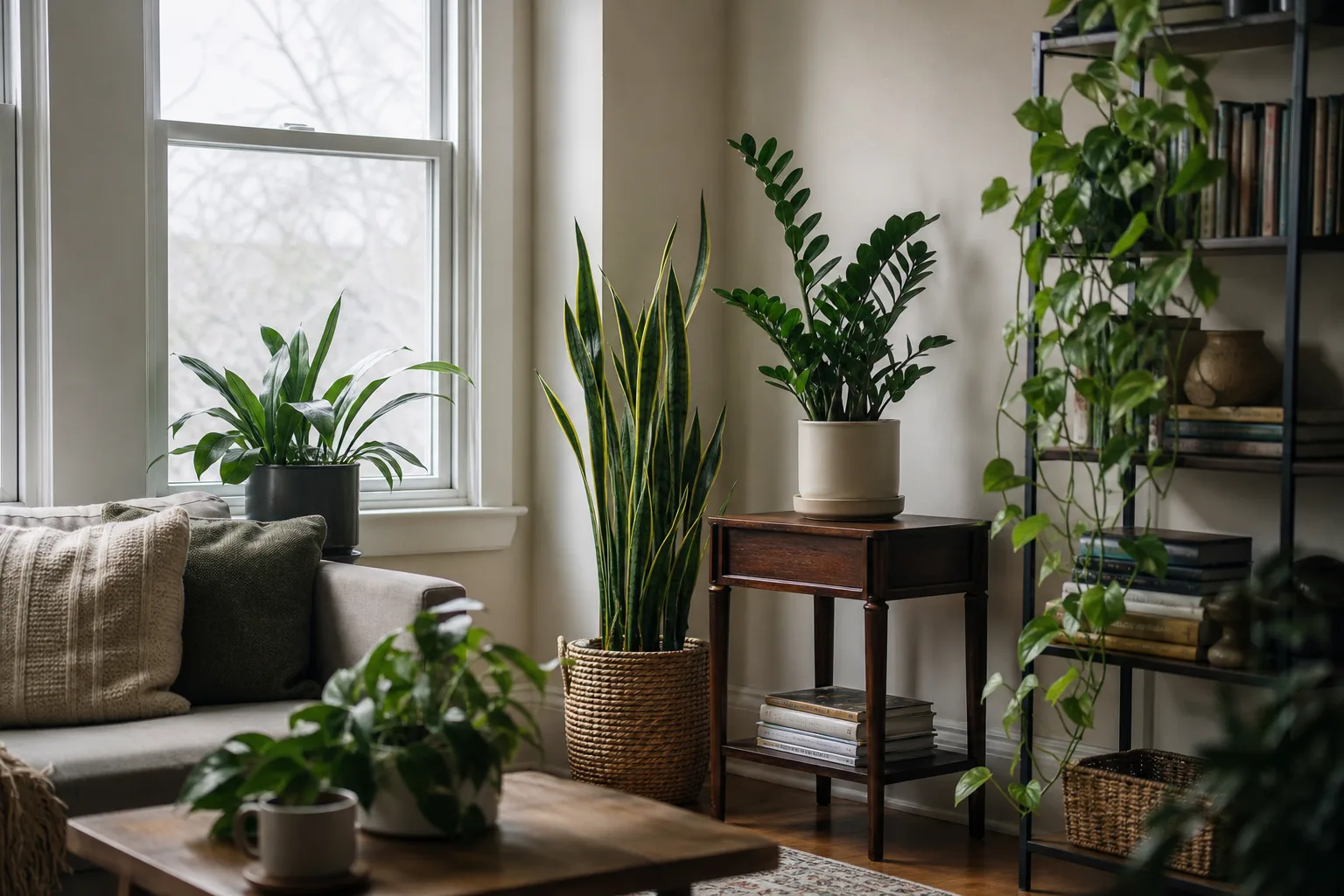
The best low-light houseplants are not plants that need no light. They are plants that can keep their foliage, shape, and basic health when a brighter-window plant would stretch, scorch, or stop growing. That distinction matters because a north-facing room, a shelf several feet from a window, and a windowless bathroom are three different growing environments.
If you want the shortest answer, start with golden pothos or heartleaf philodendron for a trailing plant, ZZ plant or snake plant for a dry room and an irregular watering routine, and spider plant when pet safety is the deciding factor. Choose peace lily, dieffenbachia, or parlor palm when you can provide steadier moisture and accept slower growth, fewer flowers, or less dramatic variegation in a dim spot.
Low Light Is Not the Same as No Light
Every green plant needs usable light for photosynthesis. A plant may survive for months in a dark corner by using stored resources and growing very slowly, but survival is not the same as thriving. In a genuinely windowless room, you need a grow light or a rotation system that moves the plant to a brighter location; a normal ceiling fixture is usually designed for people, not for sustained plant growth.
The phrase “low light” is also too imprecise to guide placement on its own. UF/IFAS Gardening Solutions describes roughly 25–100 foot-candles at midday as low, 100–500 as medium, 500–1,000 as high, and more than 1,000 as direct sunlight. Those are useful reference bands, not promises for every species, season, window, or meter.
Human eyes adjust so well that a room can look bright while being far dimmer than the space beside a window. A cheap handheld meter is more useful than guessing; hold it at the leaves, measure the proposed spot at different times, and treat a phone app as an approximation rather than a lab instrument. Garden Betty’s low-light guide makes the same important distinction: a windowless room is no light, not low light.
Match a Plant to the Kind of Dimness
Start with the room, not the plant label. A north-facing window in the Northern Hemisphere may give a plant a consistent, soft source of light. A bathroom with a small frosted window may be dim but usable. A hallway shelf ten feet from a window may receive so little light that even a tolerant plant slowly loses density. In the Southern Hemisphere, the strongest window direction changes, but the practical test is still the same: measure the light where the leaves will sit.
The Royal Horticultural Society notes that many foliage plants originate on shaded forest floors and can handle darker rooms, while still requiring some light. Its guidance for shady rooms includes cast-iron plant, ferns, golden pothos, Aspidistra, Epipremnum, Dieffenbachia, Chlorophytum, and Spathiphyllum—a useful reminder that “shade tolerant” describes adaptation, not an absence of photosynthesis. See the RHS list for dark and shady rooms for additional species beyond this eight-plant list.
Why distance from a window matters
Light drops quickly as you move away from glass. A plant on the sill can receive several times more light than the same plant on a console across the room, even when both locations feel comfortable to your eyes. Curtains, tinted glass, trees, balconies, overhangs, and winter sun angle can reduce the useful light further.
Observe the plant’s new growth rather than judging it only by the leaves it arrived with. Longer gaps between leaves, smaller new leaves, a canopy leaning toward one side, and slower production of shoots all suggest that the plant is spending more energy reaching for light. The RHS explanation of phototropism describes how plants bend toward a light source; rotate a plant regularly for even growth, but do not mistake rotation for a substitute for brighter conditions.
The Eight Plants at a Glance
Use this table to narrow the list before you buy. “Best low-light fit” means the plant can remain presentable in that setting; it does not mean the plant will grow quickly or flower freely there.
| Plant | Best fit | What dim light changes | Watering bias | Pet note |
|---|---|---|---|---|
| Heartleaf philodendron | Trailing shelf or hanging pot | Slower, longer vines; green forms hold color best | Let mix become mostly dry | Toxic if chewed |
| Dieffenbachia | Floor or tabletop focal plant | Variegation can fade; growth gets slower | Let the upper mix dry | Toxic if chewed |
| ZZ plant | Very dim room and forgetful waterer | Stems may spread; new growth is slow | Allow mix to dry thoroughly | Toxic if chewed |
| Parlor palm | Softly lit north room | Fewer, slower fronds; less fullness | Even moisture, never a swamp | Non-toxic to cats and dogs |
| Golden pothos | Trailing vine or office shelf | Yellow markings may become greener | Let mix dry between waterings | Toxic if chewed |
| Snake plant | Dry, dim corner | Less variegation and almost no blooms | Dry fully before watering | Toxic if chewed |
| Spider plant | Hanging basket in a pet home | Stripes, pups, and flowers may decrease | Keep lightly moist, then dry somewhat | Non-toxic to cats and dogs |
| Peace lily | Warm, shaded room | Fewer blooms; leaves still stay glossy | Moist but not soggy | Toxic if chewed |
Heartleaf Philodendron
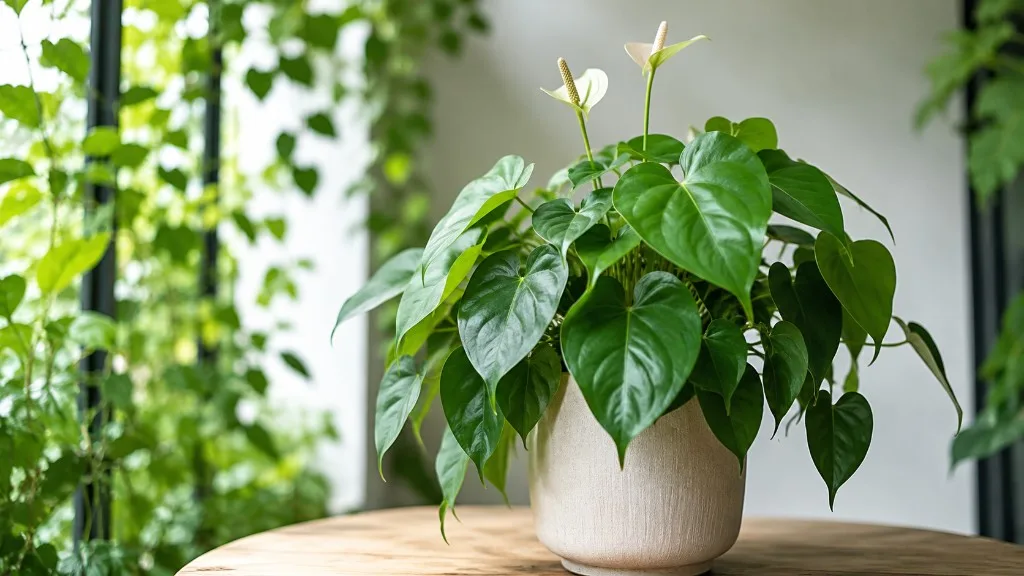
Heartleaf philodendron is one of the most forgiving choices for a dim shelf because its natural look does not depend on bright variegation or flowers. The solid green, heart-shaped leaves trail gracefully from a hanging basket, climb a support, or soften a bookcase without demanding the brightest window in the house. A low-light position will usually slow the vine and lengthen the spaces between leaves, but that can be preferable to the scorched foliage you may get by putting it in strong direct sun.
Choose a green heartleaf philodendron when the location is genuinely dim. Variegated forms such as ‘Brasil’ can live in lower light, but their markings need enough green tissue and light to remain strong. In a very dark room, a variegated vine may produce greener leaves, fewer leaves, and longer bare sections; move it closer to a window or add a grow light if preserving the pattern matters more than simply keeping the plant alive.
The main care trap is watering by calendar. Let the potting mix become mostly dry before you water thoroughly, then empty the saucer. A small plant in a large decorative pot can stay wet for a surprisingly long time in low light, so use a drainage hole and check below the surface with a finger or wooden skewer. If you want a fuller plant, prune long bare sections after improving the light; pruning alone will not stop the next round of stretching.
Dieffenbachia
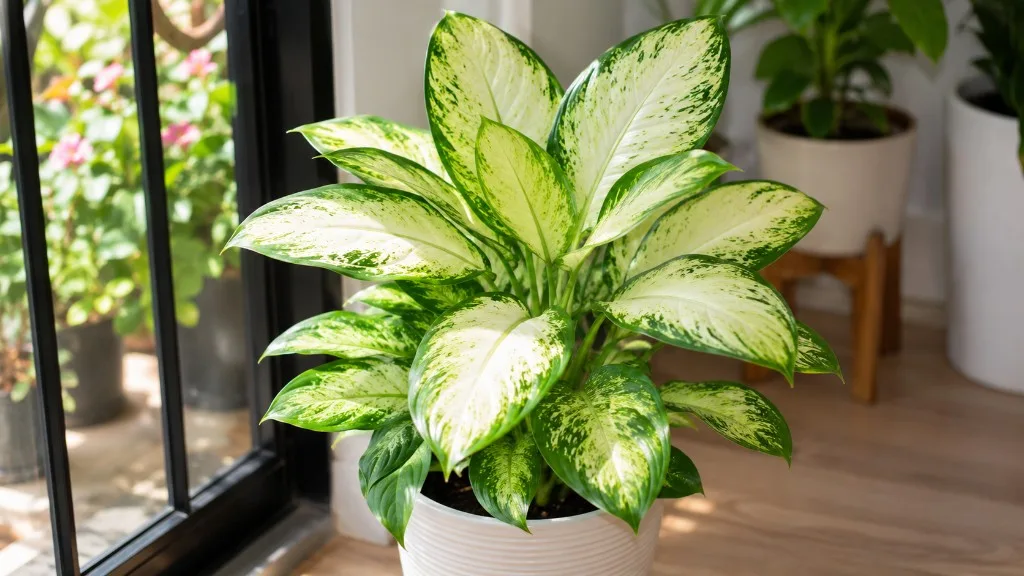
Dieffenbachia gives a dim room a broad-leaved, upright shape that a trailing vine cannot provide. It tolerates lower light particularly well when you choose a cultivar with a generous amount of green, but the cream or yellow parts of highly variegated leaves can fade as the plant adjusts. Expect a slower pace of new leaves away from a window, and place it where you can see the canopy rather than hiding it in a dark hallway.
A dieffenbachia also shows you how directional light affects plant shape. If the newest leaves all face one side, rotate the pot a quarter turn every week or two. Rotation distributes the available light; it does not increase the total light, so persistent leaning, small new leaves, or long bare stem sections mean the plant needs a brighter position or supplemental light.
Keep the mix lightly but not constantly moist. Wait until the top portion feels dry, water until some drains from the bottom, and remove standing water from the cachepot. The plant’s sap and leaves should be treated as toxic if pets or children chew them, so choose a stable, out-of-reach location and wash your hands after pruning. The ASPCA dieffenbachia record lists oral irritation, drooling, vomiting, and difficulty swallowing among possible pet signs after ingestion.
ZZ Plant
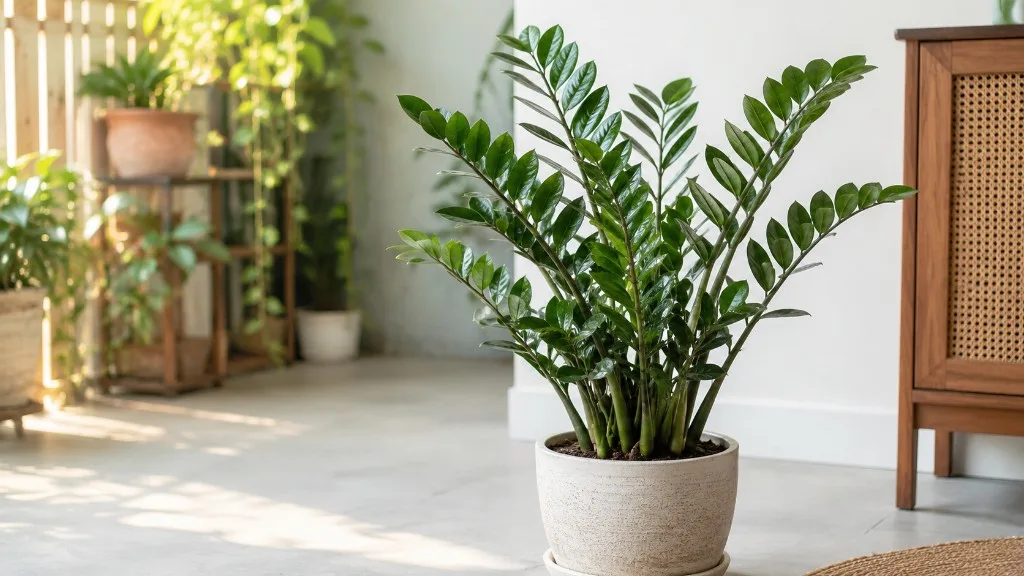
ZZ plant is the strongest candidate here for a low-maintenance, low-light corner. Its thick underground rhizomes and firm, glossy leaflets allow it to tolerate dry periods, and its upright architecture still looks intentional when growth is slow. NC State Extension’s Plant Toolbox confirms that ZZ plants can grow in very low light, including fluorescent-lit interiors, although bright indirect light produces better growth.
The trade-off is speed. In a dim room, a ZZ may hold its shape for a long time with very little new growth; when it does grow, new stems can spread farther apart and lean toward the brightest source. That is not a watering signal. Rotate the pot occasionally and move it to brighter indirect light if you want denser, more upright stems, but acclimate it gradually if the new location has direct sun.
Treat the ZZ like a plant that would rather be forgotten than fussed over. Let the mix dry thoroughly, then water deeply and drain it. In winter or in a cool, dim room, that interval may be many weeks; NC State’s profile specifically describes much less frequent watering in winter. Do not copy an exact calendar if your pot is small, your room is warm, or the mix is unusually fast draining—check the soil first. The ZZ is toxic if chewed, so keep it away from pets and young children.
Parlor Palm
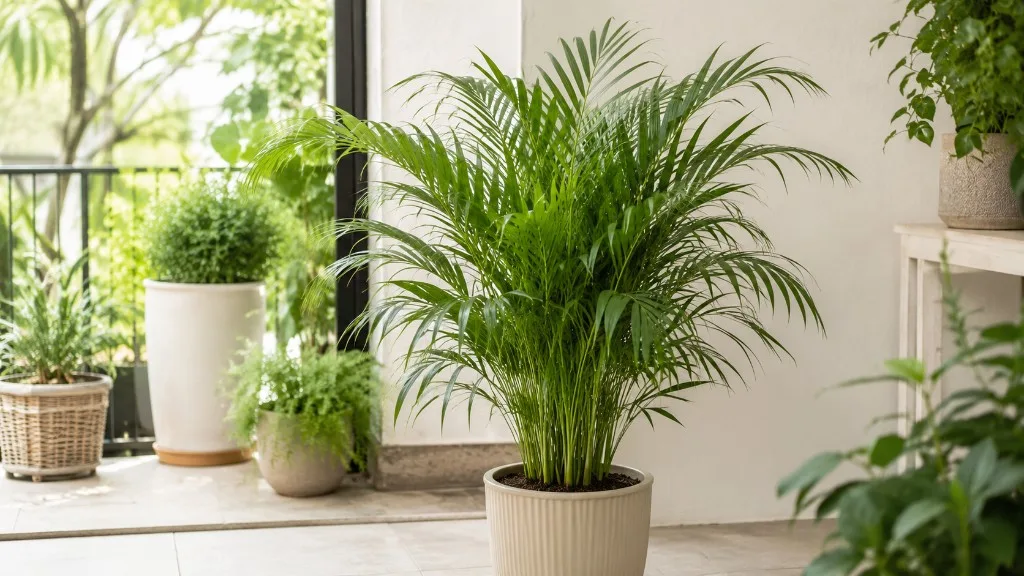
Parlor palm is the choice for a softer, more graceful silhouette. Its fine fronds work in a north-facing room or a few feet back from a bright window, and a mature plant can keep a room feeling lush even when it is not adding new growth quickly. Buy a full, healthy specimen rather than expecting a small palm in a dark corner to become large fast.
Dim light lowers water use, but parlor palm does not want the extreme dry-down that suits a snake plant or ZZ. Feel the upper layer of mix, water when it has begun to dry, and make sure the pot drains freely. Repeatedly soaking a low-light palm because its fronds look slightly tired can damage the roots; repeatedly letting the whole root ball turn bone dry can brown the fine leaflets. Aim for even moisture with air space in the mix.
Keep the plant away from cold drafts, heat vents, and a glass pane that becomes hot in direct afternoon sun. Remove fully brown fronds at the base, but do not shear healthy green tips to “shape” the plant. Parlor palm is a useful safety choice in homes with cats and dogs: ASPCA lists it as non-toxic to both, though chewing any plant can still cause stomach upset and damaged foliage.
Golden Pothos
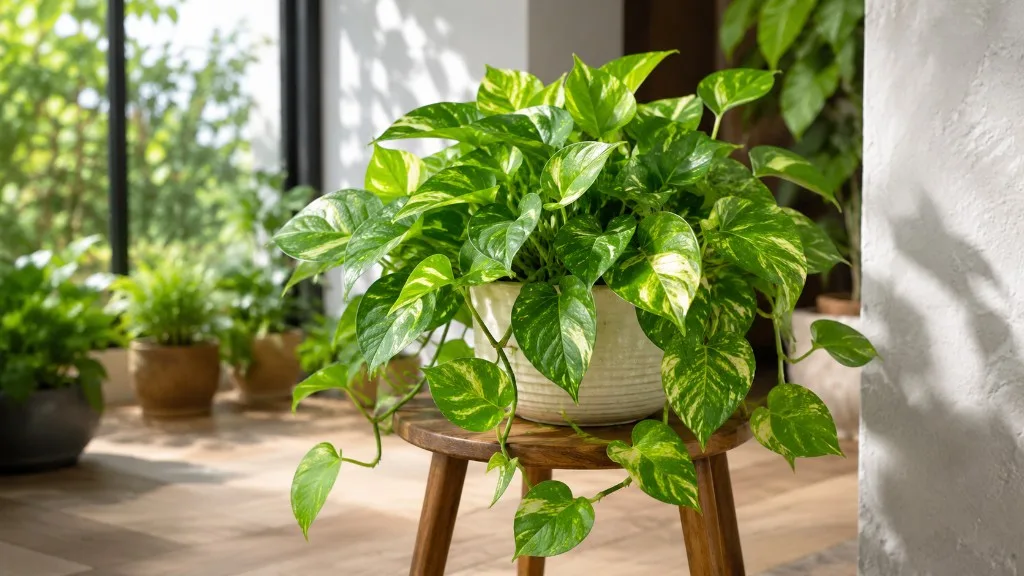
Golden pothos is the easiest recommendation when you want a fast visual payoff from a trailing plant. It can hold on in a north-facing room or farther from a window than many decorative houseplants, and its vines make a dim shelf look fuller. NC State’s profile of Epipremnum aureum describes pothos as low-maintenance, tolerant of deep shade, and suited to hanging baskets and vertical spaces.
The name “golden” can create the wrong expectation. In very low light, the yellow areas often become less distinct because the plant benefits from producing more green tissue. That is not necessarily disease or fertilizer deficiency. If strong variegation is the point of your plant, give it medium indirect light or a broad-spectrum grow light; if your priority is survival in a dim office, a green or mostly green cultivar is the better starting choice.
Water when the mix has dried partway, not whenever the leaves look less perky. Pothos can grow a long time with a wet top layer and damaged roots underneath, especially in a cachepot that holds drainage water. Prune above a node after the plant is in adequate light if you want branching, and use the pothos care guide when you need a fuller treatment of pruning, support, and propagation. Pothos contains calcium oxalates and is not a pet-safe plant if chewed.
Snake Plant
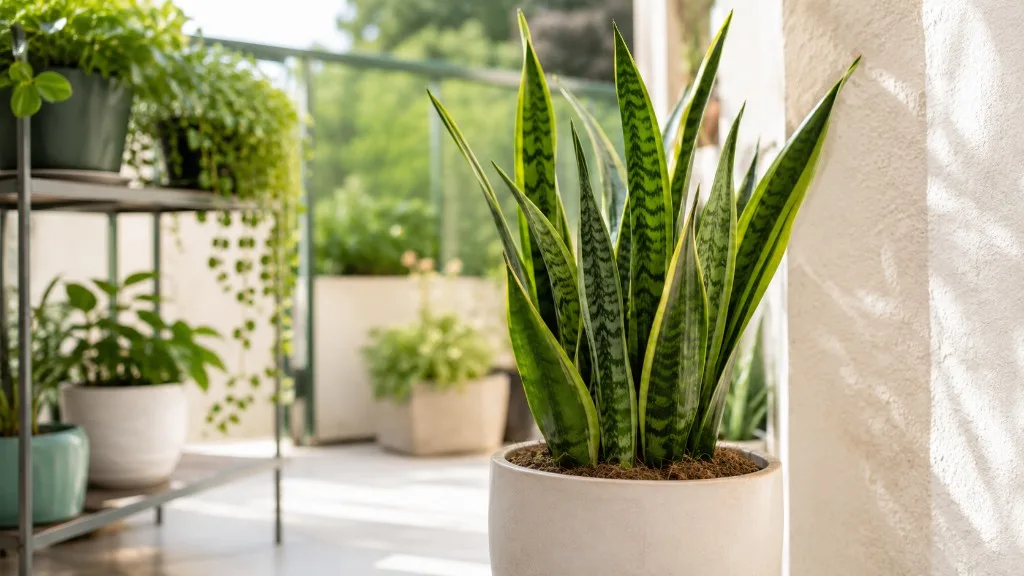
Snake plant is the most reliable match for a dry, dim room where watering is the bigger risk than forgetting. Its upright leaves occupy little floor area, and a healthy plant can look composed for months with very little intervention. It tolerates very low light, but it will grow more slowly there, lose some intensity in certain markings, and rarely reward you with flowers.
The botanical name has shifted from Sansevieria trifasciata to Dracaena trifasciata, so plant labels may use either name. NC State Extension recommends well-drained soil and careful watering, noting that overwatering is a common route to root rot. Let the mix dry completely before watering again, especially in a cool room or during winter.
Do not place a snake plant in a sealed decorative pot with no drainage and assume its drought tolerance will compensate. Water thoroughly only when the soil is dry, tip the plant out of any saucer that catches runoff, and inspect the base if leaves become soft or collapse. A sudden move from a dim corner to a hot south or west window can scorch leaves, so increase light gradually. Snake plant is toxic to cats and dogs if ingested; ASPCA lists nausea, vomiting, and diarrhea among possible signs.
Spider Plant
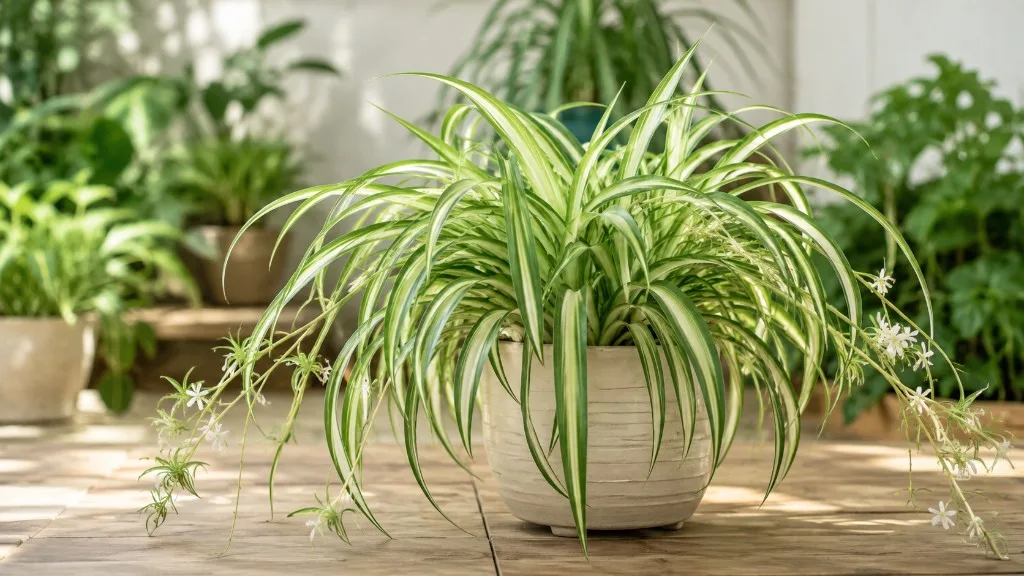
Spider plant is adaptable rather than truly ultra-low-light. Its arching leaves can keep a dim room cheerful, and the plant is particularly useful in a hanging basket where the foliage and plantlets can spill over the edge. NC State’s spider plant profile says it prefers medium light but can tolerate deep shade, which is the right expectation: it may survive in a dark shelf location, but it produces its best stripes, flowers, and babies with more usable light.
Watch the leaf tips. Brown tips can follow dry soil, dry air, fertilizer salts, or sensitivity to minerals in tap water, so do not respond by moving the plant straight into strong sun. Check the root ball, look for a crust on the mix, and flush the pot with suitable water if mineral buildup is plausible. Water when the upper mix begins to dry, then let excess drain; spider plant likes more moisture than a ZZ, but it still dislikes a pot that stays saturated.
Spider plants can be a good choice where cats and dogs have access to foliage. ASPCA lists spider plant as non-toxic to both cats and dogs. “Non-toxic” does not mean indestructible: repeated chewing can flatten the plant, and a pet that eats any large amount of greenery can still develop stomach upset. Keep the basket secure and give the plant brighter indirect light if you want more plantlets.
Peace Lily
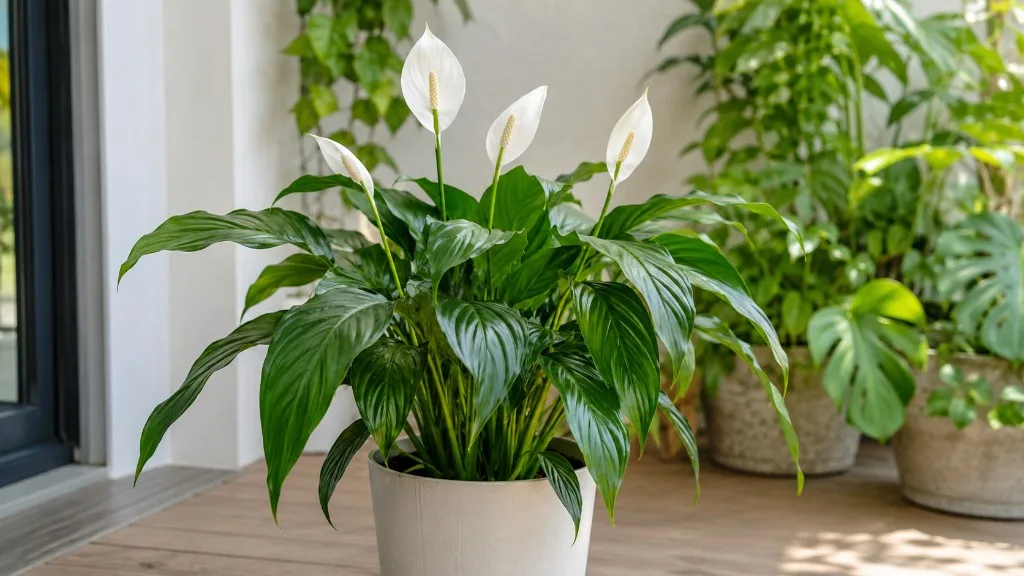
Peace lily is the best choice on this list when you want broad glossy foliage and the possibility of flowers in a shaded room. It can tolerate partial to deep shade, but flowering is a higher-light job than merely keeping the plant green. In a very dim room, expect leaves to remain attractive while blooms become occasional or disappear; move it to brighter indirect light when flowers are the priority.
This plant communicates thirst dramatically by drooping, but that signal is easy to misread. A drooping peace lily can be dry, chilled, sitting in stale wet soil, or suffering from damaged roots that can no longer move water. Feel the mix before watering, and do not add water simply because the leaves are down. NC State’s peace lily guidance recommends moist but not soggy soil, shade rather than direct sun, and protection from cold drafts.
Give peace lily a pot with drainage and water deeply when the upper mix has dried, allowing the surface to dry more in winter or in a low-light room. Wipe dust from the wide leaves so you can see pests and so the foliage can use the light that is available. Peace lily is toxic to cats and dogs if ingested; ASPCA identifies insoluble calcium oxalates and mouth irritation, drooling, vomiting, and difficulty swallowing as concerns. If flowering is essential and pets roam freely, choose a safer plant rather than trying to hide a toxic one on an unstable high shelf.
Water Less Often, but Do Not Guess
Low light usually means slower photosynthesis, slower growth, and slower drying. That is why a watering schedule copied from a sunny windowsill can rot a plant in a dim room. It is not a rule that every low-light plant should be kept dry: peace lily and spider plant still need more moisture than snake plant and ZZ. The correct response is to lengthen the interval and check the root zone more carefully.
Use a simple sequence. Lift the pot to learn how it feels when dry, press a finger or wooden skewer into the mix, then water thoroughly only when that plant’s preferred dry point has arrived. Let the container drain completely before returning it to a decorative pot, and never leave the inner pot standing in runoff. Missouri Botanical Garden’s indoor-plant guidance warns that wilting can come from overwatered, rotting roots as well as from drought; watering a root-rotted plant because it looks thirsty can accelerate the decline.
In a dim room, change one variable at a time. If the soil stays wet for two weeks, move the plant into brighter indirect light or improve drainage before adding fertilizer. If leaves become smaller and the pot is dry quickly, measure the light before assuming the plant needs more food. Fertilizer cannot replace light, and excess fertilizer in a slow-growing plant can add salt stress without creating new foliage.
Artificial Light for Windowless Rooms
A windowless room is not a challenge you solve by choosing a tougher species; it is a lighting project. You can keep a plant there temporarily and move it to a bright location every few days, but that routine is easy to forget and disruptive for large plants. A grow light is the more consistent solution if you want the room to stay green year-round.
UF/IFAS confirms that plants can be grown entirely under artificial light when the source is appropriate. For a small shelf, use a broad-spectrum white LED or a fixture sold for plants, position it close enough to illuminate the leaves without heating them, and run it on a timer. Follow the fixture’s distance and coverage guidance; wattage alone does not tell you how much light reaches the canopy.
A simple grow-light setup
Start with the lowest-risk arrangement: one plant group, one adjustable LED, and one timer. Place the light above or slightly in front of the leaves so growth stays reasonably even, keep the cord and fixture away from water, and begin with a moderate daily schedule rather than leaving it on continuously. A plant that has lived in deep shade can still scorch or stress under an abrupt jump in intensity, so increase exposure over several days.
Watch new growth over the next month. Healthy new leaves, shorter gaps, and less leaning mean the plant is receiving a better signal; bleached patches, crispy surfaces, or excessive heat mean the light is too close or too intense. Use a light meter at leaf height if you want to compare the artificial setup with a window location. For a deeper treatment of fixture types, placement, and measurement, see the complete grow-light guide.
Signs Your Plant Needs More Light
One yellow leaf is not enough evidence. Older leaves naturally age, roots can rot, pests can drain sap, and sudden temperature changes can cause decline. Look for a pattern that appears in new growth and across several leaves before deciding that darkness is the cause.
The strongest clues are longer internodes, smaller new leaves, a stem or vine leaning toward the window, slower growth during a season when the plant normally grows, and variegation becoming less distinct. Pale, stretched growth is called etiolation; University of Maine Cooperative Extension describes it as elongated, spindly growth with pale leaves associated with insufficient light. The not-enough-light troubleshooting guide can help when several symptoms overlap.
Respond in the right order. First measure or improve light, then correct watering for the new drying rate, and only then prune damaged or stretched growth. Existing long internodes will not shrink, but the next leaves can be more compact. If a move is possible, increase exposure gradually; if it is not, install a grow light rather than repeatedly cutting back a plant that is still light-starved.
Pet and Child Safety
Low-light tolerance has nothing to do with toxicity. On this list, parlor palm and spider plant are listed by ASPCA as non-toxic to cats and dogs. Heartleaf philodendron, dieffenbachia, ZZ plant, golden pothos, snake plant, and peace lily should be treated as unsafe to chew; keep them behind a barrier, in a secured hanging basket, or out of reach of animals and children.
Toxicity labels describe the risk of ingestion, not a guarantee that every contact causes a medical emergency. Do not let a pet sample the plant to “see what happens,” and do not assume a high shelf is safe if the pot can be knocked down. If a pet chews a plant, remove access, save the plant label or a clear photograph for identification, and contact your veterinarian or a poison-control service promptly. The pet-safe houseplants guide has more options if safety is your first constraint.
Conclusion
Choose the plant that matches the room you actually have. For a dim shelf, golden pothos and heartleaf philodendron give you flexible trailing growth; ZZ plant and snake plant forgive the longest dry intervals; parlor palm and peace lily add a softer, fuller look when you can monitor moisture; spider plant is the best safety-forward choice for a home where pets chew leaves; and dieffenbachia is a strong broad-leaf option when you can keep it out of reach.
Then give the plant the honest basics: measurable light, a pot that drains, watering based on the soil rather than the calendar, and gradual acclimation when conditions change. If the room has no usable daylight, add a timed grow light. “Low-light tolerant” can buy you flexibility, but it cannot repeal photosynthesis.