Best Potting Mix for Houseplants: What to Choose
Find the best potting mix for houseplants, from pothos and ferns to succulents and orchids, with simple recipes and troubleshooting rules.
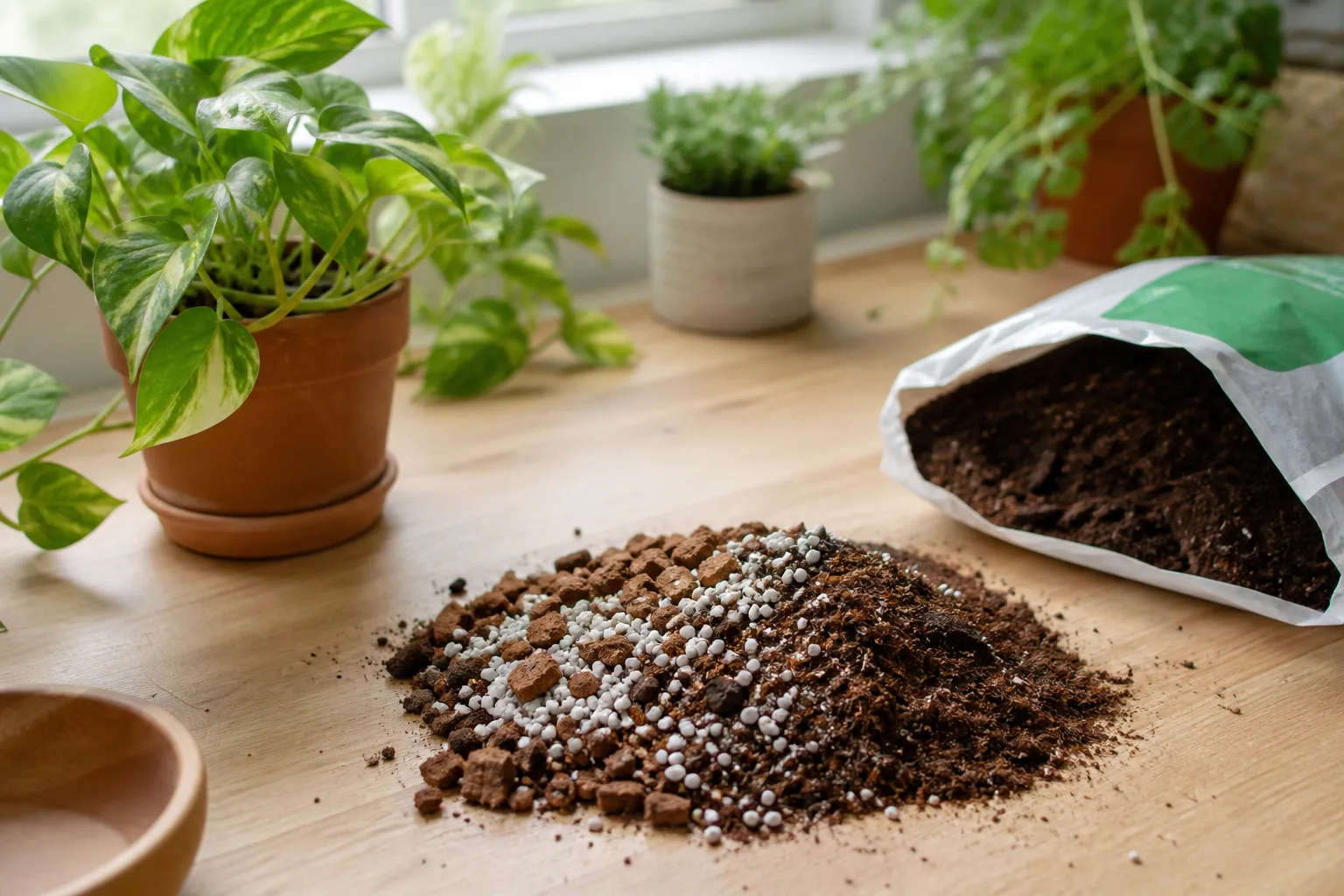
Short answer: use a quality potting mix made for containers, not soil dug from a garden bed. The best potting mix for houseplants is light enough to hold air around roots, structured enough to drain excess water, and capable of staying evenly moist for the time your plant and home require. A pothos in a warm, bright window, a jade plant in a cool room, and a bark-grown orchid should not all receive the same bag of mix.
The label “potting soil” is also confusing. In horticulture, potting mix, potting soil, growing medium, and soilless substrate often describe a manufactured blend of organic and mineral ingredients rather than true field soil. That distinction matters because a pot is a small, enclosed root environment: the mix must supply the air, water, support, and some fertility that a plant would otherwise find across a much larger volume of ground.
Start with the watering environment, not the label
Before choosing a blend, answer four questions: What plant is it? How much light does it receive? How quickly does the pot usually dry? How do you actually water? Those answers are more useful than a word such as “premium,” “moisture control,” or “all-purpose” printed on a bag.
Light and temperature set the plant’s demand for water. A plant in a bright window or warm, moving air may use a moist mix quickly; the same plant in a dim, cool corner can remain wet for much longer. A gardener who waters every Sunday needs a different margin for error from someone who checks soil moisture twice a week and waters only when the plant needs it.
Use this simple starting rule: begin with a general indoor potting mix for ordinary foliage plants, add structure if the mix stays wet or collapses, and choose a faster-draining blend for plants with succulent leaves or roots adapted to drying. Then adjust after you observe the pot for a few waterings. A recipe is a starting point, not a permanent prescription.
Why garden soil fails in a houseplant pot
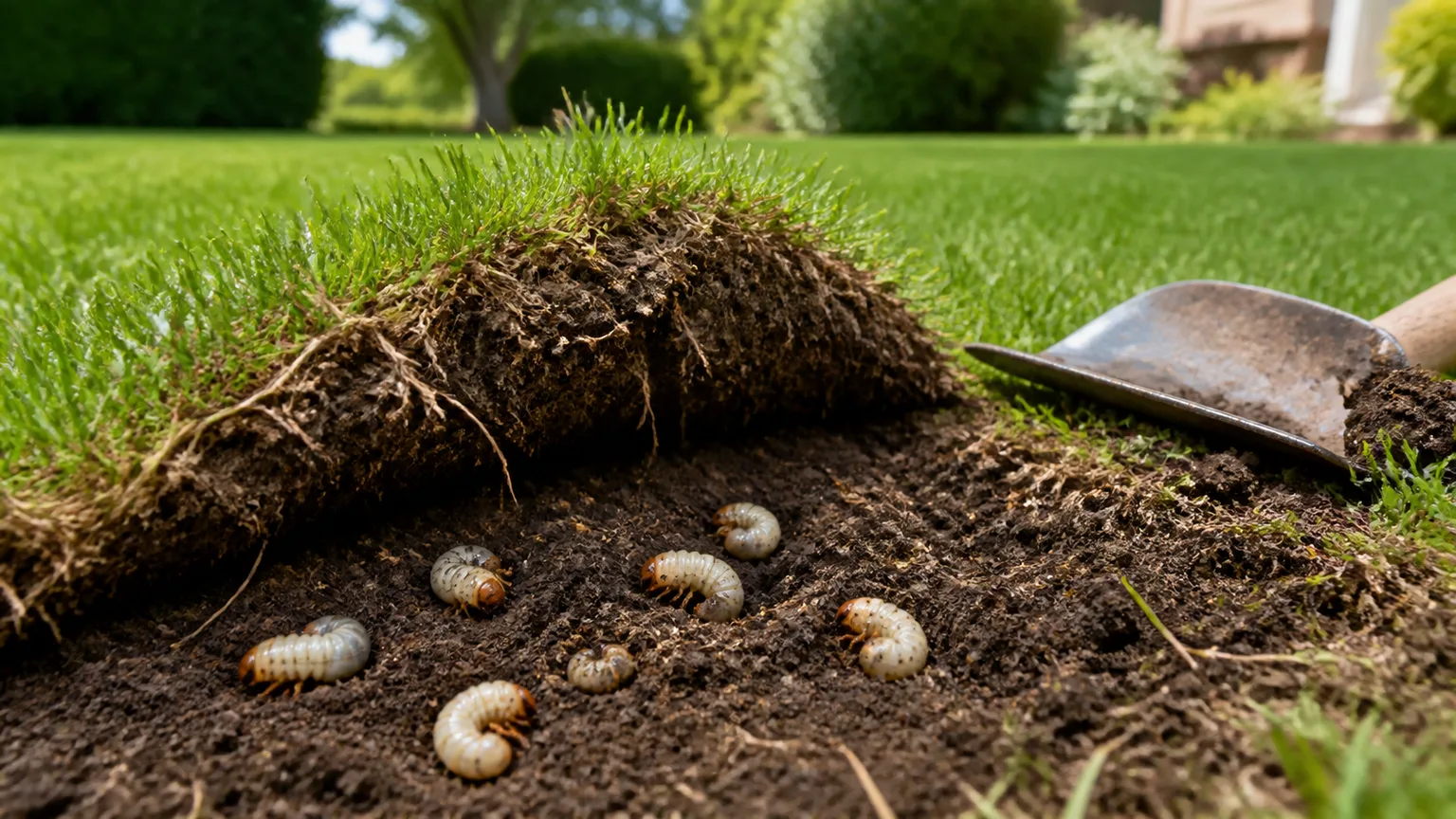
Garden soil is built to be blended with the soil already in a deep bed. In the ground, water can move through a much larger soil profile and roots can grow away from a localized wet pocket. In a pot, the same soil can settle into a dense mass that leaves too little oxygen around the roots, drains slowly, and becomes difficult to re-wet evenly after it dries.
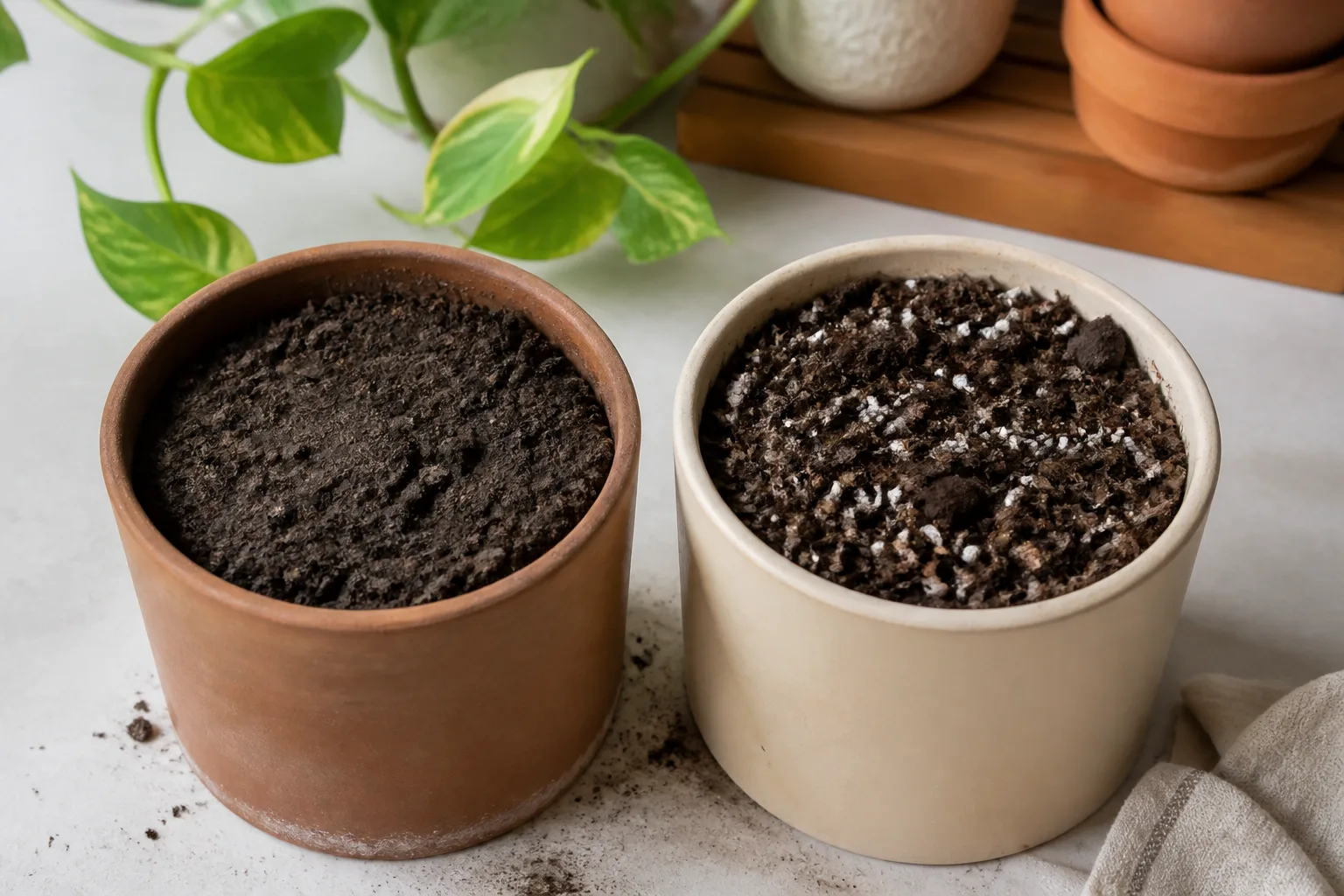
Field soil may also carry weed seeds, insects, disease organisms, or residues you do not want to introduce indoors. NC State Extension explains that true soils are generally too heavy, hold too much water, provide too little pore space for oxygen, and can harbor pests and diseases when used in containers; Penn State Extension likewise recommends a quality soilless mix created for potted plants (NC State Extension, Penn State Extension).
That does not mean garden soil is “bad.” It is the wrong tool for a self-contained pot. You can improve a garden bed with compost and mineral amendments because the bed has depth and a living soil system; you should not assume those same amendments will turn a shovel of outdoor soil into a reliable houseplant medium.
The pot changes the physics
A container has no surrounding earth to dilute compaction, and the lower portion of a saturated pot can stay wet even when the surface looks dry. This is why a plant can be thirsty at the top while its lower roots are sitting in poorly aerated mix. The problem is not solved by sprinkling water more often or placing a few stones beneath the mix.
Drainage holes are the first line of defense. If you love a decorative pot without a hole, use it as a cachepot and place the plant in a nursery pot with drainage inside it; after watering, remove any water collected in the outer pot. NC State specifically warns that a gravel layer at the bottom does not improve drainage: it can shift the saturated zone upward into the potting mix instead (NC State Extension).
The pot itself changes the result, too. Unglazed terracotta loses moisture through its porous walls and can suit plants that prefer a faster dry-down. Plastic and glazed ceramic hold moisture longer. A dense mix in a plastic pot is a very different growing environment from that mix in a small terracotta pot, even if the plant and watering can are identical.
What healthy houseplant roots need from a growing medium
Healthy roots need water, oxygen, physical support, and access to nutrients at the same time. A good growing medium balances large pores, which allow air and quick water movement, with smaller pores, which hold a reserve of moisture. If every pore fills with water, roots lose oxygen; if almost every pore drains and the mix repels water, roots cannot take up enough moisture between waterings.
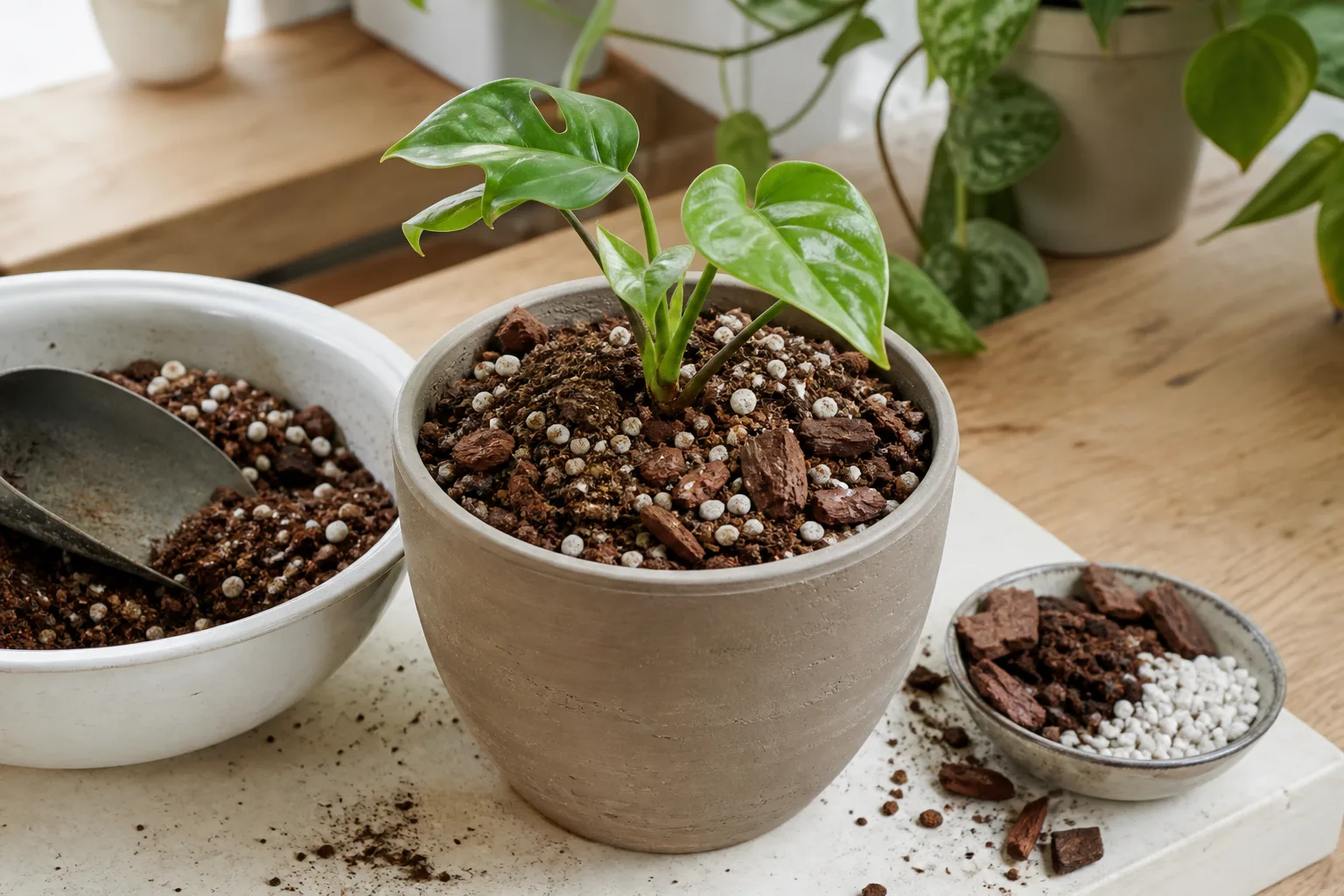
Look for a mix that is loose but not feather-light, moistens without forming a muddy paste, and contains a visible range of particle sizes. A little fine material anchors the plant and holds moisture; coarse bark, perlite, pumice, or other structural particles keep the blend from collapsing into a solid block.
The goal is not maximum drainage. It is predictable dry-down. A mix that drains instantly may be appropriate for a cactus in strong light but frustrating for a fern in a heated apartment. Conversely, a moisture-retentive mix may be useful for a thirsty plant in bright light and a poor choice for the same plant in a dark room.
Drainage is not the same as drying fast
“Well-draining” should mean that excess water can leave the pot while enough moisture remains distributed through the root ball. It should not mean that water races down the sides and leaves the center dry, or that you must water twice a day to keep a normal foliage plant alive.
Particle size and organic matter work together. Coarse particles create air spaces, while fine particles and fibers hold water. NC State’s container guidance describes good media as permeable to water and air, moisture-retentive, well-drained, lightweight, fertile, and substantially free of weeds, insects, and diseases (NC State Extension). That list is more useful than treating drainage as a single ingredient you can pour into any failing pot.
Read the bag: four ingredient jobs
Instead of choosing by brand, read the ingredient list and identify the jobs the ingredients perform. A good houseplant mix usually combines a water-holding base, structural aeration, optional organic matter or fertility, and a pH or wetting strategy appropriate for containers.
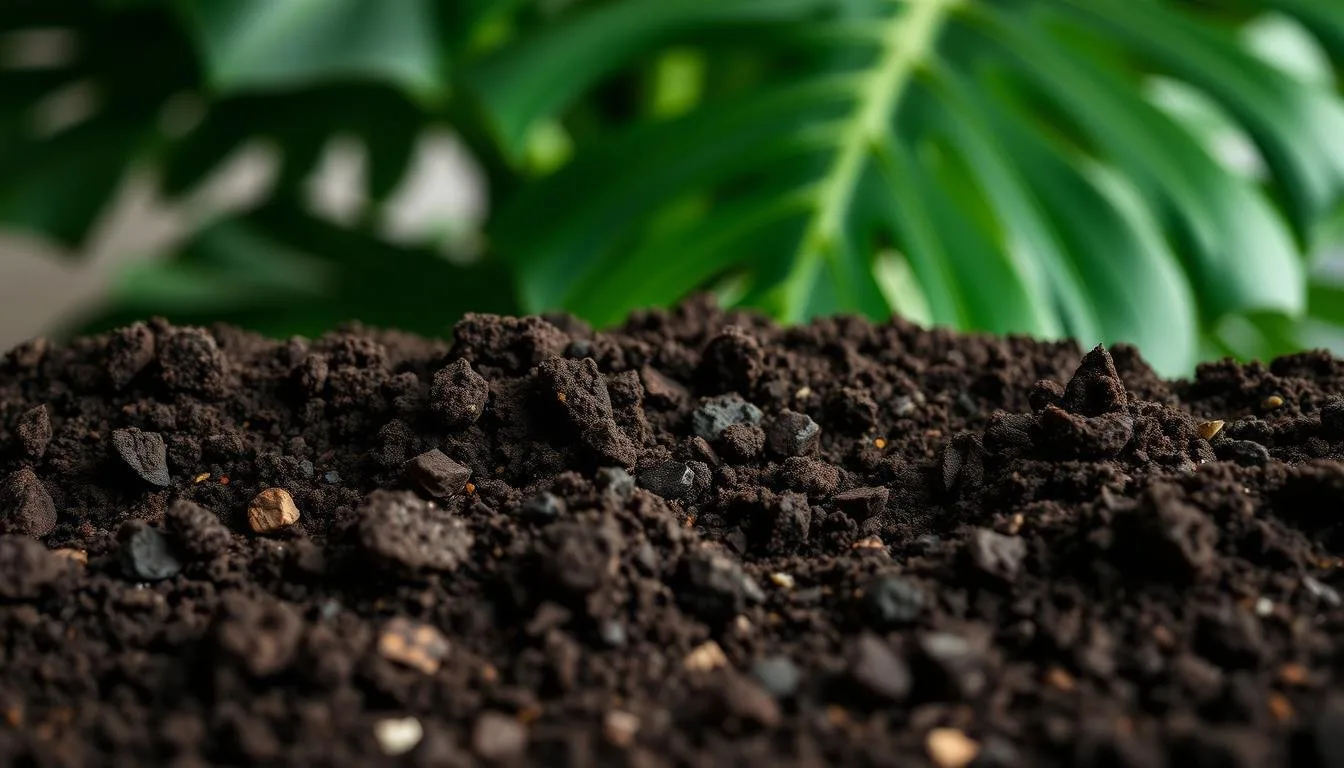
The order on the bag is not a perfect performance test, and ingredients vary in particle size and quality. Still, a mix that is mostly fine, decomposed organic material with no visible structure deserves more caution than one that contains a deliberate blend of fine and coarse components.
Peat, coir, and compost build the water-holding base
Sphagnum peat moss is lightweight and holds water once it is evenly moistened, but it can become difficult to re-wet after drying. Peat is also acidic and is a finite resource. Coco coir, made from processed coconut husk fiber, is a common peat alternative with near-neutral chemistry and good water-holding capacity; the Royal Horticultural Society describes coir as a useful ingredient because it absorbs a limited amount of water while excess can drain through (RHS).
Neither peat nor coir is complete plant food by itself. Check whether the bag contains fertilizer, and remember that a light starter charge may not feed an established plant for an entire growing season. A coir-heavy or peat-heavy DIY blend needs a measured fertility plan rather than a handful of extra fertilizer added “for insurance.”
Compost adds organic matter, moisture retention, and nutrients, but it can also make a small indoor pot heavy or stay wet if used in excess. Its nutrient and salt content vary by source. NC State advises limiting compost in container mixes and avoiding composted grass clippings from lawns treated with persistent herbicides (NC State Extension). For most houseplants, compost is an optional ingredient, not proof that a mix is superior.
Perlite, pumice, bark, and vermiculite shape air space
Perlite is the familiar white, expanded mineral that adds pore space without much weight. It helps break up fine mixes, but it is dusty, so wet it before handling and avoid breathing the dust. NC State also notes that perlite can contain fluoride, which matters for especially fluoride-sensitive plants such as spider plants and dracaenas; if those plants show recurring tip damage, use a different structural amendment and evaluate water quality as well (NC State Extension).
Pumice is heavier and more durable than perlite, with pores that hold some moisture while maintaining structure. It is useful when you want aeration without a pot full of floating white particles. Pine bark or orchid bark supplies larger air pockets and is especially helpful for thick-rooted aroids and epiphytic plants, although very dry bark can be slow to absorb water again.
Vermiculite is the better choice when you need extra water-holding capacity, such as for moisture-loving plants or propagation. It is not interchangeable with perlite: perlite generally shifts a mix toward more air and quicker drainage, while vermiculite holds more water and nutrients. The RHS describes vermiculite as a highly water-retentive ingredient suited to plants such as alocasia and calathea when used thoughtfully (RHS).
Fertility, pH, and amendments need restraint
Fertilizer is not the same as fertility built into the structure of the mix. A bag may contain slow-release plant food, compost, worm castings, or no meaningful nutrition at all. Read the label before adding more, because excess fertilizer salts can damage roots and create a crust on the pot or soil surface.
Horticultural charcoal is optional. It can contribute a coarse particle and may adsorb some compounds, but it is not a cure for root rot, a substitute for drainage, or a reason to plant directly into a sealed container. Use it only when the recipe or plant system calls for it; do not treat charcoal as a universal detoxifier.
For pH, choose a mix intended for the plant group rather than trying to correct chemistry by guesswork. Most general foliage plants tolerate a moderately acidic container medium, while specialty plants such as orchids and acid-loving species may have narrower preferences. If a plant repeatedly shows nutrient problems despite good light and sensible fertilizing, test the water and growing medium before adding lime or other amendments.
Match the mix to your plant group
The quickest way to choose is to classify the plant by how it handles water. The table below is a starting map, not a collection of rigid rules.
| Plant group | Starting texture | What to look for | Common mistake |
|---|---|---|---|
| Pothos, philodendron, monstera, peace lily | Airy, moderately moisture-retentive | Indoor mix with perlite, pumice, or bark | Using a dense mix in low light |
| Ferns, calathea, alocasia | Moisture-holding but open | Fine base plus a modest amount of aeration | Letting the mix stay saturated |
| Snake plant, ZZ plant, cacti, succulents | Gritty and fast-draining | A substantial mineral or coarse fraction | Watering by calendar |
| Phalaenopsis orchids and epiphytes | Very chunky or moss-based, plant-specific | Bark or the medium used by the grower | Burying roots in ordinary soil |
Tropical foliage, aroids, and ferns
Most pothos, philodendrons, monsteras, anthuriums, and peace lilies do well in a quality indoor mix that remains lightly moist but has visible air space. Aroid roots are often thick and benefit from a chunkier structure, but “chunky” does not mean the pot should be filled with bark alone. The plant still needs fine material around roots, a pot that drains, and enough moisture to support new growth.
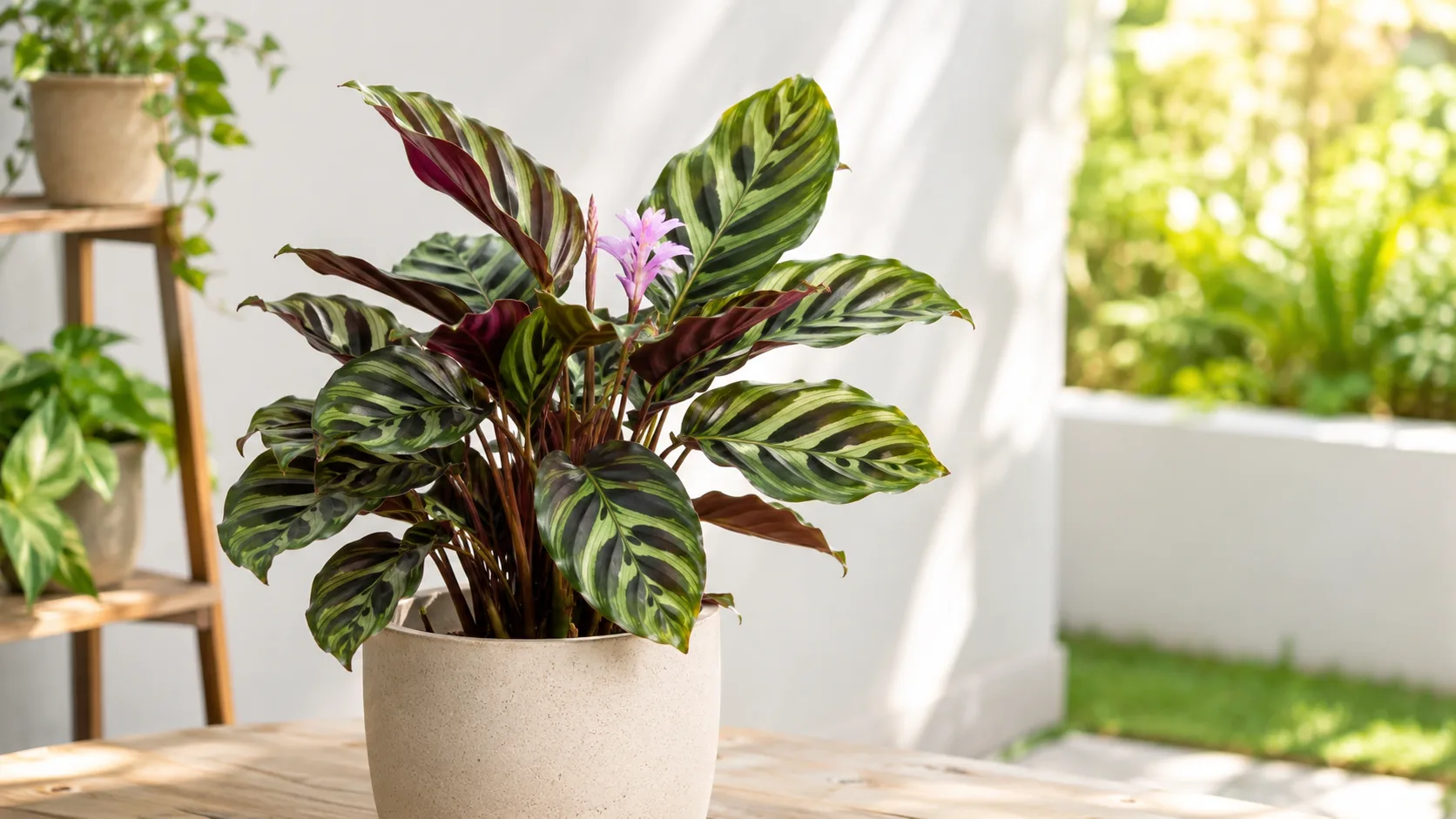
Ferns, calatheas, and alocasias usually need more consistent moisture than a cactus, especially in bright light and warm air. Give them a base that holds water, then add enough perlite, pumice, fine bark, or another aerator to prevent the mix from becoming a cold, airless mass. High humidity does not make saturated soil safe; roots still need oxygen.
If the plant is in low light, reduce the mix’s moisture-retaining bias rather than compensating with more frequent watering. Better light often improves dry-down and growth more effectively than adding another amendment to a pot that already stays wet.
Succulents, cacti, snake plants, and ZZ plants
These plants store water or tolerate a dry interval, so start with a cactus or succulent mix and inspect its texture. Some commercial “cactus soils” are only slightly lighter than general potting mix. If the blend feels fine and stays damp for many days in your home, mix in additional pumice, perlite, or coarse mineral grit rather than trusting the front label.
Snake plants and ZZ plants are not desert cacti, but they are often harmed by repeated watering while their mix is still wet. Their best mix is the one that dries to the depth you can monitor before the next thorough watering. A gritty mix in a dim room can still stay wet; a sunny plant in a terracotta pot can dry quickly even in a moderately organic blend.
Do not add sand automatically. Fine sand can fill air spaces and make a mix denser. If you use sand for weight or texture, use a coarse horticultural grade in a limited proportion; perlite or pumice is usually a more forgiving way to increase air space.
Orchids and other epiphytes
Many popular orchids, including phalaenopsis, are epiphytes that naturally anchor to bark or other surfaces rather than growing in ordinary garden soil. Their roots need air as well as water, and the correct medium depends on the orchid, pot, humidity, and the grower’s watering routine.
When repotting an orchid, identify what it is currently growing in before changing everything. The RHS notes that bark, coir, moss, pumice, and other ingredients can be combined into plant-specific growing media, and that bark is particularly useful for chunky roots of epiphytic plants (RHS). A bark-grown orchid usually does better moving into fresh bark-based orchid mix than into general indoor potting soil.
Sphagnum moss can work for some orchids and epiphytes, but it is easy to keep too wet in a home that waters heavily. If the center of a moss-packed root ball remains wet while the outer surface looks dry, the issue is not a missing fertilizer; it is a mismatch between medium, pot, and watering technique.
Three practical houseplant mix recipes
You do not need a garage full of amendments to make a useful houseplant mix. Start with clean measuring cups or a small bucket, use volume rather than weight, and moisten dusty ingredients lightly before mixing. Savvy Gardening’s practical recipes also treat peat or coir, perlite, compost, and fertilizer as adjustable components rather than a single universal formula (Savvy Gardening).
For most foliage plants: combine 2 parts quality indoor potting mix with 1 part perlite or pumice. Use this for pothos, philodendrons, many peperomias, dracaenas, and similar plants when the bagged mix is too fine or dries unevenly. If the plant is in a bright, warm home and the pot dries very quickly, keep the recipe closer to the base mix; if it stays wet, increase the structural fraction at the next repot.
For aroids and thick-rooted tropicals: combine 2 parts indoor potting mix, 1 part orchid bark, and 1 part perlite or pumice. This creates visible channels around roots while retaining enough fine material to anchor a young plant. Use finer bark for smaller roots and larger bark for a mature monstera or anthurium; oversized chunks can leave gaps around a small root ball.
For succulents and drought-tolerant plants: combine 1 part indoor mix with 1 part cactus or succulent mix, then add mineral material only if the result still stays wet. Alternatively, use a quality cactus mix amended with pumice or perlite according to the bag’s texture and your home’s dry-down. The aim is a stable, gritty root zone, not an exact percentage copied from another gardener’s climate.
Avoid adding lime, fertilizer, charcoal, compost, and several minerals all at once. Every extra ingredient changes water retention, salt concentration, weight, and pH. Plantophiles shows how experienced growers build airy mixes from coir, perlite, pumice, bark, and moss; the useful lesson is to understand each component’s job, not to assume one detailed recipe is right for every plant.
Tune the mix to your home
Your house is part of the growing medium. A bright south-facing window, an air-conditioned room, a humid bathroom, a small plastic pot, and a large terracotta planter each change how long moisture remains available. That is why two gardeners can use the same mix and report opposite results.
If the mix stays wet, check the order of causes before amending it: low light, cool temperatures, a pot that is too large, no drainage hole, frequent small sips of water, and a heavy blend can all be responsible. If the plant is healthy but dries too fast, increase the water-holding base, move it into a less porous pot, or choose a slightly larger container before adding a handful of vermiculite.
The most reliable adjustment is small and observable. Change one variable at a time, note how many days the pot remains damp, and watch new growth. A mix that needs watering every other day may be too open for your routine; a mix that remains heavy for two weeks may be asking the roots to live in a low-oxygen environment.
Repotting steps that protect roots
Repot when roots are tightly circling, escaping the drainage holes, or using the available mix so quickly that the plant wilts between thorough waterings. Do not repot a stressed plant solely because the surface looks unattractive; first determine whether the issue is light, pests, watering, or actual root restriction.
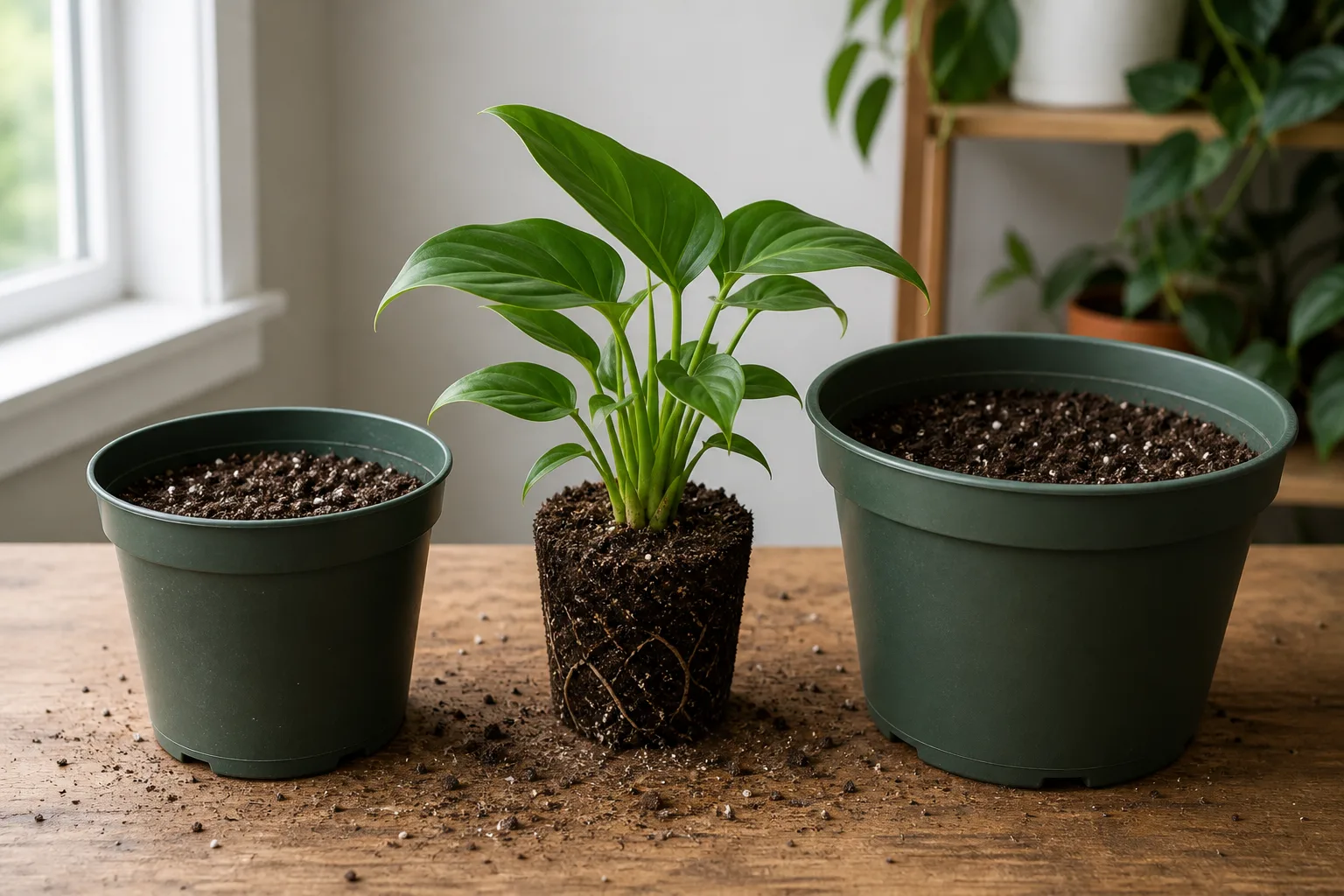
Use this sequence:
- Choose the container first. It should have drainage holes and usually be only one size larger than the current root system. A huge pot adds a large volume of wet mix around a small root ball and can slow dry-down.
- Pre-moisten the new mix. It should feel evenly damp, not muddy or dripping. Penn State Extension recommends moistening potting mix before repotting because very dry peat and bark can resist water and leave dry pockets (Penn State Extension).
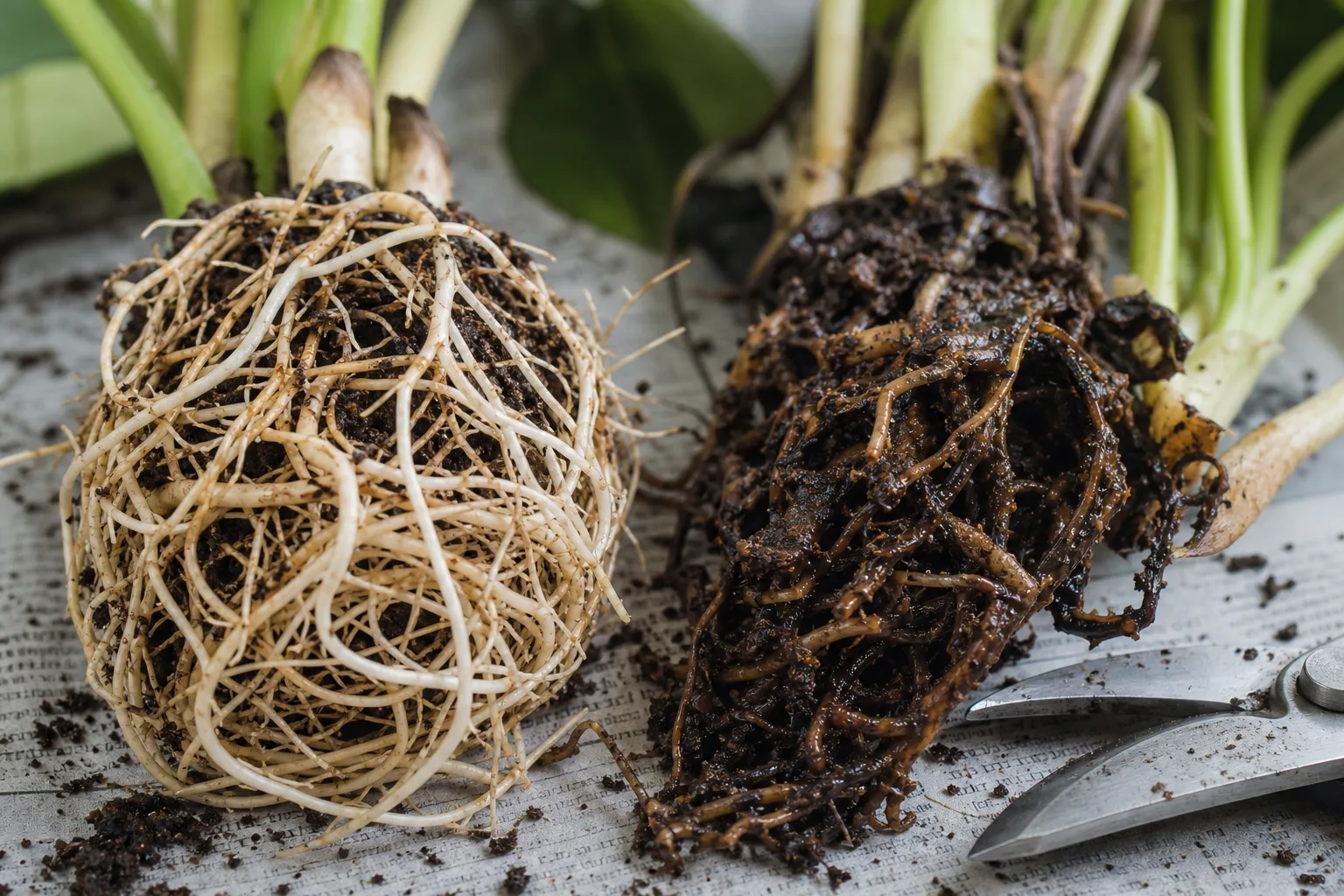
- Inspect the roots. Healthy roots are generally firm and pale or tan for many plants; brown, soft, collapsing roots or a sour smell point to prolonged saturation and possible rot. Remove only damaged tissue with clean tools and keep as much healthy root as possible.
- Set the depth correctly. Keep the crown and stem base at the same level as before. Do not bury the crown to stabilize a loose plant, and do not pile mix against leaves or petioles.
- Fill without packing. Add mix around the root ball and settle it gently. Pressing hard removes the air spaces you added the structural ingredients to create.
- Water through once. Apply water evenly until a little drains from the holes, then empty the saucer or cachepot. The first watering settles the mix; top it up lightly afterward if the level drops below the root ball.
After repotting, return the plant to appropriate light and let the new root zone settle. A freshly watered plant does not need a second watering because the leaves look temporarily tired; give the roots time to re-establish unless the medium is genuinely drying.
Test and troubleshoot before changing everything
Test a new mix in an empty pot before repotting a valuable plant. Fill the pot loosely, water it thoroughly, and observe whether water wets the whole surface or immediately runs down a gap at the edge. A good test mix should accept water without becoming a swamp, drain from the holes, and remain evenly damp rather than forming a hard, shiny crust.
If water beads on the surface or flows straight through while the center stays dry, the mix may be hydrophobic from dried peat, bark, or an unevenly mixed batch. Pre-moisten new mix thoroughly; for an established plant, rehydrate slowly from the top or soak the nursery pot briefly, then allow it to drain fully. If the root ball has pulled away from the pot and repeatedly refuses water, repotting into fresh, pre-moistened mix is more reliable than endlessly pouring water around the gap.
If the mix remains wet and the plant is declining, stop diagnosing by leaf color alone. Check the pot’s drainage, feel moisture below the surface, review light and temperature, then inspect roots if the problem continues. NC State’s houseplant guidance distinguishes a very dry root ball with firm, pale roots from overwatered roots that are brown, soft, and sometimes odorous (NC State Extension).
Surface mold, fungus gnats, and a persistent sour smell are clues that the mix is staying wet or contains too much easily decomposed organic material for the conditions. Let the plant’s safe dry-down interval happen, improve air movement, remove fallen leaves, and correct the watering pattern; do not simply bury the surface under decorative stones. If roots are rotting, changing the top inch will not repair the damaged root zone.
A white crust on the pot rim or mix surface often reflects fertilizer salts or minerals left behind as water evaporates. Flush a well-drained pot with clean water if the plant tolerates it, empty the saucer, and reduce unnecessary fertilizer. If drainage is poor or roots are damaged, a clean pot and fresh medium are safer than repeated flushing of a compacted root ball.
When to refresh or replace old potting mix
Old potting mix is not automatically useless, but it changes over time. Organic matter breaks down, large pores disappear, roots and debris accumulate, and nutrients are used or washed out. NC State Extension notes that container media can be reused when serious soilborne disease was not present, but it should be broken up, cleared of old roots, re-blended, and supplemented because its structure and fertility have changed (NC State Extension).
For indoor plants, reuse is most reasonable when the previous plant was healthy, the mix has no pest history, and the texture is still open. Discard or isolate mix from a plant with root disease, a serious pest infestation, a persistent sour smell, or a wet, collapsed root ball. Do not spread contaminated indoor mix across the collection just to save a few handfuls.
When refreshing, remove old roots and break compacted clumps, then blend the old material with enough fresh indoor mix and structural amendment to restore its texture. Do not assume adding fertilizer replaces lost air space. The new mix should pass the same moisture and drainage test before it reaches another plant.
Conclusion
The best potting mix for houseplants is not the darkest bag, the most expensive brand, or the recipe with the longest ingredient list. It is a container medium that matches the plant’s roots, your pot’s drainage, the light in your home, and the way you water: airy enough for oxygen, structured enough to drain, and moisture-retentive enough to keep the plant from swinging between drought and saturation.
Start with a quality indoor mix, read what is actually inside it, and adjust in small steps. Skip garden soil, skip gravel layers, keep decorative pots as cachepots unless they drain, pre-moisten before repotting, and inspect roots when symptoms do not match the watering schedule. Those decisions will do more for a houseplant than chasing a “perfect” soil formula.