How to Make Raking Leaves Easier: 7 Tips
Stop fighting heavy leaf piles. Learn when to rake, when to mulch-mow, how to protect your back, and how to move leaves with less lifting.
Raking feels exhausting when you treat every fallen leaf as a leaf that must be lifted, bagged, and carried. A better approach is to reduce the number of leaves you move by hand, choose the right surface strategy, and arrange the work so the rake is always moving leaves toward a useful destination.
The key question is not “How can I rake faster?” It is “Which leaves actually need raking, and what is the least strenuous way to handle the rest?” Use the seven tips below as a system: decide first, work in favorable conditions, sweep with less force, collect efficiently, and keep valuable leaf material on your property when it makes sense.
Start by deciding whether raking is necessary
Before pulling a rake from the shed, look at the surface under the leaves. A thin scatter on a lawn, leaves beneath established shrubs, and leaf litter in a quiet natural corner do not all need the same treatment. Raking everything to bare soil may create more work without improving the yard.
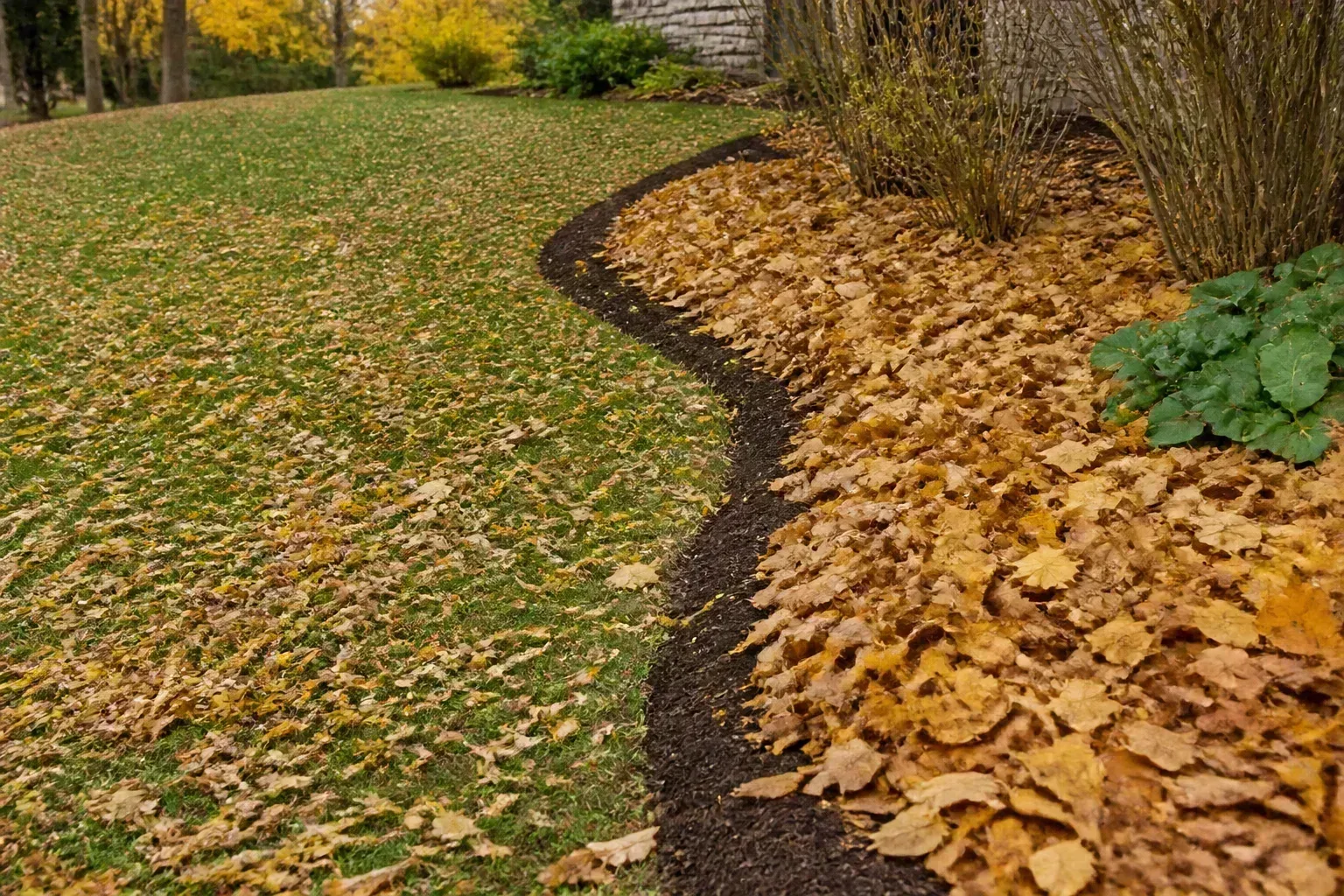
For turf, use grass visibility as your first practical test. Wisconsin Horticulture describes a lawn with roughly 20 percent leaf coverage as a situation where you can often leave the leaves alone, while moderate coverage can be handled by mowing them into smaller pieces; when the grass is barely visible beneath a thick layer, remove a significant portion before dealing with what remains. That is a useful field guide, not a universal percentage for every lawn, because grass type, moisture, disease history, and local conditions change the decision.
Here is the simple version:
- Grass is mostly visible: Mow over the dry leaves and leave the fine pieces in place if they settle between the blades.
- Grass is partly covered: Mow first, then rake or collect only the excess that remains on top.
- Grass is hidden under a thick mat: Remove enough leaves to expose the turf, then mulch-mow the thinner layer left behind.
- Leaves are in beds or under trees: Leave a reasonable layer as mulch unless it is smothering small plants, hiding a problem, or carrying a serious foliar disease.
- Leaves are near a drain, walkway, gutter, or driveway: Move them for safety and drainage even if they could remain in a planting area.
This decision saves energy immediately. If the mower can process a thin lawn layer, you have converted a long series of rake strokes into a planned pass with a machine; if a bed benefits from leaf mulch, you only need to move the leaves to the bed edge rather than export them from the property.
Pick a dry, calm window and set up your tools
Dry leaves are lighter, separate more easily, and slide across grass instead of sticking to one another. Wet leaves compress into dense clumps, clog rake tines and vacuums, and add water weight to every bag, so a short delay until the surface dries can make the same yard feel like a different job. The Colorado State University Extension guidance on mowing and managing leaves also specifically favors dry conditions for chopping leaves into smaller pieces.
Calm weather is ideal, but you do not need a perfectly windless day. A light, steady breeze can help if you work in the same direction it is moving, while gusts that repeatedly scatter your piles are a signal to stop or switch to a small protected zone. Check the next day or two of weather rather than judging only the sky above you; the best window is usually after the leaves have dried and before the next soaking rain.
Dress for friction and dust. Sturdy gloves reduce blisters, long sleeves keep dry leaves from scraping your arms, and shoes with a firm tread help you stay stable on damp grass or sloped ground. If you are sensitive to dust, mold, or pollen, eye protection and a well-fitting mask are reasonable additions, especially when disturbing old, damp piles.
Match the tool to the surface and the leaf load
Use a flexible leaf rake for lawn surfaces, not a stiff garden rake meant for breaking soil or pulling heavy debris. The handle should let you stand close to upright, and the head should be wide enough to cover ground without becoming hard to control. Better Homes & Gardens recommends looking for a no-clog design, while Bob Vila’s raking guide notes that a wide head can cover ground efficiently; a narrower rake may still be easier around shrubs, steps, or tight borders.
For a small amount of dry material, a rake and tarp are often all you need. For a large lawn, a mower with a mulching setting or bagging attachment can eliminate much of the hand work, while a leaf vacuum may help around shrubs and hard-to-reach edges. Do not buy a machine simply because a neighbor has one: a blower can move leaves quickly, but it can also push them into beds, streets, open windows, or someone else’s property if you have not planned a collection zone.
Let the mower do the first pass
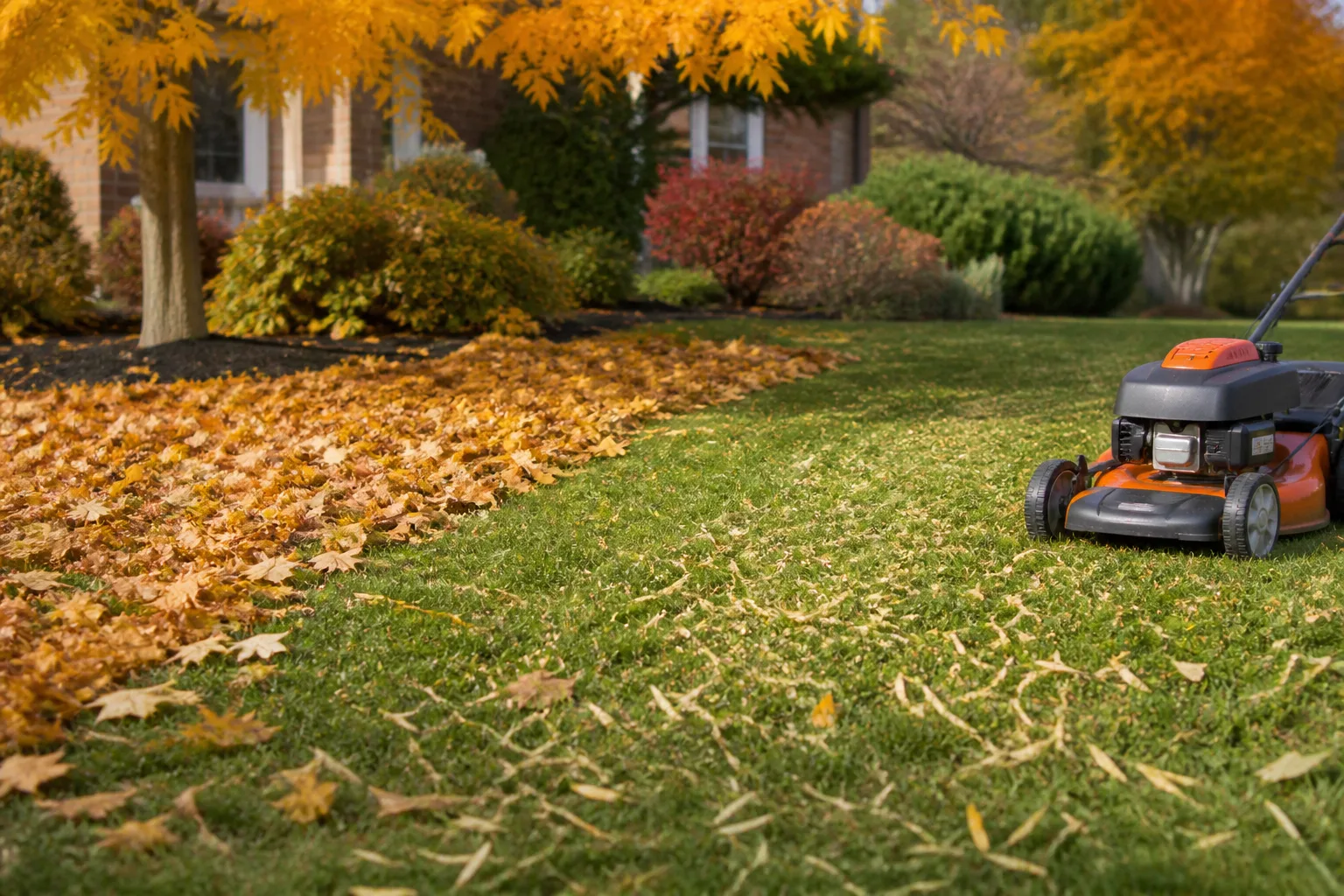
Mulch-mowing is the most important labor-saving option for a lawn with light or moderate leaf coverage. Set the mower high enough for the grass and make passes over dry leaves until the pieces are small enough to fall through the turf instead of forming a visible blanket. Colorado State University Extension advises making a couple of passes and using grass visibility as the check: if you can still see the grass after mowing, the chopped layer is not too thick for that basic approach.
Kansas State University Extension offers a related timing rule: mow according to how quickly leaves accumulate, not only according to the grass-growth calendar. A thin layer processed regularly is much easier than waiting for a deep pile and asking one pass to solve the whole problem. If the mower leaves a heavy surface of fragments, make another pass, collect the excess, or stop and change methods rather than grinding forward.
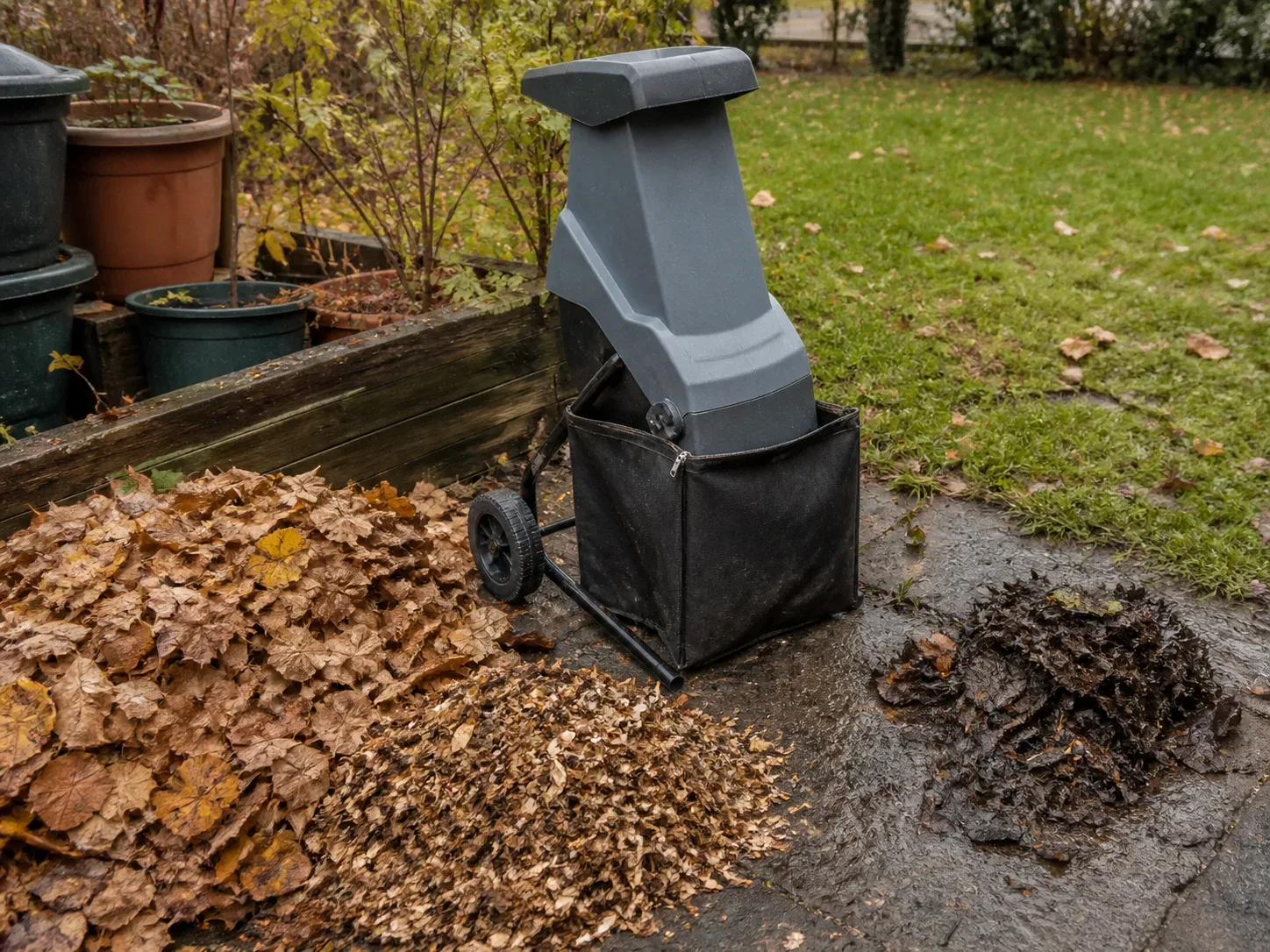
For heavy fall, use a two-pass strategy instead of asking the bagger to swallow whole leaves. First mow over the leaves without the bagging attachment so the blades chop them; then attach the bagger and make a second pass to collect the smaller pieces. Kansas State notes that this can reduce the volume you physically handle by roughly two- to four-fold, depending on the material and equipment.
Work safely around the mower. Clear branches, stones, toys, and wire before mowing, keep people and pets away from the discharge path, and never put a hand near the deck to clear a clog while the machine is connected to power or capable of starting. If leaves are wet enough to mat under the deck, stop; repeated clogging is not a challenge to power through, it is evidence that the conditions are wrong for that tool.
Know when to stop mulch-mowing
Mowing leaves in place is not the same as leaving a thick unbroken layer on the lawn. Stop the mower-first approach when grass disappears under the fragments, the surface remains visibly matted, the mower is clogging, or the leaf layer is staying wet for long periods. Those conditions can block light and air at the turf surface and create the kind of damp cover that encourages problems.
If you have a large drop, remove the top layer from the lawn and place it in a bed, compost area, or leaf-holding bin. You do not need to chase every final leaf with a rake; remove enough to restore grass visibility, then let the mower finish the light layer. This is usually the best compromise between a clean-looking lawn and a manageable workload.
Rake with a light surface sweep
A leaf rake works by catching and pulling material across the surface. It does not need to dig into the turf, and pressing the tines down only creates drag, catches grass, and makes your shoulders do work that the flexible tines could have done on their own. Let the rake head rest lightly, pull the leaves toward you, then lift and reset it rather than dragging a loaded rake through a long distance.
Use short, smooth strokes that end before the rake becomes overloaded. A small stroke keeps the tines from flexing into a tangled mass, gives you better control around plants, and reduces the twisting that happens when you try to pull a huge windrow in one sweep. When the leaves stop moving easily, release them into a small pile and start a new one rather than adding more force.
Protect your back, hands, and shoulders
Before a long session, warm up with a brisk walk and gentle movements for your shoulders, arms, and legs. The goal is not an elaborate workout; it is to avoid going from a seated position straight into hundreds of repetitive pulls. If you already have a back, shoulder, or joint condition, use shorter work intervals and follow advice from your clinician about strenuous yard work.
Keep your feet moving with the rake instead of reaching and twisting from the waist. Hinge or bend through your knees when you need to change height, keep the handle close enough that your arms are not fully extended, and switch the leading hand and the side of your body every few minutes. A straight back does not mean a rigid back; relaxed shoulders and small steps are more sustainable than locking your posture while wrestling with a pile.
Treat pain as a stop signal, not a technique problem. Put down the rake, drink water, and reassess the load, weather, or tool if you feel sharp pain, numbness, dizziness, or unusual shortness of breath. The easiest leaf cleanup is the one that does not create an injury that makes the rest of the season’s yard work harder.
Work a grid and pull leaves toward a collection point
Do not rake the whole lawn toward its center unless the center is genuinely the best place to collect. That pattern creates long return trips, crosses ground you have already cleared, and makes every pile farther from the tarp, bin, or bed where it belongs. Instead, divide the lawn into strips or quadrants and decide where each section’s leaves will end before you begin.
Start at the far edge of a section and work toward the collection point. On a slope, work downhill when safe; on a calm day, align the rows with the breeze so the air helps move dry leaves instead of undoing your progress. Keep piles small enough to control, especially if you may need to pause, and finish or cover one section before opening another.
This grid approach also makes stopping easier. You can complete one rectangle in 15 or 20 minutes, move its leaves, and decide whether your body and the weather support another section. Seeing a finished patch is more motivating than standing in the middle of a yard that still looks untouched.
Use a tarp as your collection station
A tarp changes the hardest part of leaf cleanup: the final lift. Instead of repeatedly bending to scoop leaves into a bag, spread a lightweight tarp near the section you are working and rake the leaves directly onto it. When the tarp is full enough to move safely, gather or roll its edges and drag the load to the compost bin, garden bed, or yard-waste staging area.
Choose the tarp size for the route, not just the pile. A very large tarp holds more but becomes awkward to drag around corners, while a smaller one may require more trips but stays light enough to control. On grass, drag from the corners or use a rolled edge; over rough ground, lift or fold rather than pulling hard enough to snag the fabric.
Keep the load shallow. A tarp spread with a thin, broad layer is easier to pull than a deep mound, and leaves stay more stable when you fold two opposite corners over the top before moving. If wind is present, weigh the empty corners with smooth objects that will not damage the tarp, then remove them before dragging.
Reduce leaf volume before you bag or haul it
Whole leaves contain a surprising amount of air, which is why a lawn can become a row of bags so quickly. Shredding with a mower, leaf vacuum, or dedicated mulcher breaks that structure and allows the material to settle more densely. The benefit is not only fewer bags; it is fewer trips, less lifting, and less space needed in a composting or storage area.
If you are using a mower bagger, the two-pass method is especially useful for dry leaves on turf. If you are working under shrubs or around a bed where a mower cannot go, use a rake to pull leaves onto the tarp, then run a leaf vacuum or mulcher over the pile only if the equipment is designed for the material and the pile is dry enough not to clog.
Do not compact leaves by jumping on a deep pile while hidden branches, stones, or animals may be inside. A shallow pile can be gently pressed with a rake head or foot once you have checked the area, but volume reduction is safer and cleaner when it happens through chopping rather than forceful handling.
Choose the most useful destination for the leaves
The fastest cleanup is not always the one that sends every leaf to the curb. Leaves are a free carbon-rich material that can protect soil, feed a compost pile, or become leaf mold, so decide where they can work before you begin moving them. The destination determines whether you want the leaves whole, shredded, mixed with nitrogen-rich material, or simply left in place.
Use shredded leaves on lawns and beds
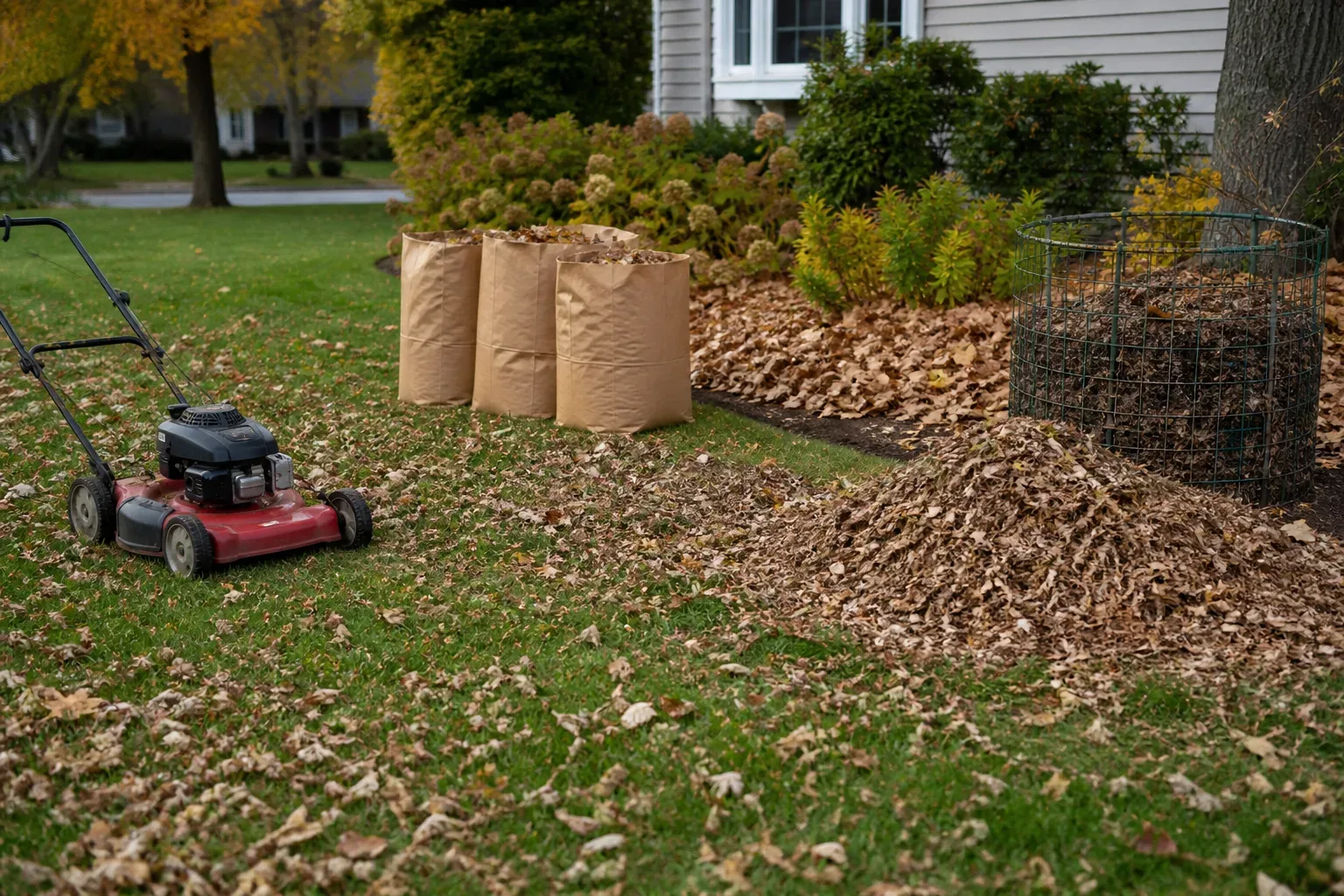
Fine leaf pieces can remain on a lawn when they settle between visible grass blades instead of forming a mat. They break down gradually and return organic matter to the soil, which is why extension guidance often recommends mowing light leaf coverage rather than removing it all. If the lawn looks coated after the final pass, remove the excess; more mulch is not automatically better mulch.
Shredded leaves also work around trees, shrubs, and perennial beds. Spread them as a loose layer that does not touch trunks or bury the crowns of small plants, and keep them out of drainage channels and against building siding. In vegetable beds, a thicker protective layer can be useful over winter, but local climate, spring timing, and the crops you plan to plant should guide how much you apply.
Compost whole leaves or make leaf mold
Whole leaves are useful in a compost system, but they can mat together if added as one dense, dry mass. Mix them with nitrogen-rich materials such as fresh grass clippings or suitable kitchen scraps, add moisture gradually, and keep air moving through the pile. Colorado State University Extension recommends a pile at least about 3 feet in each dimension and describes the target moisture as similar to a damp sponge, not a saturated heap.
Leaf mold is a slower, simpler option made primarily from leaves. Almanac’s garden guidance explains that it is created by fungi over a year or two and becomes a dark, crumbly soil conditioner rather than a hot compost pile. A wire enclosure or ventilated bags keep the leaves from blowing away; dry leaves can be collected and crushed first, then moistened as the pile settles.
Keep the system realistic. If you need finished compost by spring, a balanced compost pile may be more appropriate than leaf mold, which takes patience; if you have a wooded corner and no deadline, a contained leaf pile can turn a hauling problem into a future soil amendment. Never assume a bag labeled biodegradable belongs in your municipal leaf collection stream without checking local instructions.
Keep leaves out of problem areas
Some places need cleanup even when a natural leaf layer would be beneficial elsewhere. Clear storm drains, gutters, steps, paths, and driveway edges so water can move and people can walk safely. Do not rake or blow leaves into the street, where they can clog drains and wash nutrients into ponds and streams; Kansas State Extension’s leaf-disposal guidance identifies that as one of the worst disposal routes for fall leaves.
Be more selective around diseased trees. Many leaf spots are cosmetic, but Wisconsin Horticulture notes that a serious foliar disease can survive in fallen leaves and contribute spores to next year’s infection cycle. If a tree had a confirmed or severe recurring disease, remove the affected leaves according to local extension advice rather than leaving them under the canopy or adding them casually to a cool backyard compost pile.
Natural areas deserve a different standard from turf. Leaving some leaf litter under trees or in an undisturbed corner can provide habitat and insulation for small wildlife, but do not create a damp leaf pile against the foundation, cover young plants that need light, or leave loose piles where children and pets may hide in them without checking for sharp debris and pests first.
Follow a repeatable 20-minute workflow
When the leaves are dry enough to handle, use this sequence for a short, focused session:
- Survey the yard for five minutes. Identify lawns, beds, hard surfaces, drains, diseased foliage, and the place where each load will go.
- Choose the least-labor method. Mow thin lawn coverage, rake only thick mats, and leave appropriate bed litter in place.
- Set the collection point. Lay out the tarp or position the mower bag, cart, compost bin, or yard-waste bags before the first stroke.
- Clear hazards. Pick up branches, toys, stones, cords, and anything that can hide in the leaves or damage equipment.
- Finish one grid section. Use short, light strokes toward the tarp, preferably downhill or with a gentle breeze.
- Move the load before opening another section. Cover or flatten a temporary pile if you need a break.
- Stop at a sensible finish line. If grass is visible, pathways are clear, drains are open, and the remaining leaves have a useful destination, the job is done.
This sequence works because it separates decisions from exertion. You do the thinking while fresh, use equipment where it saves the most hand work, and avoid the common trap of creating a dozen piles that later have to be gathered, lifted, and moved again.
Avoid the mistakes that turn a light job into a hard one
Starting too early is one of the most expensive mistakes in time. If most leaves are still in the trees, a perfect lawn today may be covered again tomorrow; waiting for the main drop, then using smaller maintenance passes afterward, usually creates less total work. The exception is a dangerous accumulation on a walkway, drain, roof edge, or surface where moisture is already causing trouble.
Another mistake is using the rake head like a scraper. Digging into turf, pulling with locked elbows, taking giant sweeps, and twisting to reach the end of a row all increase drag without moving proportionally more leaves. A loaded rake should feel light enough that you can release the leaves frequently; if it feels like a shovel, the stroke or pile is too large.
Do not make wet leaves your default bagging material. Water makes the bags heavier, the tarp harder to pull, and the mower more likely to clog. Do not make a wind blower your default solution either: strong air can scatter leaves into beds, neighboring yards, or public drainage systems faster than you can collect them.
Finally, do not treat every leaf as waste. Removing all leaves from a lawn may be sensible, but exporting clean leaves that could have become mulch or compost adds trips and cost. The efficient goal is a yard with clear, safe surfaces and healthy plantings—not a property stripped of every piece of organic matter.
Change the plan when wind, rain, or freezing arrives
Weather is part of the method, not an inconvenience to ignore. If rain begins, pause the lawn work and let the leaves dry; if the wind rises, switch to a small sheltered section, cover a finished pile, or stop before you undo your progress. Work with a light breeze only when you can keep the piles compact and the route controlled.
Frozen leaves are a separate challenge because they can adhere to grass and become brittle or slippery. Avoid scraping aggressively at frozen turf, and do not risk a fall just to finish a cosmetic cleanup. When conditions improve, remove the thickest layer first and let the mower or rake handle the remainder.
If you are short on time, prioritize in this order: open drains and walkways, remove thick mats from grass, clear leaves from gutters and hard surfaces, then handle cosmetic edges and low-priority beds. That ranking keeps the work useful even when the weather gives you only a small window.
Conclusion
Raking leaves becomes much easier when the rake is the final tool in the plan instead of the first. Leave suitable thin litter where it helps, mulch-mow dry lawn coverage, remove only the excess from thick mats, and use short surface strokes when hand raking is genuinely necessary.
Set up a tarp before the piles grow, reduce volume before bagging, and give the leaves a destination that saves future work—lawn mulch, a garden bed, compost, or a contained leaf-mold pile. Add a grid pattern, a dry-weather window, clear stopping rules, and sensible breaks, and fall cleanup turns from an endless hauling session into a series of manageable decisions.