How to Garden on a Deck: 12 Expert Tips
Map your deck light, choose the right pots, and grow vegetables, herbs, and flowers in small spaces without damaging the deck or drowning neighbors below.
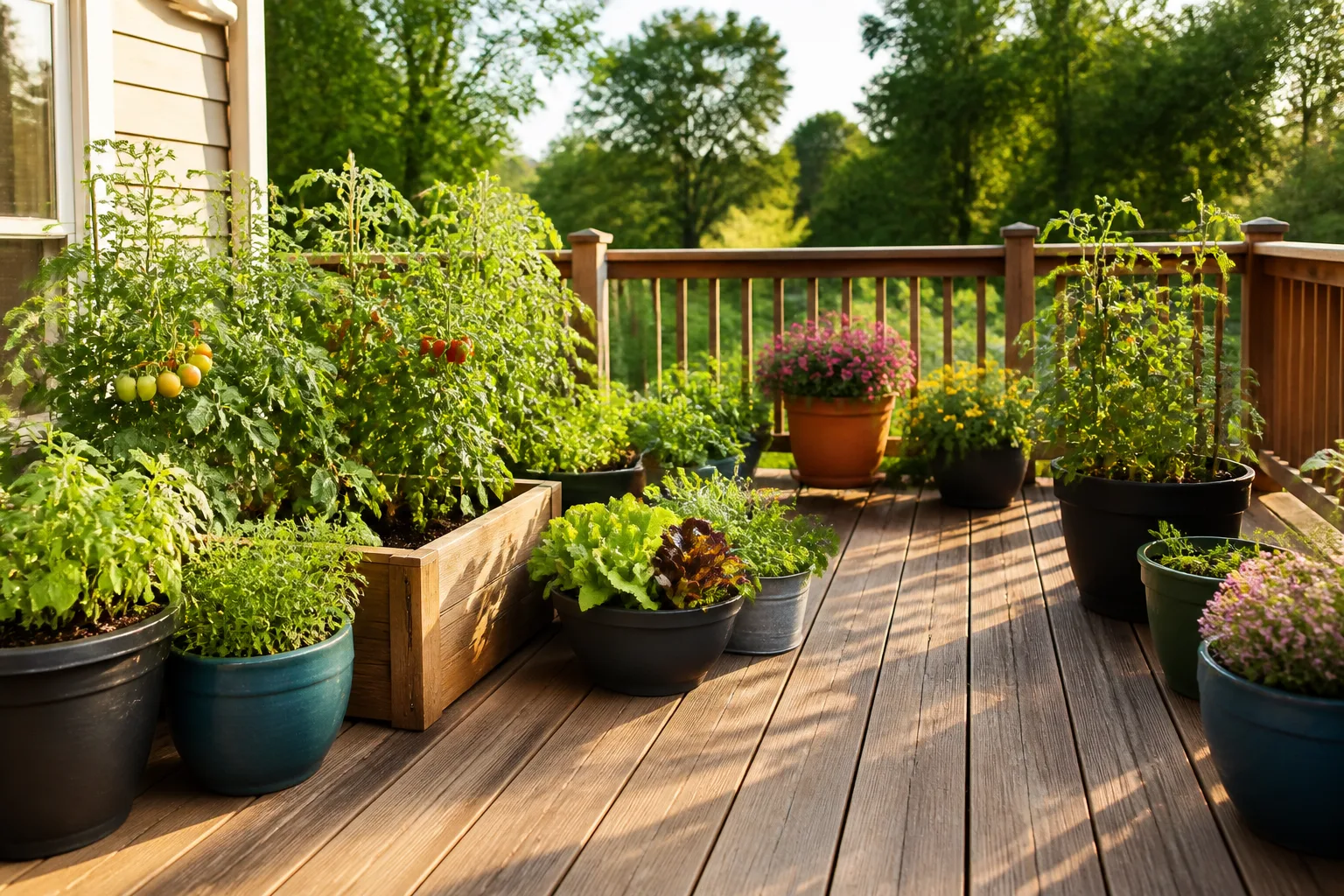
A deck garden puts fresh herbs, salad greens, and summer tomatoes within arm’s reach of the kitchen—but only if you treat the deck as part of the growing system. Sun exposure, reflected heat from boards and railings, pot weight, and where excess water goes all matter as much as which seeds you buy. Get those deck-specific details right and a small outdoor platform can outperform a neglected backyard bed. Skip them and you end up with wilted plants, stained boards, and a neighbor who is tired of your drip line.
The twelve tips below walk through the full setup: assess light and load limits, choose containers and mix, select crops that fit the space, water and feed without damaging wood or roots, and keep the garden productive through the season.
Start With an Honest Site Assessment
Before you buy a single planter, spend one afternoon understanding what your deck actually offers plants. Most deck-garden failures trace back to a mismatch between what the site provides and what the crop needs—not a lack of enthusiasm.
Map Your Deck’s Daily Light Patterns
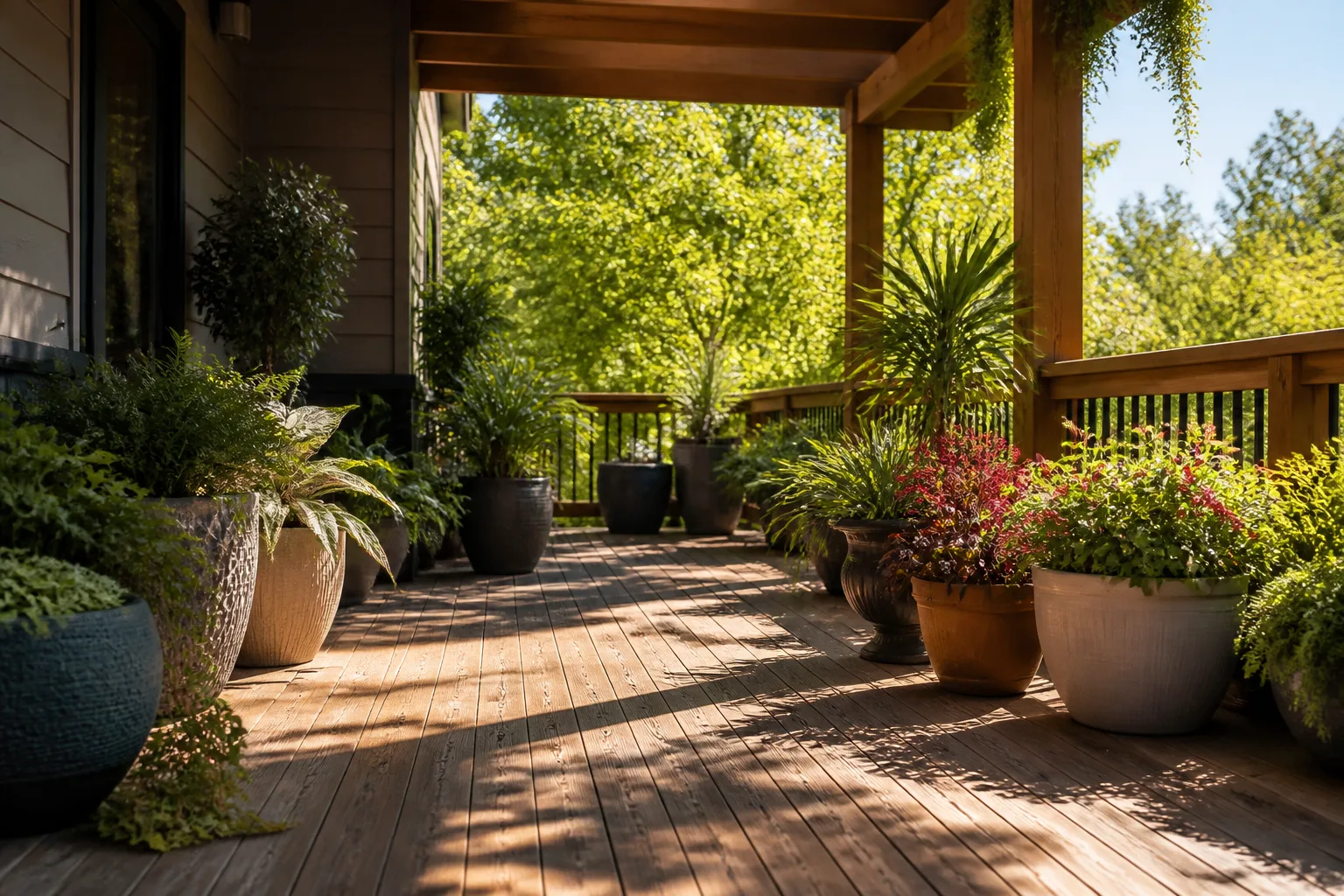
Fruiting vegetables and sun-loving herbs generally need at least five hours of direct sun each day, and they perform better with eight to ten. Leafy greens and root crops tolerate more shade, but even they struggle in deep darkness under a solid roof or north-facing wall. Clemson Cooperative Extension’s container vegetable guidance makes the distinction clear: crops grown for their fruits need full, direct light, while roots and leaves can manage partial shade (Clemson HGIC).
The practical way to map light is simple. On a clear day, note where direct sun hits the deck at mid-morning, noon, and late afternoon. Mark hot zones where tomatoes, peppers, and eggplants can live, and mark cooler or shadier edges for lettuce, spinach, calendula, and basil that might scorch in reflected afternoon heat. Tall railings, pergolas, and neighboring buildings move the line more than you expect.
Reflected light matters on decks in ways it does not in open ground. Pale composite decking, glass balustrades, and light-colored walls can bounce extra heat onto pots sitting near the edge. If leaves look bleached or pots dry out twice a day despite regular watering, move containers slightly inward or add afternoon shade cloth before you blame the plant variety.
Check Weight Limits Before You Load Up Containers
A mature container is heavier than it looks. Wet potting mix, a fully grown tomato, and a ceramic pot can easily exceed 50 to 80 pounds in a single planter—and a deck carries that load on a few joists, not across open soil. Large raised beds filled with saturated mix are the fastest way to overload a balcony or second-story deck.
Spread weight rather than stacking it. Use several medium pots instead of one massive trough unless you know the deck was built for heavy live loads. Place the heaviest containers over posts or beams when you can identify them, not at the outer cantilevered edge. If you are unsure about capacity, a contractor or structural engineer can answer the question in minutes; guessing is not worth the risk.
Moisture is the other structural concern. Standing water against wood promotes rot and staining even when weight is fine. Seal or stain decking on a maintenance schedule, elevate pots slightly on pot feet or a pallet so air circulates underneath, and never let saucers sit full for days. Clemson Extension specifically recommends moving containers off hot concrete and using trays with coarse marble chips on upstairs balconies so drainage does not become a problem for anyone below (Clemson HGIC).
Choose Containers That Protect the Deck and the Plants
Almost any vessel can hold a plant if it drains—but deck gardens need containers that balance root room, stability in wind, and deck protection. Clay breathes well but dries fast; plastic retains moisture but can overheat roots in dark colors; wood looks great but needs rot-resistant species like cedar or redwood if you build your own (Clemson HGIC).
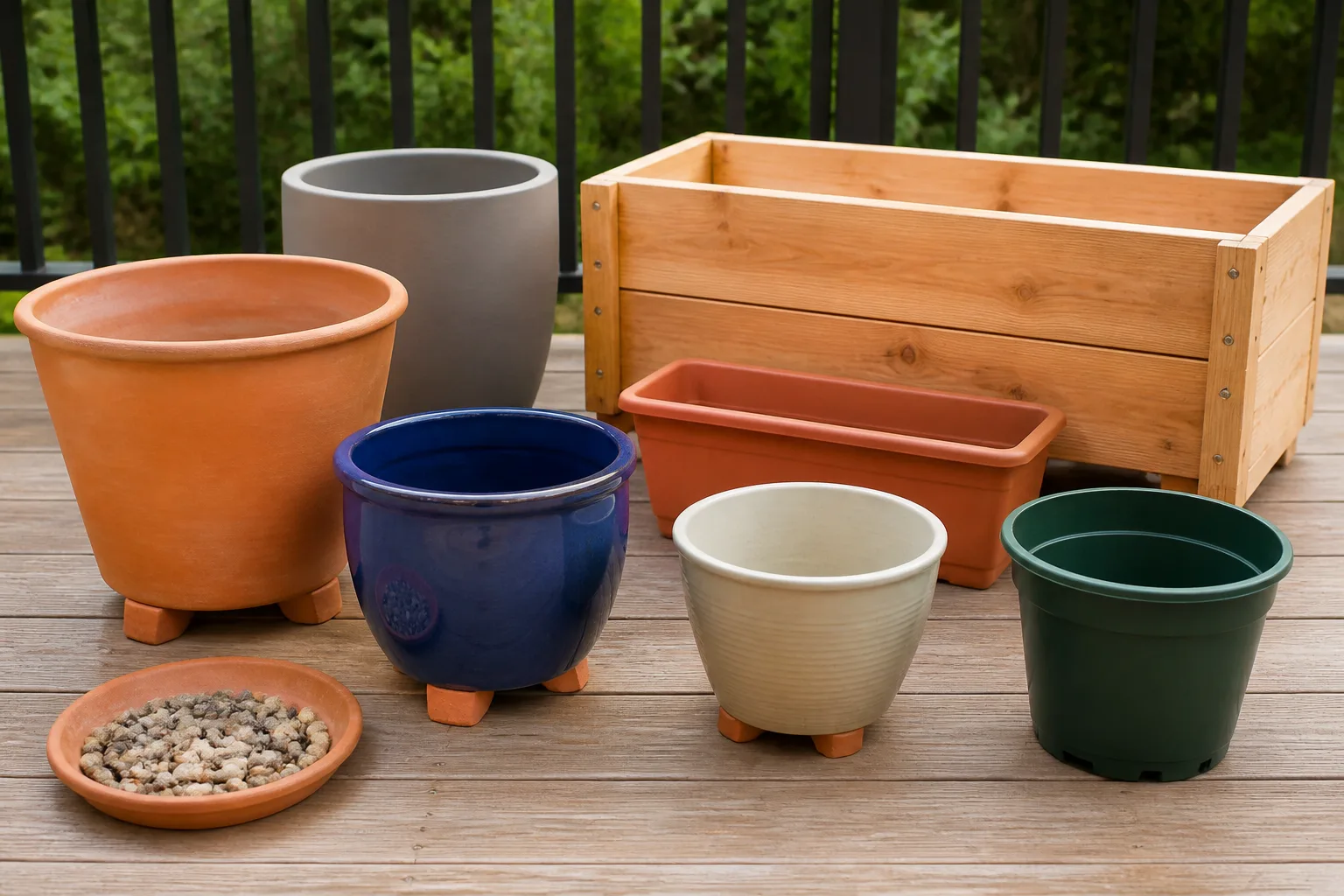
Whatever material you choose, drainage holes in the bottom are non-negotiable. Roots standing in water suffocate quickly in the small soil volume of a pot. If you are repurposing buckets, crates, or wine boxes, drill holes and confirm they are food-safe for edibles—avoid containers that held chemicals or unknown residues.
Match Pot Size to Root Zone and Mature Plant Size
Small pots look tidy on a railing photo, but they dry out in hours and restrict roots that need fuel to flower and fruit. As a starting guide for deck vegetables:
- Lettuce, radishes, and herbs: 6- to 8-inch depth minimum; window boxes and railing planters work.
- Bush beans, peppers, and compact cucumbers: 3- to 5-gallon containers.
- Determinate tomatoes and bush zucchini: 5- to 10-gallon minimum; 10- to 15-gallon is better for a full summer harvest.
- Dwarf fruit trees and large perennials: 15- to 25-gallon eventually, on casters if you need to move them.
Amy Pennington’s container gardening guidance for small spaces echoes what extension services recommend: larger pots give roots room to grow and buy you more forgiveness on watering (Bonnie Plants). If you are choosing between a cute 8-inch pot and a practical 14-inch one for a patio tomato, take the larger pot every time.
For a deeper comparison of container types and when each makes sense, see our guide on planter vs pot.
Why Drainage Trays Matter on Raised Decks and Balconies
Water has to go somewhere. On a ground-level patio, excess drain water is mostly your problem. On an elevated deck, it is also your neighbor’s. Saucers catch drips but should be emptied after watering so roots are not sitting in stagnant water. Elevated trays filled with coarse marble chips or pebbles let water drain through the pot and evaporate without staining boards or raining on the balcony below (Clemson HGIC).
Self-watering containers can reduce daily chores, but they still need occasional flushing so salts do not build up. On windy, exposed decks, group pots so foliage shades the soil surface and slows evaporation—a trick extension guides recommend when containers dry out faster than garden beds.
Use the Right Growing Mix—Not Garden Soil
Garden soil dug from a yard is usually too heavy for containers. Clay particles pack tight in a pot, hold excess water, and leave roots gasping for air. Sandy garden soil drains better but still lacks the structure and aeration a confined root zone needs (Clemson HGIC).
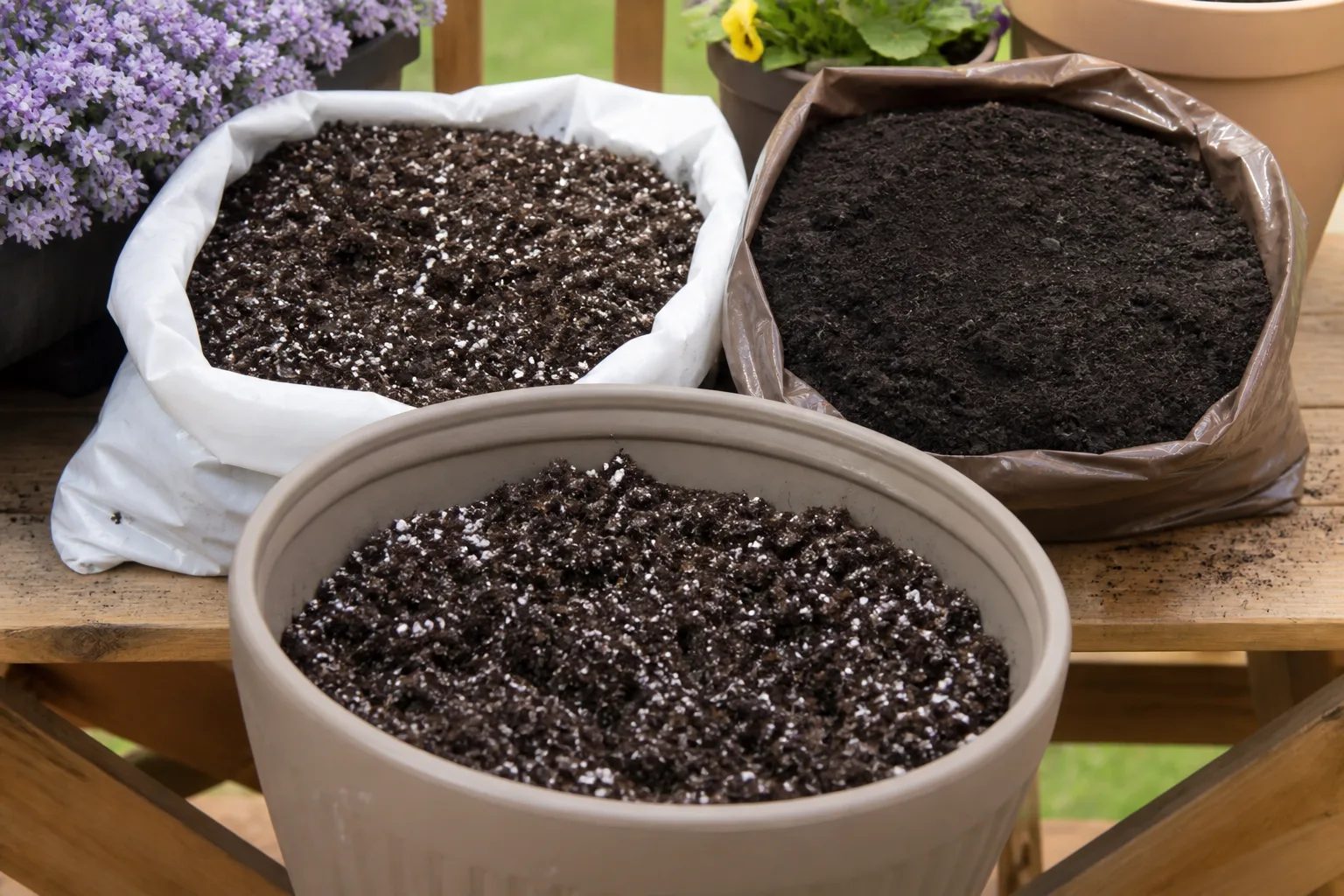
Use a lightweight potting mix labeled for containers. Quality bagged mixes are engineered to balance water retention and drainage. Pure peat-based soilless mixes can be too fluffy for top-heavy deck tomatoes in wind; blending in a portion of potting soil or perlite improves stability. For large container setups, a homemade blend of one part peat moss, one part potting soil, and one part coarse builder’s sand or perlite—with slow-release fertilizer and lime if a soil test calls for it—works well and costs less than filling a raised deck planter entirely with boutique mix.
Never confuse “garden soil” bags with potting mix. Our garden soil vs potting soil guide explains the difference in more detail. Fill containers to within about half an inch of the rim so water does not wash soil over the edge, and pre-moisten peat-heavy mixes before planting so they absorb water evenly instead of repelling the first few irrigations.
Pick Plants Built for Deck Life
The best deck garden plants are productive in a small footprint, tolerate container culture, and match your actual sun hours—not the sun hours you wish you had.
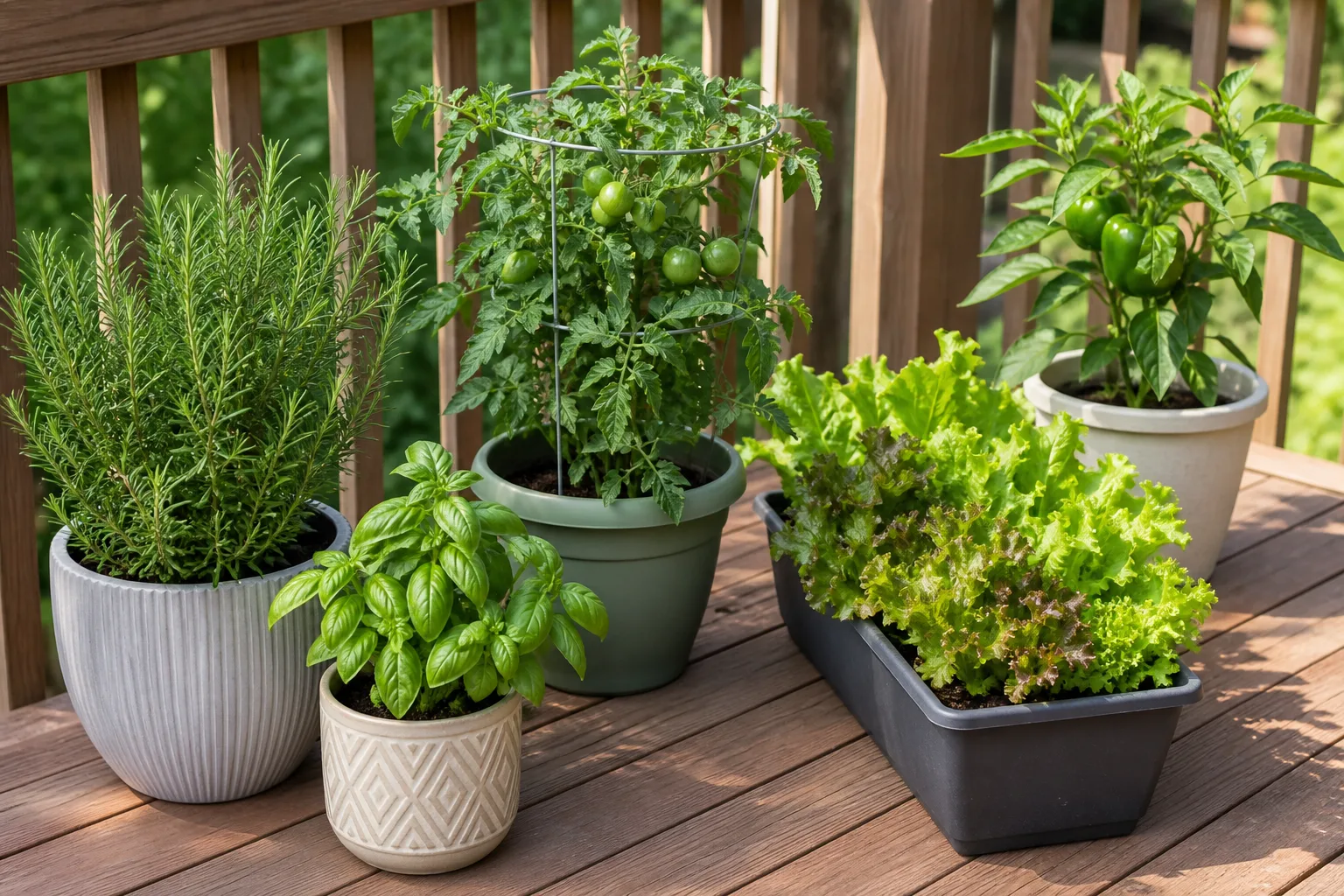
Best Vegetables and Herbs for Deck Gardens
Herbs are the highest-return deck crop for most beginners. Thyme, rosemary, sage, and oregano thrive in sunny pots with sharp drainage. Basil wants heat but burns in reflected scorch zones; give it morning sun and afternoon protection if leaves bleach. Mint is delicious and nearly foolproof in a pot—but only grow it in a container, never in a deck planter that drains into a shared bed, because mint roots escape and take over.
For vegetables, prioritize compact or determinate (bush-type) varieties. Determinate tomatoes, bush beans, bush cucumbers, and patio eggplants stay within the reach of a stake or short cage instead of swallowing a railing. Loose-leaf lettuce, mesclun mixes, radishes, and baby beets fit window boxes and shallow planters; harvest cut-and-come-again greens every week and replant as gaps open.
If you are deciding whether herbs deserve pots or in-ground space elsewhere, our should you grow herbs in pots or in-ground guide walks through the trade-offs. On a deck, pots usually win because they keep aggressive spreaders contained and let you move plants with the sun.
Compact Fruit, Flowers, and Pollinator-Friendly Additions
A deck garden does not have to be all vegetables. Dwarf blueberries, strawberries, and compact citrus can live in large pots on a sunny deck if you accept the watering and winter protection they require. For citrus specifically, choose varieties matched to your winter plan before you buy—our dwarf citrus trees for patio pots guide compares the best options.
Flowers earn their space by feeding pollinators and your eyes. Calendula, borage, chamomile, and nasturtiums fit small pots, tolerate some shade, and draw bees to fruiting crops that need pollination. A few well-placed blooms often increase pepper and cucumber set more than another shot of fertilizer.
Grow Vertically to Multiply Usable Space
Floor space on a deck is finite; vertical space is often underused. Trellises, railing-mounted planters, hanging baskets, and tiered plant stands let you grow vining crops upward instead of outward. Bush cucumbers and small winter squash varieties can climb a sturdy trellis if you tie vines as they grow and support developing fruit with slings made from cloth or netting.
Hanging baskets suit trailing cherry tomatoes, strawberries, and cascading flowers—but they dry out faster than any other container on the deck. Plan to water them first on hot mornings. For vining ornamentals and edible climbers that need heat, see heat-tolerant climbing plants for fences for variety ideas that also work on deck trellises.
Install supports when plants are small. Pushing a stake into a mature root ball mid-season damages roots and stresses the plant. A simple bamboo teepee for pole beans or a flat trellis panel bolted to a railing transforms a 2-square-foot footprint into a productive wall of food.
Design a Deck Garden That Stays Manageable
A deck garden should make your life easier, not turn the outdoor dining area into an obstacle course. Leave paths to seating, the grill, and the door. Cluster pots by water need—thirsty tomatoes together, drought-tolerant herbs on the hot edge—so you are not hauling a watering can to twelve scattered locations.
Color, Texture, and Visual Cohesion in Small Spaces
Small spaces feel chaotic fast. Choose one unifying color for pots or pick a theme—terracotta and olive greens, or matte black with silver foliage—and repeat it so the garden reads as intentional rather than accidental. Mix upright plants (rosemary, salvia, peppers) with spillers (trailing thyme, nasturtium) and fillers (lettuce, parsley) the same way you would in a decorative container.
Vegetables are beautiful when you let them be. Rainbow chard stems, purple basil, and orange calendula give you kitchen utility and deck appeal in the same pot. If you are using large raised planters on a deck, compare setup options in our best raised garden beds guide—but confirm weight and drainage before filling a deep bed on elevated decking.
Water Smarter on Hot, Exposed Decking
Container plants on a deck can need water once or even twice a day in midsummer because the soil volume is small and heat radiates from boards below. Water until it runs out the drainage holes, then stop. Shallow splashes that only wet the surface encourage weak roots and salt buildup in the mix.
Check moisture with your finger or by lifting a smaller pot to feel its weight. Wilting in the afternoon on a 95°F day is not always drought—sometimes it is heat stress that resolves by evening. Wilting in the morning almost always means water now.
Mulch the soil surface with fine bark, straw, or even a layer of compost to slow evaporation. On scorching decks, sliding pots onto pot feet or a pallet reduces direct contact with hot boards. If you travel often, a simple drip system on a timer is more reliable than asking a neighbor to guess your watering schedule. The National Gardening Association’s container maintenance guidance emphasizes that consistent moisture—not occasional floods—keeps container vegetables productive (National Gardening Association).
Feed Container Plants Without Burning Roots
Potting mix with slow-release fertilizer feeds most plants for eight to ten weeks. After that, container vegetables need supplemental feeding because frequent watering leaches nutrients and the small soil volume has little buffer against shortages or excesses (Clemson HGIC).
Use a diluted liquid organic fertilizer or a balanced water-soluble product at the label rate—never stronger. Container roots cannot escape a fertilizer burn the way in-ground plants can. Every two to three weeks during active growth is a typical rhythm for heavy feeders like tomatoes and peppers; light feeders like herbs may need less.
An occasional fish emulsion or compost tea adds trace nutrients and supports soil biology in organic mixes. If leaf tips brown and you have been feeding weekly at full strength, flush the pot with plain water and cut the dose in half before blaming pests.
Plan the Season Ahead of the First Frost
A deck garden can produce from last frost to first frost if you treat containers as a sequence, not a one-time planting. Sow fast crops like radishes and lettuce every two to four weeks through early summer for continuous harvest. Plant a final round of greens in late summer for autumn picking.
Move frost-sensitive pots indoors or against a sheltered wall when nights drop. Even a light cover can extend the season for kale and chard on a deck where cold air drains differently than in an open yard. Harvest tender crops before the first hard freeze; a tomato plant left to collapse on a deck stains boards and invites pests.
In hot climates, flip the calendar: start heat-loving transplants after soil and night temperatures stabilize, and use shade cloth during brutal afternoon stretches so pollen remains viable in tomato and pepper flowers.
Use Companion Planting and Pollinators on a Small Scale
You do not need a full farm layout to benefit from companion planting on a deck. Pairing basil with tomatoes, marigolds with peppers, or borage near squash can confuse pests and support pollinators in a single large planter. The goal is not magic pairings—it is biodiversity in a small footprint so one aphid outbreak does not wipe out your only crop.
Avoid planting one giant monoculture pot if you can help it. Mix flowers with vegetables, and let herbs flower occasionally for beneficial insects. Our companion planting vegetable garden layout guide offers patterns you can shrink to a single deck container.
Prevent and Fix Common Deck Garden Problems
Plants wilt daily despite watering: Roots may be waterlogged from a blocked drain hole or a full saucer. Lift the pot, check holes, and empty standing water. If the mix smells sour, repot with fresh mix and trim rotted roots.
Yellow leaves on tomatoes or peppers: Could be inconsistent watering, nitrogen shortage, or early blight in a crowded canopy. Stabilize moisture first, then feed at half strength. Remove lowest affected leaves and improve airflow.
Pests on a deck garden: Aphids, whiteflies, and caterpillars arrive faster than you expect because containers are isolated from the predator balance of a large garden. Inspect undersides of leaves weekly. Hand-pick caterpillars, blast aphids with water, and use insecticidal soap for persistent soft-bodied pests—always in the evening to avoid leaf burn in sun.
Neighbors complain about water: Add trays with marble chips, water more slowly in passes so mix absorbs instead of flooding through, and never leave hoses running unattended over the railing.
Deck stains or soft spots: Move pots, clean and dry the area, reseal wood if needed, and add permanent pot feet before returning containers. Prevention beats deck replacement.
Conclusion
Deck gardening rewards growers who respect the platform as much as the plants. Map your light, size containers for mature root systems, use real potting mix, and choose compact varieties that fit the sun you actually have. Water with the deck and neighbors in mind, feed lightly but consistently, and treat the season as a series of small plantings rather than a single May weekend project.
Do those things and a modest deck can supply salads, herbs, and summer fruit without the commute to a community plot. Start with one well-placed tomato, a pot of basil, and a window box of lettuce—then expand once you know how your deck behaves in heat, wind, and rain.