How to Keep Spiders Out of Your Basement in Fall
Keep spiders out of your basement this fall with five practical fixes: seal gaps, reduce clutter, solve moisture, move firewood, and vacuum webs.
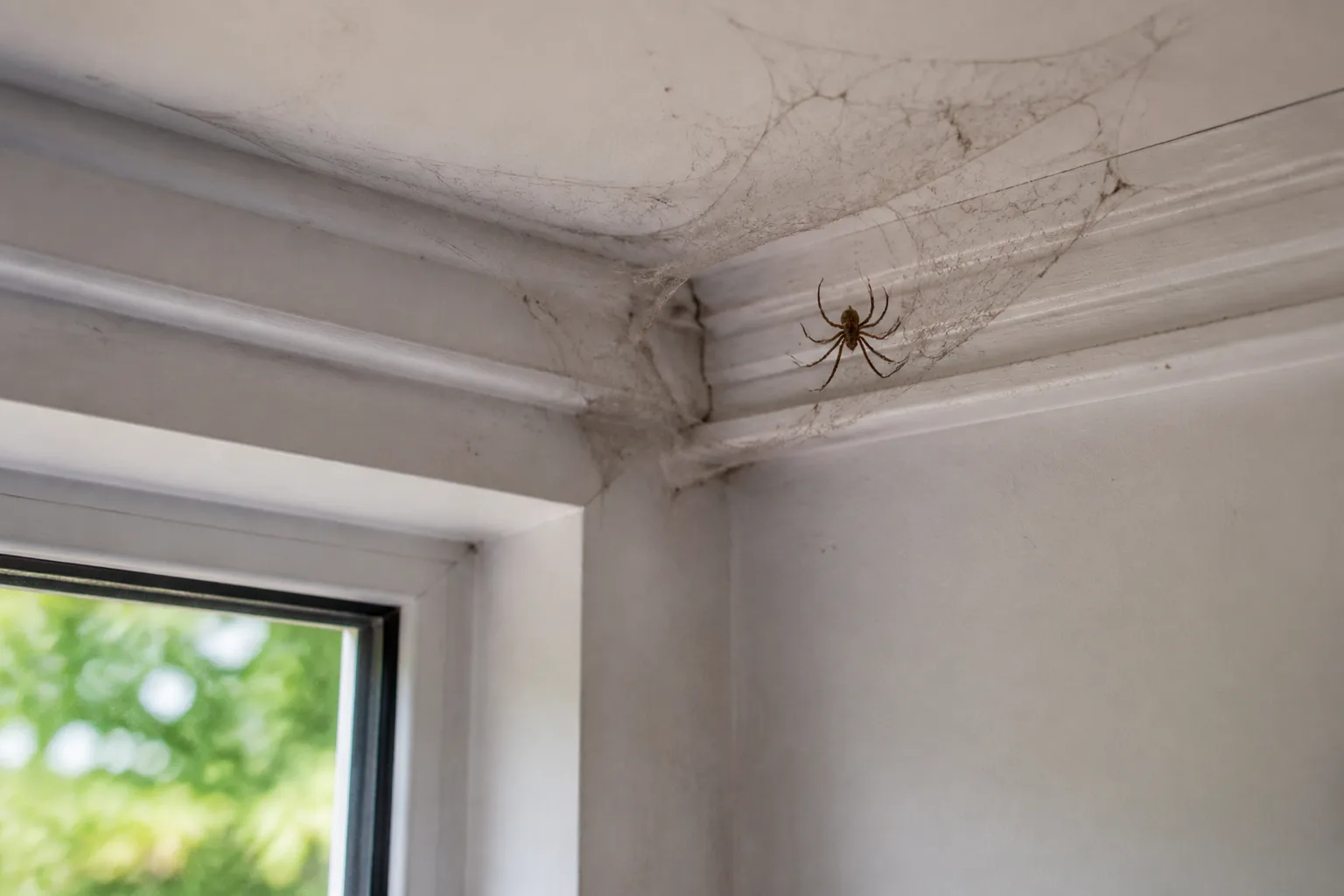
If basement spiders become more noticeable every September, do not start with a fogger or a random perimeter spray. Start by asking how they are getting in, what they are eating, and which quiet places let them stay. That three-part diagnosis tells you which fix will last instead of simply killing the spider you can see.
Most homes will never be completely spider-free, and that is not the goal. Spiders are predators that eat many nuisance insects. The practical goal is to prevent a basement from becoming a reliable combination of entry routes, prey, moisture, and undisturbed storage. The five actions below work best as one sequence, with sealing and moisture correction taking priority over scent-based repellents.
The short answer: make the basement boring to spiders
The most dependable way to keep spiders out of a basement is to close gaps and damaged screens, remove floor-level clutter, correct leaks or condensation, move firewood and debris away from the foundation, and vacuum webs and egg sacs regularly. This targets the conditions that let spiders enter and remain; it does not depend on a smell wearing off or on spraying a spider after it has already found shelter.
Do the work in this order: inspect and seal, clear and reorganize, dry the room, clean the exterior perimeter, then monitor. If you only vacuum, new spiders can use the same gap. If you only caulk, insects may continue supplying food. A combined fix is why this approach is more useful than treating each sighting as a separate emergency.
Why fall brings more basement spider sightings
Fall sightings are real, but “spiders move indoors because they are cold” is too simple to guide a homeowner. Some mature spiders become more visible while searching for mates, some outdoor species wander as weather changes, and people also close windows, sort seasonal storage, and spend more time noticing webs in dark corners. The timing varies by species and region.
The seasonal inspection advice from Target Pest Control’s fall spider guide is useful as a practical clue: repeated webs in corners and small, cottony egg sacs around storage deserve attention before the room is busy with winter belongings. Those signs do not identify a species by themselves, but they tell you where to begin looking for an entry point or an undisturbed harborage.
Spiders follow routes, prey, and shelter
Spiders do not usually enter a basement because they have selected your house as a destination. They arrive through cracks, gaps around doors and windows, vents, utility penetrations, or items carried inside. Once there, they stay where insects pass and where a web or retreat will not be disturbed.
UC Integrated Pest Management guidance makes the central connection clear: more insects inside a building generally means a greater chance of spiders living there. The same source recommends sealing openings, keeping storage off the floor, removing clutter, and vacuuming or sweeping webs in basements and other seldom-used areas. Moisture can add another layer by supporting prey and making some basement habitats more favorable, but a dry basement can still have spiders if it has gaps, boxes, and insects.
Do not confuse every basement spider with a dangerous species. Cellar spiders, common house spiders, wolf spiders, and many other indoor visitors are generally more nuisance than threat. The University of Wisconsin Extension’s overview of common spiders notes that most spiders are harmless to people and recommends tolerance or simple capture and removal when possible. Region matters, and an identification based only on a brown color or a large size is not reliable.
If you want a visual comparison before you decide how cautious to be, use LeafyPixels’ common house spider identification guide to compare web type, body shape, and regional risk. It is better to narrow the possibilities from several clues than to label any brown basement spider a recluse.
1. Seal the routes spiders use to enter
Exclusion is the highest-value fix because it prevents both spiders and the insects they follow from crossing the building envelope. Check the basement from inside and outside: a crack in the foundation, a loose window well cover, or a torn screen may be more important than a dozen webs that are already visible.
Inspect the basement in a repeatable order
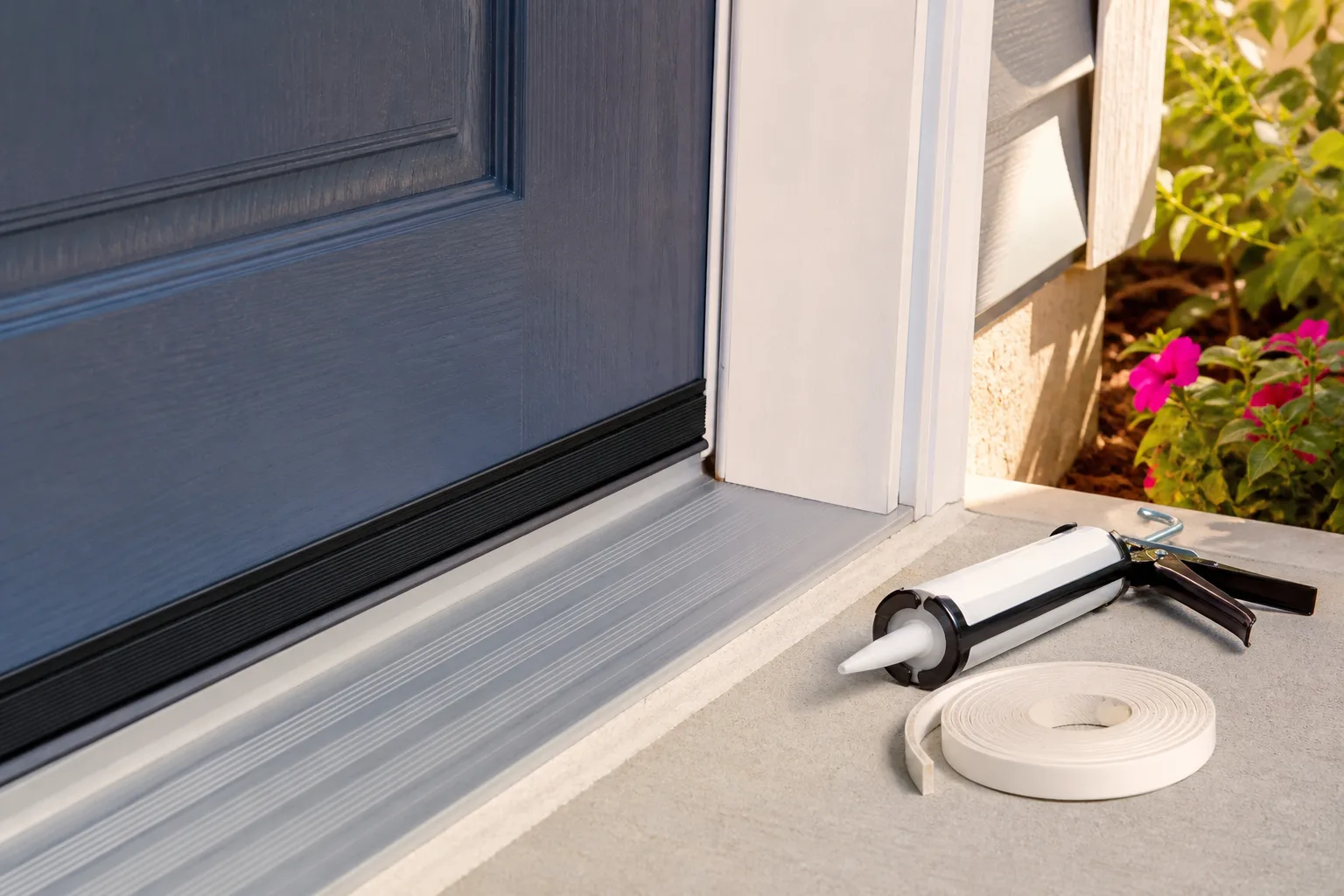
Choose a dry daylight and walk the perimeter with a flashlight. Begin at exterior doors and basement windows, then check window wells, vents, the rim joist or sill area, pipe and cable penetrations, floor drains, and the joint where foundation walls meet the floor. Look for daylight, torn mesh, loose trim, damp dirt trails, or a concentration of webs on one side of the room. Repeated webs near one window are a clue about a route, not proof that the spider is nesting in the ceiling.
Use the repair that fits the opening. Replace or patch torn screens; add door sweeps or weatherstripping where light shows under a door; use an appropriate exterior-rated caulk for small stationary cracks; and use a proper seal or escutcheon around utility openings. Do not fill a required vent, weep path, drain, combustion-air opening, or anything related to a furnace or water heater just to close a gap. If you are unsure whether an opening is intentional, ask a qualified building or HVAC professional before sealing it.
Caulk is not a substitute for fixing a moving foundation crack or active water intrusion. A crack that widens, leaks, or is accompanied by structural movement deserves inspection. The benefit of careful exclusion is larger than spider control: it can also reduce insect entry and drafts, but the work may require a ladder, exterior access, or a repair beyond a weekend project.
2. Remove clutter without creating a new hiding zone
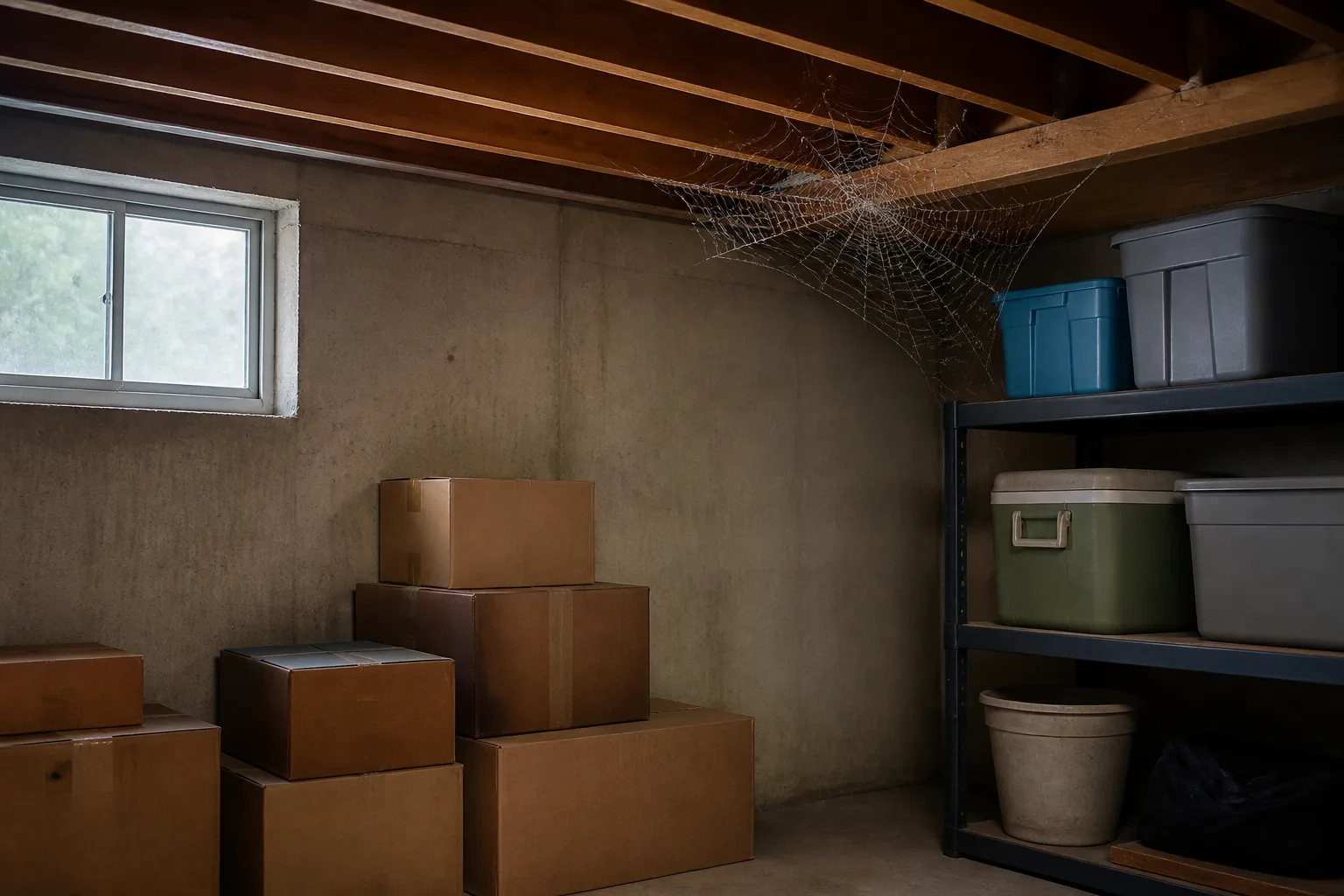
Basement storage becomes spider habitat when it creates dark, motionless layers at floor level. Cardboard boxes, folded fabric, paper bags, unused furniture, and loose lumber offer protected surfaces for spiders and the insects they hunt. A rushed cleanup can make the problem worse if you shuffle every box into a denser pile and leave the old webbed material undisturbed.
Use sealed storage and an air gap
Work in small zones so you can inspect, vacuum, and reorganize rather than simply relocate clutter. Wear gloves, long sleeves, and closed shoes when moving boxes or stored clothing; a hidden spider is more likely to defend itself when it is pressed against skin than when it is left alone in a corner.
Keep seasonal clothing, linens, and paper records in clean containers with tight-fitting lids. Place containers on sturdy shelving instead of directly on the floor, and leave enough space to see behind and below them. The Iowa State University Extension identification publication is useful when you need photographs and regional context before deciding whether a spider is simply a cellar spider or something that warrants extra caution.
Prioritize the items that arrive from outdoors. Shake out empty pots, inspect cardboard, and do not bring firewood, leaf-filled bags, or outdoor cushions straight into a basement. If an object is damp, musty, or already webbed, deal with its moisture or discard it according to the material before putting it into clean storage. Otherwise, the basement becomes a staging area that keeps reintroducing insects and spiders after you clean.
3. Dry the basement and solve the moisture source
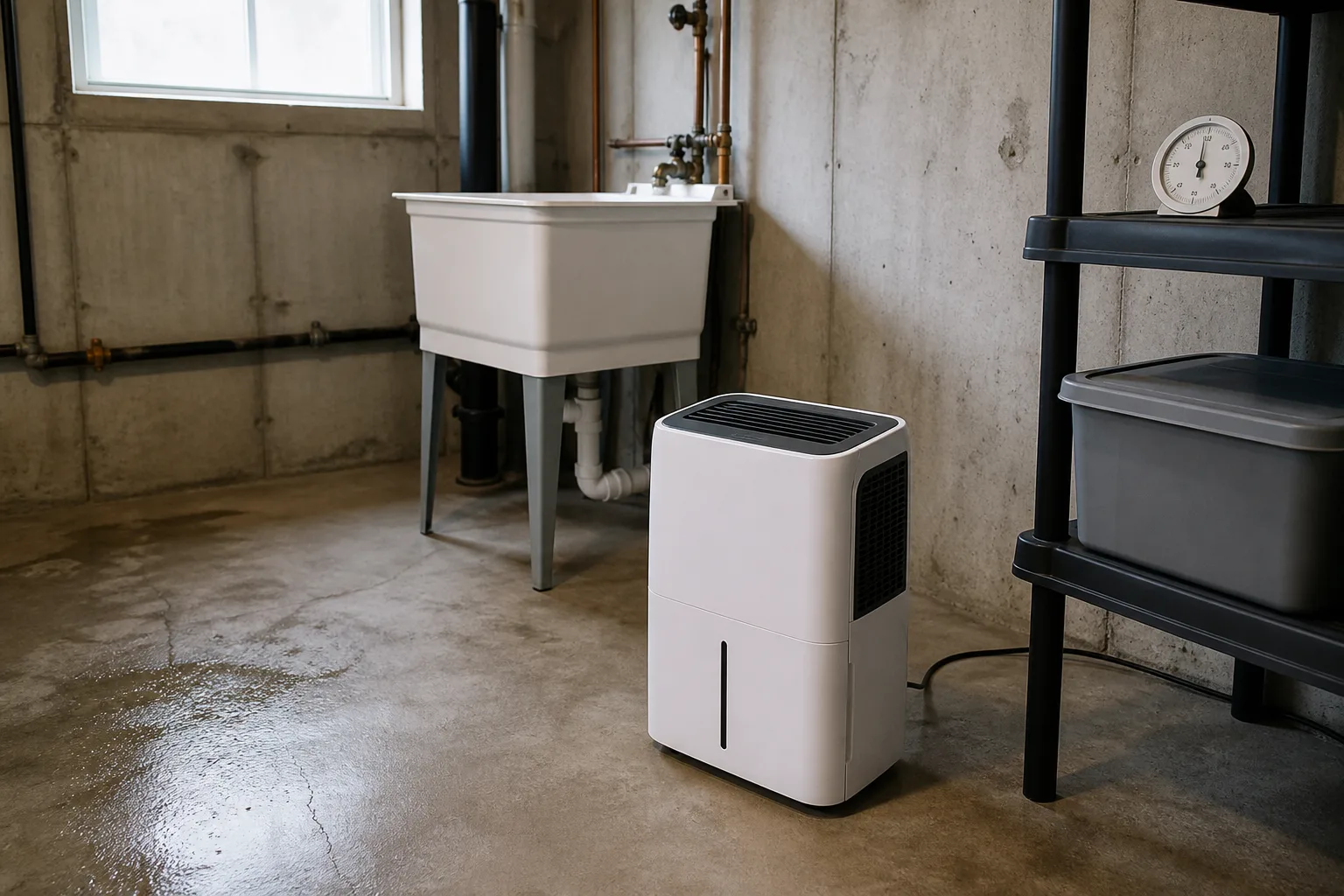
A dehumidifier can help, but it is not a spider repellent. Its value is indirect: a less damp room is less favorable to moisture-associated pests and may support fewer insects, while better ventilation and fewer condensation events reduce the number of attractive microhabitats. Some spiders can live in dry rooms, so drying the basement will not solve an unsealed window or a pile of insect-filled boxes by itself.
Measure first, then fix the cause
Place a small hygrometer in the area where webs or musty odors recur, not directly in the airflow from the dehumidifier. Record the reading at different times for several days and look for condensation on pipes, damp foundation patches, wet window wells, plumbing drips, or water collecting after rain. The number is useful, but the pattern is more useful: a basement that briefly dries during the day and becomes wet after storms needs a water-management repair, not just a larger appliance.
Fix the source in proportion to the problem. Repair plumbing leaks, improve drainage outside, keep gutters and downspouts directing water away from the foundation, and address condensation on cold pipes with suitable insulation. Run a dehumidifier according to its instructions, clean its filter, empty or drain it safely, and keep air moving around stored items. Do not block a furnace, water heater, electrical panel, or required service clearance while trying to create space for the appliance.
If there is persistent seepage, mold growth, a wet electrical area, or a flooded basement, address that hazard before pest cleanup. A dehumidifier can manage room air; it cannot repair a foundation, stop a pipe leak, or make contaminated materials safe. When moisture persists, the right fix may involve a plumber, waterproofing contractor, or building professional rather than additional pest products.
4. Move firewood and outdoor hiding places away from the house
Firewood is a common way to carry spiders, insects, and egg sacs toward the door. A stack against the foundation also creates shade, shelter, and a direct bridge to a basement window or crack. The same principle applies to piles of leaves, boards, unused pots, dense vegetation, and bags of yard debris pressed against the house.

Make the outside perimeter less welcoming
Store firewood on a rack that keeps it off the soil and as far from the foundation as your property and local fire-safety rules allow. Bring in only the amount you plan to burn soon, and inspect each piece before it crosses the threshold. Avoid carrying a woodpile indoors for convenience; even if the pile looks clean, small crevices can shelter spiders and other arthropods.
Clear leaves and stored materials from around basement windows and vents without covering or obstructing them. Trim plants that touch siding or frame windows, and keep mulch, debris, and dense groundcover from creating a continuous shaded strip against the foundation. You do not need a sterile yard—beneficial spiders and insects belong outdoors—but you do want fewer protected launch points beside the basement.
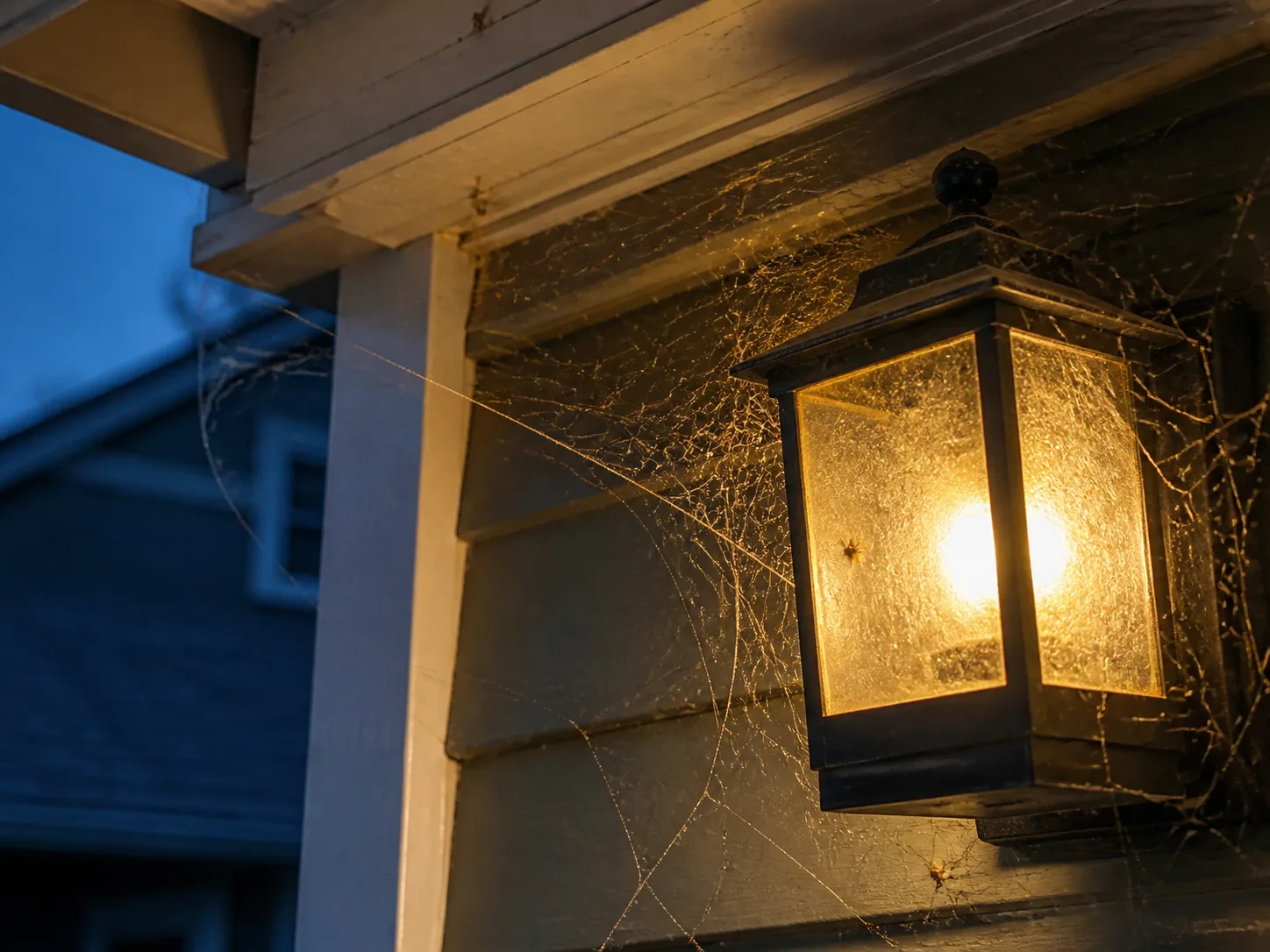
Outdoor lighting can add to the cycle because insects gather around bright fixtures and spiders follow the food. Turn off lights that are not needed, use timers or motion controls where appropriate, and keep fixtures from shining directly on doors and basement windows when you can. The goal is to reduce the insect traffic at the entry, not to leave a walkway unsafe or eliminate every outdoor light.
5. Vacuum webs, egg sacs, and insects on a schedule
Vacuuming is both a cleanup method and a monitoring tool. It removes visible webs, spiders, egg sacs, shed material, and the insects that make a corner productive. UC IPM specifically recommends regular sweeping or vacuuming in storage areas and basements; it also notes that a dusty web is often old, while an occupied web is maintained so it can catch prey.
Use a weekly fall reset
For the busiest part of fall, vacuum once a week along baseboards, ceiling-wall joints, window frames, behind shelving, under stairs, and around utility rooms. Use the crevice tool for cracks and the long attachment for high corners; do not put your hands into a dark box or reach blindly behind machinery. Empty a canister outdoors or seal and dispose of a bag according to the vacuum manufacturer’s instructions.
Make a simple map of the first few cleanups. Mark where webs return, whether they are near a window or light, and whether you see small flies, moths, or other insects nearby. If one corner stays clear after sealing a gap but another returns after every cleaning, you have useful evidence that the second location has a different entry point, moisture source, or prey supply.
When practical, relocate a single harmless spider with a cup and stiff card rather than crushing it. For a spider you cannot identify, a clear photograph from a safe distance is more useful than handling it. Sticky traps can monitor crawling activity in inaccessible areas, but place them where children and pets cannot reach them and treat them as a diagnostic aid, not a replacement for exclusion.
What to do when a spider is already inside
First, give yourself room and light. A spider on an open floor is usually easier to remove than one hidden in a box, so do not chase it into stored clothing or put your fingers behind furniture. If the spider is not in a high-traffic area and you cannot identify it, closing the room and arranging a safe removal is reasonable.
For a clearly harmless-looking individual, use the cup-and-card method: place a rigid cup or jar over it, slide a piece of stiff paper underneath, then carry the covered container outside. Wear gloves while moving nearby storage, and never squeeze a spider against your skin. If you are bitten and develop severe or spreading symptoms, contact a healthcare professional or poison-control service; do not assume every unexplained skin lesion is a spider bite.
Black widows and brown recluses require regional caution, and appearance alone can mislead. A shiny dark spider with a red marking, a uniformly brown spider, or a large fast-moving spider is not enough for a confident diagnosis. If you find a suspected medically significant species in a location where people handle stored items, keep others away, take a photograph only if you can do so safely, and ask a local extension office or licensed professional for identification.
Do sprays, peppermint oil, or diatomaceous earth work?
Scent sprays made with peppermint, citrus, or vinegar may make a freshly treated surface smell unpleasant, but they evaporate, require frequent reapplication, and do not close an entry route. Claims that a single household scent creates a permanent basement barrier are stronger than the evidence supports. If you use any cleaner or essential oil, test it on an inconspicuous surface, ventilate the room, and keep products away from children, pets, and stored fabrics.
Farmers’ Almanac’s practical prevention overview similarly puts caulking, sealed storage, vacuuming, and clearing firewood ahead of scent remedies. That is the useful distinction: a scent may be an optional short-term comfort measure, while exclusion and housekeeping change the basement itself.
For a closer look at the evidence and limits behind common household scents, see what smells do spiders hate. Treat those ideas as supplemental, not as a reason to postpone sealing and moisture work.
Diatomaceous earth and other dusts are not harmless simply because they are marketed as natural. Fine dust can irritate the lungs, and effectiveness depends on a dry, undisturbed film in a location where people and pets will not contact it. Never use a pool-filter product as a casual indoor treatment, and do not apply any pesticide unless the label allows that site and use. For a typical basement with a few spiders, exclusion, storage changes, moisture correction, and vacuuming are usually the more durable first steps.
Broad indoor spraying can also miss the reason spiders keep returning. UC IPM’s management guidance says insecticides generally do not provide long-term spider control unless they are paired with housekeeping and exclusion. If you decide a product is necessary, follow the current label exactly, protect food and personal items, keep people and pets out for the required time, and do not spray electrical equipment, heating appliances, or unapproved surfaces.
Common mistakes that keep the cycle going
The first mistake is treating a web as the whole problem. Removing silk improves the appearance, but if the same window gap, damp corner, or porch light keeps supplying insects, another spider can occupy the location. Clean the web, then investigate why that location is productive.
The second is sealing the wrong opening. Blocking a drain, combustion-air opening, or ventilation path can create a safety problem. Seal cracks and gaps that are truly unwanted, but have intentional building openings evaluated before you close them.
The third is bringing the outdoors inside during a rushed seasonal cleanup. Firewood, cardboard, potted plants, and leaf-filled containers can carry insects and spiders. Inspect them outside, store them appropriately, and keep incoming objects away from clean shelving until you have checked them.
The fourth is relying on a dehumidifier while ignoring water. If a wall remains wet, a window well fills, or pipes sweat heavily, the moisture source will keep creating conditions for pests and mold regardless of the machine’s setting. Correct the leak or drainage problem, then use the appliance to manage residual humidity.
The fifth is guessing a species from a blurry photo and escalating to a strong pesticide. Most indoor spiders are not medically significant, and misidentification can create unnecessary fear or exposure. When the spider or bite is genuinely concerning, identification and professional advice are safer than an improvised chemical routine.
When to call a pest professional
Call a licensed pest professional when webs and egg sacs continue to return after you have corrected obvious gaps, clutter, moisture, and exterior harborage; when activity is concentrated in inaccessible wall voids or crawl spaces; or when you repeatedly find spiders in areas where people handle clothing, bedding, or stored equipment. A professional can inspect the structure and identify whether the real driver is another insect infestation, water intrusion, or a route you cannot safely reach.
Ask what the inspection found and what nonchemical corrections are expected, not only which product will be applied. A useful plan should identify entry points, food sources, harborage, and monitoring steps. Be especially cautious of a service that promises a permanent spider-free basement without discussing screens, cracks, storage, moisture, and the local species.
That inspection-first mindset is the same principle behind integrated pest management indoors: identify the cause, use the least disruptive effective control, and check whether the result holds. It helps keep a seasonal spider problem from turning into an unnecessary cycle of broad chemical treatments.
If anyone is bitten by a suspected medically significant spider or develops severe pain, muscle cramps, breathing trouble, rapidly increasing swelling, vomiting, or a worsening wound, seek prompt medical advice. The spider’s location and behavior can help with identification, but never risk a second bite trying to capture it.
Conclusion
The best way to keep spiders out of a basement before fall activity peaks is to make the room unprofitable: close the routes in, remove the hiding places, dry the conditions that support prey, move outdoor materials away from the foundation, and vacuum on a schedule that reveals where the problem is repeating. Start with the perimeter inspection and the most obvious entry point, then work through storage and moisture instead of trying five repellents at once.
You may still see an occasional spider after doing this. That does not mean the plan failed; a basement is connected to the outdoors, and some visitors arrive on boxes, firewood, or clothing. What matters is whether sightings decline, webs stop returning in the same locations, and the space becomes easier to inspect and safer to use.