How to Properly Prune a Butterfly Bush
Learn when and how to prune a butterfly bush, including hard pruning, deadheading, old-wood exceptions, live-wood checks, and seed control.
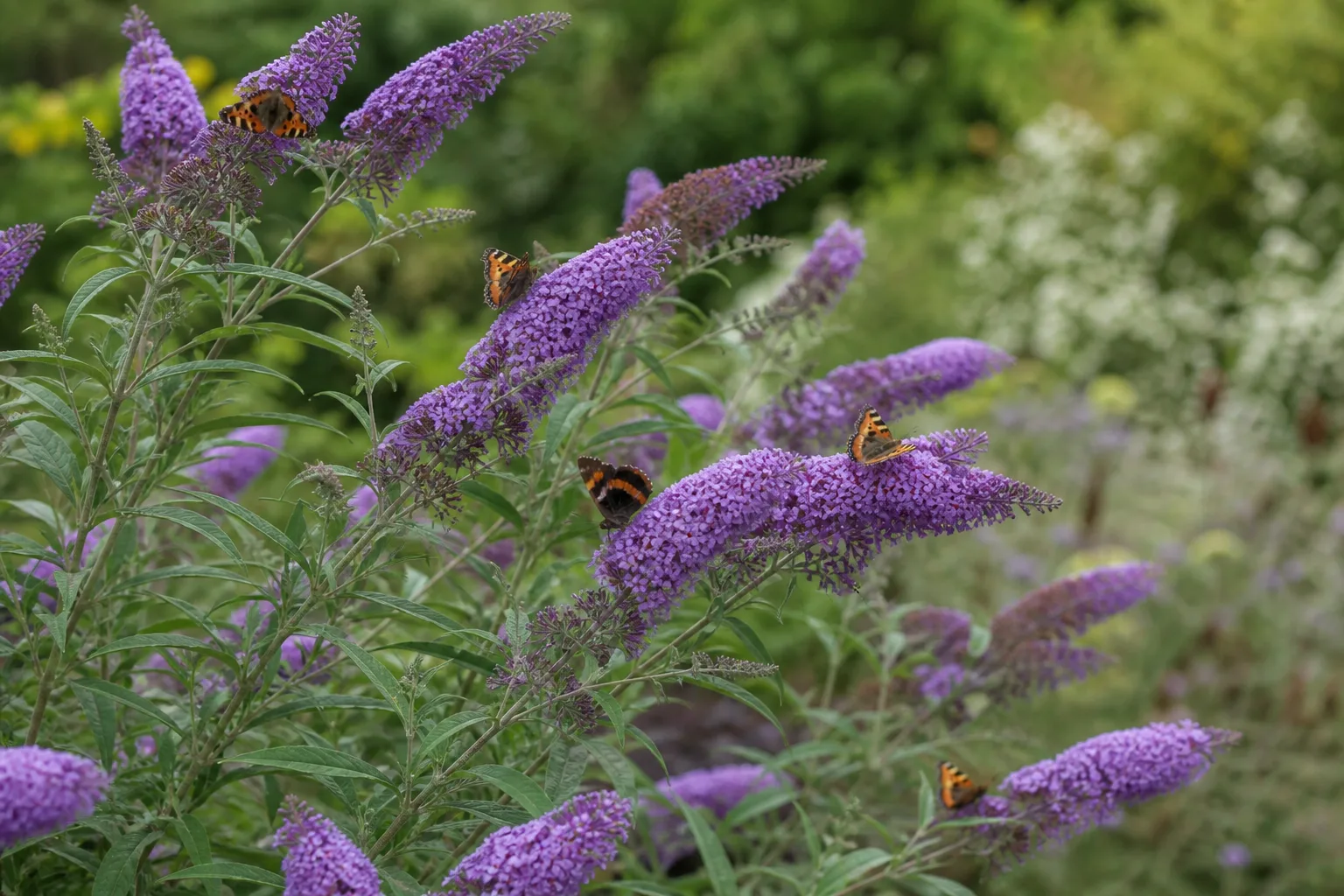
The safest way to prune a butterfly bush is to identify which kind of Buddleja you have, wait for the right growth stage, and then remove wood with a purpose. Most familiar summer-flowering butterfly bushes, especially Buddleja davidii and its hybrids, bloom on new wood and tolerate a hard spring cut. Some related species, including Buddleja alternifolia and Buddleja globosa, bloom mainly on older stems and can lose next season’s flowers if you treat them like a new-wood shrub.
For a typical B. davidii, the main pruning window is late winter to late spring, after the worst frost risk has passed and new buds make live wood visible. Remove dead and damaged stems first, thin crowded growth, then reduce the remaining framework to roughly 12 to 24 inches for a compact shrub—or leave it taller if you need height and the plant is healthy. During summer, deadhead spent flower panicles to encourage another flush and reduce seed production. Avoid a hard fall cut in cold climates, where fresh wounds and hollow stems are more exposed to freeze damage.
The Quick Answer: Prune by Species, Bloom Wood, and Weather
If the plant has long summer flower spikes, opposite gray-green leaves, and dies back heavily in a cold winter, it is likely a new-wood butterfly bush such as B. davidii. Oregon State University describes this type as a fast-growing shrub that should be pruned in early spring because flowers form on the season’s new growth. In colder areas it may die to the ground and still regrow from the roots once temperatures rise. Oregon State University’s plant profile supports that spring timing and notes that removing spent clusters helps sustain flowering.
If your shrub flowers in spring on arching, fountain-like stems, slow down. Alternate-leaf butterfly bush, B. alternifolia, flowers on the previous year’s growth, so prune it after flowering rather than cutting it to a short stump in late winter. A plant label, nursery tag, or photo from bloom time can save a year of lost flowers. When the identity is uncertain, use light cleanup only until you can confirm whether the plant flowers before or after its main pruning.
Identify Which Butterfly Bush You Have Before Cutting
Common B. davidii cultivars usually flower from summer into early fall on long terminal panicles. Their leaves are arranged opposite one another along the stem, and the shrub often sends up vigorous shoots from the base. NC State Extension lists the species as hardy through USDA Zones 5 to 9, with flowers on new growth and a strong tendency to self-seed and naturalize in some regions. Its NC State Plant Toolbox profile is a useful reference when the plant name on your tag is incomplete.
B. alternifolia has a different rhythm: its flowers appear on the previous season’s branches, often in a chain of blooms along arching stems. B. globosa, or orange-ball butterfly bush, is another old-wood bloomer. These plants need selective thinning and post-flowering shaping, not the annual ground-level reset used for many B. davidii cultivars. The RHS describes Buddleja as a group with different growth habits and places B. davidii in a pruning group that is handled after the plant’s seasonal growth cycle; its B. davidii profile also emphasizes sun and well-drained soil.
Names such as Lo & Behold or Miss often indicate compact, near-sterile hybrids, but a marketing name is not a complete pruning instruction. Check the cultivar’s tag for mature size and bloom timing. A two-foot plant that naturally branches from the base needs a light shape-up; forcing it down to one foot can remove useful structure without improving its form.
Choose the Pruning Job You Actually Need
Pruning is not one operation. Dead-wood removal makes the plant safer and cleaner. Thinning takes out a whole stem at its origin to relieve crowding. Heading back shortens a live stem to a bud or lateral branch. Hard renewal pruning reduces the entire new-wood shrub to a low framework so it produces a fresh, balanced canopy. Deadheading removes finished flower clusters during summer and is primarily about rebloom, appearance, and seed control.
Decide which result you want before picking up the pruners. If the bush is the right height but has one broken limb, remove that limb only. If it is sprawling into a path, shorten or thin the offending stems. If a large B. davidii has become a tall, bare-legged fountain with flowers far above eye level, a spring renewal cut is more useful than repeatedly trimming its outer tips. The best cut is the smallest cut that solves the actual problem, except when a vigorous new-wood cultivar genuinely needs a full reset.
Gather the Right Tools and Make Clean Cuts
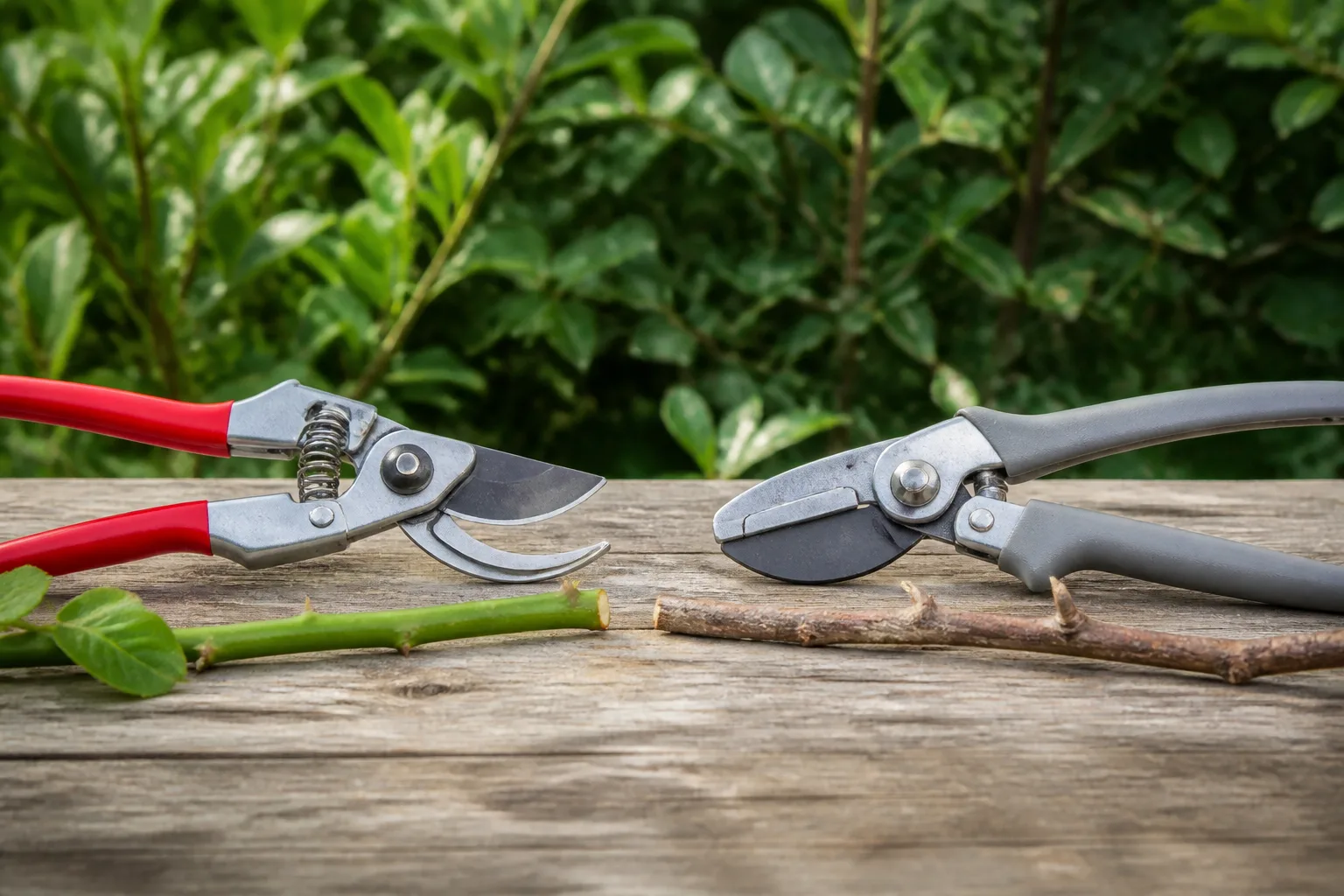
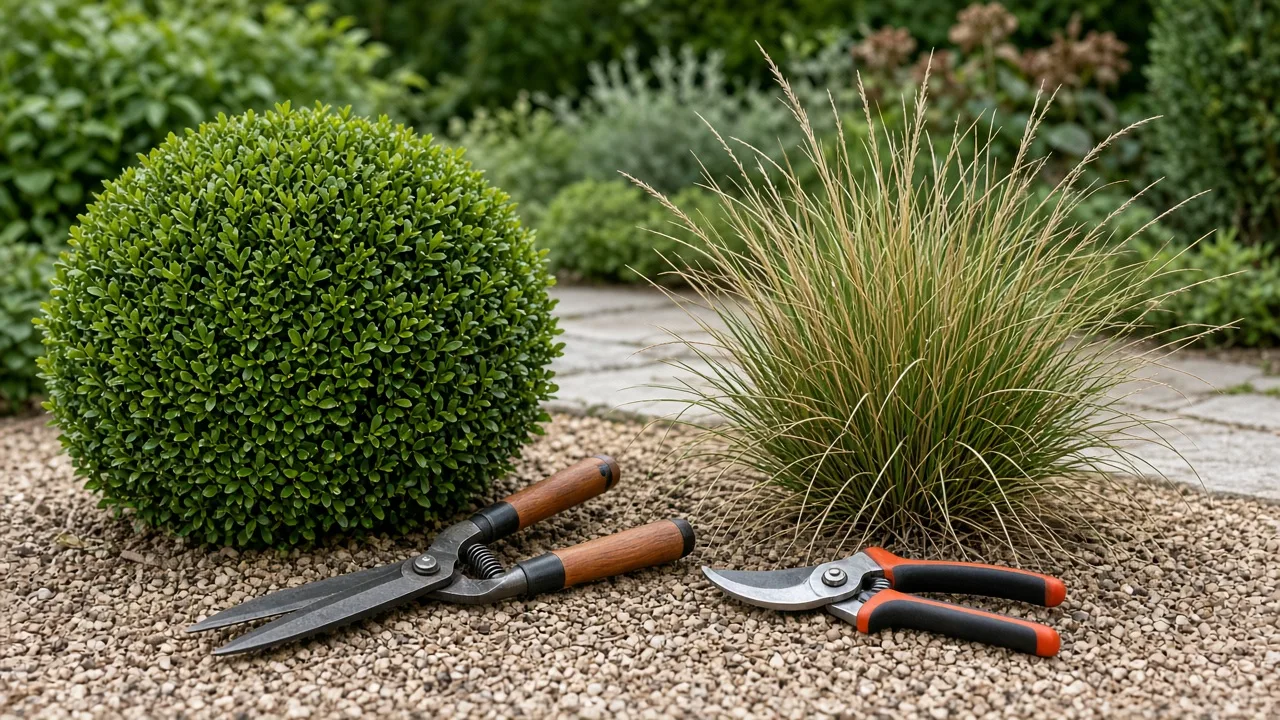
Use sharp, clean bypass pruners for pencil-thin shoots and flower stalks. Their passing blades make a cleaner cut through flexible live wood than anvil-style tools. Use long-handled loppers for thicker branches that do not fit comfortably in hand pruners. A folding pruning saw is safer than forcing loppers through a branch that is too large, because crushing bark creates a larger wound and makes it harder to control the cut.
Before you start, brush soil from the blades and disinfect them if you have been cutting diseased plants. Keep a tarp or bag nearby for removed stems and spent flowers. Do not leave flower heads containing mature seed capsules under the shrub, and do not put diseased material into home compost unless your compost reaches conditions capable of destroying the pathogen.
For a heading cut, place the blade just above a healthy outward-facing bud or lateral branch. A slight angle helps shed water, but the exact angle matters less than avoiding a long stub and avoiding a cut so close that it damages the bud. For a thinning cut, follow the stem to its point of origin and remove it without leaving a snag. Never paint ordinary butterfly bush pruning wounds; clean, properly placed cuts generally close without a sealant.
Inspect Winter Damage Before You Decide How Low to Cut
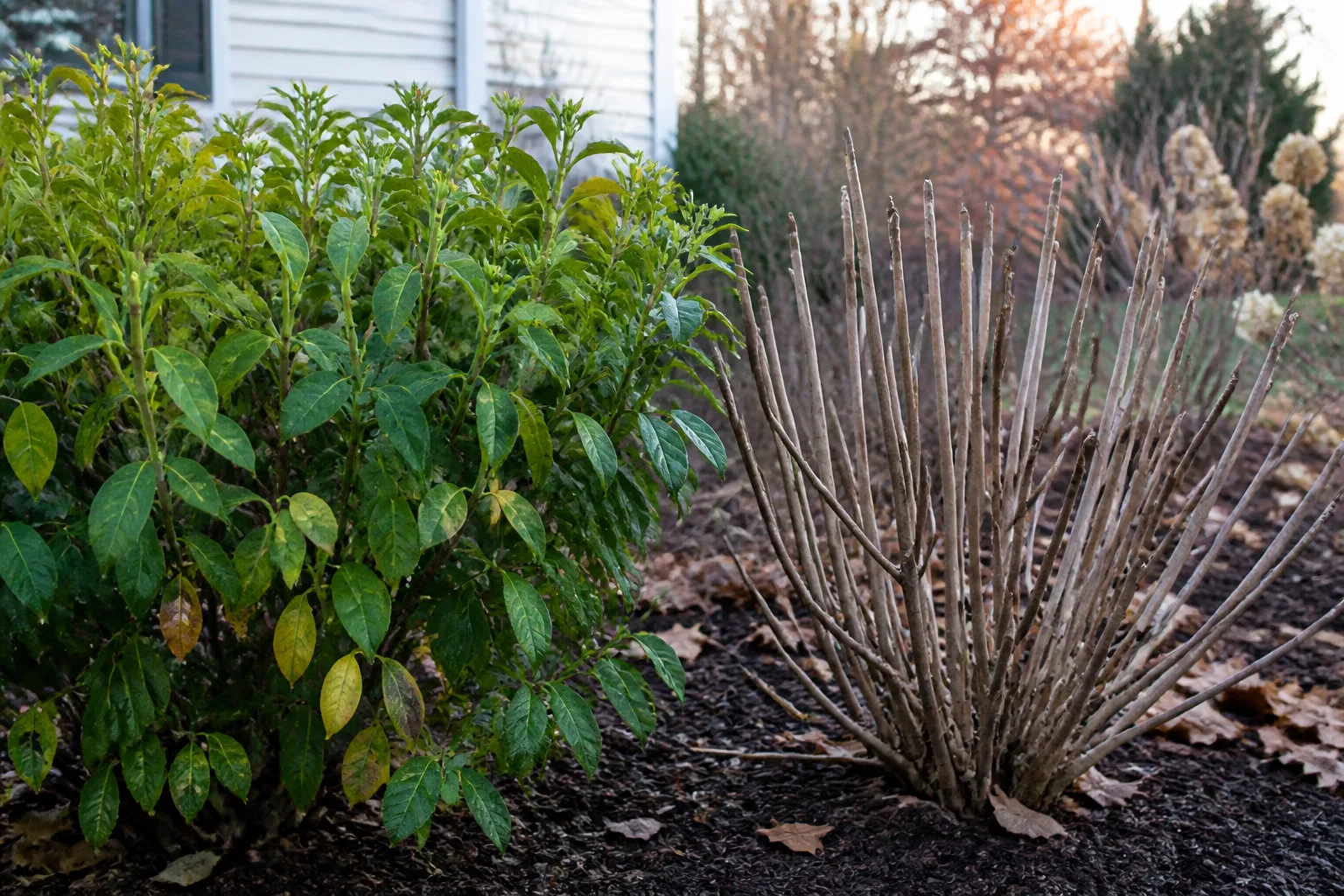
Butterfly bushes are often late to leaf out, especially after a cold winter. Do not assume a brown framework is dead in March simply because nearby shrubs are already green. Wait until the plant shows clear signs of life, then assess stems from the base upward. Better Homes & Gardens notes that some butterfly bushes may not show growth until late spring in cold regions, so patience is part of the pruning process. Its pruning guidance also recommends waiting for buds to swell and leaves to emerge so winter dieback can be identified.
Use three checks together. First, look for swelling buds, leaf emergence, or a green stem near the base. Second, gently scratch a small patch of bark with a clean fingernail; live tissue beneath is green or moist, while dead wood is brown and dry. Third, bend a very thin twig slightly. Live wood usually flexes; dead wood snaps cleanly and feels brittle. A scratch test is not a reason to strip bark all around a stem—make the smallest inspection you need.
Cut dead wood back to a live junction or all the way to the base if the whole stem is dead. If a stem is green below but brown at the tip, remove only the dead portion. This preserves as many active buds as possible and avoids delaying the first flush while you wait for a new branch to replace a healthy one.
Hard-Prune New-Wood Butterfly Bushes in Spring
For a standard B. davidii that blooms in summer, hard pruning is best done after new growth begins and the immediate late-frost threat has eased. The calendar may say February in a mild region and April or May in a colder one. Use the plant—not a fixed date—as your cue. NC State Extension says B. davidii flowers on new growth and is best pruned in early spring to control growth and encourage large flowers. NC State’s profile also explains why cold regions may see the shrub die back naturally and then regrow vigorously.
Start at the base and work outward. Remove dead, broken, diseased, and badly rubbing stems first. Next, take out one or two of the oldest, weakest stems at ground level if the center is congested. Finally, shorten the remaining healthy framework to the height that fits your garden. Many gardeners use about one foot as a compact target, while 18 to 24 inches gives more structure for a large plant, exposed site, or tall backdrop.
Do not blindly cut every stem to the same height if the plant has a useful branching framework. Make cuts just above live buds or strong lateral branches, favoring outward growth. If the shrub is extremely overgrown, a cut to a few inches above the ground can work on a vigorous new-wood type in spring, but it produces a burst of long shoots and leaves no woody structure to moderate the shape. A slightly higher framework often gives a fuller-looking shrub sooner and protects the crown from careless mower or string-trimmer damage.
Shape the Shrub Without Turning It Into a Hedge
Butterfly bush naturally has an open, arching habit. That is part of its character, and trying to shear it into a tight ball creates a dense outer shell with weak, shaded interior growth. Shearing also shortens many stems without choosing strong buds, so the shrub responds with a thicket of shoots at the ends rather than a balanced framework.
Use selective cuts instead. Step back every few minutes and view the shrub from the path, house, and side angle. Remove a branch that crosses through the center, grows into a walkway, or makes one side much heavier than the other. Shorten a long stem to an outward-facing lateral rather than cutting all stems at the same height. Keep enough open space between major stems for light and air to reach the center.
If flowers are appearing only at the top, the problem is usually a combination of excessive height, insufficient light, or years of tip-only trimming. A spring renewal prune can bring the flowering framework lower, but full sun still matters. Oregon State University describes this species as a full-sun shrub; pruning cannot compensate for a site where neighboring trees or a building leave the plant in deep shade.
Deadhead Spent Flowers During the Growing Season
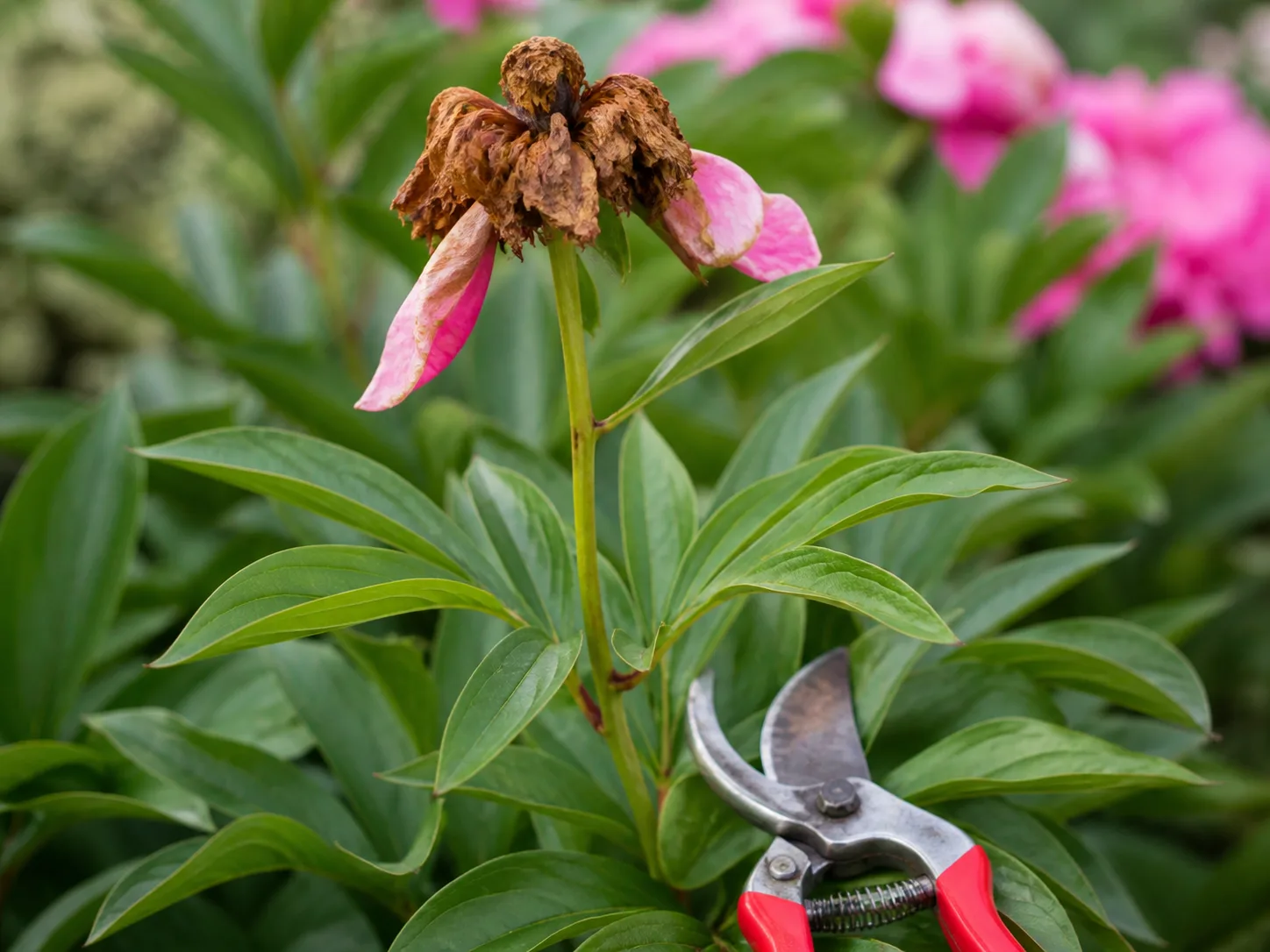
Deadheading is optional for plant survival but useful for a neater shrub, additional flower flushes, and seed management. When a panicle fades, trace its stalk down to the first strong pair of leaves or a side shoot and cut just above that point. The next growth buds below the cut can produce new flowering shoots, provided the plant has enough sun, moisture, and time left in the season.
Inspect the plant every week or two during peak bloom rather than waiting for every flower to finish. Removing a few faded clusters at a time is easier than attacking a tangled mass late in the season. Use bypass pruners for the soft stalks, collect the cut heads, and dispose of them before wind or rain can move seed.
Deadheading does not make a sterile cultivar sterile, and it cannot reverse a plant’s invasive status. It simply reduces the number of flowers that mature into capsules. Oregon State University cites large differences in seed production among cultivars and reports that a single flower cluster of one selection can produce more than 40,000 seeds. Treat that figure as a warning about potential, not a prediction for every plant, and check your state or local invasive-plant guidance before deciding whether to keep a seeding cultivar.
Adjust the Method for Dwarf and Near-Sterile Cultivars
Compact butterfly bushes are bred for smaller mature dimensions and often branch well without a drastic annual cut. Start with a light spring inspection. Remove dead tips, damaged stems, and branches that have escaped the plant’s intended outline. Shorten only the shoots that are too long for the space, cutting to healthy outward-facing buds.
Near-sterile or seedless cultivars reduce the seed-spread concern, but they still need to fit the site. Sterility does not make a plant immune to winter injury, poor light, crowding, or an awkward shape. A compact plant beside a path may need a few heading cuts, while one in a spacious border may need only dead wood removed and old flower heads trimmed.
When the tag recommends a particular pruning height, follow that cultivar-specific instruction over a generic rule. If no information is available, do not assume that a one-foot cut is automatically better. Observe where the plant naturally breaks buds and preserve that structure the first year; you can reduce it more at the next spring pruning if the growth is still too tall.
When Light Fall Pruning Is Reasonable
Fall is a poor time for hard pruning in regions with freezing winters because pruning can stimulate tender growth and expose fresh cuts to repeated freeze and thaw. Hollow stems can also admit water that freezes and splits the wood. The safer default is to leave the main framework until late winter or spring, when winter dieback can be seen and new growth is about to begin.
Light fall cleanup has a narrower use. Remove a broken branch that is a hazard, cut out clearly dead or diseased material, or take off a few spent flower heads before they release seed. If a stem is blocking a walkway, shorten only the offending portion rather than resetting the whole shrub. Make these cuts well before a hard freeze when possible, and do not use fall shaping as an excuse to reduce every branch.
In mild climates where the plant remains actively growing and frost is unlikely, a modest post-flowering shape-up may be reasonable, especially for a large shrub that is leaning into a path. Even there, keep the cut conservative. The next spring’s hard prune remains the better tool for size, structure, and bloom placement on new-wood types.
What to Do If You Missed the Spring Pruning Window
Missing the ideal spring date does not mean the shrub is ruined. If the plant is already leafy and flowering, avoid a hard reset that removes much of the season’s canopy. Remove dead, broken, or diseased stems, shorten dangerous or obstructing shoots, and deadhead faded flowers. Then schedule the full structural prune for the next appropriate spring.
If you prune a little late but before the main summer growth is mature, expect a delayed or uneven bloom flush. Water the plant during dry spells, keep the root zone mulched without piling mulch against stems, and do not compensate with a heavy nitrogen application. Fertilizer pushes soft growth; it does not repair a poorly timed cut.
For an overgrown shrub that is already too large for its space, use a two-stage correction. Thin out a few of the oldest stems now if they are clearly dead or crowding the base, then reduce the remaining height during the next spring window. If the plant repeatedly outgrows the location, moving it is usually less sustainable than choosing a smaller cultivar or a regionally appropriate native shrub.
Avoid the Common Cuts That Reduce Flowers or Cause Damage
The biggest mistake is pruning by the common name alone. A butterfly bush can refer to several species with different bloom wood, so identify the plant before copying a calendar or height. The second mistake is cutting new-wood types too early, before live buds are visible; late freezes can kill the growth you were trying to preserve and make a healthy shrub look dead.
Avoid topping every branch at the same point, which produces weak end growth and a knobby outline. Avoid using dull loppers that crush bark. Do not leave long stubs, cut into a branch collar, or make repeated small cuts that exhaust you and leave a ragged framework. If you are unsure whether a stem is dead, wait for a clearer live bud rather than removing it on a guess.
Do not remove every green leaf from a plant that is still in active growth simply to make it look tidy. Leaves pay for the next round of growth. Save large cleanup jobs for the correct dormant or early-growth window, and let the plant’s bloom season finish when seed control and local regulations do not require earlier removal.
Limit Seed Spread While Supporting Better Pollinator Habitat
Butterfly bush provides nectar that adult butterflies visit, but a nectar source is not the same as a complete habitat. It generally does not supply the native host-plant relationships that support caterpillars and other parts of a pollinator life cycle. That does not change how you make a pruning cut, but it should change how you manage the whole planting.
If your local guidance permits an existing plant, deadhead before seed capsules mature and monitor the area around the shrub for volunteer seedlings. Pull seedlings while they are small, bag mature flower heads, and never move seed-bearing cuttings to a vacant lot, natural area, or compost pile that can spread them. NC State Extension notes that B. davidii can self-seed and naturalize easily and recommends considering less problematic cultivars or native alternatives where appropriate.
The strongest pollinator planting pairs the shrub, if you keep it, with native host and nectar plants suited to your region. Ask a local extension office or native-plant society which species support butterfly larvae as well as adult insects. Pruning can keep one shrub manageable; plant selection determines whether the broader garden supports wildlife responsibly.
Care for the Bush After Pruning
Leave the plant’s roots undisturbed after a structural prune. Water slowly and deeply when the soil is dry, especially during the first warm spell that triggers rapid new shoots. Do not keep the soil saturated; butterfly bush prefers well-drained conditions, and soggy roots can fail even while the top growth looks vigorous.
Keep a two- to three-inch layer of organic mulch over the root zone, pulled a few inches away from the stems. Mulch buffers temperature swings and slows evaporation, but it should not form a wet collar around the crown. Watch new shoots as they emerge and remove only the weakest, badly crossing growth if the plant produces a crowded cluster at one point.
Give the shrub enough light and room to mature. A hard prune can create a dramatic flush of shoots, but it cannot fix a plant placed where it receives little sun or where a downspout keeps the soil wet. If the season’s growth is thin despite correct pruning, investigate light, drainage, drought, and animal damage before cutting harder next year.
Conclusion
Proper butterfly bush pruning starts with a name and ends with a reason for every cut. For the common summer-flowering B. davidii group, wait until late winter or spring growth makes live wood visible, remove winter damage, thin the center, and reduce healthy stems to a practical framework—often about one foot for a compact reset, or higher when the site calls for more structure. Shape selectively rather than shearing, and deadhead during summer when rebloom and seed control matter.
Old-wood species such as B. alternifolia need a different schedule: prune after flowering and preserve the stems that will carry next year’s blooms. Dwarf cultivars usually need even less. Keep cuts clean, protect the shrub from premature frost exposure, and check local guidance about seeding forms. Once you match the method to the plant, pruning becomes a short seasonal routine instead of a yearly gamble.