How to Remove Rust Stains From Clothes, Carpet, and Upholstery
Rust stains need acid, not bleach. Learn safe removal for clothes, carpet, and upholstery — plus what sets the mark permanently.
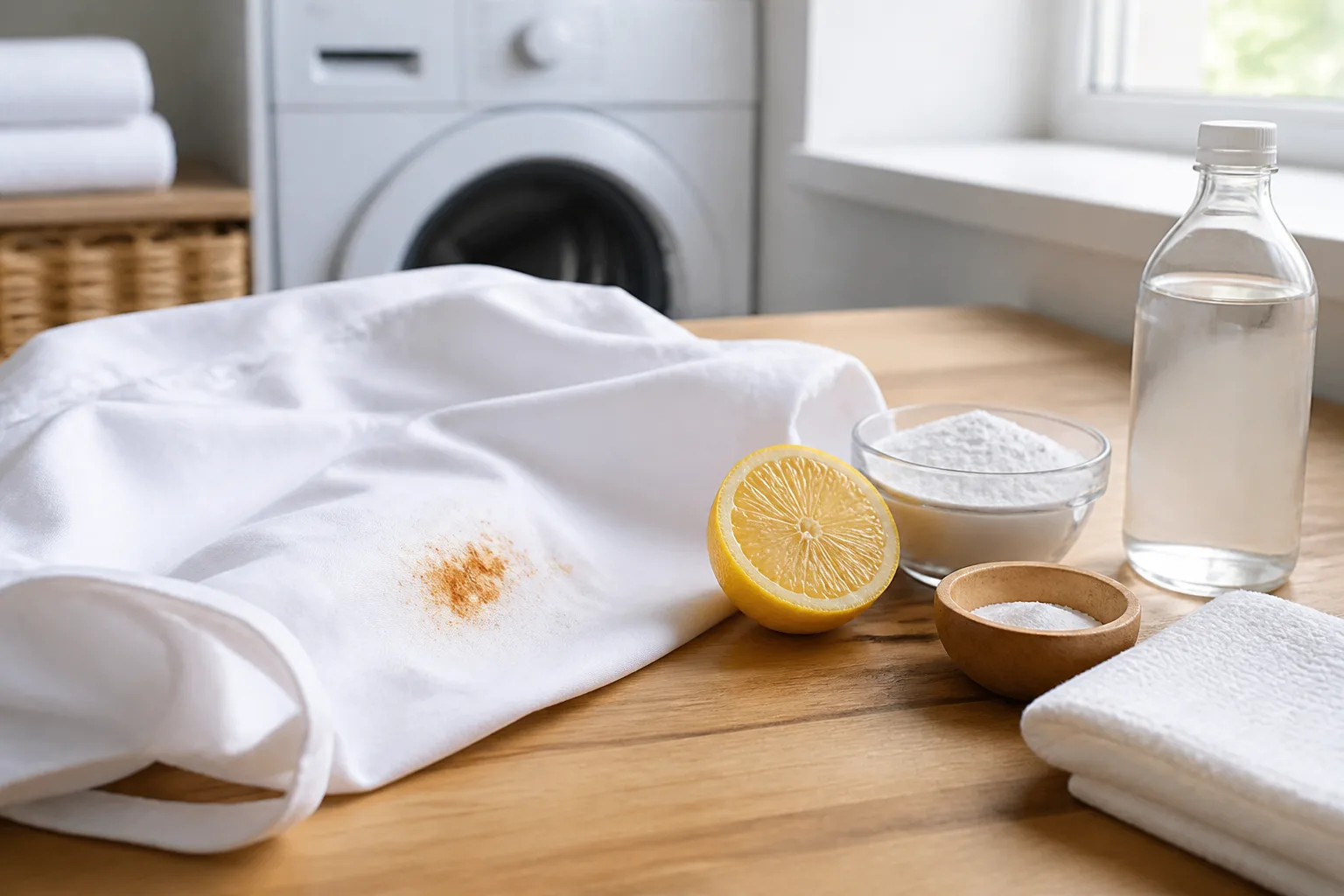
That orange-brown mark on a white shirt, the reddish ring on the carpet under a metal plant stand, and the tan streak on a sofa cushion from a forgotten paper clip all look like ordinary dirt — until detergent does nothing and bleach makes them worse. Rust stains are mineral-based, not protein or oil stains. They come from iron oxide transferred when metal touches fabric while damp. The fix is almost always an acid that dissolves the iron compound, not a heavier wash cycle or chlorine bleach.
This guide walks through safe, tested removal for washable clothes, carpet, and upholstery. You will learn how to confirm the stain is actually rust, why bleach is the wrong first move, which pantry combinations work on colorfast whites, when a commercial oxalic-acid remover earns its place, and how to blot carpet and furniture without pushing rust deeper or soaking padding you cannot dry. If the rust came from garden tools, patio furniture, or corroded bed brackets, fixing the metal source matters as much as treating the fabric — our companion guide on how to remove rust from metal objects and surfaces covers that side of the problem.
Rust Stains Are Not Like Other Laundry Marks
Standard laundry detergent is built to lift oils, proteins, and some dyes. Rust does not respond to surfactants because it is a fine mineral deposit bonded to fibers — more like colored dust trapped in the weave than a grease splash. Enzyme detergents, oxygen bleach, and most “all-purpose” stain sprays simply will not break the iron-oxide bond. You need chemistry that reduces rust to a water-soluble form, which is why acids — lemon juice, vinegar, cream of tartar, oxalic acid — show up in every reliable rust-stain method.
Treat rust as its own stain class from the first minute. Scrape off any loose flaky particles, keep the area cool, and do not machine-dry or iron until every trace of orange is gone. Heat and chlorine bleach are the two fastest ways to turn a removable spot into a permanent shadow.
How to Tell Rust From Hard Water or Dye Transfer
Before you pour acid on a mark, confirm you are fighting rust, not a different mineral or color bleed. Rust usually reads as orange, reddish-brown, tan, or yellow and often traces back to a metal contact point — a rusty nail in a pocket, a corroded furniture leg, sprinkler overspray hitting a fence bracket, or iron bacteria in well water leaving marks on laundry.
Hard water deposits (calcium and magnesium) look white, chalky, or cloudy, not orange. Manganese in water can leave dark brown or black marks. Dye transfer from another garment spreads in soft edges and responds to color-safe oxygen bleach — unlike rust, which stays in sharp mineral outlines. If the “rust” is white and crusty, reach for a limescale cleaner on fixtures or a water-softening fix for laundry, not lemon juice on fabric.
Why Chlorine Bleach Makes Rust Stains Permanent
Never use chlorine bleach on a rust stain. Rust is already iron oxide, and chlorine bleach (sodium hypochlorite) is a strong oxidizer at alkaline pH. Instead of lifting the mark, bleach drives the iron reaction further, darkening and setting the stain into the fibers. Clorox’s own guidance notes that bleach is not a rust remover — it can worsen the discoloration you are trying to erase.
The same rule applies to mixing bleach with acid rust removers or using bleach in a second pass after lemon or vinegar. You are combining incompatible chemistries that either cancel each other out or create hazardous fumes. If someone already bleached a rust spot and it turned darker, switch to an acid method below and accept that complete removal may no longer be possible — but you can often still lighten what remains.
Before You Treat Any Fabric
Every rust method here assumes you have identified the stain, ruled out bleach, and checked whether the material can tolerate mild acid and moisture. Skipping those checks is how good intentions fade silk, delaminate upholstery foam, or spread a dime-sized spot across a whole cushion.
Read the Care Label and Test Colorfastness
On washable clothing, read the care label for fiber content and maximum wash temperature. Lemon juice and sunlight act as a natural bleach — excellent on white cotton and many ecru fabrics, risky on navy, black, and saturated prints. Before treating a colored garment, dab diluted lemon juice or vinegar on an inside seam or hem and wait ten minutes. Blot dry and check for lightening or dye transfer. If the color shifts, use a commercial rust remover labeled safe for colors after a hidden-spot test, or take the item to a professional cleaner.
For carpet and upholstery, find the manufacturer’s cleaning code if possible: W (water-based cleaners OK), S (solvent-based only — no water), WS (either), or X (vacuum only — no liquid cleaners). Water-based rust methods below suit W and WS codes. S-coded fabric needs a solvent cleaner from an upholstery supply shop or a professional — household vinegar can leave water rings on solvent-only fibers. X-coded pieces require professional help for anything beyond gentle vacuuming of loose rust flakes.
What to Do When a Garment Is Dry Clean Only
If the care label says dry clean only, scrape off excess rust with a dull edge but do not rub the stain — friction drives particles deeper. Do not apply water, lemon, or commercial rust remover at home. Point out the stain when you drop the garment off and tell the cleaner it is rust, not food or ink. Professional dry cleaners have controlled acid rust treatments and solvent systems suited to structured jackets, silk linings, and wool suits that home acids would ruin.
How to Remove Rust Stains From Clothes
Washable fabrics give you the most options. Work from the mildest acid on whites and colorfast cottons, escalate to paste treatments for set-in spots, and reserve commercial removers for heavy oxidation or when pantry methods stall after two honest attempts.
Salt, Lemon Juice, and Sunlight Method
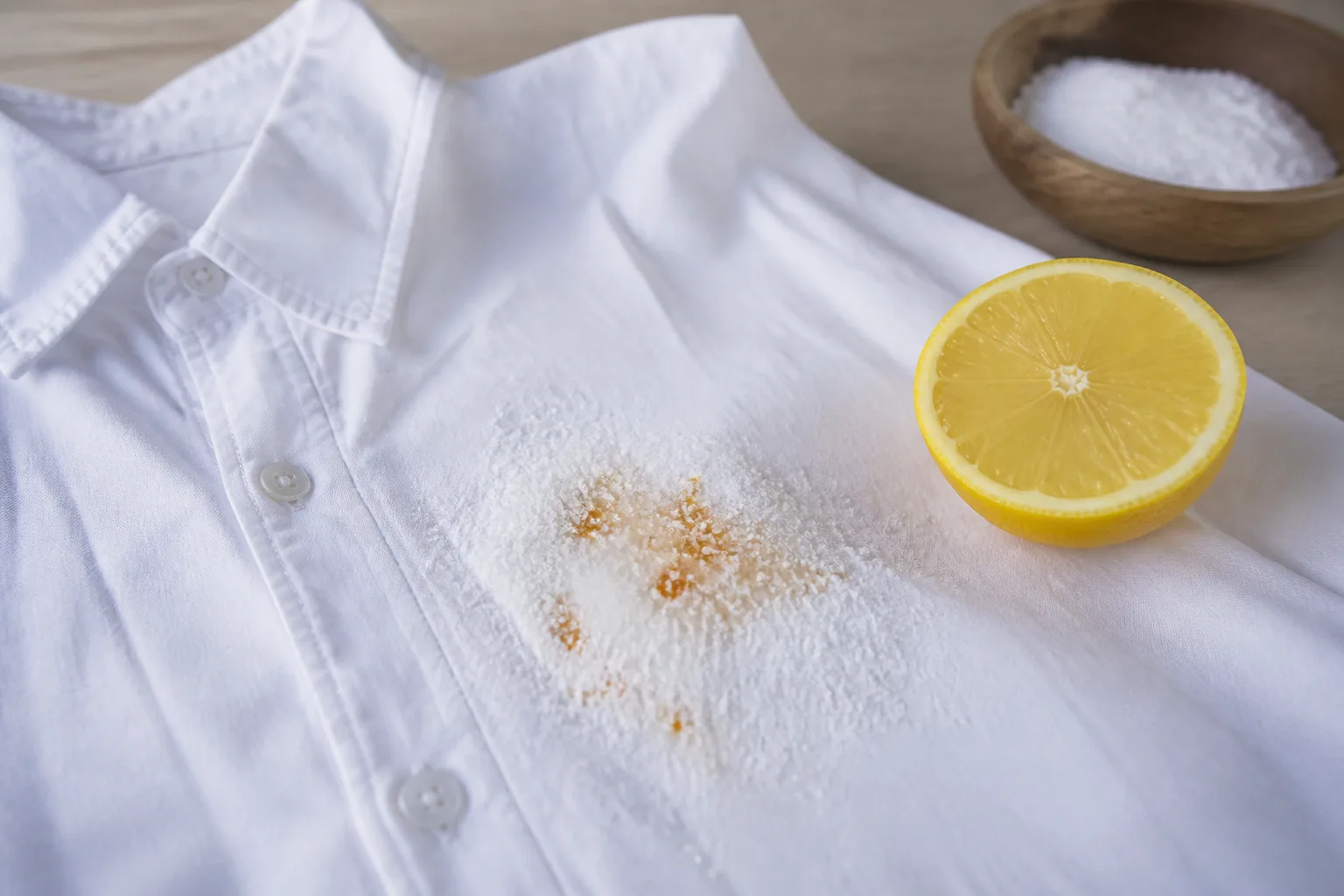
This classic pairing works on white or light colorfast fabrics because citric acid dissolves iron oxide while salt adds gentle abrasion. According to UGA Extension’s textile care reference, lemon-based treatments are standard rust approaches when fabric tolerates acid.
Sprinkle table salt directly on the dampened rust stain until the spot is covered. Squeeze fresh lemon juice over the salt until saturated. Gently work the mixture into the fibers with a soft white cloth — do not scrub hard on delicate knits. Lay the garment flat in direct sunlight for two to four hours; ultraviolet light accelerates the acid reaction on many cotton and linen blends. Rinse thoroughly with cold water, then machine-wash with heavy-duty detergent at the hottest temperature the care label allows. Inspect the stain while the fabric is still wet. If any orange remains, repeat before drying. Air-dry until you are certain the mark is gone; dryer heat sets residual rust permanently.
Cream of Tartar and Hydrogen Peroxide Paste
When lemon alone is too weak or you need a paste that clings to a vertical stain on a hanging garment, mix one teaspoon cream of tartar (tartaric acid), one teaspoon baking soda, and a few drops of 3% hydrogen peroxide into a thick paste. Spread it over the rust spot and let it work 30 minutes, keeping the paste moist with a damp cloth draped over it if needed. Rinse thoroughly with cool water, then wash immediately. Cream of tartar is milder than some commercial acids — a good middle step between lemon and store-bought removers on pastel and lightly colored cotton.
White Vinegar for Light Rust on Washable Fabric
Distilled white vinegar (about 5% acetic acid) handles fresh, light rust on cotton, polyester blends, and many work shirts. Soak the stained area in undiluted vinegar for 30 to 60 minutes, then rub gently with a soft brush and rinse. For a stronger boost on white fabric, sprinkle salt or baking soda on the spot before adding vinegar — the mild abrasive helps lift loosened oxide. UGA Extension notes that white vinegar neutralizes alkali residues after other treatments; here it is the active rust dissolver. Wash as usual afterward and check before drying.
Skip long vinegar soaks on silk, wool, and acetate — acid can weaken protein fibers. Dilute vinegar half-and-half with water only if a patch test on a hidden area shows the full strength is too harsh.
When to Use a Commercial Rust Remover on Clothing
Pantry acids have limits. Heavy, old rust, multiple failed home attempts, and stains from iron-rich well water often need a product formulated for fabric. Commercial rust removers fall into two main categories: oxalic-acid products (examples include Iron Out and RoVer) and hydrofluoric-acid formulas (Whink is the best-known brand). UGA Extension lists rust removers as stain products specifically formulated for fabric iron stains, sold in grocery, hardware, and drug stores.
Oxalic-acid laundry products are generally easier to use safely: follow label dilution, apply to the damp stain, wait the recommended few minutes, rinse thoroughly, then wash. They work well on colorfast fabrics when a patch test passes.
Hydrofluoric-acid removers dissolve rust aggressively but carry serious safety risks. The California Department of Toxic Substances Control warns that even low concentrations can cause severe skin, eye, and respiratory injury — absorption through skin can be dangerous without immediate medical care. Wear chemical-resistant gloves, work in a ventilated room, never mix with other cleaners, and rinse fabric exhaustively before washing. Reserve HF products for white cotton and linen when oxalic products fail — not for everyday first attempts.
For rust on garden gloves, cotton aprons, and outdoor cushion covers, see our best rust removers for tools and patio metal roundup to match product strength to the fabric and stain age.
How to Remove Rust Stains From Carpet
Carpet rust usually comes from metal furniture feet, rusty plant saucers, tools left on rugs, or iron in irrigation water tracking indoors. The fibers and backing trap fine oxide particles, so blotting and lifting beat scrubbing, which grinds rust deeper and frays pile.
Scrape, Vacuum, and Blot — Never Rub
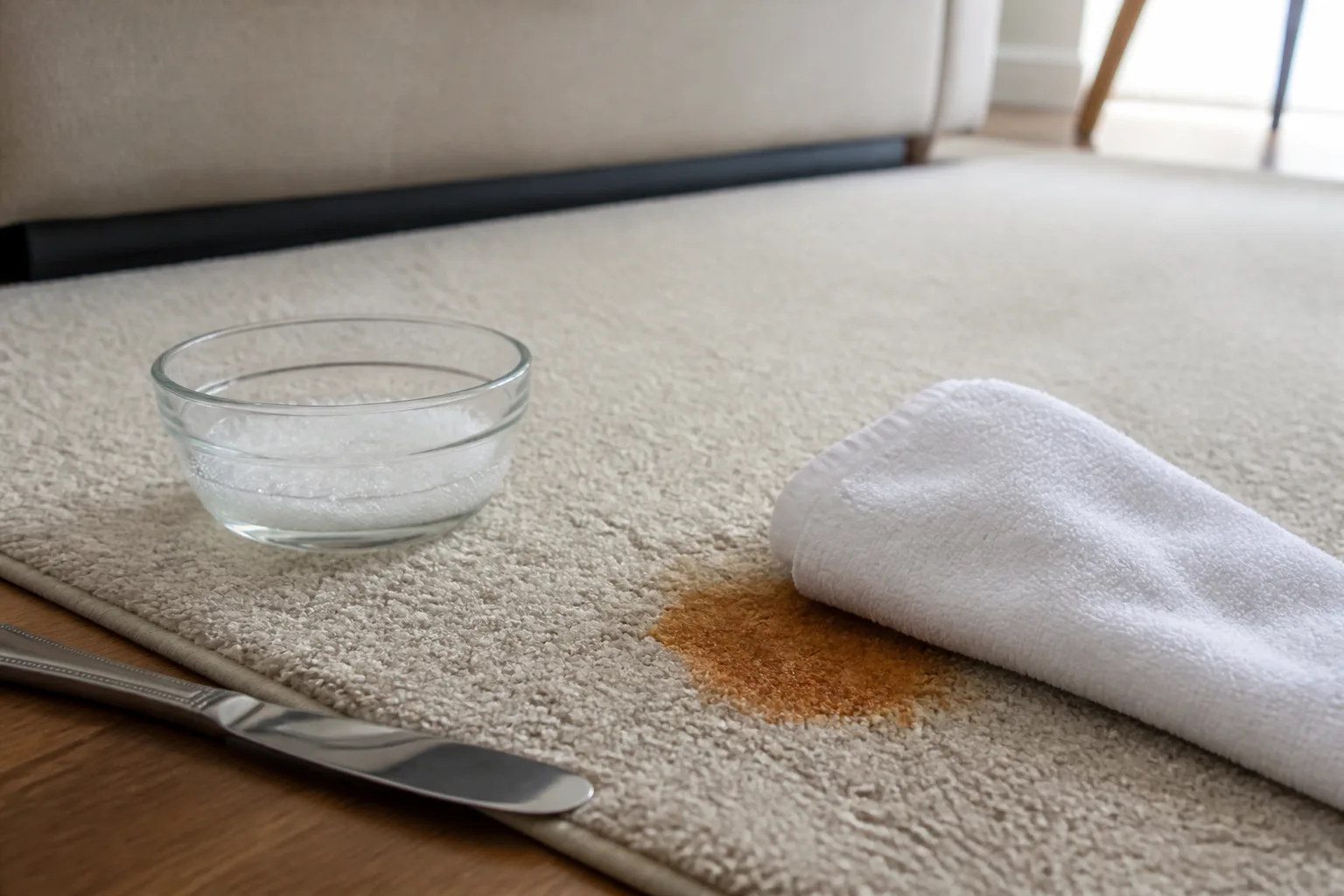
Start with a dull butter knife or spoon to lift flaky rust without cutting tufts. Vacuum the area with an upholstery attachment to pull loose particles out of the pile. Work from the outside of the stain toward the center so you do not spread the mark. If the carpet is wool or silk blend, keep moisture minimal from the first step — protein fibers stain and shrink easily.
Dish Soap and Ammonia Cleaning Solution
For many synthetic and nylon carpets, a dish soap and ammonia solution lifts rust that has not fully bonded to backing. UGA Extension emphasizes that ammonia is poisonous, needs ventilation, and must never be mixed with chlorine bleach — toxic chloramine gas forms instantly.
Mix 2 tablespoons liquid dish soap, 1 tablespoon household ammonia, and 2 cups warm water in a bowl. Dip a clean white cloth into the solution — not the carpet directly — and blot the stain until damp, not soaked. Wait five minutes, then blot with a fresh dry cloth, rotating to clean sections as orange transfers out. Rinse by blotting with plain water, then blot dry with towels. Weight the area with a dry towel and book to wick moisture upward. Do not walk on the spot until the backing is dry — trapped moisture leads to mold and pad damage.
Baking Soda and Lemon Paste for Set-In Carpet Stains
When liquid solutions leave a faint shadow, a dry paste can pull remaining oxide without over-wetting. Mix 1/4 cup baking soda with 1 teaspoon lemon juice to form a thick paste. Spread over the stain, let it dry completely — two hours minimum — then vacuum thoroughly. Baking soda absorbs loosened pigment as the lemon acid works. Repeat once if needed. This method suits synthetic carpets in low-traffic spots; always patch-test lemon on an inconspicuous corner first because acid can lighten some dyes.
How to Remove Rust Stains From Upholstery
Upholstery rust feels high-stakes because you cannot toss a sofa in the washer and over-wetting sends moisture into foam you will never fully extract. Success depends on minimal liquid, vertical blotting, and respecting the fabric code.
Match the Method to the Fabric Cleaning Code
Check the tag under the cushion or manufacturer specs online. W or WS codes tolerate the water-based vinegar method below. S codes need professional solvent cleaning — home vinegar can leave rings. X codes (vacuum only) mean rust removal requires a professional upholstery cleaner who can treat mineral stains without invalidating warranty coverage. If you cannot find a code, test every liquid on a hidden fold and wait 24 hours for water marks or color change before treating the visible stain.
Vinegar Blotting for Washable Upholstery
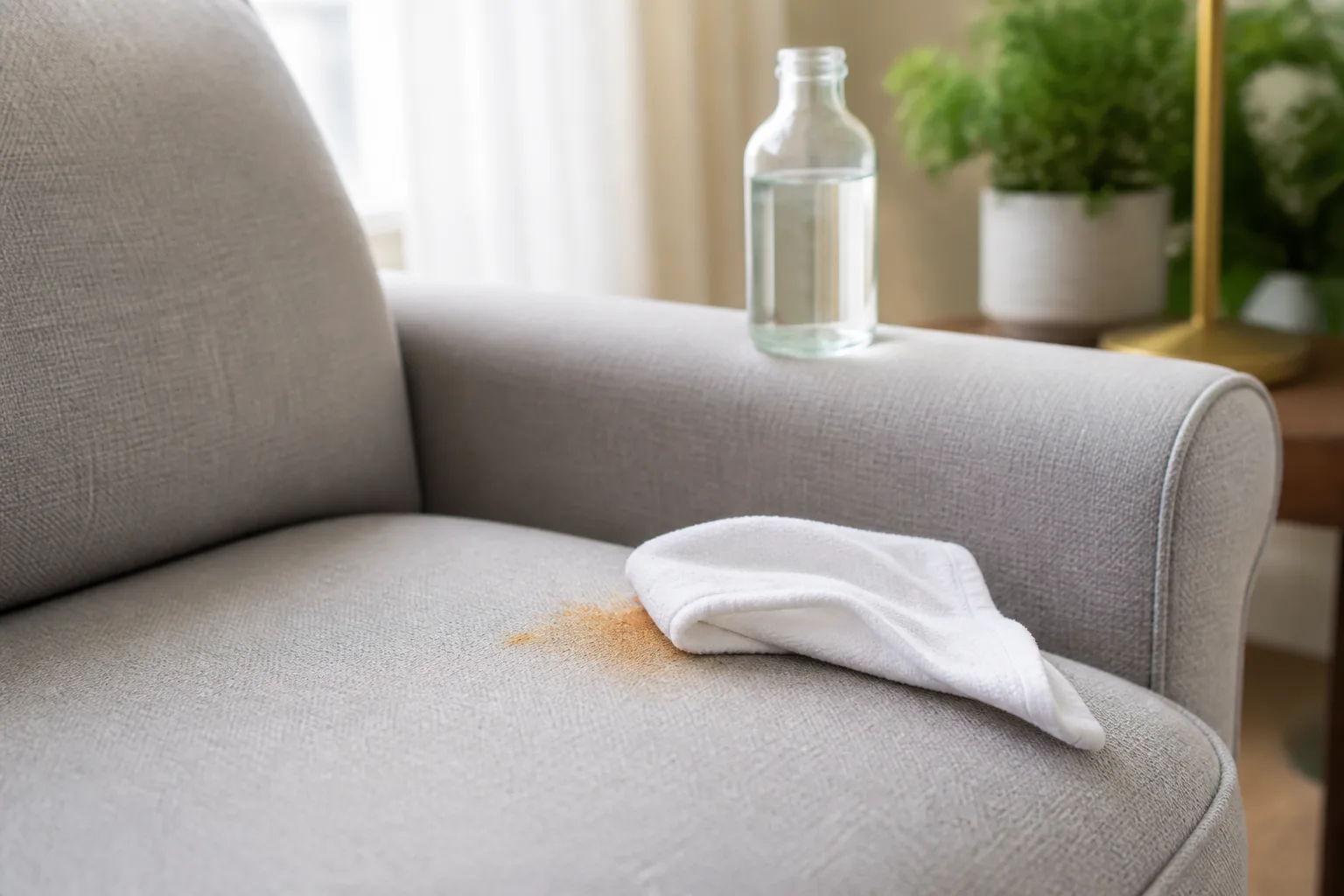
White vinegar is often the safest household acid for upholstery because it lacks the sugars and pigments in lemon juice that can leave sticky or yellow residue on fabric. Dampen a clean white cloth with vinegar until moist but not dripping. Pat straight down on the rust stain for 30 seconds — do not rub. Let the acid dwell 10 minutes, keeping the area away from direct heat or sunlight, which can set stains before rinsing. Blot with a dry paper towel until no more orange transfers. Rinse by blotting with a cloth lightly dampened with distilled water — tap water can deposit new minerals and leave rings. Air-dry completely over several hours with cushions propped for airflow. Inspect in bright light; repeat once before escalating to commercial products or a pro.
For stubborn upholstery rust after vinegar fails, apply a commercial fabric rust remover per label directions on a hidden area first, blot rather than saturate, and rinse twice. If the stain sits on silk, vintage velvet, or structured dining chairs, stop after one home attempt and call a cleaner — the cost of ruining the fabric exceeds the cost of professional mineral-stain treatment.
What to Do When the Stain Will Not Budge
Rust is stubborn but not always permanent if you have not yet applied heat or bleach. If two full rounds of the appropriate acid method leave a faint shadow, try a commercial oxalic-acid fabric remover with extended dwell time (always within label limits), then wash or blot-rinse again. Old stains that were previously bleached, ironed, or dryer-set may only lighten — not disappear — because the iron compound has chemically bonded to the fiber.
Call a professional cleaner when: the item is dry clean only or X-coded; the fabric is silk, leather, or vintage; the stain covers a large area; you smell mustiness after carpet treatment (pad may need replacement); or color bleeding starts during treatment. A pro can apply controlled oxalic acid poultices on carpet and solvent-safe rust treatments on S-code upholstery.
Stop Rust Stains From Coming Back
Removing the mark without fixing the source guarantees a repeat performance. Track where the rust came from:
- Corroded metal furniture legs on carpet or rugs — sand, treat, and seal the feet, or add plastic or felt caps. Our metal rust removal guide covers tool and patio hardware restoration.
- Rusty plant saucers and galvanized buckets on cushions or deck fabric — move to sealed ceramic saucers and dry surfaces under pots.
- Iron bacteria or high iron in well water — orange streaks on laundry and bathroom linens point to water treatment, not more stain spray. Replace rusty pipes and water-heater anodes; repair chipped enamel inside washers where bare metal contacts wet clothes.
- Paper clips, pins, and damp tools left in pockets or on upholstery — empty pockets before washing; store pruners and trowels dry, not on sofa arms.
Fix the metal, keep fabric dry until rust is fully gone before heat-drying, and keep chlorine bleach away from any stain you suspect is rust.
Conclusion
Rust stains on clothes, carpet, and upholstery respond to acids, not bleach and not ordinary detergent alone. Confirm the mark is iron oxide, patch-test colorfastness, scrape and blot instead of rubbing, and match your method to the surface — lemon and salt for white cotton, vinegar blotting for upholstery, ammonia and dish soap for synthetic carpet, commercial oxalic or fabric-labeled removers when pantry steps stall. Never machine-dry or iron until the orange is gone, and fix the rusty metal, pipe, or water issue that put the stain there in the first place. With the right chemistry and patience, most fabric rust lifts completely; the ones that do not usually tell you it is time for a professional — not another cap of chlorine bleach.