How to Harvest and Save Zinnia Seeds
Learn when zinnia seed heads are ready, how to dry and clean them, and how to store labeled seed. Get practical guidance on hybrids and germination today.
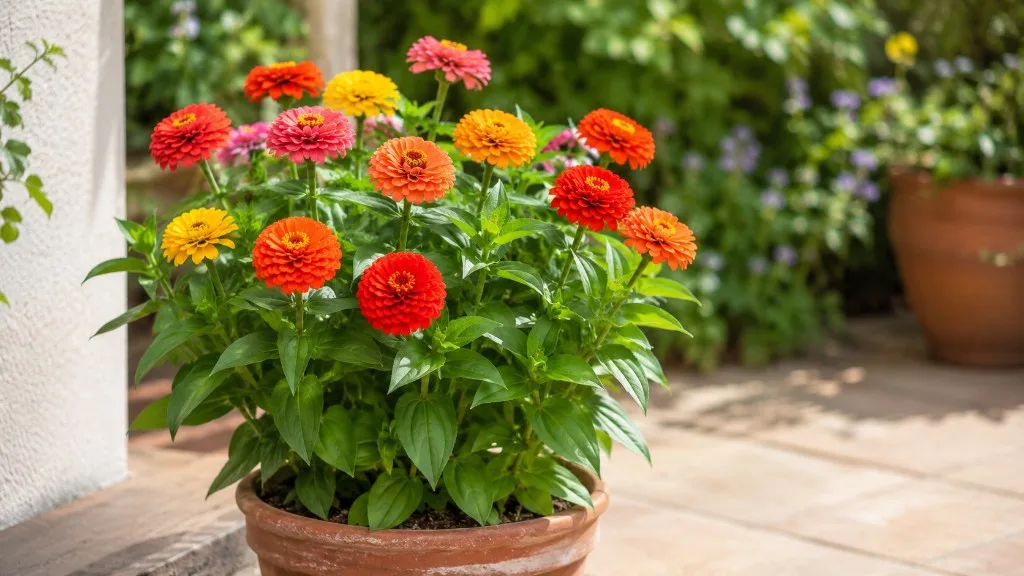
To save zinnia seeds, leave a few healthy flowers on the plant until their heads turn brown and papery, then cut them on a dry day. Finish drying the heads indoors, rub or pull out the seeds over a tray, label the batch, and store it cool and dry. The most important decision comes before harvest: seed from an F1 hybrid or a flower pollinated by another variety may grow, but the next plants may not look like the parent.
Zinnias keep flowering over a long season, so you do not need to sacrifice the whole display. Mark a handful of blooms you are willing to leave past their prime and deadhead the rest. That gives the selected heads enough time to mature while the rest of the plant continues producing flowers.
The short version: leave, dry, label
The job has four distinct stages: choose a seed parent, let its flower mature on the plant, dry and clean the head, and store the seed in a labeled packet. Do not skip the on-plant ripening stage. A head that is still green or soft may contain immature seed; placing it in a warm room afterward can dry the plant tissue but cannot reliably complete development that never finished.
As a quick check, a mature head is dull rather than fresh-looking, the petals are dry or mostly gone, and the center feels papery instead of fleshy. Cut only after morning dew has evaporated and the head itself is dry. If you save more than one color or cultivar, label each collection before you move to the next plant.
Decide what you want from saved seed
Before you mark a flower, decide whether your goal is a reliable repeat of a named variety or a lively mix of flowers with some variation. Either goal is valid, but they call for different choices about what to save and how much effort to spend preventing cross-pollination. A mixed planting is usually easy to save for fun; keeping a cultivar true takes planning before the flowers open.
Open-pollinated versus F1 hybrid
An open-pollinated zinnia can produce seed that generally resembles its parent when it is pollinated within the same variety. “Heirloom” often describes an open-pollinated variety with a history of being maintained over time, but the label matters more than an assumption based on age or flower appearance. Check the original packet or cultivar description; if it says F1 or hybrid, the seed may still germinate, yet the resulting plants can split into different colors, heights, or flower forms.
That variation is a genetic issue, not a sign that you harvested incorrectly. An F1 plant is the first generation from a deliberate cross of parent lines; seed it produces is a later generation, where traits can separate. The University of Wisconsin–Madison Extension’s zinnia guide identifies multiple F1 series, including Magellan and Holi, alongside older and open-pollinated types. Save F1 seed if you enjoy surprises, but buy fresh labeled seed when uniformity or a specific cultivar is the goal. (Wisconsin Horticulture)
Keep cultivars from crossing
Zinnias attract insect pollinators, so two varieties flowering close together may exchange pollen. An open-pollinated label does not mean a plant is isolated from its neighbors. If you collect from a mixed bed, your seeds may be viable but produce an unpredictable cross; that is fine for a relaxed cottage garden and a poor way to preserve a particular named selection.
For a home garden, use the method that matches your standards. If color variation is welcome, keep the varieties in one labeled “mixed zinnia” batch. If you want better odds of preserving a variety, grow only that variety where it flowers, or arrange for different varieties to bloom at separate times. For higher purity, bag selected unopened buds before pollinators visit and hand-pollinate with pollen from the same variety; this takes more work and still requires careful labeling. University of California Agriculture and Natural Resources describes harvesting zinnia seed from dried flower heads, while the more exact isolation choice depends on whether a gardener needs a mixed garden batch or varietal identity. (UC ANR: Zinnia seed-saving guidance)
Choose healthy flowers worth saving
Choose plants that are vigorous, flower well, and show the traits you would like to see again. Look at the whole plant rather than selecting only the largest bloom: a strong stem, balanced growth, and repeated flowering may matter more to next year’s garden than one unusually large flower. If you are selecting a color, mark several flowers from plants with that color and habit so you are not depending on one head.
Avoid flower heads that are rotting, visibly moldy, badly damaged, or still wet inside. Zinnia leaves can develop powdery mildew and leaf spots, especially when conditions are humid; Wisconsin Extension notes these common disease concerns and emphasizes site conditions such as sun and airflow. Selecting healthy parent plants is a practical way to keep your seed batch clean and to choose for garden performance, but it does not guarantee that every disease is seed-borne or absent from future plants. (Wisconsin Horticulture)
Mark selected stems with a loose tie or a small tag as soon as the bloom starts fading. This prevents an accidental cut during routine deadheading and lets you track a cultivar while petals still show its color. Use a tie that will not girdle the stem, and avoid writing only a color if you may want to reproduce a named variety.
Read the flower head, not the calendar
Harvest timing varies with when the flower opened, the variety, humidity, and how much late-season rain your garden gets. A bloom can finish well before frost in a long summer, while a late flower may not ripen before a wet or cold spell. Use the plant’s condition as your signal: the head should be dry, brown or gray-brown, and papery throughout, not green, swollen, or soft at its center.
Let the flower remain on the stem after its petals fade. The ray florets and central disk finish developing at different points, so a flower that looks unattractive is not automatically ready. When the back and center of the head have dried and the structure begins to loosen, test one head by rubbing it over a plate; if the material is still moist or squashes rather than crumbles, give the others more time.
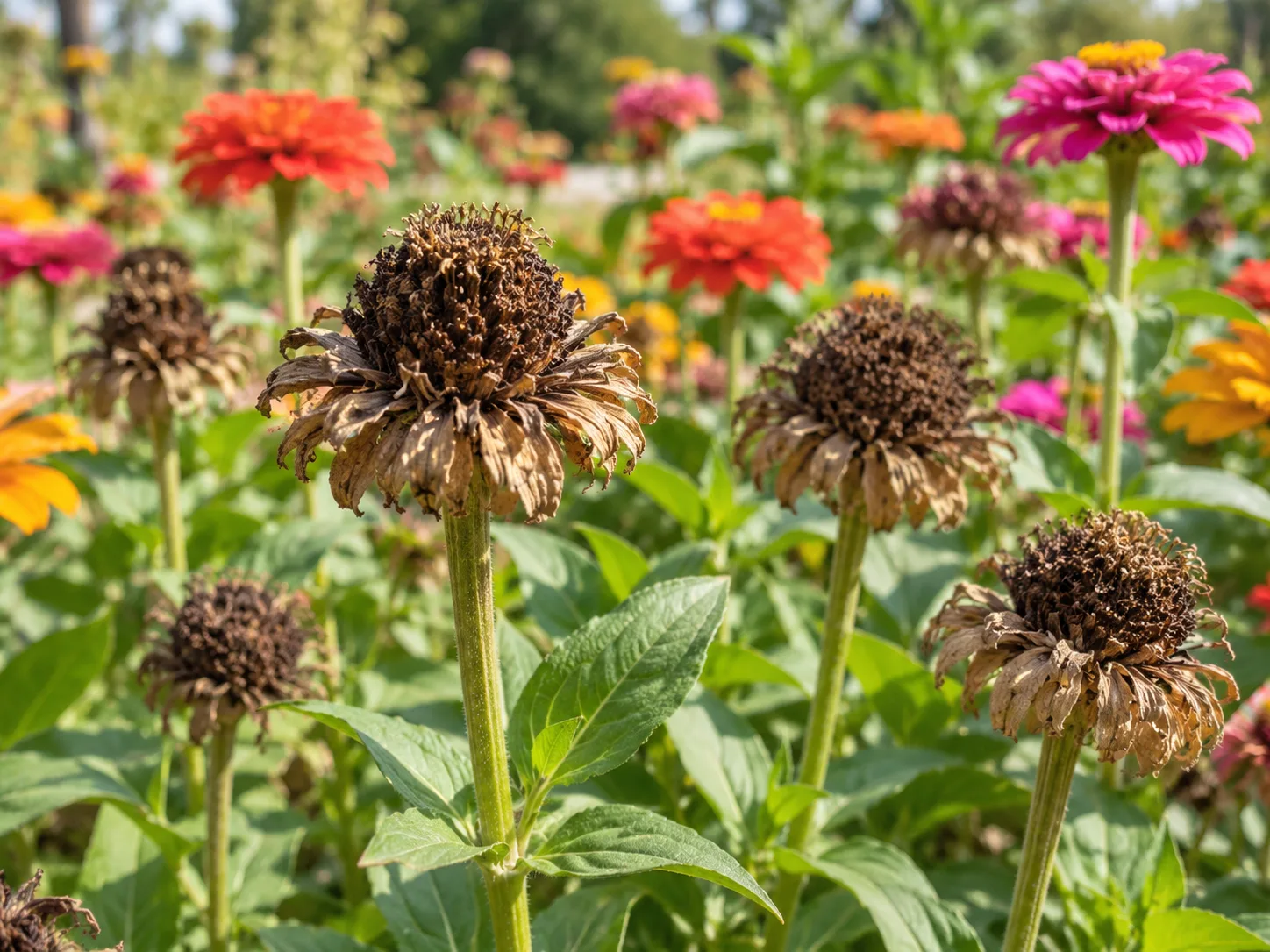
Late-season gardeners can start saving as soon as the first suitable heads mature; there is no need to wait until every zinnia is finished. This is especially useful in regions where fall rain, frost, or hungry birds can reduce the number of intact heads. The University of California Agriculture and Natural Resources seed-saving note likewise advises collecting the arrow-shaped seed from drying flower heads and storing it through winter in a cool, dry place. (UC ANR: Zinnia seed-saving guidance)
Harvest on a dry day and label first
Choose a dry afternoon after dew has evaporated. Place a clean paper bag or small tray beside the plant, then cut a mature head with a few inches of stem using clean pruners or scissors. If the center is loose and seeds are beginning to fall, hold the bag beneath the head while cutting so the seed does not scatter into the bed.
Label the bag immediately with the cultivar or “mixed zinnias,” the visible color or flower type, the date, and any note about nearby varieties. If you do not know the cultivar, write “unknown” instead of guessing. A clear label such as “pink double, mixed bed, 2026” is more useful than a cultivar name you cannot verify.
Keep different plants or varieties separate until you decide whether to combine them. It is easy to mix them accidentally when several heads are collected in the same container, and after the seed is dry and detached, the original flower color may be hard to reconstruct. For casual gardens, you can combine heads from the same labeled mix; for any effort at keeping a variety, preserve the individual labels through drying and cleaning.
Finish drying flower heads indoors
Bring the cut heads indoors promptly and spread them in a single layer on a screen, shallow tray, or paper-lined plate. Choose a dry room with good air movement and no direct sun, and turn the heads occasionally if the undersides rest against the surface. Leave space around each one; a crowded pile holds humidity where the dense center needs to dry.
Drying may take several days or longer depending on the head size and room humidity, so use texture instead of a strict countdown. The head should crumble readily when pressed, with no cool, soft, or flexible parts in the middle. Gardenary’s zinnia seed-saving guide recommends drying flowers before separating seed and notes that trapped moisture can lead to mold; Farmhouse & Blooms also describes waiting for mature spent flowers and drying them before cleaning. (Gardenary; Farmhouse & Blooms)
Do not put a moist head directly into a sealed jar, plastic bag, or closed envelope. A container that keeps humidity out also traps moisture already inside, which can encourage mold and weaken the seed. Let the plant material dry first; use the moisture-proof container only after the seeds and chaff are crisp and fully dry.
If rain or frost is coming
If a dry head is already mature and a storm is on the way, harvest it before the weather turns, then finish drying it indoors. If the head is still green or soft, prioritize the most mature flowers and leave the rest only as long as conditions allow. A mature head may finish drying off the plant; an immature seed cannot be made fully mature simply by warming it indoors.
If a freeze is forecast and you have several nearly mature heads, cutting the stems and hanging them upside down in a dry, ventilated place can save the material for inspection. Keep the heads in labeled paper bags or above a clean sheet to catch anything that falls. Discard heads that become damp, musty, or visibly moldy rather than mixing questionable material with your clean collection.
Separate seeds from the dried head
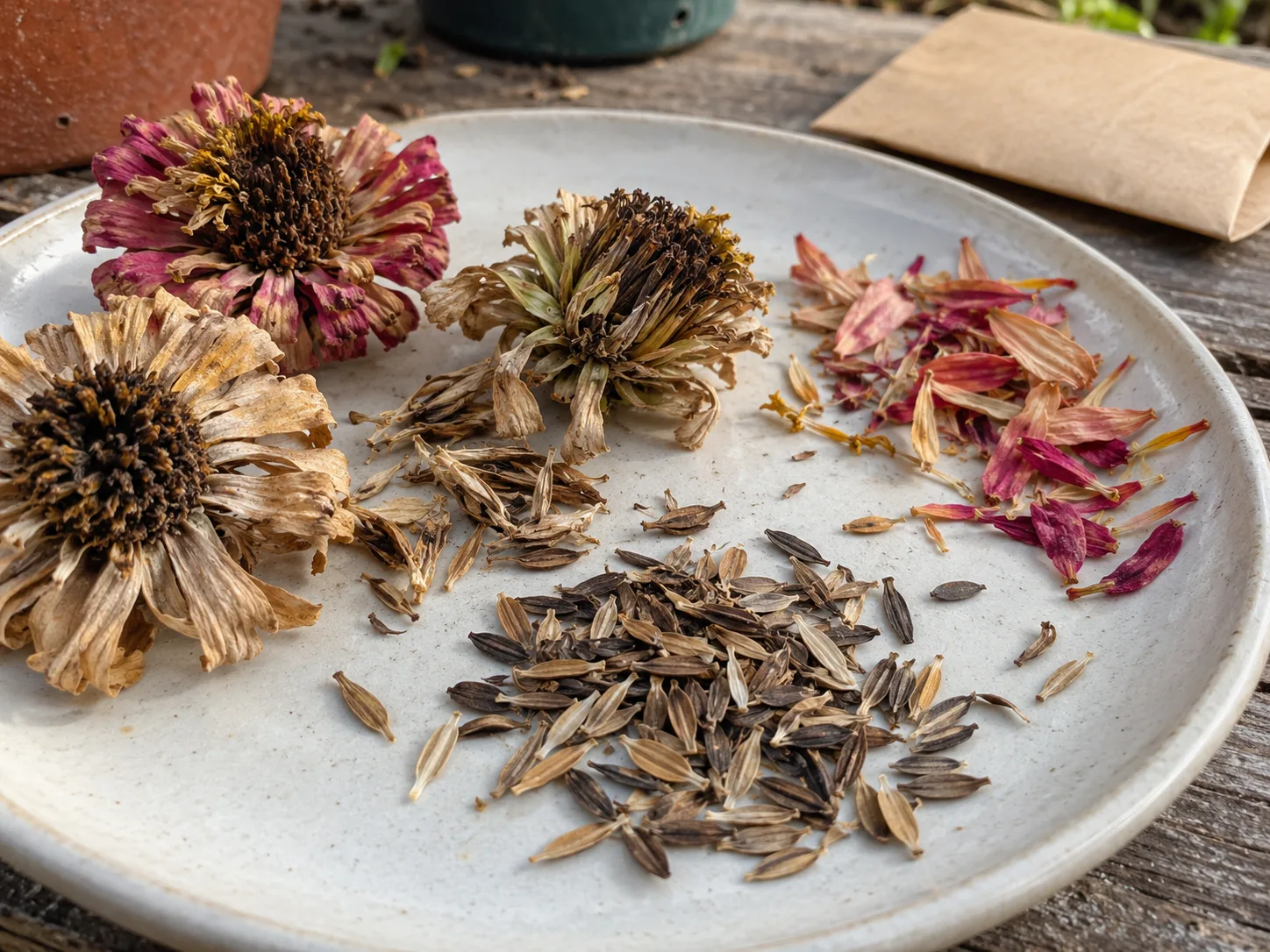
Work over a clean plate, tray, or sheet of paper with one labeled variety at a time. Break or rub the dry flower head gently between your fingers; the brittle central structure should release the seed-like pieces and loose petals. You can pull away large pieces of petal first, then work through the center to release what remains.
There is no need to crush the head into dust. Gentle rubbing is enough for a small home batch, and working slowly makes it easier to notice seed that is still attached to a petal. The UC Davis video catalog includes a zinnia-specific seed-saving demonstration; this hands-on approach is also the practical method described by named garden writers. (UC Davis, Zinnia Seed Saving Video)
Recognize the seed inside a flower head
Zinnia seed is not a round bead hidden in the flower. The part you save is a dry, seed-bearing fruit called an achene; many are flat, narrow, wedge- or arrow-shaped, and some are slimmer or more oval. They may vary in shade and fullness, so do not judge the whole batch by color alone.
A full, firm piece is a better candidate than one that is paper-thin or obviously empty, but appearance is only a first sort. Some pale pieces may still sprout, and a dark piece is not automatically alive. If dependable emergence matters, the useful test is to sow a counted sample and see what grows.
Clean the batch without chasing perfect purity
Remove the largest petals, stems, and pieces of flower base, but do not spend hours making every seed look laboratory-clean. A small amount of completely dry chaff will not usually prevent a home gardener from sowing the batch. The practical priorities are to keep cultivars labeled, remove soft or damp plant material, and avoid mixing a suspect head with clean seed.
For a modest batch, pinch off loose chaff and sort the larger, full-looking achenes by hand over a light-colored tray. You can tilt the tray gently so loose light debris moves away, but avoid blowing hard: tiny seeds may scatter, and household fans can send a year’s collection across the room. Do not rinse the seed in water; wet seed takes longer to dry and is easier to damage during storage.
If you want to preserve a color mix, you can leave some dried petals attached to the seeds or store whole heads by labeled flower. That may make the next sowing more recognizable, but it also takes more space and leaves more plant material in the packet. Cleaned seed is compact and easier to inspect; intact heads are simpler when you value the visual label more than tidy storage.
Store zinnia seeds cool, dry, and dark
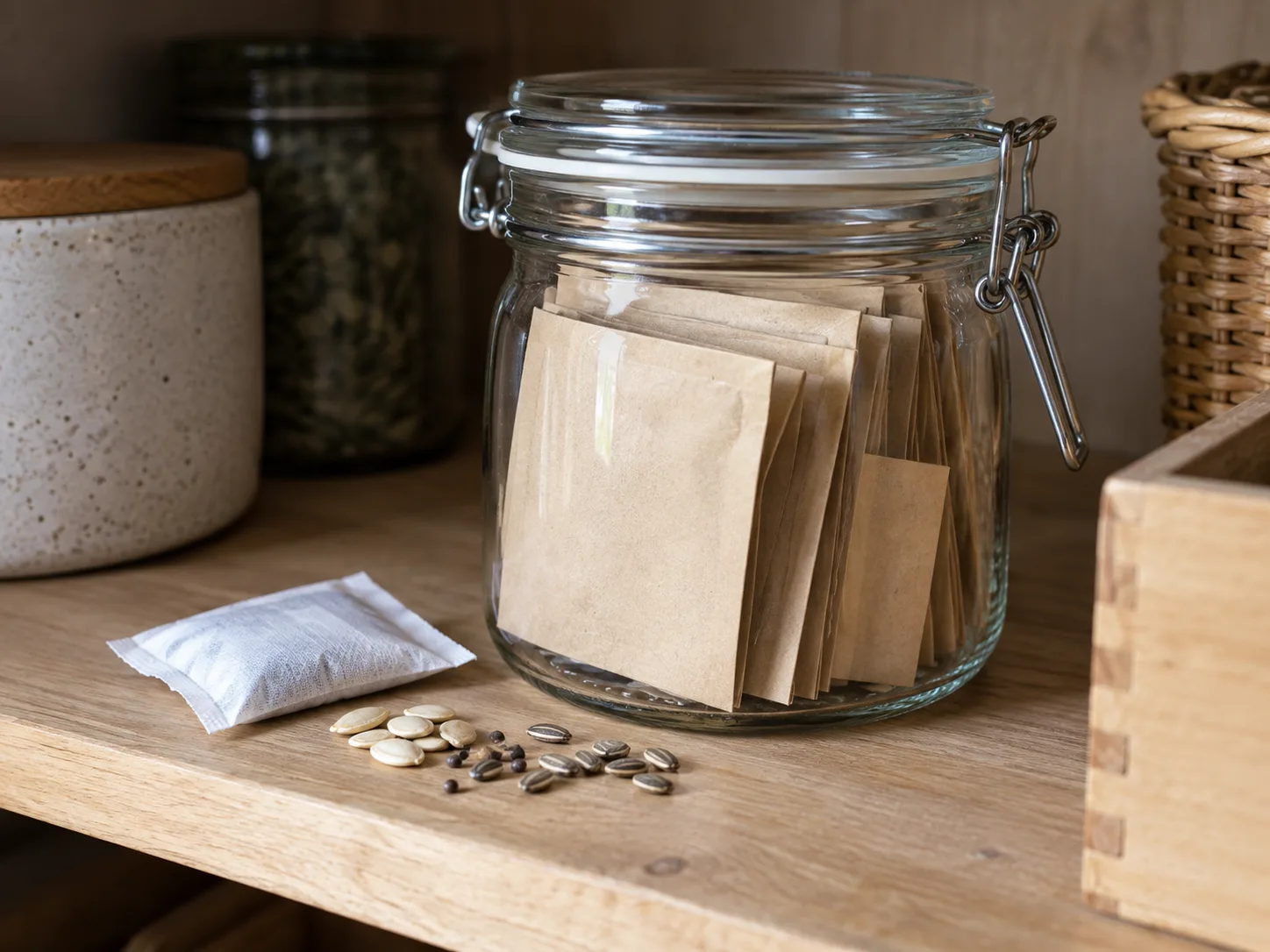
Once the seeds are thoroughly dry, place each collection in a paper envelope and write the identity and harvest date on the outside. Put the paper packets inside a clean, tightly closed jar or other moisture-proof container if your home is humid or the packets will be stored for months. Keep the jar in a cool, dark place away from a sunny window, stove, water heater, or temperature swings.
The envelope makes it easy to keep varieties separate; the sealed outer container helps buffer changing room humidity. Colorado State University Extension identifies seed moisture and storage temperature as major factors in how long seed remains usable and notes that flower seed can often be kept at room temperature for at least a year when conditions are suitable. That is broad guidance, not a zinnia-specific guarantee, so plan to test older packets rather than relying on a fixed lifespan. (Colorado State University Extension)
Refrigeration can work if the seed is dry and the container is sealed against humidity. Let a cold jar come to room temperature before opening it; opening it while cold can expose the contents to condensation in a humid room. A small dry desiccant packet in the outer container can help buffer moisture, but it cannot rescue seed that was sealed while damp.
Test a sample before sowing a full bed
Seed viability and cultivar identity are separate questions. A packet can sprout well while producing flowers that differ from the parent, or it can be genetically promising but germinate poorly because the seed was immature or stored damp. A small test tells you whether the batch is worth relying on before you clear a large bed for it.
Count 10 seeds and place them between two pieces of damp—not dripping—paper towel. Put the towel in a loosely closed bag or covered container in a warm place, then check it daily and keep it evenly moist. Use the germination timing on the original packet if you have it; otherwise, give zinnia seed roughly a week or two in warmth and continue checking if the seeds have not responded.
Count the seeds that produce a visible root, then divide that number by the number tested. If seven of 10 sprout, the sample germinated at 70 percent; sow more seed than the number of plants you want or start extra seedlings. A test of 10 is a practical home estimate, not a laboratory quality test, and testing fewer seeds makes the percentage less precise.
Plant saved seed next season
Wait until frost danger has passed and the soil is warm before sowing zinnias outdoors. Wisconsin Extension notes that annual zinnias are readily grown from seed and are normally direct-sown after frost danger, while the details of depth and spacing should follow the variety packet when available. If you cannot recover the packet, sow shallowly in a sunny bed with well-drained soil and keep the seed zone evenly moist until the seedlings emerge. (Wisconsin Horticulture)
Use the germination test to decide how densely to sow. A strong result lets you sow near the normal spacing; a lower result means you can place extra seeds and thin after seedlings establish. Keep the packet label with the row or container, especially if you saved both a named open-pollinated cultivar and an unknown mixed batch.
As plants flower, compare them with the parent only if the original batch was a variety you intended to keep. Differences in color or flower form may reflect a hybrid generation or pollen from a neighboring cultivar, not a mistake during drying. If you like the variation, choose the strongest plants and continue saving from those; if you want exact uniformity, start with a fresh packet of the named cultivar.
Troubleshoot disappointing results
| What you see | Likely reason | What to do |
|---|---|---|
| The head is green or soft inside | It was harvested before the seed matured. | Leave other heads on the plant longer; do not rely on indoor drying to finish immature seed. |
| The packet smells musty or contains fuzzy growth | Damp material was sealed or the storage area stayed humid. | Discard moldy material and keep it separate from clean seed; dry future batches fully before sealing. |
| Many pieces look flat and papery | Some may be empty or poorly developed. | Test a counted sample before sowing; do not assume every piece in a head is viable. |
| Few seedlings appear | Low viability, cool soil, dry seedbed, deep sowing, or excess water may be involved. | Check soil warmth and moisture, sow at the packet depth, and test another sample. |
| Flowers vary from the saved parent | The seed came from a hybrid or was cross-pollinated. | Treat the batch as a mix, or start with isolated/open-pollinated seed next time. |
| The labels are no longer clear | Seeds from several plants were combined before identifying them. | Keep the batch as “mixed zinnia” rather than inventing a cultivar name. |
When germination is poor, change one variable at a time. First check that the seed was mature and dry, then review storage and sowing conditions; replacing the whole batch without diagnosing the failure may repeat the same problem. If the only disappointment is flower variation, the storage may have worked perfectly—the next generation simply did not inherit a uniform set of traits.
Conclusion
Choose healthy zinnia plants, decide whether you want a consistent cultivar or an enjoyable mix, and leave only selected blooms to mature. Harvest a fully dry, brown, papery head, finish drying it indoors, and separate the seed over a labeled tray.
Store the dry collection in labeled envelopes inside a cool, protected container, then test older seed before depending on it for a full planting. Saved zinnias can make next season less expensive and more personal, as long as you treat seed germination and flower-to-flower resemblance as two different things.