Is Wood Ash Good for Garden Soil? Test Before Using It
Wood ash can add potassium and raise pH, but it can push soil out of range. Learn how to check pH, lime need, potassium and contamination risks first.
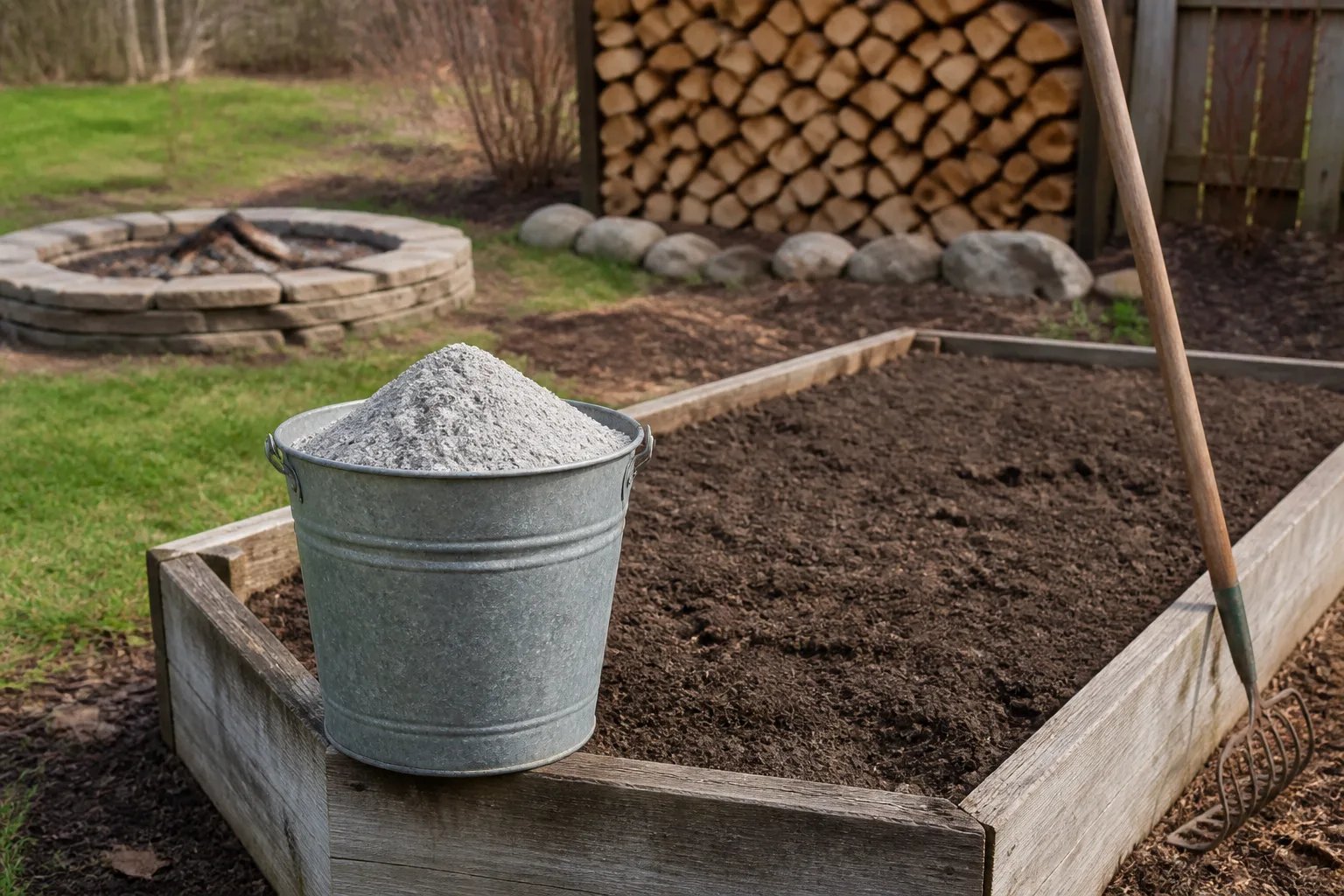
Wood ash can be useful in a garden, but only when the soil needs the specific things it adds: a liming effect and potassium. It is not a general soil conditioner or a complete fertilizer, and its strength is too variable to assume that a fireplace bucket will help any bed.
The deciding evidence is a soil test from the area where you want to use it. If the test shows that the soil is too acidic for the planned crop, that lime is needed, and that potassium is not already high, clean wood ash may be one option. If pH is already in range, potassium is adequate, the bed is alkaline, or the source of the ash is uncertain, leave it out. A labeled agricultural lime product and a separate potassium source are easier to dose when only one of those needs is present.
The Short Answer: Sometimes, With Evidence
Wood ash is best thought of as a variable liming material that also contributes potassium, not as a harmless way to recycle every gray residue from a stove. Its minerals can be helpful in acidic soil, but the same alkaline salts can raise pH beyond the range a plant can use or add potassium the bed does not need. That makes “my plants could use fertilizer” an insufficient reason to spread it.
Use ash only when you can answer three questions: Does this bed need its pH raised for the intended crop? Is the potassium level low enough that adding more is reasonable? Do you know the ash came from clean, untreated wood? If one answer is no or unknown, an ordinary fertilizer or labeled lime chosen from the test results is a more controlled choice.
A useful distinction is that beneficial material and beneficial dose are not the same thing. The nutrients in ash are real, but their amount is not printed on a product label, and the effect can vary from one batch to another. That variability is why extension guidance treats soil-test recommendations as the starting point rather than recommending ash for every garden.
What Wood Ash Changes in Soil
Burning wood concentrates some of the minerals the tree took up while growing. University of Wisconsin–Madison Extension notes that wood ash can contain substantial calcium, potassium, and smaller quantities of other minerals, while the exact composition and carbonate content depend on the wood and how it burned. Those minerals explain the possible benefit, but also why ash from different fireplaces is not a standardized amendment.
The bigger practical change is usually soil acidity. Carbonates in ash neutralize some acidity and push pH upward; it is therefore a liming material. Ash also contributes potassium, often called potash, but it does not contribute nitrogen in a meaningful way, and it does not add organic matter or improve soil structure the way compost can.
The pH Effect Is the Main Event
When a recommendation says a soil is acidic, the correct response depends on the crop and the laboratory’s lime recommendation—not on the fact that wood ash is “natural.” The Royal Horticultural Society explains that ash has a liming effect and warns that overuse can raise alkalinity and soluble salts to levels that harm plants. The Old Farmer’s Almanac likewise describes ash as liming-like and relatively quick to affect pH, which is a reason to avoid casual repeat applications rather than a reason to apply it on a schedule.
Soil pH is a measure of acidity in a soil-water test; it is not a direct measure of the total quantity of lime needed to change the soil. Two beds can show the same pH yet need different amounts of a liming material because their clay, organic matter, and buffering capacity differ. This is why a number from a cheap meter cannot be turned into a wood-ash recipe.
What Ash Cannot Replace
Ash does not provide a balanced set of plant nutrients. It contains little or no nitrogen because nitrogen compounds are lost during burning, so adding ash to a pale, slow-growing crop without diagnosing the cause can miss the real problem. Nor does ash feed soil organisms with carbon or build crumb structure, water-holding capacity, and organic matter.
The nutrient label for a fertilizer separates nitrogen, phosphorus, and potassium as N-P-K. Ash may contribute potassium, but there is no dependable N-P-K analysis for a household batch unless that batch has been tested. UGA Cooperative Extension also cautions that composition varies and that high potassium or a neutral soil pH are reasons to avoid adding more. If the soil is short of only nitrogen, potassium, or organic matter, choose an amendment that addresses that need without changing pH unnecessarily.
Start With a Soil Test, Not a Bucket
A soil test makes the decision bed-specific. The same yard can have an acidic blueberry row, a vegetable bed that needs no lime, and an alkaline strip next to a concrete foundation; combining those into one sample can hide the difference. Follow the lab’s sampling directions and submit separate samples for areas that differ in use, soil, or amendment history.
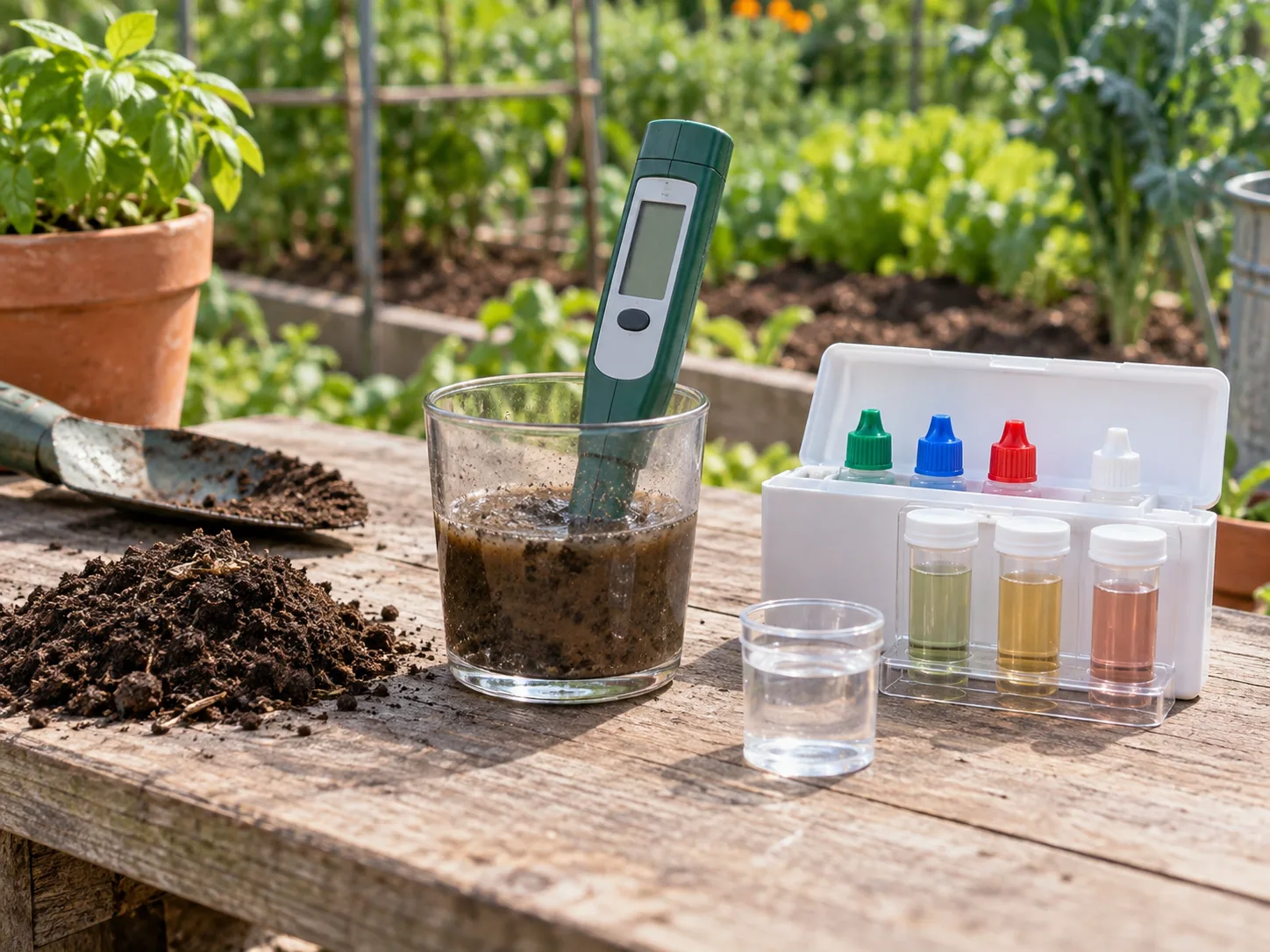
A home pH kit can be a rough screen, but a lab test can also report potassium and a lime requirement for the crop or target pH you specify. If your provider offers recommendations for garden plants, say what is growing now and what you plan to plant. A lawn sample and a vegetable-bed sample should not share one amendment plan simply because they are close together.
Read pH, Lime Requirement, and Potassium Separately
The most useful question is not just “Is this soil acidic?” It is whether the lab recommends lime for the crop and whether the potassium test gives you a reason to add more. UGA Cooperative Extension specifically recommends checking both pH and potassium before using ash; its guidance says a soil nutrient analysis is the reliable way to determine need.
| Soil-test result | What it says about ash |
|---|---|
| pH below the crop’s target; lime recommended; potassium is low or the lab says added potassium is appropriate | Ash might fit only if a local extension or lab can provide a suitable ash recommendation and the source is known. |
| pH is already in the crop’s range; potassium is low | Use a potassium amendment selected from the report; ash may raise pH when that is not needed. |
| pH is low; potassium is already high | Ask the lab about a liming material that does not add potassium. |
| pH is near neutral or alkaline; no lime is recommended | Do not add wood ash to that bed. |
| Soil has never been tested, or only a meter reading is available | Wait for a lab result before making ash a soil amendment. |
The table is a screening tool, not an ash rate chart. If the lab reports a lime requirement, that is usually a recommendation calibrated to a known liming product and a target depth. Do not silently substitute an untested, variable material and assume that an equal scoop or weight has an equal effect.
For example, a report might show that a bed is mildly acidic but already has a high potassium level from previous fertilizer. That is a reason to separate the problems: follow the lab’s advice for acidity with a potassium-free liming material, rather than using ash because it can address both conditions at once. A different bed could have adequate pH but low potassium; that result points toward a measured potassium source, not a pH-raising material.
If the report uses categories such as “low,” “optimum,” or “high,” keep the crop named on the sample submission in mind. “Low” potassium does not automatically mean an ash application is best, since the same bed may not need lime. The report’s interpretation and the lab’s target for your crop matter more than a single number copied from a general gardening chart.
Why pH Alone Cannot Give You an Ash Rate
A pH reading describes the soil’s active acidity, while the lab’s lime requirement also accounts for how strongly that soil resists a pH change. The University of Nebraska–Lincoln Extension guide to soil acidity and liming explains that neutralizing value and particle fineness both affect how well liming products work. A household ash pile has neither a guaranteed neutralizing value nor a consistent particle analysis, so applying a conversion copied from another garden can overshoot.
This is especially relevant if you have amended the bed repeatedly, garden in a small raised bed, or grow in a sandy soil where soluble materials can move quickly. In a large, clay-rich field, a small addition may have a different response from the same amount in a small container or shallow bed. The safe inference is simple: get a recommendation for that soil and crop, and do not calculate a dose from pH alone.
Choose Between Wood Ash and Agricultural Lime
If the test shows a need to raise pH, compare the two materials by control, not just by whether they can both neutralize acidity. Wood ash may add potassium at the same time; agricultural limestone is sold with a stated analysis and can be matched more directly to a soil-test recommendation. If the soil needs potassium but not lime, a potassium fertilizer is usually a cleaner fit than ash.
| Consideration | Household wood ash | Labeled agricultural lime |
|---|---|---|
| Composition | Varies by wood and burn conditions; potassium and salts come along with it | Sold with a stated neutralizing value and particle-size information |
| Nutrient contribution | Adds potassium and other minerals in unpredictable amounts | Primarily adjusts acidity; dolomitic products also supply magnesium |
| Best reason to choose it | A known, clean batch may serve when a qualified soil recommendation accounts for it | The soil test calls for lime and you want a more predictable, labeled input |
| Main limitation | No reliable household batch analysis; can add unwanted potassium or salts | Does not solve a separate nutrient deficiency unless the product includes that nutrient |
Where a Standardized Liming Product Is Easier to Manage
The UNL liming guide describes how recommendations depend on the material’s calcium carbonate equivalent and fineness. Those measures let a lab or label account for the product’s effectiveness; a fireplace does not produce a bag with those numbers. Use the soil-test rate for the labeled product unless your extension service gives a specific, locally appropriate method for substituting wood ash.
That does not make ash useless. It means ash is a poorer match when you need precision, when you are already near your target pH, or when potassium is not deficient. A gardener with a known supply of clean ash and a documented need may have a reason to consider it; a gardener trying to solve “weak plants” without a test does not yet know whether ash addresses the cause.
Think of the choice as matching inputs to constraints. If you have two independently documented needs—raise pH and add potassium—ash may look convenient, but it still has to meet both needs without exceeding either one. When the lab provides no ash-specific conversion, the more predictable option is to use the labeled liming product for pH and a separately measured potassium product only if the soil report calls for it.
Match the Amendment to the Plants in the Bed
The target is the plant’s preferred soil chemistry, not a universal “garden pH.” Many vegetables tolerate a slightly acidic soil, but different crops and cultivars vary, and a plant’s pH target can shift depending on region and soil. The lab report and local extension recommendations should guide the decision rather than a blanket claim that all vegetables like ash.
This matters most in mixed beds and small landscapes. If a bed contains crops with different pH preferences, do not amend the whole area for the plant that tolerates the highest pH. Separate the growing areas where possible; otherwise choose the amendment that avoids pushing the most sensitive crop out of range.
Acid-Loving Plants and Potatoes Are Special Cases
Skip wood ash around blueberries, azaleas, and rhododendrons because they are adapted to distinctly acidic soil. Raising pH can make some nutrients, including iron, less available even when those nutrients are physically present; yellowing leaves can then reflect nutrient lockout rather than a lack of fertilizer. RHS guidance on wood ash cautions against applying it to acid-soil plants and advises avoiding ash where potatoes will be grown because alkaline conditions can favor common scab.
Do not use ash as a quick way to change hydrangea flower color. Ash is a variable liming material, so it can move a bed past the conditions you meant to adjust, especially when the growing area is small. If bloom color is the goal, check advice for the specific hydrangea and soil instead of treating a fireplace residue as a calibrated product.
Can Wood Ash Contaminate Garden Soil?
The word “wood” does not guarantee a safe ash source. Trace metals can occur in ash, and the likelihood of a problem depends on the wood’s history and the material burned with it. Clean, untreated firewood from a known source lowers uncertainty, but it cannot certify the chemical contents of every batch.
Higher pH may change the availability of some metals to plants, but it does not remove contaminants or prove that soil is safe. A pH test cannot tell you whether ash contains lead or cadmium, and an ordinary garden fertility test may not include metals. If wood came from an industrial or contaminated site, its treatment is unknown, or a large volume has accumulated over time, do not apply it to food beds; ask a local extension office or environmental laboratory whether separate ash or soil testing is appropriate.
Source History Matters More Than Color
Use only ash from clean, untreated natural wood whose origin you know. Exclude ash from coal, charcoal briquettes, fire-starting logs, painted or stained wood, pressure-treated lumber, plywood, composite boards, trash, plastics, or wood burned with waste oil or chemical accelerants. If fireplace contents are mixed or you cannot identify the fuel, treat the batch as unknown rather than trying to judge it by color or texture.
The University of Wisconsin–Madison Extension advises against ash from unknown or potentially contaminated wood and from waste, plastic, or treated material. The RHS similarly separates clean wood ash from coal and anthracite ash and warns against treated-timber residues. Clean provenance is the first screen; for ash collected from a questionable source, skipping garden use is safer than hoping that dilution will solve the unknowns.
A practical gardening article from Gardening Know How also points out that ash is not a uniform material and that excess can cause plant problems. Use that kind of practical source for context, but let your soil laboratory and university extension guidance decide whether pH and nutrients make ash a fit for your specific bed.
If Ash Has Already Been Spread
Do not panic over one small, accidental dusting of known, clean wood ash. Stop adding more, note which bed received it and roughly when, then have that area tested before you use lime, fertilizer, sulfur, vinegar, or another “counteracting” product. Trying to undo one unknown amendment with another can turn a simple pH question into a nutrient or salt problem.
If the application was heavy, repeated, or from an uncertain source, tell the soil-testing lab what was added and how much you estimate. Ask whether its standard test covers the concern you have; a basic pH and nutrient panel will not necessarily measure trace metals. If edible crops are growing in the area, avoid applying more material until you have advice based on the source and a test of the soil.
A plant with yellow leaves is not enough evidence that ash caused harm or that iron is needed. Nutrient symptoms overlap with poor drainage, root injury, pests, and several nutrient imbalances. Use the soil report and the pattern of symptoms to diagnose the next step rather than trying to lower pH by eye.
Handle and Store Ash Carefully
Wood ash is fine, alkaline dust that can irritate skin, eyes, and breathing passages. When handling cool ash, avoid raising dust, wear gloves and eye protection, and use a well-fitted particulate mask if dust could become airborne; do not spread it on a windy day. UW–Madison Extension recommends protective clothing, goggles, gloves, and a dust mask for this reason.
Keep ash off skin and out of eyes, and keep children and pets away while handling it. Avoid putting ash directly on foliage or against tender stems; concentrated alkaline salts are not a gentle foliar feed. If ash gets on skin or into eyes, rinse it off promptly with plenty of clean water; seek medical advice if irritation continues.
Keep Airborne Dust and Hidden Embers in Mind
Ash can look cold while embers remain hidden inside. Let it cool completely and use a covered metal container on a noncombustible surface, away from buildings, decks, leaves, and other combustible materials; check local fire-safety guidance for disposal and storage details. The Tahoe Fire & Fuels Team gives its region a 96-hour minimum cooling period and says to keep the lidded container at least 10 feet from buildings, so use the time and distance specified by your own fire district. Do not assume a plastic pail, paper bag, or open pile is safe simply because the surface ash is gray.
Keep the storage container closed and separate from garden inputs so nobody mistakes ash from mixed fuel for a clean amendment. Do not leave ash uncovered where wind can carry it or rain can wash soluble material into a drain or waterway. If you cannot store or identify a batch safely, use your local waste-disposal instructions instead of applying it to soil.
Conclusion
Wood ash can be good for garden soil only when that soil has a measured need for its liming effect and the extra potassium is appropriate. Start with a lab test for the bed and crop, check pH, lime requirement, and potassium as separate results, and use only ash from a known source of clean, untreated wood.
If the test does not call for lime, if potassium is already high, or if the ash source is uncertain, skip it. A labeled lime or potassium product chosen from the report is easier to control, and ordinary compost is a better way to build organic matter. The best use of ash is not finding a place to empty it; it is confirming that the soil actually benefits from what remains after the fire.