How to Tell When a Watermelon Is Ripe for Picking
Picking too soon means bland fruit. Use this practical watermelon ripeness checklist to decide when to harvest, what to do when signs disagree, and how to store it.
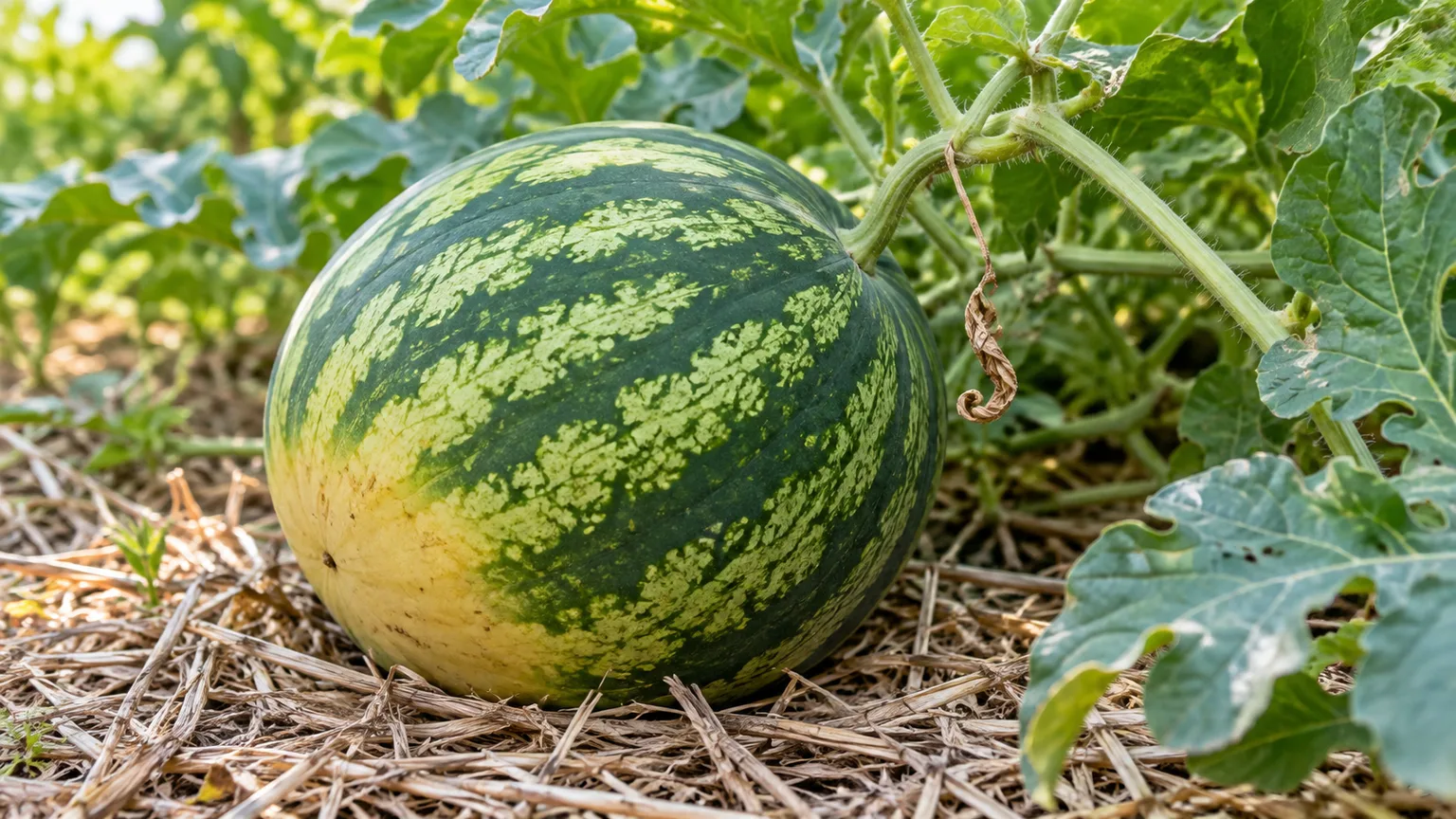
A watermelon is ready to pick when several clues agree: the tendril nearest the fruit is brown and dry, the ground spot has shifted from white to creamy yellow, the melon has reached the size and rind appearance expected for its variety, and the fruit feels heavy for its size. Treat tapping as a supporting clue, not a verdict.
That combination matters because watermelon is a non-climacteric fruit. Once it is cut from the vine, its sugar content does not increase. University of Minnesota Extension explains that watermelons should remain on the vine until fully ripe, while Oklahoma State University Extension places the usual harvest window at about five to six weeks after pollination, depending on variety and season. The calendar narrows the window; the fruit and vine tell you when to act.
The Short Answer: Use a Combination of Signs
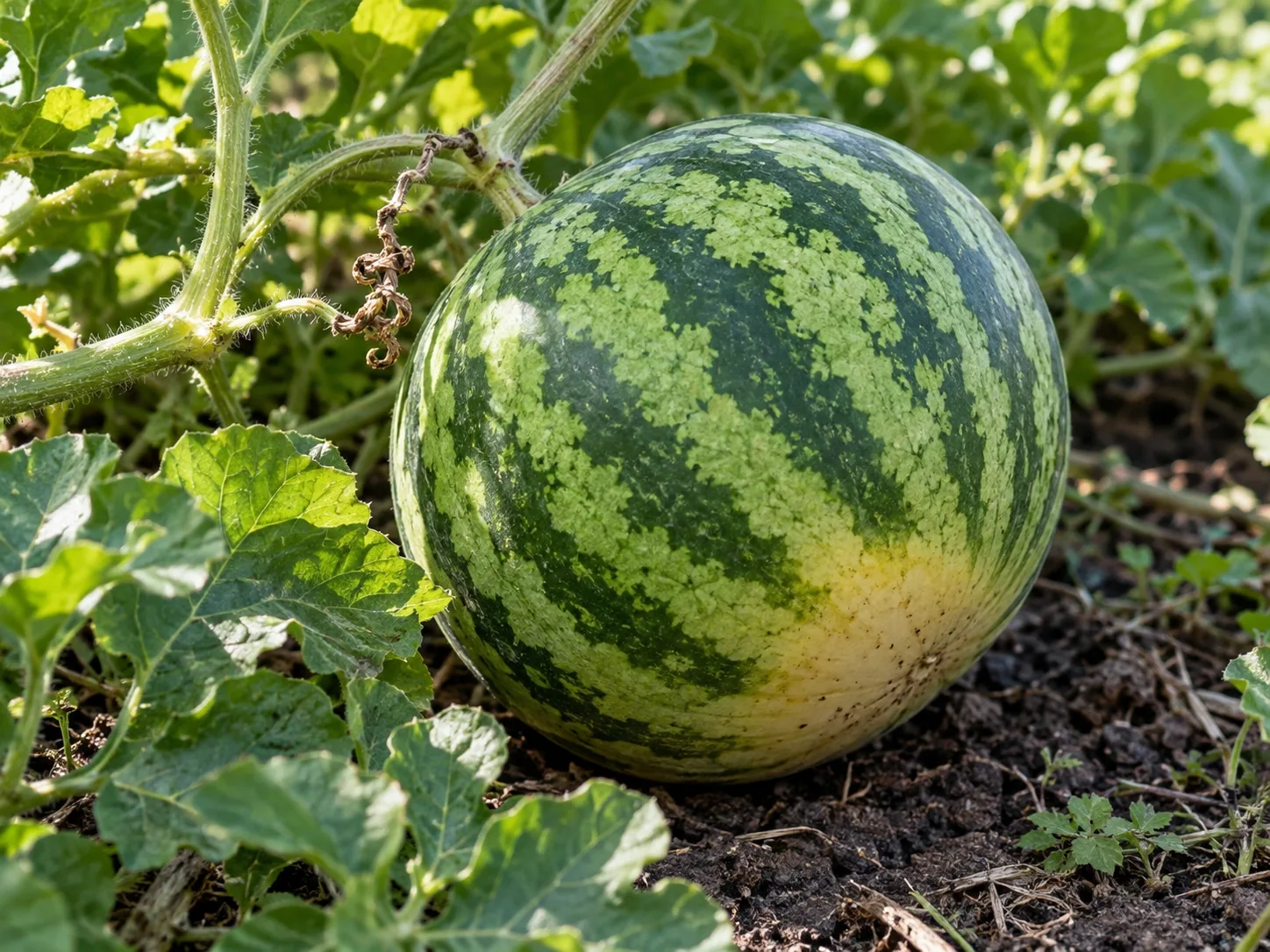
Start with the vine, not the size. Find the small curly tendril closest to the stem that connects the fruit to the plant. When that tendril is green and flexible, the melon is still receiving strong signals from an active vine; when it becomes brown, dry, and crisp, harvest is getting close.
Next, look at the underside. The ground spot, also called the belly spot or field spot, is where the fruit rested against the soil or mulch. White or pale green usually means “check again later.” Creamy yellow is a much stronger sign that the fruit has finished maturing on the vine.
Then use the rind, size, and weight to confirm what the plant is telling you. A ripe melon should look like the mature version pictured on the seed packet or plant label, feel dense for its size, and show a change in sheen that fits the cultivar. You are building a case, not passing a one-clue test.
Know Your Variety Before You Judge the Fruit
Watermelons do not all become the same size, shape, or color. A small round ‘Sugar Baby’, a long striped ‘Crimson Sweet’, a yellow-fleshed cultivar, and a seedless mini may all be ripe while looking nothing alike. Oregon Agriculture in the Classroom’s watermelon overview is a useful reminder that varieties differ in size, flesh color, rind pattern, and growing time.
Use the seed packet, plant tag, or the breeder’s description to answer three questions: What is the mature size? What does the ripe rind look like? Are the listed days counted from sowing or transplanting? A melon that has stopped at 8 pounds may be perfectly mature if it is a mini variety, while a full-sized type that has stopped at the same weight may simply be underdeveloped.
The description also helps you avoid a common mistake: treating a pale or unusual rind as immature. Some ripe cultivars stay gray-green, light green, or strongly striped. Compare your fruit with the variety’s expected mature color rather than with the darkest watermelon you have seen at a market.
Start With Days From Pollination or Maturity
Count days as a window, not an appointment. If you recorded when the female flower opened or when bees were visiting the newly set fruit, begin checking seriously around five weeks later. Warm, sunny weather can move the crop toward maturity faster; cool or cloudy weather can stretch the window.
If you did not record pollination, use the seed packet’s days-to-maturity estimate and begin daily checks near the upper end of that range. The number is especially useful when several melons are growing at once, but it cannot account for a late planting, drought stress, excessive rain, disease, or a variety that behaves differently in your climate.
Do not pick solely because a melon has been on the vine for the advertised number of days. The same number may describe a transplant-to-harvest estimate in one catalog and a sowing-to-harvest estimate in another. Pair the calendar with the tendril and ground spot before cutting.
For a more useful date next season, mark the first day you see a female flower with a tiny swelling behind the petals, then note when it closes and begins to enlarge. You do not need to identify every pollinated flower; recording one or two fruits on each plant gives you a reference for that cultivar in your garden. If a fruit is hand-pollinated, mark the stem with a loose weatherproof tag or write the date in your garden notebook.
The pollination date also explains why two melons on one vine can disagree. A fruit set ten days later may still have a green tendril while an older neighbor is ready, even though both have similar size. Marked dates stop you from treating a later fruit as a failure or picking an earlier fruit just because the plant has another melon that looks ready.
The Most Reliable Ripeness Signs
These clues work best together, but they do not all deserve equal weight. The tendril and ground spot usually tell you more than smell, blossom-end pressure, or an isolated thump. The Watermelon Board’s cultivation guidance also emphasizes a firm, symmetrical fruit, a pale or buttery-yellow underside, and weight relative to size when growers assess mature melons. For a practical home-garden comparison, Harvest to Table’s melon harvest guide likewise treats the yellow ground spot and browning stem as useful watermelon harvest clues.
The Tendril Nearest the Fruit Turns Brown
Find the tendril attached at the closest node to the melon, not a random curl several inches away. The useful tendril starts green and pliable, then dries from green to tan or brown. When it is completely dry and crisp, it is one of the best harvest cues available to a home gardener.
The tendril test is practical because you can inspect it without rolling a heavy fruit through the leaves. It is not infallible: a vine damaged by disease, drought, root injury, or physical breakage can produce a dry tendril before the melon has developed good sweetness. If the plant looks stressed or the tendril is broken, give greater weight to the ground spot, expected variety size, calendar, and overall fruit condition.
The Ground Spot Changes From White to Yellow
Look for the patch where the melon rested on the ground. A mature spot is usually creamy yellow to buttery yellow, while an immature spot is white, greenish-white, or barely visible. It may become more pronounced as the fruit matures, but color is more useful than size.
Rotate the fruit only as far as needed and support it with both hands. Do not drag it across rough soil or twist the stem while checking. If mulch, a basket, or dense foliage hides the underside, clear the view gently rather than lifting the melon by the vine.
The ground spot is a strong clue, not a sweetness meter. A yellow spot means the fruit has reached a useful maturity stage; it does not prove that every watermelon on the plant has the same sugar level. Check each fruit separately.
Rind Color and Sheen Shift
An immature watermelon often has a bright, glossy surface. As it matures, the sheen may become more muted or the background color may deepen. This is useful when you know what your variety should look like, but it is not universal enough to be your only test. University of Minnesota Extension specifically notes that the rind-sheen change depends on variety.
Look for a healthy, firm rind without soft wet patches, deep cuts, leaking cracks, or rapidly spreading discoloration. A few superficial scratches are not automatically a problem, but a bruise or puncture can invite decay, especially if rain has kept the vine and soil wet.
The blossom end—the end opposite the stem—should remain firm. A tiny amount of natural give is not a dependable harvest signal, and repeatedly pressing it can bruise the fruit. If that end is distinctly soft, wet, sunken, or foul-smelling, think over-maturity or damage rather than “perfectly ripe.”
The Fruit Is Full-Sized and Heavy
Size helps only when you judge it against the variety. A watermelon should have reached the mature dimensions described for its cultivar and should no longer be swelling quickly. If it has looked unchanged for several days and the vine clues are also moving toward maturity, it is worth checking closely.
Weight is a useful supporting clue because watermelons contain a great deal of water. A ripe fruit often feels dense and heavy for its size, but heavy does not automatically mean sweet; excessive late moisture can produce a large, watery melon. Compare similar-sized melons on the same plant if you can, and use weight to confirm rather than override a green tendril or white ground spot.
Symmetry is also a quality clue. A severe lump, flat side, or bottleneck may reflect poor pollination, uneven moisture, crowding, or the fruit resting on an uneven surface. Shape does not tell you exactly when to pick, so do not leave a damaged melon indefinitely in hopes that time will correct a problem that began early.
What the Thump Can—and Cannot—Tell You
Tap the middle of the melon gently with your knuckles. Gardeners often describe an immature watermelon as bright, metallic, or ringing and a mature one as more muted or hollow. Oklahoma State University Extension gives a more careful version of that rule: a metallic ringing sound can indicate immaturity, while a duller sound can indicate maturity or over-maturity.
That overlap is the problem. Shape, rind thickness, fruit temperature, internal defects, and your own hearing change the result. The thump test is more useful for detecting an obviously immature or over-mature melon than for separating two nearly ready fruits. Use it last, after the tendril, ground spot, variety timing, rind, and weight.
Do not squeeze hard, slap the fruit, or tap every side repeatedly. You risk bruising the rind and still will not gain the certainty that comes from a cut test. Commercial growers can sacrifice sample melons from different parts of a field and associate outside appearance with internal color and sweetness; a home gardener usually needs a non-destructive combination of clues instead.
A Quick Field Decision: Pick, Wait, or Check Again
Use this table when you are standing beside the vine with shears in hand. It gives priority to the clues that are easiest to interpret without damaging the fruit.
| What you see | Decision | Next action |
|---|---|---|
| Brown, dry adjacent tendril; creamy-yellow ground spot; mature size | Pick | Harvest on a dry day and cut the stem cleanly. |
| Tendril is dry, but the spot is white and the fruit is still smaller than the variety description | Wait | Recheck the same fruit in two or three days; verify that you found the correct tendril. |
| Yellow ground spot, mature size, but the nearest tendril is still green | Check again | Inspect the rind and variety timing; do not let tapping alone make the decision. |
| No ground spot, or the fruit is growing vertically | Use alternatives | Rely on the tendril, cultivar timing, mature appearance, and weight. |
| Soft, leaking, cracked, bruised, or foul-smelling fruit | Harvest or remove | Protect nearby fruit from decay; do not treat damage as a ripeness signal. |
If two strong clues agree and the fruit is within its expected window, picking is reasonable. If only one clue agrees, wait and inspect the same melon again rather than harvesting the whole plant. One ripe watermelon does not make every neighboring fruit ripe on the same day.
When to Harvest Watermelon From the Vine
Choose a dry part of the day when the rind and surrounding leaves are not wet. Wet handling increases the chance of spreading grime and makes the fruit harder to grip without slipping. Have a clean, sharp knife or pair of pruning shears ready before you lift the melon.
Cut, Don’t Pull
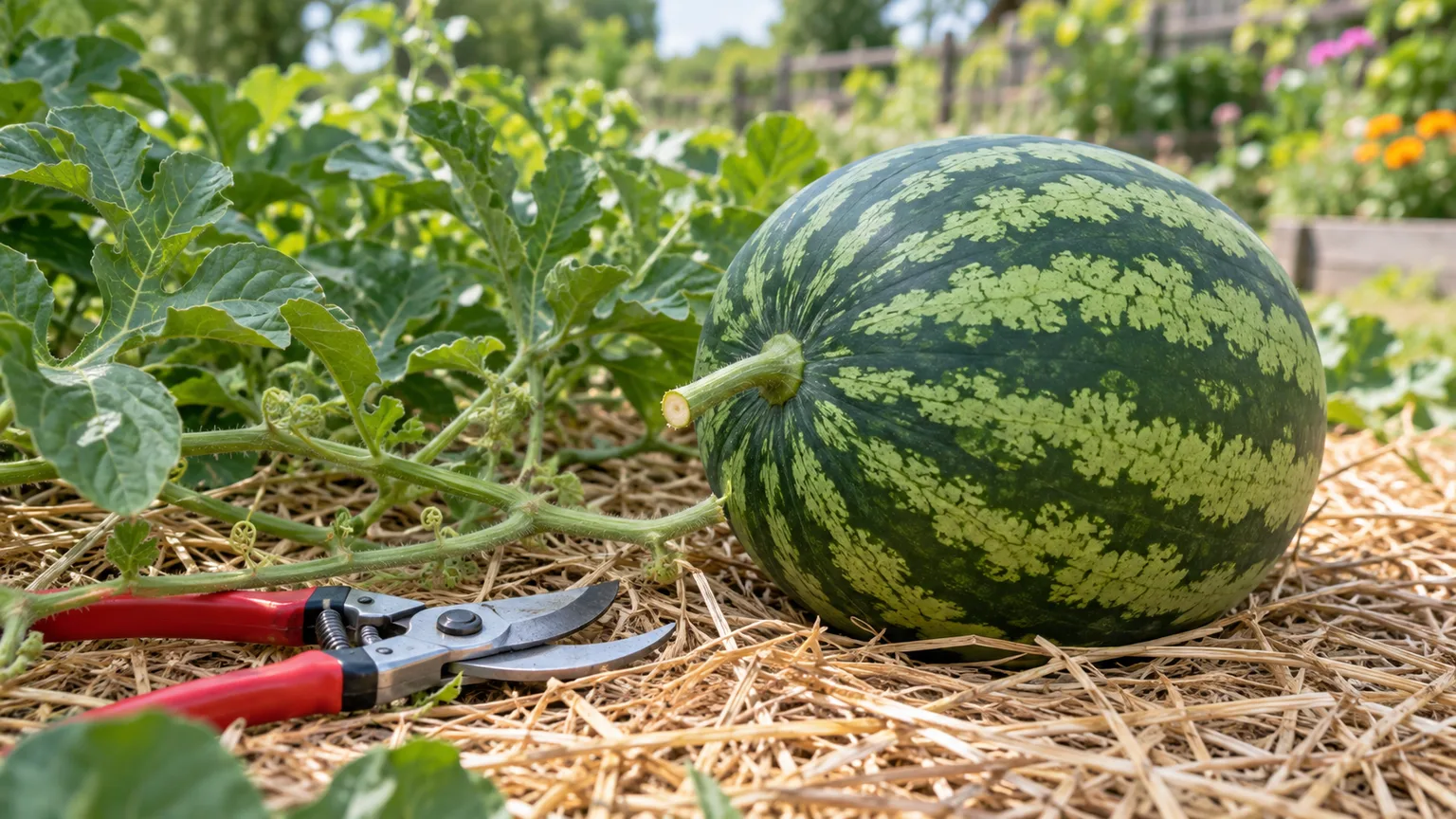
Watermelons do not reliably “slip” from the vine like ripe cantaloupes. Cut through the stem with a clean tool instead of pulling, twisting, or breaking the fruit loose. The Oklahoma State University Extension watermelon production guide recommends cutting rather than pulling and leaving a length of stem to reduce stem decay.
Support the melon with your free hand if it is hanging or resting on a narrow support, but do not lift by the stem. Make one decisive cut, leaving a short stem stub attached to the fruit. If the stem is tough, reposition the tool and cut again; do not wrench the vine until the fruit snaps free.
After cutting, carry the watermelon with two hands and keep it close to your body. A drop can bruise the flesh even when the rind looks intact. Do not stack heavy fruit on top of one another, and keep harvested melons out of direct sun while you finish the picking round.
Protect the Rind After Cutting
Keep the fruit on its side on a padded surface rather than setting it on a sharp stem end or a hot, exposed underside. Brush away loose soil gently and inspect for punctures, soft spots, cracks, or insect damage before bringing it into storage.
If you plan to cut it soon, chill it for serving after the outside is clean and dry. Chilling changes the eating temperature and texture; it does not rescue an under-ripe watermelon or make it sweeter. The important quality decision happened before you made the cut.
What to Do if Signs Disagree
Conflicting signs are normal, especially on a first crop or an unfamiliar cultivar. Resist the urge to average every clue equally. First confirm that you are looking at the right part of the plant, then check for conditions that can imitate maturity.
No Ground Spot? Use Other Clues
A watermelon may have no obvious yellow patch if it is growing on a trellis, hanging in a sling, sitting in a basket, or resting on thick mulch that prevents a clear soil-contact mark. A missing spot does not mean the fruit is immature.
In that case, use the dry adjacent tendril as your lead clue and confirm the cultivar’s expected size, rind pattern, and harvest window. A mature-feeling, heavy fruit with a dry tendril and an appropriate rind is a better candidate than a large fruit with a glossy rind and a green tendril. If you have multiple melons of the same variety, compare them without assuming the largest is the first to ripen.
Trellised or Container-Grown Melons
Vertical growing changes the ground-spot test and increases the importance of support. A melon in a sling can ripen normally, but the sling may hide the underside and make it tempting to lift the fruit by the stem. Inspect the exposed rind and tendril, and support the fruit while you work.
Container-grown watermelons can mature at a different pace from vines in an open bed because the root zone heats and dries faster. Do not use a dead or wilted container vine as proof that the fruit is ready; water stress can stop the plant before the melon has developed its best flavor. Check the calendar, size, tendril, and rind together.
Seedless, Mini, and Unusual Varieties
Seedless watermelons follow the same basic harvest logic, but their size and internal texture vary by cultivar. Mini watermelons may be ready at a fraction of the weight of a picnic type. Use the plant label, not a supermarket scale, as your benchmark.
Unusual rind colors deserve the same caution. A yellow-fleshed or pale-skinned watermelon may never develop the dark green appearance you expect from a red-fleshed striped type. A reference photo from the seed company can help, but the tendril and ground spot—when available—still provide the more useful plant-level clues.
Late-season vine decline needs interpretation. Natural aging around harvest can be normal, but sudden wilt, spotted leaves, stem lesions, or fruit rot can reflect disease or root stress. A stressed plant may show a brown tendril before the fruit is sweet, so do not let vine decline overrule an immature ground spot and undersized fruit.
How to Store a Whole Watermelon
For the best quality, use a freshly harvested watermelon soon rather than treating it like a long-term storage crop. Oklahoma State University Extension gives a practical whole-fruit range of about 52 to 60°F and warns that extended temperatures below 50°F can cause chilling injury, while University of Minnesota Extension also describes cool, humid storage and notes that watermelons are sensitive to ethylene.
At home, keep an uncut melon in a cool, shaded, well-ventilated place if you will eat it shortly. Avoid a hot garage, sunny porch, or damp pile where the stem end stays wet. If you need longer storage, a cool room or cellar is preferable to forcing a whole watermelon into a very cold refrigerator for weeks.
There is no need to create a laboratory-perfect storage room for a melon you will eat in the next day or two. The practical priorities are to keep it out of heat and sunlight, avoid dropping or stacking it, and move it to the refrigerator after cutting. Check the stem end and rind each day; a soft wet spot or fermented odor means quality is declining, not that the fruit is becoming sweeter.
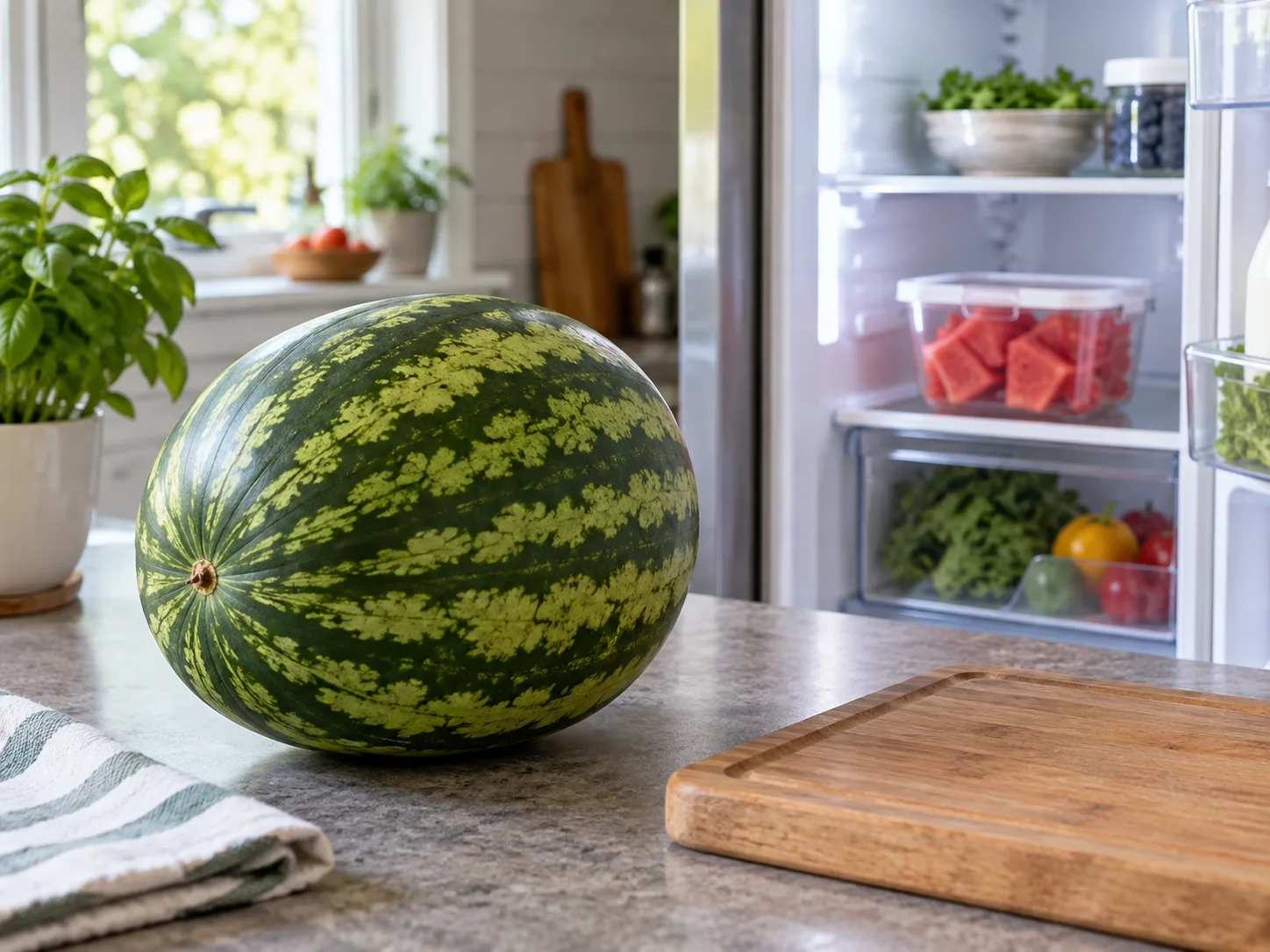
Keep whole melons away from ripening bananas, apples, pears, tomatoes, and cantaloupes when you are trying to extend quality. Watermelon does not produce ethylene but is sensitive to it, so separating it from strong ethylene-producing fruit can slow quality loss. Once cut, cover or seal the pieces and refrigerate them promptly; clean utensils and a clean cutting surface matter more than trying to hold the fruit at a perfect whole-melon temperature.
Conclusion
The most dependable way to tell when a watermelon is ripe is to let the vine and fruit agree. Look first for the tendril nearest the melon to turn brown and crisp, then check for a creamy-yellow ground spot, the right mature size for the variety, a healthy change in rind appearance, and weight that feels dense for the fruit’s size. Use the thump as a final supporting clue, never as the only reason to cut.
When the signs conflict, wait a few days and check the same melon again—unless it is cracked, leaking, bruised, or clearly decaying. When they agree, cut the stem cleanly, leave a short stub, carry the fruit carefully, and keep it cool and shaded until you are ready to eat it. You cannot sweeten an under-ripe watermelon after picking, but a patient, evidence-based check can keep one from leaving the vine too soon.