Rose Rosette Disease: 5 Signs and What to Do
Learn the five signs of rose rosette disease, how to separate it from normal red growth or herbicide injury, and how to remove an infected rose safely.
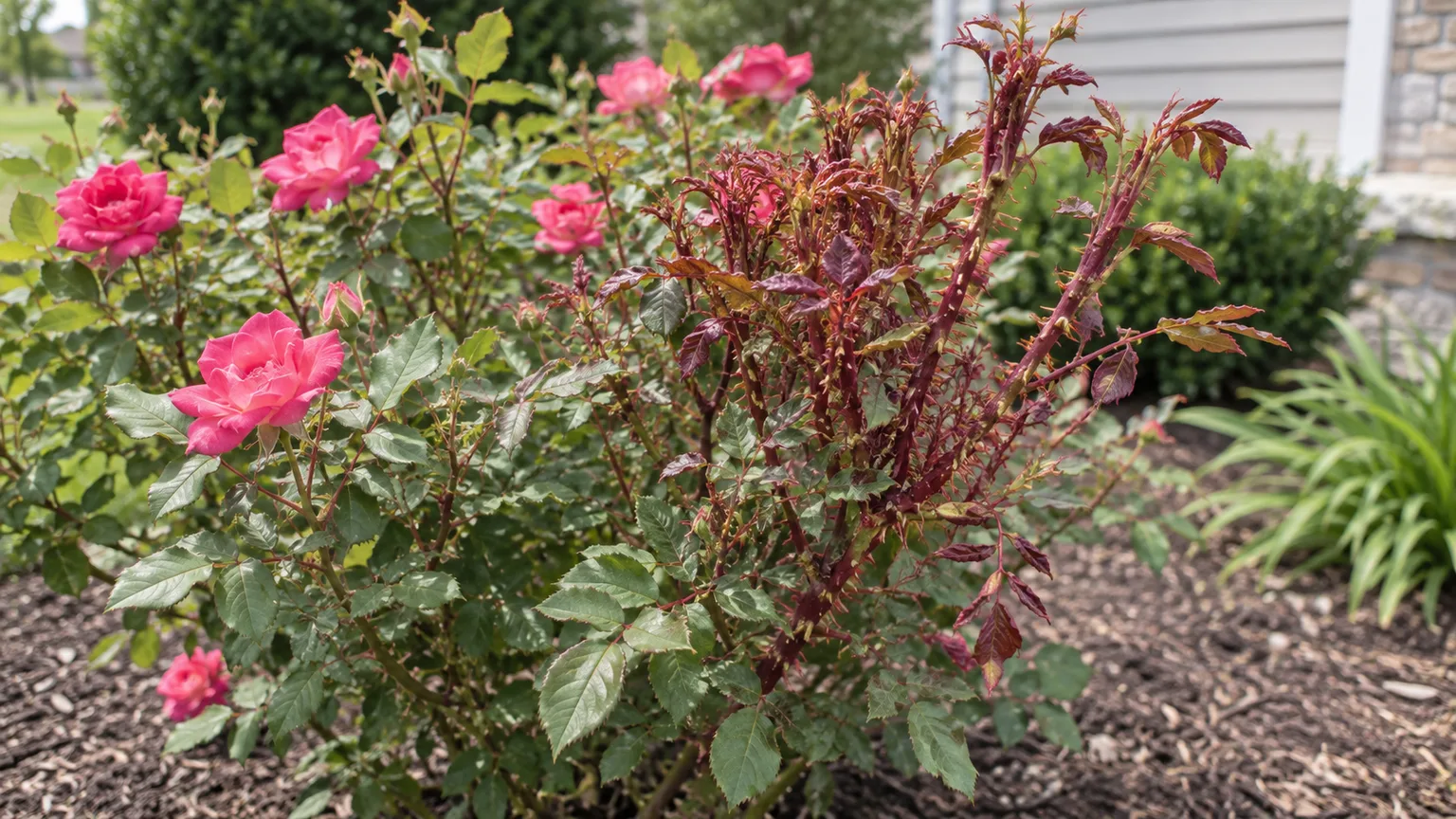
A rose can look “vigorous” right before it reveals a serious problem. One or two red shoots may be normal spring growth, but a rose that keeps producing distorted red stems, crowded twiggy branches, soft thorns, and buds that never open deserves a closer inspection. That combination is the warning—not red color alone.
Rose rosette disease (RRD) is a viral disease of roses with no dependable cure once a plant is infected, as Oklahoma State University Extension explains. The useful skill is recognizing the pattern early and responding in a way that protects the roses around it. The steps below will help you decide whether to watch a suspicious shoot, seek a diagnosis, or remove the whole bush.
If you are looking at a suspect plant right now, do not prune it casually and then move to your healthiest rose. Set aside the pruners, avoid a leaf blower, keep the plant material in place until you have a plan, and work from healthy roses toward the suspect one if other garden work cannot wait.
First, Isolate the Suspect Rose
Start with a short pause rather than a panic spray. RRD is carried by microscopic eriophyid mites, and those mites can move on air currents or hitchhike on clothing and equipment. Your first goal is to prevent an uncertain diagnosis from becoming an avoidable transfer event.
For the next inspection, take these precautions:
- Do not handle the suspect rose and then touch a healthy rose. If you have already done so, change gloves or wash your hands and launder clothing before moving on.
- Skip the leaf blower. Blowing leaves, petals, and pruning debris can move mites and infected plant material through the bed.
- Photograph the whole plant and the odd shoot. Include the shoot tip, a normal branch for comparison, leaf undersides, buds, and thorns. A dated photo makes it much easier to tell whether red growth is maturing or staying abnormal.
- Do not share cuttings. A rose with unexplained distortion should never be propagated or passed to another gardener.
If only one branch looks different, this pause lets you compare it without spreading the problem through unnecessary pruning.
What Rose Rosette Disease Actually Is—and Why the Mite Matters
RRD is caused by rose rosette virus, also called RRV; the virus is classified within the genus Emaravirus. It is associated with Rosa species and hybrids, so hydrangeas, perennials, trees, and vegetables are not infected by RRV simply because they grew beside a diseased rose. The important host question is which other roses are nearby or downwind. Virginia Cooperative Extension likewise describes RRD as a rose-specific disease.
The primary vector is the eriophyid mite Phyllocoptes fructiphilus. UGA Cooperative Extension and Virginia Cooperative Extension also identify a second eriophyid mite, Phyllocoptes arcani, as a vector. These mites are too small to identify in an ordinary garden inspection; they hide around buds, sepals, leaf bases, leaf scars, and other protected tissue rather than sitting conspicuously on the leaf surface.
The disease cycle explains why waiting for a dying plant is a mistake. A mite feeds on an infected rose, carries the virus to another rose, and symptoms emerge later. Oklahoma State University Extension describes a delay of weeks to months, while a peer-reviewed study documented symptoms appearing 30 to 146 days after exposure under studied conditions. The interval varies with cultivar, plant size, environment, and timing of infection, so a neighboring rose can look normal today and still require careful observation.
The virus is systemic once established in a rose, so a single cut does not reliably cure the plant. Current extension guidance treats prompt removal of the plant, including the roots, as the safest established response when RRD is confirmed or unmistakable.
Five Signs of Rose Rosette Disease to Check Together
No single symptom appears on every rose, and normal cultivar traits can confuse the picture. NC State Extension cautions that the signs vary, so look for a cluster of changes clearly different from the rest of the plant, especially when unusual color is paired with distortion, crowding, thorn changes, or flower failure.
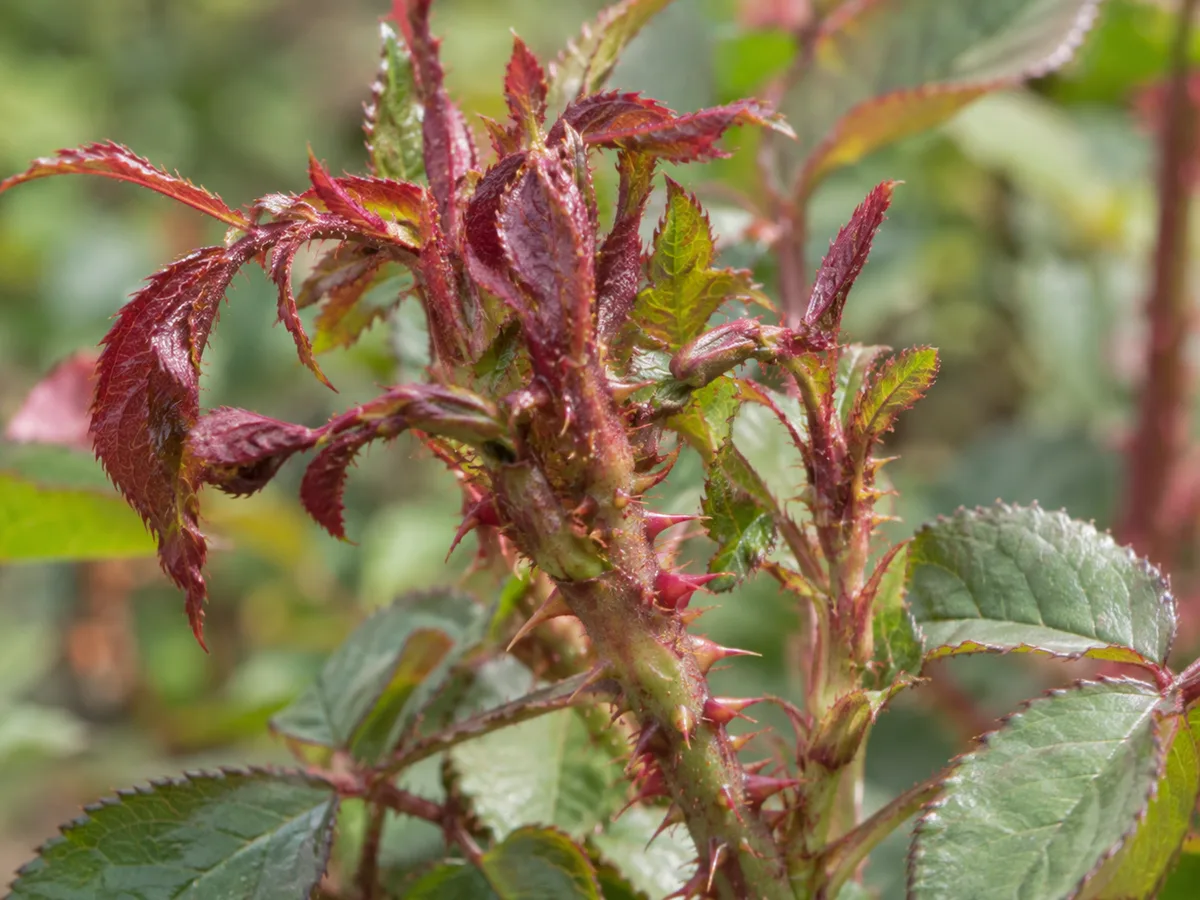
A close look at the shoot is more useful than red color alone: persistent juvenile foliage, crowded growth, and closely spaced soft prickles together are more concerning than a normal red flush.
Persistent Red or Purple Growth That Never Matures
Healthy roses often push red, bronze, or purple new leaves. The color is part of the plant’s normal juvenile phase, and it usually fades as the leaves expand, take on their mature shape, and turn green. That temporary transition is not a diagnosis of RRD.
The concern is persistent, abnormal red growth that keeps extending without becoming ordinary rose foliage. Infected shoots may be unusually long, succulent, pliable, and tinted red or purple. The leaves can be narrow, strap-like, crinkled, or undersized, and the entire shoot may look softer and more crowded than the older canes.
Compare the odd shoot with a normal new shoot on the same bush. Ask whether the leaves share the same leaflet pattern, outline, and progression from juvenile color to mature green. Persistent red color with distortion is more concerning than a flush that quickly matures.
Witch’s-Broom Branching at the Shoot Tips
“Witch’s broom” describes a brush-like cluster of many short shoots emerging close together, often from one point on a cane. Instead of one orderly stem extending toward a flower, the rose produces a congested tuft that resembles a small broom or rosette.
The shape matters more than the nickname. Look for shortened spaces between leaves, multiple lateral shoots, and new growth that seems to multiply rather than resolve into a normal flowering stem. The leaves inside the cluster are often small, distorted, and red or yellow, although the exact color varies by rose cultivar.
Witch’s broom is a strong warning, but it is not automatically diagnostic. Certain herbicides can create a similar pattern, particularly when a rose is exposed during late summer or fall and the injury appears as buds open the following season. Virginia Cooperative Extension recommends reading the broom alongside thorn texture, persistent color, leaf shape, nearby plant symptoms, and chemical timing.
Distorted Leaves, Tight Buds, and Missing Blooms
NC State Extension includes these flower and foliage changes among the disease’s signs.
RRD can change the rose’s basic growth geometry. Leaves may be smaller than normal, twisted, roughened, brittle, or oddly shaped. Leaf color can include red, yellow, or mosaic-like patterns, and the petioles may be unusually short. Affected shoots may hold many buds, but those buds can remain tight, malformed, mottled, or unable to open into recognizable flowers.
This is different from a single flower bud lost to rain, cold, thrips, or botrytis. A rose with RRD often shows a broader pattern: the shoot is abnormal, several buds are crowded together, and the foliage below them does not look like the mature foliage elsewhere on the plant. The plant may seem to be putting energy into growth without producing usable flowers.
The comparison helps because cultivar differences are substantial; a naturally small-flowered rose should not be judged against a hybrid tea, and a red-leaved spring flush should not be judged against midsummer foliage.
A Sudden Explosion of Soft, Closely Spaced Thorns
Excessive prickles are one of the most useful clues because the change can be dramatic. An affected cane may become covered with many more thorns than the surrounding growth, with the prickles packed unusually close together and initially soft or rubbery rather than normally firm and pointed. Virginia Cooperative Extension identifies excessive soft, pliable prickles on swollen stems as an especially useful symptom.
Do not test the thorns with bare fingers. Look at their spacing and structure visually, or use gloves if you need to move the cane for a photograph. Virginia Tech describes excessive, unusually soft and pliable thorns on swollen stems as a symptom that can be diagnostic when present with the other signs.
A rose can naturally produce thornier juvenile stems, and some cultivars are thorny by habit. The useful comparison is within the plant: if one new cane is swollen, red, flexible, and covered in a dense, unfamiliar pattern of soft prickles while mature canes are ordinary, the change is much more suspicious than a generally thorny rose.
Thick, Flexible Stems and a Declining Canopy
An RRD-affected shoot may be thicker and more succulent than the older cane that supports it. It can bend with a springy pliability that feels unlike healthy woody growth, and the new stem may remain green or red while its leaves and buds become increasingly distorted.
As the disease advances, the plant may lose leaves, suffer cane dieback, become more vulnerable to cold injury, and stop looking like the rose you planted. Do not wait for defoliation or death; that gives the virus and its mite vector more time to occupy the garden.
The strongest field pattern is therefore not “my rose has a red stem.” It is persistent unusual color plus distorted leaves or buds plus crowded branching, excessive prickles, or an oddly swollen flexible cane. The more of those changes appear together—and the more one shoot differs from the plant’s normal growth—the sooner you should ask an extension office or plant clinic for guidance.
Separate Normal Red Rose Flush From RRD
Normal red growth is the false alarm that causes many gardeners to overreact. New rose foliage can be red, bronze, or burgundy because young tissue contains pigments that change as it matures. Oklahoma State University Extension notes that healthy red new growth should expand into leaves with the cultivar’s normal shape, soften or turn green, and settle into a recognizable flowering stem.
RRD growth tends to break that progression. The red color persists, the leaves remain narrow or distorted, the shoot branches excessively, and the thorns or stem texture change. Instead of asking “is this red?” ask “does this shoot become a normal rose shoot over the next few weeks?”
Use this side-by-side check:
| What you see | More consistent with normal new growth | More concerning for RRD |
|---|---|---|
| Color | Red or bronze at first, then fades as leaves mature | Red or purple persists with abnormal foliage |
| Leaf shape | Same general leaflet pattern as mature growth | Narrow, twisted, rough, strapped, or undersized leaves |
| Branching | One orderly cane or flowering stem | Many short shoots clustered at one point |
| Thorns | Normal for the cultivar and firming with age | Sudden dense pattern of soft, closely spaced prickles |
| Flowering | Buds develop and open normally | Crowded, malformed, mottled, or permanently blind buds |
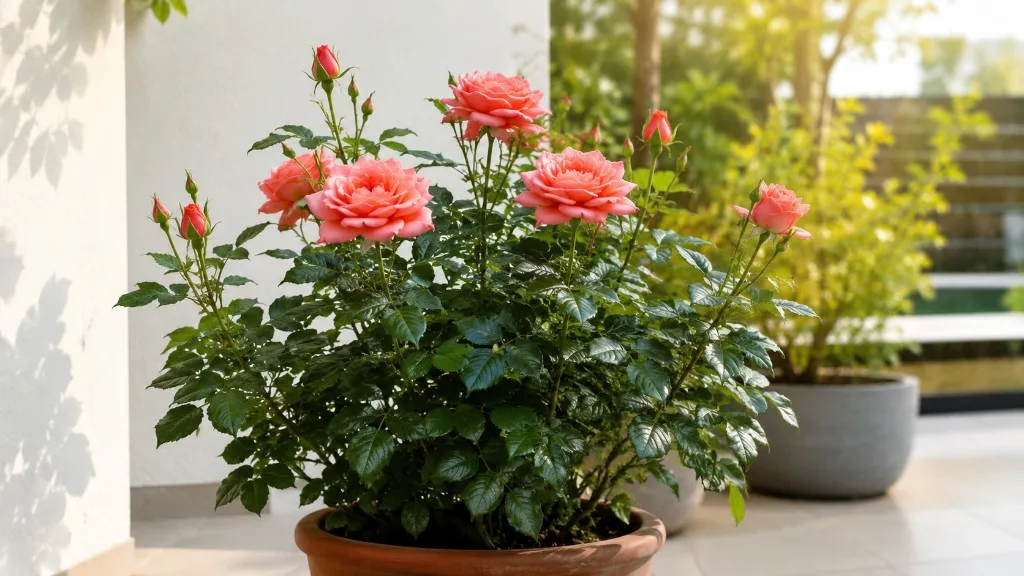
Healthy rose growth should resolve into the plant’s ordinary leaf shape and flowering habit as it matures.
If the only difference is color, photograph the shoot, mark the date, and compare it with a normal cane after the leaves expand. If soft thorns, a broom, or multiple distorted buds are already present, treat waiting as a diagnosis window—not permission to move cuttings or tools around the garden.
Rule Out Herbicide Injury and Other Look-Alikes
Herbicide injury is the most important look-alike because it can create narrow leaves, yellowing, stunting, and a witches’-broom appearance. Virginia Cooperative Extension notes that glyphosate contacting green rose tissue in fall can move to buds and produce symptoms the following spring; 2,4-D can also distort rose leaves. If an entire nearby group of unrelated plants shows distortion or discoloration, chemical exposure becomes more plausible.
Herbicide injury usually has a different timeline from RRD. If the exposure stops, new growth in the next season may return to normal, whereas RRD symptoms persist and progress. Excessive soft prickles and unusual persistent red pigmentation are not typical of herbicide damage, so their presence shifts concern back toward RRD.
Several other problems can explain one part of the story:
- Botrytis blight can turn rose buds brown and make them fail to open during cool, wet weather, but it does not normally create a red, thorn-covered broom of distorted shoots.
- Black spot causes dark leaf lesions and yellowing, often beginning on lower leaves. It does not explain a sudden cluster of soft prickles and flexible red stems.
- Aphids or other insects can bunch new growth or deform leaves, but look for visible insects, honeydew, cast skins, or feeding damage. Insect pressure alone does not account for the full RRD pattern.
- Pruning, frost, or physical damage can produce a strange single cane, especially after a storm. The affected tissue should show a plausible injury rather than repeated abnormal growth emerging from several buds.
Avoid spraying insecticide, miticide, or herbicide “just in case.” A spray cannot cure a virus, and a misapplied product can add chemical injury to an already uncertain diagnosis. When the pattern is mixed, a clear set of photographs and a sample for professional diagnosis are more useful than a cabinet full of treatments.
How to Get a Reliable Diagnosis
You cannot confirm RRD by finding the mite with a hand lens. The mites are microscopic and often concealed within buds, leaf bases, and sepals. A trained diagnostician may use microscopy, symptom evaluation, and molecular testing such as RT-PCR, particularly when the disease is suspected in a new area or the symptoms overlap with herbicide injury.
Oklahoma State University Extension recommends collecting a symptomatic shoot, preferably one with open flower buds, measuring roughly 6 to 12 inches. Wrap it in newspaper or a dry paper towel, place it in a sealed plastic bag, and refrigerate it if it cannot be delivered promptly. Take the sample to your local county extension office or follow the submission instructions for a plant disease clinic; include dated photos of the entire plant and close-ups of the affected growth.
Before cutting a sample, ask the receiving office about its current requirements. Some clinics want a specific form, fee, or shipping method, and a sample that arrives hot, wet, or decomposed may not be useful. If removal is already the responsible choice because several signs are unmistakable, do not delay for weeks waiting for a laboratory result; contact the extension office quickly while preparing to remove the plant.
Record what a still image cannot show: when the odd growth began, whether it affects one cane or several, nearby herbicide use, leaf-blower use, the location of other roses, and nearby multiflora rose. That context can separate viral disease from a one-time injury.
Remove and Dispose of an Infected Rose Safely
Once RRD is confirmed—or the symptom combination is strong enough that protecting nearby roses matters more than preserving the bush—remove the entire plant. Extension guidance warns that cutting out only the red tip is inconsistently effective because the virus is systemic, mites may remain on the plant, and infected roots or symptomless canes can still matter.

Clean tools before they move from the suspect rose to healthy plants; the sanitation step is part of disease management, not an optional finish.
Use this sequence:
- Choose a calm, dry period if possible. Wind can carry mites, and wet soil makes root removal harder. Wear thorn-resistant gloves, long sleeves, and eye protection.
- Bag the foliage before cutting. Place a large plastic bag over the canopy or gather branches into bags as much as the plant’s size allows. The aim is to reduce falling foliage and mite movement during handling.
- Cut the plant at or near ground level inside the containment. Avoid shaking the branches. Do not drag the unbagged plant past other roses.
- Dig out the root system and crown. Remove the root ball as thoroughly as practical, then inspect the hole for thick root pieces capable of sending up new shoots. The virus is not considered soil-borne, but an infected root fragment that regrows can recreate a rose host in the bed.
- Seal the plant and debris. Put the bagged rose, roots, fallen leaves, spent flowers, buds, and pruning scraps into a sturdy sealed bag. Keep it away from other roses until it leaves the property.
- Use the disposal method allowed where you live. Trash pickup or an approved green-waste route is usually the simplest choice. Do not compost infected material, and do not burn it unless local rules explicitly allow it and you can do so safely.
- Clean the work area and tools. Remove soil and plant residue from pruners, loppers, shovel, footwear, gloves, and clothing. Wash tools with soap and water, then use a suitable disinfectant according to its label and rinse or dry metal tools to limit corrosion.
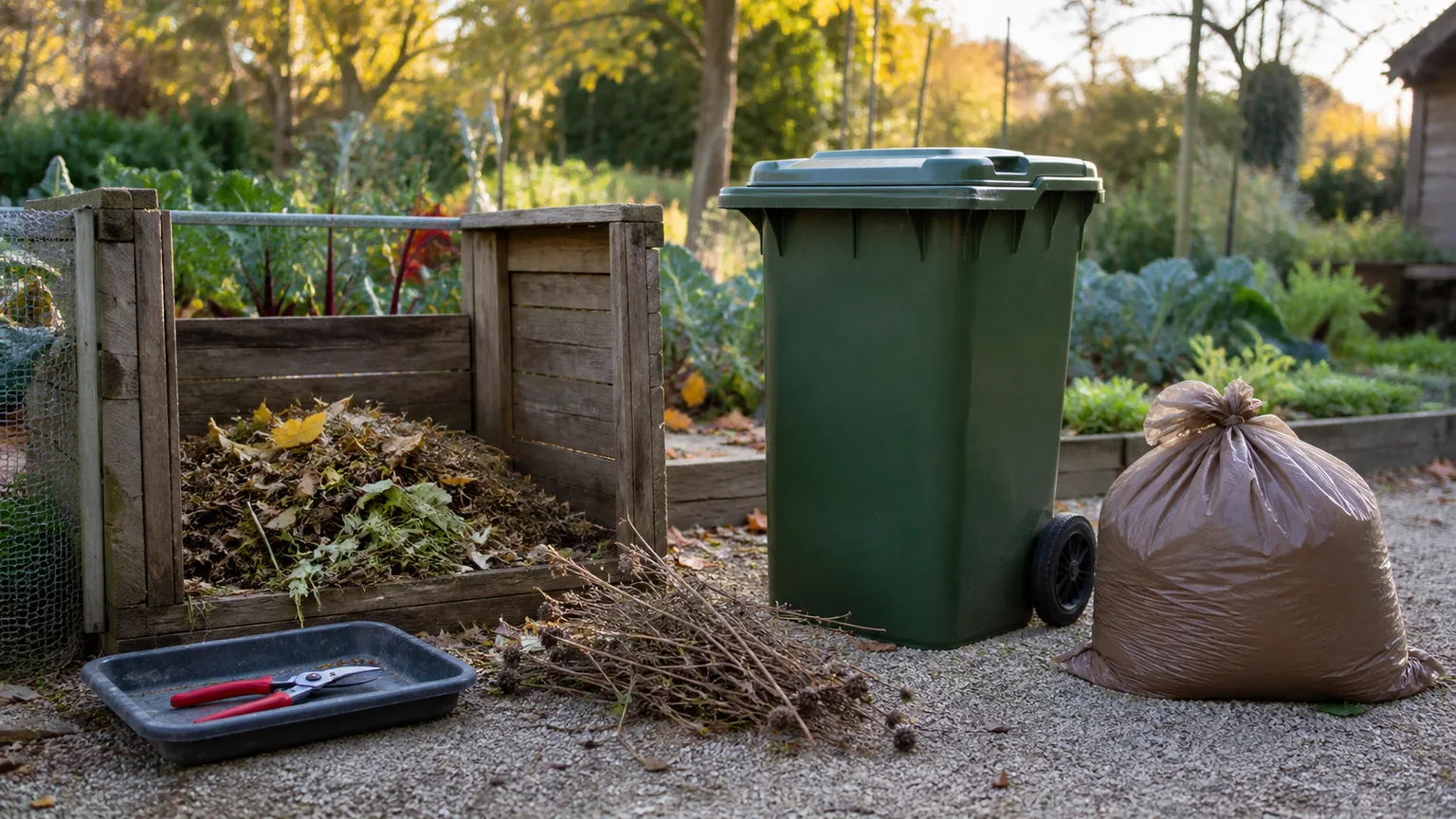
Bag diseased plant material for disposal rather than leaving it beside the bed or returning it to a home compost pile.
The most commonly missed step is cleanup after the bush is gone. Fallen leaves, flower parts, buds, and root sprouts can keep the host-and-vector cycle going even when the original canopy is in a bag. After cleanup, wash your hands, change or wash clothing, and work on healthy roses first the next time you garden.
Protect Nearby Roses for the Next Growing Season
Removing one rose reduces the immediate source of virus and mites, but it does not prove that neighboring roses are safe. A rose may have been exposed before symptoms appeared, and eriophyid mites can move short distances by crawling or farther on wind currents. University of Delaware guidance describes the mites as active around developing shoots and able to move on contaminated clothing, equipment, and air currents.
Map every cultivated rose within and around the bed, including roses across a fence and visible wild or escaped roses. Learn to recognize multiflora rose (Rosa multiflora), a susceptible host that can form dense thickets; remove it only when identification, local rules, and habitat concerns are clear.
For the first growing season after removal, inspect roses weekly during active flushes and at least every two weeks once growth is steady. Focus on shoot tips, leaf bases, sepals, and flower buds rather than only looking at the overall silhouette. A peer-reviewed study in central Georgia found eriophyid mites active from April through December, with higher densities on symptomatic plants and important concentrations around sepals and leaf bases; your local season will differ, but the lesson is to scout throughout growth rather than only in spring.
Use a consistent checklist at every inspection:
- Is new red color fading as the leaves mature?
- Does the new shoot have the normal leaflet count and shape for that rose?
- Are buds developing into ordinary flowers?
- Is one cane becoming crowded, swollen, flexible, or unusually thorny?
- Are symptoms appearing on one rose, several roses, or a wild rose nearby?
Space new roses so their canes and leaves do not touch. Mix roses with non-rose plants where the design allows, and use a fence, house wall, or tall planting as a windward barrier when it does not create shade or poor airflow. These measures can slow movement within a bed; none creates an invisible quarantine around a rose.
Avoid unnecessary leaf blowers, prune and deadhead with clean tools, remove fallen rose debris, and work from healthy plants toward suspect plants. Good watering, sunlight, spacing, and nutrition support a vigorous rose and make new growth easier to read, but they do not make a susceptible cultivar immune to RRV.
Replanting After Rose Rosette Disease
You can replant a rose in the same general area after removing the infected plant thoroughly, but do not rush to fill the hole. Virginia Cooperative Extension explains that RRV is not soil-borne, while also warning that infected root pieces can remain and regrow. The practical reason for a waiting period is to find and remove sprouts, confirm that no old rose tissue is returning, and give nearby roses time to reveal symptoms.
A conservative plan is to wait about one to two months after complete root removal, then inspect repeatedly before planting. Remove any rose sprout promptly and extend the pause until the source is gone. In a bed with many nearby roses, a temporary non-rose planting can make monitoring easier.
When you buy a replacement, inspect every cane, bud, leaf cluster, and graft union. Choose a reputable nursery, reject unexplained distorted shoots, and keep new roses separate long enough to inspect new growth. A clean tag or attractive bloom is not proof that exposure has never occurred; delayed symptoms make observation important.
There is no universally immune commercial rose to rely on. Research is looking for resistance or tolerance, and some rose species have shown promise, but a label that says “disease resistant” should not be treated as a guarantee against RRD. In a high-risk garden, site selection, spacing, scouting, and community-wide removal of symptomatic roses are more dependable than betting everything on one cultivar name.
What New Research Changes—and What It Does Not
Most current extension recommendations still favor removing an infected rose because RRV can be systemic and pruning has not reliably saved diseased plants. That remains the sensible default for a plant with multiple symptomatic canes, a long-standing broom, clear whole-plant decline, or a history that makes delayed action especially risky.
A 2025 peer-reviewed paper proposed a rescue hypothesis after observing RRV-positive roses in which symptoms appeared on one cane before other canes. The researchers documented delayed movement within some plants and suggested that very early removal of a single symptomatic cane might sometimes limit spread. They also state that the observations are preliminary and not fully validated; the work is a research direction, not permission to assume that a quick haircut cured a rose.
That distinction matters. If you have one questionable cane and the rest of the plant is normal, photograph it, contact an extension office, and ask whether targeted sampling or urgent removal is appropriate in your area. If multiple canes show the characteristic pattern, or if the diagnosis is already clear, do not keep the plant as an experiment while neighboring roses remain exposed.
The same caution applies to miticides and horticultural oils. They may be studied or used in specialized integrated pest-management programs, but products registered for common spider mites do not automatically control the eriophyid mites involved in RRD, and no spray cures the virus inside an infected rose. Follow local extension guidance and every product label; cultural controls and prompt removal remain the foundation for a home garden.
Conclusion
Rose rosette disease is easiest to miss when a gardener notices each clue separately: a red shoot in spring, a bud that never opens, a thornier cane, or a cluster of odd leaves. The pattern becomes much clearer when you compare the suspect growth with the rest of the rose and look for persistent color, distorted foliage, witch’s-broom branching, dense soft prickles, swollen flexible stems, and flower failure appearing together.
If the pattern is strong, contain the plant, bag it before removal, dig out the roots, dispose of every affected part, clean the tools and clothing, and scout every nearby rose through the next growing season. A patient replanting pause and an honest monitoring plan will do more for your garden than a hurried replacement or a hopeful spray.