How to Prune Cucumber Plants: 7 Easy Tips
A practical cucumber pruning guide with seven tips, lower-node rules, clean-cut technique, bush versus vining advice, and mistakes that reduce fruit.
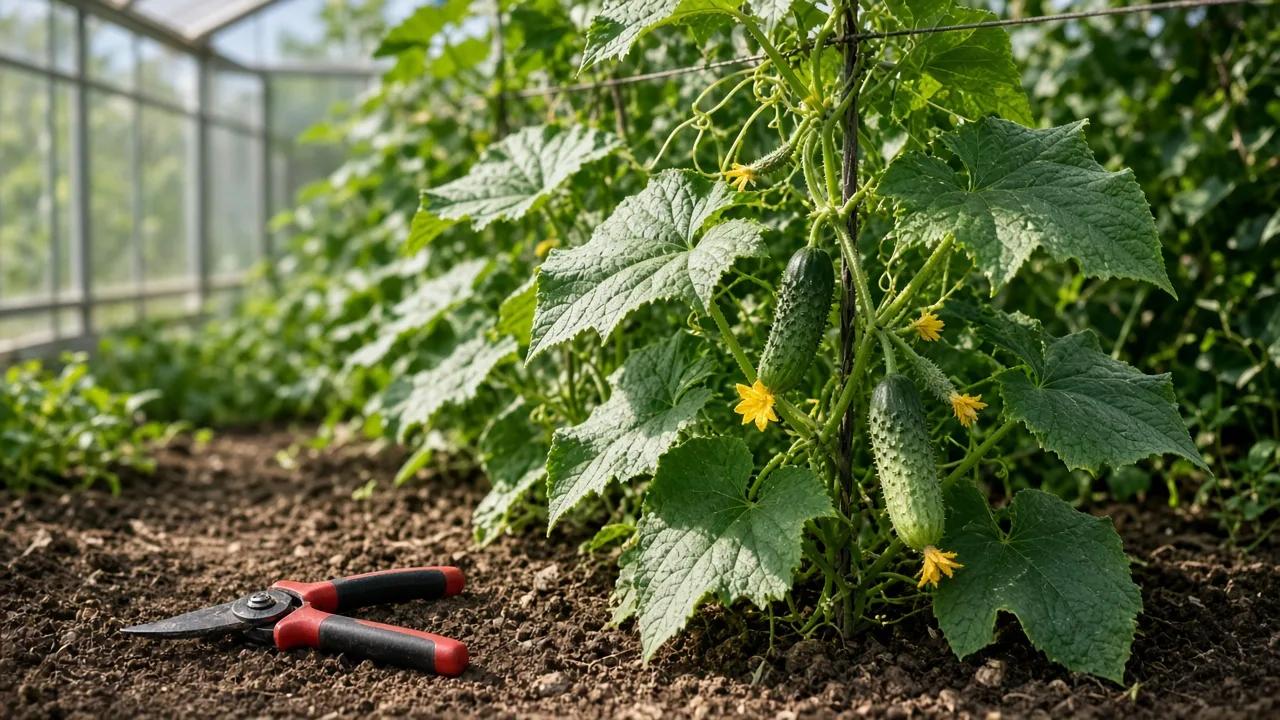
Cucumber vines are quick to forgive a small, thoughtful trim and quick to punish a careless one. The right job is not to strip the plant until it looks tidy; it is to create a readable vine that you can support, inspect, and harvest without sacrificing the leaves that power fruit production.
For a trellised vining cucumber, that usually means guiding one to three main leaders, removing competing side shoots while they are tiny, opening the lowest part of the canopy, and keeping healthy leaves around developing fruit. For a compact bush cucumber, it may mean removing nothing except damaged leaves. The first pruning decision is therefore not where to cut. It is whether your plant needs structured pruning at all.
Quick answer: prune for structure, not a bare vine
You can prune cucumber plants throughout the growing season, but pruning is most useful on vigorous vining varieties grown vertically. Start when the plant is established and producing several true leaves, or when new side shoots begin appearing at the leaf joints. Use your fingers for soft shoots that are less than about 2 inches long and sharp, clean bypass pruners for thicker growth.
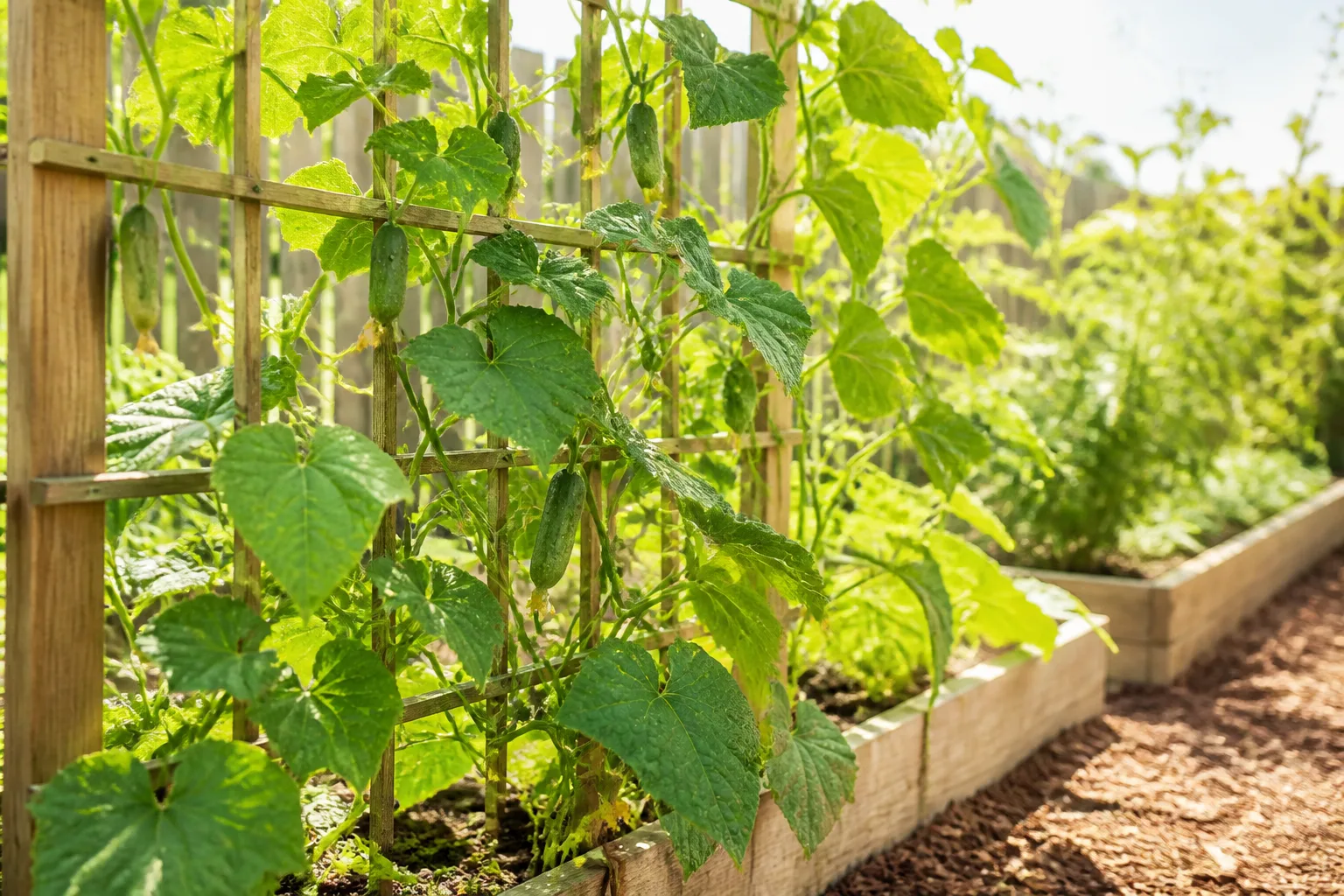
Begin with the jobs that have the clearest benefit: remove dead or diseased tissue, keep foliage off the soil, guide the main vine to its support, and thin side shoots that are creating a crowded knot. Do not remove every leaf or every flower just because the canopy looks lush. Cucumber leaves are the plant’s solar panels, and excessive leaf removal can expose fruit to heat and sunscald while slowing growth.
Pruning can make fruit easier to find, help foliage dry faster, and keep a trellis usable. It does not guarantee a higher number of cucumbers. A Penn State Extension comparison of greenhouse training systems illustrates the trade-off: a system that retained short lateral branches produced more fruit in that trial, while a more aggressively single-stemmed system produced a more consistent harvest pattern. The practical lesson for a home garden is to prune toward the result you need—space, visibility, airflow, or a manageable harvest—not toward the fewest stems possible.
Identify the cucumber before you make the first cut
Look at the seed packet, plant tag, or cultivar name before copying a pruning diagram. Cucumber plants share the same basic anatomy, but a bush pickler in a pot, a field slicer sprawling across mulch, and a parthenocarpic greenhouse cucumber do not carry fruit in exactly the same way.
Bush, vining, greenhouse, and parthenocarpic types
Bush cucumbers stay relatively compact and usually make short branches rather than a long climbing leader. If the plant fits its container or bed, leave most of those branches alone. Remove yellow, broken, or badly crowded leaves, but aggressive sucker removal can take away flowering sites without giving you much extra airflow.
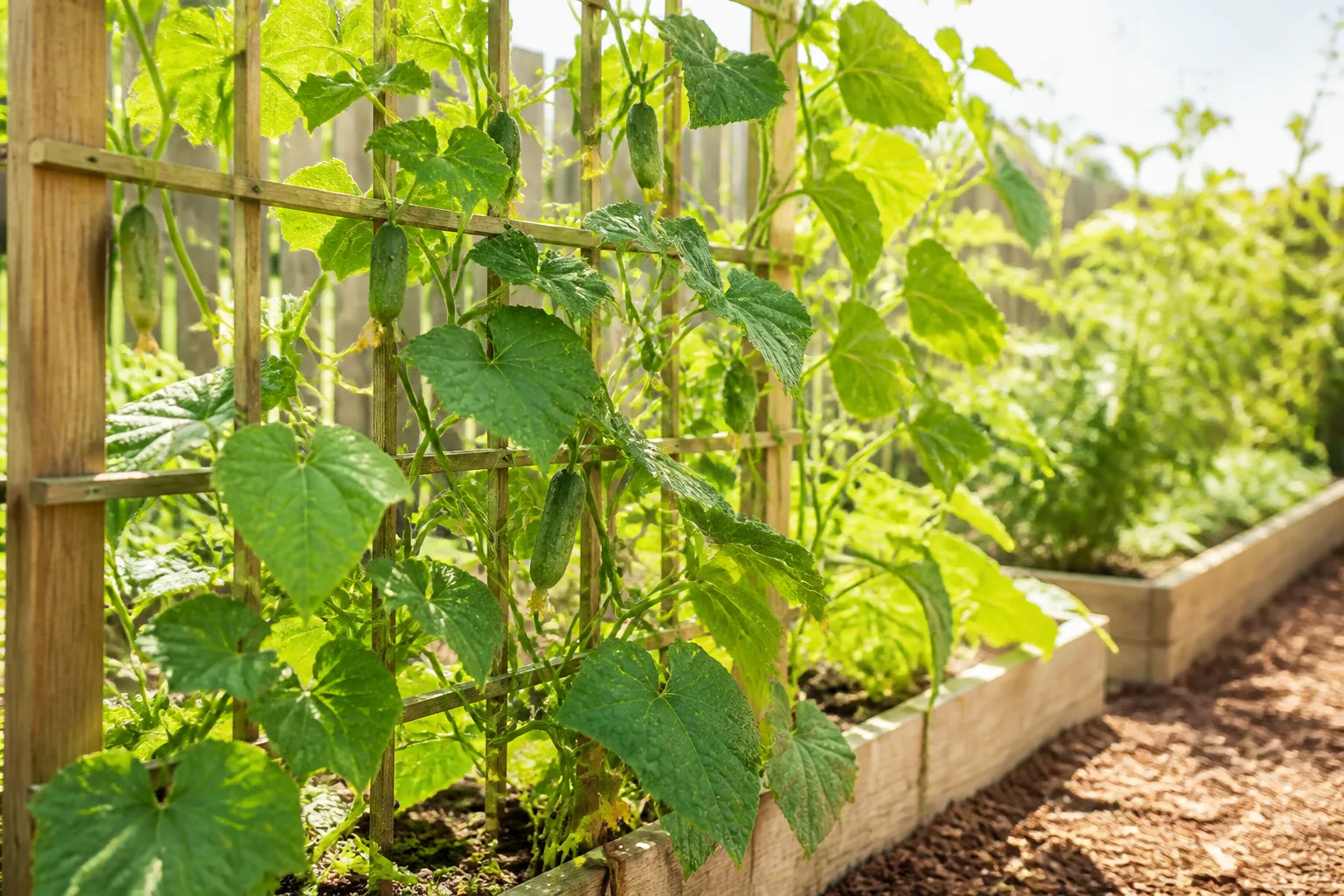
Vining cucumbers keep extending and are the best candidates for a trellis and regular side-shoot control. Slicing and pickling cucumbers may both be vining types, so the use of the fruit does not tell you how hard to prune. A vigorous vining cucumber in a raised bed often benefits from a two-leader plan: enough foliage and fruiting wood to stay productive, but not so much side growth that the trellis becomes a green wall.
Greenhouse and high-tunnel cucumbers are often trained more deliberately because space and humidity are controlled. Some seedless types are parthenocarpic and set fruit without pollination; others, including many modern hybrids, have mostly female flowers and may need a compatible pollen-producing plant in outdoor conditions. Read the packet before removing flowers or changing the leader system.
Oklahoma State University Extension describes cucumber cultivar groups, pollination needs, disease risks, and harvest timing in its cucumber production guide. That production perspective matters even in a backyard bed: cultivar choice, water consistency, pollination, and disease resistance can influence harvest more than an extra round of pruning.
Learn the node, leader, sucker, and tendril
The leader, or primary vine, is the stem you are trying to keep connected from the soil to the trellis. A node is the joint along that stem. At a node you may see a leaf, a tendril, a flower or young fruit, and a new side shoot emerging from the angle between the leaf stem and the main vine. That side shoot is the part most gardeners call a sucker, lateral, or runner.
The distinctions are important. A tendril is a thin, curling structure that grabs the support; a sucker is a leafy shoot trying to become another vine. A flower has a short floral stem, and a female flower usually has a tiny cucumber-shaped swelling behind it. If you cut the leader instead of the sucker, you may lose the main upward path. If you cut every tendril, you remove the plant’s natural climbing hardware.
Seven cucumber pruning tips that protect your harvest
Tip 1: Put up the support before the vine sprawls
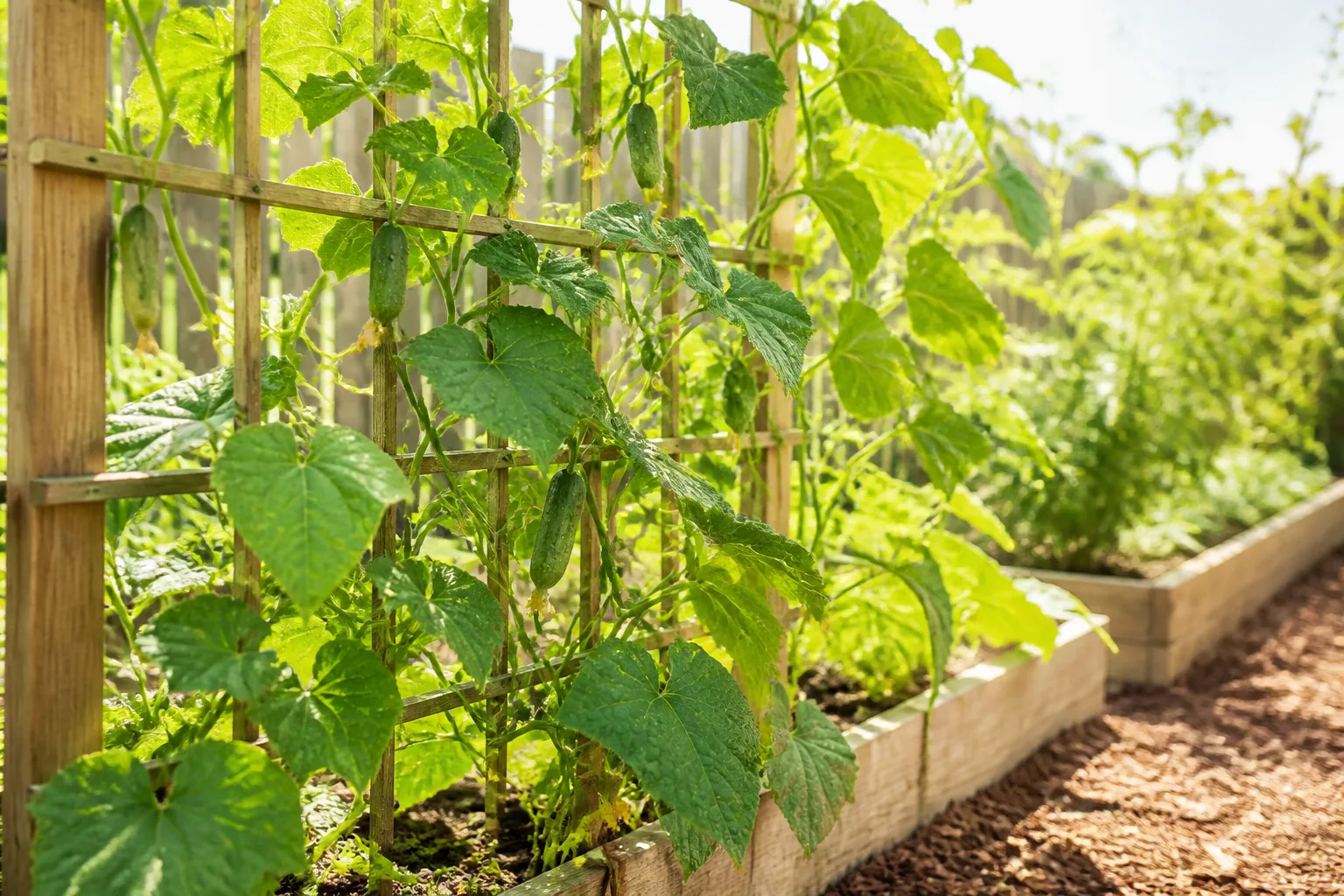
Training and pruning work together. Install a sturdy trellis, mesh panel, A-frame, or stake-and-string system before planting or while the seedling is still small. A support that is already in place lets you guide flexible growth without lifting a heavy, tangled vine later.
Utah State University Extension notes that trellising lets cucumbers use vertical space and can improve airflow while making care easier. For a home garden, choose a support you can reach comfortably from both sides. A 5- to 6-foot structure is a practical starting point for many vining varieties, but a vigorous cultivar may need a wider panel or a plan for guiding the leader sideways once it reaches the top.
Use soft ties only when the stem needs help finding the support. Make a loose loop rather than cinching the vine to a stake; cucumber stems expand quickly and a tight tie can cut into them. Let healthy tendrils do their own wrapping when they can. If the trellis is too flimsy for a fruit-loaded vine, pruning is not the real fix—reinforce the support before a storm turns a manageable plant into a broken one.
Tip 2: Open the lower canopy gradually
The bottom of a cucumber plant is where soil splash, shade, and trapped moisture meet. Once the vine is established and climbing, remove leaves that touch the soil, are heavily shaded and declining, or block air at the crown. On a structured trellis, many gardeners clear the lowest 5 to 7 nodes of side shoots, and sometimes the first flowers or fruit, to keep the skirt open.
Treat that lower-node rule as a training option, not a law for every cultivar. If your field cucumber is already fruiting well on short laterals, removing every lower fruiting branch may reduce the harvest you could have picked. Start with dead or damaged leaves and the smallest competing shoots. If the plant is healthy and the base is open, stop; more cutting is not automatically better.
Do not strip a whole foot of foliage in one afternoon if the plant is already stressed by heat, drought, transplant shock, or disease. Remove a few of the worst leaves, wait several days, and reassess. Leaving healthy upper leaves also helps shade fruit and protects the plant from sudden exposure.
Tip 3: Remove suckers while they are small
Check the leaf axils every few days during rapid growth. A sucker that is only a nub can usually be pinched cleanly between your fingers. Once it has become a long, brittle branch, use bypass pruners and cut just above its base without scraping the leader.
Choose your leader count before you start. A single-leader system keeps one vertical stem and is suited to tight supports or controlled greenhouse training. A two-leader system keeps the main vine plus one deliberately selected side shoot, which is often a useful compromise for a home trellis. A three-leader system lets two strong laterals develop while removing competing shoots. On all three systems, the selected leaders need their own space; do not keep three vines only to pile them into one narrow string.
If the plant is already a thicket, do not pull every branch away from the trellis in one pass. Remove the newest, weakest, or most awkward side shoots first, then return a few days later. Leave a lateral that is carrying healthy fruit until you have decided whether your variety produces reliably on that growth. This staged approach preserves leaf area and prevents a sudden change in the plant’s balance.
Tip 4: Keep healthy sun leaves and remove true trouble
Large, green leaves that receive light are doing useful work. Keep them when they are healthy and positioned where they can feed nearby fruit. Remove leaves that are dead, badly torn, touching wet soil, completely buried in shade, or showing clear disease symptoms. Thin a dense pocket when several leaves are pressed together and air cannot move through it, but do not turn “more light” into an excuse to expose every cucumber.
When you see spots, powder, sudden wilt, or a mosaic pattern, treat pruning as sanitation and scouting, not diagnosis. Cut affected tissue with clean tools, remove fallen debris, and inspect the rest of the plant and neighboring cucurbits. Penn State Extension lists bacterial wilt, powdery mildew, downy mildew, angular leaf spot, anthracnose, and several viruses among cucumber problems; each has a different management strategy.
If you are unsure whether yellowing is normal old-leaf decline or a developing problem, compare the pattern. One or two oldest leaves at the base may simply be aging. Yellowing that moves upward, affects many plants at once, follows insect feeding, or comes with wilt and stunting deserves investigation. The LeafyPixels cucumber yellow-leaf guide can help you sort the next observation before you start cutting widely.
Tip 5: Protect the leader and useful tendrils
Never cut the central leader just because it has reached the top of a support. If the structure is stable, guide the stem along the top, let it drape in a planned direction, or pinch the tip only when height is genuinely the limiting problem. Cutting the leader is a major training decision, not routine cleanup.
Healthy tendrils should usually stay. They wrap around mesh, string, and narrow stakes and help distribute the weight of leaves and fruit. Remove a tendril only if it is dead, trapped around a neighboring stem, or pulling the vine into a damaging position. If the tendril is not grabbing because the support is too broad or smooth, add mesh or a soft guide rather than cutting the tendril.
This is also the moment to correct direction. Separate a young side shoot before it hardens against the wrong side of the trellis. Do not tug an old, loaded stem straight; move the flexible tip, add a tie, or leave the established section where it is and train new growth from there.
Tip 6: Make clean cuts on dry plants
Choose a dry day when the leaves have dried and the weather will allow the cut surfaces to dry. Epic Gardening’s cucumber pruning guide recommends clean shears and emphasizes working from the leader and lower nodes rather than cutting indiscriminately through the canopy. A sharp bypass pruner makes a cleaner cut than a dull blade that crushes the stem.
Before you begin, remove soil from the blades and disinfect them. If you are moving from a visibly diseased plant to a healthy one, clean the blades between plants; wipe them with 70% isopropyl alcohol or use a labeled garden-tool disinfectant according to its directions. Keep a small container for removed diseased leaves so you do not drag them through the bed.
Gardening Know How’s cucumber vine pruning overview also recommends removing dead and damaged material first and limiting lower-node growth when a structured system fits the cultivar. Make cuts close to the unwanted shoot’s base, but do not gouge the main vine. A ragged tear is not proof that you pruned too little; it is a reason to slow down and use the tool.
Tip 7: Pair pruning with steady care and frequent harvests
Pruning cannot compensate for a dry root zone, waterlogged soil, weak light, or a missed harvest. Cucumbers need consistent moisture while growing and setting fruit. Water at the soil line when possible, use mulch to reduce splash and evaporation, and if you must use overhead irrigation, give foliage time to dry before night. Oklahoma State University Extension specifically connects wet foliage and low air movement with greater foliar disease pressure.
Harvest on the same walk as your pruning inspection. Look behind leaves and around nodes for fruit that has reached the size and color expected for its cultivar. Oklahoma State recommends picking every two to three days in normal production, with more frequent harvests when growth is fast; a mature cucumber left hidden on the vine can reduce quality and occupy energy that could go to newer fruit.
Do not use pruning to solve a pollination failure. A plant with many male flowers but few female flowers, flowers that fall without swelling, or tiny fruits that yellow and drop may be responding to variety, weather, bee activity, heat, drought, or another stress. Make the canopy easier to inspect, then investigate the cause instead of removing more leaves.
The ten-minute cucumber pruning routine
Once the vines are established, a short repeatable routine is better than a dramatic monthly haircut. Work on one plant at a time and stop when the plant meets your chosen structure.
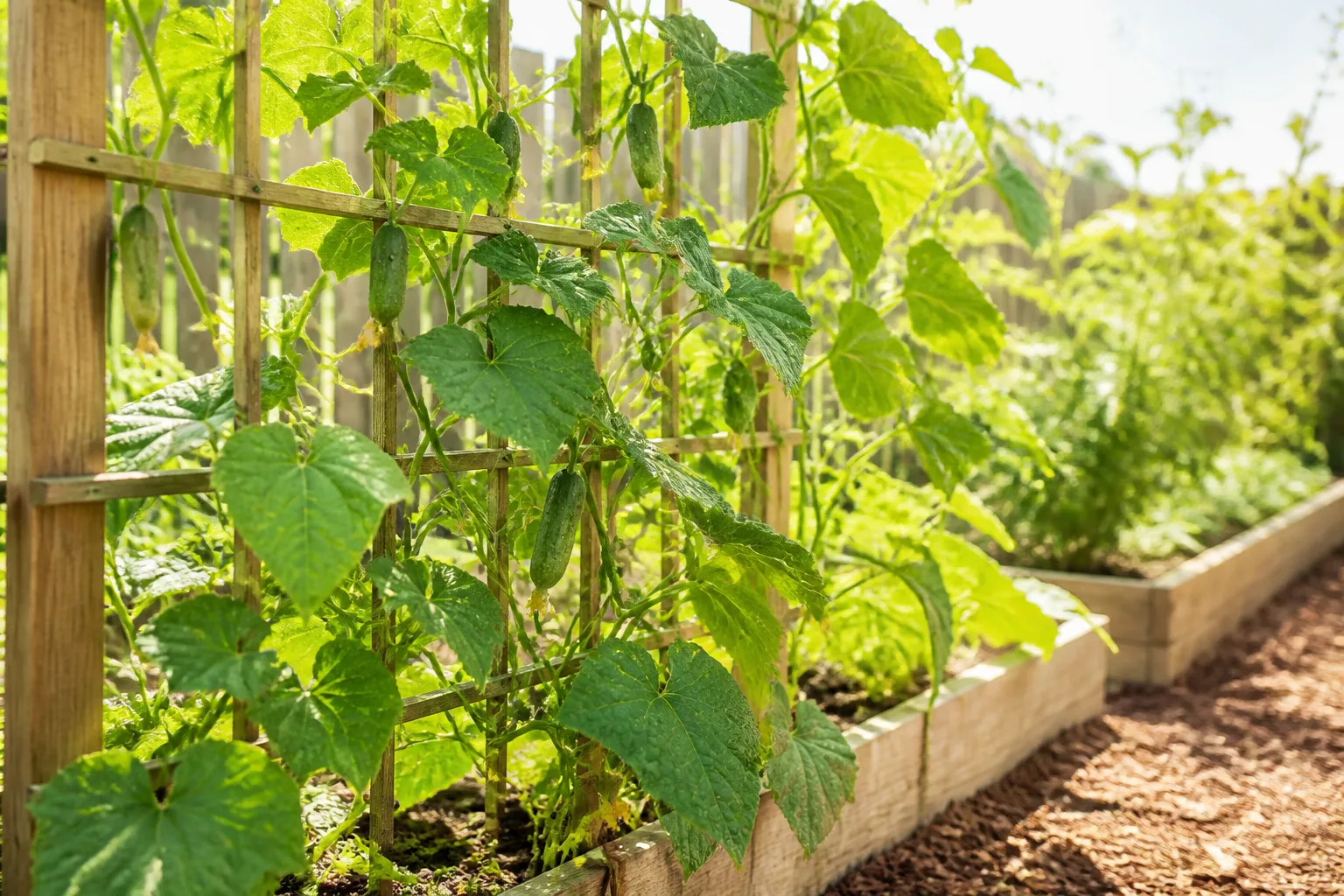
- Stand back first. Identify the main leader, the support path, the densest knot, and any fruit that needs to stay shaded. Decide whether you are maintaining one, two, or three leaders.
- Start with obvious damage. Remove dead, diseased, broken, and soil-touching leaves or fruit. Bag questionable diseased material rather than dropping it beneath the plant.
- Trace each node. Follow the leader upward and inspect the leaf axils. Pinch tiny unwanted suckers; use pruners on anything thick enough to pull or tear.
- Open only the crowded areas. Keep healthy sun leaves and productive lateral growth. Remove enough foliage to create a visible gap, not enough to make fruit fully exposed.
- Check the trellis. Redirect flexible tips, loosen tight ties, and leave healthy tendrils that are holding the vine. If the support is failing, stabilize it before more pruning.
- Finish with fruit and water. Harvest ready cucumbers, check the soil moisture, and clean the tool before moving to another plant.
Your goal at the end is a vine you can see through in places, not a vine you can see through everywhere. If you removed a large amount of material, wait several days before making another substantial cut. This pause gives you time to see whether sunlight, airflow, and access improved without adding stress.
Match pruning intensity to your growing setup
For containers: Give a vining cucumber a trellis or cage before the vines fill the pot. Keep one or two leaders if the support is narrow, and remove side shoots that spill onto the patio or tangle around the rim. A compact bush variety generally needs only light cleanup. Because the root volume is limited, avoid combining heavy pruning with missed watering or a large fertilizer dose.
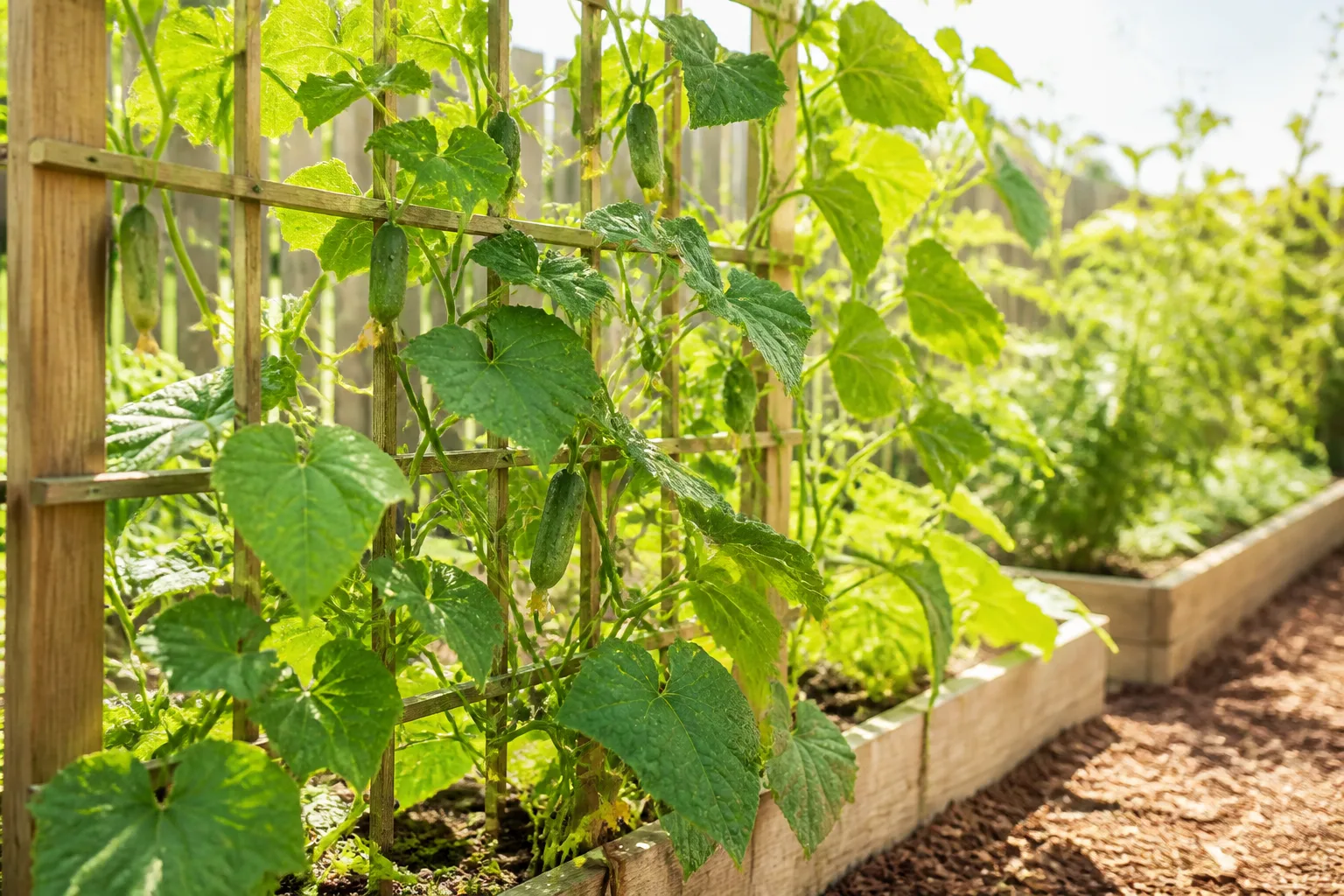
For raised beds: Vertical training pays off when several plants share a small footprint. Give each plant a clear section of mesh or string and remove the shoots that invade its neighbor’s lane. Keep enough leaves for shade in hot climates, especially on the west or south-facing side of the trellis. If airflow remains poor after thinning, widen spacing or improve the support rather than continuing to strip leaves.
For ground-sprawling vines: Pruning is less important when the plant has room to spread on clean mulch. Remove damaged leaves and fruit, lift vines gently if they are sitting in wet soil, and thin only the areas that are matting together. Do not force a mature ground vine onto a trellis by pulling the main stem upright; that can kink or split it.
For greenhouses and high tunnels: Use the training system described for the cultivar or operation. Penn State’s high-wire and modified-umbrella cucumber comparison shows why pruning intensity changes yield shape: removing all lateral branches can simplify a high-wire canopy, while retaining short laterals and forming an umbrella can support more fruit under some conditions. Those results came from a controlled hydroponic trial, so treat them as a framework, not a backyard guarantee.
For a late-season or overgrown plant: Prioritize harvest access, diseased tissue, and new growth that cannot mature before cold weather. Do not convert a sprawling plant to a single leader in one session after it has already built a productive canopy. Take the worst crowding first and preserve leaves around existing fruit. In a short season, a modest tidy-up usually beats a beautiful but suddenly unproductive vine.
Flowers, fruit, and pollination change what you should cut
The advice to “remove the first flowers” has a narrow use. Pinching one or two early flowers can be reasonable when a young transplant is small, weak, or not yet attached to its trellis. It gives the plant a little more time to build roots, leaves, and a stable climbing stem. Once the plant is growing strongly, repeated flower removal delays the harvest and removes potential fruit.
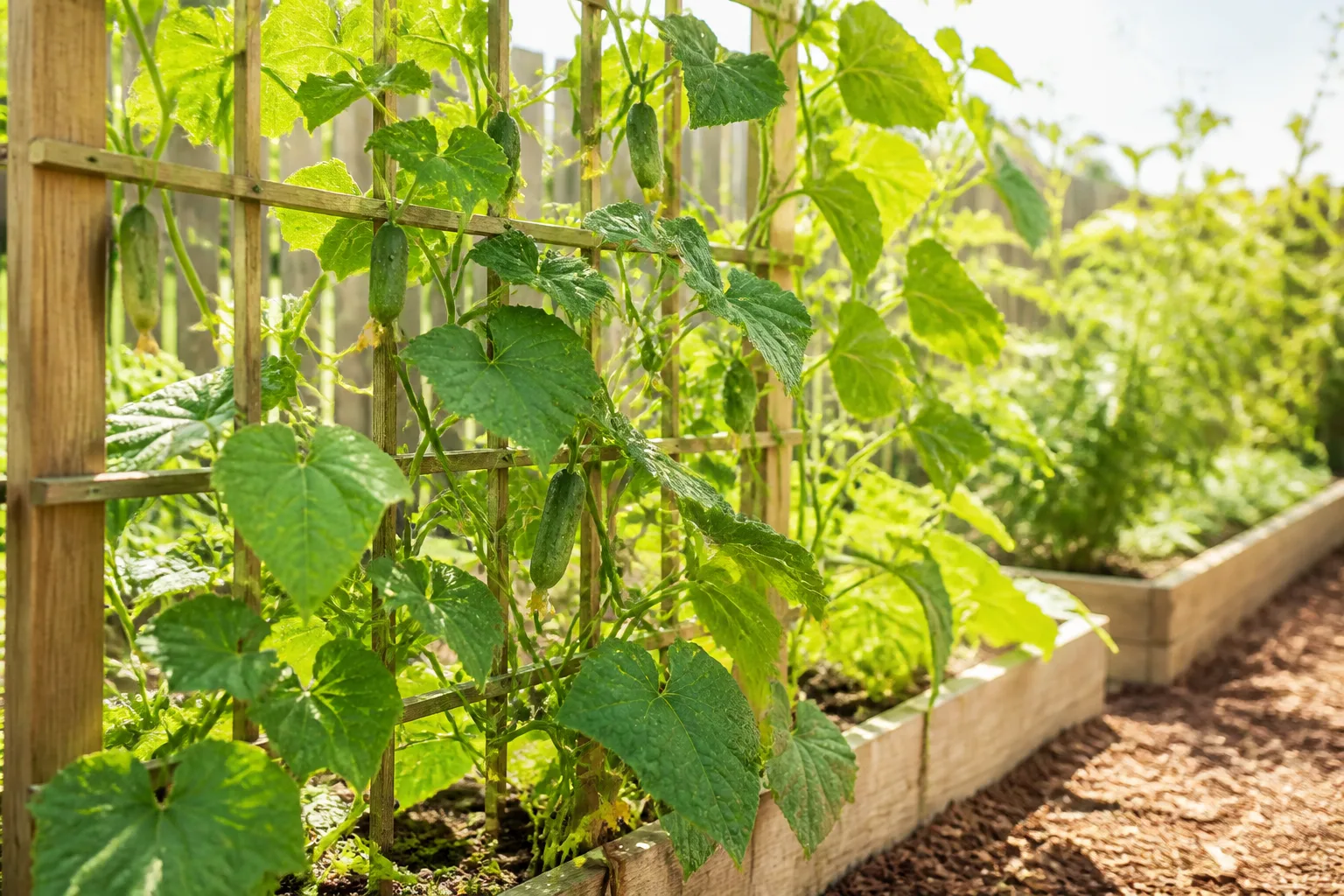
Most outdoor cucumbers produce separate male and female flowers on the same plant. The female flower has a miniature cucumber behind it; the male flower sits on a plain stem. Bees and other insects move pollen between them. Penn State Extension identifies honey bees, squash bees, bumble bees, and other wild bees as important pollinators, while noting that parthenocarpic seedless cucumbers do not require pollination for fruit production.
That difference changes a pruning decision. If a variety needs pollination, do not clear every flower from the canopy or remove the flowering lateral simply because it looks untidy. If a greenhouse variety is parthenocarpic, removing a misshapen fruit or managing a crowded node may be more relevant than protecting male flowers. If your plant has flowers but few cucumbers, compare the variety’s pollination needs with bee activity, heat, drought, and fruit abortion before blaming the leaves. The LeafyPixels guide to cucumber fruiting problems covers those checks in more detail.
The same restraint applies to fruit. Remove fruit that is damaged, rotting, severely misshapen, or far past the cultivar’s harvest size. Do not thin every young cucumber to one per node unless you are following a specific greenhouse or seedless production system. Field varieties differ in fruiting habit, and a healthy lateral can be a productive part of the plant rather than a wasteful sucker.
When pruning will not fix the problem
A dense canopy can worsen disease pressure, but it is only one variable. Powdery mildew, downy mildew, bacterial wilt, angular leaf spot, anthracnose, and viruses can all affect cucumbers, and their management depends on symptoms, weather, insects, sanitation, cultivar resistance, and local recommendations. Prune visibly affected tissue to slow contact and improve access, then identify the problem before applying a treatment.
If leaves wilt suddenly while the soil is moist, inspect stems, roots, and the plant for beetle feeding rather than removing more leaves. If older leaves yellow one at a time while new growth stays vigorous, normal aging or a root-zone issue may be more likely than a pruning failure. If leaves are pale throughout and the plant is growing slowly, check light, water, roots, and fertility. If fruit is bitter or misshapen, look at cultivar, heat, pollination, and moisture consistency.
Do not prune a heat-stressed or drought-stressed plant heavily. Water the root zone, improve mulch, and wait for recovery before making structural cuts. Likewise, do not work through wet foliage just because you found a diseased leaf; mark the leaf, let the plant dry, and return with clean tools unless immediate removal is needed to prevent contact with neighboring plants.
Common cucumber pruning mistakes
Cutting by appearance alone. A huge green leaf is not automatically useless, and a thin side shoot is not automatically harmful. Trace it to its node, note whether it carries fruit, and make the smallest cut that solves the actual problem.
Treating every cucumber like a greenhouse cucumber. Single-stem training can be useful in a controlled system, but a field variety may produce well on lateral branches. Start with the seed packet and watch where your plant sets fruit.
Removing the leader or all the tendrils. The leader is the plant’s main route upward, and tendrils help it hold the support. Cut competing side shoots, not the plant’s climbing equipment.
Making one giant cut. A sudden loss of leaves can expose fruit, slow growth, and leave the plant vulnerable during hot weather. Divide major cleanup into two or three passes.
Pruning wet plants with dirty tools. Moisture and torn tissue make a poor combination for disease management. Wait for dry foliage and clean blades between plants, especially if symptoms are present.
Using pruning as a substitute for harvest. Hidden, oversized cucumbers are best solved by checking plants every day or two once production begins. Harvesting carefully is part of keeping the vine productive; it is not just the reward at the end.
Ignoring the trellis while cutting. A support that leans, flexes, or crowds the vine will keep creating the same problem. Reinforce it, widen the training path, or let the plant sprawl on clean mulch rather than forcing more cuts.
Conclusion
The best way to prune cucumber plants is to match the cut to the plant’s growth habit and your growing method. Trellised vining cucumbers usually benefit from a clear leader plan, small-sucker removal, an open lower canopy, clean tools, and regular harvests. Bush cucumbers and roomy ground-sprawling plants often need only light cleanup.
Keep healthy leaves, flowers, useful tendrils, and fruiting laterals unless you have a clear reason to remove them. Start with dead or diseased tissue, trace the vine node by node, make a few precise cuts, and give the plant time to respond. A manageable cucumber vine is not the one with the fewest leaves; it is the one that stays supported, dry enough to inspect, and easy enough to harvest before the best fruit passes its prime.



