When to Harvest Muscadines: Signs of Ripeness
Muscadines ripen unevenly. Use these checks to judge each berry, time Georgia harvests by cultivar, and avoid tart or overripe fruit through the season.
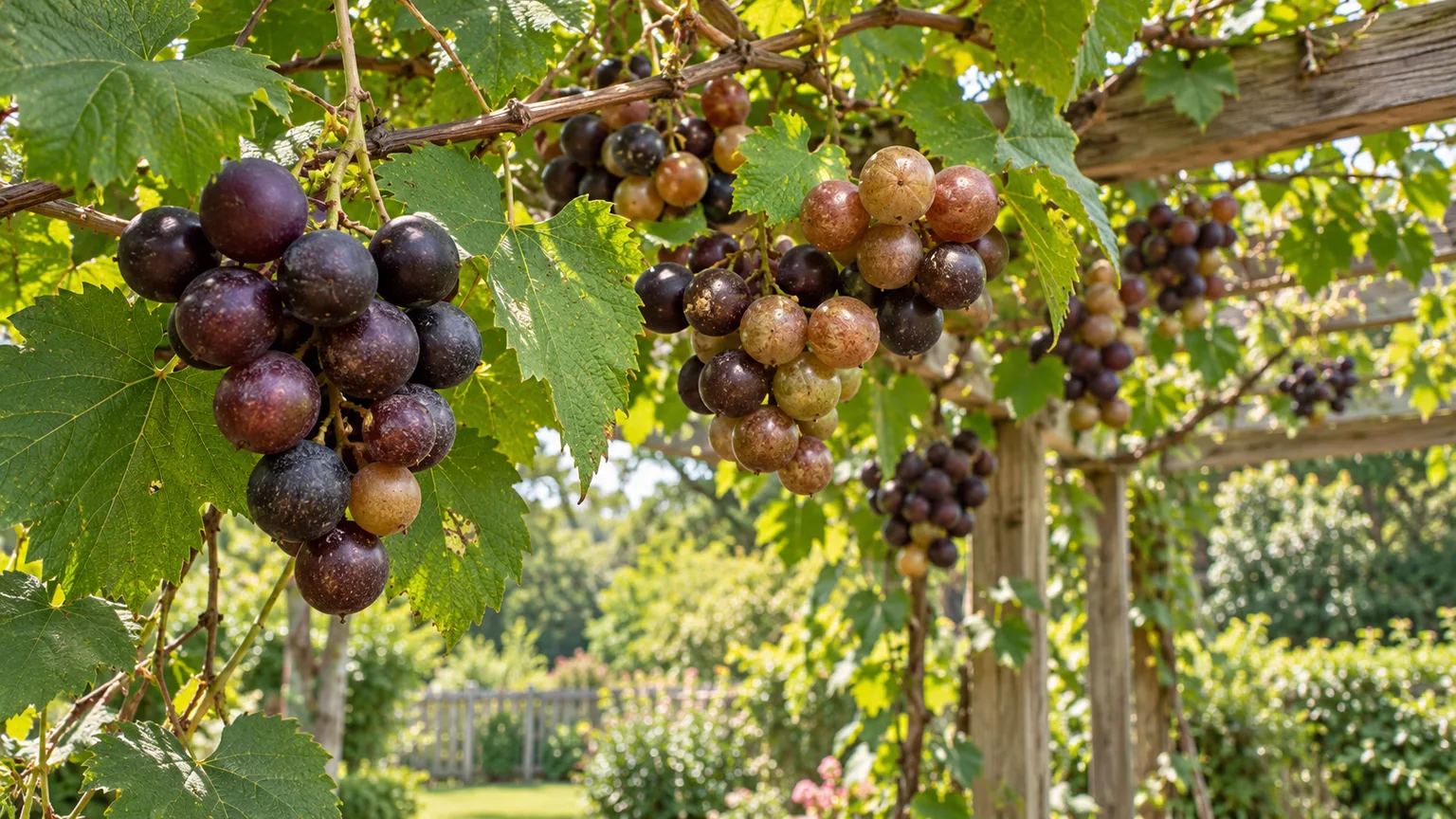
A muscadine is ready when its color matches the cultivar, the berry has softened, and a sample tastes pleasantly sweet and developed. Mature fruit also separates readily from the vine. No single cue is dependable for every variety: a ripe bronze muscadine can look very different from a ripe purple-black one, and berries on the same vine may mature at different times. In Georgia, check the fruit itself and plan to make several passes rather than waiting for one perfect calendar date.
The Short Answer: Test the Berry, Not the Calendar
Start by identifying the cultivar if you can, then compare its ripe color with fruit you have already tasted or with a reliable variety description. Choose a berry from a typical part of the vine. A mature muscadine should be fully colored for its type, slightly yielding rather than rock-hard, and pleasant to eat. It should come away with a gentle lift or roll instead of needing a hard tug. UF/IFAS describes muscadines as non-climacteric: they need to reach full ripeness on the vine because picking does not trigger the further ripening seen in some other fruits.UF/IFAS
Treat those signs as a set. Color alone can mislead you, particularly when an unfamiliar bronze variety stays greenish. Softness alone can mean damage or overripeness. A single sweet berry on a sunny edge does not prove that the shaded side is ready. Use a taste test across a few parts of the canopy, harvest only what meets the combined cues, and leave borderline fruit for another visit.
Why Muscadines Do Not Ripen as One Bunch
Muscadines are not like supermarket grapes carried in compact bunches. Their berries are typically borne singly or in small groups, and they can ripen unevenly along a vine. NC State Extension describes the fruit as appearing singly or in small groups and notes the species’ purple-black and bronze forms.NC State Extension This growth pattern makes selective picking practical: you can take mature berries while less-ripe ones stay attached.
That difference also changes how you inspect and harvest. Do not judge a whole cluster by its first colored berry, and do not expect every berry on a long cane to be ready together. A well-managed muscadine trellis gives you access to separate fruiting shoots, but avoid pulling or shaking the entire vine just to release a few ripe berries. If you are comparing the training needs of different grape types, our common grape vine guide explains why general grape-growing advice may not transfer directly to muscadines.
Match Color to Your Cultivar
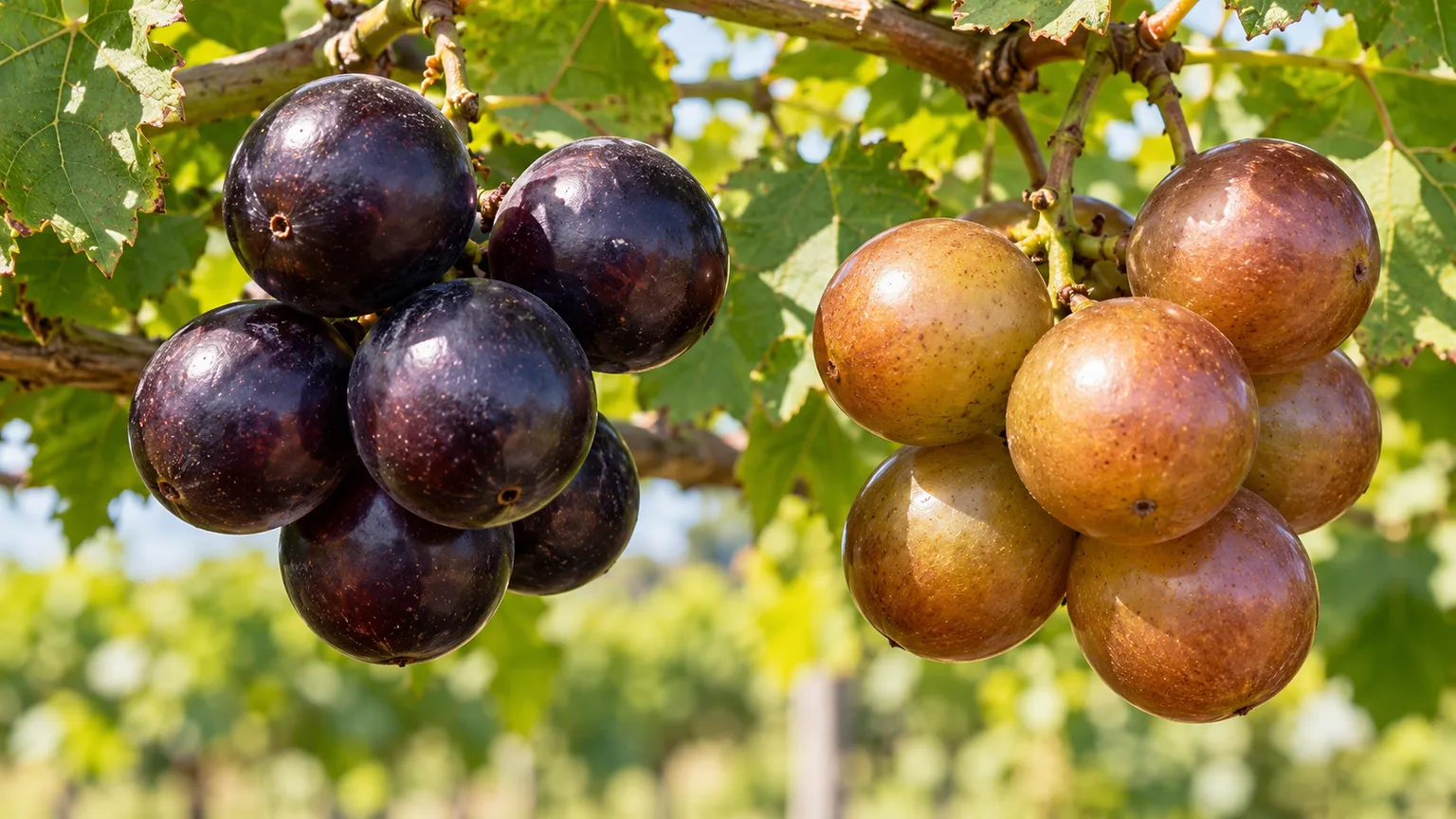
Muscadines include bronze and dark-fruited cultivars. Purple or black types generally deepen toward their mature color; bronze types can shift from green toward golden, bronze, or amber tones. However, the exact color and amount of change depend on the variety. NC State lists bronze and purple-black fruit forms, while UF/IFAS notes that certain bronze cultivars can remain green even when ripe.UF/IFAS and NC State Extension If you know the cultivar name, use it to interpret what you see rather than relying on a generic photograph.
Color is most useful when you compare like with like. Look at several berries on the same cultivar, including fruit inside the canopy. A berry that is still distinctly green when its neighbors have turned dark may be lagging, but a greenish bronze variety is not automatically unripe. If the nursery tag is long gone, taste a few berries over multiple days and keep a note of the color and flavor that signal maturity on your own vine.
Use Color as a Signal, Not a Verdict
A color change is a useful cue to begin checking; it is not a dependable sugar test. Sun exposure, cultivar, and the berry’s individual development all affect appearance. A group of berries can look uniformly colored while still tasting tart, and an unfamiliar cultivar may not fit the color progression you expect. UF/IFAS recommends judging maturity with the fruit’s characteristics and reports a broad soluble-solids range for ripe muscadines rather than one universal number.UF/IFAS
Use the point when fruit begins coloring as a reminder to inspect more often. When most berries on a shoot approach the expected mature shade, test one that looks representative. If the color is right but the flavor is sharp or grassy, wait and repeat the taste test. If a berry has the expected flavor and yields easily, pick similar fruit individually. This avoids both extremes: leaving good fruit to drop while waiting for every berry to match, and stripping a vine just because its color changed.
Check Softness and Easy Detachment
Ripe muscadines generally feel softer than immature ones, but “soft” should not mean mushy, leaking, or collapsing under light pressure. NC State Extension describes ripe fruit as fully colored and soft, with wrinkling associated with overripe berries.NC State Extension Use gentle pressure between your fingers; the skin should give slightly without splitting. Do not squeeze repeatedly, since bruised berries can deteriorate quickly after picking.
Then test how the berry separates. A mature berry should release with little force as you support it and roll or lift it from its attachment. UF/IFAS explains that a dry stem scar can indicate clean separation at the abscission zone, while an immature attachment may tear the peel and leave a wet scar that is more vulnerable to leakage and decay.UF/IFAS If you have to yank, twist hard, or pull a cane toward you, leave that berry. Ease of detachment is a supporting sign, not permission to shake unready fruit loose.
Taste a Sample Before Filling a Basket
Taste gives a home grower the most direct answer to the question “is this ripe enough for me?” Select a berry that looks typical rather than the most advanced one. If it tastes markedly tart, green, or astringent, check again later. A ripe berry should have the developed flavor expected for its variety, with sweetness and acidity in balance. Muscadine skin is relatively thick compared with many table grapes, so taste the whole berry as you normally would instead of judging the juice alone; NC State Extension describes the species as having thick skin.
Do not make a decision from one exceptional berry. Sample more than one from a few shoots and compare. A single berry may have had better sun, started maturing earlier, or softened because it was damaged. UF/IFAS reports that ripe fruit’s total soluble solids often fall within a range, which supports the practical lesson that there is no one sugar reading that guarantees ideal flavor for every cultivar or use.UF/IFAS Your own taste preference matters too: fruit intended for fresh eating may be picked at a different flavor point from fruit destined for cooking or processing.
Sample Sunlit and Shaded Parts of the Vine
Fruit along the outer, sunny edge can be ahead of berries sheltered in dense leaves. Check more than one direction and height: a couple of accessible berries from the top or outer arm, one from the middle, and one from a less-exposed area. You do not need to taste every part of the vine on every visit. The aim is to avoid letting the most advanced fruit stand in for the entire crop. For common bunch grapes, Gardening Know How likewise recommends repeat taste samples from sunny and shaded parts of the vine and cautions that color can change before fruit reaches full sweetness. That is broad grape guidance, so use it to reinforce sampling rather than as a muscadine-specific threshold.Gardening Know How
A simple notebook helps when a vine has multiple cultivars or you are learning a new one. Record the date, where you sampled, color, taste, and whether the berry released cleanly. If the sunny side is sweet but the shaded interior remains tart, pick only the ready portion and recheck the rest later. This small observation routine is more reliable than copying another garden’s date because Georgia’s locations, varieties, and exposure differ.
Use °Brix as a Supporting Check, Not a Shortcut
A handheld refractometer estimates soluble solids in expressed juice, reported in degrees Brix. For a grower who already owns one, it can help compare samples over time or compare berries from different vines. UF/IFAS reports that ripe muscadines commonly measure in a broad range around 13–18% total soluble solids, but that range is descriptive, not a pass/fail rule for every cultivar, harvest purpose, or personal palate.UF/IFAS
Take a reading from representative fruit, not from the single sweetest berry. Follow the meter’s instructions, clean it between samples, and remember that the reading does not measure aroma, acidity, skin texture, or whether the berry separates well. You do not need this tool to harvest a home vine. If taste and texture say the fruit is ready, an equipment purchase adds little. If readings seem low while berries look mature, sample again and compare with flavor rather than forcing a number to overrule the fruit.
What Dropped Berries Can Tell You
A few berries on the ground tell you that some fruit has detached; they do not establish that all fruit on the vine is ready. Muscadines mature individually, and natural detachment can occur as fruit reaches maturity. Check the attached berries nearby, but assess those berries themselves before picking. If many fruits are falling while the vine still has tart, firm berries, look for other causes such as physical disturbance, damaged fruit, or an uneven stage of development.
Do not treat ground fruit as part of a clean harvest. UF/IFAS cautions that fallen grapes are unsalable because of soil-contact food-safety concerns.UF/IFAS Soil, debris, insects, and moisture can contaminate or damage fruit, and washing is not a reliable reason to collect every berry from the ground. Remove fallen fruit from under the vine as appropriate, especially if it is decaying, and keep the eating harvest to fruit gathered directly from the plant into a clean container.
Georgia Harvest Dates Depend on Cultivar and Site
There is no single Georgia harvest date that fits every muscadine. Cultivars differ in their ripening sequence, and a warm, exposed site may move ahead of a cooler or shaded one. NC State’s plant profile places the species’ fruiting season in the September-to-October period for its regional guidance, while UF/IFAS notes that muscadine cultivars can differ in maturity timing.NC State Extension UF/IFAS These sources offer context, not a guaranteed schedule for every Georgia yard.
A University of Georgia Extension Viticulture report from August 2018 illustrates the cultivar effect in South Georgia: early ‘Fry’ was being harvested while ‘Carlos’ and ‘Noble’ were beginning veraison.UGA Extension That is a dated example, not a forecast for this year or for every part of the state. In practice, begin watching as berries approach their cultivar’s mature color, then use taste and detachment to decide when to pick. A nearby grower’s calendar can be a useful prompt to check, but it cannot replace checking your own vine.
How Often to Check a Ripening Vine
Once berries start coloring, inspect the vine regularly enough to catch ready fruit before it becomes wrinkled, damaged, or falls. At first, a weekly check may be enough; as several berries begin to taste ripe or detach easily, check every few days. The right interval depends on how quickly fruit is changing, how many vines you have, the weather, and whether animals are taking fruit. Think of these as practical observation intervals, not a horticultural rule.
Look for patterns during each pass. If only scattered berries are ready, pick those and leave the rest. If a whole section tastes mature and releases cleanly, harvest that section without stripping green fruit from nearby shoots. When you have a large planting, a shallow basket and a short loop through the rows make selective harvesting easier. The point of repeated checks is to let each berry reach its flavor without losing the earliest fruit while waiting for the latest.
Harvest Individual Berries Gently
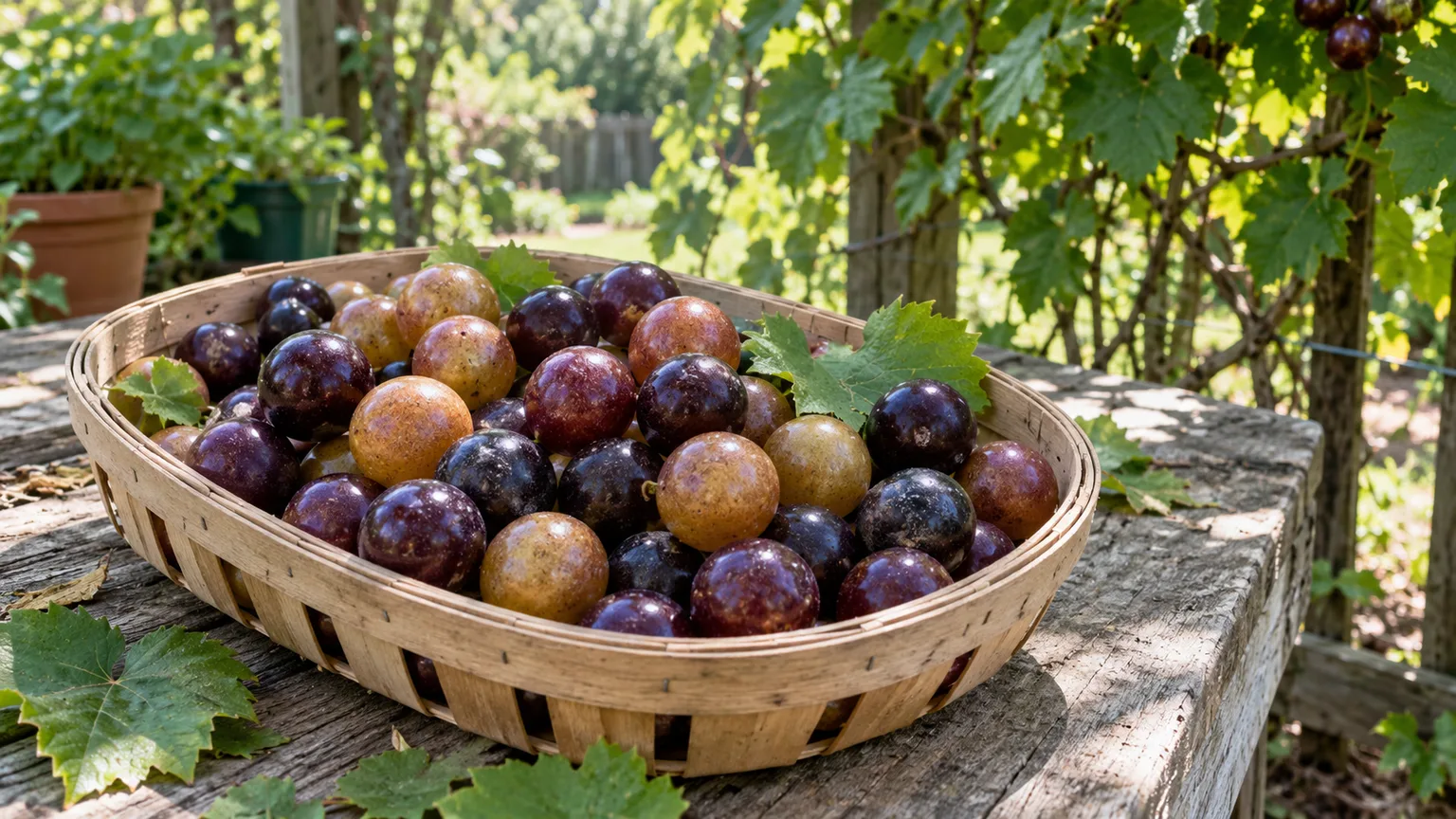
Bring a clean, shallow container and harvest in dry conditions when possible. Support the cane with one hand if needed, then roll or lift a ready berry off with the other. Avoid tugging the shoot, crushing the fruit in your palm, or dropping berries into a deep bucket where their own weight can bruise those underneath. A small amount of stem attachment is normal; the key is avoiding torn skin and leaking fruit.
Harvesting by hand fits the way muscadines ripen: individual berries, rather than an entire tight bunch, may be at maturity. UF/IFAS recommends hand harvesting ripe fruit before it naturally detaches, and Southern Living also describes picking muscadines from the vine as fruit comes ready.UF/IFAS and Southern Living If your vine is trained overhead or across a frame, use a stable reach and keep your attention on the fruiting shoots. Our DIY trellis ideas can help with access and support planning for future seasons, while our cattle panel trellis guide covers measuring and anchoring one type of garden support. Do not pull on a loaded trellis to reach a berry.
Account for Heat, Rain, and Wet Fruit
Georgia harvest work can be uncomfortable during hot weather, and fruit picked warm from the vine carries field heat into storage. UF/IFAS recommends harvesting during the cooler part of the day and cooling fruit promptly to protect quality.UF/IFAS For a home garden, early morning after dew has dried can be a practical window. Keep the berries shaded while you finish, and move them to a cool place soon after picking rather than leaving a basket in sun or a hot vehicle.
Rain does not change a berry’s underlying cultivar or make an unripe berry ready. Wet fruit is harder to handle cleanly and can spread decay organisms, so if rain is forecast and the berries are ready, pick when the surface is dry where practical; UF/IFAS notes that wetting muscadines can exacerbate decay spread. Do not harvest wet, damaged fruit into the same container as sound berries. If the harvest must happen during a warm spell, smaller batches are easier to keep shaded and cool than one large basket left waiting.
When Wildlife Changes Your Pick Threshold
Birds and small mammals may sample fruit before you can complete several careful passes. If you see fresh pecks or missing berries, that is a reason to check the vine more often and protect the crop, not to harvest every hard, tart berry early. A ripe fruit still needs to meet your own maturity check. Consider netting or other protective tactics that are appropriate for the site, installed and monitored so wildlife cannot become trapped.
The right response depends on which animal is taking fruit and how the vine is built. Our guide to protecting fruit trees from birds covers humane exclusion methods that can be adapted thoughtfully to fruiting vines. For mammal pressure, see ways to keep squirrels out of fruit trees. Those guides are about broader fruit-garden protection; choose a setup that fits your muscadine trellis and check it often. Harvest ripe berries on schedule so they are not left exposed longer than necessary.
Sort Out Cracked, Moldy, and Ground-Fallen Fruit
After each picking, spread berries in a shallow layer and remove fruit that is leaking, moldy, badly cracked, or visibly rotting. A small dry stem scar is different from a torn, wet attachment scar: the latter can leave the berry more exposed to leakage and decay, according to UF/IFAS.UF/IFAS Handle questionable fruit separately and do not pack it against sound berries. If only a small area is damaged, discard the affected berries rather than assuming the whole harvest is spoiled.
Check the vine, too. Cracking, soft spots, or mold are signs to adjust your handling and inspection, but they do not identify a single cause by themselves. Rain, injury, maturity, and storage conditions can all matter. Remove decayed berries from the picking container promptly, clean equipment between harvests if fruit is leaking, and avoid leaving ripe berries piled in a warm place. When in doubt about a berry’s condition, discard it instead of tasting it.
Cool and Store Muscadines Promptly
Muscadines have relatively firm skins, but freshly picked fruit is still perishable. Keep the harvest dry, shaded, and cool; refrigerate sound berries promptly in a clean container that allows some airflow. A shallow container limits crushing. Do not wash all the fruit before storage if you will not use it immediately, because added surface moisture can complicate storage; rinse the amount you plan to eat and dry it gently.UF/IFAS Follow UF/IFAS postharvest handling guidance for temperature management and careful handling.UF/IFAS
Do not assume storage will improve the flavor of an under-ripe berry. UF/IFAS states that muscadines do not continue ripening after harvest, so a cool shelf or refrigerator is for holding quality, not finishing maturity.UF/IFAS Check stored fruit and remove any berry that begins leaking or molding. For best eating quality, use the harvest while it is still fresh, and process or freeze sound surplus fruit rather than leaving it forgotten in the back of the refrigerator. Exact keeping time varies with maturity, handling, and storage conditions; inspect the fruit rather than relying on a universal number of days.
A Repeatable Field Checklist
Use this sequence on each visit:
- Identify the cultivar if possible. Establish whether its ripe fruit should be bronze, purple-black, or another shade, and use local cultivar information as context.
- Look for a readiness cue. When berries approach mature color, begin sampling more often. Do not harvest the whole vine because one berry changed color.
- Taste representative fruit. Try berries from more than one shoot or exposure. Wait if typical fruit is still distinctly tart or green tasting.
- Check texture and release. A ripe berry yields slightly and comes away with a gentle lift. Hard pulling or a torn wet scar suggests leaving that berry.
- Pick selectively and keep fruit clean. Place sound berries in a shallow container, keep them shaded, and sort out damaged fruit.
- Return for the rest. Berries that are still firm or tart can remain on the vine; check again as they continue to mature.
For a grower with several cultivars, keep a separate note for each vine. Write down what ripe color, taste, and detachment looked like this year. Over time that record will be more useful than a generic harvest calendar because it captures your actual varieties and microclimate.
Mistakes That Lead to Tart or Wasted Fruit
The most common mistake is harvesting by a fixed date. Calendar advice from another state or another year may describe a different cultivar, latitude, and weather pattern. A second mistake is trusting color alone, especially with bronze types. Combine mature color with a taste test and easy detachment, then leave fruit that fails one or more checks. Broad grape guidance from BBC Gardeners’ World also emphasizes that grapes do not become sweeter after picking, but cultivar-specific muscadine decisions should follow muscadine guidance.UF/IFAS and BBC Gardeners’ World
Avoid shaking the vine or stripping every berry in one pass. That can knock off fruit that would have benefited from more time and bruise the fruit you meant to keep. Do not rely on one exceptionally sweet berry, a single °Brix number, or a dropped berry to speak for the entire crop. Finally, do not store unripe or damaged fruit in the hope that it will recover. Pick thoughtfully, sort promptly, and make another pass when the remaining berries reach their own maturity.
Conclusion
For Georgia muscadines, the most reliable harvest decision comes from several cues together: cultivar-appropriate color, slight softness, a flavor you enjoy, and easy separation from the vine. Muscadines mature unevenly and do not ripen further once picked, so selective harvesting is usually more dependable than a single date or a one-time sweep. Check the fruit across the canopy, keep notes on your cultivar, and return for berries that are still firm or tart.
Harvest sound fruit gently into a clean, shallow container, keep it shaded, and cool it soon after picking. Leave soil-contact fruit out of the eating harvest, and remove cracked or decaying berries before storage. With repeated checks and a simple taste-led routine, you can catch the ripe berries without sacrificing the rest of the crop to impatience or delay.