Vermiculite: What It Is and How to Use It
Learn what vermiculite does, when to choose it over perlite, which grade to buy, and how to use it for seeds, cuttings, pots, lawns, and storage.
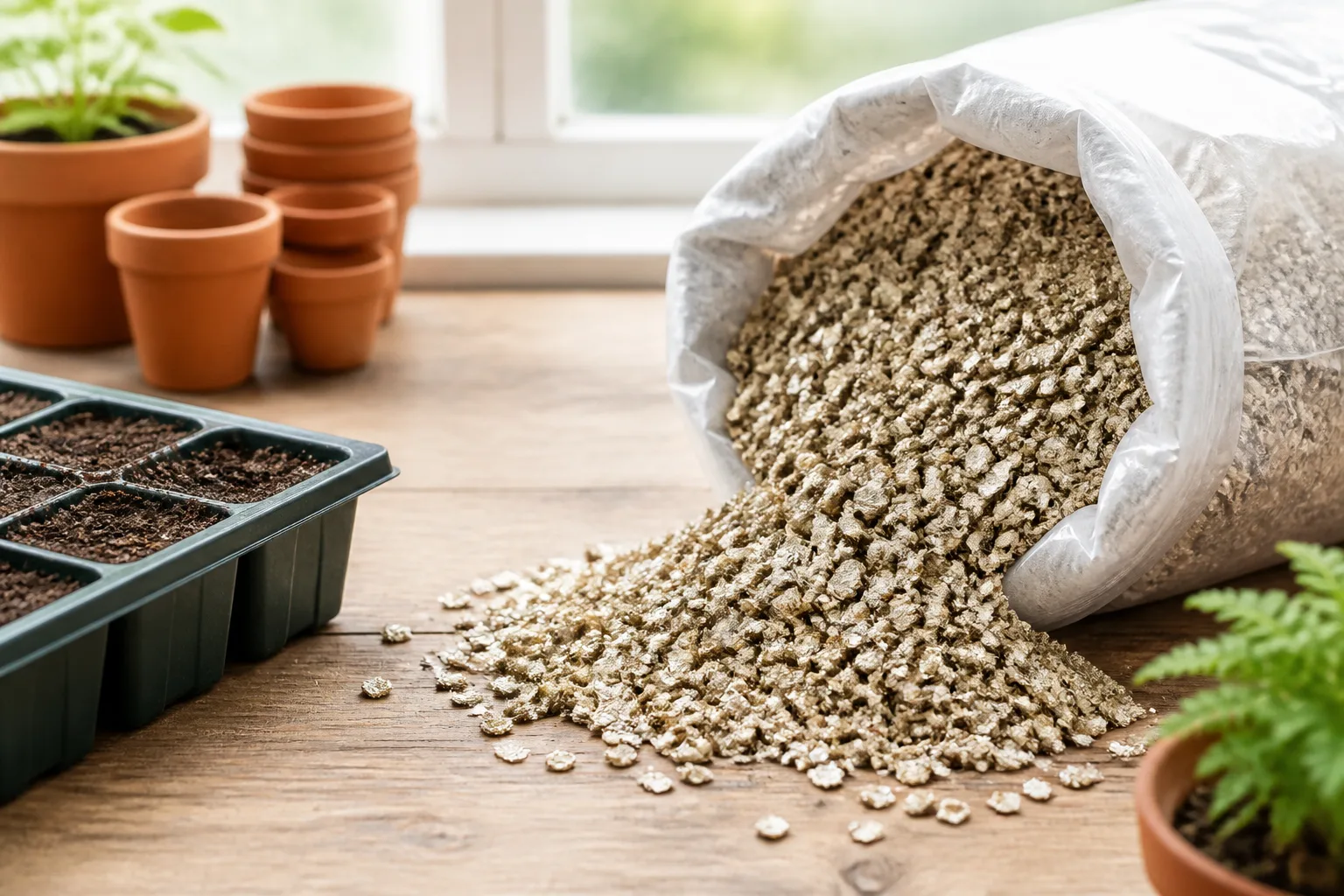
Vermiculite is a lightweight, heat-expanded mineral used to change how a growing medium holds water, air, and nutrients. It is most useful when seeds or roots need a more even moisture supply, but it is not a universal drainage additive and it does not replace fertilizer.
The short decision rule is simple: choose vermiculite when a mix dries too quickly or when you need a fine, moisture-buffering medium for germination and tender roots. Choose a more open mineral such as perlite when the problem is slow dry-down, poor aeration, or a plant that is damaged by consistently damp soil.
Vermiculite at a Glance
Vermiculite is sold as gray, bronze, or silver-gold flakes that puff into light, wormlike pieces when heated. In gardening, it can be mixed into potting media, used on top of seeds, used to anchor cuttings, or used as a dry packing material around bulbs and tubers.
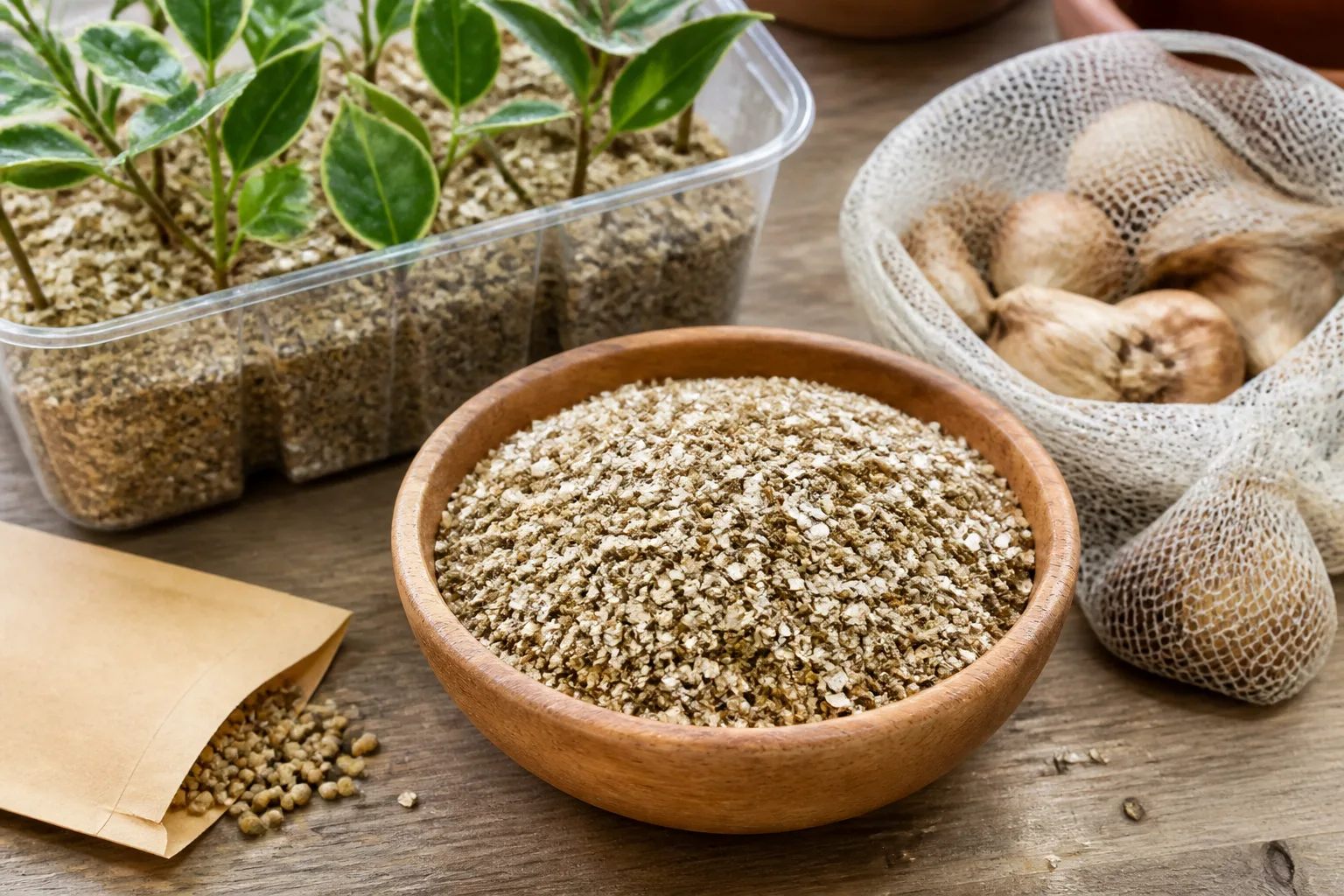
| Gardening job | What vermiculite contributes | Main caution |
|---|---|---|
| Seed starting | Fine texture and an even moisture buffer | It supplies little complete fertility; do not keep seedlings saturated |
| Rooting cuttings | A light, moisture-holding anchor for new roots | Use a clean container and keep the medium damp, not waterlogged |
| Container mix | More moisture and nutrient retention | Too much can lengthen dry-down and reduce air-filled pore space |
| Sandy garden soil | Some water-holding capacity | It is expensive and mined; compost and organic matter are often better at bed scale |
| Lawn seed | A thin protective cover that slows surface drying | A heavy layer can interfere with emergence |
| Bulb or tuber storage | A dry, cushioning medium that can absorb condensation | Storage moisture still has to match the crop; damp packing can encourage decay |
The University of Connecticut’s potting-media guidance describes vermiculite as a moisture- and nutrient-retentive ingredient, while the University of Florida IFAS guide to homemade potting mix places it alongside other ingredients that create support, air exchange, water flow, and moisture retention. That distinction matters: vermiculite changes the physical environment around roots; it is not a stand-alone plant food.
What Vermiculite Is—and How It Is Made
Vermiculite begins as a naturally occurring mica-like mineral. Manufacturers heat the mined material until its layered structure expands, producing the light, flaky granules sold for horticulture. The process gives it a large surface area and many small spaces where water can be held.
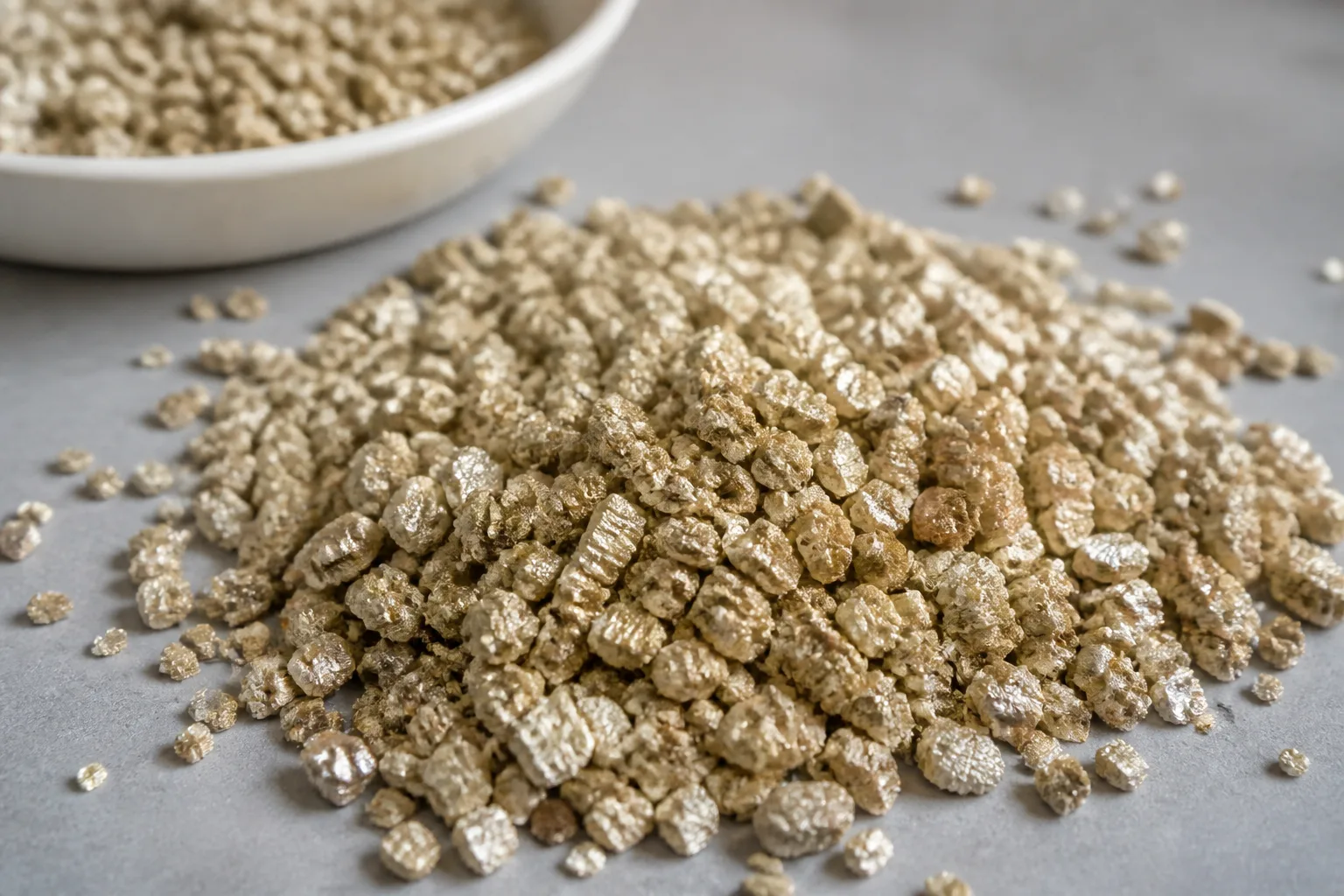
Fresh horticultural vermiculite is generally clean and free of weed seed, which is one reason it is useful around germinating plants. It may contribute small amounts of minerals such as potassium, magnesium, and calcium as it weathers, but those traces should not be treated as a balanced fertilizer. Seedlings and established plants still need the fertility supplied by a labeled potting mix, compost, or fertilizer program.
Do not confuse a sealed bag of horticultural vermiculite with unidentified mineral material, loose insulation, or old building fill. The U.S. Environmental Protection Agency’s guidance on vermiculite used in potting soil is the relevant safety reference for gardeners who are worried about product dust or an older material. If the material is not clearly labeled for horticultural use, do not put it in a planting mix.
How Vermiculite Changes a Growing Medium
Think of vermiculite as a moisture reservoir distributed through the mix rather than as a fertilizer pellet. Its expanded particles absorb and hold water, then release some of that moisture as the surrounding medium dries. They can also hold dissolved nutrients near the root zone instead of allowing every watering to move them straight through the pot.
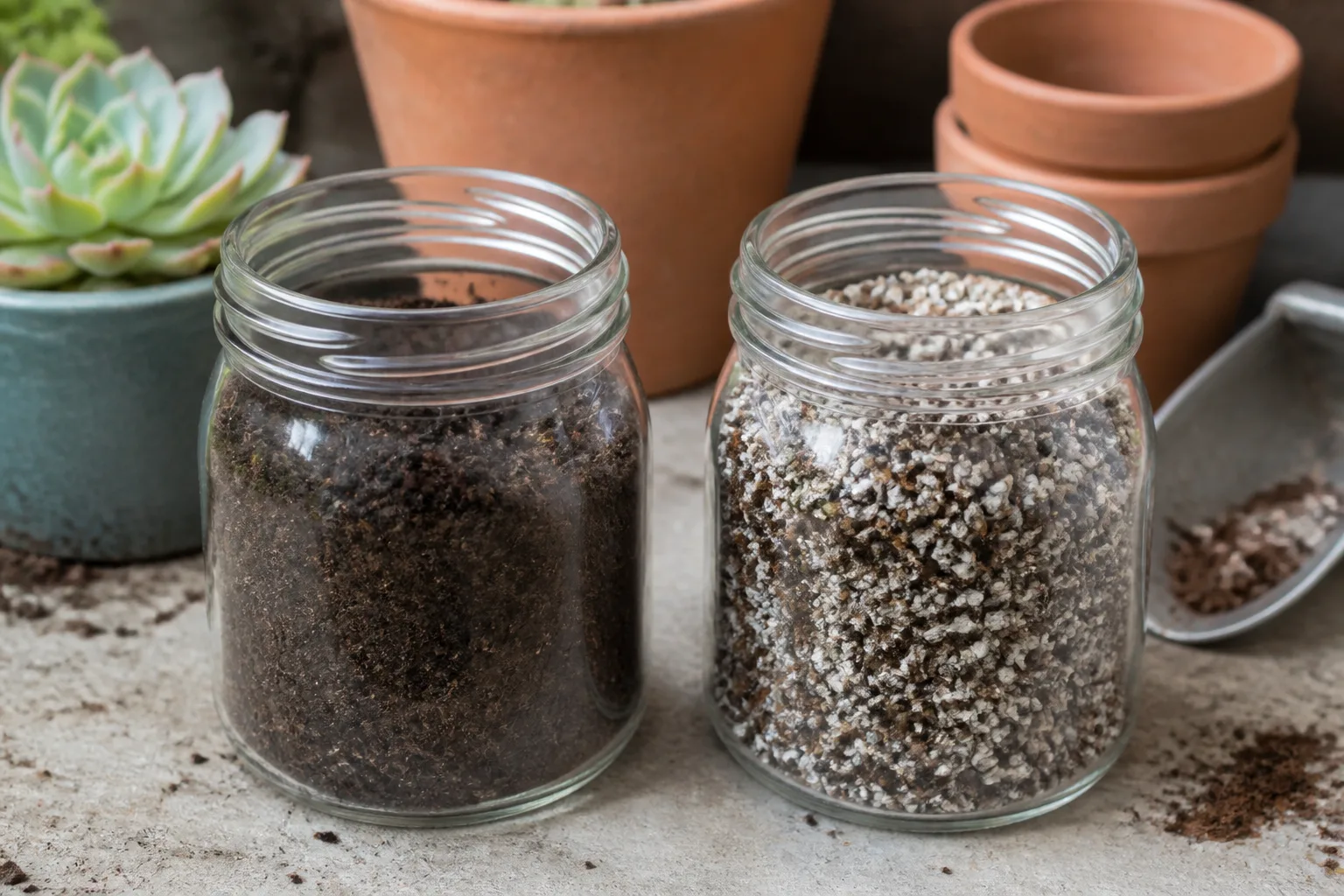
That behavior helps in a small seed tray, where a thin layer can dry quickly under a grow light or a warm window. It can also help a hanging basket or a moisture-loving houseplant that repeatedly becomes dry before you can water it. The trade-off is that the same water-holding behavior can keep a poorly drained container wet for too long.
Vermiculite also adds pore space, but “adds pore space” is not the same as “creates fast drainage.” A mix can contain visible particles and still stay wet if the fine ingredients, container size, or watering routine hold too much water. Colorado State University Extension emphasizes choosing an amendment for the desired result and warns that over-amending can lead to excessive water holding. In practical terms, diagnose the problem first: fast drying calls for a water buffer; a soggy root zone calls for better structure, a drainage hole, a smaller pot, or a more open mix.
Vermiculite Grades: Fine, Medium, and Coarse
Grade describes particle size, and particle size changes how the material behaves. The exact labels vary among suppliers, so use the bag description as the final reference, but the broad pattern is consistent.
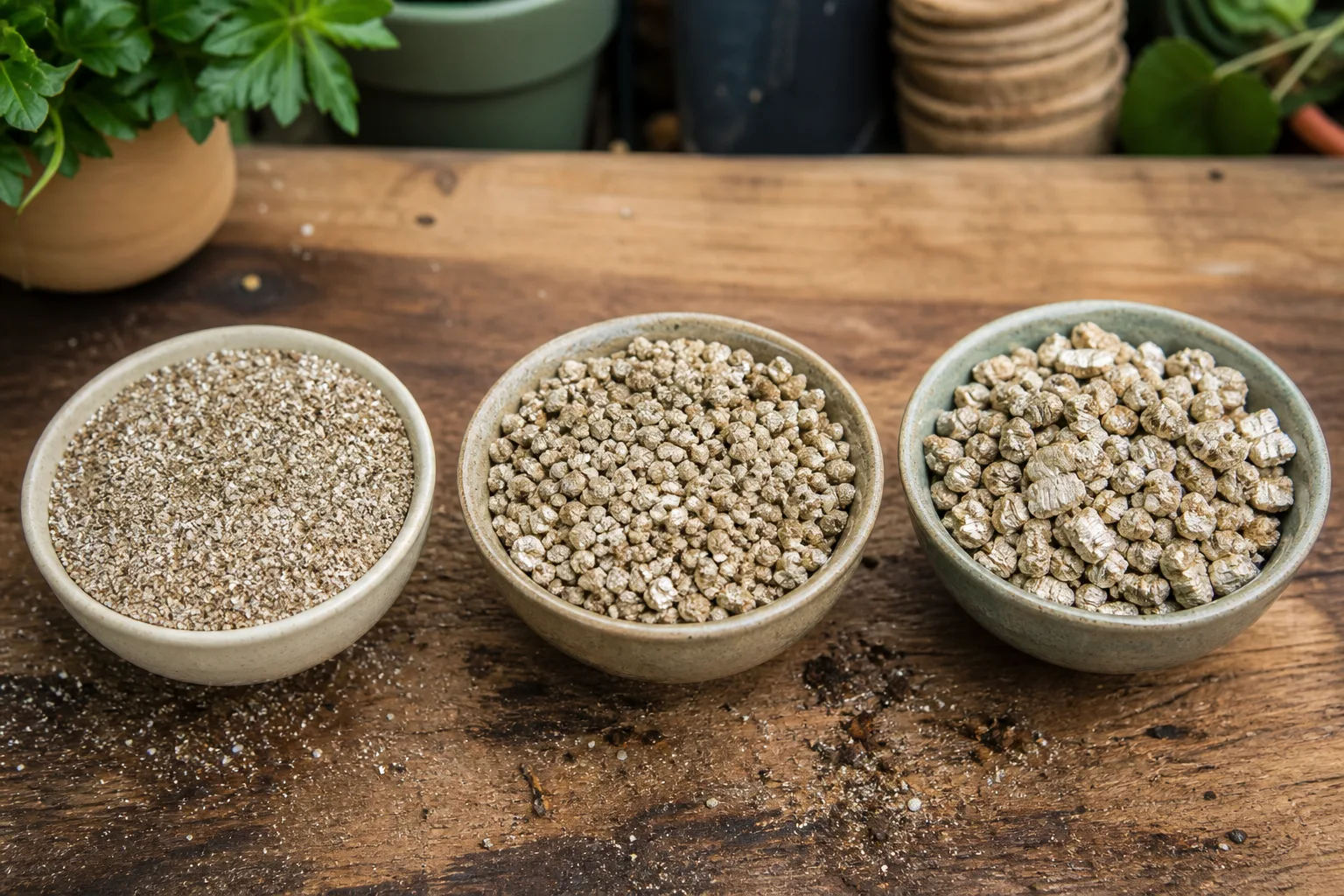
- Fine vermiculite is best for lightly covering small seeds or blending into a fine seed-starting medium. It settles around seed surfaces and can help prevent them from drying during germination.
- Medium vermiculite is a useful all-purpose size for seed-starting mixes and many soft-stem cuttings. It gives roots something to grip without creating the dense surface that fine particles can create.
- Coarse vermiculite is more appropriate as a component in a container mix for larger seedlings or established plants that need extra moisture retention. It is too chunky for a neat seed cover and may leave tiny seeds poorly supported.
The University of Florida’s local guidance gives medium grade as suitable for seedlings and coarse grade as better for mixes used by older plants. If you are choosing between two bags, buy the grade that fits the task rather than assuming the largest or cheapest bag is the best value.
Vermiculite vs. Perlite
Vermiculite and perlite are both lightweight, heat-treated mineral products, but they solve different root-zone problems. Vermiculite absorbs and holds more water; perlite creates larger, airier spaces and encourages water to move through the mix.
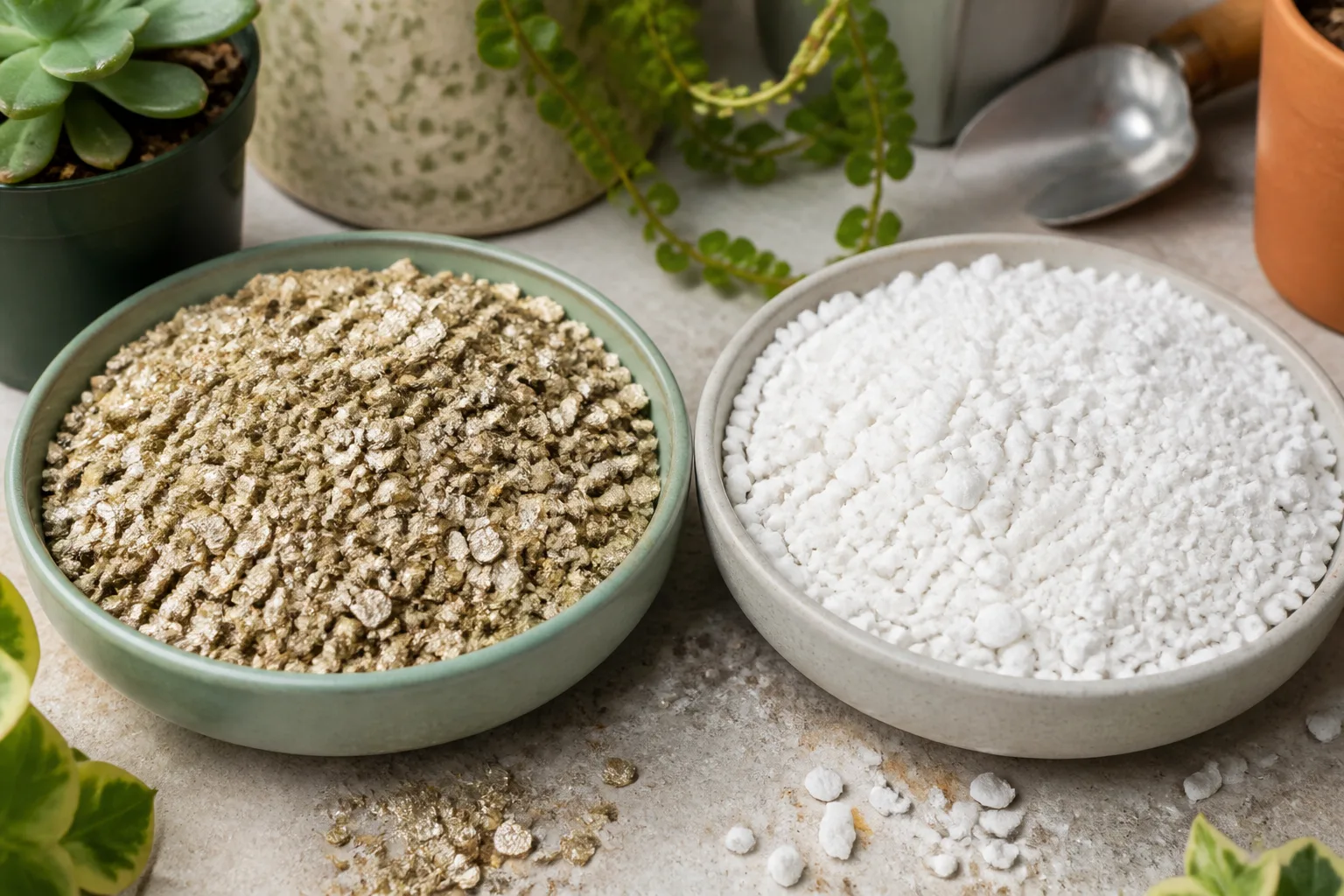
| If your growing medium… | Start by considering… | Why |
|---|---|---|
| Dries before seedlings establish | Vermiculite | It provides a moisture buffer around small roots |
| Stays wet for days after watering | Perlite or a more open mix | More air space can improve drainage and dry-down |
| Supports cacti or succulents | Perlite, pumice, or coarse mineral material | These plants generally need a faster-drying root zone |
| Roots seeds or tender cuttings | Fine or medium vermiculite, often blended | New roots benefit from moisture and a stable anchor |
| Grows a moisture-loving foliage plant | A modest amount of vermiculite | Retention can reduce repeated drought stress |
Neither material is automatically better. The Penn State Extension guide to potting media and plant propagation describes a useful growing medium as a balance of water-holding capacity, nutrient supply, and aeration. A successful mix is the one that reaches that balance for the plant and the way you actually water.
Choose Vermiculite When Moisture Is the Limiting Factor
Use vermiculite when a seed tray dries at the surface before germination, a cutting wilts in an otherwise suitable setup, or a container mix cannot hold enough moisture between normal waterings. This is especially relevant for small seeds, shallow trays, hanging containers exposed to wind, and plants that prefer an evenly moist—not swampy—root zone.
A moisture-retentive amendment is also useful when you are trying to make watering more forgiving during a short absence. It does not make a plant drought-proof, and it should not be used to compensate for a pot with no drainage, a dense garden soil in a container, or a watering routine that keeps the mix constantly wet.
Choose Perlite When Air and Fast Drainage Matter More
Reach for perlite when the roots need rapid drainage and a generous exchange of air after watering. That usually includes cacti, many succulents, plants recovering from root rot, and containers where the mix remains damp long after the surface looks dry.
You can use both materials in one mix, but do not add them by habit. Start with the plant’s dry-down needs and the existing mix. If the base is already peat-heavy and moisture-retentive, more vermiculite may push it too far; if it is mostly bark and dries quickly, a small amount may be helpful.
How to Use Vermiculite for Seed Starting
Vermiculite works well for seeds because it is light, easy for emerging shoots to push through, and able to keep the seed zone from drying unevenly. It can be used by itself for a short germination stage, as one part of a seed-starting mix, or as a thin covering over seeds already sown in a suitable medium.
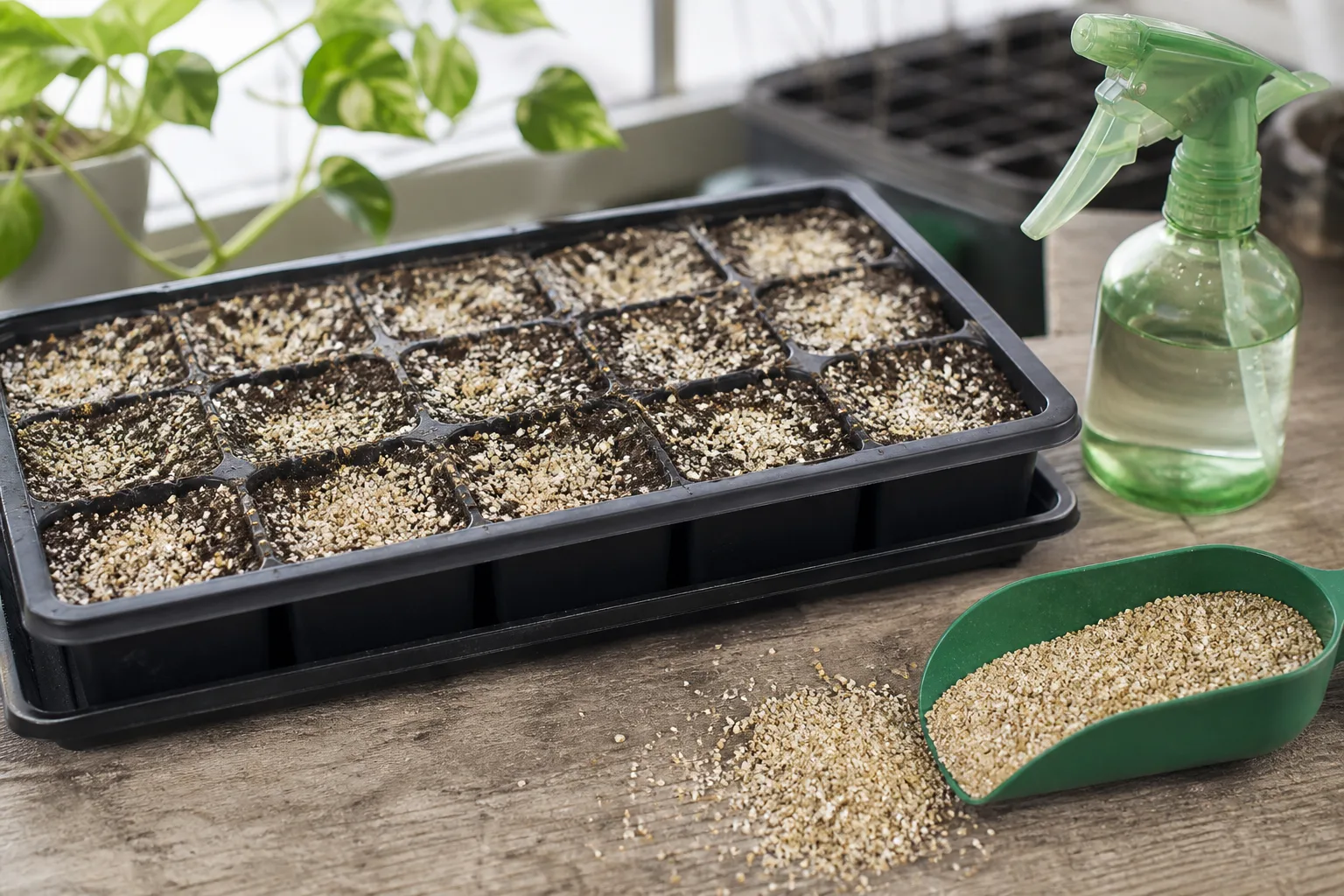
For most home gardeners, the best approach is not a tray filled with pure vermiculite for the plant’s entire early life. Use a quality seed-starting or soilless mix as the structural base, then add vermiculite when the tray needs more moisture retention or use a fine grade on top. A seedling eventually needs support, air, and nutrition as well as moisture.
Pre-Wet the Mix Before Filling Trays
Moisten the growing medium before you fill the cells. A dry mix containing peat, coir, or fine mineral particles can repel water at first, causing water to run around the seed rather than through the root zone. Cornell Cooperative Extension’s potting-soil guidance recommends pre-wetting so the medium is moist but not sopping wet, a useful target for vermiculite blends too.
Add water gradually in a clean bucket, stir, and wait a minute before deciding whether more is needed. The finished mix should hold together when gently squeezed but should not drip. Fill trays loosely, tap them once to settle voids, and avoid compressing the surface into a hard layer.
Cover Seeds Lightly, Then Manage Surface Moisture
Sow at the depth listed on the seed packet. For tiny seeds that need light or are normally surface-sown, dust with only a very thin veil of fine vermiculite—or leave them uncovered if the seed instructions call for light exposure. Larger seeds can be covered with the specified depth of the base medium, with vermiculite used only when it improves contact without burying the seed too deeply.
Water from below or use a fine mist until roots are established. A cover or humidity dome can prevent rapid drying, but remove or vent it as soon as seedlings emerge so the surface has airflow. If algae, fuzzy growth, or collapsed stems appear, the fix is usually less standing moisture and more ventilation—not another layer of vermiculite.
How to Use Vermiculite for Cuttings
For soft cuttings, fill a small container with clean, pre-moistened vermiculite or a light vermiculite-based propagation mix. Make a hole before inserting the cutting so the stem is not scraped, then firm the medium gently around the lower node. Place the container in bright, indirect light and keep the medium evenly damp while roots develop.
Vermiculite is valuable here because it holds enough moisture around a cutting that has no established root system, while its loose texture makes it easier to remove the young plant later. It is still possible to overwater. The container needs a drainage hole, excess water needs a way out, and a clear bag or dome should be vented if condensation stays heavy all day.
Check progress by giving the cutting a gentle resistance test after a reasonable rooting period rather than pulling it out every few days. White roots or new growth are better signs than a calendar. Once roots hold the medium, pot the cutting into a mix with the structure and fertility needed for the next growth stage.
How to Add Vermiculite to Potting Mix
Start with a quality potting mix rather than trying to turn garden soil into a container medium with one amendment. UConn’s potting-media guidance notes that container media need support, drainage, air circulation, and storage of water and nutrients; mineral garden soils can compact under repeated watering.
Use vermiculite as an adjustment, not the entire recipe. For a moisture-loving houseplant, a modest portion blended thoroughly through the mix may slow dry-down without creating a soggy core. For a general foliage mix, use less if the base already contains peat, coir, compost, or other retention-heavy ingredients. Always mix evenly rather than making a pocket of vermiculite directly under the root ball.
Match the Amendment to the Plant’s Dry-Down Needs
Use vermiculite more cautiously for plants that prefer to dry between waterings. Cacti, many succulents, rosemary, and plants already showing root-rot symptoms generally benefit more from a fast-draining, air-filled mix than from added water retention. A plant that wilts in wet soil is telling you to inspect roots and oxygen availability, not necessarily to add more moisture-holding material.
For ferns, seedlings, tropical foliage, or a container that loses moisture quickly in hot, dry air, vermiculite can be a useful part of the solution. Still, light, temperature, pot size, root mass, and watering frequency can overwhelm any amendment. Treat the recipe as a starting point and observe how long the mix stays damp below the surface.
Test a Small Batch Before Repotting Everything
Mix a single cup or small bucket first. Fill one spare pot with a drainage hole, water it thoroughly, and check the weight and moisture at several depths over the next week. Compare it with an unamended pot of the same base mix if you can; the comparison reveals whether vermiculite is solving fast dry-down or simply extending wetness.
If the test pot remains heavy and cool for many days, reduce the vermiculite or add a more open component suited to the plant. If it dries within a day or two under the same conditions, a small increase may be reasonable. Cornell’s local guidance makes the broader point that potting-media choices depend on the crop, setup, budget, and availability, and that keeping notes improves the next batch.
Vermiculite in Garden Soil, Lawns, and Bulb Storage
Vermiculite has uses beyond houseplant pots, but scale changes the value of the amendment. In sandy soil, it can add water-holding capacity around a small planting area, raised bed, or containerized vegetable. In heavy clay, however, a few bags of vermiculite rarely solve compaction and poor infiltration across an entire bed. Colorado State University Extension recommends selecting amendments according to the goal; well-decomposed organic matter is usually the more practical bed-scale tool for improving water and nutrient holding in sandy soil and structure in clay soil.
For a newly seeded lawn, a thin layer of vermiculite can help protect the surface from drying while roots begin. Keep the layer light—about one-quarter inch is a reasonable upper guide from the local source material—and make sure it does not bury the seed below its required depth. Maintain consistent surface moisture, then reduce watering frequency and increase depth as the grass establishes.
For bulbs, root crops, and tender plants being stored indoors, use clean, dry vermiculite as a cushioning medium that separates pieces and can absorb small amounts of condensation. It is not a cure for a damaged or wet bulb. Inspect and dry the plant material first, leave air space in the container, and follow the storage moisture and temperature requirements for that particular crop.
When Vermiculite Is the Wrong Choice
Skip vermiculite when the growing medium already dries slowly, the container lacks a drainage hole, or the plant is adapted to sharp dry-down. Adding a moisture-retentive ingredient to a saturated setup can make symptoms harder to diagnose because the surface may look dry while the lower root zone remains wet.
It is also the wrong first tool for several common problems:
- Compacted garden soil: improve structure with organic matter and correct cultivation rather than scattering vermiculite through a whole bed.
- Root rot: remove the plant, inspect the roots, improve drainage, and replace degraded mix; vermiculite alone cannot restore damaged roots.
- Nutrient deficiency: test or review the fertility program; vermiculite is not a complete fertilizer.
- A mix that repels water: pre-wet and rehydrate the organic ingredients, then check whether the mix has become hydrophobic or compacted.
- A plant that wilts in wet soil: investigate root oxygen, temperature, pests, and disease before adding more water-holding material.
Dust, Product Quality, and Sustainability Cautions
Vermiculite dust can irritate the eyes and airways, so handle the bag gently and avoid pouring it from height. Dampen the material before mixing, work outdoors or in a well-ventilated space, wash your hands afterward, and keep the bag away from children and pets. If dust bothers you, wear a well-fitting particulate mask and eye protection rather than trying to work faster.
Read the product label and buy material sold for horticultural use. The local EPA-referenced guidance is about gardening products; it is not a reason to disturb unidentified insulation or reuse loose material from an old building project. If a bag is damaged, unlabeled, or contaminated, discard it according to local instructions instead of bringing it into a potting area.
Vermiculite is mined, so it is not a renewable input. Use only what the plant or task needs, reuse clean leftover material when appropriate, and consider whether compost, aged bark, or coconut coir can meet the same physical goal in your situation. Those alternatives have their own sourcing and quality trade-offs; “natural” does not automatically mean low-impact or pathogen-free.
Troubleshooting a Vermiculite Mix
The mix stays wet too long. Check the container’s drainage hole, pot size, light level, and the proportion of fine organic material before blaming the vermiculite. Move a struggling plant only after you have identified the wetness pattern; repot into a more open, appropriately sized mix if roots are declining.
Seedlings collapse at the soil line. Stop treating the surface as a moisture reservoir. Remove a dome or vent it, improve air movement, water from below when practical, and use a clean seed-starting medium. Vermiculite can help with even moisture, but it cannot prevent every damping-off problem.
Cuttings look limp even though the medium is wet. Wet vermiculite does not prove that a cutting is absorbing water. Check for a rotting stem base, buried leaves, poor light, excessive heat, or a container with no drainage. Trim damaged tissue if the cutting still has a healthy node, then restart it in fresh, lightly moist medium.
The surface dries into a crust or sheds water. The mix may have been filled dry and compacted, or peat and coir may have become hydrophobic. Re-wet gradually, loosen only the surface, and avoid blasting the tray with a heavy stream that moves seeds.
A succulent declines after vermiculite was added. Remove the amendment if it has materially lengthened the dry-down, then check roots and the pot’s drainage. The goal for a drought-adapted plant is not to keep the mix moist longer; it is to give roots a reliable cycle of wetting, drainage, and drying.
Conclusion
Vermiculite is a lightweight, heat-expanded mineral that helps a growing medium hold moisture and nutrients. Its best jobs are seed starting, rooting tender cuttings, adjusting a fast-drying container mix, lightly covering lawn seed, and cushioning clean bulbs or tubers in storage.
Use the smallest amount that solves the actual problem. Choose fine or medium grades for seeds and propagation, consider coarse material for established-plant mixes, and reach for perlite or another open component when the root zone is already too wet. Pre-wet the medium, use a pot with drainage, handle dusty material carefully, and test a small batch before changing every pot or bed.